Buying a house in Sydney is a major life project that calls for careful preparation and a clear grasp of how things are done locally. This guide sets out how the market works, the traps to avoid and the essential steps for completing your purchase with confidence.
Get the app
What nobody tells you.
Real prices, hidden costs and the traps to check before you commit.
Why the floor area promised in Sydney does not always match your real living space
Scroll
Why the floor area promised in Sydney does not always match your real living space
Buying a house in Sydney is a major life project that calls for careful preparation and a clear grasp of how things are done locally. This guide sets out how the market works, the traps to avoid and the essential steps for completing your purchase with confidence.
Written by the ting.ad editorial team ·
Sale House Sydney in Street View: drag to look around.
Beyond the square metres on the listing, it is your everyday way of life that should decide the neighbourhood and the type of house.
Buying a house in Sydney means decoding standards for floor area and layout that differ noticeably from what many buyers are used to back home. Between semi-open outdoor spaces, verandas and the wall thickness of homes raised on subfloors, living area is measured by very specific local conventions. Understanding this helps you avoid disappointment at the viewing and anticipate how your living spaces will really be laid out.
The gross floor area shown in listingsvsThe real footprint of the main rooms
Stated areas often include semi-covered spaces and balconies enclosed with fly screens. The usable indoor living area sometimes turns out to be fifteen per cent smaller than the advertised figure.
The promise of a private, leafy blockvsEasements and shared-boundary constraints
Many blocks carry rights of way or development restrictions tied to protected trees. You own the land, but not necessarily the complete freedom to build on it.
The natural light you notice in summervsThe actual aspect towards the southern-hemisphere sun
In the southern hemisphere it is north that brings the most sunshine. A south-facing house needs close attention to how much light it gets in the cooler months.
The thermal comfort suggested by air conditioningvsHow well the structure itself is insulated
Many older homes lack insulation in the walls. Heating and cooling then become essential to keep the temperature stable.
Which kind of buyer are you in the Sydney property market?
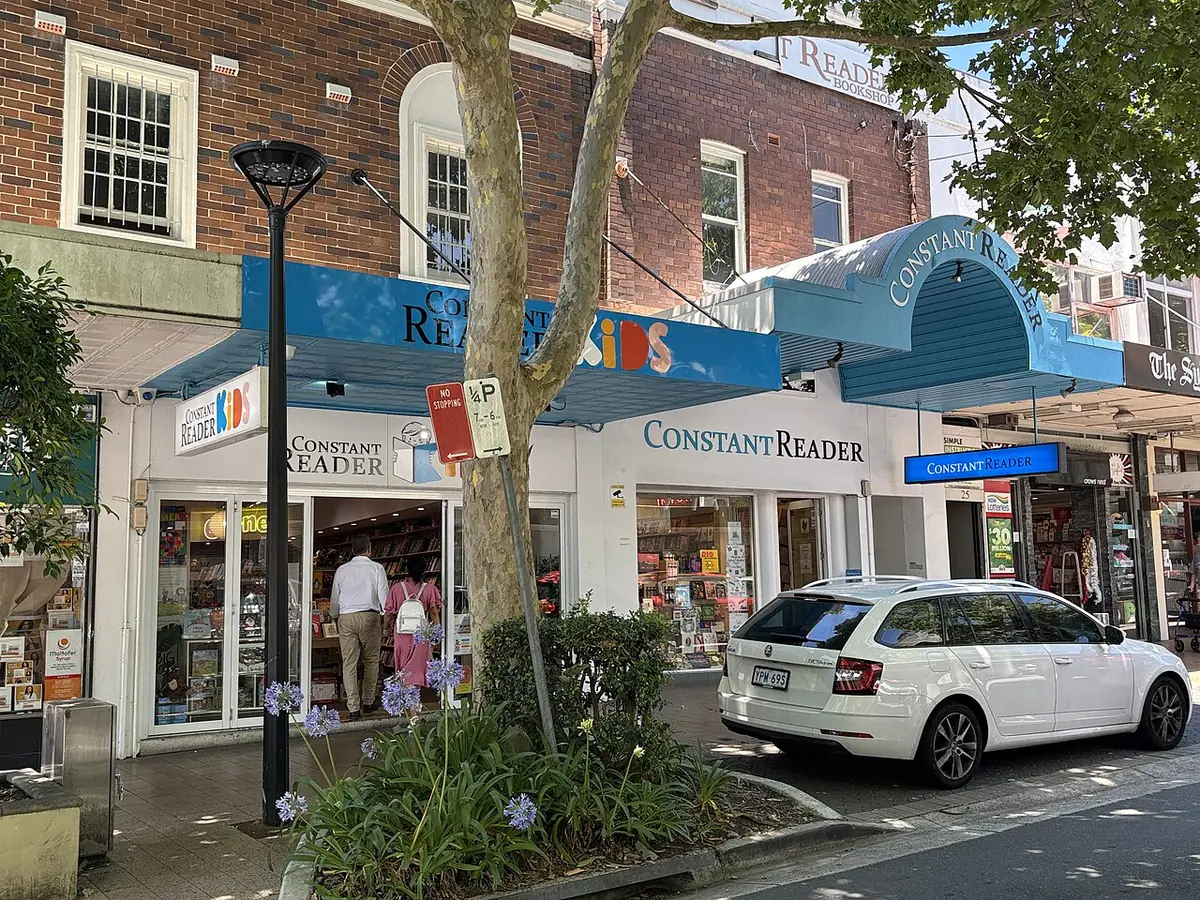
Independent shops like this line many of Sydney's lively local streets — Photo: Nick-D · CC BY-SA 4.0 · Wikimedia Commons
Leaving your home country to settle here upsets all your reference points about owning and running a property.
Sydney's residential market serves buyers with very different expectations, depending on whether they want to be right next to the business district or prefer the quiet of leafy suburbs. Each situation brings its own compromises on commuting time, the size of the home and day-to-day upkeep. Looking honestly at the pace of your life today is the best compass for steering your search towards the right area.
Demanding urban professional
Houses close to the main rail lines or ferry routes save you a great deal of time every day. In return, the price per square metre is at its peak and block sizes shrink dramatically. Here you are putting a strategic location and a quick resale ahead of a large, leafy garden.
Family with school-age children
Outer residential suburbs offer larger houses with proper gardens and a calmer environment. The downside lies in peak-hour commuting times and the need to organise the school run. This choice favours living space and peace and quiet over urban immediacy.
Lifestyle and retirement plan
Opting for a single-storey house with a low-maintenance landscaped garden considerably reduces the weekly upkeep. Coastal or semi-rural suburbs offer the calm you are after while staying connected to health services. The investment focuses on quality of life and long-term thermal comfort.
What changes fundamentally when you buy property in Sydney rather than back home
Once these rules are understood, it makes sense to map out the different parts of the city to find the one that suits you.
Moving from one legal and cultural system to another holds plenty of surprises for buyers arriving from abroad. Legal practice, public auction procedures and the relationship with local real estate agents all follow their own specific codes. Taking these cultural and administrative differences on board is essential to seeing your transaction through calmly.
From abroad
In many countries a single notary drafts and certifies the entire transaction on a neutral basis.
Sydney
Solicitors or conveyancers represent each party independently to secure the contract.
Every buyer must appoint their own legal adviser from the start of negotiations to review the terms of the contract of sale.
From abroad
Signing a preliminary agreement commits the buyer but comes with a legal cooling-off period.
Sydney
Sales are frequently concluded at public auction with no finance condition.
You absolutely must secure bank pre-approval and have the property inspected before you turn up on the day.
From abroad
Technical surveys are compulsory and automatically attached to the sale file.
Sydney
The building inspection is solely the responsibility of the buyer, who has to order it.
Never skip a full structural and pest inspection report before signing the final commitment.
From abroad
Transfer taxes and legal fees are strictly regulated by the state.
Sydney
State stamp duty varies with the value of the property and the buyer's profile.
Your overall budget must include these taxes from the outset to avoid any nasty financial surprises.
How to choose where to live among Sydney's main areas
This geographical diversity feeds directly into price levels and the conditions for getting onto the property ladder.
Metropolitan Sydney divides into areas with very distinct personalities that set the pace of life and determine access to beaches or to employment hubs. Between the buzz of the eastern coastal suburbs and the peaceful greenery of the north or west, each area strikes its own balance. Weighing up these options helps you focus your search precisely instead of spreading yourself too thin.
The Eastern Suburbs and the Beaches
A lively atmosphere shaped by beach life and pavement cafés.
Suits
People after an active, ocean-facing lifestyle with the coastline right on their doorstep.
Trade-off
A price per square metre among the highest in the country and a very limited supply of freestanding houses.
The North Shore
A green, quiet residential setting known for the quality of its schools.
Suits
Families who prioritise tranquillity, generous space and a reassuring leafy environment.
Trade-off
Longer journeys into the centre and a more low-key atmosphere in the evenings.
Greater Western Sydney
Suburbs undergoing major urban change, with large blocks and newer houses.
Suits
Buyers on a moderate budget looking for significantly more living space.
Trade-off
Distance from the city centre and the coast, which demands excellent organisation.
An overview of the budget ranges for buying a house in Sydney
Beyond the headline value of the property, the very nature of your ownership rights deserves particular attention.
Assessing a purchase budget in Sydney means analysing market trends by property type and by area. Asking prices reflect the city's strong appeal and the scarcity of available land. Having realistic benchmark figures lets you structure your financing plan together with your bank.
SydneyFor saleHouseestimate
Median price / m²A$10,283Half the apartments sell below this
Median priceA$1.8mthe average is 14% higher — a few very large properties pull it up
Most common2 bedrooms50 % of listings
Average size166 m²
By number of bedrooms
Bedrooms
Share of market
Avg price
Price / m²
Avg size
2most common
50 %
A$1.52m
A$10,824
140 m²
3
34 %
A$2.02m
A$10,283
196 m²
4
16 %
A$2.79m
A$9,958best value / m²
280 m²
Each row is an average, compared against the area average of A$10,824 / m². These are indicative estimates of a typical local market, not a measured sample of live listings. Check current listings before relying on them.
Freehold or leasehold-style titles: what you really own
Sydney's harbour setting makes waterside living part of daily life — Photo: Dicklyon · CC BY-SA 4.0 · Wikimedia Commons
Once the legal framework is settled, completing the transaction follows a very strict sequence of steps.
Property tenure in New South Wales mainly distinguishes between outright ownership of the land and forms of shared ownership, whether in horizontal or vertical schemes. Grasping the legal scope of these titles protects you from surprises linked to scheme by-laws or shared costs. It is a fundamental point that governs how freely you can alter your house.
Freehold (outright ownership)
You own both the building and the land it stands on, with no perpetual ground rent owed to a third party. This title gives you the greatest freedom to renovate or change the exterior of your house, subject to local planning approvals.
What it changesYou decide on every piece of work on your property and bear the full cost of its long-term maintenance.
Strata Title or Community Title
Your house is part of a residential scheme run by an owners' association that oversees common areas, private roads or shared facilities. Regular levies cover the upkeep of the common property and the scheme's collective insurance.
What it changesYou must follow the scheme's by-laws and take part in the general meetings where decisions are made.
The critical sequence to follow before paying a deposit in Sydney
Several professionals work together throughout the process to coordinate all of these steps.
Committing money to a property purchase in Australia follows a rigorous, step-by-step protocol that should never be short-circuited. From the first look at a property to the final deposit, each stage clears a level of legal and financial risk. Knowing this chain protects you from losing your stake or buying a property with hidden defects.
Finding the ideal property on the specialist listing portals.
Carry out a thorough viewing with an adviser or someone close to you to spot any visible defects.
Order a building and pest inspection report straight away from an accredited independent inspector.
Have your solicitor review the contract of sale to check its special conditions and any easements.
Confirm your final borrowing capacity with your bank before making any firm offer.
Formally signing the contract and paying the deposit into the solicitor's trust account.
Who does what: the key players in your Sydney property transaction
In short, buying a house in Sydney is built methodically, by respecting local practice and the legal rules in force.
A successful property purchase depends on effective coordination between professionals with clearly defined roles. From the agent who represents the seller to the solicitor who protects your legal interests, each one secures a part of the deal. Knowing what each of them is responsible for lets you turn to the right person at the right moment.
The real estate agentRepresenting the sellerThey arrange viewings, handle the marketing of the property and run negotiations or auctions solely in the owner's interest.
The solicitor or conveyancerLegal protectionThey draft or review the contract of sale, carry out the official title searches and oversee the legal transfer of ownership.
The building inspectorStructural assessmentThey examine the condition of the building, the roof and the foundations, and detect any pests or damp.
The mortgage brokerFinancingThey negotiate with lenders to find the loan terms best suited to your profile as an international borrower.
The auditor or accountantTax planningThey analyse the tax impact of your investment in light of your overall financial situation and your tax residence.
Buying a house or an apartment in Sydney: weighing space against upkeep
Once that fundamental choice between house and apartment is made, the crucial question of financing and the real budget comes straight to the fore.
Choosing between a freestanding house and an apartment in Sydney shapes your everyday life directly, well beyond the purely financial side. Houses offer complete independence and private land, but they demand an often very heavy initial outlay and constant upkeep, especially in the Australian climate where timber and paintwork take a beating from intense UV. An urban apartment, by contrast, does away with gardening and roof chores and offers shared amenities such as a pool or a gym, but it brings strata levies that can be high and neighbours much closer at hand.
Sydney's geography sharpens this dilemma: houses with gardens are mostly found in suburbs a long way from the business district, such as the Hills District or the far end of the Northern Beaches, which considerably lengthens daily commutes. Apartments, on the other hand, are concentrated along the main transport corridors, in lively areas such as Chatswood, Parramatta or the Inner West, making car-free living possible but at the cost of a smaller living area for the same budget.
The choice therefore depends above all on how much commuting you can tolerate and how attached you are to private outdoor space. If you have young children or pets, the space of a freestanding house is a comfort that is hard to replace despite the upkeep. If you value community life, being right next to cafés and public transport and cutting your commute drastically make a clear case for buying a well-located apartment.
You also need to factor in resale and long-term capital growth in the Sydney property market. Historically, land and freestanding houses in well-connected areas have gained value faster than apartments, because of the chronic shortage of land in the Sydney basin. However, the premium paid upfront for a house can sometimes be invested more effectively elsewhere if you opt for a very well-located apartment.
What overall budget should you plan for to live comfortably in a house in Sydney?
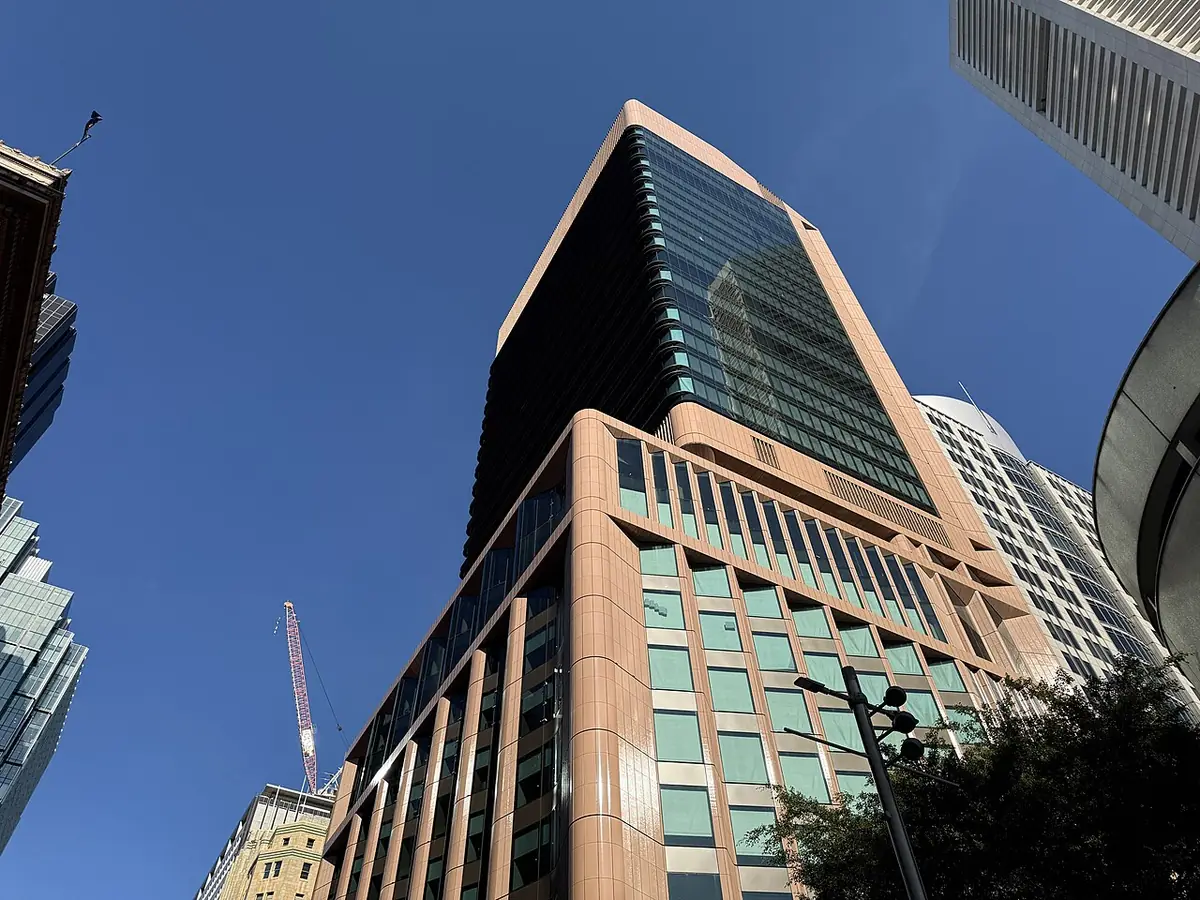
Martin Place sits at the heart of Sydney's financial district — Photo: Klauskazamias · CC0 · Wikimedia Commons
With these figures in hand, it is time to picture how a typical day is actually organised when you live in these residential suburbs.
Buying a house in Sydney means anticipating all the extra costs that come with the transaction and with owning property in New South Wales. Beyond the headline price advertised by agents, transfer duty, known as stamp duty, is a substantial sum that has to be paid in cash. On top of that come the insurance you will need, the local rates collected by councils and the recurring upkeep of a building exposed to coastal weather and to the termite risk that is widespread in the region.
Upfront and recurring costs for a house in Sydney
Cost item
Estimated amount or range
Frequency and impact
Transfer duty (Stamp Duty)
4% to 5.5% of the purchase price
Paid once when the contract of sale is signed
Legal and conveyancing fees
AUD 1,500 to AUD 3,500
Paid at the legal settlement of the transaction
Council rates
AUD 1,200 to AUD 2,500 per year
Paid quarterly or annually depending on the council
Comprehensive home insurance
AUD 1,800 to AUD 3,500 per year
Annual premium covering fire and storm damage
The amounts shown are observed averages for standard family houses in metropolitan Sydney and vary with the exact market value.
Preventive and remedial maintenance costs
Type of work
Average annual cost
Local necessity
Annual termite inspection
AUD 300 to AUD 600
Essential to protect timber structures from destructive attack
Garden maintenance and tree pruning
AUD 1,500 to AUD 3,000
Essential for meeting local bushfire prevention standards
Roof and gutter cleaning
AUD 400 to AUD 900
Recommended before the rainy season to prevent water getting in
These preventive maintenance budgets help you avoid major structural repairs whose costs can quickly spiral.
Health, schools and transport: what an ordinary Tuesday looks like in a Sydney house
Behind this apparent smoothness lie realities that real estate agents are careful to leave out of their brochures.
Living in a freestanding house in Sydney calls for well-oiled daily logistics, shaped by the relative distance from the main employment hubs and by how the transport networks are laid out. Between dropping the children at a public or private school, commuting to the Central Business District and picking up local shopping, every hour of the day is carefully paced. Managing travel time is the real key to protecting your quality of life.
07:00Residential suburb (e.g. Hornsby or Parramatta)Waking up and getting the family ready in the calm of the house, with a morning glance at the garden and the veranda.
08:15Local schoolDropping the children at the local public school or private secondary school, often ten or fifteen minutes away by car.
09:00Railway station or main motorwayCommuting to work, either by express suburban train or along the toll roads with electronic tolling.
12:30Sydney's business district (CBD)A working day at the office, broken up by a lunch break in one of the many parks or cafés in the city centre.
17:30Local supermarket (Coles or Woolworths)A stop on the way home to do the week's grocery shopping and pick up some fresh produce.
19:00Family homeDinner at home and time to unwind as a family in the living room or on the terrace, enjoying the evening breeze.
What the property listing will not tell you about buying a house in Sydney
These grey areas explain why some buyers feel bitter regret only a few months after settlement.
The marketing photos and glowing descriptions put out by Sydney real estate agencies systematically embellish reality to stoke demand. Behind a green lawn and a renovated kitchen there are often strict regulatory constraints, utility easements or local climate quirks that weigh heavily on new owners' budgets and daily comfort. Knowing about these unmentioned aspects spares you serious disappointment after the purchase.
Strict restrictions on removing trees (Tree Preservation Orders)
In New South Wales, even on private land, removing or heavily pruning certain protected trees requires a complex, fee-paying council approval. A badly placed tree can block a future extension to your house or damage your foundations with its roots without you being able to fix it easily.
The real exposure to bushfire risk (Bushfire Prone Land)
Many houses on the edge of national parks or in Sydney's wooded valleys are classed as bushfire-prone. That classification requires extremely costly building standards for any future renovation and can send your annual insurance premium soaring.
Underground easements and sewer pipes
It is common for part of your land to be subject to an easement in favour of Sydney Water or the local council. You are not allowed to build a pool, a garage or even a solid deck over these strips, which considerably reduces the usable area of your block.
The noise and visual impact of flight paths and major roads
Viewings often take place on Saturdays, when air and road traffic can differ from weekdays. Many buyers discover too late that their house sits under a flight path or suffers constant noise during the weekday rush hours.
The buying mistakes you only discover six months in, in Sydney
Faced with these potential pitfalls, it is fair to ask whether buying property in Sydney really suits everyone.
Looked likeA charming older house full of character, with period floorboards and high ceilings in the Inner West.
Turned outA poorly insulated, energy-leaking home, stifling in summer and freezing in winter, with sky-high electricity bills for heating or cooling.
Would have caught itInsist on a full energy performance assessment and check for proper insulation in the roof space and walls before making a firm offer.
Looked likeA peaceful, leafy neighbourhood, ideal for raising children away from the bustle of central Sydney.
Turned outCompletely boxed in by traffic at peak hours, turning every school run or work journey into a daily ordeal of endless jams.
Would have caught itTest the exact journey at peak hour on a Tuesday morning before committing to the purchase, and look into how accessible public transport really is.
Looked likeA great opportunity to enlarge the house by adding a second storey or an extension at the back of the block.
Turned outAn outright refusal from the local council because of the planning rules (Local Environmental Plan) limiting building height and floor space ratio.
Would have caught itCheck the council's planning rules and consult a local architect before signing the conditional contract.
Looked likeAn attractive purchase price thanks to minor cosmetic refreshing you could do yourself.
Turned outThe discovery of major hidden defects, including rising damp and timber structures eaten away by decades of rot.
Would have caught itAlways commission an independent expert to produce a full structural and pest inspection report before the conditions are lifted.
Who really should not buy a house in Sydney right now?
Now it is time to take stock once and for all and check how ready you are for the Sydney property market.
Buying a home in Sydney is a financial and long-term commitment on such a scale that it simply does not suit every life situation. Interest rate movements set by the Reserve Bank of Australia, combined with high nominal prices, demand real stability in your job and in where you live. Committing to a house without long-term visibility on your personal circumstances exposes you to major financial risk if you have to sell in a hurry.
Mobile first-home buyers or expatriates on temporary work contracts
→Flexible renting rather than a rigid property purchase
Upfront transaction costs, notably stamp duty, and agent fees on resale swallow a considerable share of the capital invested. If you leave the country or are transferred within five years, the sale almost always ends in a net loss.
Households with a deposit that is only just enough and no emergency savings
→Putting their purchase off to build up their financial cushion
A freestanding house in Sydney brings regular unexpected expenses, whether that is repairing a storm-damaged roof or coping with a sudden rise in mortgage repayments. Without cash savings, the smallest incident turns into a financial crisis.
People who cannot bear commutes of more than forty minutes
→Renting a compact apartment right next to the CBD's employment hubs
Sydney's urban sprawl makes central jobs harder and harder to reach from the affordable residential suburbs. Wanting a large house without accepting the long daily commutes that come with it inevitably leads to burnout.
So, are you really ready to take the plunge into Sydney property?
Having reached the end of this analysis, buying a house or an apartment in Sydney should no longer be a matter of impulse or of simply falling for a fitted kitchen. It is a defining financial decision that requires your finances, your tolerance for local logistical constraints and your long-term vision of life in this Australian city to line up perfectly. If you have measured the real weight of transfer duty, anticipated upkeep costs and accepted the strict planning rules, you hold the keys to making your project a success.
The Sydney property market rewards patience, rigour in building inspections and clear thinking about location. Do not give in to the artificial pressure of auctions or to the alarmist talk of intermediaries trying to rush your signature. Take the time to visit several neighbourhoods at peak hours, ask councils about their development plans and confirm your financing plan with an independent broker who understands the finer points of the Australian banking system.
Ultimately, buying in Sydney is an exciting adventure that offers an exceptional quality of life, provided you go into it with your eyes wide open. Do not look for the perfect property, which exists nowhere, but focus on the one that best fits your family and working life. If every box in your preparation has been ticked methodically, you are fully ready to invest calmly in your future home in New South Wales.
Related questions
What extra costs should I budget for when buying a house in Sydney?
You must budget for transfer duty (stamp duty), which runs between 4% and 5.5% of the purchase price, conveyancing fees for the legal side, plus the home insurance you will need and the local rates collected by the council.
Is a building inspection compulsory before buying in New South Wales?
The law does not formally require an inspection, but it is strongly recommended to order a full report on the structural condition and any termite activity before the conditions of the sale are lifted.
How do property auctions work in Sydney?
Auctions are public and carry no finance condition. The winning bidder must sign the contract of sale on the spot and pay a deposit that is usually ten per cent of the total price.
How do bushfire zones affect buying a house in Sydney?
Properties close to national parks or bushland are classed as bushfire-prone, which brings specific and costly building standards for renovations and pushes up the cost of insurance.
Can you easily cut down a tree on your own land in Sydney?
No. Sydney councils apply very strict tree protection policies (Tree Preservation Orders). Cutting down or pruning a protected tree without the council's prior approval exposes you to substantial fines.
What is the fundamental difference between a house and an apartment when it comes to resale?
Freestanding houses on their own blocks of land have historically gained value faster because of the chronic shortage of land across metropolitan Sydney, whereas apartments face a more plentiful supply.
How do you choose the best neighbourhood for family life in Sydney?
The choice of neighbourhood should rest on weighing up commuting times to the main employment hubs, the reputation of the local public or private schools, and access to the public transport network.
What are council rates in the Australian property system?
They are the local property taxes levied by the council to pay for local road maintenance, waste collection, public parks and neighbourhood community services.
Why are commuting times such a critical factor in Sydney?
The sheer size of the metropolis and the congestion on roads and rail at peak hours mean that living further out translates straight into a considerable daily loss of time, which has to be factored into your lifestyle choice.
What is the minimum deposit needed to buy property in Sydney?
Australian banks generally require a deposit of at least twenty per cent to avoid paying Lenders Mortgage Insurance (LMI), on top of which you need the full amount of stamp duty and the legal fees.
Property review of ting
No ting properties in Sydney yet
Be the first — share it on ting and it shows up right here.