Buying a house in Philadelphia is a major commitment of capital that calls for a clear-eyed reading of the local market. This guide sets out the urban realities, the legal subtleties and the true costs of ownership, to walk you step by step through your purchase decision.
Get the app
What nobody tells you.
Real prices, hidden costs and the traps to check before you commit.
What you are really getting when you buy a house in Philadelphia
Scroll
What you are really getting when you buy a house in Philadelphia
Buying a house in Philadelphia is a major commitment of capital that calls for a clear-eyed reading of the local market. This guide sets out the urban realities, the legal subtleties and the true costs of ownership, to walk you step by step through your purchase decision.
Written by the ting.ad editorial team ·
John F. Kennedy Boulevard, Philadelphia in Street View: drag to look around.
Beyond the bricks, the question to press on is how well your daily life fits the reality of the city.
Buying a house in this large American metropolis is not simply a matter of acquiring square metres or the private enjoyment of a plot of land. Behind the promise of generous living space and a solid asset sits a set of complex urban realities that deserve cold analysis. Between the historic architecture of certain neighbourhoods and the upkeep the local housing stock demands, every buyer has to measure the true reach of the investment. The choice means accepting structural trade-offs between the character of an older property and the budget predictability of a newer one. Understanding those basic mechanics lets you approach the Philadelphia housing market clearly, far from the romantic illusions of the tourist brochures.
Historic character and heritage architecturevsThe demands of energy and structural renovation
Older homes offer exceptional character and the proportions buyers look for, but they invariably come with substantial budgets for bringing things up to standard. You often inherit period floors and remarkable facades at the price of imperfect insulation and plumbing that needs watching at every turn.
Private space and an urban gardenvsThe maintenance burden and the upkeep of the outdoor space
Owning a house comes with valuable autonomy and outdoor living space that is rare in a dense city. In exchange, every cost tied to the roof, the foundations and the surroundings falls to the owner, with no collective ownership structure as a safety net to spread the big-ticket work.
Putting down roots in an established residential neighbourhoodvsHow rigid the market can be when you come to resell
Settling on a quiet, paved street guarantees a stable setting and a genuine neighbourhood life. That geographical stability can, however, translate into lower liquidity in a quick resale compared with more standardised apartment stock.
Does this place really match the way you live now and expect to live later?
Moving country or region means taking apart your usual reference points and adopting new ones.
Choosing a main home does not depend only on its floor area or its price per square metre, but on its ability to absorb the constraints of a typical week. Between work journeys into the business districts, running family life and the search for quiet, every buyer profile faces its own trade-offs. Transport infrastructure and the layout of neighbourhoods largely dictate how satisfied you will be day to day. It is therefore essential to weigh your personal situation against local specifics before signing a binding purchase commitment.
The remote worker after volume
You make full use of the extra floor area to set up a permanent, closed-off office away from urban noise. Your day organises itself around the neighbourhood, with particular attention paid to the quality of the internet connection and how quiet the street is. In exchange, you have to accept longer journeys when you do travel into the metropolitan area's economic hubs. This way of living puts a premium on interior space at the cost of spontaneous nights out in the city.
The parent buying for the family
Your absolute priority shifts to proximity to schools, safe green spaces and nearby cultural or sports facilities. Buying a house here gives your children the stability you want, but obliges you to deal with the logistics of the school run or with rush-hour traffic jams. Managing parks and after-school activities day to day becomes the real heart of your organisation.
The mobile professional in urban transition
You are looking for a base with strong medium-term appreciation potential and immediate access to fast transport links. For you, a house is a serious long-term asset, even if you use part of its floor area only intermittently. You accept the upkeep that comes with a single-family property in exchange for the complete independence it gives you from the rules of a collective ownership scheme.
Living here when you arrive from abroad: what actually changes
Once those reference points are in place, the success of your project rests on choosing the area with care.
Carrying a property track record from another country into the American market in Philadelphia confronts a buyer with legal, tax and architectural customs that can be disorienting. Ownership, local taxation and construction do not rest on the same foundations as they do in much of Europe or elsewhere. The gap is not limited to language or paperwork; it reaches the heart of the relationship you have with your home. Identifying those differences from the outset avoids administrative disillusion and lets you anticipate the hidden costs that often surface after the keys change hands.
From abroad
Centralised legal machinery and statutory construction guarantees, with a single official overseeing the deed
Philadelphia
An American contractual system built on title insurance and targeted inspections
You have to engage your own independent experts to inspect the structure, the roof and the heating systems, because automatic protection on the construction is far less standardised here.
From abroad
Property taxes that are moderate, or smoothed out by the local authority
Philadelphia
High local property taxes, reassessed periodically against market value
The recurring cost of holding the property weighs heavily on your annual budget and must be built into the calculation of what you can afford to repay over the long term.
From abroad
Interior walls in traditional plaster or hollow brick
Philadelphia
A structure that is mostly wood-frame across much of the residential stock
Sound insulation between rooms and the upkeep of exterior cladding call for repair methods, or professional trades, that are completely different from what you are used to.
From abroad
Central gas heating or a building-wide system
Philadelphia
Individual forced air equipment combined with central air conditioning
Thermal comfort comes from moving air rather than from a radiator holding heat, which changes how warm a room feels and calls for regular duct maintenance.
Which Philadelphia neighbourhood should you target?
That geographical choice weighs heavily on the budget structure and the price ranges you will encounter.
Philadelphia's urban fabric is built around micro-neighbourhoods with strong identities, where the atmosphere changes sharply from one avenue to the next. The area you choose determines not only the quality of your daily journeys but also the stability of your investment. Between the very dense historic zones, districts in the middle of energetic gentrification and greener residential enclaves, the property on offer varies considerably. Weighing how each zone feels day to day, along with its strengths and its trade-offs, is an unavoidable step in securing your purchase.
Center City and the historic surroundings
Constant urban buzz, everything within walking distance, busy pavements and well-preserved colonial architecture.
Suits
Buyers who want to be right next to institutions, restaurants and heavy public transit.
Trade-off
A high price per square metre, a chronic shortage of houses with a real garden and recurring parking difficulties.
The residential neighbourhoods to the west (University City and around)
A lively mix of students and researchers, planted open spaces and tree-lined residential streets.
Suits
Families and professionals working in the academic or hospital sectors who want a compromise between space and proximity.
Trade-off
Marked variation from street to street, which calls for careful analysis of the micro-location before you make any offer.
The changing districts of North and South Philadelphia
A working-class atmosphere in full transformation, new independent businesses appearing and strong potential for appreciation.
Suits
Bold investors or first-time buyers looking to maximise living space for a given budget.
Trade-off
Uneven public services from block to block and a potentially longer resale timeline if the neighbourhood's transformation slows.
What does a property here really cost?
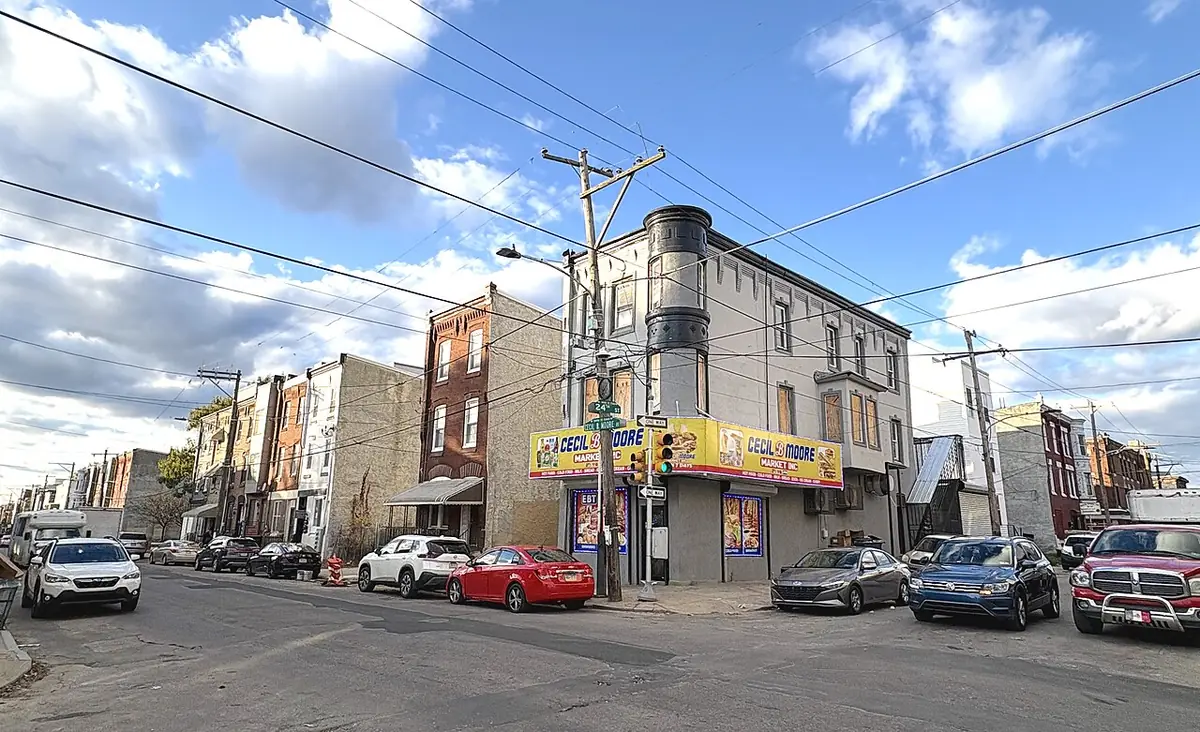
A lively commercial street lined with rowhouses and shopfronts — Photo: Moriah Levin · CC BY-SA 4.0 · Wikimedia Commons
Knowing the prices is not enough; you also need to understand what local law lets you own.
Budgeting for a home purchase in the United States never comes down to the net figure written on the purchase agreement. Between local property taxes, the insurance policies you are required to carry against specific risks and the closing costs of the transaction, the total cost of ownership deserves to be dissected rigorously. The tables below summarise the orders of magnitude observed on the market to help you calibrate your financing plan without putting your future cash position at risk. No fanciful estimate replaces an analysis of the transactions actually recorded in the city registries.
philadelphiaFor saleHouseestimate
Median price / m²US$2,415Half the apartments sell below this
Median priceUS$400kthe average is 14% higher — a few very large properties pull it up
Most common2 bedrooms59 % of listings
Average size158 m²
By number of bedrooms
Bedrooms
Share of market
Avg price
Price / m²
Avg size
2most common
59 %
US$400k
US$2,542
158 m²
3
29 %
US$512k
US$2,339 −8 %
219 m²
4
12 %
US$646k
US$2,237best value / m²
289 m²
Each row is an average, compared against the area average of US$2,542 / m². These are indicative estimates of a typical local market, not a measured sample of live listings. Check current listings before relying on them.
What you can actually own in legal terms
Once the legal framework is settled, it is the timeline of the transaction that demands your attention.
In American property law, ownership of land is inseparable from the title and the easements attached to it. Unlike systems elsewhere where collective ownership dominates, buying a single-family house comes with full ownership of both the land and the building (fee simple absolute), subject to local zoning rules. That apparent freedom nevertheless comes with strict rules laid down by the city or, in some newer developments, by homeowner associations. It is crucial to separate the freedom you have over the exterior architecture from the legal reality of your parcel.
Full ownership of the land (fee simple)
You own both the structure and the ground it stands on, with no perpetual ground rent payable to a third party. You make decisions about alterations and renovation in your own name, strictly within the city of Philadelphia's zoning codes. That legal autonomy guarantees complete control over your property, but leaves you alone in the face of any dispute with a neighbour or over a party wall.
What it changesYou take on the full legal and financial responsibility for your parcel's compliance, with no way to shift part of the burden onto a collective body.
Use restrictions and local easements (zoning and covenants)
Your freedom as an owner is bounded by the local zoning plan and, where they apply, by the rules of a homeowners association or a historic district. Changing a facade, adding an extension or changing what a room is used for requires rigorous approval from the relevant city departments. Ignoring those constraints exposes a buyer to heavy financial penalties or to orders to restore the original condition.
What it changesYou must check the permit history and confirm there is no past non-compliance before you finalise your offer.
The rule to understand before you put down a deposit
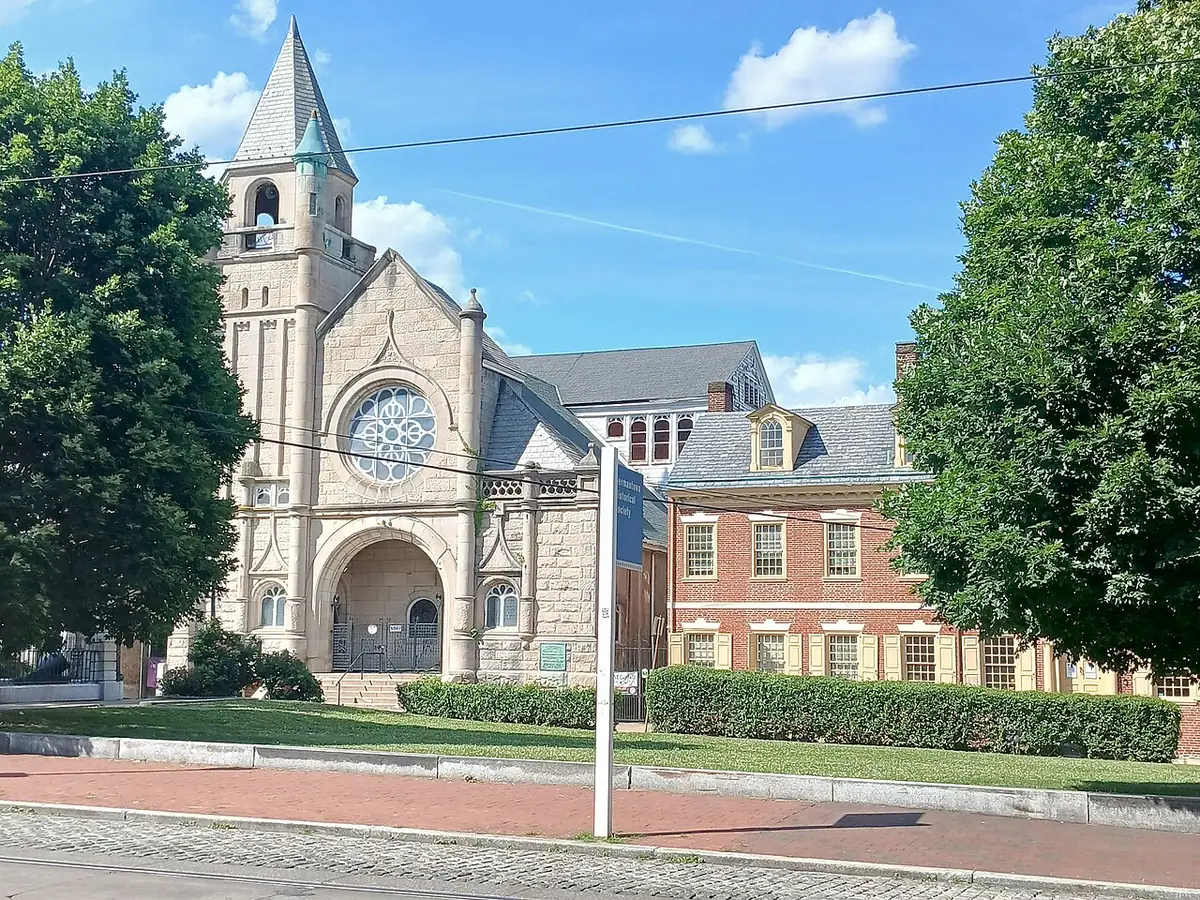
Market Square in Germantown, a historic corner of the city — Photo: Kreuz und quer · CC0 · Wikimedia Commons
To orchestrate that timeline without a false note, let us look precisely at each party's role.
Buying property in the United States follows an absolute contractual discipline in which every stage is paced by precise contingency clauses. Unlike markets where a verbal undertaking sometimes carries weight, here everything rests on the written word, on escrow and on carefully scheduled technical inspections. The first deposit is paid very early in the process and binds the buyer subject to financing and inspection contingencies. Understanding that chain of consequences protects your capital and avoids losing your deposit outright in a dispute.
Drafting the written purchase agreement and having both parties sign it.
Paying the earnest money deposit into a secure escrow account held by a neutral third party.
The period of thorough home inspection of the building, carried out by a certified professional.
Waiving or negotiating any remedial work following hidden defects or structural problems found during the inspection.
Final approval of the mortgage financing and confirmation of the title search and title insurance.
Signing at settlement and the official transfer of funds and keys.
How a transaction unfolds, step by step
A successful property transaction in Philadelphia mobilises an ecosystem of independent experts whose roles are strictly separated by law. From the mortgage broker to the title company agent by way of the home inspector, each one protects a specific facet of your interests as a buyer. Knowing the order in which they act lets you steer your project calmly and avoid the confusion over roles that so often catches out international buyers. Here is exactly how those responsibilities play out across your purchase.
The buyer (you)Setting the budget and obtaining mortgage pre-approvalYou confirm your borrowing capacity with a local lender before you even view the first property.
The buyer's agentSelecting properties and drafting the initial offerThey guide you through the subtleties of the city's different neighbourhoods and negotiate the protective clauses in your offer.
The home inspectorA full audit of the structure and the equipmentThey go over the roof, the foundations, the wiring and the plumbing to produce a detailed technical report.
The title companyVerifying the legal validity of the titleIt confirms that no hidden lien or disputed easement sits on the property before the final transfer of funds.
The closing agentSigning at settlement and recording with the cityThey orchestrate settlement day, allocate the costs between seller and buyer, and formally record the sale with the city.
House or apartment in Philadelphia: the real trade-off
Choosing between a traditional red-brick rowhouse in Philadelphia and a converted apartment in a former industrial building in Fishtown or Center City involves far more than your aesthetic preferences. The local market imposes a strong structural reality: a single-family house gives you complete autonomy over the land, with no eye-watering monthly association dues, but it leaves you entirely responsible for the roofs, the facades and the old basements that characterise Pennsylvania's housing stock. An apartment in a condominium, on the other hand, handles exterior maintenance and security collectively, while often concentrating its costs in a homeowners association whose fees can weigh heavily on your recurring monthly budget over the years.
Space and layout weigh heavily in the balance when you compare Philadelphia's residential neighbourhoods such as Mount Airy or Chestnut Hill with the denser areas. Typical rowhouses traditionally run to three narrow storeys, which multiplies the steep staircases and sometimes complicates life for young families or anyone with reduced mobility. In exchange, they offer direct access to a small rear patio, a private outdoor space that is rare and precious in the dense urban environment of the city, where apartments often make do with a shared roof terrace or a cramped balcony with no real privacy.
The long-term financial picture does not stop at the asking price shown on the listing portals during your initial search. The property taxes levied by the city of Philadelphia apply to the whole assessed value of the property, which sometimes penalises the larger footprints of single-family houses in rapidly gentrifying districts. Conversely, buying a condo means scrutinising the association's financial health with extreme care, because major work to meet energy or structural standards can trigger special assessments capable of upending your personal finances overnight.
The way you live day to day and how you expect your career to develop over the medium term should guide this fundamental decision between historic brick and a contemporary apartment. If you plan to settle for the long haul in a quiet neighbourhood and cultivate an urban garden while accepting the constraints of renovating an older property, the house is naturally the better long-term asset. If you value mobility, being right at the centre of the cultural action and the absence of immediate maintenance demands, a secure urban apartment remains the more rational choice for settling into the city where American independence was declared.
What overall budget do you need to live comfortably in Philadelphia?
Working out the finances of a home purchase in Philadelphia never stops at the monthly mortgage repayment to your local lender. You have to build in the full tax burden, the homeowners insurance policies specific to the region and the real cost of maintaining older structures to get an accurate picture. Neglecting those recurring items leads inevitably to cash-flow trouble in the first year in your new home.
Estimated monthly and annual cost items for a house in Philadelphia
Cost item
Estimated average amount
Frequency
Adjustment factors
Municipal property taxes
$3,500 to $7,000
Annual
Varies widely with the assessment and the neighbourhood chosen.
Homeowners insurance
$1,200 to $2,200
Annual
Depends on the age of the building, the materials and the cover taken out.
Energy and utilities
$250 to $450
Monthly
Strong seasonal swings driven by harsh winters and hot summers.
Reserve fund for works
$200 to $500
Monthly
Essential for anticipating roof replacement and heating systems.
The figures shown are indicative orders of magnitude based on local market averages and need checking case by case.
What does an ordinary Tuesday in a Philadelphia house actually look like?
St. Helena Catholic Church anchoring its Philadelphia block — Photo: Farragutful · CC BY-SA 4.0 · Wikimedia Commons
Getting a grip on the daily reality of owning a home in Philadelphia means looking past the postcards and the sunny viewings. The rhythm of an ordinary Tuesday combines the commute towards the employment centres, dealing with local services and interacting with the fabric of the city. This detailed timeline illustrates the friction and the high points that will mark your new life here.
07:30Residential neighbourhood and departureWaking in your rowhouse, checking the heating and heading out early to avoid the morning traffic jams on the main routes.
08:15Commute via SEPTAUsing regional transit or walking briskly to the nearest subway station to reach Center City.
12:30Lunch break and neighbourhood lifeLunch at an independent local business, a chance to observe local life and build ties with the shopkeepers in the area.
17:30The way home and food shoppingStopping at a specialist grocer or a neighbourhood supermarket for fresh produce on the way back to the house.
19:00Household management and upkeepTime given over to the regular small repairs that come with an older home, and to local administrative paperwork.
What property listings deliberately leave out about Philadelphia
The Philadelphia housing market has its own unspoken codes and grey areas that sales brochures carefully avoid highlighting. Behind the promise of charming Georgian or Victorian architecture sit substantial technical and regulatory constraints. Knowing these unstated aspects keeps you from signing a purchase commitment loaded with unexpected financial consequences.
The true state of the drainage and plumbing
Many older homes still have degraded lead or cast-iron waste pipes that need complete and very costly replacement to meet current health standards.
The strict rules of neighbourhood historic commissions
If your house sits in a protected district, the smallest change to a facade colour or a roofing material has to clear a long and complex approval process before any work starts.
How complicated on-street residential parking is
Getting a parking permit in dense areas never guarantees finding a free space in the evening, turning every return home into a search that can be long and stressful.
The subtle variations in safety from one street to the next
In Philadelphia, the shift from a very quiet residential block to a far more difficult area can happen within a single intersection, which makes micro-local analysis absolutely essential.
The classic traps new buyers discover six months after moving in
Looked likeA charming older house tastefully and completely renovated by an investor in a quick flip.
Turned outDefects hidden behind new partitions, notably severe insulation problems and wiring that did not meet code.
Would have caught itInsisting every time on a very thorough independent home inspection and refusing offers with no documented record of the work by certified trades.
Looked likeA lively central neighbourhood with immediate access to everything happening culturally and gastronomically in the city.
Turned outUnbearable night-time noise at weekends and no chance at all of parking within five blocks.
Would have caught itVisiting the target area at different times of day, including late on a Friday night, to judge the real atmosphere and noise level objectively.
Looked likeAn initial property tax bill presented as moderate by the seller when the purchase agreement was signed.
Turned outA sharp reassessment of the property's value by the city a few months after the transaction, sending the annual charge sky-high.
Would have caught itReviewing the full history of taxes paid over the last three years in advance and anticipating a potential rise following the sale.
Looked likeA small, intimate and leafy city garden described in the listing as needing minimal upkeep.
Turned outA shaded space overtaken by damp, with no direct sunlight, causing recurring infiltration problems in the party walls.
Would have caught itWorking out the exact solar orientation of the outdoor parcel and checking the condition of the rainwater drainage at ground level.
Which buyer profile should absolutely hold off on buying in Philadelphia?
Buying is not the universal answer to every situation in life, and the Philadelphia market in particular has its own demands. Setting out to buy without the stability those demands require exposes a buyer to swift financial disillusion. Identifying the profiles for whom this investment is a poor fit helps avoid major strategic mistakes.
The mobile young professional chasing opportunities across the country
→Flexible renting rather than buying
The high transaction costs on both purchase and resale in Philadelphia call for a holding period of at least five to seven years to absorb the investment.
The household with very limited emergency savings
→To rebuild a solid financial cushion before taking the plunge
Maintaining an older house in this region exposes you to major unplanned expenses, such as replacing a boiler or a roof.
The buyer with no appetite for managing and fixing things
→A managed rental or a modern condominium apartment
Owning a single-family house means constant personal involvement in maintaining the building and sorting out small domestic problems.
Are you genuinely ready to take the step of buying in Philadelphia?
The Betsy Ross Bridge crossing the Delaware River — Photo: SnowFire · CC BY 4.0 · Wikimedia Commons
Deciding to buy a house in Philadelphia marks a major turning point in your life and in building your personal wealth. At the end of this careful look at local realities, the costs involved, the hidden traps and the city's architectural specifics, the answer no longer depends on an agency's marketing. It rests entirely on the fit between your real financial capacity, your tolerance for risk on the asset, and your genuine desire to put down roots in the fabric of this historic city.
If you have validated your budget with local property taxes built in, if you accept the constraints that come with maintaining an older building, and if your professional horizon sits durably in the region, then the conditions are in place to move ahead calmly. The Philadelphia housing market rewards buyers who are patient, informed and clear-eyed about the effort needed to preserve a property's value across the decades. Take the time to visit several times, surround yourself with independent experts, and make this project the solid foundation of your future.
Related questions
Which neighbourhoods are most sought after for buying a house in Philadelphia?
The most prized areas include Center City, Rittenhouse Square and Society Hill, along with more residential, family-oriented neighbourhoods such as Chestnut Hill and Mount Airy. Each zone has very distinct architectural characteristics and price levels, which you should weigh against the way you actually live.
How are property taxes calculated in Philadelphia?
Municipal property taxes are calculated each year by the Office of Property Assessment on the basis of your property's estimated market value. That assessment can change from one cycle to the next and weighs significantly on an owner's overall annual budget.
Is a home inspection compulsory before buying?
Although the law does not formally require one in every case, an independent home inspection is an absolutely essential step in the United States. It surfaces hidden defects and problems with the structure, the wiring or the plumbing before you sign for good.
What closing and transaction costs should I budget for when buying?
Closing costs generally represent between 2% and 5% of the total transaction amount. They cover local and state transfer taxes, the title company's fees and the lender's processing charges.
How long does it usually take to complete a home purchase?
The average gap between acceptance of your offer and final settlement generally runs between 30 and 45 days. That window is needed to secure the mortgage financing, carry out the inspections and check the title to the property.
Can you negotiate the asking price of a house in Philadelphia?
How much room there is to negotiate depends entirely on how tight the local market is, how long the property has been listed and its general condition. In high-demand neighbourhoods, offers at or above the asking price are common, while properties needing work leave more flexibility.
How does the SEPTA transit system work for commuters?
The SEPTA network runs the subways, the buses and the Regional Rail trains that link outlying residential neighbourhoods efficiently to the business district. It is a key factor to weigh if you work in Center City and want to limit daily use of your car.
What help is available for first-time buyers in this city?
The city of Philadelphia sometimes offers financial assistance programmes or grants designed to make ownership more accessible to first-time buyers, subject to income conditions. It is worth checking with the Philadelphia Housing Development Corporation.
What climate risks should you anticipate when buying a property?
Some areas close to waterways can be exposed to flooding during extreme weather, which sometimes means taking out separate flood insurance on top of a standard homeowners policy.
Is it better to buy a house with a finished or an unfinished basement?
A finished basement gives you welcome extra living space, but it calls for the closest possible inspection for chronic damp and the water infiltration risks that are common in the region's older construction.
Property review of ting
No ting properties in Philadelphia yet
Be the first — share it on ting and it shows up right here.