Investing in property in Singapore calls for a firm grasp of the local rules, the tax regime and the types of property on offer. This guide takes you step by step through structuring your purchase with no blind spots.
Get the app
What nobody tells you.
Real prices, hidden costs and the traps to check before you commit.
Why Singapore's property market has to be read beyond appearances
Scroll
Why Singapore's property market has to be read beyond appearances
Investing in property in Singapore calls for a firm grasp of the local rules, the tax regime and the types of property on offer. This guide takes you step by step through structuring your purchase with no blind spots.
Written by the ting.ad editorial team ·
Sale Apartment Singapore in Street View: drag to look around.
This tension between security and financial constraint plays out very concretely in your daily life, depending on your personal situation.
Buying an apartment in Singapore is unlike any other investment in Western or Asian markets. On one side, legal certainty and a strong currency offer an absolute safe haven for your capital over the long term. On the other, the taxes and strict quotas imposed on foreigners completely redefine the net return on the deal. Understanding this fundamental duality is the only way to avoid financial disappointment once the sale deed is signed.
Exceptional security for your wealth, guaranteed by a rigorous state.vsAn entry cost weighed down by transfer duties and specific taxes you will never get back.
Political and monetary stability offsets the heavy upfront tax if you plan to hold for the long term, but it severely penalises any short-term resale strategy.
An extremely lively rental market, structurally supported by a large population of skilled expatriates.vsHistorically moderate gross yields, because property is valued so highly per square metre.
Do not count on spectacular rental yields to make the property pay for itself from year one, as the capital tied up is considerable compared with the rent coming in.
Rigorous condominium management and faultless public infrastructure.vsRules of use and restrictions on interior alterations that can be very strict, depending on the type of development.
The absence of nasty surprises over the upkeep of common areas comes at a direct price, one you accept in exchange for the lasting preservation of the property's value.
What kind of buyer are you, faced with the realities of the Singapore market?
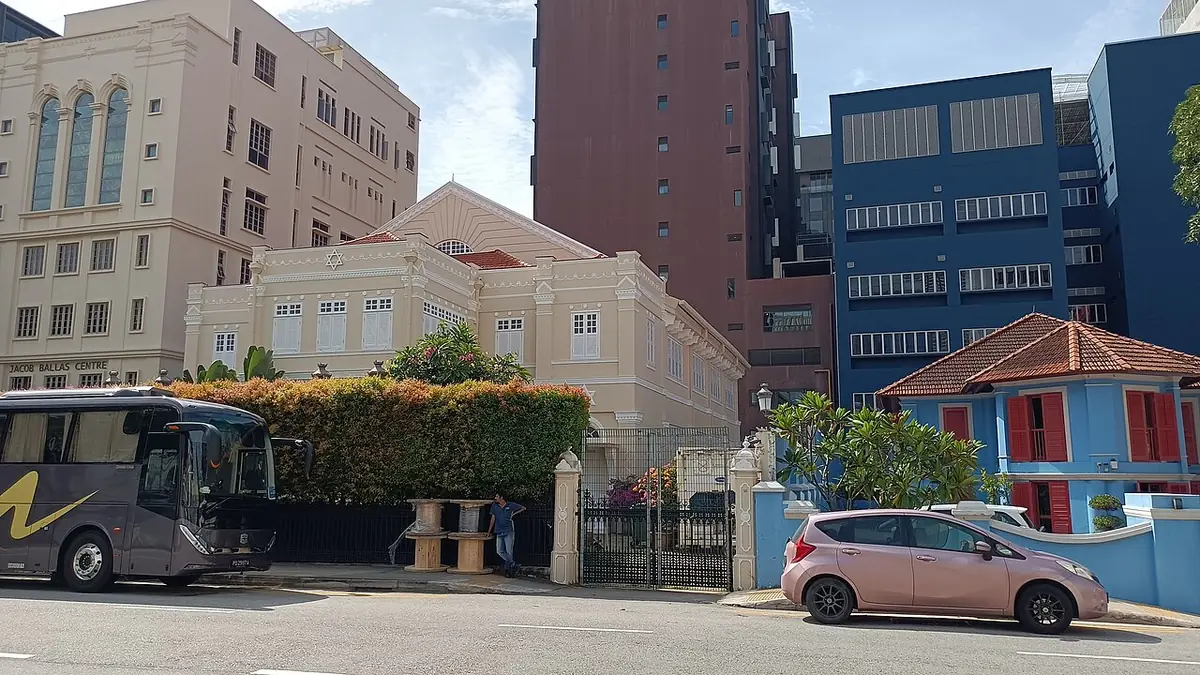
Old shophouses and new towers share this Singapore street — Photo: GoAheadFan95 · CC BY-SA 4.0 · Wikimedia Commons
To weigh these choices properly, it helps to set the reference points you are used to back home against the way things work in Singapore.
Buying property in Singapore is not something to improvise on purely emotional or aesthetic grounds. Your professional situation, your investment horizon and how mobile you expect to be decide which type of property you should look at first. Assessing your profile clearly will stop you tying up cash in an asset that does not suit your plans for the medium term.
The expatriate between career moves
In your case, buying a private apartment (private property) only makes sense if you are prepared to absorb the upfront transaction costs and a liquidity risk when you sell. Taxes such as the ABSD that apply to foreigners weigh heavily over such a short investment horizon. It is often wiser to weigh the rent you would otherwise pay against the cost of exiting the local property market before you sign anything with a lawyer.
The long-term resident
Your perspective changes radically, because you are investing in your main home while anchoring your family's future in the city-state. You benefit from the structural rise in Singapore land values over a decade or more. Even if the barriers to entry remain high for non-citizens, the holding period cushions the tax friction and turns the purchase into a solid wealth strategy.
The international wealth investor
You should look at condominiums in the central districts or close to the main transport lines to guarantee steady liquidity. Your absolute priority is the quality of the development's management and the scarcity of the surrounding land. Rental yields will need to be assessed with local tax in mind, along with the cost of delegated management if you live outside Singapore.
What fundamentally changes for a buyer arriving in Singapore from abroad?
This distinctive legal framework plays out differently depending on the neighbourhood where you decide to settle.
Carrying your home-country property habits into the Singapore context is the most frequent and most costly mistake newcomers make. The law, local taxation and market practice have almost nothing in common with what you may be used to back home. Here are the key friction points to take on board so you can steer your purchase without a false note.
From abroad
A market governed by borrower-protection laws and generous cooling-off periods, as in many countries back home.
Singapore
An ultra-fast transaction process, framed by deposits held in escrow and strict option clauses (the Option to Purchase).
You absolutely must have your financing and legal checks finalised before paying any deposit, because the commitments you make bind you financially straight away.
From abroad
Standardised purchase costs of around 7 to 8% on older property in many markets back home.
Singapore
Stamp duties and surcharges for foreigners (ABSD) that can substantially raise the overall cost of entry.
Your overall budget must not stop at the price shown on the listing; it has to include every tax due at signing, or you risk a critical cash shortfall.
From abroad
Building management that can be cumbersome back home, prone to unpaid charges and deadlock at owners' meetings.
Singapore
Condominiums (condos) run with formidable efficiency, with compulsory reserve funds and strict house rules.
Condominium charges are higher than you may be used to, but they guarantee a standard of upkeep for shared facilities and a cleanliness that are absolutely faultless.
From abroad
Ownership of the land and the building that is generally perpetual (conventional outright ownership).
Singapore
A mix of freehold properties (outright ownership) and 99-year leases (leasehold).
You must examine the remaining term of the lease with extreme care, because the discount on an apartment whose lease is nearing its end is an unavoidable mathematical reality.
How do you find your way among Singapore's different types of residential area?
Once you have targeted an area, the next step is to look closely at the hard figures behind the prices on the market.
Singapore is divided into distinct districts, each with its own identity, price range and daily rhythm. Choosing your area is not only about being close to the business district, but also about whether you want urban buzz or residential calm. Here are the main options open to you for anchoring your property plans.
The central districts (Core Central Region - CCR)
Constant urban bustle, immediate proximity to the financial centres and a high-end cultural scene.
Suits
Investors seeking maximum liquidity and senior executives who want to keep their daily commute to a minimum.
Trade-off
A price per square metre among the highest in the world, and floor areas that are often smaller for the same budget.
The city-fringe districts (Rest of Central Region - RCR)
A subtle balance between genuine neighbourhood life, local shops and quick access to the city centre by MRT.
Suits
Long-term residents and families looking for a practical setting without the steep premium of the city core.
Trade-off
Fiercer competition for good-quality properties and rising prices driven by demand from local buyers.
The outlying areas (Outside Central Region - OCR)
Quieter surroundings, large residential developments set among greenery and a high proportion of local residents.
Suits
Families with children looking for more generous living space and a more peaceful environment.
Trade-off
A longer daily commute to the business district and a resale that may be less smooth with international buyers.
What are the real price ranges for buying a property in Singapore?
Beyond the headline purchase price, the exact legal nature of the ownership deserves your closest attention.
Singapore's property market stands out for the complete transparency of the transactions recorded by the authorities, but the prices on show still need to be read methodically. There is no single price, because value depends closely on location, the age of the building and its land tenure. The figures below reflect the trends observed in the private apartment market.
SingaporeFor saleApartmentestimate
Median price / m²SGD 18,525Half the apartments sell below this
Median priceSGD 1.35mthe average is 14% higher — a few very large properties pull it up
Most common2 bedrooms34 % of listings
Average size90 m²
By number of bedrooms
Bedrooms
Share of market
Avg price
Price / m²
Avg size
1
22 %
SGD 1.05m
SGD 21,060 +8 %
50 m²
2most common
34 %
SGD 1.46m
SGD 19,500
75 m²
3
32 %
SGD 1.95m
SGD 18,525 −5 %
105 m²
4
12 %
SGD 2.51m
SGD 17,940best value / m²
140 m²
Each row is an average, compared against the area average of SGD 19,500 / m². These are indicative estimates of a typical local market, not a measured sample of live listings. Check current listings before relying on them.
Freehold or leasehold: which type of tenure really protects your investment?
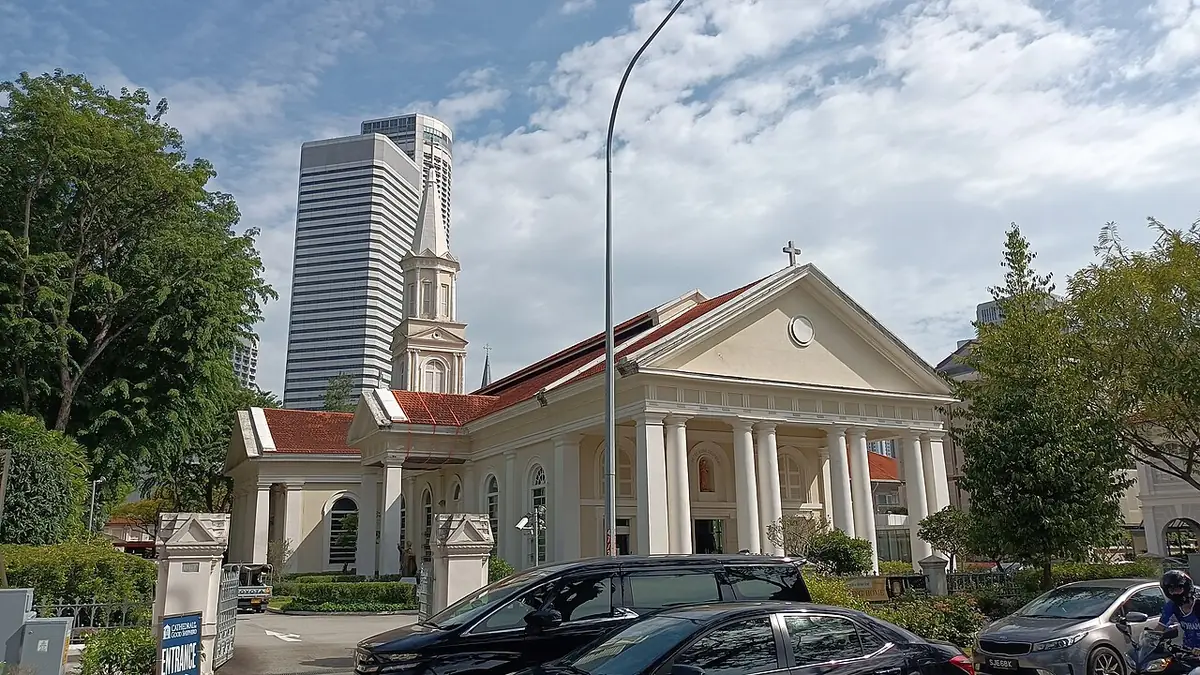
Heritage and modern Singapore side by side — Photo: GoAheadFan95 · CC BY-SA 4.0 · Wikimedia Commons
This care over the nature of the property goes hand in hand with an absolute need to master the timetable and the stages of the transaction.
Singapore's land system rests on a sharp distinction between properties held in perpetual outright ownership and those granted on long leases. This distinction directly shapes how your apartment's value holds up over the long term and how future buyers will see it when you sell. Assessing it avoids disappointment linked to the lease's value eroding over time.
Freehold properties
These properties give a perpetual right of ownership over the land and the building, with no time limit. They carry a substantial historic value premium on the market, because they reassure investors attached to the traditional idea of passing wealth down the generations.
What it changesYou pay for that security with a noticeably higher purchase price for the same features, as the scarcity of lease-free land in the city-state structurally sustains the price gap.
Properties on a 99-year lease (leasehold)
These state leases make up the great majority of Singapore's housing stock, whether public schemes (HDB) or many private condominiums. The property's value moves with the time left on the lease, with a discount that generally speeds up once the threshold of 50 years remaining is crossed.
What it changesYou get access to locations that are often more central and to modern condominium facilities at a lower headline cost, provided you build the end of the lease into your eventual resale strategy.
What are the legal traps and critical steps before you pay a deposit?
To orchestrate all of these steps calmly, it helps to picture each party's role in the timeline.
Singapore property law runs on strict contractual rules in which every signature binds the parties irrevocably. Unlike some European markets, where conditions precedent protect the buyer for a long time, the local system demands faultless preparation upfront. Understanding how the Option to Purchase (OTP) works is essential to protecting your money.
The initial assessment phase and the search for the right property through licensed agencies.
A careful check of your borrowing capacity with financial institutions and an exact calculation of the taxes that apply to your buyer profile.
A thorough viewing of the property and a review of the technical inspection reports and the minutes of the condominium's general meetings.
Negotiation of the financial terms and an in-principle approval from your bank to finance the deal.
Issue and signature of the Option to Purchase (OTP), together with payment of the initial deposit held in escrow.
Signature of the final sale deed and transfer of ownership through the lawyers acting for both parties.
How does the timetable of your property transaction actually unfold?
Seeing a property purchase through in Singapore requires the careful coordination of several professionals: licensed agents, specialist lawyers and bankers. Each one steps in at a specific moment to protect your legal and financial interests. The roadmap below sets out the stages you must follow.
The buyerFinancial review and approval of the overall budgetYou work out your net budget, including the price of the property, the legal fees and the government taxes that apply to non-residents or permanent residents.
The estate agentShortlisting properties and initial negotiationYour representative filters listings against your criteria and negotiates the terms of the sale with the seller or the seller's official agent.
The specialist lawyerLegal checks (title search)The lawyer makes sure there are no charges, mortgages or disputes attached to the property and checks that the title deed is in order with the land registry.
The buyer and the sellerSigning the Option to Purchase (OTP)You usually pay a 1% deposit to secure the property, then a further 4% when you exercise the option within the set period of 14 days.
The bankRelease of funds and completion of the loanThe lender transfers the required funds to the lawyer handling the transaction so the payment can be settled on completion day.
The specialist lawyerFinal registration of the titleThe final deed of sale is registered with the relevant Singapore authorities to make your status as legal owner official.
Apartment or house: which property choice really makes sense in Singapore?
Once this fundamental choice between vertical city living and owning land is settled, the next step is to look in detail at the real budget involved in buying an apartment in Singapore.
In Singapore, the fundamental divide in housing lies between the private high-rise development, universally known as a condo, and the house with its own land, known as landed property. The distinction goes far beyond looks or surface details: it shapes your entire wealth strategy and your daily life. The condominium market dominates the urban landscape for expatriates and investors because the rules are far more accessible, liquidity is higher and the built-in facilities rival those of a resort hotel. Condos offer direct access to pools, gyms, tennis courts and round-the-clock security, sharing heavy maintenance and technical burdens among dozens or even hundreds of owners. In a dense city-state where every square metre is optimised, the condo is the cornerstone of modern residential life, especially along the mass rapid transit lines and in the busiest central districts.
Houses, by contrast, whether terraced, semi-detached or detached bungalows, form an ultra-exclusive market that is fiercely protected and structurally limited. Buying a property with land in Singapore comes with colossal barriers to entry, reserved almost exclusively for Singapore citizens or, under exceptional and extremely rare government approvals, for highly qualified permanent residents. Non-resident foreigners, and residents without that civic passport, face an almost total ban on acquiring bare land, with the notable exception of a few rare enclaves such as Sentosa Cove. This absolute scarcity of land gives landed properties an invaluable safe-haven value, insulated from global economic shocks and driven by insatiable local demand from people who want to own a tangible, lasting piece of the island.
Financially, owning a condominium apartment means recurring monthly charges, the well-known maintenance fees, which rise with the age of the development, the complexity of the shared facilities and the size of the condominium's reserve fund. These fees come on top of property taxes and government levies, creating a permanent holding cost that you must factor carefully into your rental return or your personal cost of ownership. In return, reselling a condo is noticeably smoother and faster thanks to a far larger pool of buyers, including local investors, permanent residents and skilled expatriates allowed to invest in private non-landed housing. Liquidity thus becomes the great competitive advantage of the high-rise segment, whereas a house demands phenomenal starting capital, a generational investment outlook and full acceptance of limited liquidity on the resale market.
The final choice between these two property worlds therefore depends directly on your exact legal status, your investment horizon and your tolerance of liquidity risk. If you are an expatriate or resident looking for flexibility, ready-made facilities and a highly rated investment at the heart of the urban buzz, a condominium apartment is the obvious, undisputed choice. If you hold Singapore citizenship, have very deep financial resources and want to anchor your family dynasty for several decades in a private haven, buying a house with land is the absolute pinnacle of local wealth building. Either way, a rigorous legal review beforehand with a specialist adviser will spare you any fatal regulatory setback.
What overall budget do you really need to buy an apartment in Singapore?
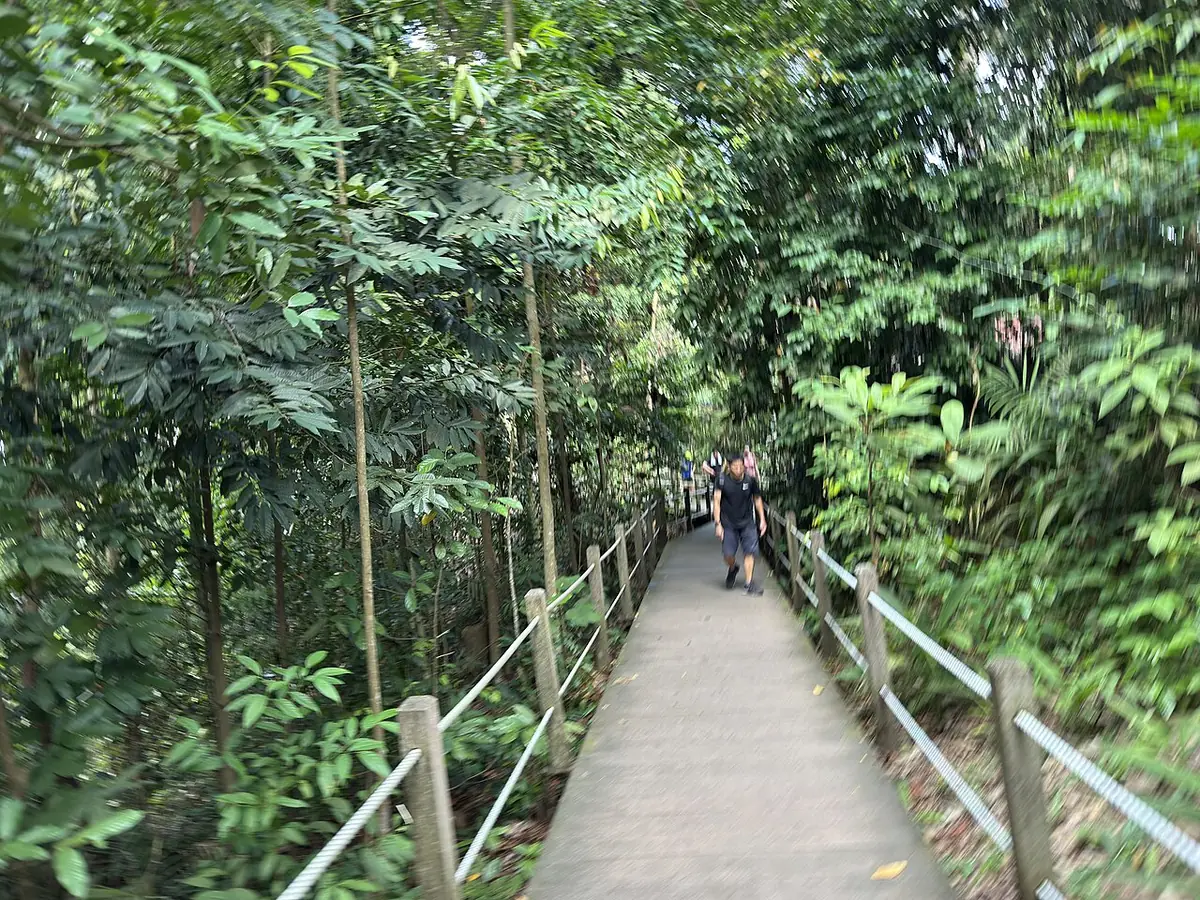
A quiet forest walk in Bukit Timah Nature Reserve — Photo: LN9267 · CC BY-SA 4.0 · Wikimedia Commons
Once the overall budget is under control and set aside, it is time to look at how a typical week actually unfolds, to judge the real quality of life this investment offers.
Buying an apartment in Singapore never comes down to the headline price quoted by the agent or the developer. The true cost of entry includes a complex pyramid of strict government taxes, punitive stamp duties for non-local buyers and compulsory legal fees. Anticipating these costs from day one is the only way to avoid a financing gap at the critical moment of signing with your lawyer. The monetary and tax authorities oversee every transaction with formidable precision, imposing minimum down payments and tight borrowing caps through the Total Debt Servicing Ratio. Ignoring these financial parameters exposes the buyer to severe financial penalties or to the outright collapse of the sale agreement.
Budget items when buying a private apartment
Budget item
Indicative amount or rate
Impact on your cash flow
Headline purchase price of the property
Varies by district and floor area
The main foundation of the initial investment
Additional Buyer's Stamp Duty (ABSD)
From 0% for citizens up to 60% for foreigners
The major deterrent tax weighing on non-nationals
Buyer's Stamp Duty (BSD)
Progressive scale from 1% to 6% depending on value
Standard stamp duty required on every transaction
Legal fees and conveyancing charges
Between SGD 2,500 and SGD 6,000 on average
Payment for legal advice and land registry formalities
ABSD rates are revised frequently by the Singapore government to cool an overheating property market.
Recurring charges and annual holding costs
Type of charge
Frequency and estimated amount
What it means for the owner
Condominium and upkeep charges (maintenance fees)
SGD 300 to SGD 1,200 a month depending on the development
Pays for security, cleaning and the upkeep of facilities
Annual property tax
Calculated on the annual rental value (AV)
Tax collected by the Inland Revenue Authority of Singapore
Comprehensive home insurance
SGD 400 to SGD 1,200 a year
Essential cover against water damage and other claims
Luxury developments with extensive concierge services charge maintenance fees well above the national average.
Healthcare, schools and transport: what does an ordinary Tuesday actually look like living here?
However appealing this everyday ease may be, it should not hide the less visible aspects that sales brochures consistently fail to mention.
Getting to know a residential neighbourhood in Singapore is not just a matter of studying rental yield charts or glossy architectural brochures. The real test lies in the daily experience of getting around, of access to first-rate healthcare and of being close to well-regarded schools. The public transport network, built around the Mass Rapid Transit, redefines the very idea of distance with legendary punctuality and spotless cleanliness. Local and expatriate families organise their week around this remarkably smooth infrastructure, where every minute saved on the commute feeds directly into the balance between work and personal life. Stepping into the rhythm of an ordinary Tuesday lets you gauge straight away whether your future location is the right one.
07:30Local MRT station and the daily commuteThe morning journey to the Central Business District takes place in highly efficient air-conditioned trains where mobile coverage never drops. With trains running less than two minutes apart, rush-hour timetables cause no stress at all.
09:00Neighbourhood health centre and general clinicMedical facilities, whether public polyclinics or private groups such as Raffles Medical, guarantee prompt care and immediate access to internationally renowned specialists.
12:30Traditional hawker centre for lunchA genuine social and culinary institution, the hawker centre offers unrivalled culinary variety at very modest prices, licensed and inspected by the National Environment Agency for impeccable hygiene.
15:30International or local schoolLiving close to the best international schools or to top public institutions secures children's education while avoiding long daily car journeys at the busiest times of day.
18:30FairPrice Finest or Cold Storage supermarketShopping for fresh local produce and high-end Western imports is effortless in modern retail spaces built right at the foot of large residential estates or MRT stations.
20:30Green spaces and connected parksThe evening ends with a run or a safe night-time walk along the Park Connector Network, lit green corridors that link all of the city-state's urban parks in complete calm.
What sales brochures and estate agents leave out
These regulatory and technical subtleties explain the disappointments buyers most often express six months after getting the keys.
Behind the apparent perfection of 3D renderings and the immaculate polish of developers' showrooms lie technical, regulatory and climatic realities that every well-informed buyer must anticipate. Singapore's property market follows strict codes, and standard sale contracts contain clauses that protect sellers and demand a careful, critical reading. Constraints linked to tropical humidity, neighbourly easements and future planning projects scheduled by the Urban Redevelopment Authority can radically change your quality of life or the resale value of your property. Knowing about these things that never appear in ordinary listings is your best shield against disappointment after the purchase.
Sun orientation and harsh tropical heat
A west-facing apartment takes direct heat in the afternoon, which sends air-conditioning bills soaring and makes the balcony unusable for several hours a day.
99-year land leases and the discount over time
A large part of the private housing stock sits on 99-year leases. Once a building passes 30 or 40 years of age, the property's value falls away sharply and access to bank loans becomes complicated.
Future construction and the URA master plan
The idyllic calm of an open view can be wiped out overnight by a public or private building site approved by the Urban Redevelopment Authority as part of the island's continual development.
The strict rules of condominium management (MCST)
The Management Corporation Strata Title imposes extremely fussy house rules on pets, changes to the facade, hanging out washing and the use of common areas.
Restrictions on short-term letting
Singapore law expressly bans Airbnb-style lets of less than three months in private housing, ruling out any flexible income strategy through holiday rental platforms.
The major strategic mistakes you only discover six months after moving in
Faced with these potential risks and disappointments, it is essential to ask whether this market really suits your profile.
Looked likeAn excellent deal in an up-and-coming neighbourhood, with an immediate capital gain guaranteed, according to the agent.
Turned outAn out-of-the-way area poorly served by the MRT at rush hour, leading to exhausting daily commutes and a chronic inability to resell or relet at the hoped-for price.
Would have caught itInsisting on an independent analysis of historic transaction volumes and testing the rush-hour commute yourself before signing the Option to Purchase.
Looked likeA spacious apartment with a modern open-plan layout, perfect for entertaining and enjoying an unbeatable panoramic view over the city's rooftops.
Turned outNo built-in storage at all, a tiny closed kitchen with no ventilation and a neighbouring block built right up to the plot boundary, looking straight in.
Would have caught itVisiting the property at different times of day to assess the natural light, inspecting where the service ducts run and checking for built-in wardrobes.
Looked likeModerate condominium charges giving unlimited access to an Olympic-size pool and superb tennis courts in an upmarket development.
Turned outA drained condominium reserve fund that triggered a massive one-off levy to pay for urgent facade and waterproofing works.
Would have caught itAlways reading the minutes of the last three MCST general meetings to identify ongoing disputes and future works already voted through.
Looked likeA bank financing package stretched to the very limit of your borrowing capacity to buy a bigger property than originally planned.
Turned outTotal exposure to the slightest rise in SORA interbank interest rates, putting constant psychological pressure on the monthly family budget.
Would have caught itKeeping a safety margin of at least thirty per cent below your maximum permitted borrowing limit and modelling an aggressive rise in benchmark rates.
Who should definitely not buy an apartment in Singapore in the current climate?
Once these fundamental warning signs have been examined, the time has come to make your decision with a clear head.
Buying property in Singapore is often presented as the ultimate prize of settling in and building wealth. Yet for many profiles, committing to an apartment in the city-state is a major financial and practical misstep. Between the heavy taxes on foreign purchases, a rigid credit market and how quickly careers move across the Asia-Pacific region, renting offers a life-saving flexibility that bricks and mortar can never match. Knowing which profiles should not buy helps defuse the social pressure that pushes people blindly into ownership at any cost.
The expatriate on a temporary assignment of less than five years
→Sticking with renting and putting their capital into liquid, global financial investments.
The upfront transaction costs, combined with the prohibitive Additional Buyer's Stamp Duty rate for non-citizens, cannot be recouped over such a short period without risking a net capital loss on resale.
The buy-to-let investor looking for a high gross yield straight away
→Turning to other Asian or global property markets with more favourable price-to-rent ratios.
Gross rental yields in Singapore have historically sat in a low range, often between 2.5% and 3.5%, which does not cover today's borrowing costs or local taxes.
The young professional whose career and personal path are uncertain
→Renting a furnished apartment right next to their current workplace to keep their freedom of movement.
Singapore property demands long-term roots and a geographical stability that the volatility of international careers and transfers within the region cannot guarantee.
The buyer with a down payment just large enough to cover the legal minimum
→Focusing their savings effort on building up a cash safety cushion before considering any purchase at all.
Without a cash reserve, the first-time buyer is exposed to the slightest professional or medical setback, heading straight for a forced sale at a low price in a crisis.
So, are you really ready to take the step of buying property in Singapore?
At the end of this rigorous analysis, the decision whether or not to buy an apartment in Singapore is no longer a matter of intuition or impulse, but of a mathematical and personal equation you now understand fully. The city-state offers one of the safest, most stable and most transparent legal environments on the planet for securing property wealth, but that excellence comes at a price only long-term players can fully bear. If you have the career visibility, the long-term horizon and the financial scale needed to absorb the taxes and charges without flinching, buying a private property is a cornerstone of wealth of remarkable solidity.
Refusing to give in to the social pressure to buy at any cost, however, is often the mark of the best investor. If your plans in Singapore have grey areas, if your time here is limited to a few years, or if your savings would be stretched by the colossal entry costs, renting remains a strategically superior and extremely comfortable option. The flexibility it gives you in such a dynamic city is well worth the rent you pay, and it keeps you from being trapped in an illiquid asset in a market hemmed in by numerous state safeguards.
Your next step, then, is not to trawl the online listing portals frantically, but to review your tax position precisely with an independent adviser who specialises in Singapore. Work out your real borrowing capacity with every stamp duty included, model the impact of a rise in interest rates, and view properties at rush hour to test the reality on the ground against the promises of the brochures. Singapore's property market forgives neither improvisation nor haste, but it rewards generously those who approach it with method, realism and cool-headed clarity.
Related questions
Can a foreigner buy any type of apartment in Singapore?
Non-resident foreigners can freely buy apartments in private condominiums without special approval from the Singapore Land Authority. Access to HDB flats (public housing), however, is strictly closed to non-citizens, and buying a house with land (landed property) is subject to severe restrictions that are almost impossible for non-nationals to overcome.
Exactly how much is the Additional Buyer's Stamp Duty for a foreign buyer?
The Additional Buyer's Stamp Duty (ABSD) is set at a flat rate of sixty per cent for foreign nationals buying residential property in Singapore, whether it is their first property or not. This punitive levy is a deliberate government choice, designed to temper international demand and stabilise the market so that housing stays within reach of local citizens.
What is meant by a 99-year lease on an apartment in Singapore?
Most land in Singapore belongs to the state and is granted to property developers on long leases of 99 years. Once the remaining term of the lease falls below sixty years, the value of the property usually suffers a marked discount on the resale market, and securing a bank loan from lenders becomes more complicated.
What are the standard legal fees and stamp duties, leaving aside the foreigner surcharge?
On top of any ABSD surcharge, every buyer must pay the Buyer's Stamp Duty (BSD), a progressive stamp duty ranging from one per cent to six per cent depending on the value band of the property. Legal fees for drawing up the conveyancing documents add a further few thousand Singapore dollars.
Can I let my condominium apartment on Airbnb in Singapore?
Singapore's legislation is extremely strict about short-term letting in private housing. Any let of less than three consecutive months is plainly illegal in condominiums, unless the whole development obtains specific approval from the authorities, which remains extremely rare in practice.
How do condominium charges, or maintenance fees, work?
Maintenance fees are paid quarterly or monthly by owners to the building's Management Corporation Strata Title. They fund round-the-clock security, the upkeep of shared facilities such as the pool and the gym, and the cleaning of common areas, and they vary according to each owner's share of the floor area.
What average gross rental yield can you expect in Singapore?
The gross rental yield on private apartments in Singapore generally sits between two point five per cent and three point five per cent a year. This moderate level is explained by high purchase prices, sustained by the scarcity of land, combined with a rental market kept firmly in check by supply and demand.
What is the Total Debt Servicing Ratio and how does it affect my borrowing?
The Total Debt Servicing Ratio (TDSR) is a prudential limit set by the Monetary Authority of Singapore that caps a borrower's total monthly debt repayments at a maximum of fifty-five per cent of their gross monthly income. The rule covers all outstanding credit, including home loans and car loans.
Should you favour buying in the city centre (CCR) or in the suburbs (OCR)?
The Core Central Region (CCR) offers sought-after centrality and prestige but a lower gross rental yield, while the Outside Central Region (OCR) offers more affordable prices per square metre, more generous floor areas and strong rental demand from local families drawn by neighbourhood schools.
What guarantees do developers give on a new apartment bought off-plan?
For properties bought before completion (off-plan purchases), developers are required by law to provide a warranty period against poor workmanship and construction defects (the defects liability period), which as standard runs for twelve months after the official handover of the keys.
Property review of ting
No ting properties in Singapore yet
Be the first — share it on ting and it shows up right here.