Buying a house in Singapore is a major long-term financial commitment, shaped by a demanding legal framework and an absolute scarcity of land. This guide sets out the realities of the local market, from lease types to the finer points of the residential neighbourhoods, so you can carry your project through with your eyes open.
Get the app
What nobody tells you.
Real prices, hidden costs and the traps to check before you commit.
What you really get when you buy a house in Singapore
Scroll
What you really get when you buy a house in Singapore
Buying a house in Singapore is a major long-term financial commitment, shaped by a demanding legal framework and an absolute scarcity of land. This guide sets out the realities of the local market, from lease types to the finer points of the residential neighbourhoods, so you can carry your project through with your eyes open.
Written by the ting.ad editorial team ·
Singapore in Street View: drag to look around.
Before considering a purchase, it is worth checking whether your own daily life fits the rhythms of Singapore.
Buying a residential property in the city-state does not follow the usual European or Western standards. Between the strict restrictions placed on foreigners and the absolute scarcity of land, every square metre you own is a compromise between wealth status and regulatory reality. This is not simply about settling into a tropical green haven, but about accepting a legal framework in which the State keeps permanent control over the land. Understanding this fundamental duality avoids disappointment when the deeds are signed, and redefines what long-term property ownership actually means.
The promise of a private enclave at the heart of an ultra-dense, green metropolisvsThe reality of an often limited land lease, or drastic restrictions on land
Almost the entire territory is subject to 99-year leases managed by the public authority, which changes how a property loses value over time compared with the perpetual freehold ownership common back home.
International prestige and the rock-solid stability of a top-tier financial marketvsA prohibitive entry cost, made heavier by massive additional taxes for non-residents
Buying property as a foreigner means punitive transfer duties that absorb a significant share of your initial capital, with no guarantee of rapid capital gains in the short term.
Access to an exceptional, safe and impeccably organised family lifestylevsThe obligation to follow condominium or neighbourhood rules enforced with total administrative rigour
The calm of upmarket residential neighbourhoods comes at the price of a tacit but firm acceptance of house rules, compulsory landscaping upkeep and social scrutiny.
Does the Singapore way of life fit your day-to-day?
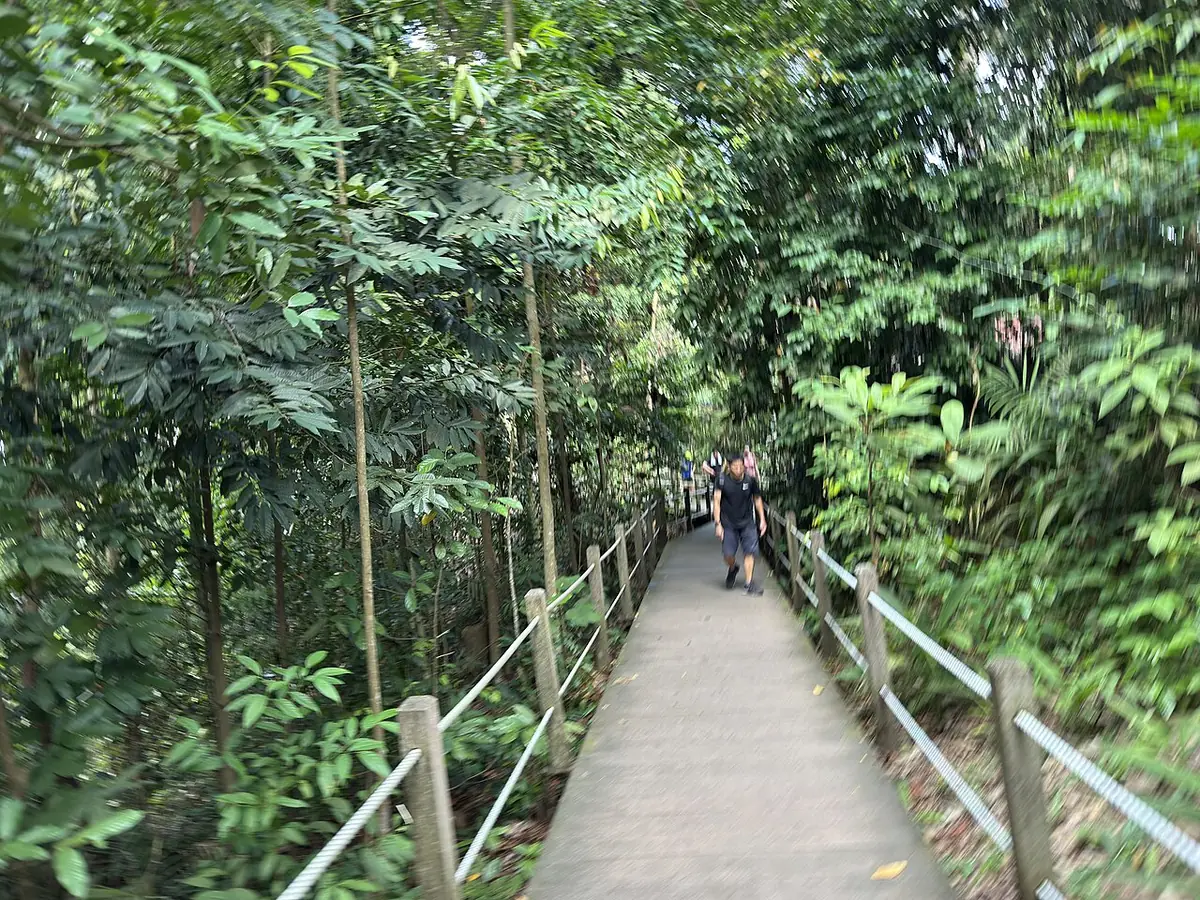
A quiet forest walk in Bukit Timah Nature Reserve — Photo: LN9267 · CC BY-SA 4.0 · Wikimedia Commons
Moving from the way of life you know back home to island life in Singapore upends your everyday reference points.
Singapore's urban space runs like clockwork in the tropics, where smooth transport and the ever-present greenery transform daily life. Choosing a house rather than an apartment in a condominium (condo) radically changes your relationship with the city, with running a home and with getting around. Every type of buyer needs to weigh their habits against the island's climatic and logistical constraints.
The family looking for space
Residential neighbourhoods of terraced or single-storey houses offer generous floor areas that are now impossible to find in the towers of the centre. You enjoy a private garden and immediate proximity to the best English-speaking or French schools. On the other hand, managing daily school and work runs at rush hour takes careful organisation, as houses are often some way from the Central Business District.
The hyperactive professional
Choosing a house means giving up the built-in concierge and shared security of the large condo-style residential complexes. You have to hand over the upkeep of the garden, air conditioning and pool to outside contractors, which takes a fair amount of management time. This choice is therefore best suited to people who live here long term and want to put down real roots.
The buyer who wants their own land
This is the clinching argument for a house in Singapore: escaping the noise of vertical condominiums and having your own direct access from the street. However, the island's density means plots are often narrow and overlooked. Privacy has to be created through deliberate design choices, such as planted boundary walls or inner courtyards.
Living here when you arrive from abroad: what changes radically
Once these reference points are reset, choosing where to live within the city-state becomes the top priority.
The sense of dislocation lies not only in the tropical heat or the futuristic skyline, but in the unspoken social contract that governs daily life. The habits formed in the system you know back home, whether around tenant protection, local taxation or dealings with the authorities, are shattered here by a pragmatic and ultra-efficient liberalism.
From abroad
Strong legal protection for tenants and owners back home
Singapore
Absolute contractual pragmatism and the primacy of lease clauses in Singapore
Disputes are settled quickly through strict contractual means, without the lengthy court proceedings common in Europe. Every delay or breach is penalised immediately.
From abroad
Progressive income tax and moderate property tax
Singapore
Very low taxes on income but punitive registration duties (ABSD)
The tax burden shifts from annual upkeep to the initial purchase, heavily penalising foreign buyers who are not permanent residents.
From abroad
Informal personal networks and centralised public services
Singapore
Hyper-digitalised services and complete administrative traceability
Every property step, from the history of the title to payments, goes through secure and highly reliable digital platforms.
From abroad
Open, historic public spaces made for strolling on foot
Singapore
Planned, spotless, air-conditioned and strictly zoned urban design
Walking outdoors often happens under shady canopies or covered walkways to escape the humidity, which changes how you perceive distances.
Which residential neighbourhood to target for your future house?
These geographical distinctions show up immediately in the prices charged on the market.
Singapore is divided into distinct districts (known by their postal codes or as CCR, RCR and OCR regions) that dictate not only prices per square metre but also the kind of neighbourhood you live in. Between historic colonial enclaves and green suburban areas, each area has its own identity and its own logistical trade-offs.
District 10 (Tanglin, Holland Village, Bukit Timah)
Complete calm, a tropical canopy atmosphere and a concentration of leading international schools.
Suits
Wealthy families looking for prestige, greenery and immediate proximity to the Botanic Gardens.
Trade-off
Purchase prices among the highest on the planet and a heavy reliance on cars or taxis.
District 15 (East Coast, Joo Chiat, Katong)
A relaxed seaside atmosphere, a mix of historic Peranakan architecture and lively neighbourhood life.
Suits
Those who enjoy being near the sea, trendy cafés and quick access to Changi Airport.
Trade-off
Higher urban density and potential noise from nearby flight paths and main roads.
District 19 & 26 (Serangoon, Upper Thomson)
A more residential, authentic and down-to-earth pace of life, away from the expat bubbles of the centre.
Suits
Buyers looking for more space for their budget and a more local way of life.
Trade-off
A significant distance from the Central Business District and longer journey times at rush hour.
What does buying a house here really cost?
Beyond the raw figures, the exact legal nature of what you own deserves very close attention.
Singapore's property market is marked by complete transparency, with transactions recorded by the land authority (Singapore Land Authority), but asking prices tell only part of the financial story. Regulatory taxes and additional costs change the budget equation substantially for foreign buyers.
SingaporeFor saleHouseestimate
Median price / m²SGD 15,190Half the apartments sell below this
Median priceSGD 2.52mthe average is 14% higher — a few very large properties pull it up
Most common2 bedrooms44 % of listings
Average size158 m²
By number of bedrooms
Bedrooms
Share of market
Avg price
Price / m²
Avg size
2most common
44 %
SGD 2.1m
SGD 15,990
131 m²
3
41 %
SGD 2.79m
SGD 15,190 −5 %
184 m²
4
15 %
SGD 3.6m
SGD 14,711best value / m²
245 m²
Each row is an average, compared against the area average of SGD 15,990 / m². These are indicative estimates of a typical local market, not a measured sample of live listings. Check current listings before relying on them.
What you can actually own: freehold versus leasehold
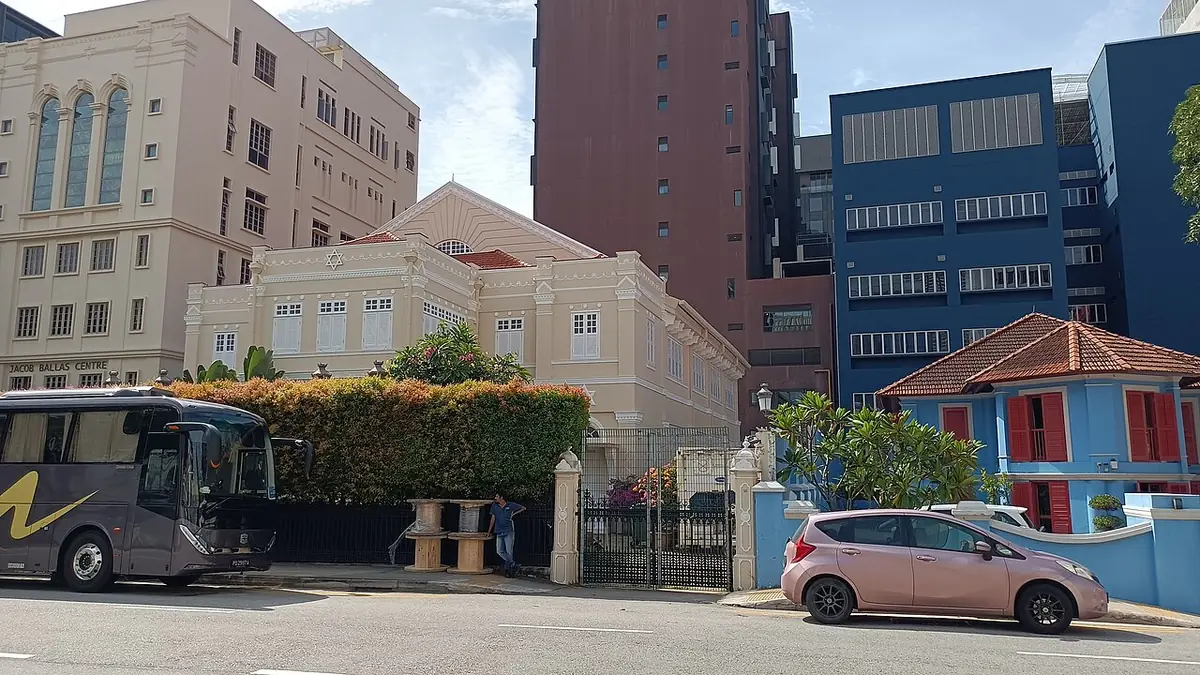
Old shophouses and new towers share this Singapore street — Photo: GoAheadFan95 · CC BY-SA 4.0 · Wikimedia Commons
Once the property you want has been identified and checked, the purchase process follows a very strict procedural sequence.
The question of who owns the land is the classic trap for the novice investor. Unlike many markets abroad where freehold ownership is the historic norm, Singapore releases its land sparingly, through a careful balance between long-term State leases and freehold plots.
Freehold ownership (Freehold / 999 years)
Freehold properties, or those with 999-year leases, guarantee a lasting transfer of wealth with no loss of value as time runs out. They are an absolute safe haven within the city-state, especially sought after by wealthy local and international families keen to secure an unquestionable asset across generations.
What it changesThese properties always sell at a significant price premium, reflecting how extremely rare such land is on a small island.
The 99-year lease (Leasehold)
The vast majority of residential land released by the State is sold as 99-year leases. As time passes, the property's value declines in a predictable, mathematical way, especially once fewer than 40 or 50 years remain, because renewal of the lease by the authorities is neither automatic nor free.
What it changesIt is essential to check exactly how many years remain on the lease before making any offer, so you do not see your capital drain away in the medium term.
The legal rule to understand before paying any deposit
To run this timeline without a hitch, it helps to map out the role of each party involved.
Property transactions in Singapore rest on a contractual mechanism formalised by the Option to Purchase (OTP). This unilateral legal document binds the seller as soon as it is signed, in return for a deposit held in escrow, and leaves little room for last-minute hesitation.
Viewing the property and verbally agreeing the net sale price.
The seller issues the Option to Purchase (OTP) in exchange for a deposit usually set at 1% of the purchase price.
A statutory option period (usually 14 days) during which the buyer carries out legal checks and arranges financing.
The OTP is exercised by paying a further deposit (bringing the total to 5% or 10%) and signing the final agreement.
The transaction is officially registered with the Singapore Land Authority and the applicable taxes are calculated.
Full completion of the sale and handover of the keys within a standard period of 8 to 12 weeks.
How a transaction works, step by step
In short, a successful property move to Singapore takes method, financial foresight and careful respect for local rules.
Buying property in Singapore leaves no room for improvisation and involves professionals with strictly defined roles. From the licensed agent to the conveyancing lawyer, each party secures one link in the chain up to the handover of the keys.
The buyerChecking eligibility upfront (SDA / SLA)Formal verification of purchase rights for foreigners, including obtaining the necessary approvals from the Land Dealings Approval Department where required.
The licensed estate agentNegotiating and drafting the OTPUsing the industry's standard forms to secure the conditions precedent and set the payment schedule.
The mortgage brokerArranging the mortgageObtaining an In-Principle Approval (IPA) from local banks to confirm borrowing capacity in Singapore dollars.
The specialist lawyer (Conveyancing Lawyer)Title checks and escrowCareful inspection of any charges and easements on the property, and secure handling of funds through a dedicated escrow account.
The tax authority (IRAS)Collecting transfer duties and taxesCalculation and automated payment of the Buyer's Stamp Duty (BSD) and any additional duty (ABSD) within strict legal deadlines.
The building surveyorFinal technical inspectionChecking the structural condition, the air-conditioning systems and waterproofing, all of which are put to a severe test by the tropical climate.
House or apartment: choosing between landed property and a tower with a pool in Singapore
Buying a house, which Singaporeans call landed property, or opting for an apartment in a condominium, commonly known as a condo, commits not only your capital but also your everyday way of life. In Singapore, land is extraordinarily scarce, which gives houses with land a long-term value and a structural rarity almost impossible to find in dense urban areas. Terraced houses, semi-detached houses and bungalows come with freehold rights or very long leases, but access to them is strictly regulated and reserved overwhelmingly for citizens or well-established permanent residents. For an expat buyer or a non-resident investor, the market points almost exclusively to condominium apartments, with built-in facilities such as a pool, gym and 24-hour security. So you need to decide whether you want the managed, secure vertical living of a central condo or the independence of your own plot of land in a residential suburb.
The choice between these two types entirely reshapes your monthly charges and your long-term maintenance. In a condominium apartment, the maintenance charges, known as maintenance fees, cover upkeep of the common areas, sports facilities and security guards, spreading the technical burden across all owners. However, these charges rise steadily as the building ages, you never get them back, and they are subject to the sometimes complex decisions of the condominium's management council. Owning a house, by contrast, means you alone bear the cost of any work on the roof, outdoor plumbing or waterproofing, but you keep complete freedom over the architecture, interior alterations and landscaping. That autonomy comes with dealing directly with the tropical climate, where monsoon rains and constant humidity demand unrelenting vigilance to protect the building from erosion and leaks.
In terms of location and how you fit into the city, the gap between these two options is just as wide. Apartments are heavily concentrated along the Mass Rapid Transit lines, the MRT stations, and in central districts such as Orchard, River Valley or the Central Business District, making it possible to do without a car altogether. That central location saves working people a great deal of time every day, at the cost of a smaller living space and unavoidable proximity to hundreds of neighbours. Houses, for their part, are tucked away in quieter, greener residential neighbourhoods, often in districts 10, 11 and 15 or in the north-east of the island, far from the bustle of the glass towers. Living in a landed house means accepting a longer journey to the business district, often making buses or car ownership essential, and the cost of buying and registering a car here is among the highest in the world.
Finally, liquidity and resale dynamics differ profoundly depending on the property you choose for your base in Singapore. Apartments are the most liquid segment of the market, attracting a much wider pool of local and international buyers thanks to more varied entry prices and fewer regulatory constraints. They rent and resell with well-established statistical predictability, even if competition from new developments delivered continuously can sometimes push prices down. Houses, because their stock is finite and the State can almost never create new plots for individual homes, act as unusually powerful safe-haven assets, able to ride out economic cycles with remarkable resilience. Your final decision between these two worlds will therefore come down to a trade-off between immediate liquidity and holding on to an absolutely scarce piece of land.
What budget should you really plan for buying and living in a property in Singapore?
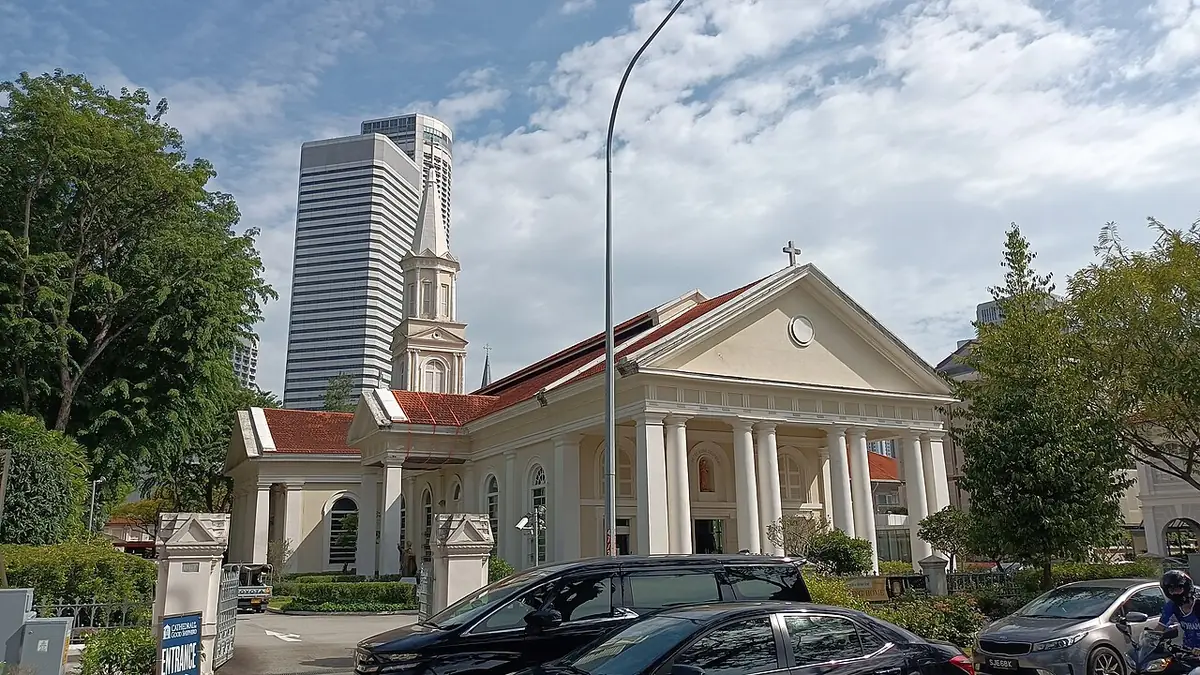
Heritage and modern Singapore side by side — Photo: GoAheadFan95 · CC BY-SA 4.0 · Wikimedia Commons
Buying property in Singapore is about far more than the headline price on the listing. You must factor in punitive purchase taxes for non-residents, as well as the high running and structural costs that characterise this highly developed city-state. The tables below set out, first, the unavoidable upfront costs of the transaction and, second, the recurring monthly expenses needed to maintain your lifestyle in a quality home, whether a central apartment or a detached house.
Upfront costs and purchase taxes when buying property in Singapore
Cost item
Indicative rate or amount
Budget impact and comments
Additional Buyer's Stamp Duty (ABSD)
Up to 60% for foreigners
A deterrent government tax on non-citizen buyers that radically changes the long-term return calculation.
Buyer's Stamp Duty (BSD)
Progressive scale up to 6%
Stamp duty payable on all property transactions, calculated in bands on the purchase price or market value.
Legal and conveyancing fees
Between SGD 2,500 and SGD 6,000
Fees for the lawyers who check the title, draft the contracts and secure the funds held in escrow.
Estate agency commission
1% to 2% of the sale price
Standard fees paid to the agent representing the buyer, or shared according to local market practice, for the negotiation.
These purchase costs come on top of the property price straight away and must be paid from your own funds, as banks generally do not include government taxes in the mortgage loan.
Monthly running budget and regular costs for a resident household
Type of cost
Estimated range in SGD
Details of services and seasonal variations
Condominium fees (Maintenance)
SGD 300 to SGD 1,200 per month
Varies with the size of the condo and whether it has tennis courts, a large pool and round-the-clock concierge services.
Electricity, water and air-conditioning bills
SGD 250 to SGD 700 per month
A very high item because air conditioners run almost continuously, which is essential to cope with the equatorial humidity.
Property tax
Progressive scale based on rental value
An annual tax based on the annual rental value estimated by the Inland Revenue Authority of Singapore, heavier for homes that are not owner-occupied.
Home insurance and technical maintenance
SGD 50 to SGD 200 per month
Essential cover against the water damage common in towers, plus preventive maintenance of electrical installations.
The cost of running a home in Singapore requires careful planning, as services and energy are priced to the high standards of a developed, high-value economy.
Healthcare, international schools and transport: what daily life around your home looks like
Settling long term into a home in Singapore means plugging into a network of infrastructure that is formidably efficient but strictly planned. From the morning commute on the automated metro to specialist medical appointments and the children's schooling at international institutions, every moment of the day is calibrated to keep the city flowing smoothly. This ordinary Tuesday shows in concrete terms the physical and time distance between where you live and the essential amenities that structure residents' lives on the island.
07:15MRT station or residence exitAn early start to beat the rush hour. The public transport network is remarkably punctual, with air-conditioned trains every two minutes.
08:00International school campusDropping the children at one of the schools offering the International Baccalaureate or European and North American national curricula.
09:30Raffles Place or Marina Bay business districtArriving at the office after a smooth journey. The links between residential areas and business hubs work seamlessly thanks to the dense rail network.
13:00Neighbourhood shopping centre or Hawker CentreLunch break at a popular hawker food hall or a modern food court at the foot of an apartment block, offering a culinary variety unique in the world.
17:30Medical clinic or polyclinicA routine consultation or check-up within a private or public healthcare system recognised worldwide for its technological excellence and efficiency.
19:00FairPrice Finest or Cold Storage supermarketBuying fresh produce imported from around the world for dinner, made easy by very long opening hours and constant product availability.
20:30Main residenceBack to the calm of your secure home, enjoying the air conditioning and the complete absence of excessive city noise thanks to thorough soundproofing.
What sales brochures and estate agents will never tell you about property in Singapore
Behind the developers' superb 3D renderings and the agents' flawless smiles lie technical, regulatory and climatic realities that are often discovered only after the sale has been signed. Singapore's property market follows strict rules dictated by State urban planning and the island's tropical conditions. Knowing these unspoken points will spare you major financial setbacks and unpleasant surprises when you move into your new home.
Sun orientation and intense tropical heat
An apartment facing due west takes direct afternoon sun, turning the living room into a furnace and sending the electricity bill for continuous air conditioning soaring. Those in the know hunt for north-south orientations to enjoy the natural breeze without suffering the equatorial heat.
Long leases and the depreciation of 99-year leasehold
Much of the land in Singapore belongs to the State and is held under 99-year leases. Once the remaining lease falls below 60 years, getting a bank loan becomes complicated and resale becomes much harder, with the property losing value as the end of the term approaches.
Noise from constant construction work
Because of the city-state's relentless urban renewal, an empty plot next to your future home can turn into a skyscraper construction site overnight, bringing years of dust and background noise from 8am to 10pm, weekends included depending on the permits.
Strict restrictions on pets and rentals
Condominium house rules frequently ban certain dog breeds or limit their number. In addition, the minimum rental period for private apartments is strictly regulated by law, ruling out the Airbnb-style short lets that attract unwary investors.
Persistent humidity and hidden damage to materials
The hot, humid climate encourages mould to spread quickly behind built-in wardrobes and on poorly ventilated wooden floors. A careful inspection of seals and of any leak marks hidden under fresh paint is essential before making a firm offer.
The classic traps and buying mistakes buyers discover six months after moving in
Looked likeAn ideal buying opportunity in an up-and-coming outlying neighbourhood with a very attractive price per square foot.
Turned outAn area poorly served by public transport at rush hour, turning every daily journey into a logistical ordeal and seriously hurting resale value.
Would have caught itPersonally testing the real journey time at rush hour on a Tuesday morning before signing, rather than relying solely on the brochure's promises.
Looked likeA spacious older apartment sold below the neighbourhood's usual prices, needing only a light cosmetic refresh.
Turned outAn ageing structure needing a full overhaul of the water and electrical systems, with the real cost exceeding the initial budget by 50% because of a shortage of skilled labour.
Would have caught itHaving the property's technical condition assessed by an independent expert before making the offer, so hidden works can be costed accurately.
Looked likeA profitable rental investment backed by figures supplied by the developer's agent for an off-plan project.
Turned outAn oversupply of similar new developments completed at the same time in the same district, causing long rental voids and a sharp drop in expected rents.
Would have caught itChecking the full pipeline of completions planned in the same neighbourhood over the next three years with the planning authorities.
Looked likeA quick purchase made without a specialist lawyer to save on legal fees in a private sale.
Turned outHidden defects in the title and unpaid charges left by the previous owner, leading to months of costly legal proceedings.
Would have caught itAlways instructing an independent law firm specialising in Singapore property law to secure the entire transfer process.
Buyer profiles: who should definitely not buy property in Singapore
Buying property in Singapore is often presented as the crowning achievement of a successful expat career or the ultimate financial investment. Yet the tax structure and the market's rigidities make local bricks and mortar a formidable trap for certain profiles. If your time horizon is short, or if your job depends on a visa exposed to economic ups and downs, committing to buy a home can wipe out a large part of your savings because of exit costs and purchase taxes.
The expat on a temporary assignment of less than five years
→To rent a flexible condominium apartment rather than buy
Purchase taxes (ABSD) and legal fees, combined with resale commissions, require a holding period of at least six to seven years to recoup the initial transaction costs, making a purchase pointless over a short period.
The investor looking for a high gross rental yield
→To put their capital into other international markets or financial instruments
Gross rental yields in Singapore have traditionally hovered around 2% to 3%, among the lowest in the world, which does not cover the cost of borrowed capital when interest rates rise.
The buyer with a deposit that is only just sufficient and no emergency savings
→To keep their financial flexibility by continuing to rent
The slightest change in mortgage rates, or an unexpected condominium or health expense, can put the household's solvency at risk, as local banks are unforgiving about missed payments.
Summary and final decision: are you really ready to go ahead with your property project in Singapore?
Deciding to buy property in Singapore means tuning out the siren song of quick riches and facing the mathematical reality of a mature, heavily regulated market with unique land constraints. If you have confirmed you will stay in the city-state for the long term, your investment horizon stretches well beyond a decade, and you accept the weight of government taxes as the price of legal security, then buying a condominium apartment or a house makes full sense as a long-term asset.
This is not about speculating on a magical surge in property prices, but about giving yourself a stable base in one of the safest, cleanest and most efficient cities on the planet. The constraints we have described, whether sun orientation, the depreciation of 99-year leases or the costs driven by the tropical climate, should be seen not as insurmountable obstacles but as the unavoidable rules of an elite market that does not forgive guesswork.
Take the time to visit several neighbourhoods at different times of day, check your real journey times to work and school, and have every cent of your budget reviewed by independent professionals. If, after this rigorous self-examination, the financial equation still balances and your life plans are firmly rooted in Singapore, you are ready to take the step into ownership with your eyes open.
Related questions
Can a non-resident foreigner buy a house with land in Singapore?
As a general rule, non-resident foreigners cannot buy landed property, meaning houses with their own private plot, apart from a very restrictive exception in Sentosa Cove that requires prior approval from the relevant government authorities.
How much stamp duty does a non-citizen pay when buying an apartment?
Non-resident foreign buyers must pay the Additional Buyer's Stamp Duty (ABSD), set at a steep 60% of the purchase price, on top of the progressive Buyer's Stamp Duty (BSD) of up to 6%, which adds considerably to the upfront financial outlay.
How long do land leases typically run for property in Singapore?
Most properties sit on long leases granted by the State for 99 years, while a minority of so-called freehold properties carry perpetual ownership rights, which are more sought after and noticeably more expensive on the market.
Do local banks readily finance property purchases by non-residents?
Banks in Singapore do lend to non-residents buying property, but they generally cap the Loan-to-Value ratio at 55% to 75% at most, which means putting down a very substantial deposit of your own.
What monthly costs should you budget for on top of the mortgage repayments?
You must factor in the condominium maintenance charges (management fees), the annual property tax calculated on the estimated rental value, and high electricity bills driven by near-constant use of air conditioning.
Is it easy to rent out an apartment bought in Singapore as an investment?
The rental market is lively thanks to a steady inflow of skilled professionals, but the rules impose a minimum rental period of three months for private apartments, which effectively rules out nightly holiday lets.
How are property prices protected against excessive speculation?
The Singapore government regularly steps in with market cooling measures (macroprudential cooling measures), adjusting borrowing rules and stamp duties to keep prices in line with the real growth of household incomes.
What is an HDB flat, and can expats buy one?
HDB flats are public housing built by the Housing & Development Board, home to more than 80% of the local population. They are strictly reserved for Singapore citizens and, under conditions such as being a couple, permanent residents, and are completely closed to non-resident foreigners.
How much does an apartment's orientation matter in the final choice?
Orientation is crucial in the tropics: a home facing due west takes the full afternoon heat, pushing up the energy needed to keep it cool, whereas north-south orientations catch the natural breezes.
Which professionals must you consult before signing an offer to purchase?
It is strongly recommended to work with an estate agent registered with the CEA (Council for Estate Agencies), a specialist lawyer to secure the title and, ideally, an independent building inspector to check the condition of the property.
Property review of ting
No ting properties in Singapore yet
Be the first — share it on ting and it shows up right here.