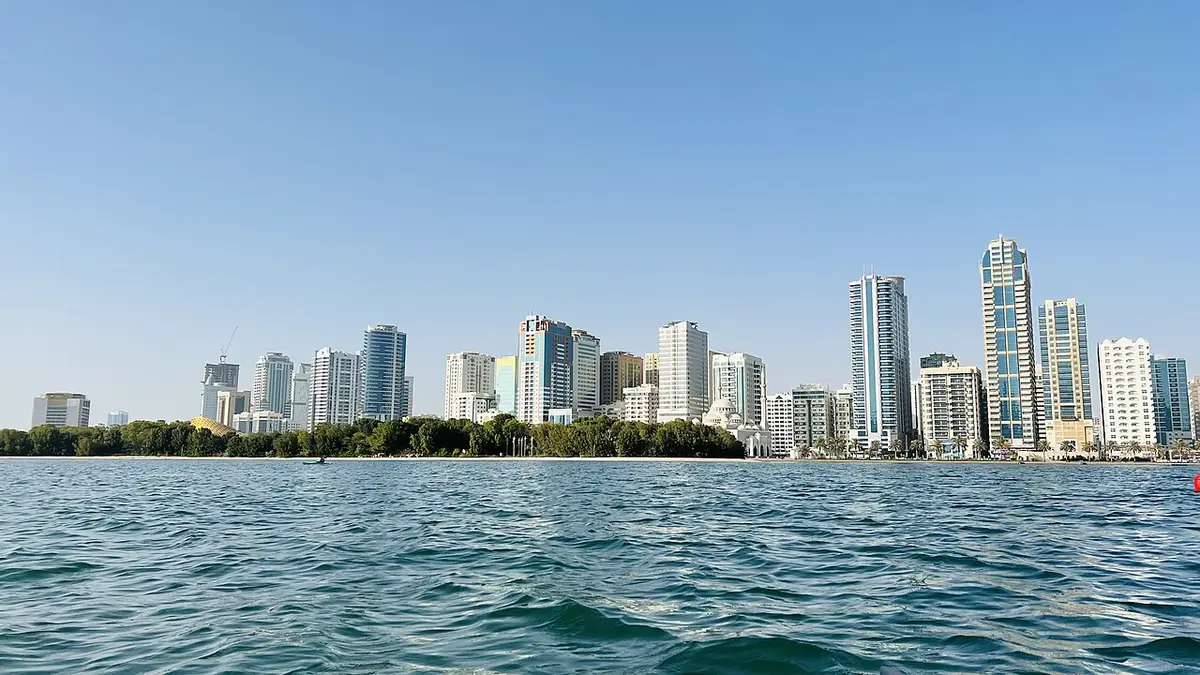
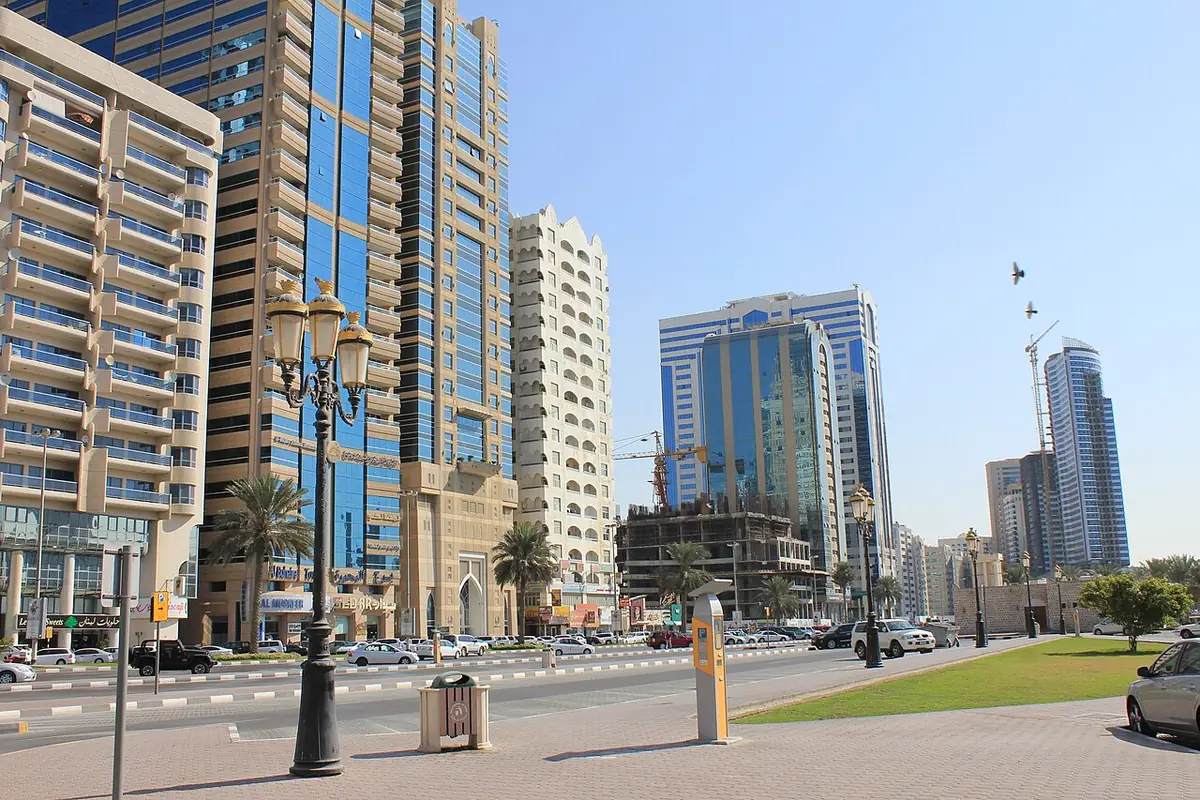
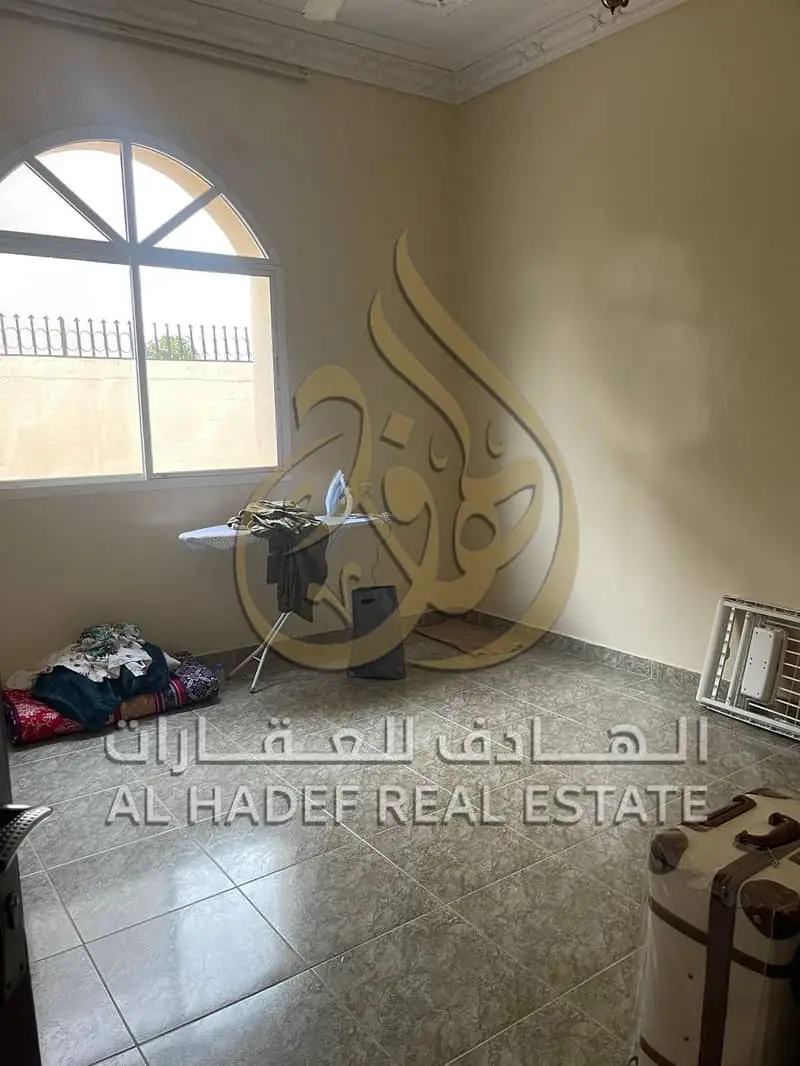
Buying an apartment in Sharjah is a measured, long-horizon alternative to the volatility of neighbouring property markets. This guide sets out, in detail, the reality of the districts, the financial mechanics and the legal rules you need in order to carry your purchase through with confidence.
Get the app
What nobody tells you.
Real prices, hidden costs and the traps to check before you commit.
What you actually get when you buy an apartment in Sharjah
Scroll
What you actually get when you buy an apartment in Sharjah
Buying an apartment in Sharjah is a measured, long-horizon alternative to the volatility of neighbouring property markets. This guide sets out, in detail, the reality of the districts, the financial mechanics and the legal rules you need in order to carry your purchase through with confidence.
Written by the ting.ad editorial team ·
Sharjah in Street View: drag to look around.
That tension between affordability and logistical constraint raises the real question of whether this market fits your own profile.
Buying an apartment in the Emirate of Sharjah belongs to a search for stability and budget control, a long way from the speculative dynamics of the neighbouring cities. Buyers find a more affordable market, but one with its own specific rules of engagement that deserve to be measured precisely. By accepting a slower pace and districts whose infrastructure is sometimes more traditional, you secure a durable place to live. Weighing the financial and regulatory trade-offs is what reveals the true scope of this investment over the long run.
Immediate access to ownership at prices per square foot that are markedly lower than in the large centres nearby.vsA potentially slower resale, because the secondary market is less liquid and more dependent on local cycles.
The moderate entry price is often paid for with reduced liquidity on the way out, which calls for a long-term view of the asset rather than a short-term speculative play.
A preserved cultural setting, family-oriented and notably quiet, well suited to settling in for the long term.vsStrict local rules on conduct and planning that can surprise investors used to complete flexibility.
Choosing Sharjah means fully accepting a way of life and a set of community standards that keep residential districts calm but also place firm limits on how a property may be used.
Service charges and ancillary costs that are proportionally lower than in the ultra-modern developments.vsCommon areas whose finish is sometimes more basic, and building refurbishment left to the judgement of uneven management companies.
The savings on headline price and recurring costs sometimes translate into less sophisticated upkeep of the building, which calls for extra care during the technical inspection before you buy.
Direct geographic proximity to the economic hub of Dubai while retaining complete administrative autonomy.vsDaily commuter flows that come with recurring road congestion at peak hours on the connecting routes.
Living in Sharjah while working in the neighbouring emirate means building significant travel time into your day, and no amount of apparent geographic proximity fully erases it.
Does this place really match your way of life and your plans?
Beyond your individual profile, the cultural and practical shift between where you come from and this environment deserves a closer look.
Looking hard at your work and family situation is the best filter for deciding whether buying an apartment in Sharjah makes sense. Anyone looking for constant urban buzz or total flexibility will need to adjust their expectations to the realities of the emirate. Every resident profile meets structural advantages but also specific frictions that are worth anticipating to avoid disappointment after the purchase. Here is how your daily life is likely to change depending on exactly where you sit in the local ecosystem.
The commuter looking to build equity
You want to stop renting and take advantage of prices per square metre that are far gentler than in the neighbouring emirate, even if that means a daily drive. Buying an apartment in Sharjah lets you build a solid property asset without swallowing your entire monthly income. In exchange, you accept a demanding morning routine and a clean separation between where you work and where you live.
This setup suits self-sufficient people who value coming back to the quiet of a family district in the evening, away from the bustle of the big business hubs. It is essential, though, to test the real journey times during office hours before signing anything binding.
The household seeking steady ground
Your absolute priority is to give your family a safe environment with well-regarded schools and community spaces built around traditional family values. Sharjah offers a dense but well-structured urban fabric for exactly that, where parks and landscaped waterfronts make weekend activities easy. You give up nightlife and the fastest cosmopolitan lifestyles in favour of a calm that is genuinely worth having.
Buying a large apartment or a duplex in this market secures generous living space for an overall cost that is often out of reach elsewhere in the region. It is a considered choice of life that bets on permanence and on solid local roots.
The pragmatic long-term investor
You want a tangible investment resting on strong local rental demand from families and mid-budget salaried workers. The yields advertised often look attractive on paper, but they demand a rigorous choice of building to avoid the discounts attached to older stock or to unforeseen management costs. You must accept lower liquidity and more linear capital growth than in purely speculative zones.
This cautious approach protects your capital from market swings while requiring hands-on local management to keep the property in good order and to make sure successive tenants can pay across the run of leases.
Living here when you have moved from abroad: what actually changes
That practical transition comes with a crucial geographic choice: steering towards the right district for what you want.
Moving to Sharjah, or investing there from overseas, means confronting architectural, regulatory and climatic reference points that are radically different from the ones you arrive with. The standards buyers are used to in many other countries often fall apart against local urban organisation and the emirate's own requirements. Anticipating these gaps lets you approach the transaction clear-headed and adjust your way of life from the first months. Here are the main points of friction and what they mean directly for your daily life as an owner.
From abroad
A rental and property market heavily regulated by national law with strict tenant protections.
Sharjah
A local legal framework where owner and tenant rights follow specific rules administered by the municipalities.
You must be guided by licensed local professionals to draft or review contracts, or you risk missing the subtleties of eviction procedures and rent reviews.
From abroad
Neighbourhood life organised around shops within walking distance and pedestrianised historic centres.
Sharjah
An urban design built around the car, where movement between districts happens along major roads.
Your choice of apartment must factor in immediate proximity to the main exit routes and to essential amenities, so that you are not cut off inside your own building day after day.
From abroad
Mild winters and moderate summers that allow outdoor life all year round.
Sharjah
A desert climate with extremely hot summers that requires centralised air conditioning to run continuously for several months a year.
The running budget for your apartment includes a substantial monthly energy bill that has to be anticipated as soon as you calculate your fixed costs.
From abroad
Buildings run by professional managing agents answerable to tightly regulated owners' meetings.
Sharjah
Building management to variable standards depending on the developer and the age of the property, sometimes centralised through state bodies.
Careful examination of the building's accounts and its history of works is essential before you sign anything, if you want to avoid unpleasant surprises.
Which district should you choose to settle in or to invest?
Once the right area is identified, the next task is to read the market's actual numbers so you can negotiate accurately.
Sharjah is not one uniform block; the emirate is made up of districts with strongly marked identities, from landscaped waterfronts to more traditional inland residential zones. Each micro-market has its own price dynamics, its own level of saturation and its own resident population. Ignoring those differences exposes a buyer to location mistakes that cannot be undone when it comes to resale value. Reviewing the options lets you target precisely the area that matches your budget and your expectations.
Al Majaz
A lively urban hub facing the lagoon, with pedestrian promenades that fill with families at the end of the day.
Suits
Buyers who want an active neighbourhood, open views over the water and easy access to restaurants.
Trade-off
Prices per square metre above the emirate average, and chronic parking difficulties at peak times.
Al Khan
A coastal feel shaped by the beaches, the hotels and recent developments that give the area a more modern profile.
Suits
Those who want to combine seaside living with immediate access to the fast routes towards the other emirates.
Trade-off
Direct exposure to commuter traffic noise, and service charges that are often heavier because of the leisure facilities.
Muwaileh Commercial
An area in full swing, much sought after by investors chasing high rental yields thanks to its proximity to the universities.
Suits
Investors targeting students and young professionals looking for small, functional, well-connected units.
Trade-off
A townscape that is still very hard-edged and permanently under construction, sometimes short on mature green space and complete quiet.
Al Nahda (Sharjah)
An ultra-dense border zone, marked by high residential towers and an immediate connection to Dubai's road network.
Suits
Daily commuters whose first criterion is cutting the journey to a workplace outside the emirate as far as possible.
Trade-off
Exceptional road saturation and a very vertical environment that sacrifices calm for geographic convenience.
What does an apartment in Sharjah actually cost today?
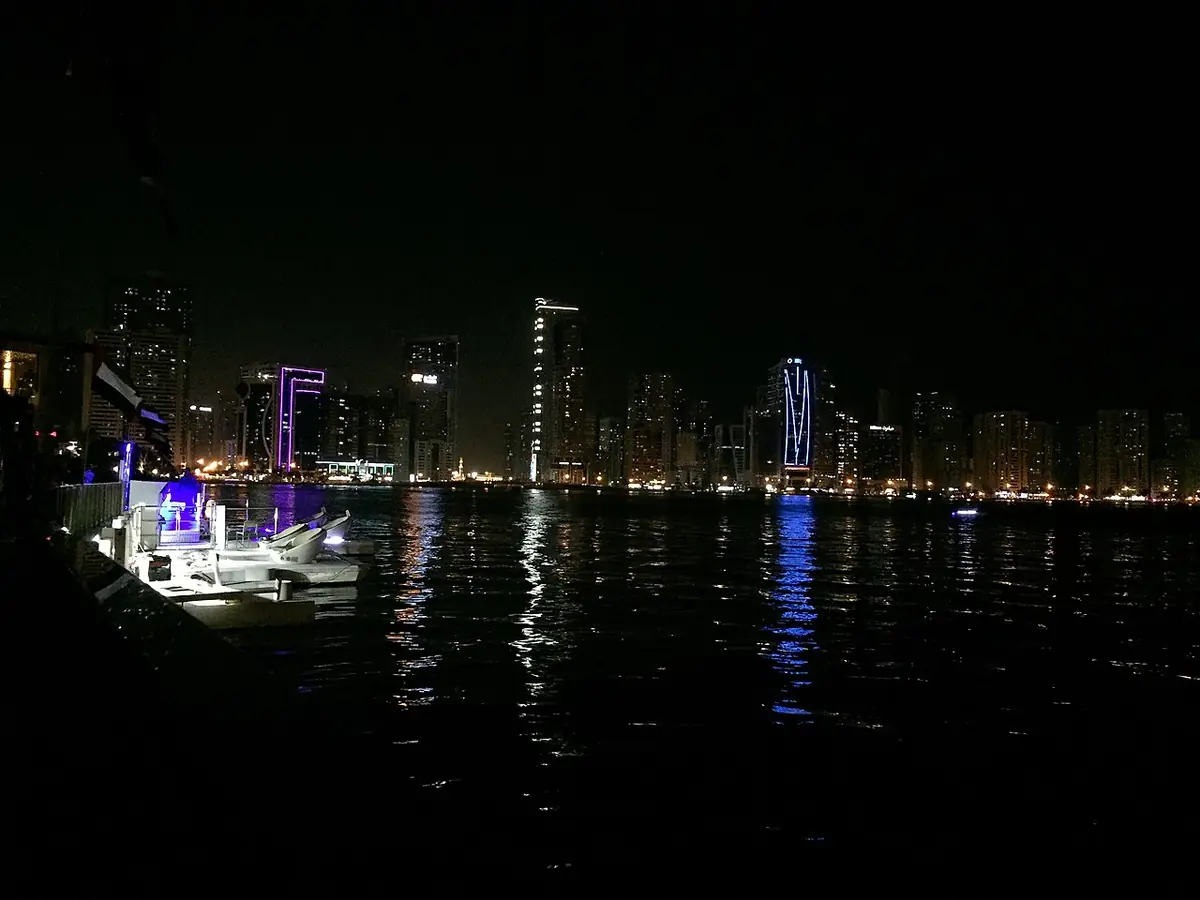
Boats and city lights along Sharjah's waterfront at night — Photo: Clintonpeter · CC BY-SA 4.0 · Wikimedia Commons
Beyond the headline price of the transaction, the legal nature of the ownership deserves very careful attention if you want to avoid disappointment.
Budgeting a property purchase in Sharjah cannot stop at the apartment's asking price. Registration fees, agency commission and recurring charges all shift the overall financial equation of the deal appreciably. Market data reflects wide variation according to the age of the building and the quality of the finishes on offer. The table below brings together the price ranges observed, so you can pitch your offer objectively.
sharjahFor saleApartmentestimate
Median price / m²AED 7,600Half the apartments sell below this
Median priceAED 880kthe average is 14% higher — a few very large properties pull it up
Most common2 bedrooms38 % of listings
Average size110 m²
By number of bedrooms
Bedrooms
Share of market
Avg price
Price / m²
Avg size
1
30 %
AED 598k
AED 9,200 +15 %
65 m²
2most common
38 %
AED 857k
AED 8,160
105 m²
3
24 %
AED 1.14m
AED 7,600 −5 %
150 m²
4
8 %
AED 1.51m
AED 7,200best value / m²
210 m²
Each row is an average, compared against the area average of AED 8,000 / m². These are indicative estimates of a typical local market, not a measured sample of live listings. Check current listings before relying on them.
What you can actually own as a buyer, depending on your nationality
That legal caution has to extend to the transaction's own timeline, which is punctuated by administrative steps you cannot skip.
Outright ownership for international investors follows precise regulatory frameworks that you must master before paying a single dirham. Unlike some other free zones in the region, access to ownership for non-nationals in Sharjah has gone through structural changes that are worth checking against each specific project. Never confuse a long-term right of use with freely transmissible outright ownership. The two panels below set the legal realities of buying side by side.
Freehold ownership, subject to conditions
Absolute freehold ownership is tightly framed within geographic zones designated by the emirate's authorities. Inside those specific areas, eligible buyers obtain a full title deed, giving them the right to sell, let or pass on the property with no time limit. That reassuring framework attracts investors who want to build an asset they can leave to their direct heirs without excessive administrative complexity.
What it changesYou must check with Sharjah's planning department that the plot you are targeting genuinely holds that status before signing any preliminary contract.
Long leases and extended usufruct rights
In many of the emirate's older or more traditional districts, foreign nationals can only obtain long leases, often set at 99 years and renewable. That mechanism, although secured by deeds registered with the official land registry, does not amount to outright freehold ownership in the strict sense. It does nonetheless carry the full rights of use, of collecting rent and of reselling the leasehold interest for the agreed period.
What it changesIt is worth analysing precisely how many years remain on the original lease when buying an older property, to avoid a discount later on resale.
The golden rule to understand before you pay a deposit on a property
To run that administrative sequence smoothly, the coordinated involvement of the various local players proves indispensable.
Buying an apartment in Sharjah cannot be improvised: it follows a strict procedural sequence in which each step conditions the validity of the next. From signing the memorandum of understanding to obtaining the final title deed issued by the land authorities, the smallest contractual misstep can lock up your funds. Understanding the order of this chain of guarantees protects your capital against the risk of a seller defaulting or of hidden defects. The path below sets out the logical trajectory of a properly secured transaction.
The search phase and the friendly negotiation of the net price to the seller.
Signature of the Memorandum of Understanding (MoU) formalising agreement on the property and the price, together with payment of a deposit held in escrow.
Technical surveys and verification that there are no unpaid charges or mortgages outstanding with the building management and the municipal services.
Obtaining the no objection certificates (NOC) required from the developer or the building manager, confirming that the seller is up to date on their obligations.
Final validation of the file with Sharjah's land registration service and transfer of the remaining funds to complete the official transfer.
Issue of the new official title deed in your name.
How the transaction actually unfolds, player by player
A successful property transaction in Sharjah rests on the orchestrated collaboration of licensed professionals whose roles are strictly delimited by law. Venturing alone into the local administrative maze without a network of recognised experts exposes a buyer to serious risk of dispute. Each party has precise powers that need to be called on at the right moment. The chronological table below sets out what each one contributes across your purchase.
The licensed estate agentIntroduction and initial negotiationThey select properties matching your strict criteria, arrange viewings on site and draft the first offer to purchase according to the standards in force in the emirate.
The building surveyorSurvey of the property's structural conditionThey inspect the air conditioning installations, the plumbing and the weatherproofing of the walls, and pick up any hidden defects that would require remedial work.
The building managerIssue of the no objection certificate (NOC)They confirm that the seller has settled all ordinary and exceptional service charges before authorising the official transfer of ownership.
The land registration officerLegal validation and formal executionA sworn official of the emirate's services, they authenticate the final sale contract, collect the transfer fees and update the official ownership registers.
You, the buyerFinal decisions and secure release of fundsYou sign off each financial milestone, release the funds under the escrow procedures and take actual possession of your new apartment.
Apartment or villa in Sharjah: choosing between shared urban ownership and residential independence
Once that fundamental choice is settled, the next step is to quantify precisely the financial effort your purchase will require.
The choice between buying an apartment and buying a villa in Sharjah shapes your whole asset strategy and your family's daily life. Apartments are concentrated heavily along the corniche, around Bu Daniq and in the newer towers of Al Majaz. They offer immediate proximity to the routes towards Dubai, integrated service infrastructure and shared service charges. On the other hand, you depend on a building manager, parking is governed by the strict rules of the underground car parks, and outdoor space usually comes down to a glazed balcony. The formula suits working people whose time is split between the office and the city, who want minimal maintenance and quicker liquidity on resale into the rental market.
A villa or town house, by contrast, is a purchase for the outer districts and the planned developments such as Sharjah Garden City or Tilal City. Here the spatial logic reverses completely: you have your own plot, a closed garage for several vehicles, living space spread over two or three floors and complete architectural autonomy. That configuration removes the direct nuisance of shared walls and offers a setting particularly suited to families with children or to pet owners. In exchange, maintaining the roof, the centralised air conditioning system and the garden falls entirely to you, financially and practically.
Financially, the gap is not just the headline price per square metre but the total cost of ownership across a decade. Apartments show more accessible entry tickets, starting around 400,000 dirhams for compact units, but they carry annual service charges calculated per square foot that eat into the net return. Villas require a markedly higher initial outlay, often above 1.5 million dirhams, with transfer and registration fees that weigh heavily on the acquisition budget. That said, long-term appreciation on properties that come with their own land has historically tended to outperform residential towers saturated by successive new deliveries.
Finally, day-to-day life decides between the two options according to your tolerance for urban constraint. Living in an apartment in Sharjah means accepting the lift, close neighbours and the strict rules on use of the common areas laid down by the local authorities and the developers. Living in a villa means accepting slightly longer journeys to reach the shopping centre or the government offices, along with heavier management of the technical problems of a detached house. Your final decision therefore has to weigh how smoothly you need to move around for work against how much you want independent domestic space.
What total budget should you plan for buying and living in an apartment in Sharjah?
To gauge what this investment really means, you have to test the actual rhythm of daily residential life in the emirate.
Buying an apartment in Sharjah means anticipating all the ancillary costs that sit on top of the net price to the seller. Between local registration fees, agency fees and recurring service charges, the total cost often exceeds the figure advertised on the property portals. This table sets out, line by line, the real cash flows observed in the market for a standard two-bedroom apartment.
Upfront purchase costs for a two-bedroom apartment
Cost item
Estimated amount (AED)
How it is calculated
Land registration fee
2% to 4% of the price
Paid to the Sharjah Real Estate Registration Department on transfer of ownership.
Estate agency fee
2% of the purchase price
Standard commission paid to the licensed intermediary on final signature.
Bank arrangement and valuation fees
AED 3,000 to 7,000
Flat amount required by the lender if you are borrowing.
Borrower insurance and guarantees
0.4% to 0.8% of the capital per year
Annual premium calculated on the outstanding balance according to the borrower's age and profile.
These upfront costs have to be provided for in cash and generally cannot be financed through the mortgage.
Recurring annual costs of ownership
Type of cost
Average annual cost (AED)
What it covers
Service charge (building maintenance)
AED 4,000 to 12,000
Lift maintenance, security, cleaning of common areas and the pool.
Electricity and water consumption (SEWA)
AED 6,000 to 14,000
Monthly billing including centralised air conditioning and municipal charges.
Home contents and liability insurance
AED 800 to 1,500
Cover for contents and the required public liability.
Provision for exceptional works
AED 2,000 to 5,000
Recommended savings to cover appliance breakdowns and small refurbishments.
Service charges vary considerably with the age of the building and the presence of facilities such as a clubhouse or a gym.
What does an ordinary Tuesday actually look like living in an apartment in Sharjah?
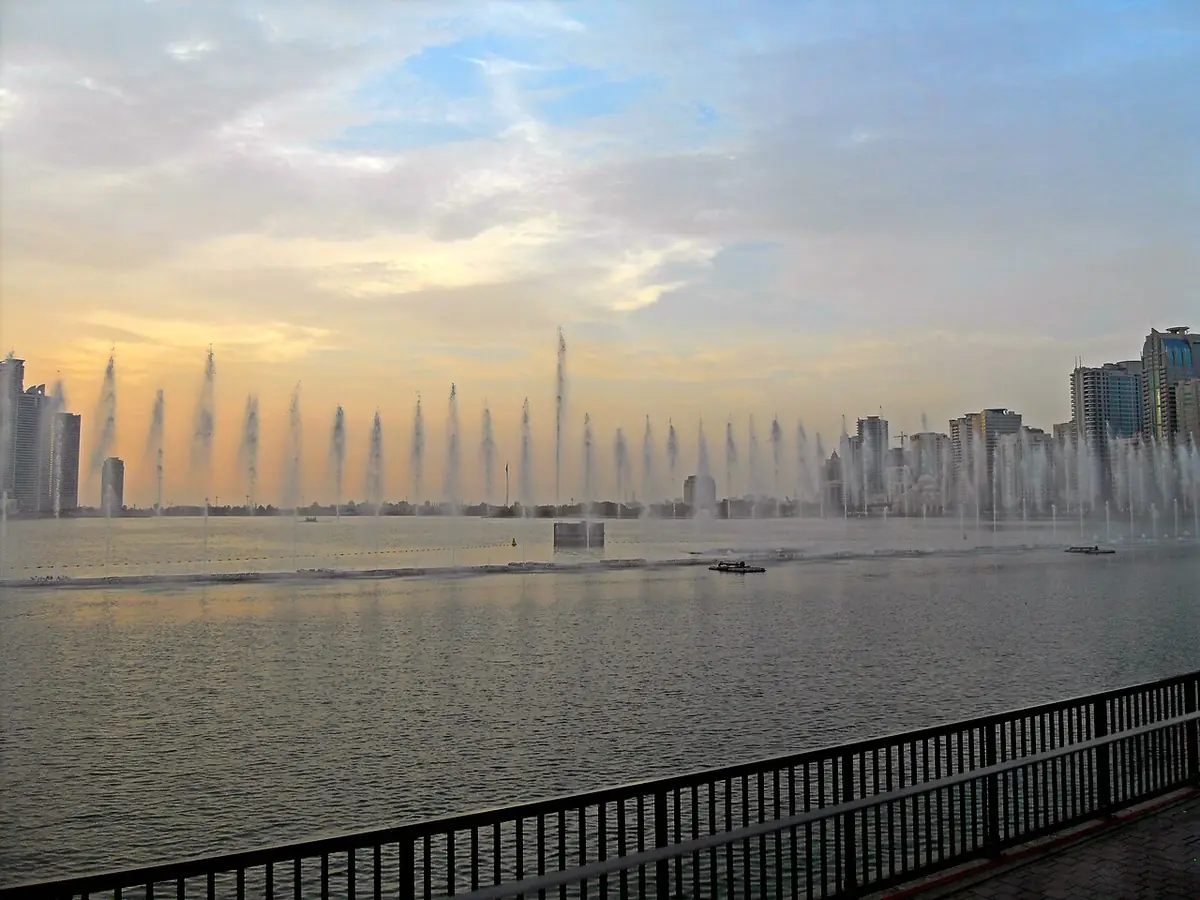
The Al Majaz fountain lighting up the Sharjah evening — Photo: Farrah Zakir · CC BY-SA 4.0 · Wikimedia Commons
Beyond that well-oiled routine, plenty of things the sales brochures never show deserve to be brought into the light.
How smoothly your typical day runs in Sharjah depends closely on your ability to anticipate traffic flows, particularly towards the neighbouring emirate of Dubai. Between getting children to school, local shopping and running the household, each stretch of the day follows a precise spatial logic. This hour-by-hour record of an ordinary Tuesday illustrates the transitions and the real logistical constraints.
06:45Apartment, Al MajazWaking up and getting ready. Checking that the centralised air conditioning is working properly and taking in the morning view over the corniche before the bustle starts.
07:30Leaving the car parkA delicate manoeuvre out of the building's underground car park. Joining the heavy traffic on Al Ittihad Road for those working in Dubai, or taking Sharjah's internal routes.
08:15International schoolDropping the children at one of the emirate's well-known schools, such as the City School or the American School of Creative Science, both in the outer residential zones.
12:30Local supermarket or neighbourhood grocerA midday break or a quick shop at a large store such as Lulu Hypermarket or Carrefour to restock the household with fresh produce and everyday goods.
17:30Home again and parkingThe evening peak. Managing the allocated parking space in the building and carrying the shopping bags to the lift.
19:00A walk along the Al Majaz cornicheUnwinding at the end of the day beside the water, enjoying the relative cool of the evening, the landscaped walkways and the play areas for children.
21:00Apartment, living roomA quiet evening, going over the children's homework and getting tomorrow's logistics ready in an air-conditioned building with 24-hour security.
What the sales brochures will never tell you about buying property in Sharjah
These blind spots explain why some owners bitterly regret their investment a few months after collecting the keys.
Sharjah's property market has regulatory and technical dynamics that sales pitches systematically leave out. Understanding those underlying mechanics protects a buyer from financial surprises and from disappointment in use. Here are the four structural realities every serious buyer should absorb before signing a reservation contract.
The real impact of changes in service charges
Developers often advertise artificially low service charges in the first year to win the buyer over. From the second year, the owners' meeting votes significant increases to fund lift and facade maintenance, which weighs heavily on your net budget.
How complicated it is to resell before the mortgage is cleared
Reselling an apartment while the mortgage is not fully repaid requires a heavy and costly discharge procedure. Local banks apply early repayment penalties and require administrative delays that can cost you a simultaneous purchase opportunity.
The invisible wear on older technical installations
Towers built in the early 2000s sometimes suffer from obsolete plumbing and air conditioning ducting. A superficial survey is not enough to detect chronic leaks or compressor failures that will later require exceptional contributions from owners.
The reality of visitor parking saturation
If your apartment comes with a single allocated parking space, having family or friends over becomes an obstacle course. The public spaces nearby are paid, strictly regulated by the municipality and often taken by early evening.
The buying mistakes you only discover after six months of daily life
Faced with these potential traps, it is fair to ask whether buying property in Sharjah really is for everyone.
Looked likeAn unbroken view over the lagoon and total quiet on the top floor.
Turned outDirect exposure to the afternoon sun, sending the SEWA air conditioning bill through the roof, plus night-time noise from the roads below.
Would have caught itAlways check which way the property faces (favour east or north) and visit at peak hours to gauge how well the double glazing really blocks sound.
Looked likeAn ideal central location allowing a quick hop across to Dubai.
Turned outA daily traffic trap at peak hours on the bridges linking the two emirates, turning a theoretical twenty-minute drive into an hour and a half bumper to bumper.
Would have caught itDrive the home-to-work route yourself at the exact times you would normally travel for work, before paying any reservation deposit.
Looked likeA modern fitted kitchen built into an open-plan living space.
Turned outInadequate ventilation that spreads cooking smells through the whole apartment, coupled with a serious shortage of closed storage for everyday utensils.
Would have caught itInsist on a detailed inspection of the extractor hood and measure the real amount of wall cupboard space against how you actually cook.
Looked likeA lively residents' community with a pool and a gym included.
Turned outOverused facilities, poorly maintained by the building management and subject to recurring technical closures over the summer with no reduction in charges.
Would have caught itRead the minutes of the last few owners' meetings to identify any live disputes over maintenance of the common areas.
Who really should not buy an apartment in Sharjah right now?
If you recognise yourself in these profiles, caution is the wise course; if not, it is time to decide.
Ownership is not a universal answer and can turn out badly depending on your career horizon or your personal situation. Sharjah's property market has rigidities that penalise buyers who are too mobile or financially stretched. Here are the buyer profiles that should firmly postpone their plans or stick to renting.
The employee on a short assignment, or whose job in Dubai is uncertain
→To stay a flexible tenant in a managed building.
Upfront purchase costs (registration, agency, transfer formalities) come to close to 6% of the price of the property. If you sell the apartment inside five years, any gain will not be enough to absorb those sunk transaction costs.
The investor after an immediate, high net rental yield
→To place their cash in alternative financial instruments or in other locations.
High service charges and the relative moderation of rents in Sharjah compress the real net yield to around 5% to 7%, which does not compensate for the risk of void periods.
The household without enough of a deposit to cover the ancillary costs
→To wait and build a solid cash reserve before taking on a loan.
Borrowing without a cash cushion for medical surprises, rate movements or urgent repairs leaves an owner exposed to falling into arrears quickly.
So, are you ready to take the step of buying property in Sharjah?
At the end of this analysis, buying an apartment in Sharjah is no longer an impulse but a decision informed by the reality of the numbers, the logistical constraints and the experience of people on the ground. You now know that the emirate offers a formidable compromise between proximity to the intensity of Dubai and a markedly more moderate residential cost of living. The opportunities are real, whether you plan to settle for the long term beside the corniche or to bet on the development of the new planned districts on the outskirts.
That said, the process demands absolute rigour in financial preparation. Never underestimate the cumulative impact of registration fees, commissions and the predictable rise in service charges over the years. Your future peace of mind depends directly on the strength of your deposit and on your ability to absorb swings in traffic and in energy costs. If your career horizon runs beyond five years and you want residential stability, buying property in Sharjah makes for a solid and coherent anchor.
Take the time to view several properties at different hours, demand transparency on the technical condition of the building, and test the traffic routes yourself at peak times. The local market rewards patient, methodical buyers who refuse to be swayed by sales talk that sounds too good. Your future home in Sharjah will be built on that clear-eyed judgement, which is what makes a purchase durable and a daily source of satisfaction for you and your family.
Related questions
What are the registration fees on a property purchase in Sharjah?
Registration fees payable to the Sharjah Real Estate Registration Department generally run between 2% and 4% of the total acquisition value of the property, and may or may not be split with the seller depending on what is negotiated.
Can foreign nationals buy property outright in Sharjah?
Outright ownership (freehold) is tightly framed and reserved for certain zones designated for foreign nationals, while other areas offer long-term leasehold arrangements instead.
What do service charges typically cost in Sharjah's residential towers?
Service charges generally range from 4 to 12 dirhams per square foot per year, depending on the age of the building, the quality of the finishes and the presence of leisure facilities such as a pool or a gym.
Is it easy to resell an apartment quickly in Sharjah?
How liquid an apartment is depends directly on its location, its price per square metre and the developer's reputation. Properties in Al Majaz or along the corniche have traditionally resold faster.
How much does traffic affect the daily commute to Dubai?
The bridges and main roads linking Sharjah to Dubai suffer heavy congestion during the morning and evening peaks, so you need to allow for journey times that can double depending on conditions.
How does billing for water and electricity (SEWA) work?
The Sharjah Electricity, Water and Gas Authority (SEWA) runs all of the utilities. Bills are monthly and cover actual consumption together with municipal charges calculated on the assessed rental value.
Do you need to budget for air conditioning in an apartment?
Yes. Air conditioning is the single largest energy cost, particularly through the summer months, when outside temperatures keep the systems running continuously.
What warranties do developers offer on new build in Sharjah?
New developments generally carry a ten-year structural warranty on the building, plus a one to two year warranty on interior fittings, plumbing and electrical installations.
Do you have to go through an estate agent to buy?
Using an agency is not strictly required in law, but it is strongly recommended in order to secure the transaction, verify title and draft contracts in line with the applicable rules.
What net rental yield can you expect on an apartment in Sharjah?
Gross rental yields generally sit between 7% and 9%, which, once service charges and taxes are deducted, brings the real net yield to somewhere around 5% to 7% a year.