Investing in property in Mumbai calls for a close understanding of the local dynamics, the scarcity of land and the legal subtleties that govern India's financial capital. This structured guide walks you step by step through weighing up the different neighbourhoods, securing your title to the property and seeing your project through with full transparency.
Get the app
What nobody tells you.
Real prices, hidden costs and the traps to check before you commit.
What you really get when you buy an apartment in Mumbai
Scroll
What you really get when you buy an apartment in Mumbai
Investing in property in Mumbai calls for a close understanding of the local dynamics, the scarcity of land and the legal subtleties that govern India's financial capital. This structured guide walks you step by step through weighing up the different neighbourhoods, securing your title to the property and seeing your project through with full transparency.
Written by the ting.ad editorial team ·
Mumbai in Street View: drag to look around.
Understanding these fundamental trade-offs lets you calmly work out how well you personally fit the local way of life.
Investing in India's financial capital is not just about acquiring square metres in a dynamic metropolis. It is a bet on an island territory hemmed in by the sea, where every neighbourhood has its own pattern of appreciation and its own structural constraints. The scarcity of land completely redefines what property value means compared with the standards you may know back home. You are buying a strategic position in a global financial hub just as much as a vertical, high-density way of life.
Being right at the financial heart of the cityvsPermanent road and urban congestion
The most sought-after addresses put you right next to business districts such as Lower Parel or Bandra Kurla Complex. In return, getting around demands constant planning, and rush-hour journey times remain an unavoidable part of daily life.
Modern, secure residential housingvsA cost per square metre among the highest in South Asia
Recent residential complexes include high-end amenities worthy of any major Western city, with pools, concierge services and round-the-clock security. That modernity comes with a high headline price and significant maintenance charges that you need to factor in from the start.
Solid potential for long-term capital growthvsResale liquidity that depends entirely on the quality of the title
Structural demand, driven by senior executives and entrepreneurs moving in from across the country, supports prices over the long term. However, the administrative and legal complexity of property titles demands absolute rigour at the time of purchase if you want a smooth resale later.
A cosmopolitan, fast-paced way of lifevsA complete break from the calm and space of quieter cities
The city offers a cultural, culinary and social scene of rare intensity, driven by an ambitious working population. That constant buzz means accepting a dense environment of noise and visual clutter, a long way from the more peaceful residential settings you may be used to.
Does this city suit your lifestyle and your ambitions?
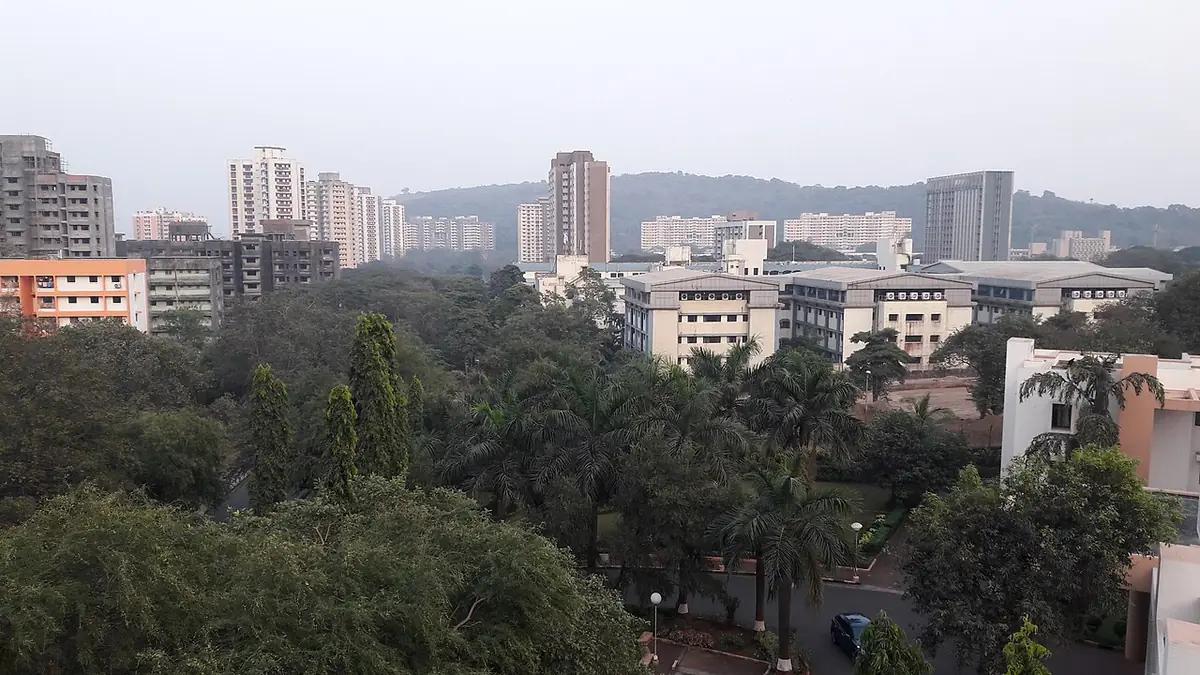
Apartment towers among the trees in Anushakti Nagar — Photo: arunpnair_787 · CC BY-SA 4.0 · Wikimedia Commons
These ways of living contrast sharply with the reference points you may have built up back home.
Moving to or investing in property in a megacity of this scale cannot be improvised, and it depends closely on your profile as an expatriate or investor. Whether you are after a base for regular business trips or a permanent home, the criteria for choosing an area and a type of property vary dramatically. Let us look at how your personal situation interacts with the realities of the local property market.
A base built around business and international mobility
You put being close to the major business hubs first, to keep daily commuting time to a minimum. Central neighbourhoods or new developments run by international developers meet your need for immediate comfort and built-in services perfectly. Legal security and ease of letting matter more here than a search for historic character.
Looking for an established residential setting with neighbourhood character
You would rather settle in historic residential areas with wide tree-lined avenues, independent cafés and a walkable neighbourhood life. These areas have undeniable charm and a well-established community of expatriates and affluent locals. The housing stock is older, which often means setting aside a renovation budget to bring a property up to contemporary standards.
Schools, healthcare and secure spaces come first
Your property brief is shaped by being close to international schools and leading clinics. You will naturally lean towards gated residential complexes with inner green spaces and protected play areas. The compromise will usually be a certain distance from the historic business core.
Living here when you come from abroad: what changes radically
In practice, this cultural shift turns into a difficult choice between the different areas of the city.
Moving from a regulated, predictable property market to the Indian property ecosystem calls for a deep cultural and procedural adjustment. Ideas about neighbours, the management of common areas and household services do not rest on the same legal foundations or the same social expectations. Here are the major structural differences you need to take on board to make the transition a success.
From abroad
Centralised management by a professional managing agent and formally run owners' meetings back home
Mumbai
Building governance run by a very involved residents' association (Cooperative Housing Society)
You need to take an active part in the life of the building and understand the local relationships in order to assert your rights as an owner.
From abroad
Discreet, outsourced concierge or caretaking services
Mumbai
A constant presence of residential staff (guards, technicians, cleaning staff) within the building
The cost and organisation of day-to-day maintenance are included in maintenance charges that are often structured differently from what you are used to.
From abroad
Urban development governed by strict, fixed local planning rules
Mumbai
Rapid urban change driven by major infrastructure projects and large-scale redevelopment of land
The immediate surroundings of your property can change faster than you might expect, affecting both its value and the view from your apartment.
From abroad
Energy performance standards focused on thermal insulation and heating
Mumbai
Architecture designed for natural ventilation, sun protection and widespread air conditioning
The orientation of the property, the ceiling height and the quality of the windows and doors matter more than wall thickness for your thermal comfort.
Which Mumbai neighbourhood should you choose for your buyer profile?
Once you have settled on an area, the central question of budget and price structure naturally follows.
The Mumbai peninsula and its northern extensions are divided into micro-markets with very distinct atmospheres and socio-economic profiles. Choosing where to settle does not depend only on your budget, but on how much commuting you can tolerate and the particular setting you want to live in. Each area offers its own balance between urban buzz, accessibility and residential standing.
Bandra West
A trendy, cosmopolitan village by the sea, full of cafés, designer boutiques and a strong artistic community.
Suits
Buyers looking for a Western-style way of life, walkable evenings and a relaxed international atmosphere.
Trade-off
An extremely tight market, with prices per square metre among the highest in the city and a chronic shortage of available properties.
Lower Parel / Worli
A cluster of ultra-modern residential towers rising on former industrial sites, a symbol of today's financial power.
Suits
Senior executives and investors looking for luxury amenities, built-in hotel-style services and a central location.
Trade-off
Very dense concrete surroundings, gridlocked traffic at rush hour and the feeling of a neighbourhood forever under construction.
Colaba / Fort
A historic setting steeped in colonial history, marked by majestic Victorian architecture and constant cultural activity.
Suits
Lovers of architectural heritage, cultural institutions and dense urban life rooted in the historic south of the city.
Trade-off
Older housing stock that often needs major upgrading work, and a long distance from the new business hubs in the north.
Andheri West / Juhu
A lively residential and commercial area, popular with entertainment celebrities, with direct access to beaches and leisure areas.
Suits
Families and professionals looking for more generous floor space, a lively neighbourhood life and relative proximity to the international airport.
Trade-off
Chronic congestion on the main roads and a more mixed architectural character from one street to the next.
How much does an apartment in Mumbai really cost?
Beyond the headline figures, the legal nature of the property rights you acquire deserves very close attention.
The Mumbai property market follows strict valuation rules, driven by the scarcity of buildable land and the standing of residential developments. Prices are usually quoted per square foot (sq ft) and vary dramatically depending on the exact location, the age of the building and the security features on offer. It is essential to read these ranges with the local taxes and registration charges in mind, as they come on top of the headline price.
MumbaiFor saleApartmentestimate
Median price / m²₹232,750Half the apartments sell below this
Median price₹19.5mthe average is 14% higher — a few very large properties pull it up
Most common2 bedrooms40 % of listings
Average size80 m²
By number of bedrooms
Bedrooms
Share of market
Avg price
Price / m²
Avg size
1
38 %
₹11.9m
₹264,600 +8 %
45 m²
2most common
40 %
₹17.2m
₹245,000
70 m²
3
17 %
₹24.4m
₹232,750 −5 %
105 m²
4
5 %
₹33.8m
₹225,400best value / m²
150 m²
Each row is an average, compared against the area average of ₹245,000 / m². These are indicative estimates of a typical local market, not a measured sample of live listings. Check current listings before relying on them.
What you can actually own: understanding property titles
The same legal rigour applies to every step, in order, of the purchase process itself.
Buying property in India rests on a legal system that differs considerably from the civil law systems many buyers know from home. The distinction between full ownership and long-term leasehold arrangements has a direct bearing on how secure your investment is and how its value develops. Grasping these legal subtleties is what guarantees a secure transaction and a trouble-free resale when the time comes.
Full ownership (Freehold)
You own the property outright along with your share of the land it stands on, with no time limit and no remaining ground rent owed to a third party. This status offers maximum legal security and the best possible liquidity when you later sell on the secondary market.
What it changesIt is the arrangement preferred by international investors who want to preserve their assets over the long term without complex administrative constraints.
Long-term lease (Leasehold)
The land belongs to a public authority or state body that grants the housing society a long-term right of occupation (usually 99 years, renewable). Although perfectly legal and common in some large urban developments, this arrangement requires you to check with extreme care how much of the lease remains and the terms for renewing it.
What it changesHeightened legal vigilance is needed to avoid any future loss of value linked to the approaching expiry of the original lease granted by the authorities.
The fundamental rule to understand before paying a deposit
To manage this timeline calmly, it helps to picture the role of each party involved in the transaction.
Securing a property in India's financial capital is not just a matter of signing a private preliminary sale agreement. The process follows a strict sequence in which each document check either confirms or halts the rest of the transaction. Skipping any one of these steps exposes the buyer to long and complex land disputes.
Choosing the property and making a conditional offer to buy (Expression of Interest)
A full legal audit (Title Due Diligence) carried out by an independent specialist lawyer to trace the history of the property over the last thirty years.
Checking that all the building permits (Commencement Certificate and Occupation Certificate) have been issued by the municipality.
Signing the formal sale agreement (Agreement for Sale), which sets out the staged payment terms and the mutual penalties for delay.
Officially registering the deed with the relevant sub-registrar and paying the applicable stamp duty (Stamp Duty).
The final handover of the keys and the transfer of the Cooperative Housing Society shares into the new owner's name.
How a property transaction works, step by step
A successful property transaction in Mumbai relies on careful coordination between several professionals with strictly defined roles. From the registered estate agent to the legal adviser and the local notary, each party secures one specific part of the file. Knowing the order in which they step in lets you steer your project clearly and efficiently.
The buyerDefining the brief and confirming the overall budgetSet precise location and budget criteria, factoring in all taxes and additional costs from the moment the search begins.
The estate agentShortlisting properties and arranging targeted viewingsPresent only properties whose owners have clear documentation and a genuine willingness to sell at market terms.
The specialist lawyerIn-depth audit of the property titles and land records checkExamine the property's legal history and confirm there are no hidden encumbrances or inheritance disputes pending before the local courts.
The developer or sellerNegotiating and signing the preliminary sale agreementFormalise the mutual commitments, set the schedule of staged payments and place the deposit in a secure escrow account.
The tax authoritiesOfficial registration of the deed and collection of dutiesPay the compulsory stamp duty and register the deed with the official state services to make the transfer official.
Apartment or house in Mumbai: choosing between vertical and horizontal living
Dadar Chowpatty, where the city skyline meets the sea — Photo: Suraj Digrase · CC0 · Wikimedia Commons
Once the type of property is decided, the central question of the overall cost of settling in immediately arises for any buyer.
Choosing between an apartment in a modern tower in Lower Parel and a traditional house in one of Mumbai's historic residential neighbourhoods raises a fundamental dilemma about how to live in this megacity. Vertical living dominates today's market, driven by developers who make the most of every available square metre in the face of land pressure unmatched anywhere else in India. Towers offer built-in services, 24-hour security and relative protection from street dust and noise, while guaranteeing breathtaking views over the Arabian Sea or the vast cityscape.
By contrast, a detached house or bungalow, harder to find and mostly confined to privileged enclaves such as Juhu or Bandra, offers a close connection to the ground and an architectural freedom that building rules strictly forbid in high-rises. Apartment residents have to deal with strict management committees, fussy internal rules and maintenance charges that rise regularly to pay for the upkeep of lifts and backup generators.
Maintaining a house in Mumbai is, however, an uphill struggle because of the extreme humidity of the monsoon and the rapid spread of tropical vegetation. House owners have to manage the roof waterproofing, the external plumbing and perimeter security themselves, while apartment owners share these heavy burdens through a collective structure. That difference in day-to-day management radically changes the experience of living there, depending on whether you value independence or operational peace of mind.
As a long-term investment, apartments in secure complexes remain more liquid and let more quickly to expatriate executives and local finance professionals. Houses, while rarer and therefore highly prestigious, require stratospheric purchase budgets and appeal to a very specific wealthy clientele able to tie up considerable capital without seeking an immediate rental return. Your choice will therefore depend on whether you are ready to hand day-to-day management over to a housing society or to accept the direct responsibilities of an independent property.
What total budget should you plan for to settle in Mumbai for the long term?
Knowing the overall budget is essential, but the real test lies in how you manage your time day to day.
Buying property in Mumbai is not just about the price per square metre advertised by developers or agencies. You absolutely must factor in local taxes, registration charges, stamp duty and the recurring maintenance charges that weigh heavily on a household's annual budget. The price gaps between central areas such as South Mumbai and northern suburbs such as Andheri or Borivali completely reshape the financial equation of your move.
Indicative purchase prices and charges by neighbourhood in Mumbai
Neighbourhood
Average price per m² (INR)
Monthly maintenance charges
Registration charges and taxes
South Mumbai (Cuffe Parade, Colaba)
INR 450,000 to INR 750,000
INR 15,000 to INR 40,000
6% to 7% of the purchase price
Bandra West / Juhu
INR 400,000 to INR 650,000
INR 12,000 to INR 35,000
6% to 7% of the purchase price
Lower Parel / Worli
INR 350,000 to INR 600,000
INR 10,000 to INR 30,000
6% to 7% of the purchase price
Andheri West / Goregaon
INR 180,000 to INR 300,000
INR 6,000 to INR 18,000
6% to 7% of the purchase price
Prices per square metre are based on actual 'carpet' area and include the government transfer and registration taxes in force in the state of Maharashtra.
Monthly running budget for a household of four
Expense
Low range (INR)
High range (INR)
Comment on the cost structure
Electricity and air conditioning
INR 5,000
INR 15,000
Rises sharply during the hot, humid months before the monsoon
Household staff (cleaner, cook)
INR 15,000
INR 35,000
Almost standard in upper-middle-class households
International schooling (per child)
INR 30,000
INR 120,000
Annual tuition fees spread over the calendar year, plus admission fees
Food and everyday shopping
INR 25,000
INR 60,000
A mix of traditional local markets and supermarkets selling imported goods
These estimates reflect a standard urban lifestyle for expatriates or senior local professionals living in secure complexes.
What an ordinary Tuesday of traffic jams and services really looks like in Mumbai
Beyond this tightly timed routine, some fundamental aspects of living in Mumbai never make it into the brochures.
How smoothly your daily life runs in Mumbai depends entirely on the strategic distance between your home and where you work. Getting around the megacity takes careful planning to avoid the chronic congestion on the main roads and suburban rail lines. Each part of the day sets its own pace, dictated by the tropical climate and the city's constant economic buzz.
07:30Private residenceHousehold staff arrive to prepare breakfast and do the daily cleaning while the family gets ready.
08:45Commute to work (Bandra to BKC)A journey by air-conditioned car or shared taxi through the congested roads of the Bandra-Kurla Complex.
10:00Office or coworking spaceThe working day begins in an air-conditioned environment with a redundant high-speed internet connection.
13:00Business restaurant or local canteenA quick business lunch, or the famous 'tiffin box' delivered by the legendary Dabbawala network.
17:30Supermarket or neighbourhood marketBuying fresh local produce and seasonal vegetables before the evening traffic gets too heavy.
20:30Back to the family homeA quiet dinner in the secure residence, away from the bustle outside and the noise of the traffic.
The hidden realities estate agencies leave out in Mumbai
These technical and hidden aspects lead straight to the regrets most often voiced by recent buyers.
Buying property in Mumbai comes with structural and environmental constraints that sales brochures carefully avoid mentioning. Between the complex management of water cuts, the direct impact of the monsoon on foundations and the legal subtleties of land titles, you need to be absolutely vigilant before signing a preliminary agreement. Understanding these hidden realities will spare you major financial and practical disappointments after the keys are handed over.
Water management and seasonal shortages
Many buildings rely on water tankers during the dry season, which creates unexpected extra costs and consumption restrictions that need to be written into the building's rules.
The destructive impact of the monsoon on buildings
Persistent humidity and heavy rainfall cause recurring leaks if the waterproofing of the facades and roofs has not recently been redone with professional-grade materials.
The complexity of property titles (Clear Title)
Mumbai's land history is full of complex disputes between former owners, developers and the port or municipal authorities, which calls for the opinion of an independent specialist lawyer.
Noise and air pollution
Ongoing construction of metro lines and towers turns some quiet neighbourhoods into noisy zones 18 hours a day, lastingly affecting residents' quality of life.
The buying regrets new owners discover six months after moving in
Faced with these demands and risks, it is just as crucial to know whether this market is really right for you.
Looked likeA quiet, green and perfectly peaceful residential area during the week
Turned outAn area that turns into a rat run at rush hour, with incessant horns
Would have caught itVisiting the property at three key times: a weekday morning, a busy evening and a weekend
Looked likeModerate, stable maintenance charges voted by the general meeting
Turned outMassive one-off levies to replace ageing lifts and refurbish the facade
Would have caught itAsking for the minutes of the last three general meetings to identify postponed works
Looked likeA private parking space included at no extra cost in the sale deed
Turned outA cramped, awkward space requiring complicated manoeuvres that are impossible with a large SUV
Would have caught itPhysically testing your own car in the space during the final inspection visit
Looked likeAn ultra-fast internet connection available straight away throughout the building
Turned outOutdated wiring in the stairwell limiting speeds to a basic, non-professional fibre line
Would have caught itChecking the exact list of eligible operators directly with local internet providers
Who should give up on buying property in Mumbai and rent instead?
It is time to bring all these factors together so you can make your final decision with complete peace of mind.
Buying property is not always the ideal solution, especially in a megacity as dynamic and changeable as Mumbai. The rigidity of the resale market, combined with very high upfront transaction costs, penalises short-term plans and less stable career profiles. Some would-be buyers have every interest in keeping the financial flexibility that the high-end rental market offers.
The young expatriate professional on an assignment of less than four years
→A high-end furnished rental in a secure serviced complex
Stamp duty and registration charges of 6% to 7% cannot be recovered over such a short period without taking an outright financial loss on a quick resale of the property.
The investor seeking a high, immediate net rental yield
→Diversified financial investments or commercial property
Gross rental yields on residential apartments in Mumbai have traditionally topped out at between 2% and 3% a year, which covers neither real inflation nor rising maintenance charges.
The household undecided about the children's long-term schooling
→A flexible rental close to the city's various school hubs
Changing neighbourhood in Mumbai because of a change of school is a logistical and financial nightmare if you have to sell and buy a property at every stage.
So, are you ready to take the plunge into Mumbai property?
Buying property in Mumbai is much more than a simple financial transaction: it is a deep commitment to one of the most intense urban dynamics on the planet. Between the vertical glass towers and the cultural richness of the historic neighbourhoods, the city demands constant adaptability and a long-term vision from its residents. If you have weighed up the reality of maintenance charges, accepted the constraints of the traffic and secured impeccable legal support, you have everything you need to succeed.
Take the time to visit your shortlisted properties several times, at different hours and in varied weather, to back up your first impression with hard facts. Do not hesitate to surround yourself with independent local experts — lawyers, valuers and tax advisers — who know the land-record and planning subtleties of every neighbourhood on the peninsula. Your investment should fit into a coherent long-term wealth strategy, able to ride out economic cycles without upsetting the balance of your family life.
Ultimately, Mumbai rewards those who approach its property market with clear eyes, rigour and patience. The choice of your future home will directly shape your daily life, your journeys and how you settle into this fascinating metropolis. If every criterion is ticked and your project rests on solid foundations, you are now fully ready to make your move to India's financial capital a reality.
Related questions
What stamp duty and registration charges apply when buying property in Mumbai?
Stamp duty and registration charges generally come to between 6% and 7% of the market value or purchase price of the property in the state of Maharashtra, on top of which you pay your lawyer's fees.
Can non-resident foreigners easily buy property in Mumbai?
Indian law (FEMA) restricts the purchase of residential property by non-residents who do not hold Overseas Citizen of India (OCI) status, which in practice rules out direct purchases by foreigners without specific approval from the Reserve Bank of India.
What is the difference between carpet area and super built-up area in Mumbai?
Carpet area is the actual living space inside the walls of the apartment, while super built-up area adds a share of the common areas, corridors and lifts, artificially inflating the advertised floor area by 20% to 35%.
How are apartment buildings managed in Mumbai?
Buildings are run by an officially registered residents' committee (Housing Society), which votes on annual budgets, sets the monthly maintenance charges and strictly enforces the building's internal rules.
Which Mumbai neighbourhoods offer the best balance between price and accessibility?
Western suburbs such as Andheri West, Goregaon and Malad strike a good balance between modern infrastructure, efficient transport links and prices per square metre that are more affordable than in South Mumbai.
What real impact does the monsoon have on buildings in Mumbai?
The torrential monsoon rains put facade waterproofing under heavy strain, causing leaks and calling for regular preventive maintenance that building committees need to plan for in their budgets.
Is it possible to get a mortgage as a buyer in Mumbai?
Indian and international banks offer home loans to residents and to holders of valid work visas, subject to a minimum down payment that generally represents 20% to 25% of the property's value.
What is meant by a 'clear title' in Mumbai?
It is a title to the property free of any past dispute, hidden mortgage, contested inheritance or municipal claim, certified by a specialist lawyer after a thorough review of the land records going back 30 years.
What is the average rental yield on a residential apartment in Mumbai?
Gross rental yields on residential property in Mumbai generally sit between 2% and 3% a year, reflecting the strong historical appreciation of land value rather than high cash returns.
How are food and parcel deliveries handled in secure towers?
Residential complexes have a centralised reception service at the entrance (Gate Security) that screens visitors and receives deliveries before allowing couriers up to the floors under the building's rules.