Getting a property investment right in Mumbai means understanding the dynamics that make this fascinating metropolis unlike anywhere else. This guide sets out the essential criteria, the legal rules and the reality of each neighbourhood, so you can reach your decision with confidence.
Get the app
What nobody tells you.
Real prices, hidden costs and the traps to check before you commit.
What you really get when you buy a house in Mumbai
Scroll
What you really get when you buy a house in Mumbai
Getting a property investment right in Mumbai means understanding the dynamics that make this fascinating metropolis unlike anywhere else. This guide sets out the essential criteria, the legal rules and the reality of each neighbourhood, so you can reach your decision with confidence.
Written by the ting.ad editorial team ·
Valuation House Mumbai in Street View: drag to look around.
Beyond the purely financial side, your everyday life will be shaped profoundly by the exact micro-location you choose.
Investing in bricks and mortar in Mumbai is like no other property market in the world. With extreme urban density and scarce land, every purchase forces a trade-off between private space and a central location. Buyers quickly discover that real living space is not measured only in square metres, but in accessibility and in the services built into the housing society. Grasping this basic reality is what saves you from disappointment on your very first viewings.
Floor space that feels limitedvsAn unrivalled central location
Properties with generous floor areas are generally a very long way from the business districts. Accepting a more compact home lets you settle in the lively areas where every daily journey is considerably shorter.
High society maintenance chargesvsRound-the-clock security and comfort facilities
Building upkeep, 24-hour security, water management and backup generators all carry a direct cost. Yet these outgoings secure a quality of life and a peace of mind that are indispensable in this megacity.
A highly competitive marketvsHistorically robust liquidity for your asset
Structural demand consistently outstrips the supply available in sought-after neighbourhoods. This constant pressure protects the value of the asset over the long term, despite global economic swings.
Does this place suit your lifestyle and expectations?
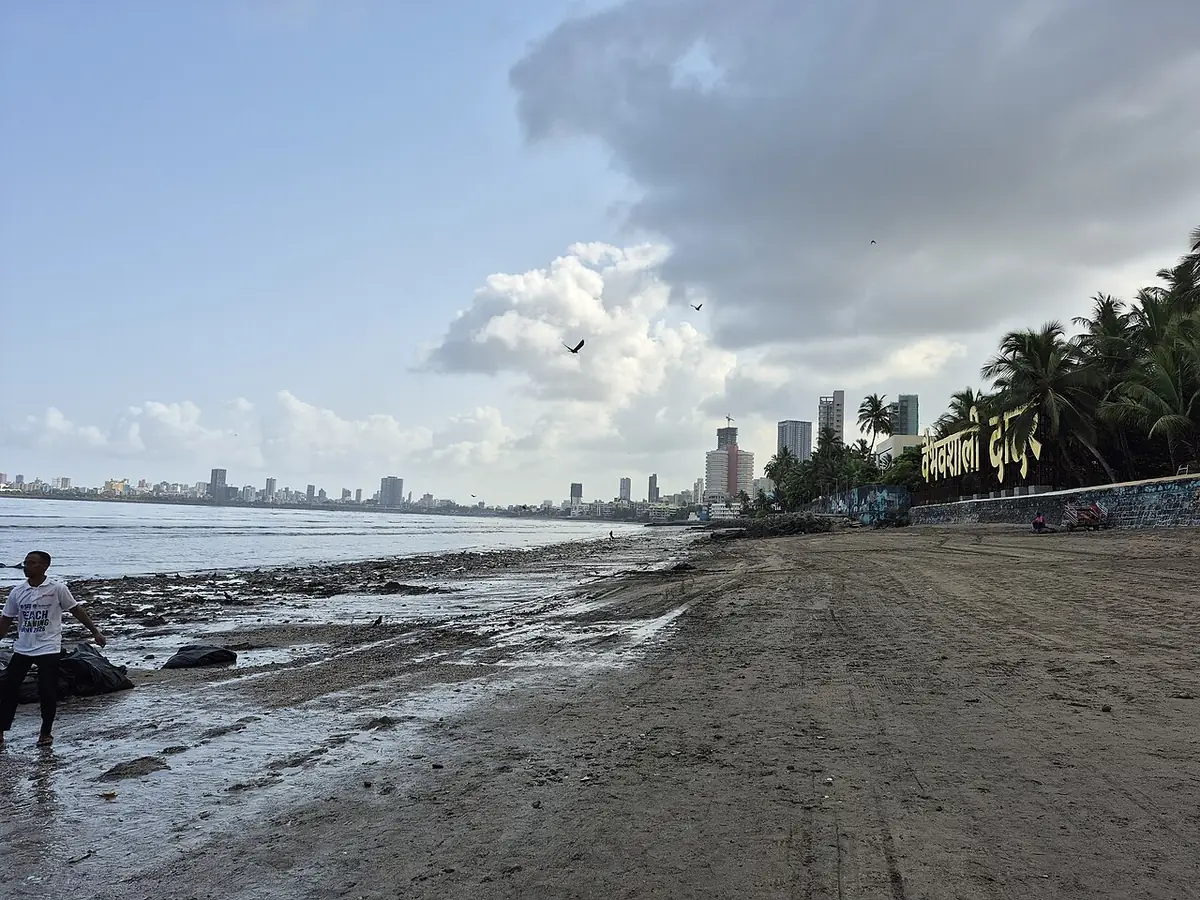
Dadar Chowpatty, where the city skyline meets the sea — Photo: Suraj Digrase · CC0 · Wikimedia Commons
Adapting to the local rhythm is a radical change from the standards you may be used to back home.
How well your personal profile matches the day-to-day reality of Mumbai decides whether your property project succeeds. The traffic constraints and the city's frantic pace call for careful thought about how you will organise your days. Every work or family situation demands specific trade-offs over where your future home should be.
Close to the business districts
Favouring central areas will cut your daily travel time drastically, a critical factor for your personal balance. You will give up floor space in return for a considerable time saving every morning and evening. Properties in these areas also hold the best rental value should you sell in the future.
Outlying residential neighbourhoods
Moving a little way from the centre gives you access to secure residences with green spaces and top-tier international schools. Work journeys will be longer, but your immediate surroundings will offer a welcome respite from the constant urban bustle. It is the option favoured by expatriates settling in for the long term.
Targeted buy-to-let property
Studios and one-bedroom apartments near the technology hubs and commercial districts attract a young, mobile population. Letting there is brisk, driven by steady demand from senior managers and international consultants. Choosing the right housing society carefully matters more here than raw floor area.
Living here when you arrive from abroad: what really changes day to day
To turn your project into reality, the next step is to map out the neighbourhoods on offer precisely.
Moving abroad, or investing in property from another country, brings you up against cultural and urban reference points that are entirely different. The idea of service, the use of domestic space and the way urban infrastructure is organised all follow their own local logic. Anticipating these structural differences spares you the disillusionment of the first few months.
From abroad
A highly codified and protective regulatory framework back home
Mumbai
A property market governed by strict local laws (RERA) but with its own customary practices
You must surround yourself with independent local legal advisers to secure every clause of the purchase contract and confirm the title deeds are in order.
From abroad
Outsourced maintenance services billed job by job
Mumbai
A large presence of residential service staff and integrated management within buildings
Running the home day to day involves new relationships and organisational demands that you need to put in place as soon as you move in.
From abroad
Predictable urban journeys by public transport
Mumbai
Heavy dependence on traffic conditions and on the main transport corridors
Your choice of address must take into account how close you are to where you actually live and work, to avoid daily gridlock.
From abroad
Standardised thermal comfort built around winter heating
Mumbai
Constant management of air conditioning and tropical humidity
The property's orientation, natural ventilation and the quality of the building's electrical installations become absolutely top-priority technical criteria.
Which neighbourhood should you choose to settle in Mumbai?
Once you have identified the area, it is worth looking in detail at the budgets you will really need.
The diversity of Mumbai's micro-markets calls for a rigorous area-by-area analysis before you sign an offer. Each area has its own identity, its own price per square metre and its own dominant demographic profile. Your final choice will depend directly on how much commuting you can tolerate and on your family priorities.
South Mumbai (Colaba, Cuffe Parade)
A prestigious historic atmosphere blending colonial architecture with the energy of traditional finance.
Suits
Buyers seeking heritage prestige and immediate proximity to the long-established financial institutions.
Trade-off
Land is extremely scarce and prices reach the highest levels in the city, often for older properties.
Bandra West and Khar
A cosmopolitan, fashionable way of life, much loved by creatives, senior executives and public figures.
Suits
Those who value lively neighbourhood life, plenty of restaurants and direct access to the sea.
Trade-off
Property pressure is at its peak, creating fierce competition for every home that comes up for sale.
Andheri West and Juhu
An area that never stops buzzing, combining modern business hubs, nightlife and sought-after residential streets.
Suits
Families and professionals looking for a balanced compromise between urban energy and access to the beaches.
Trade-off
Traffic is especially heavy at rush hour, which demands careful planning.
Lower Parel and Worli
The ultra-modern face of Mumbai, defined by high-rise residential towers with spectacular views.
Suits
Investors and buyers drawn to international-standard residences with built-in hotel-style services.
Trade-off
The feel is very concrete and vertical, far from the charm of traditional low-rise residential areas.
How much does a property in Mumbai really cost?
Beyond the budget alone, the legal nature of the properties on offer deserves very close attention.
Working out your purchase budget in Mumbai does not stop at the headline price per square metre. Local taxes, registration fees, professional fees and recurring society charges all weigh significantly on the overall cost of the deal. Looking closely at these ranges lets you adjust your financial strategy without any nasty surprises.
MumbaiFor saleHouseestimate
Median price / m²₹190,855Half the apartments sell below this
Median price₹28.1mthe average is 14% higher — a few very large properties pull it up
Most common2 bedrooms65 % of listings
Average size140 m²
By number of bedrooms
Bedrooms
Share of market
Avg price
Price / m²
Avg size
2most common
65 %
₹24.6m
₹200,900
123 m²
3
27 %
₹35.1m
₹190,855 −5 %
184 m²
4
8 %
₹48.5m
₹184,828best value / m²
263 m²
Each row is an average, compared against the area average of ₹200,900 / m². These are indicative estimates of a typical local market, not a measured sample of live listings. Check current listings before relying on them.
What you can actually own: understanding the types of property
Before you commit any money, one golden rule governs every property transaction in the region.
Mumbai's property market offers a range of housing formats whose legal status and management differ markedly from what you may know back home. Telling apart modern residential complexes run by large developers from traditional independent buildings is essential to securing your investment over the long term.
Managed residential complexes (gated communities)
These recent developments come with a full set of shared amenities: permanent security, green spaces, swimming pools, gyms and concierge services. Their legal framework is tightly governed by local government regulation, which ensures greater transparency over title deeds and the management of common areas.
What it changesYou enjoy immediate comfort and stronger legal security, at the price of fixed monthly society charges.
Independent buildings and heritage properties
Rarer and often found in historic neighbourhoods, these properties offer unique architectural character with generous ceiling heights and large volumes. Buying one, however, requires an in-depth technical and legal audit to clear any historic disputes over the land title.
What it changesYou acquire a rare asset with incomparable charm, but must plan for upgrade works and handle the upkeep yourself.
The absolute rule to understand before you pay a deposit
Once these steps are complete, the transaction itself follows a well-established timetable.
Securing a property transaction in Mumbai requires strict adherence to a precise legal sequence. Every official document must be audited by an independent specialist lawyer to guarantee there is no earlier land dispute. Failing to follow these checks exposes the buyer to major risks to their ownership rights.
Choosing the property and making a written purchase offer.
A meticulous check of the original title deeds going back thirty years (chain of title).
Obtaining no-objection certificates (NOCs) from the local authorities and from the building's cooperative housing society.
Signing the preliminary sale agreement (agreement to sale), setting out the conditions precedent and the payment schedule.
Paying the mandatory registration fees and stamp duty to the state tax authorities.
Final registration of the sale deed at the relevant sub-registrar's office.
How a property transaction unfolds, step by step
Coordinating the different parties to a property transaction in Mumbai takes method and forward planning. From choosing a registered estate agent to handing over the keys, each party plays a specific role that you need to oversee. This table sums up the responsibilities of everyone involved in the process.
The buyerSetting the budget and choosing advisersAppoint an independent local lawyer and set the maximum budget, including all additional costs and taxes.
The estate agentShortlisting properties and targeted viewingsPresent only properties with a verifiable title history and arrange viewings according to your neighbourhood criteria.
The specialist lawyerFull legal audit (due diligence)Examine the legality of the title deeds, confirm there are no hidden charges and check the building complies with planning rules.
The sellerSupplying documents and negotiatingHand over all receipts for charges and the society's approvals, and sign the preliminary agreement.
The tax authoritiesRegistration and collection of dutiesCollect the stamp duty and validate the official deed of transfer in the state's official registers.
The buyer and the sellerCompleting the sale and handing over the keysMake the final payment of the escrowed funds and sign the record confirming the actual transfer of possession.
A house or an apartment in Mumbai: weighing independence against security
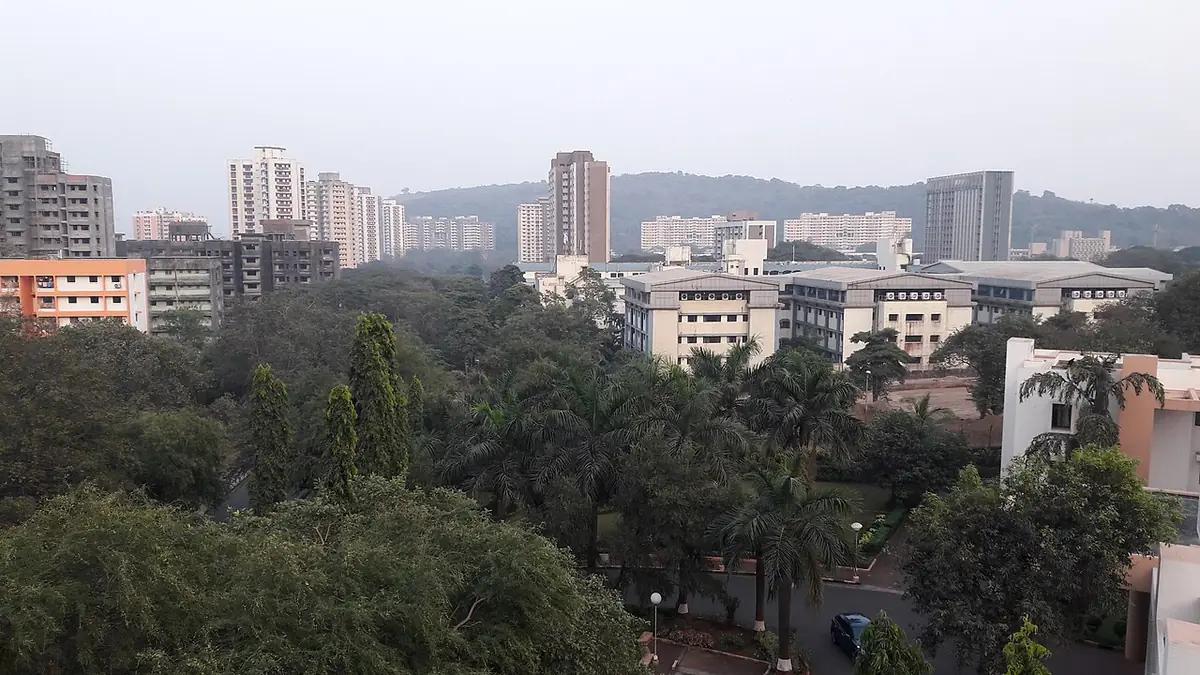
Apartment towers among the trees in Anushakti Nagar — Photo: arunpnair_787 · CC BY-SA 4.0 · Wikimedia Commons
Once that fundamental choice is made, it is time to look at the full budget reality of settling in Mumbai.
Choosing between a detached house and an apartment in Mumbai means choosing between two radically different ways of life in one of the densest cities in the world. On one side, a house offers rare private space, complete architectural freedom and no rigid society charges. On the other, apartments in secure residential complexes, known locally as societies, guarantee direct access to essential infrastructure such as running water at constant pressure, backup generators and active round-the-clock security. In Mumbai, the scarcity of land makes houses genuine heritage relics, often found in historic pockets such as Bandra or Juhu, while well-designed developments are multiplying in growing neighbourhoods such as Andheri West or Lower Parel.
Maintenance and day-to-day management weigh heavily in the balance. In a house, the owner deals alone with major climatic hazards, notably the monsoon and its risk of leaks, roof repairs and perimeter security. That independence appeals to families who value their autonomy, but it exposes them to unpredictable costs and a considerable mental load. By contrast, choosing an apartment in a well-run society hands those worries to a management committee, in return for monthly contributions that can be high but are essential to maintaining the value of the building. Residents gain welcome peace of mind, especially during the extreme weather episodes that occasionally paralyse parts of the city.
In strictly financial terms, buying a house in Mumbai requires enormous upfront capital and complex legal checks on land ownership, often a thorny issue in older areas. Apartments, for their part, offer far greater liquidity on the resale market and are much easier to let if your plans change. First-time buyers and investors almost always favour the legal security and operational simplicity of an apartment in a society, leaving houses to wealthy buyers with seasoned legal advisers who can clear the land history of the property they want without unpleasant surprises.
In the end, the decision is not a matter of simple aesthetic preference, but of how well it fits your appetite for risk and your working life. If you spend your days in the business districts of Nariman Point or the Bandra Kurla Complex, the proximity and security of an apartment logically win out over the charm of an outlying house. Take the time to weigh your real priorities for daily commuting before signing a final commitment that will shape your everyday life for the next ten years.
What overall budget should you plan to live and settle long term in Mumbai?
With these financial markers in place, let us look at how a typical day actually unfolds for a Mumbai resident.
Buying a house or a large apartment in Mumbai is not just about the purchase price shown on property portals. From the outset you need to factor in local taxes, registration fees, fitting-out costs linked to the region's climate and recurring maintenance expenses. Rigorous financial modelling of this kind avoids serious setbacks and secures the long-term future of your investment in a market marked by high volatility and strict regulatory requirements.
Upfront and purchase costs for a property
Cost item
Estimated range in rupees (INR)
Practical comment
Registration fee (stamp duty)
5% to 6% of the property's value
A mandatory tax payable to the government of the State of Maharashtra when the sale deed is registered.
Notary and legal fees
1% to 2% of the purchase price
Essential for auditing the history of the title deeds and making sure there are no land disputes.
Brokerage fees
1% to 2% of the transaction amount
The standard fee paid to the agency or agent who saw the negotiations through.
These costs come on top of the purchase capital straight away and can under no circumstances be financed by conventional bank loans.
Recurring charges and annual running budget
Type of charge
Indicative monthly or annual amount
Services included
Society charges (maintenance)
INR 5,000 to INR 25,000 per month
Covers security, lift maintenance, cleaning of common areas and general lighting.
Property tax
INR 30,000 to INR 150,000 per year
Collected by the municipality (BMC) based on floor area, exact location and the age of the building.
Comprehensive home insurance
INR 15,000 to INR 40,000 per year
Essential cover for monsoon water damage, fire and electrical risks.
Set aside an extra reserve to cover the structural renovation work that the ambient humidity demands.
Healthcare, schools, transport: what does an ordinary Tuesday in Mumbai look like?
Beyond this well-worn routine, many aspects that never appear in the sales brochures deserve your full attention.
To judge whether a property location in Mumbai makes sense, you have to set aside purely geographical calculations and look at the hard reality of daily travel. Between the chronic congestion of the main roads, the density of the suburban rail network and the proximity of leading healthcare facilities, every hour of the day brings its share of logistical compromises. Here is exactly how an ordinary Tuesday unfolds for a resident of an established residential neighbourhood.
07:30 - 08:30The school run and the first trafficSchool buses and private cars crawl through residential streets. Living right next to a good international school spares children hours of exhausting travel.
09:00 - 10:30Heading to the business district (BKC or Nariman Point)Peak congestion on the main roads. Local trains or ride-hailing apps help structure this journey, whose length can triple depending on the weather.
13:00 - 14:00Lunch break and neighbourhood lifeRelative calm returns to the local shopping areas. It is the ideal moment to pick up everyday essentials from the independent shops on the corner.
17:00 - 18:30Medical emergencies and health servicesIf needed, having leading hospitals less than twenty minutes away ensures quick treatment, a critical factor in a sprawling megacity.
20:00 - 21:30Back home as things calm downCity traffic gradually eases. Residents make use of the secure common areas or neighbourhood parks to unwind after an intense day.
What sales brochures and online listings always leave out
With these blind spots identified, let us turn to the classic misjudgements that surface a few months after moving in.
Mumbai's property market is full of beautiful visual promises that cleverly mask major structural constraints. Virtual tours and wide-angle photos flatter reality, leaving in the shadows technical or regulatory problems that weigh heavily on everyday quality of life. Let us break down the most common blind spots that intermediaries deliberately forget to raise at the first viewing.
How the water supply is actually managed
Many older buildings suffer regular supply cuts organised by the municipality. It is vital to check the capacity of the underground and overhead tanks and whether an effective individual filtration system is in place.
The real impact of the monsoon on foundations and facades
The torrential rains from June to September put buildings' waterproofing to a severe test. No recent facade renovation, or poor-quality materials, quickly show up as destructive damp and leaks.
Noise and pervasive air pollution
Heavy road traffic and constant construction sites in developing neighbourhoods generate high noise levels and concentrations of fine particles that call for double glazing.
The complexity of society bylaws
Some societies impose drastic restrictions on moving-in hours, pets or the use of common areas, sometimes significantly limiting owners' freedom.
The property disappointments you only discover six months after signing
Despite all these precautions, buying property in Mumbai does not suit every kind of investor or resident.
Looked likeA stunning, open view over green space or the sea.
Turned outThe vacant plot opposite was soon turned into a huge residential tower site, destroying the natural light and creating deafening noise for years.
Would have caught itAlways check the land-use plan with the local authorities (MCGM) to identify future construction projects that could block your outlook.
Looked likeA very attractive price per square metre compared with the upmarket neighbourhood next door.
Turned outThe society was riddled with chronic unpaid charges, leading to the rapid decline of the lifts, the suspension of security services and massive one-off calls for funds.
Would have caught itAsk to see the minutes of the society's last three general meetings to audit the building's real financial health before you commit.
Looked likeA calm, peaceful neighbourhood sheltered from the city's frantic bustle.
Turned outThe residential street turned out to be a busy night-time bypass for lorries and two-wheelers, making sleep impossible without professional soundproofing.
Would have caught itVisit the property at different times of day, especially in the evening and at the weekend, to judge the real noise level of the surroundings objectively.
Looked likeA kitchen and bathrooms renovated with gleaming modern materials.
Turned outThe previous owner's plumbing work was superficial, hiding decrepit pipes that gave way under the first heavy pressure of the rainy season.
Would have caught itHire an independent technical surveyor to carry out a thorough inspection of the water, drainage and electrical systems before final signature.
Unusual profiles: who should definitely not buy in Mumbai?
Now that every side of this demanding market has been brought to light, it is time to decide whether you are truly ready to take the plunge.
The buzz of the Mumbai property market exerts an irresistible pull, sometimes pushing unprepared buyers to commit considerable capital to projects that do not fit their personal situation. The opportunity cost of a poor purchase is especially high in this city, where selling an unusual property quickly is an uphill battle. A clear-eyed look at the profiles it does not suit helps you avoid disastrous asset-allocation mistakes.
The first-time buyer with a highly mobile career
→Buying a property in their very first year of relocation or job transfer.
Upfront transaction costs (taxes, registration, brokerage) easily reach 8% to 10% of the total, which requires holding the property for at least five to seven years to recoup the investment without an outright loss.
The investor who cannot stand red tape
→Buying older properties with strong renovation potential but complicated title deeds.
The Indian land system demands absolute legal rigour and endless patience with slow land-registry services and legal procedures, at the risk of tying up your funds for a decade.
The household seeking a high, immediate rental yield
→Buying high-end apartments in the most sought-after central neighbourhoods.
Gross rental yields in Mumbai have traditionally hovered around 2% to 3% a year, which makes buy-to-let a poor fit if immediate cash flow is your main goal.
So, are you really ready to go ahead with your property project in Mumbai?
At the end of this analysis, buying a property in Mumbai is no longer a matter of aesthetic impulse or falling for a photo. You now have a realistic picture of the budget constraints, the logistical demands of an ordinary Tuesday, the pitfalls hidden in listings and the classic mistakes that lie in wait for careless buyers. That clarity is your best shield against the disappointments of the local market.
If your career horizon is long term, your finances can comfortably absorb the upfront taxes and recurring charges, and you accept the compromises that come with life in a vibrant but demanding megacity, then the investment makes complete sense. Mumbai rewards those who approach its property market with method, legal rigour and first-class professional support, surrounding themselves with independent local experts.
If not, if any uncertainty hangs over your job stability or your tolerance for administrative and climatic hazards is limited, long-term renting remains a far wiser alternative. It gives you the flexibility you need to try out different neighbourhoods before putting down permanent roots in one of the most captivating cities on the planet.
Related questions
What additional costs should I budget for when buying a property in Mumbai?
You must budget for stamp duty, set at around 5 to 6% of the property's value, legal and title-check fees of 1 to 2%, plus brokerage commission and the local taxes collected by the municipality.
Can a foreign national buy property in India?
The rules for non-residents and foreign nationals are extremely strict and depend on your exact immigration status. It is essential to consult a lawyer who specialises in foreign exchange law and property regulation before taking any step.
Which Mumbai neighbourhoods are most popular with families buying a home?
Areas such as Bandra West, Juhu, Worli and some residential pockets of Andheri West draw most of the family demand, thanks to their international schools, healthcare centres and safe leisure spaces nearby.
How can I be sure the title deeds of an older apartment are valid?
A title audit means tracing the history of transactions back over several decades to confirm there are no disputed inheritances, hidden mortgages or land claims. Bringing in a specialist lawyer is a non-negotiable step.
What is the average rental yield in the Mumbai market?
Gross rental yields generally sit between 2% and 3% a year in most residential neighbourhoods. The market rests mainly on the expectation of long-term capital growth rather than on high immediate rental income.
How do housing societies deal with water and power cuts?
The vast majority of upmarket residences have oversized water tanks and diesel backup generators that can take over the power supply to common areas and lifts immediately in the event of an outage.
How does the monsoon affect the overall condition of buildings?
The monsoon season exposes facades and roofs to very heavy rainfall, inside and out. A thorough check of waterproofing and of the condition of rainwater drainage is essential on any technical inspection.
On average, how long does a complete property transaction take in Mumbai?
Between the initial choice of property, negotiation, the legal title audit, any bank financing and the final registration of the sale deed, you should generally allow two to four months.
What should I prioritise to keep my daily commute to the business district short?
Being right next to a suburban railway station or a major road serving the Bandra Kurla Complex (BKC) and Nariman Point remains the deciding factor in protecting your work-life balance.
Is it better to buy off-plan or an existing property in Mumbai?
Buying off-plan offers staged payment plans but carries the risk of delivery delays. A well-maintained existing property lets you move in quickly but requires more capital upfront and a meticulous technical inspection.