Preparing to value or buy an apartment in Perth means looking beyond first impressions and analysing how the local market really moves. This methodical guide takes you through every decisive step, from what sets each neighbourhood apart to the legal finer points of strata ownership.
Get the app
What nobody tells you.
Real prices, hidden costs and the traps to check before you commit.
Why valuing an apartment in Perth demands a rigorous local reading
Scroll
Why valuing an apartment in Perth demands a rigorous local reading
Preparing to value or buy an apartment in Perth means looking beyond first impressions and analysing how the local market really moves. This methodical guide takes you through every decisive step, from what sets each neighbourhood apart to the legal finer points of strata ownership.
Written by the ting.ad editorial team ·
Valuation Apartment Perth in Street View: drag to look around.
Moving from price theory to the reality of your own buyer profile is the essential next step to avoid heading in the wrong direction.
Valuing property in Perth is not just about floor area or distant national comparables. Each neighbourhood responds to very specific market forces, somewhere between the pull of the coastline and the appeal of fast-growing business districts. The same number of square metres can command radically different values depending on aspect, floor level and the year the building was completed. Price per square metre should be read not as an absolute truth but as the result of a fragile balance between available supply and demand from local employment hubs. Potential buyers compare every detail with surgical precision, so any loose pricing is punished straight away with months of sitting on the market.
The gross floor area shown on the plansvsHow the living spaces are actually used and how much light they get
A poorly oriented or awkwardly laid-out apartment loses perceived value, even with flattering square metre figures. Buyers favour easy flow and natural light over sheer gross volume.
Being right next to major roadsvsThe residential calm that working professionals look for
Easy access looks appealing on paper, but constant traffic noise drives away a large share of well-financed buyers. A valuation has to factor in the discount for background urban noise, or how well the property is served by public transport.
The building's ageing shared facilitiesvsFuture strata fees and reserve funds
An ageing pool or lifts signal costly renovation works that weigh heavily on the property's net value. A savvy buyer immediately deducts those future outlays from their opening offer.
Instant visual appeal during viewingsvsThe structural soundness and technical compliance of the building
Attractive home staging can sometimes hide insulation defects or damp problems linked to the region's climate. The financial valuation must rest on thorough technical reports to avoid any nasty surprises.
Does this apartment in Perth really suit the way you live now and in future?
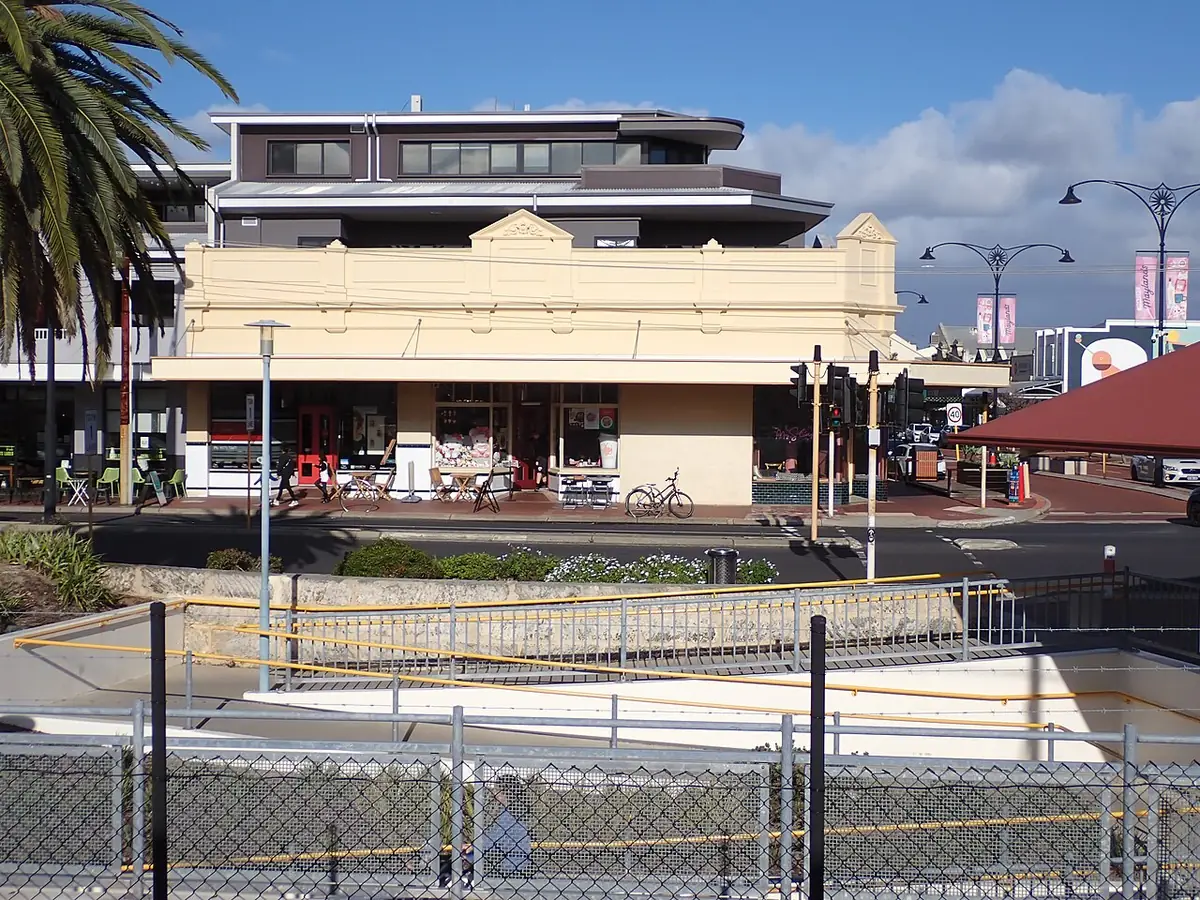
A heritage shopfront on Whatley Crescent in Maylands — Photo: Calistemon · CC BY-SA 4.0 · Wikimedia Commons
With your profile clarified, it is time to measure the cultural and practical gap between the habits you bring with you and the reality here.
Buying or valuing an apartment in Perth commits your day-to-day comfort for several years, well beyond simple resale returns. Local lifestyles place particular value on a connection with the outdoors, walking and cycling, and being close to urban leisure spaces. Every type of occupant has to weigh the constraints of strata living against their own wishes for space, quiet and independence. Ignoring these lifestyle factors almost always leads to a quick sense of mismatch after settlement. So it pays to look honestly at your weekly routine to confirm this kind of property is the right fit.
Busy urban professional
You put a central location and instant access to public transport first, to make the most of every day. A compact but well-designed apartment in the inner city meets your need for speed and energy. You are happy to give up a large private garden in exchange for a lively neighbourhood full of cafes, restaurants and local services. Simplified strata management frees up time for your work and your weekend activities. It is the ideal option to maximise your useful time while building on a highly sought-after location.
Retiree seeking peace of mind
Your top priorities are security, step-free or lift access, and no heavy upkeep of outdoor spaces. A well soundproofed apartment in a quiet residential neighbourhood of Perth gives you the calm you are after. You value having doctors, pharmacies and shops within walking distance without always depending on a car. Professionally managed strata living spares you worries about the roof or the building's structure. It is the choice of peace of mind and renewed freedom in everyday life.
Long-term investor
You assess every property strictly through net yield, rental demand and the strength of local demand. One- and two-bedroom apartments close to universities or employment hubs attract a stable, reliable pool of tenants. You need to build local taxes, management fees and strata levies carefully into your financial equation. Location outweighs everything else to ensure a smooth resale when the time comes, without a major discount. Your decision rests on hard figures rather than falling for looks.
Living here when you arrive from abroad: what really changes about housing in Perth
Once that cultural shift has sunk in, a close look at Perth's neighbourhoods becomes your compass for targeting the right area.
Settling or investing in Perth from abroad quickly brings you up against distinctive architectural, regulatory and cultural standards. Thermal insulation, habitable floor area and the relationship with outdoor space do not follow the same rules. Modern comfort is a constant, but the structure of strata schemes and the rules between neighbours have local specifics that you need to take on board before finalising a purchase. Failing to anticipate these cultural differences exposes you to lasting misunderstandings at general meetings or when fitting out your apartment.
From abroad
A centralised administrative structure and uniform national standards
Perth
A strict state regulatory framework run by local bodies, with very detailed strata by-laws
Each building has its own internal rules on structural alterations, short-term letting and pets. You absolutely must read the strata by-laws in full before signing.
From abroad
The historic importance given to old stone and traditional facades
Perth
An architectural culture firmly focused on modernity, maximum light and contemporary materials
Recent or renovated apartments include ventilation and double-glazing standards suited to the region's sunny climate. The costs of air conditioning and sun protection need to be built into your recurring budget.
From abroad
Works managed by traditional building managers
Perth
Often more responsive local strata councils, backed by specialist professional managers
Decisions on maintaining common areas are made more quickly, but they require owners to take an active part in meetings. Compulsory reserve funds make for healthier building finances.
From abroad
Making the most of the often compartmentalised interiors of older buildings
Perth
Open-plan layouts favouring large dual-aspect spaces and generous balconies or verandas
The boundary between inside and outside largely disappears, turning the balcony into a genuine extra living room for most of the year. The quality of this outdoor area weighs heavily in the price.
From abroad
Traditional choice criteria based on proximity to heavy rail and metro
Perth
A very strong premium on being close to nature reserves, riverbanks and dedicated cycle paths
The quality of the immediate surroundings and green spaces within walking distance directly affect the apartment's resale value. Local buyers see urban nature as a non-negotiable comfort criterion.
Which Perth neighbourhood should you target for your lifestyle priorities and budget?
Once you have identified the ideal neighbourhood, you need to test your financial ambitions against the hard figures of the local property market.
Choosing the right neighbourhood in Perth determines the quality of your investment and your day-to-day satisfaction through the seasons. Each area has its own identity, its own level of nightlife, its own transport links and its own mix of residents. Prices per square metre vary widely from one area to the next, reflecting the scarcity of land and demand from working people or retirees. It is unrealistic to look for the perfect neighbourhood without accepting clear compromises between purchase price, target floor area and distance from the city's main centres of activity.
The inner city (CBD)
Constant professional bustle, a brisk urban pace and the highest concentration of administrative and cultural services.
Suits
Professionals who want to cut out commuting and enjoy a lively city life without depending on a car.
Trade-off
One of the highest costs per square metre in the city, high density and relative quiet in the evenings and at weekends.
The inner residential suburbs
Tree-lined streets, an urban village atmosphere, independent cafes and a strong sense of community.
Suits
Buyers seeking a balance between local buzz, green space and residential calm in the evening.
Trade-off
Fierce competition for quality properties, limited housing stock and prices held up by constant demand.
The coastal and riverside areas
Exceptional light, bracing sea air and a lifestyle centred on the outdoors and water sports.
Suits
Those for whom being right by the water and a natural setting matter more than being close to the business district.
Trade-off
Exposure to coastal weather that requires careful upkeep of facades, and very high purchase prices.
The emerging and outer hubs
Urban renewal projects, public transport schemes under development and a younger population.
Suits
Bold investors and first-home buyers looking for medium-term growth potential on a more accessible budget.
Trade-off
An urban transition that is still unfinished, amenities sometimes still being rolled out and a less settled feel.
How much does an apartment in Perth really cost across different areas?
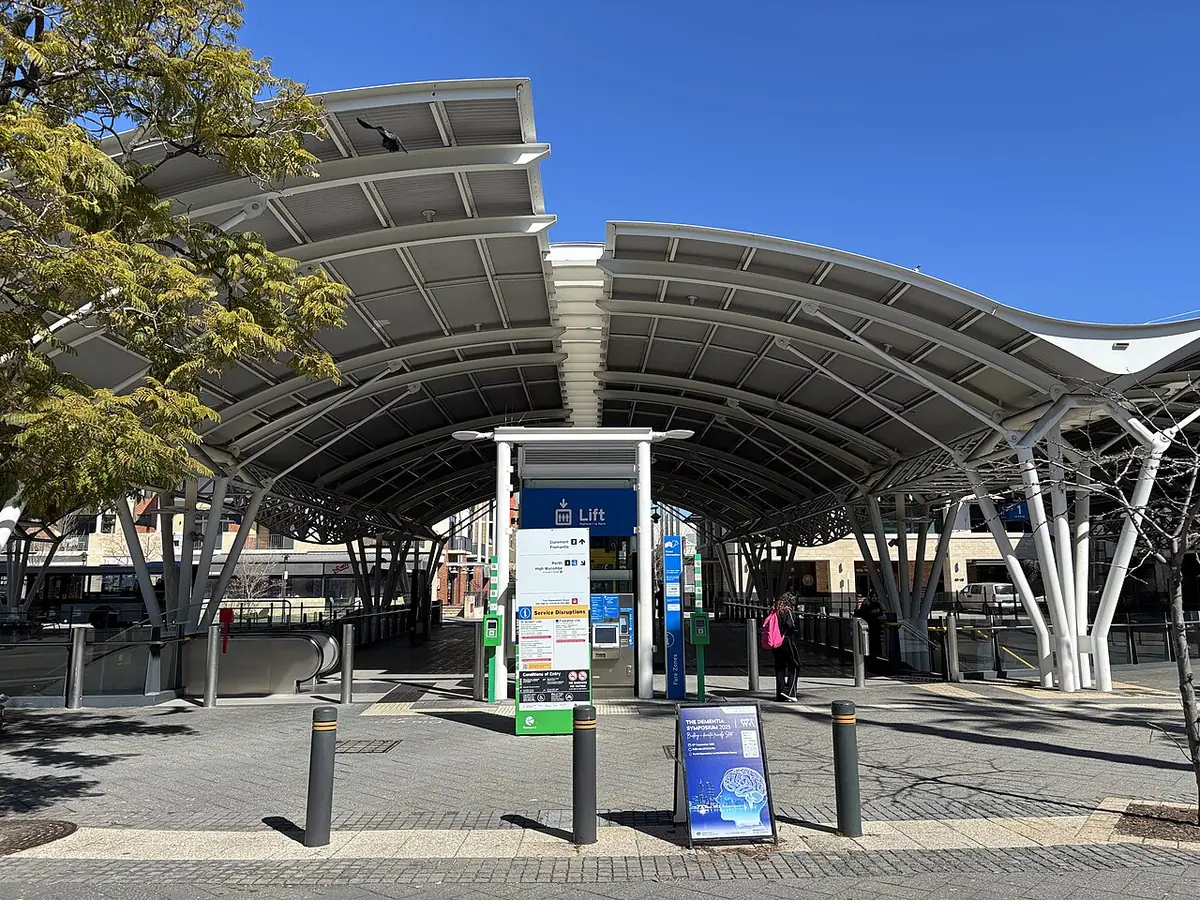
The curved canopy at the entrance to Subiaco station — Photo: Nick-D · CC BY-SA 4.0 · Wikimedia Commons
With the financial framework set, let us turn to exactly what you are buying in terms of ownership rights.
Budgeting for a property project in Perth requires a realistic view of the price ranges seen on the market. Sale prices depend closely on the age of the building, whether there is secure parking, a usable balcony and the overall quality of the strata scheme. The tables below summarise the trends observed to guide your offer without overpaying for a property or making an unrealistic bid. Bear in mind that additional costs, including local taxes and fees, come on top of the seller's net price.
PerthFor saleApartmentestimate
Median price / m²A$7,220Half the apartments sell below this
Median priceA$780kthe average is 14% higher — a few very large properties pull it up
Most common3 bedrooms36 % of listings
Average size110 m²
By number of bedrooms
Bedrooms
Share of market
Avg price
Price / m²
Avg size
1
14 %
A$451k
A$8,208 +8 %
55 m²
2
32 %
A$646k
A$7,600
85 m²
3most common
36 %
A$903k
A$7,220 −5 %
125 m²
4
18 %
A$1.22m
A$6,992best value / m²
175 m²
Each row is an average, compared against the area average of A$7,600 / m². These are indicative estimates of a typical local market, not a measured sample of live listings. Check current listings before relying on them.
What you can actually own: understanding the legal status of properties
With the legal structure understood, let us look at the strict order of steps to follow before you pay a single cent of deposit.
Buying an apartment in Perth is not just a matter of signing a standard sale contract. The legal rules governing strata ownership and the management of common property define exactly the extent of your rights and financial obligations. Confusing the different ownership regimes can lead to unpleasant surprises when works are carried out or collective decisions are made. It is essential to decode the legal structure of the title before committing for good.
Traditional strata title with shared unit entitlements
You own your private lot outright, plus an undivided share of the building's common property, such as the entrance lobby, corridors, foundations and roof. All decisions on maintaining or improving these shared spaces are put to a vote at the owners' general meeting according to a set allocation schedule. This system ensures major structural works are managed collectively, but it requires strict compliance with the strata by-laws to keep the whole scheme running smoothly.
What it changesYou share the financial and decision-making burden of the building, which protects you from unilateral decisions while obliging you to contribute to collective spending approved by majority vote.
Self-managed schemes or those run by a professional strata manager
Some small strata schemes opt for simplified self-management without an outside administrator, while large complexes bring in firms specialising in property management. The choice of governance directly affects how quickly technical emergencies are handled, the level of annual management fees and how transparent the accounts are. A rigorous strata manager protects the long-term value of the building through regular preventive maintenance.
What it changesYou benefit from professional administration that safeguards your legal and technical interests, in return for recurring running costs that must be built into your annual budget.
The fundamental rule to understand before paying a deposit on an apartment
With all these precautions in mind, let us look concretely at how a successful property transaction unfolds from start to finish.
Financially committing to an apartment in Perth follows a strict sequence that leaves no room for haste. Many buyers make the mistake of focusing only on the advertised price without auditing the financial and technical health of the strata scheme. Each verification step is a safeguard against hidden defects, unpaid levies within the building or ongoing neighbour disputes. Following this logical sequence protects your capital and gives you peace of mind about moving in.
Making a detailed written offer to the seller.
A thorough review of the minutes of the last three strata general meetings to identify works that were approved or rejected.
A careful check of the reserve fund balance and confirmation that no legal proceedings involving the strata company are under way.
Obtaining an independent building inspection report covering the structural condition of the building, waterproofing and the compliance of its services.
Final approval of your bank finance, with conditions clearly written into the contract.
Settlement of the sale through the authorised professional and the handover of the keys.
How a property transaction in Perth works, step by step
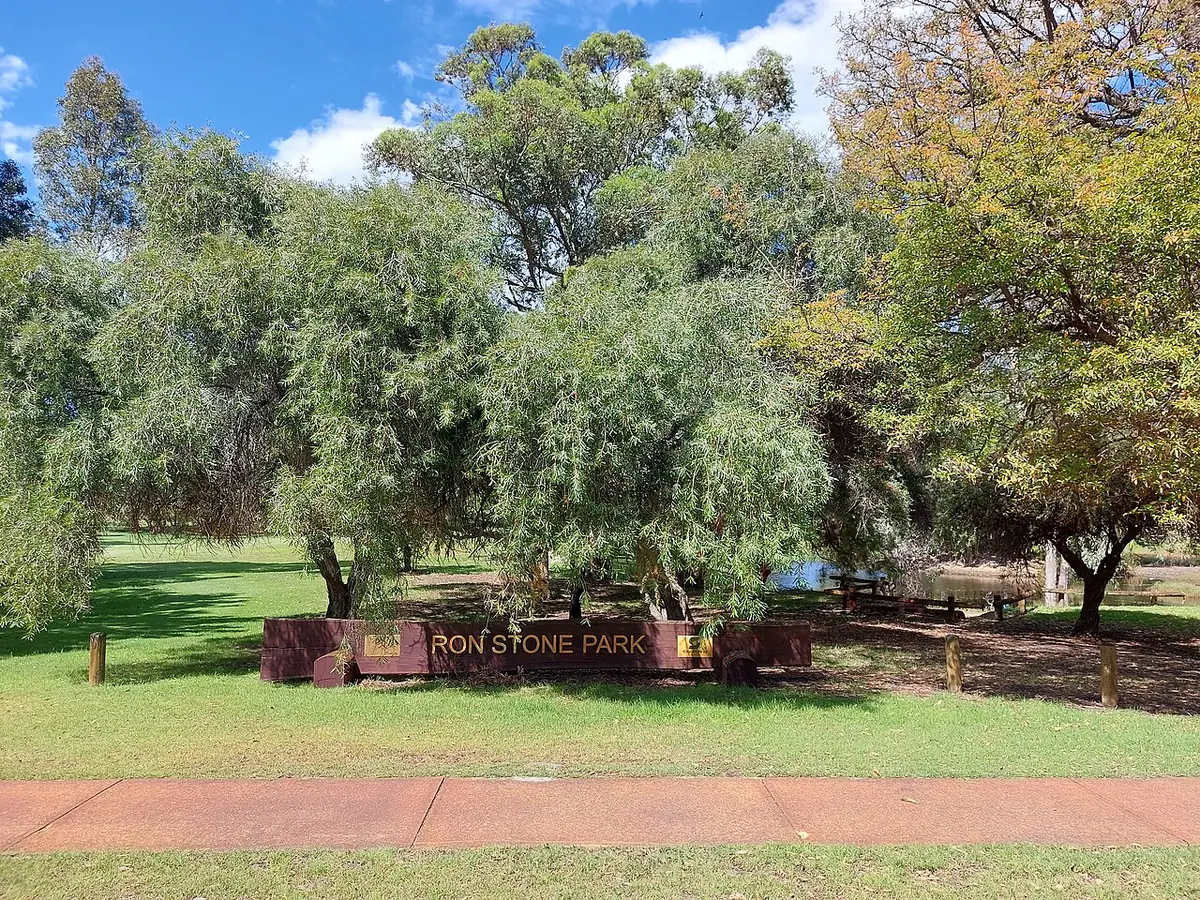
Ron Stone Park, a green space in Mount Lawley — Photo: Orderinchaos · CC BY-SA 4.0 · Wikimedia Commons
This complete journey gives you all the reference points you need to carry through your apartment valuation and purchase in Perth.
A successful property transaction in Perth depends on smooth coordination between the buyer, the seller, legal advisers and technical experts. Each party plays a specific role in confirming the legality, compliance and financing of the deal within the legal timeframes. Knowing the timeline and each party's responsibilities lets you steer your purchase with confidence and anticipate potential sticking points. Here is the marked-out path from the first viewing to actually moving into your new apartment.
The buyerTargeted viewing and checking your criteriaYou view the property, examining the condition of the common areas, its aspect, the noise level and the immediate surroundings before making an offer.
The seller and their agentNegotiating and accepting the offerThe owner considers your written offer and responds, setting the seller's net price and the main conditions of the transaction.
The legal representativesDrafting and signing the contract of saleBoth parties' legal advisers draw up the contract, including the finance and building inspection conditions.
The lenderProcessing the loan application and satisfying the conditionsYour bank processes the final loan application and issues the formal approval once the required security and valuation reports are confirmed.
The technical expertsStructural inspections and levy checksAn independent firm carries out the required inspections to certify there are no major defects and that the strata levy statements are accurate.
The settlement and legal officersSettlement and transfer of fundsThe final documents are signed, the funds are transferred to the seller's trust account and legal ownership of the apartment is officially transferred to you.
The buyerFinal inspection and moving inYou collect the keys, carry out the final condition inspection if the property was previously rented, and transfer your utility accounts.
House or apartment in Perth: which type of property suits your lifestyle?
Choosing between a detached house and an apartment in Perth fundamentally depends on how you feel about distance, upkeep and Western Australia's Mediterranean climate. Detached family homes dominate the outer suburbs and coastal neighbourhoods, offering generous living space, private yards and the privacy families look for. However, they demand considerable time and money to maintain gardens, pools and structures under intense sunshine. They are the obvious choice for those seeking complete residential independence and a direct connection with the outdoors.
Apartments, by contrast, are concentrated in the Central Business District, in Northbridge and along lively coastal strips such as Scarborough and Cottesloe. They meet the needs of working professionals, investors and buyers looking to cut commuting times and day-to-day logistics. Modern strata complexes often include high-end shared facilities such as communal pools, gyms and rooftop terraces overlooking the Indian Ocean or the Swan River. The trade-off is paying regular strata fees and accepting shared or smaller outdoor space.
Financially, the price gap between a house on its own block and an apartment has widened because of strong demand in the Perth property market. Houses in popular areas require a large purchase budget and come with rising maintenance costs due to the price of local labour. Apartments offer a more affordable way into some sought-after neighbourhoods, and while they have historically delivered more modest capital growth on resale, they offer excellent gross rental yields for investors chasing returns.
Your decision should therefore turn on your time horizon and your tolerance for household chores. If you plan to settle for the long term with children and value private space, a house is the natural choice despite the upkeep. If you prioritise a central location, the security of a gated complex and the freedom to travel without worrying about mowing the lawn, an inner-city or beachside apartment in Perth will be the most sensible option for your plans.
What overall budget should you plan for settling in Perth for the long term?
Buying a property in Perth means accounting for all the additional costs that come on top of the advertised price. Transfer duty, known as stamp duty in Western Australia, rises progressively with the value of the property. On top of that come building inspection fees, which are essential to identify any termite damage or coastal damp. Anticipating these outlays avoids unpleasant surprises when you put together your bank finance application.
Purchase costs and upfront taxes in Perth
Expense item
Estimated range in AUD
Comment and calculation
Transfer duty (stamp duty)
AUD 15,000 to AUD 35,000
Government tax calculated on the purchase value of the residential property.
Legal and conveyancing fees
AUD 1,500 to AUD 3,500
Payment to the conveyancer or specialist lawyer for the transfer of ownership.
Technical inspections (building and termites)
AUD 500 to AUD 1,200
Essential check of the structural condition and the absence of timber pests.
Loan application and valuation fees
AUD 600 to AUD 1,500
Administrative fees charged by the lender for granting the loan.
These amounts are indicative and depend directly on the market value of the property and on whether you are a resident or a foreign investor.
Annual running costs for an apartment or a house
Type of cost
Average annual cost
Frequency and local specifics
Strata fees
AUD 3,000 to AUD 8,000
Paid quarterly for apartments, covering upkeep of common areas and building insurance.
Council rates
AUD 1,800 to AUD 3,200
Annual charge paid to the local council for roads and waste management services.
Comprehensive home insurance
AUD 1,200 to AUD 2,500
Essential cover for fire, theft and weather events specific to the region.
Strata fees can soar in complexes with lifts, heated pools and high-end concierge services.
Health, education and transport: an ordinary Tuesday in Perth
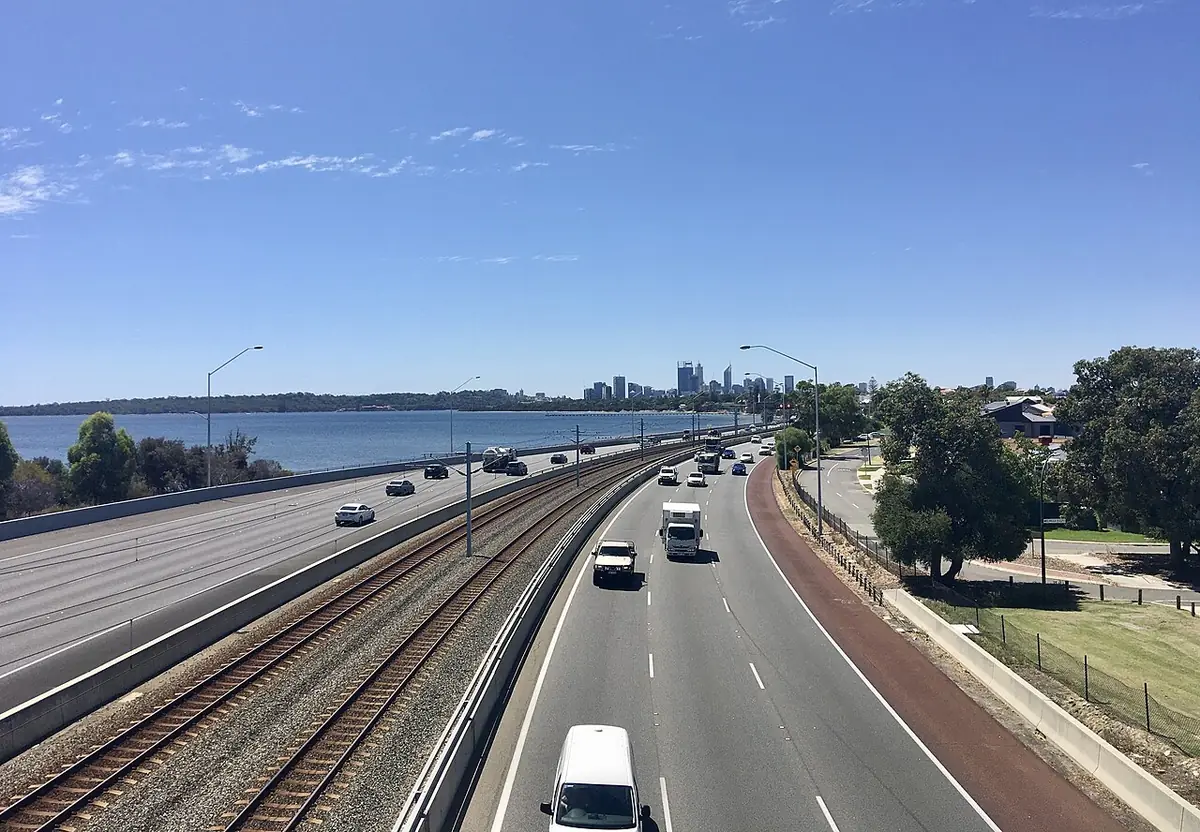
The freeway and rail line run along the river towards Perth city — Photo: Steelkamp · CC BY-SA 4.0 · Wikimedia Commons
Settling in the capital of Western Australia means understanding how its transport network and public infrastructure are organised. The Transperth train system and the freeways linking the metropolitan area from north to south set the rhythm of morning journeys. Families also need to consider how close they are to local public schools and major hospitals so they can plan their weekly routine without losing too much time in traffic.
07:30Leaving home and commuting to workTaking the Transperth rail network or main roads such as the Mitchell Freeway to reach the CBD.
08:45Dropping the children at schoolAccess to local primary and secondary schools, where school catchment areas matter a great deal.
12:30Lunch break and local servicesVisiting neighbourhood shopping centres or commercial areas for groceries and errands.
17:00Back near home and shoppingA stop at the local supermarket (Coles or Woolworths) to stock up before the evening rush.
19:30Relaxing and evening leisureEnjoying urban green spaces, parks along the Swan River or the ocean beaches, depending on where you live.
What property listings will not tell you about Perth
Behind the sunny photos and the promise of an easy lifestyle lie technical and regulatory realities that agencies often fail to highlight. Whether it is strata management, insulation poorly suited to cool winters or the constraints of local planning rules, every buyer needs to do their own research to avoid financial disappointments after signing.
Strict strata by-laws
Buying an apartment can come with very tough restrictions on keeping pets, interior alterations or short-term letting such as Airbnb. You must read the full register of by-laws before committing.
Thermal insulation and energy performance
Many older buildings in Perth have inadequate insulation, leading to high electricity bills for heating in winter and heavy air conditioning use during summer heatwaves. Building standards have moved on, but the existing housing stock remains uneven.
Urban development projects and noise
Perth's rapid expansion brings major road works and urban densification projects that can permanently change a neighbourhood's calm, a property's light or how smoothly traffic flows at peak hours.
The availability and cost of labour for renovations
Hiring qualified tradespeople in Western Australia is currently difficult and particularly expensive because of strong demand in the construction sector. Any refresh project should be budgeted with a generous safety margin.
The buying mistakes you only discover six months after moving to Perth
Looked likeAn ideal opportunity for a rental investment or a main home in an up-and-coming neighbourhood with strong growth potential.
Turned outAn area suffering from major road bottlenecks at peak hours, turning every daily journey into a test of patience.
Would have caught itPersonally testing the travel times at peak hour on a Monday morning before signing the final offer.
Looked likeA modern apartment with moderate strata fees and high-end features in a secure complex.
Turned outA strata reserve fund too small to cover major facade repairs or bringing the lifts up to standard.
Would have caught itInsisting that a legal adviser reviews the minutes of the last three strata general meetings.
Looked likeA charming older house full of character in a leafy, quiet residential neighbourhood.
Turned outA timber and brick structure needing repeated termite treatments and costly repairs to the original plumbing.
Would have caught itEngaging a specialist independent inspector to carry out a thorough assessment of the building's condition.
Looked likeA central location where you can do everything on foot or hop straight onto fast public transport.
Turned outPersistent night-time noise from major traffic routes and nearby nightlife areas.
Would have caught itVisiting the area around the property at different times of day, especially in the evening and at the weekend.
Who should not buy an apartment or a house in Perth for now?
Buying property in Perth is not a universal answer suited to every personal or professional situation. Interest rate volatility, upfront purchase costs and tying up cash all call for careful judgement. Some potential buyers expose themselves to disproportionate financial risk if they rush into the local market without a long-term view.
Expats and professionals on short-term assignments
→Postpone buying and opt for a long-term rental.
Buying and selling costs in Australia quickly swallow any potential capital gain over a period of less than five years of actual occupancy.
First-home buyers with a very small deposit
→Build up their savings before applying to banks for a mortgage.
An insufficient deposit exposes the borrower to less favourable interest rates and the need to take out costly lenders mortgage insurance (LMI).
Investors looking for immediate liquidity
→Turn to alternative financial investments that are more flexible than bricks and mortar.
Perth's property market, although dynamic, has slow liquidity cycles compared with listed stock market assets.
So, are you ready to go ahead with your property project in Perth?
Deciding to buy property in Perth calls for carefully weighing your hopes for personal stability against the economic reality of the local market. If your work and family ties to the capital of Western Australia are firmly rooted for the years ahead, buying an apartment or a house is an effective hedge against inflation and a volatile rental market. The region's economic fundamentals continue to attract new residents, underpinning lasting structural demand for well-located quality properties.
However, this step should never be driven by haste or the fear of missing out. Every dollar invested must be protected by a thorough analysis of additional costs, the technical condition of the building and how well the home fits your daily life. Taking the time to compare neighbourhoods, check the strata rules and confirm your finance plan with reputable professionals is the best guarantee of peace of mind for your financial future.
Ultimately, a successful property purchase in Perth is one that reconciles financial logic with the pleasure of living there. Whether it is a bright apartment with ocean views or a family home with a welcoming garden, your future home must meet your standards of comfort while keeping your budget balanced. If all these conditions are met and your time horizon is clearly defined, you have everything you need to move forward with confidence as a buyer.
Related questions
What are the key criteria for choosing between an apartment and a house in Perth?
The choice comes down to how much upkeep you are willing to take on, how much private outdoor space you need, and whether you prefer a central urban location or the calm of the outer residential suburbs.
How much do legal fees and taxes add to a property purchase in Western Australia?
Transfer duty (stamp duty) and the associated legal costs generally amount to between 3% and 6% of the total purchase price of a residential property.
Is a building inspection compulsory before buying in Perth?
It is strongly recommended to have a certified professional inspect the structure of the building and check for termites before you lift all the conditions on the contract.
Which neighbourhoods are most sought after for buying an apartment in Perth?
The Central Business District, Northbridge and popular coastal areas such as Scarborough and Cottesloe account for most of the developments that buyers are looking for.
How do strata fees work for apartments?
Strata fees are paid quarterly by owners to fund the upkeep of common areas, the building's shared insurance and a reserve fund for future works.
How much do commuting times matter when choosing a location in Perth?
Perth's urban sprawl makes being close to the Transperth rail lines and the main road corridors decisive if you want to keep daily journeys short at peak hours.
Can foreign investors buy property freely in Perth?
Purchases by non-residents require prior approval from the Foreign Investment Review Board (FIRB) and come with specific taxes on both buying and holding the property.
What should you check regarding a home's thermal insulation?
Many older properties need their insulation checked to keep energy bills down during the region's hot summers and cool winters.
How long should you plan to hold a property in Perth to make the purchase pay off?
Given the upfront purchase and transaction costs, it is generally advisable to plan on holding the property for at least five to seven years to recoup them.
Where can you find official information on planning and development projects in Perth?
The City of Perth and the Western Australian lands department regularly publish master plans and the planning regulations that apply.
Property review of ting
No ting properties in Perth yet
Be the first — share it on ting and it shows up right here.