Buying an apartment in Perth calls for a close understanding of the local market, of the city's geography and of the legal framework particular to Western Australia. This decision guide walks you step by step through structuring your property purchase with a clear head.
Get the app
What nobody tells you.
Real prices, hidden costs and the traps to check before you commit.
What you really get when you buy an apartment in Perth
Scroll
What you really get when you buy an apartment in Perth
Buying an apartment in Perth calls for a close understanding of the local market, of the city's geography and of the legal framework particular to Western Australia. This decision guide walks you step by step through structuring your property purchase with a clear head.
Written by the ting.ad editorial team ·
Perth in Street View: drag to look around.
Understanding these basic balances helps you judge whether your property plan fits the everyday reality of the city.
Buying an apartment in Perth is about more than acquiring square metres under a sunny sky. It means entering a property market that behaves like an island, sheltered by its geographic isolation and driven by a powerful mining economy. Between the search for a solid rental yield and the wish for a beachside lifestyle, the financial trade-offs call for a clear-eyed look at the distance between the centre and the coast.
Living right next to the business districtvsBuying on the waterfront or in the coastal suburbs
Living in central Perth makes working life easy and city life lively, but it often means smaller floor areas. Aiming for the coast, on the other hand, gives you open living spaces facing the Indian Ocean, at the cost of longer daily journeys to the economic centre.
Looking for long-term capital growthvsMaximising immediate rental yield
Investors have to choose between new apartments with strong rental demand but high strata levies, and older, better-located properties that need renovation to attract the tenants the local market is after.
The calm of the outer residential suburbsvsThe cultural buzz of the dense inner areas
The neighbourhood you pick shapes your daily life directly. Quiet areas offer an unspoilt, family-friendly setting, while central or trendy districts such as Northbridge mean accepting constant activity and the noise that comes with it.
Does this place really suit the way you live?
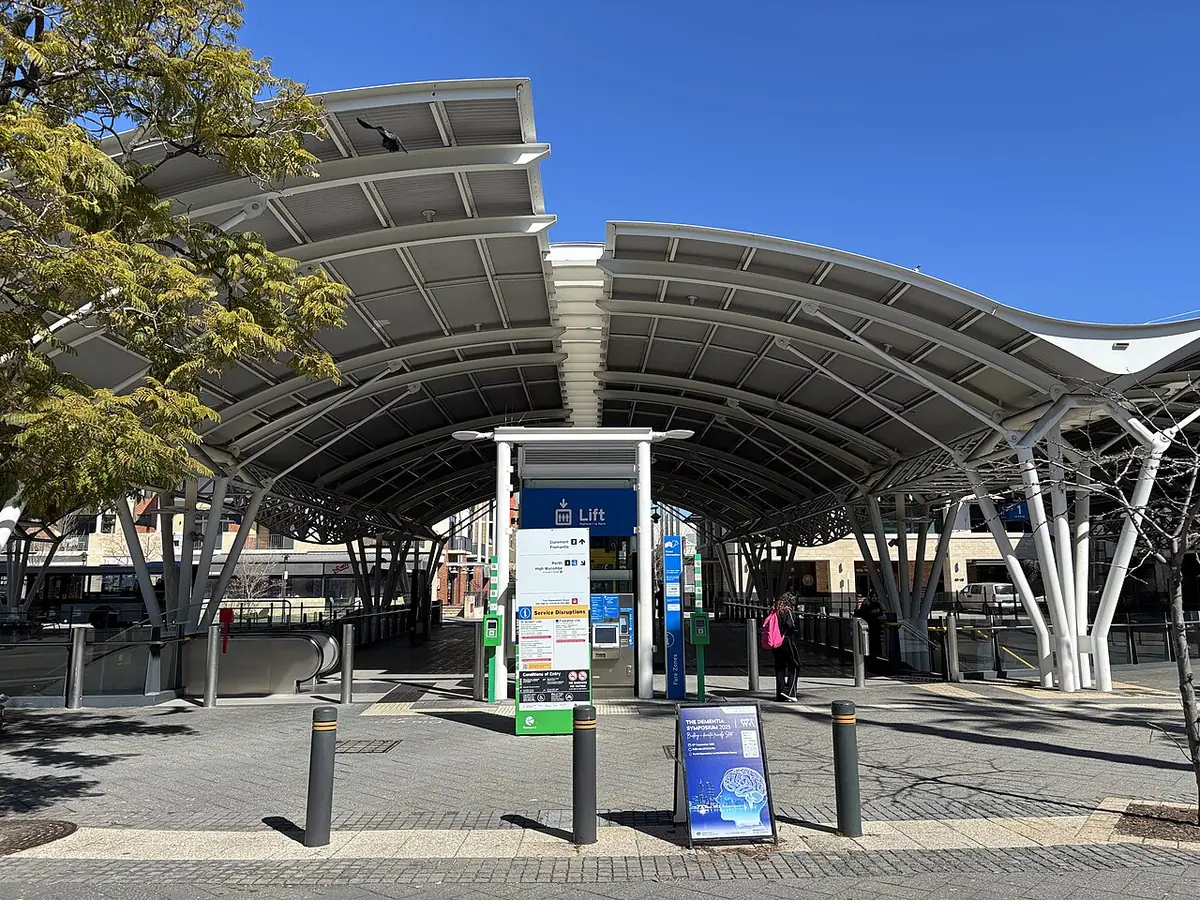
The curved canopy at the entrance to Subiaco station — Photo: Nick-D · CC BY-SA 4.0 · Wikimedia Commons
These lifestyle choices take on particular weight when you compare the cultural and regulatory reference points you are leaving behind.
Moving to or investing in Perth means signing up to a particular pace of life, one that puts a lot of weight on outdoor space and nature. The sheer size of the region and its geographic isolation shape a daily routine in which the car often remains central, despite the growth of public transport. Every kind of buyer needs to test their habits against local realities to avoid disappointment.
The active city dweller
To live in Perth without using a car every day, you need to focus strictly on apartments in the CBD or in the immediately neighbouring areas such as Mount Lawley or Subiaco. Properties there are scarcer and often more expensive to buy, but they put you within walking distance of cafés, train lines and the main employment hubs. It is the choice of convenience and time saved, at the expense of living space and of being close to the ocean beaches.
The coast lover
Targeting coastal suburbs such as Scarborough or Cottesloe transforms your experience of Perth. You enjoy an exceptional setting, shaped by swims in the sea and sunsets over the Indian Ocean. In return, prices per square metre soar and you will have to accept longer journeys to the city's financial centre, especially at rush hour. Coastal strata buildings also need closer attention to the effect of salt air on building materials.
The savvy investor
If your approach is purely about building wealth, your choice of property should rest on proximity to the city's major university or hospital hubs. These areas ensure healthy tenant turnover and steady demand from young professionals and international students. The challenge lies in picking well-managed strata schemes whose levies do not eat into your net return, a common pitfall in buildings with heavy shared facilities such as swimming pools.
Living here when you come from abroad: what actually changes
Once these reference points are absorbed, the crucial question of where to settle across the metropolitan area comes sharply into focus.
The Australian property system and the local practices of Western Australia can differ profoundly from what you are used to back home. Carrying your usual reference points into the Perth market will lead you into misjudgements, on the legal side as well as in the very idea of what a home is and how contracts work. Anticipating these cultural and administrative differences makes your purchase safer.
From abroad
A protective regulatory framework set uniformly at national level
Perth
Planning and strata rules governed at the level of the State of Western Australia
The laws governing shared ownership, known as strata titles, have their own local subtleties that you really must master before making any offer. Ignoring those details exposes you to surprises at owners' general meetings.
From abroad
Comprehensive, standardised technical reports that the seller is required to provide
Perth
An approach in which responsibility for inspection falls largely on the buyer
In Australia, the principle of 'caveat emptor' (let the buyer beware) often applies. You must commission independent experts yourself to inspect the structure, check for termites and assess the condition of the fittings before you lift your contract conditions.
From abroad
Negotiation practices framed by legal cooling-off periods
Perth
A very direct and fast process of auctions or sealed offers
The Perth market often runs hot, with decisions made within a few days. Getting your finances ready in advance with pre-approval from a lender is essential if you do not want the property to slip away while you are still studying the documents.
From abroad
Shared building charges that are usually predictable and evened out over time
Perth
Reserve funds that are sometimes underfunded and require special levies
Carefully reviewing the minutes of recent strata meetings is vital to identify upcoming work on the building, so you avoid picking up unexpected bills as soon as you move in.
Which Perth neighbourhood should you target for your property purchase?
These geographic choices translate into specific budget realities that deserve a frank look.
Metropolitan Perth stretches along the Swan River and the ocean, forming a patchwork of neighbourhoods with very distinct identities. Choosing the right area depends as much on your budget as on your tolerance for commuting and your appetite for urban buzz or residential calm. A close analysis of these micro-markets keeps you from buying a property that will be hard to resell later.
The CBD and Northbridge
A dense urban atmosphere, driven by the flow of office workers during the day and lively restaurants in the evening.
Suits
Professionals who want the shortest possible commute and investors counting on strong rental demand from working tenants.
Trade-off
High prices per square metre, often compact apartments and exposure to city noise.
Subiaco and Mount Lawley
A green, fashionable setting of tree-lined streets, independent shops and busy cafés.
Suits
People who want to combine architectural character, a village-style community and being right next to the city centre.
Trade-off
Fierce competition between buyers for quality properties and strict planning restrictions on renovations.
Scarborough and the coastal suburbs
Daily life shaped by sea breezes, open spaces and an ocean-focused sporting culture.
Suits
Buyers looking for a beachside way of life and an exceptional natural setting every day.
Trade-off
A strong reliance on the car to reach the inner metropolitan area and higher maintenance costs caused by sea salt.
Victoria Park and South Perth
Beautiful views of the city skyline across the river and a cosmopolitan food scene.
Suits
Families and couples looking for a sensible balance between residential space and quick access to the centre.
Trade-off
Roads crossing the river bridges quickly become congested during the morning and evening rush hours.
How much does an apartment in Perth really cost?
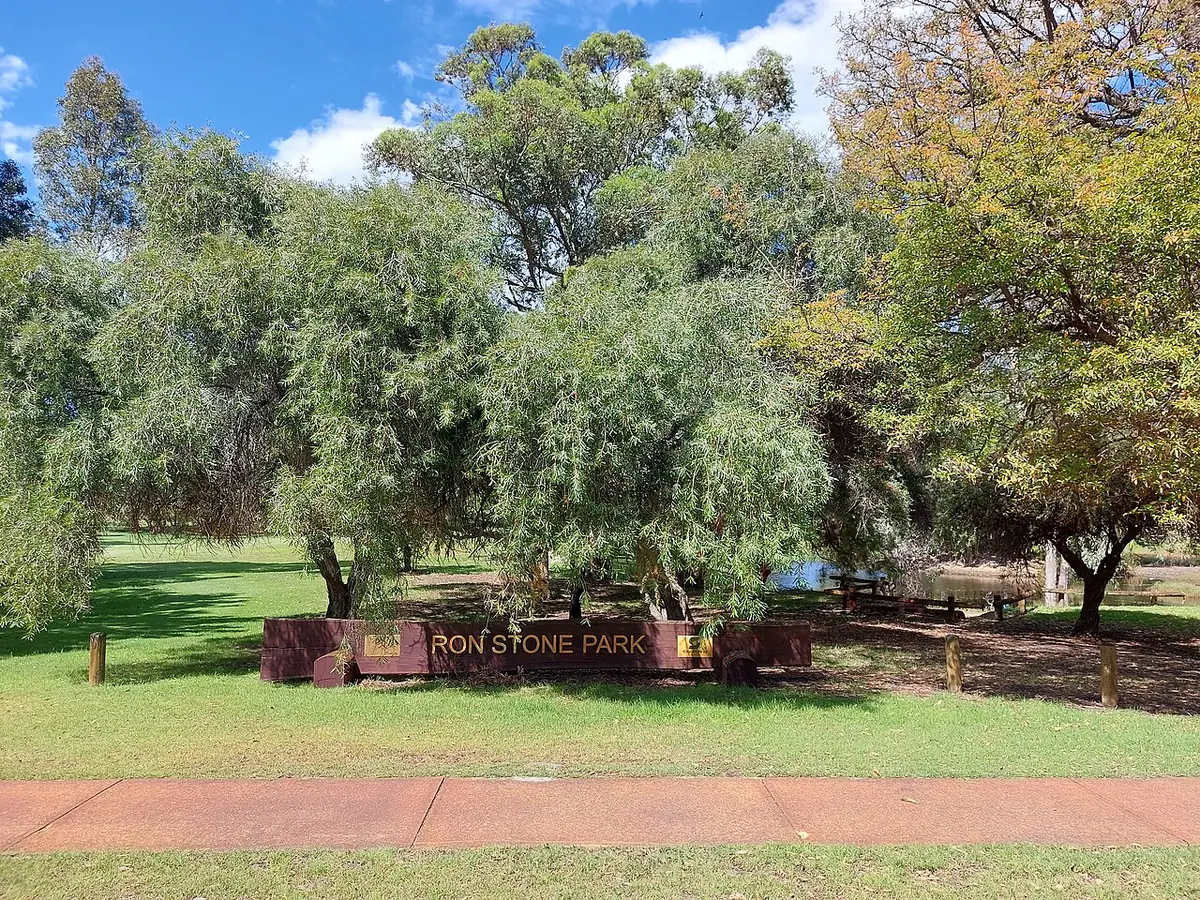
Ron Stone Park, a green space in Mount Lawley — Photo: Orderinchaos · CC BY-SA 4.0 · Wikimedia Commons
Beyond the headline value of the property, the legal structure of ownership determines what you actually own.
Working out the budget needed to buy an apartment in Perth means separating the headline value of the property from the compulsory extra costs in Western Australia. Transfer duty (stamp duty), conveyancing fees and strata levies all have a direct impact on your overall financing plan. With no fixed prices imposed, studying recent sales is essential.
PerthFor saleApartmentestimate
Median price / m²A$7,220Half the apartments sell below this
Median priceA$780kthe average is 14% higher — a few very large properties pull it up
Most common3 bedrooms36 % of listings
Average size110 m²
By number of bedrooms
Bedrooms
Share of market
Avg price
Price / m²
Avg size
1
14 %
A$451k
A$8,208 +8 %
55 m²
2
32 %
A$646k
A$7,600
85 m²
3most common
36 %
A$903k
A$7,220 −5 %
125 m²
4
18 %
A$1.22m
A$6,992best value / m²
175 m²
Each row is an average, compared against the area average of A$7,600 / m². These are indicative estimates of a typical local market, not a measured sample of live listings. Check current listings before relying on them.
What you can actually own: understanding Australian strata title
That administrative rigour carries straight through into strict respect for each stage of a property transaction.
In Western Australia, apartments are generally bought under strata title or survey strata title. This fundamental legal distinction redefines your rights over the walls, the common areas and the use of the land. Misunderstanding this legal framework leaves buyers open to disappointment when they later want to alter their property.
Standard strata title
You buy a defined volume of space inside a building, together with an undivided share of the common areas and the land. Decisions about the building are taken collectively by all the owners acting as a strata company, and any external change to your lot requires formal approval.
What it changesYou cannot carry out work that changes the outside appearance of your apartment without the prior agreement of the strata company, which protects the visual harmony of the building but limits your freedom.
Financial and management responsibilities
Strata ownership means paying regular levies towards the upkeep of the shared spaces, the lifts and the building's foundations. Local legislation requires a reserve fund to be built up to cover major repairs, safeguarding the long-term finances of the scheme.
What it changesLooking closely at the strata company's accounts before you buy saves you from discovering unpaid collective debts, or that there is no provision for roof repairs that have become urgent.
The basic rule to understand before you pay a deposit
Following this sequence carefully leads naturally to carrying out the practical steps in the right order on the day.
Making an offer on an apartment in Perth leaves no room for guesswork. The local legal system does not tolerate second thoughts once the conditions have been satisfied, which makes the technical and financial checks absolutely critical. The timeline of your contract conditions is your only shield against hidden defects and refused finance.
Drafting the initial offer with clear conditions attached.
Including protective clauses covering firm approval of your bank finance and an inspection of the property by an independent professional.
Paying a deposit into trust with the real estate agent or the settlement agent as soon as the seller accepts the offer.
Carrying out the essential inspections, in particular for termites and for the building structure, within the agreed deadlines.
Formally satisfying the conditions once everything is clear on both the technical and the financial side.
Final signing and the official transfer of ownership handled by the legal representatives.
How a property transaction in Perth unfolds, step by step
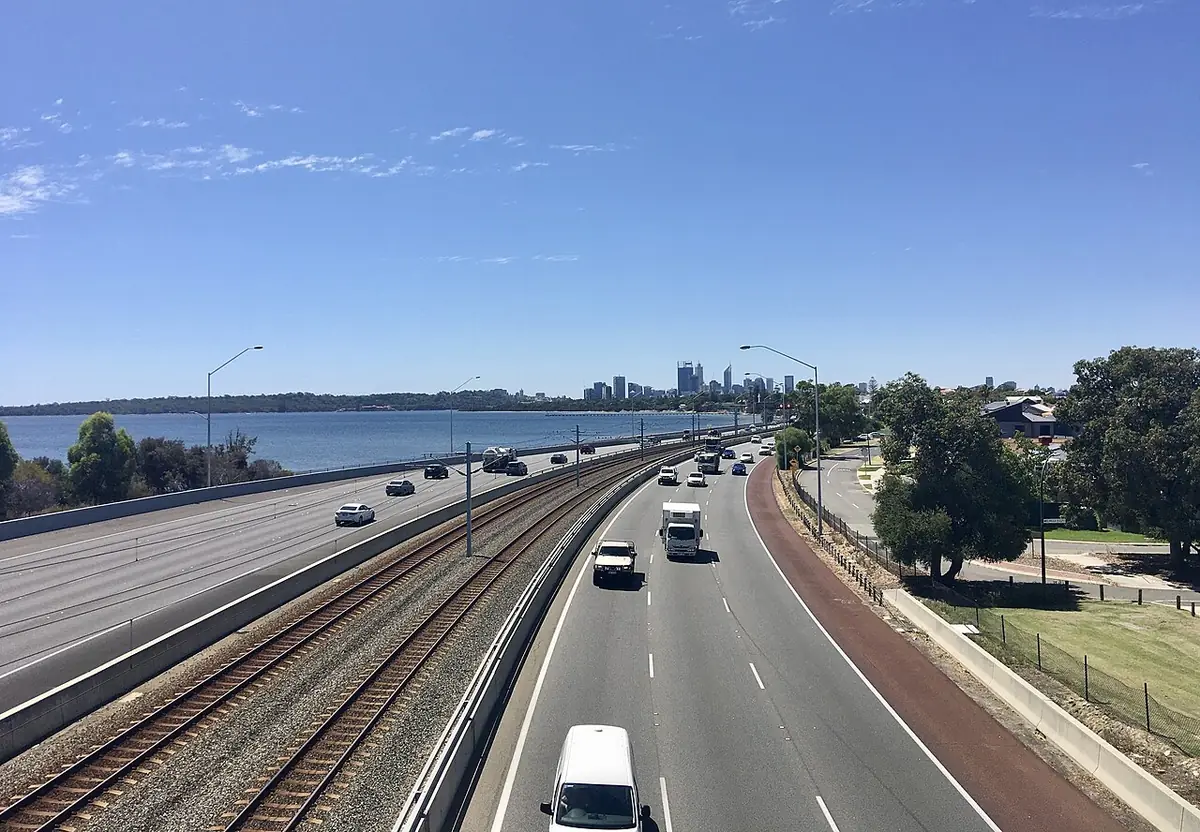
The freeway and rail line run along the river towards Perth city — Photo: Steelkamp · CC BY-SA 4.0 · Wikimedia Commons
Buying property in Western Australia follows a formal process overseen by specialists called settlement agents or conveyancers, who are distinct from traditional lawyers. This professional set-up provides legal certainty for the transfer of ownership, from the initial agreement through to registration with the state land registry.
The buyerMaking a written offerThe offer is set out on a standard form that includes the proposed price, the conditions and the preferred date for final settlement.
The sellerAcceptance or counter-offerThe seller reviews the offer and may negotiate the financial terms, or accepts it by signing the contract, which binds both parties subject to the conditions.
The building inspectorInspections and checksThe buyer commissions experts to confirm there are no timber pests and to assess the structural condition of the apartment before the conditional period expires.
The lenderMortgage approvalThe bank issues final loan approval after an independent valuation of the property's market value.
The settlement agentPreparing for settlementThe settlement agent prepares the legal documents, apportions rates and taxes, and coordinates the flow of money between the different parties.
The parties and agentsCompleting the transaction (settlement)The funds are officially transferred, the property is registered in the buyer's name and the keys are handed over to the new owner.
Buying an apartment or a house in Perth: which is right for you?
Now let us turn to the figures, to understand exactly what financial effort it takes to make this purchase happen in Perth.
Buying property in Perth forces you to choose, quite quickly, between two radically different ways of life that will shape your days for the next ten years. On one side are detached houses with gardens, often found in the sprawling suburbs such as Joondalup or Cannington, which embody the traditional Western Australian way of life. They offer plenty of space, complete freedom to arrange things as you like and room for a growing family without worrying about noise from next door. However, all that space comes at a direct cost, not only when you buy but also in upkeep, in water for the lawn and in the daily commute to the Perth CBD business district. Every weekend quickly turns into a session of mowing and weeding, which can weigh heavily on a busy working schedule.
By contrast, choosing an apartment in central Perth, East Perth or Subiaco completely redefines urban convenience and the way you manage your time. Modern strata buildings often include high-quality shared facilities, such as an outdoor pool, a gym and a communal barbecue area, while removing the burden of major exterior maintenance. It is the preferred option for young professionals and investors looking for quick resale and walkable access to the best restaurants, cafés and lines on the Transperth network. Even so, you have to accept a smaller living space, work within strata by-laws that can be strict and pay regular levies that rise over the years, not to mention the potential volatility of resale prices depending on the supply of new developments.
The choice between these two options therefore comes down to your time horizon and your tolerance for logistical constraints. If you value space and independence and want to build pure land wealth, the detached house remains the region's safe haven above all others. If easy travel, security and effortless modern comfort are at the top of your priorities, the city apartment is the natural choice. Looking honestly at your real habits on the worst days of rain or heatwave will save you from taking an irreversible wrong turn when you come to sign at settlement.
What realistic budget do you need to live and buy in Perth?
To get a better feel for everyday life, let us picture a typical day in the Western Australian capital.
Drawing up a budget for buying and for day-to-day living in Perth means taking account of the economic particularities of Western Australia, marked by a strong mining sector and constant population pressure. Beyond the headline price of the property, buyers need to allow for the local transfer duty known as stamp duty, compulsory insurance and changes in the cash rate set by the Reserve Bank of Australia. A careful assessment of fixed and variable costs keeps your investment sustainable and protects your ability to save when the economy turns.
Purchase price ranges by property type and area in Perth
Property type
Typical area
Lower range
Upper range
What moves the price
One-bedroom apartment
Perth CBD / East Perth
AUD 350,000
AUD 500,000
Proximity to transport and a usable balcony
Two-bedroom apartment
Subiaco / South Perth
AUD 550,000
AUD 800,000
Views over the Swan River and the standard of the building
Family house
Middle-ring suburb
AUD 650,000
AUD 950,000
Block size and proximity to the best schools
Premium house
Coastal suburbs (Cottesloe)
AUD 1,200,000
AUD 2,500,000
Direct beach access and architectural character
Median prices fluctuate with the seasons of the Western Australian property market and the speed of sales.
Estimated monthly budget for a resident household in Perth
Expense
Apartment (strata)
Detached house
Budget comment
Strata levies / maintenance
AUD 350 to AUD 700
AUD 100 to AUD 250
Higher management costs in buildings with a lift and a pool
Home insurance and local rates
AUD 200 to AUD 350
AUD 350 to AUD 600
Council rates and water rates vary with the size of the home
Energy (electricity, gas)
AUD 150 to AUD 250
AUD 250 to AUD 450
Heavy air conditioning use during the very hot summer months
Transport and getting around
AUD 200 to AUD 400
AUD 350 to AUD 700
Using the Transperth network versus running two cars
These estimates reflect average costs for a typical household in urban and outer suburban areas.
Health care, schools and transport: what does an ordinary Tuesday in Perth look like?
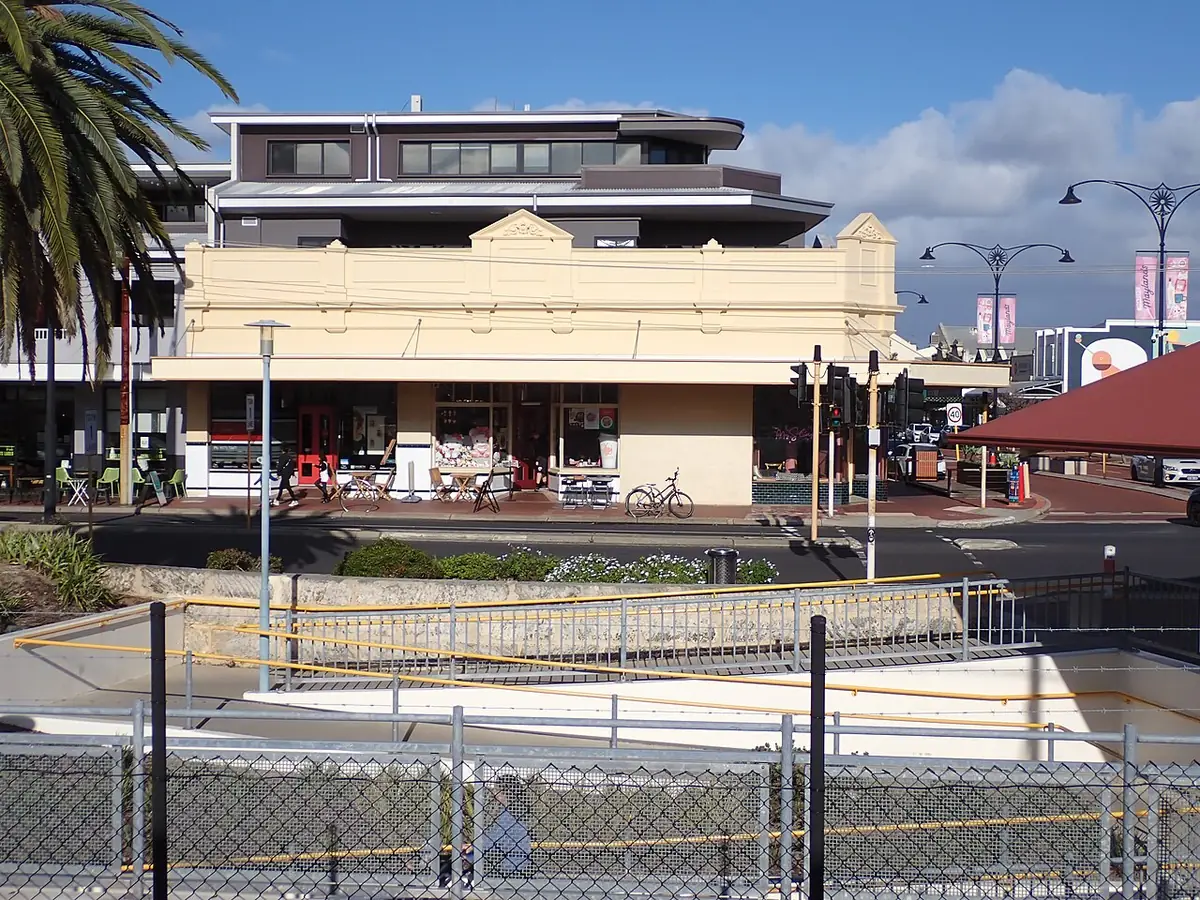
A heritage shopfront on Whatley Crescent in Maylands — Photo: Calistemon · CC BY-SA 4.0 · Wikimedia Commons
Beyond this well-oiled routine, some crucial aspects of the property market never appear in the glossy brochures.
Getting a feel for the pace of life in Perth means looking at the practical reality of an ordinary weekday, from getting up to going to bed. Between commuting on the freeway, getting to well-regarded schools and using the medical facilities, every minute counts. The Transperth public transport network, combining trains and buses, shapes how city residents get around, while those in the outer suburbs have to build morning traffic congestion into their daily planning.
07:00Home and early startMaking coffee and checking the traffic on major roads such as the Kwinana Freeway to avoid the worst of the hold-ups.
08:15School drop-offArriving at the local school, a key moment when the 40 km/h school zones are closely enforced by the authorities.
09:00Arriving at the office in the Perth CBDSettling in at work in the business district, making the most of good digital connectivity and the lively atmosphere of the city centre.
12:30Lunch break by the Swan RiverA well-earned break along the landscaped riverbanks, very popular with office workers who want some fresh air at midday.
15:30Errands and health appointmentsA quick visit to the local pharmacist or a stop at a nearby shopping centre for the week's fresh groceries.
17:30Commute home and after-school activitiesTaking the Transperth trains or driving home, often combined with picking the children up after their sports training.
20:00A quiet evening at homeFamily dinner in the living room or out on the patio, enjoying the easy-going evenings typical of Western Australia.
What glossy Perth property listings consistently fail to tell you
These grey areas explain why some buyers voice bitter regrets a few months after getting the keys.
The superb photos of sunsets over the Indian Ocean and the gushing agency descriptions often hide technical and regulatory constraints specific to Perth. Overlooking these invisible factors during a viewing can turn your purchase into an unexpected money pit. It is essential to examine the building's history, the local planning rules and the particular characteristics of Western Australian soil closely before committing for good.
Thermal orientation and sun exposure
A west-facing façade without proper sun shading turns your apartment into a real furnace during the summer months. Electricity bills shoot up because the air conditioning runs non-stop just to keep the temperature bearable.
The strict rules of strata councils
The strata council has wide powers to ban pets, restrict short-term letting or impose costly exterior refurbishment work. Failing to read the by-laws before buying is a guarantee of unpleasant surprises.
Termites and the quality of timber framing
Many traditional houses have timber structures vulnerable to destructive attacks from termites, which are very active in the region. A thorough pest inspection is non-negotiable if you want to avoid repairs running into tens of thousands of dollars.
Restrictions in bushfire-prone areas
Some outer suburbs close to natural bushland are subject to extremely strict fire-resistant building standards. These requirements considerably increase the cost of renovations and annual insurance premiums.
The real speed of the broadband connection (NBN)
Depending on the connection technology available in the street (FTTC, FTTN or FTTP), internet speeds can vary by a factor of five. For anyone working from home, checking this technical point avoids lasting daily frustration.
The buying mistakes newcomers discover six months after settling in Perth
These disappointments show that buying property in Perth does not suit every kind of buyer.
Looked likeA golden opportunity in a booming suburb with guaranteed short-term capital growth.
Turned outAn area poorly served by public transport, creating total dependence on the car and hours lost in traffic jams.
Would have caught itTesting the commute at rush hour on a Tuesday morning before signing the final offer.
Looked likeA charming older apartment full of irresistible character, with minimal strata levies.
Turned outA money pit eaten away by winter damp and ageing pipes that needed urgent and costly full renovation.
Would have caught itInsisting on a complete, detailed building inspection report written by a certified independent expert.
Looked likeA large leafy garden guaranteeing total peace and privacy, with no one overlooking you.
Turned outA ruinously expensive summer watering chore and a constant invasion of insects needing regular, burdensome pest treatments.
Would have caught itLooking at the property's past water usage and estimating the real time you would spend on garden upkeep.
Looked likeAn ideal rental investment that would need no management at all on your part.
Turned outUnpaid rent and long vacancies caused by an oversupply of competing new developments in the same area.
Would have caught itChecking the actual rental vacancy rates published by the state's property authorities before committing.
Which kind of buyer is Perth property absolutely not right for?
It is time to pull all of this together and work out whether you are truly ready to take the plunge.
The Perth property market has cyclical dynamics and geographic constraints that make it unsuitable for certain investors and home buyers. Trying to establish yourself in this city without aligning your personal strategy with the reality on the ground inevitably leads to financial failure or to dissatisfaction with where you live. Identifying these counter-examples saves precious time and money.
The investor chasing very short-term speculative gains
→An upmarket apartment in the city centre, hoping to resell quickly at a 30% profit within twelve months.
The Western Australian market follows long cycles, often tied to commodity prices, and the upfront purchase costs absorb almost all of any short-term gain.
The first-time buyer on an extremely tight budget with no savings buffer
→The cheapest house on the market, far from everything, hoping to renovate it themselves at weekends on a small budget.
The cost of building materials and the shortage of skilled tradespeople in Australia push even the smallest renovation quote well beyond expectations.
The city dweller deeply attached to extensive public transport and a vibrant nightlife
→A large, isolated house in the green outer suburbs to enjoy the space and the quiet.
Geographic isolation and local shops closing early quickly create a sense of cultural and social isolation that becomes hard to bear.
So, are you ready to make your Perth property plan happen?
At the end of this analysis, buying property in Perth should no longer feel like an uncertain gamble but like a carefully considered decision grounded in the economic reality of Western Australia. You now understand that every choice of neighbourhood, every type of property and every practical factor weighs heavily on your future quality of life and on the health of your savings. The advertising promises fade in the face of the concrete demands of maintenance costs, strata by-laws and daily commuting times. If you have measured that effort and accepted those trade-offs, you have the clarity needed to make your purchase a success.
The Perth property market consistently rewards thorough preparation, patience and careful checking of the technical details rather than impulse or passing fashion. Whether you are securing a modern apartment near the Swan River or investing in a family house in the residential suburbs, your success depends on your ability to match your real budget with your deeper aspirations. Take the time to view properties at rush hour, talk to your future neighbours and consult independent local experts before signing any contract of sale.
In the end, becoming a homeowner in Perth is an exciting adventure that anchors you for the long term in the southern hemisphere. If your finances are firmly backed by a sufficient emergency fund and your plans are set on a medium- to long-term horizon, the signs are good. Trust the facts, set aside speculative mirages and move step by step towards the settlement that will make you a contented resident of Western Australia.
Related questions
What do purchase costs and transfer duty typically add up to when buying in Perth?
Purchase taxes and costs, known in Western Australia as stamp duty, vary with the value of the property you buy. For a standard apartment or house, they generally come to between 3% and 5% of the total purchase price, plus modest administration fees for the official land registration.
Can foreigners buy property freely in Perth?
Property purchases by non-residents in Australia are tightly regulated by the Foreign Investment Review Board (FIRB). Foreign investors must obtain FIRB approval before they buy, and the restrictions apply mainly to established homes, as a way of encouraging the construction of new housing.
Which are the most sought-after neighbourhoods for buying an apartment in Perth?
The most popular areas for buying an apartment include the Perth CBD for being right next to work, Subiaco for its village feel and its cafés, South Perth for its sweeping views of the skyline, and East Perth for its quiet, well-connected riverside setting.
How does apartment ownership in a shared building work in Perth?
Shared buildings, called strata schemes in Western Australia, are run by a council elected by the owners. The council collects regular levies to maintain the common areas, pay for the building insurance and enforce by-laws that can be very strict about pets or letting.
How does the summer weather affect your energy budget in Perth?
Perth enjoys a hot Mediterranean climate with especially dry, sunny summers in which temperatures regularly go above 35 degrees. Heavy use of air conditioning during those periods, at peak and off-peak times alike, pushes monthly electricity bills up noticeably, and that is worth planning for.
Is it possible to get a mortgage as an expat in Perth?
Yes, Australian banks and local lenders will grant loans to expats and new arrivals who hold a valid work visa. However, the lending conditions often require a larger deposit, generally 20% or 30% of the value of the property.
Which natural hazards should you watch for when buying property in the region?
The main risks to consider in Perth are bushfires for properties on the far, wooded fringes of the city, and episodes of severe coastal storms. It is essential to check that the building meets local resilience standards and to take out comprehensive home insurance.
How long does it usually take to complete a property transaction in Perth?
Once the offer has been accepted and the contract signed, the standard time to complete the transaction and reach final settlement is generally between 30 and 60 days. That window allows all the necessary legal, title and financial checks to be carried out.
How can you find out about future planning projects around a property in Perth?
The City of Perth and the state authorities regularly publish urban development plans and registers of building permits. Looking through these public documents lets you make sure that no large construction project will block your view or disturb the peace of the neighbourhood you have in mind.
What tax advantages come with rental investment in Australia?
The Australian tax system allows negative gearing, which lets investors deduct the losses generated by a rental property, including loan interest and depreciation, from their overall taxable income. The arrangement is regularly debated in politics but remains a pillar of the market.
Property review of ting
No ting properties in Perth yet
Be the first — share it on ting and it shows up right here.