Getting a property purchase right in Perth means properly understanding the local housing and the Western Australian way of life. This guide sets out the key trade-offs between neighbourhoods, the financial realities and the legal steps you cannot skip, so you can settle in with complete peace of mind.
Get the app
What nobody tells you.
Real prices, hidden costs and the traps to check before you commit.
What owning a house in Perth really changes in your daily life
Scroll
What owning a house in Perth really changes in your daily life
Getting a property purchase right in Perth means properly understanding the local housing and the Western Australian way of life. This guide sets out the key trade-offs between neighbourhoods, the financial realities and the legal steps you cannot skip, so you can settle in with complete peace of mind.
Written by the ting.ad editorial team ·
Valuation House Perth in Street View: drag to look around.
Beyond the practical side, your personal lifestyle has to be weighed against the geography of the region.
Buying a detached house in Perth is not just about extra square metres or building up wealth. It is a lifestyle choice shaped by the vastness of Western Australia, the constant sunshine and an outdoor-focused urban culture. The space on offer and the closeness of wide open landscapes redefine what residential comfort means. Understanding that initial gap helps you avoid the disappointments that come from the housing expectations you bring from back home.
Generous living space and private outdoor areasvsRegular upkeep demanded by the climate and the size of the blocks
Properties usually come with large blocks of land that need careful garden management, especially through the hot summers. That freedom of space is paid for with a real investment of your own time or significant landscaping costs.
A relaxed pace of life centred on nature and the coastvsGreater reliance on main roads to reach the employment hubs
The metropolitan area stretches for dozens of kilometres along the Indian Ocean and the Swan River. Daily life may feel calmer, but commuting takes a level of planning that people often underestimate at first.
Quickly becoming part of a lively local communityvsRelative distance from the big, very dense cultural centres
Neighbourhood life revolves around local hubs and parks that are very busy at weekends. In return, the constant buzz of a big city gives way to a more suburban, family-oriented lifestyle.
What kind of buyer are you in Perth's residential property market?
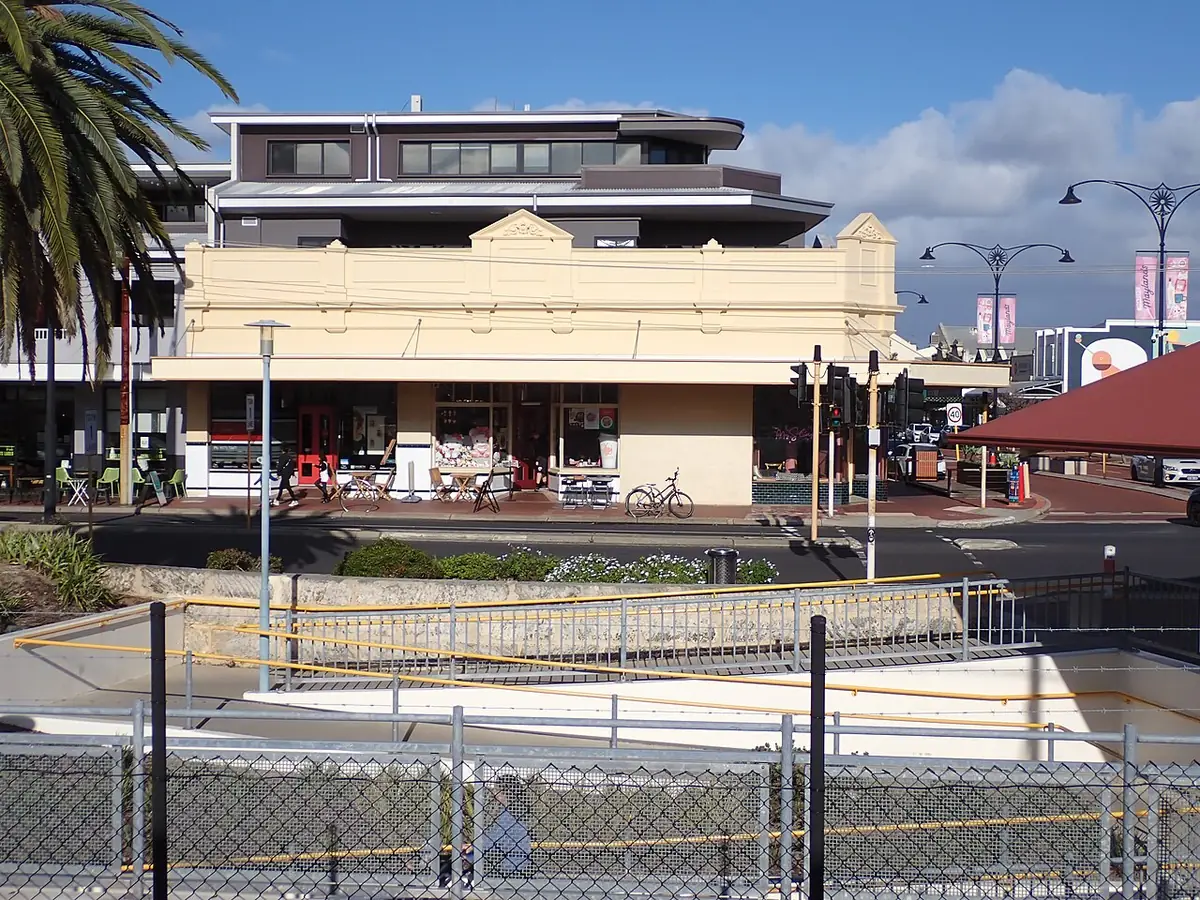
A heritage shopfront on Whatley Crescent in Maylands — Photo: Calistemon · CC BY-SA 4.0 · Wikimedia Commons
To weigh these choices properly, it helps to compare how things work here with what you are used to.
How well your personal goals match the reality of the local property market depends above all on your work situation and your family priorities. The outer suburbs do not offer the same services as the coastal areas or the streets right around the business district. Assessing your profile before targeting an area saves you from heading in the wrong direction.
Family looking for space
Middle-ring residential neighbourhoods and green suburbs offer spacious blocks and well-regarded schools. You get a safe setting that suits outdoor activities, in exchange for longer daily journeys into the centre. The layout of the houses easily makes room for a home office and safe outdoor play areas.
Working professional or couple without children
Looking at areas near the Swan River or the well-known beaches cuts travel times while giving you a rich choice of culture and food. Properties in these areas often mean trading living space for location. Your daily life is then shaped by having urban amenities and leisure spaces right on your doorstep.
Long-term plan or retirement
Buying a single-storey house in a quiet coastal area guarantees an unspoilt setting and good liquidity over time. These areas combine residential calm with top-quality health services close by. The focus is on energy efficiency and the ease of single-level living, for lasting comfort without excessive upkeep.
Buying a house in Perth from abroad: what changes completely
Once these principles are clear, the central question becomes where to buy within the metropolitan area.
The Australian property system and the local building culture differ deeply from what many buyers from abroad are used to. From how contracts are structured to building methods and the management of outdoor space, familiar reference points often fall apart. Identifying these structural differences lets you approach your purchase clear-eyed and ask local professionals the right questions.
From abroad
Used to older stone buildings or grand period apartments in the city centre
Perth
Mostly single-storey detached houses, often brick with a timber roof frame
Thermal and acoustic insulation follows different climate standards, focused on ventilation and managing summer sun rather than winter heating.
From abroad
A rigid notary-led process with cooling-off periods and centralised checks
Perth
Public auctions or conditional offers formalised by agents and conveyancers
Transactions move fast, so you need your finances fully in order and must be ready to act immediately when a property matches what you are looking for.
From abroad
Always looking for central locations and historic density
Perth
Accepting a sprawling city where the car remains the main way of getting around
Your choice of neighbourhood has to factor in potential road congestion at peak times and the real distance to your workplace.
From abroad
Collective management of shared buildings
Perth
A strong culture of outright individual ownership with strict estate rules
You look after your own block directly while carefully following the community rules on development set by the local authorities.
How to choose your residential area among Perth's main types of neighbourhood
This geographic variety feeds directly into the prices charged from one area to the next.
Perth's geography is organised around coastal corridors, riverside areas and suburbs that keep on expanding. Each type of area has its own day-to-day feel in terms of pace, neighbours and access to services. Structuring your search by broad type of area helps you target your viewings and avoid spreading yourself too thin.
The coastal and beachside area
A relaxed atmosphere set by sea breezes, beach cafés and a very lively neighbourhood scene at weekends.
Suits
Water sports lovers and households wanting a bright, ocean-facing lifestyle.
Trade-off
Noticeably higher prices per square metre and exposure to salty winds that means more upkeep on the exterior.
Along the Swan River
A balanced mix of greenery, landscaped parks and closeness to the city's central business hubs.
Suits
Working people who want to limit travel time while enjoying a calm, leafy residential setting.
Trade-off
A particularly competitive property market where detached houses are rare and expensive.
Established residential suburbs
Quiet streets lined with mature trees, with neighbourhood life built around local schools and parks.
Suits
Families looking for large blocks of land and a stable community for the long term.
Trade-off
Distance from the very centre means relying on your own car every day to get to work.
Fast-developing areas
New infrastructure, modern shopping centres and a young working population that is constantly changing.
Suits
Buyers looking for more space on a more affordable budget.
Trade-off
A streetscape that can feel bare and public transport networks that are still being built up.
What a house in Perth really costs, area by area
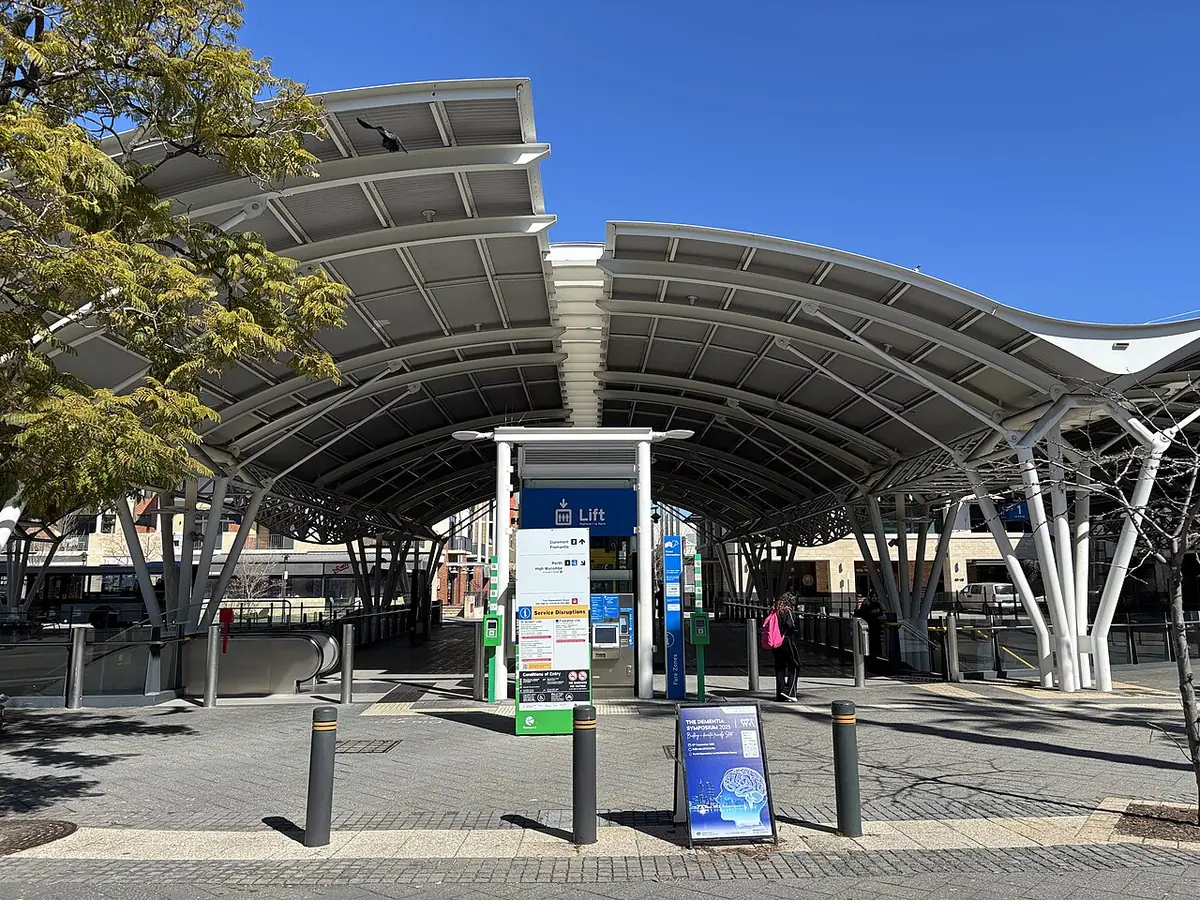
The curved canopy at the entrance to Subiaco station — Photo: Nick-D · CC BY-SA 4.0 · Wikimedia Commons
Beyond the headline value of the property, the legal nature of ownership deserves very close attention.
Perth's property market reflects the economic strength of Western Australia, with notable price differences between the rings of the city. Working from realistic ranges lets you calibrate your financing plan to include all the local taxes and compulsory transaction costs. Planning for these items up front avoids any nasty surprises when the documents are signed.
PerthFor saleHouseestimate
Median price / m²A$5,920Half the apartments sell below this
Median priceA$1.2mthe average is 14% higher — a few very large properties pull it up
Most common3 bedrooms42 % of listings
Average size193 m²
By number of bedrooms
Bedrooms
Share of market
Avg price
Price / m²
Avg size
2
37 %
A$927k
A$6,232
149 m²
3most common
42 %
A$1.3m
A$5,920 −5 %
219 m²
4
21 %
A$1.76m
A$5,733best value / m²
306 m²
Each row is an average, compared against the area average of A$6,232 / m². These are indicative estimates of a typical local market, not a measured sample of live listings. Check current listings before relying on them.
What you can actually own: freehold and planning rules
With the legal side secured, the next thing to master is the order in which the transaction unfolds.
In Western Australia, the distinction between the different types of land title is fundamental to protecting your investment. Unlike some practices elsewhere, land law and local planning rules dictate precisely what you can change or build on your block. Checking the title before making any firm offer is a step you cannot skip.
Freehold (outright ownership of land)
You own both the building and the land beneath it with no time limit, provided you comply with the local council's planning schemes. This status gives you the most freedom to manage your asset and to carry out any extensions.
What it changesYou keep full control over how the property's value grows in future and how you manage your outdoor space.
Strata Title (shared ownership)
Common for semi-detached properties or grouped housing developments, this structure involves sharing common areas and following strict by-laws managed by an owners' body (strata company).
What it changesYou need to plan for regular levies and get approval from the other owners for any changes to the exterior.
The critical timeline to understand before signing an offer in Perth
To handle these steps calmly, let us break down the role of each party in the transaction.
Buying property in Western Australia follows a set sequence of procedures in which each stage carries strict legal implications. From the first offer to the final transfer of title, administrative rigour is essential. Knowing this chain of consequences protects your financial interests at every point.
Targeted search and first viewings of the properties on the market
Careful review of the building inspection reports (structure and termites) required before final commitment
Drafting and submitting a formal offer (Offer and Acceptance) including finance conditions
Paying the deposit into a secure trust account as soon as the seller formally accepts
Checking the legal aspects and the land title with an independent conveyancer or specialist lawyer
Final payment of the balance and official registration of the change of ownership with the state land titles office
How the transaction works step by step with local professionals
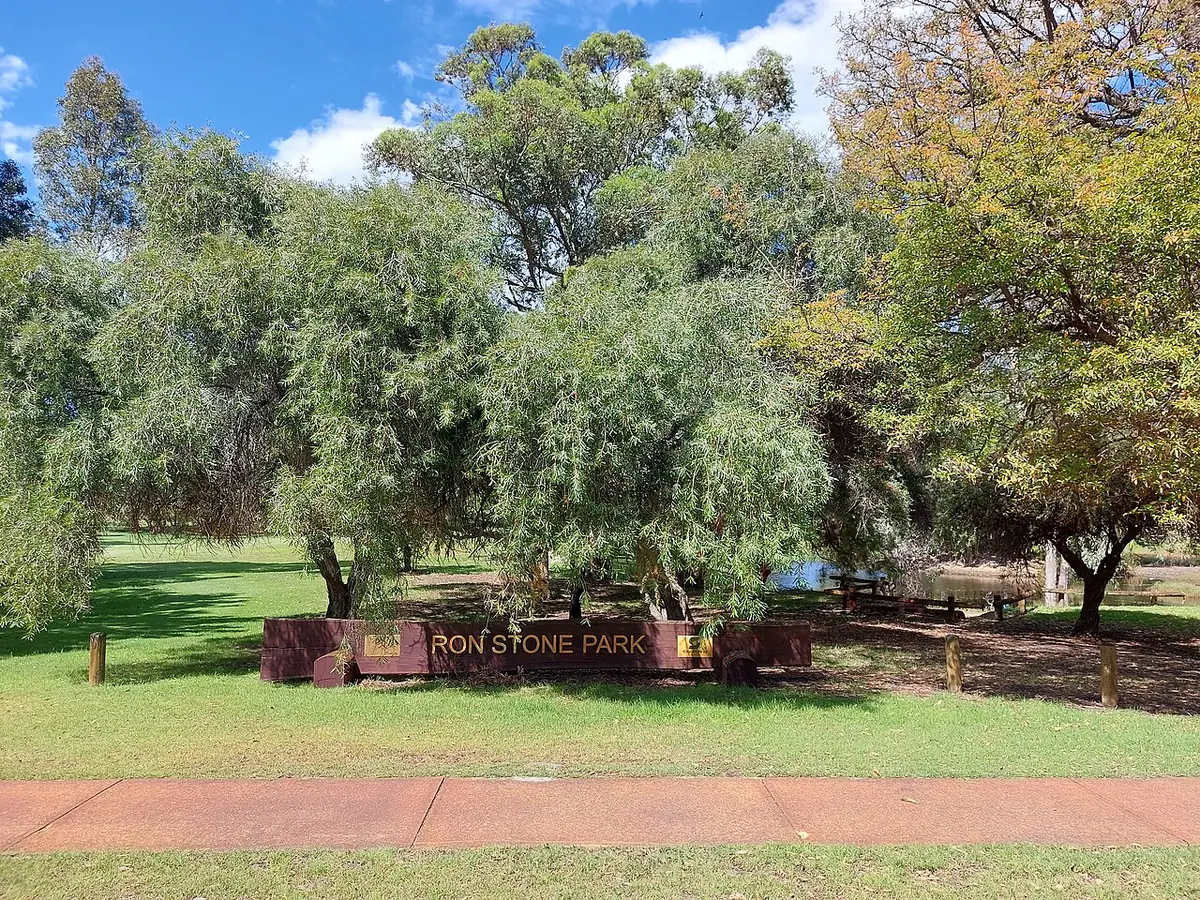
Ron Stone Park, a green space in Mount Lawley — Photo: Orderinchaos · CC BY-SA 4.0 · Wikimedia Commons
By combining a clear view of your life priorities with a firm grasp of local procedures, your property plans in Perth take shape on solid foundations.
A successful property transaction in Perth relies on close coordination between several parties with clearly defined roles. Understanding what each one does lets you work with them effectively and avoid the common mix-ups between agents, inspectors and legal professionals. Each of them secures one specific part of your purchase.
The real estate agentShowing properties and initial negotiationThey legally represent the seller's interests while making communication easier and passing on formal offers.
The mortgage brokerStructuring the financing planThey put your profile to a range of lenders to secure borrowing terms suited to your situation.
The building and timber pest inspectorTechnical inspection of the buildingThey carry out a thorough inspection to detect any hidden defects, damp problems or termite damage.
The legal professional (conveyancer or settlement agent)Administration and legal transferThey check the validity of the land title, arrange the transfer of funds and make sure the sale is administratively in order.
The buyer (you)Decision-making and financial commitmentYou approve each key step, sign the contract documents and make sure your purchase timeline is kept to.
House or apartment in Perth: which suits your plans?
Once you have made that fundamental choice between house and apartment, the immediate question of budget comes next, to confirm your Perth property plans are financially feasible.
Choosing between a detached house and an apartment in Perth is not simply a question of living space or initial budget. In Perth, a house with a garden stands for a lifestyle centred on the outdoors, weekend barbecues and room for the children, but it often means longer daily journeys from the residential suburbs and regular, demanding upkeep in a demanding climate. It is the preferred choice for families wanting to put down lasting roots in a calm setting, close to parks and the main routes to the coastal beaches.
An apartment, on the other hand, whether in the modern towers of Perth CBD or in lively neighbourhoods such as Subiaco or Leederville, is for people who put centrality, compactness and freedom from upkeep first. Living in an apartment in Perth means having cafés, urban train lines and cultural venues right on hand, without spending your weekends mowing the lawn or repainting fences. However, strata fees, known as strata levies in Western Australia, are a recurring cost that must be factored carefully into any long-term return calculation.
To decide between the two, take a clear-eyed look at your time horizon and your tolerance for commuting. If you work in the heart of Perth's financial district and hate losing an hour a day in traffic on the Kwinana Freeway or the Mitchell Freeway, an apartment offers immediate comfort despite less outdoor space. If you have pets or long for complete peace and quiet after an intense day, a house, even in the outer suburbs, remains the ultimate safe haven in the Western Australian property market.
Finally, resale and capital growth weigh heavily in the balance. Historically, detached houses on their own land in Perth have tended to outperform apartments in capital growth, as land is scarce and highly valued in the metropolitan area. Even so, the supply of well-located high-end apartments remains limited, which protects the value of top-quality properties against the ups and downs of the local mining economy.
What overall budget should you plan to buy and live in Perth?
With that financial framework in place, let us look at what daily life is actually like for someone settled long term in the Perth area.
Budgeting for a property purchase in Perth is not limited to the asking price shown on listing sites. You need to include all the compulsory extra costs in Western Australia, including transfer duty, the local conveyancing charges known as settlement fees, and the running costs of the home, so you can plan your monthly cash flow calmly and avoid any financial surprises.
Upfront and purchase costs for a property in Perth
Cost item
Estimated range in Australian dollars (AUD)
Comment and impact on financing
Transfer Duty
AUD 2,000 to AUD 25,000 depending on the value of the property
A progressive state tax calculated on the purchase price of the property in Western Australia.
Settlement fees (Settlement Agent / Conveyancing)
AUD 1,000 to AUD 2,500
The fee for the legal professional who secures the transfer of ownership.
Compulsory home insurance (Building Insurance)
AUD 1,200 to AUD 3,000 a year
Essential to cover local climate risks and required by the lending bank.
The amounts shown vary with the exact value of the property and the specific terms of your mortgage application.
Annual running budget for an owner in Perth
Type of cost
Average annual cost
What is included
Local taxes (Council Rates)
AUD 1,500 to AUD 2,800
Levied by the local council for road maintenance, rubbish collection and parks.
Strata fees (Strata Levies, if applicable)
AUD 3,000 to AUD 8,000
Only apply to apartments and townhouses, for upkeep of the common areas and building insurance.
Water bills (Water Corporation)
AUD 1,200 to AUD 1,800
Billing covering access to the drinking water network and fixed drainage charges.
These running costs should be set aside monthly in your budget to protect your ability to save.
Health, schools, transport: what does an ordinary Tuesday in Perth look like?
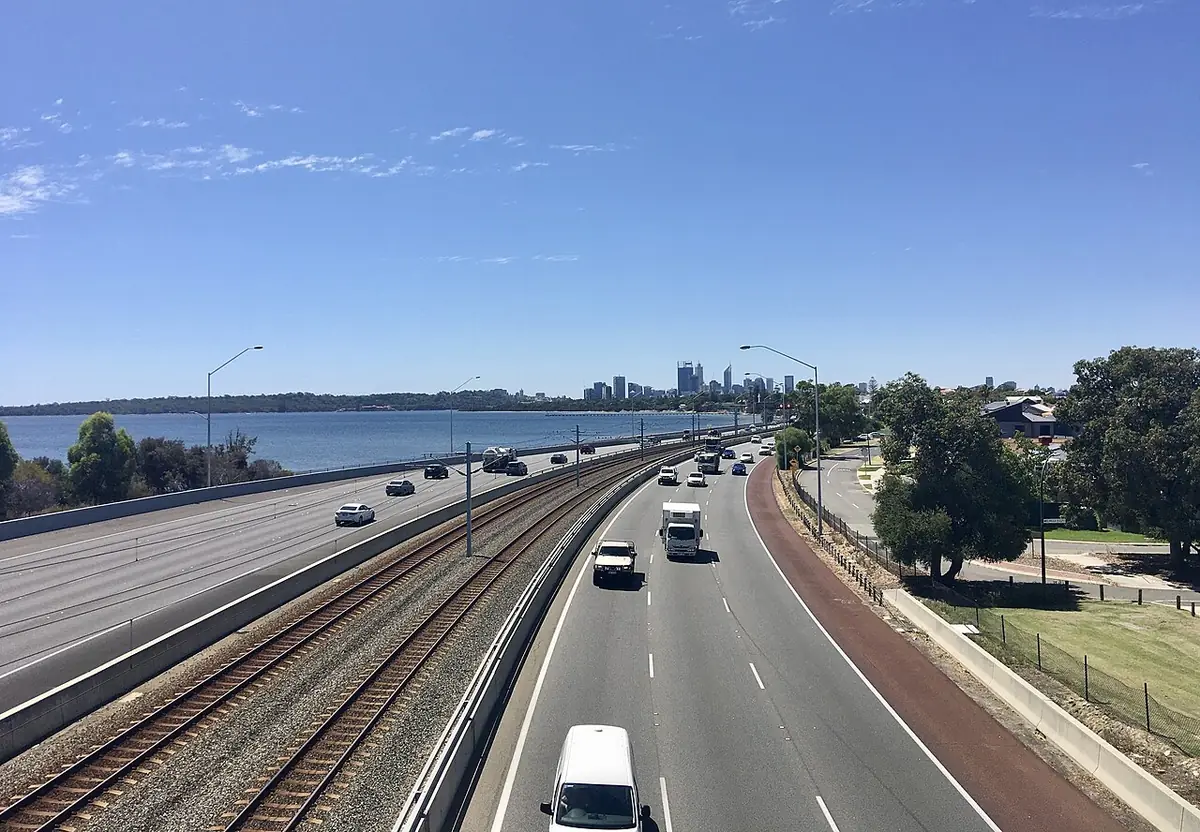
The freeway and rail line run along the river towards Perth city — Photo: Steelkamp · CC BY-SA 4.0 · Wikimedia Commons
Beyond this well-oiled daily routine, some less visible aspects of the local property market deserve your full attention.
To judge whether a future home in Perth is right for you, nothing beats looking at a typical day in concrete terms. Between morning journeys on the Transperth network, access to well-regarded schools and closeness to leading medical facilities, each neighbourhood strikes its own balance, and it is worth examining before you sign an offer.
07:30Local train station or main roadsThe morning commute into Perth CBD begins, using Transperth's efficient train lines or the freeways with dedicated carpool lanes.
08:15Local school or childcare centre (Childcare)Dropping the children at a high-performing local public school or at a private school with recognised quality of care in the region.
12:30Local shopping centre or business districtA lunch break to pick up some groceries at the local supermarkets (Coles or Woolworths) and enjoy the landscaped public spaces.
17:30Back home and outdoor activitiesMaking the most of the mild climate to do some sport in a council park or walk along the landscaped banks of the Swan River.
19:00Local medical centre (GP Clinic)Primary healthcare is quickly available for a routine appointment, thanks to Perth's efficient spread of clinics.
What the glossy photos in Perth property listings will not tell you
These essential technical checks help you avoid the major setbacks that often surface a few months after the housewarming party.
Property listings in Perth cleverly highlight natural light and sparkling pools under the Western Australian sun. Yet behind these attractive presentations lie specific technical and climate realities that every savvy buyer must inspect before committing to a purchase.
Which way the house faces and how it handles summer heat
Summer temperatures in Perth often exceed 35°C for several days in a row. A badly oriented house, without proper shading on west-facing windows, turns into a real greenhouse and sends the electricity bill for air conditioning soaring.
Termites and the condition of the timber frame
The hot, dry climate of Western Australia is particularly favourable to termites. A full structural inspection report (Timber Pest Inspection) is absolutely essential to detect any damage invisible to the naked eye that could undermine the property's value.
Strict planning and heritage rules
Some historic or character neighbourhoods in Perth impose very tight restrictions on exterior changes, renovations or even cutting down trees on your own land. Checking the Local Planning Scheme stops you ruining your future extension plans.
Sewer connection and old plumbing
In some older Perth suburbs, underground clay or cast-iron pipes can be cracked by the roots of native trees. Replacing them is a considerable unexpected cost for an unprepared new owner.
The most common regrets people discover six months after settling in Perth
Faced with these classic traps, it is just as important to ask whether your plans really match the realities of the local market.
Looked likeA peaceful, leafy residential suburb, ideal for raising children in complete tranquillity.
Turned outMarked geographic isolation, with long daily car journeys needed to reach jobs and secondary schools.
Would have caught itCheck commute times precisely at rush hour on a Tuesday morning before signing the final offer.
Looked likeA charming older house full of character on a large, tree-filled block.
Turned outA constant money pit of insulation work, electrical upgrades and worn-out plumbing.
Would have caught itAlways commission an independent building inspector to carry out a full assessment before the conditions of the offer are removed.
Looked likeA modern apartment offering an attractive rental yield and high-end finishes.
Turned outSky-high strata levies voted through by the owners' meeting to repair defects in the building's facade.
Would have caught itGo through the minutes of the last three annual general meetings of the strata carefully to spot any ongoing disputes.
Looked likeA strategic location close to all amenities and the city's main roads.
Turned outUnbearable night-time noise from a very busy road right next door.
Would have caught itVisit the neighbourhood at different times of the day and night, including at the weekend, to judge the real noise level.
Who really should not buy property in Perth right now?
If you recognise yourself in these cautious profiles, it is time to take a final look at how ready your own property plans really are.
Home ownership is often presented as unquestionable financial wisdom. Yet for some buyer profiles or in certain life situations, committing to a property purchase in Perth is the wrong decision, and it will weigh heavily on your personal flexibility and your financial security.
The newly arrived expat on a fixed-term employment contract of less than three years
→Opts for flexible renting rather than buying straight away
The upfront transaction costs (transfer duty, agency and legal fees) cannot be recovered over such a short period, exposing the buyer to a certain financial loss if they have to sell in a hurry.
The speculative investor looking for an immediate, high rental yield
→Turns to other Australian cities or other asset classes
Perth's property market follows macroeconomic cycles closely tied to the mining industry, which makes gross rental yields less predictable and subject to marked swings.
The household with too small a deposit and no emergency savings
→Postpones the purchase to strengthen its financial footing
Having no financial buffer for urgent repairs or changes in mortgage interest rates exposes financially stretched owners to a real risk of defaulting on payments.
So, are you ready to make your Perth property plans happen?
Deciding to buy property in Perth means putting all of the analysis we have covered into practice. If you expect to live in the capital of Western Australia for more than five years, your work situation is firmly established and you have confirmed you can absorb the hidden costs and the demands of the local climate, then the time has come to act, with method and good judgement.
Do not let yourself be driven by haste or by fear of missing out in a tight market. Perth's property market always rewards patient buyers who inspect properties thoroughly, negotiate on the basis of hard facts and choose a location that truly fits their daily life. Every dollar invested should serve your long-term stability, not a passing anxiety.
Take the time to meet local mortgage brokers to get clear loan pre-approval, define your search area around your transport and schooling needs, and surround yourself with independent professionals to secure your transaction. Your future home in Perth deserves this analytical rigour, so that a financial investment becomes a place where you genuinely thrive.
Related questions
What legal and title transfer costs apply in Perth?
Purchase costs in Western Australia include transfer duty, calculated on a sliding scale according to the value of the property, plus the fees of the settlement agent, who handles the secure legal transfer of the property.
Is a termite inspection really essential before buying?
Yes. A thorough inspection by a qualified professional (Timber Pest Inspection) is essential in Perth because the climate suits termites, which can cause structural damage that is invisible but very expensive to repair.
How does the Transperth public transport network work?
The Transperth network combines fast suburban train lines, an extensive bus network and ferries linking the banks of the Swan River, giving excellent connections between the residential suburbs and the Perth CBD business district.
How does Perth's climate affect your choice of home?
Hot, dry summers mean paying close attention to which way the property faces, the quality of its insulation and whether it has efficient air conditioning, so you can keep energy use under control.
What are strata levies in Western Australia?
They are regular contributions paid by the owners of apartments or townhouses to fund the upkeep of shared areas, cleaning, building management and the collective insurance of the strata scheme.
Can you buy property in Perth as a non-resident?
Yes, but purchases by non-residents need prior approval from the Foreign Investment Review Board (FIRB) and may involve additional taxes on the purchase and on resale, depending on your visa status.
What local taxes does an owner pay each year?
Owners must pay council rates, levied by the local council to fund local public services, as well as state land tax if the property is not your main residence.
Which Perth neighbourhoods suit an urban lifestyle?
Neighbourhoods such as Subiaco, Leederville, Mount Lawley or Perth CBD offer lively streets every day, plenty of cafés and immediate access to public transport, although the blocks of land are smaller.
How long does a property transaction take in Perth on average?
The standard time between an offer being accepted and final settlement is generally 30 to 60 days, during which the legal and technical checks are carried out.
How do you find out the planning rules that apply to a block of land?
You should consult the Local Planning Scheme with the relevant City Council to find out exactly what you can build, the height restrictions and the rules on preserving architectural character.
Property review of ting
No ting properties in Perth yet
Be the first — share it on ting and it shows up right here.