Putting a value on an apartment in San Diego means reading one of California's most closely watched markets with a clear head. This guide sets out, step by step, the financial, legal and practical inputs that drive an estimate here, so you can judge a figure on its merits rather than take it on trust.
Get the app
What nobody tells you.
Real prices, hidden costs and the traps to check before you commit.
What a San Diego apartment valuation really captures, and what it leaves out
Scroll
What a San Diego apartment valuation really captures, and what it leaves out
Putting a value on an apartment in San Diego means reading one of California's most closely watched markets with a clear head. This guide sets out, step by step, the financial, legal and practical inputs that drive an estimate here, so you can judge a figure on its merits rather than take it on trust.
Written by the ting.ad editorial team ·
San Diego in Street View: drag to look around.
Valuing property in San Diego is not a matter of multiplying square metres by a sunny-coast premium. It means reading a singular market in which the scarcity of developable land between the ocean and the canyons resets the worth of every individual unit. Owners find quickly that the appeal of the setting comes bundled with structural constraints, particularly around the condominium regime and its running costs, and those constraints belong inside the figure. Understanding that duality is what separates a defensible estimate from a hopeful one.
The climate and the enduring pull of the Pacific coast support the underlying figurevsConstant demographic pressure and an absolute scarcity of developable land distort it
The weather and the regional economy hold values up over the long run, which gives any estimate a firm floor. But that same desirability produces high entry prices and fierce competition on every listing, so recent sale evidence can overshoot what a calmer week would support. Read comparables across several months, not just the last bidding war.
The promise of delegated management through the homeowners associationvsThe financial and regulatory weight of the monthly HOA dues
Common parts, pools and roofs are looked after without visible effort on your part, but the monthly dues keep climbing. They bear heavily on the recurring budget a buyer can carry, and an association that has voted a heavy special assessment for compliance works will see that cost reflected as a downward adjustment on every unit in the building.
A historically solid record of capital growth behind the estimatevsExposure to interest rate cycles and to corrections in the wider California market
San Diego property has held up well through downturns thanks to the technology and military employment base, so long-run comparables read reassuringly. Even so, a valuation prepared under one rate environment does not survive unchanged into another: when borrowing costs rise, the pool of buyers who can meet the figure narrows, and the estimate has to move with it.
Which kind of valuation actually fits what you are trying to decide?
An estimate for an apartment in this Californian city answers a different question depending on whether you are preparing to sell and live elsewhere, holding the unit as a long-term let, or weighing a short-stay letting business against the rules that govern it. Local regulation constrains short-term letting tightly, and that reshapes the income assumptions underneath the figure. Working out which situation you are in is what tells you whose valuation method to trust.
Sale valuation
For a resale figure, the evidence that matters is closed sales of genuinely comparable units in the same building or the same few streets, adjusted for floor, aspect, parking and condition. Ask the agent to show you the comparative market analysis behind the number and to name each comparable, rather than accepting a single headline figure. Fold the property tax position and the HOA dues into your thinking too: those recurring costs shape what a buyer can afford to bid, and therefore what the apartment is genuinely worth.
Investment valuation
Here the estimate has to be read alongside the income the unit produces, because the permanent rental market benefits from steady demand from the university, hospital and technology employers in the city. Vacancy rates are historically low, which supports the figure for a well-located unit. Set the achieved rent against the acquisition-level prices in the same building, and remember that gross yields here are often modest, so a valuation built purely on an income multiple will read low against comparable sale evidence.
Short-term letting valuation
Be careful here: the City of San Diego applies extremely strict rules to Airbnb-style lets and short stays, and obtaining an official permit is often an ordeal because of tight per-neighbourhood quotas. Never let a valuation rest on maximum seasonal income without first confirming the permissions attached to that specific unit. Two apartments on the same floor can be worth materially different sums if only one carries a transferable licence, and any estimate that ignores this is not an estimate you can rely on.
Valuing from abroad: what works differently once you own here
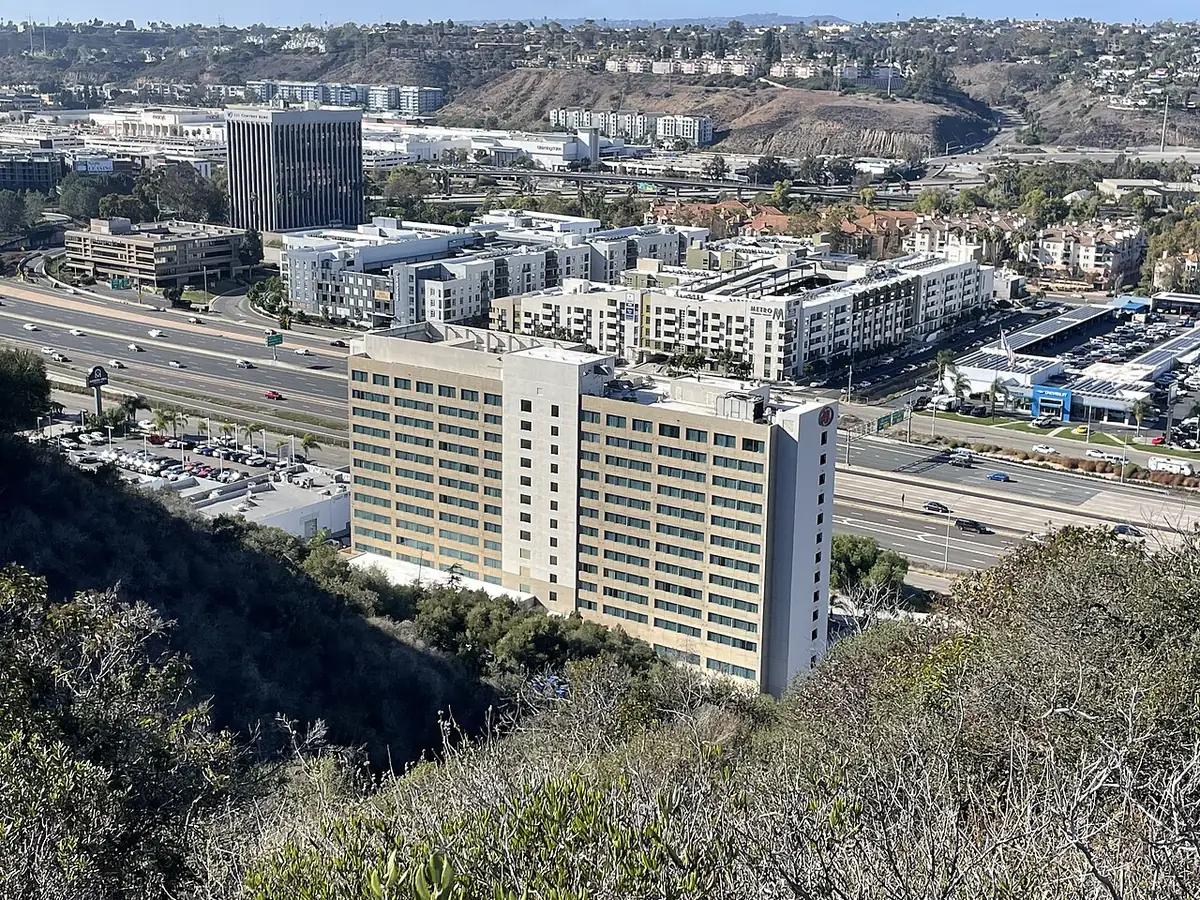
Mission Valley's mid-rise buildings, framed by hills and highway — Photo: Blervis · CC0 · Wikimedia Commons
The American system, and the Californian one in particular, rests on legal mechanisms and market habits that differ sharply from those most overseas owners are used to. Carrying assumptions from another country straight into San Diego leads to misreadings of the figure, whether about taxation, the role of the agent, or the way condominium associations work. The comparison below sets out the gaps that matter when you are trying to judge whether an estimate is sound.
From abroad
A single central legal officer preparing one deed and holding the transaction together
San Diego
Title companies and escrow services carrying the transaction between them
In the United States the sale is run by a neutral company that holds the funds and confirms the title is clear. There is no equivalent of a single state-appointed officer, and each side is usually represented by its own agent, so the valuation you are given comes from an agent with a commercial interest and should be tested against a second opinion.
From abroad
Condominium charges set within a tight statutory frame and closely regulated general meetings
San Diego
Broad powers held by Homeowners Associations operating under strict internal rules
American HOAs can impose severe restrictions on door colours, pets or letting. Their decisions carry real force and their reserves must be read with great care, because an underfunded reserve fund is a direct downward adjustment to the value of every unit in the scheme.
From abroad
Local occupancy and property taxes calculated on a periodically revalued rental value
San Diego
A property tax often close to 1% to 1.2% of the purchase value, plus specific local levies
This weighs heavily on the long-run cost of holding the property and rises each year under strict Californian rules (Proposition 13). It also means the county assessor's assessed value tracks the price paid at acquisition, not today's market, so it can sit well below or above a current estimate and must never be used as one.
From abroad
A standard pack of technical certificates supplied by the seller as a matter of course
San Diego
A duty of thorough inspection falling on the buyer (home inspection and pest inspection)
The buyer instructs independent experts during the due diligence period to examine the structure and plumbing and to look for termites, which are common in the region. Those reports are the evidence a buyer uses to argue the price down, so a seller who has not read the building's condition first is negotiating from an estimate that will not hold.
Which neighbourhood's evidence should your comparables come from?
San Diego is a mosaic of neighbourhoods with sharply distinct identities, running from dense urban energy to relaxed beachside districts. Location determines not only daily life and commuting times but also how quickly a unit sells, which is precisely what a valuation is trying to predict. Each area strikes its own balance between affordability, cultural pull and parking constraints, and each therefore produces its own price evidence.
Downtown and Little Italy
A dense urban feel, paced by cafes, fashionable restaurants and the immediate proximity of the bay.
Suits
Valuations of serviced condominium stock aimed at car-free buyers and younger working households, where building amenities carry real weight in the figure.
Trade-off
Prices per square metre among the highest in the city and substantial HOA dues, so an estimate that omits the monthly charge overstates what a buyer can actually bid.
North Park and Hillcrest
A bohemian, artistic and inclusive character, with lively walkable streets, craft breweries and low-rise buildings.
Suits
Valuations where neighbourhood character and architectural individuality lift the figure above the raw floor area, and where a tight-knit local community sustains demand.
Trade-off
An older housing stock that needs a renovation allowance deducted from the estimate, and thin transaction volumes that leave you with few reliable comparables.
La Jolla and the coastal districts
A spectacular natural setting of sea cliffs, fine sand beaches and sought-after high-end residences.
Suits
Valuations at the top of the market, where international recognition and scarcity value justify a premium that ordinary per-square-metre arithmetic will miss.
Trade-off
Slower liquidity at these price levels, which widens the margin of error on any estimate, and local tax loads that are priced into a narrow band of buyers.
What are apartments in San Diego actually being valued at today?
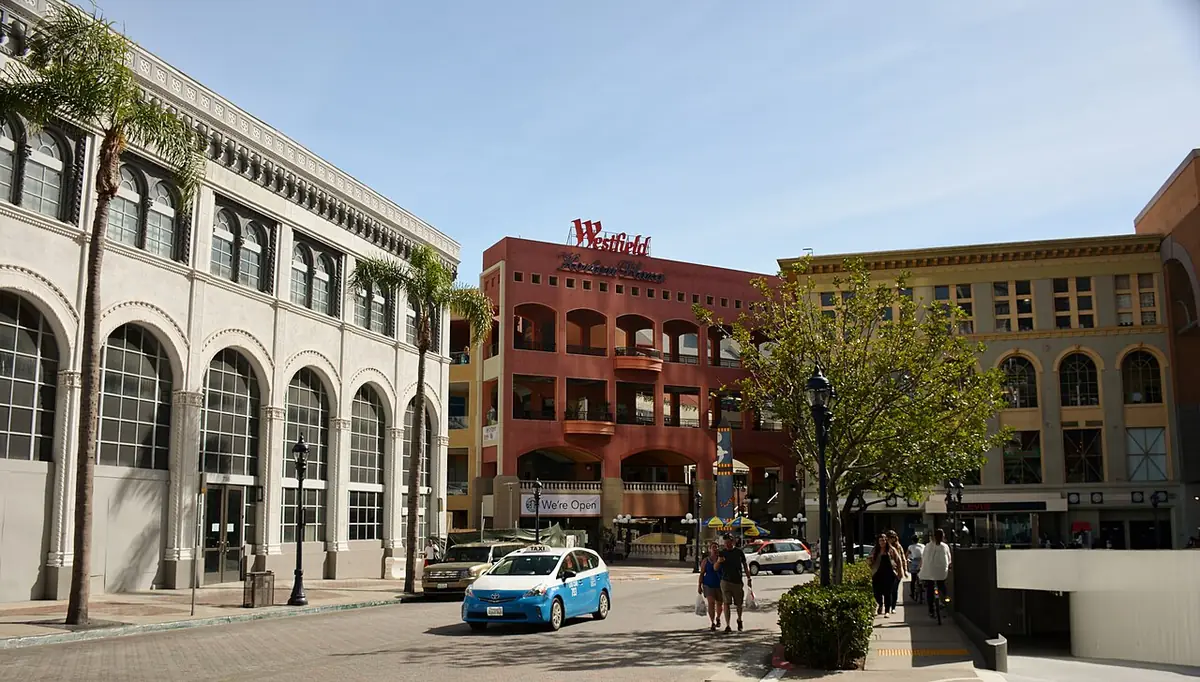
A landmark corner in San Diego's historic Gaslamp Quarter — Photo: Roman Eugeniusz · CC BY-SA 3.0 · Wikimedia Commons
Judging what an apartment in San Diego is worth means going beyond the asking prices displayed on the listing portals, which record hope rather than outcome. Between neighbourhood variation, property taxes and monthly condominium dues, the figure that matters has to be built carefully. The data below sets out the orders of magnitude observed in the market, so you have something concrete against which to sanity-check any estimate you are handed.
san-diegoFor saleApartmentestimate
Median price / m²US$6,460Half the apartments sell below this
Median priceUS$625kthe average is 14% higher — a few very large properties pull it up
Most common2 bedrooms42 % of listings
Average size92 m²
By number of bedrooms
Bedrooms
Share of market
Avg price
Price / m²
Avg size
1
38 %
US$508k
US$7,820 +15 %
65 m²
2most common
42 %
US$646k
US$6,800
95 m²
3
17 %
US$799k
US$6,392 −6 %
125 m²
4
3 %
US$979k
US$6,120best value / m²
160 m²
Each row is an average, compared against the area average of US$6,800 / m². These are indicative estimates of a typical local market, not a measured sample of live listings. Check current listings before relying on them.
What you actually own: full title or a share, and why the estimate differs
Under Californian law, the legal structure of your ownership directly affects your freedom to deal with the property and the value a valuer can attach to it. There is a fundamental distinction between conventional condominiums and other forms of collective ownership. Knowing the difference stops you from comparing a freely transferable title with a more constrained arrangement and calling the two figures equivalent.
Condominium (condo) held in full title
You own the interior of your apartment outright, together with an undivided share of the common parts and the land beneath. This is the most common and most transparent form of ownership for an overseas or resident owner alike, and you hold an individual title recorded with San Diego County.
What it changesComparable sale evidence for condominiums is plentiful and readable, so an estimate here can be built on genuine like-for-like transactions, and the figure carries a narrower margin of error.
Co-op (cooperative housing)
You are not buying the real estate directly but shares in a company that owns the whole building, coupled with an exclusive occupancy lease for your apartment. This structure is far more common on the East Coast, though it exists in a more marginal way in California too.
What it changesThe cooperative's board holds an absolute and discretionary say over who may be admitted, which lengthens transactions and thins out the sale evidence, so any valuation of a co-op share carries a meaningful discount and a wider range.
The rule to grasp before you accept a number as your valuation
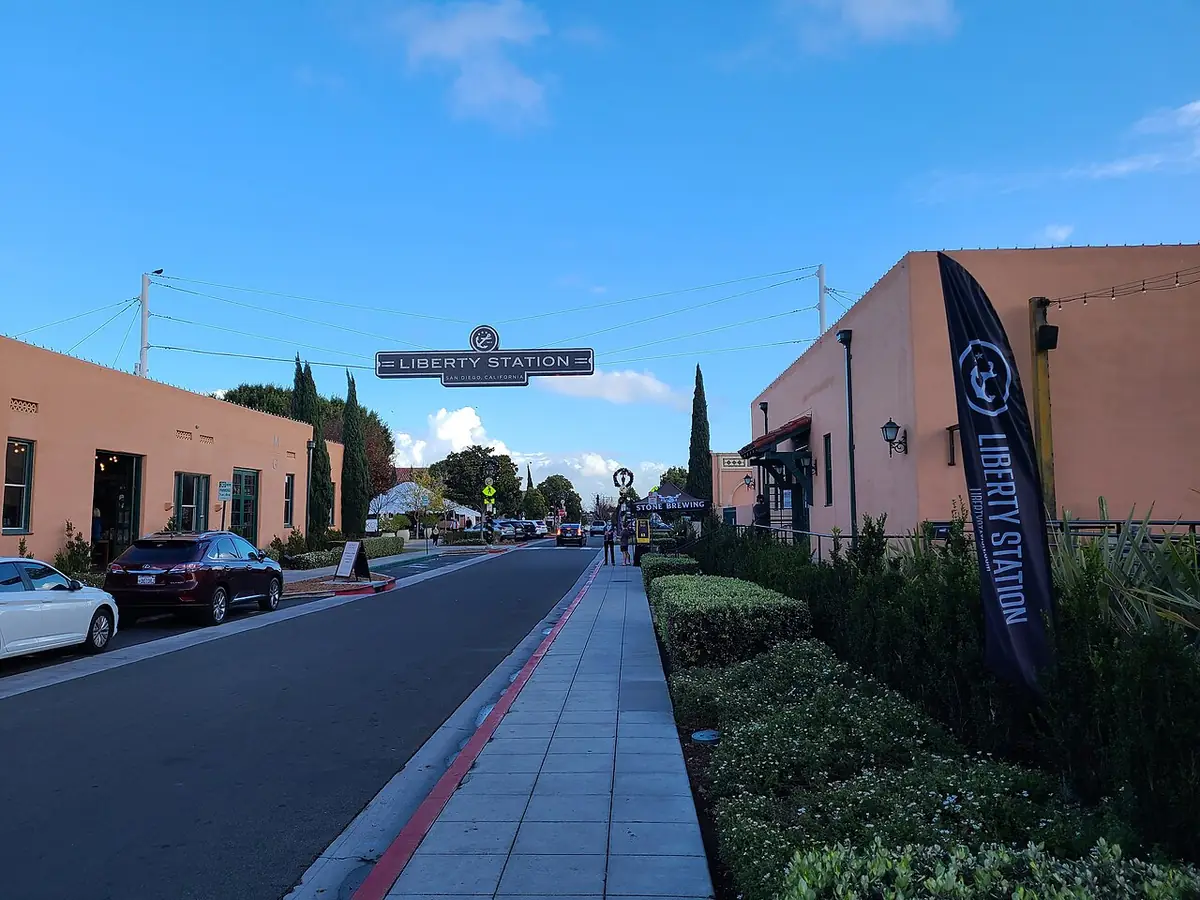
A grand green promenade at Liberty Station — Photo: Alan Islas · CC BY-SA 4.0 · Wikimedia Commons
A valuation in the United States is not settled by the agent's opinion; it is tested against a strict contractual timetable once a property goes under offer. From the moment both sides sign, an escrow mechanism runs, with precise windows for withdrawal and investigation during which the figure is either confirmed or renegotiated. Understanding that chain is what turns an estimate into a number you can defend.
An agent's comparative market analysis produces an opening figure, tested the moment an offer is accepted and an earnest money deposit is lodged
Opening of the escrow account with the designated title company, which fixes the figure the transaction is working to
Due diligence period and technical inspections (structure, termites, plumbing) that surface every condition adjustment
Close review of the financial documents and the condominium rules, where HOA disclosures and reserve levels move the number
Removal of contingencies and final confirmation of the mortgage, at which point the lender's appraisal must support the price
Closing and public recording of the transfer, which turns your estimate into the recorded sale price and becomes a comparable for the next valuation
How a valuation is built and verified, step by step
Arriving at a reliable figure for a San Diego apartment calls for a disciplined method and several specialists, each contributing a different piece of evidence. Every party has a defined role in confirming that the number holds up and that the owner's interests are protected. The sequence below sets out the phases through which a rough estimate becomes a verified valuation.
OwnerAssembling the evidence pack before any figure is discussedBefore the first agent walks through the door, gather the title, the floor area, the HOA dues and reserve statements, the property tax bill and the receipts for any works. A valuation is only as good as the documents behind it.
Real estate agentPreparing a comparative market analysisThe agent assembles closed sales of genuinely similar units, adjusts them for floor, aspect, parking and condition, and analyses the price history within the building and the surrounding streets to produce a defensible range.
Owner and agentTesting the figure and agreeing an asking priceThis is where the range becomes a number: the two of you weigh how quickly the unit needs to sell, what the recurring charges do to a buyer's borrowing capacity, and how much of the estimate is negotiating room.
Home inspectorSurveying the unit and pricing the condition adjustmentsThe instructed experts examine the property to identify hidden defects or compliance works, and each finding translates into a specific deduction from the headline figure rather than a vague sense of unease.
Title companyConfirming clear title and holding the fundsThe escrow company confirms that the seller holds a title free of any undisclosed lien or mortgage before releasing funds; an unresolved encumbrance found here can force the agreed figure to be revisited.
Licensed appraiserIndependent appraisal for the lenderThe buyer's lender instructs a licensed appraiser whose independent opinion of value must support the price. If it comes in low, the sale is repriced or the buyer must bridge the gap, which is the ultimate test of any valuation.
Apartment or house in San Diego: how the view, the condominium regime and the floor area pull an estimate in different directions
With that distinction in place, it is worth looking closely at the running costs that any credible figure has to absorb.
Valuing an apartment in the heart of San Diego and valuing a house in the western residential districts are not the same exercise, and treating them as one is how owners end up with a figure they cannot defend. The urban apartment, typically in an active area such as Downtown, Little Italy or East Village, draws its value from immediate access to restaurants, transport lines and employment centres, plus the absence of any grounds to maintain. A shared pool, an on-site gym and a controlled entrance all lift the figure, because they widen the pool of working buyers and investors looking for a unit that is easy to let. Against that, the monthly condominium charges, the HOA fees, rise steadily and weigh on the budget a buyer can carry, which is why a high monthly due reliably pulls the achievable price down even when the apartment itself is faultless.
A house in San Diego, whether in Normal Heights, North Park or further out towards Clairemont, removes those collective constraints but puts the whole burden of maintenance on the owner, and a valuer reads that in the condition of the building. The roof, the foundations, the air conditioning and the garden irrigation all require a preventive maintenance budget under the Californian sun, and visible deferred maintenance in any of them is a direct deduction. In exchange, the owner holds complete decision-making autonomy, a private plot and a land value that has historically been more robust thanks to the scarcity of developable ground in the county. That land component is the reason house valuations in the same neighbourhood can outrun apartment valuations per square metre by a wide margin, and it is also why they are harder to pin down: each plot is genuinely different.
The financial arbitration between the two goes well beyond the headline number displayed on the listing platforms. The HOA fees on the large modern buildings downtown can easily reach a monthly figure comparable to a share of the mortgage repayment, while remaining a sunk cost that is never recovered on resale, and a competent valuation reflects that by discounting the capital figure rather than ignoring the charge. On the other side, an older house needing insulation upgrades or the replacement of an obsolete electrical system carries immediate unbudgeted expenditure, and a buyer's inspection report will quantify it precisely. An owner therefore has to know which of these adjustments applies to their own property before deciding whether an estimate is generous or merely optimistic.
Finally, liquidity is a critical input to any figure in a city as attractive and as varied as San Diego. Well-placed apartments in the coastal or fashionable districts let extremely quickly to young professionals and visitors, and that demonstrable income supports the valuation and narrows its range. Family houses, by contrast, are becoming scarcer and attract a stable local buyer prepared to pay a premium for the quiet of a residential street, which lifts the figure but can slow the sale. Your reading of any estimate should therefore account for time as well as price: a number achievable over six months is not the same number as one achievable in three weeks.
Which costs a credible San Diego valuation has to absorb
To see how those costs land in practice, it helps to follow the rhythm of an ordinary day here.
Valuing an apartment in San Diego means looking well beyond the sale price the local agencies advertise. Property taxes, the climate-risk element in home insurance and the condominium dues all reshape the monthly commitment a buyer can carry, and therefore the price that unit can actually command. The grid below brings together the unavoidable cost lines you need in front of you before you accept or challenge a figure.
Indicative acquisition and recurring costs behind an apartment valuation
Cost line
Estimated range
Effect on the valuation
Median apartment price
$650,000 - $850,000
Depends heavily on immediate proximity to the coast and to Downtown, so pick comparables from the same band.
Annual property tax (Prop 13)
1.1% - 1.3% of value
A recurring cost indexed to the original purchase price and revalued only modestly, which is why the assessed value is not the market value.
Condominium dues (HOA)
$350 - $900 per month
Varies with the shared amenities, the pool and any concierge service; a high due reduces what a buyer can bid.
Home insurance (incl. risk cover)
$1,200 - $2,500 per year
Rising noticeably because of fire risk and rebuild costs, and increasingly a line buyers price into their offer.
The figures shown come from averages observed across the San Diego County market and should be confirmed against your own building's accounts and your local broker.
Indicative monthly household budget for a resident in San Diego
Expense category
Indicative monthly budget
Why it bears on the figure
Food and groceries
$800 - $1,200
Typical basket for a couple in local supermarkets and organic markets, and part of what a buyer nets off before deciding what they can offer.
Transport and fuel
$300 - $600
Daily car use is unavoidable in most outlying neighbourhoods, so proximity to a transit line is worth real money in an estimate.
Energy and utilities (water, power)
$200 - $450
Bills driven by air conditioning use during the hot months; an efficient unit with lower running costs supports a higher figure.
The cost of living in San Diego remains above the American national average, offset by an exceptional setting, and both facts are already priced into local sale evidence.
Health, schools and transport: the ordinary Tuesday that sits inside your valuation
Hillside homes above the bay, a classic San Diego view — Photo: A Guy Named Nyal · CC BY-SA 2.0 · Wikimedia Commons
Beyond this well-worn routine, some hidden features of the market deserve your full attention before you settle on a number.
Living in San Diego is not only a matter of sunny beaches at the weekend; it is the daily negotiation of commutes, health services and neighbourhood life, and every one of those is a value driver a valuer can point to. To see what that means for a specific address, here is an ordinary Tuesday laid out hour by hour. Walking through it against the unit you are valuing is a practical way to test whether the location premium in the figure is real.
07:30Residential street, leaving homeThe morning routine and the departure. Traffic starts to thicken on the secondary roads before the main boulevards saturate, and a unit that avoids that bottleneck carries a measurable premium.
08:15The local schoolDropping the children at the neighbourhood public or private school. Safe access and the organisation of the parents shape this part of the morning, and catchment is one of the strongest single drivers of family-unit values.
09:00The journey to workBy car, or on the light rail network (the Trolley), heading for Downtown or the biotechnology campuses. Walkable distance to a Trolley stop is a comparable adjustment in its own right.
12:30Lunch break and local shopsA quick errand or lunch in the local shopping street. Health services and pharmacies are within ten minutes, and that convenience is visible in the prices achieved nearby.
17:30The return and after-school activitiesThe trip home is often marked by delays on Interstate 5 or Interstate 805, and organising the children's activities around them. Commute reliability separates two otherwise identical apartments in the evidence.
19:30Winding down and neighbourhood lifeA walk around the block or an evening at home. The calm of the residential streets contrasts with the daytime bustle, and evening quiet is worth checking before you accept any location-based uplift in a figure.
What the listings never tell you about the real condition behind a San Diego figure
These frequent omissions are what turn a confident estimate into a disappointment discovered far too late in the process.
Marketing photographs showcase the light and the view, but they deliberately conceal major technical and regulatory constraints, and each of those is an adjustment a valuer should be making. In San Diego, the age of the buildings and the complexity of the planning rules demand particular vigilance. Here are the items the brochures systematically leave out, and which will surface later as a price reduction if you have not priced them yourself.
The state of the association's reserve fund (HOA reserves)
A poorly run association without adequate reserves will inevitably need heavy special assessments to pay for roof works or seismic compliance. An owner who ignores this is carrying an unquantified liability of tens of thousands of dollars, and a buyer who reads the reserve study will deduct it from your asking price in the first week.
Noise from traffic arteries and aircraft approach corridors
San Diego International Airport (SAN) sits very close to the city centre and to several sought-after neighbourhoods such as Mission Hills or Bankers Hill. Weekend or midday viewings do not reflect the real noise level during weekday flight sequences, so a comparable taken from a quieter street will overstate what a unit under the corridor is worth.
Strict water conservation and landscaping obligations
California applies severe restrictions on drinking water use and on watering green spaces. A unit with a private garden or an association that has not adapted will face early investment in drip irrigation systems on pain of steep municipal fines, and that pending spend belongs in the valuation as a deduction rather than a surprise.
Heritage constraints and renovation restrictions (historic districts)
Some of the more picturesque San Diego neighbourhoods are designated or overseen by strict planning commissions that forbid any external alteration to the facade, the windows or the paint colour. That caps the improvement potential a valuer might otherwise credit, so an estimate that assumes an extension is possible can be badly wrong.
The valuation mistakes owners discover six months too late in San Diego
Despite these pitfalls, some owners should be more cautious still about relying on an estimate in this market.
Looked likeAn irresistible figure for an older building with undeniable vintage charm in the heart of the city.
Turned outA permanent financial drain, with worn-out pipework, no thermal insulation and repeated air conditioning failures, none of which the headline estimate had deducted.
Would have caught itCommission a full inspection report from a certified independent expert and read the association's minutes for the last three years before you accept any number as your valuation.
Looked likeA quiet, peaceful street, discovered on a sunny Sunday viewing with no visible traffic, and valued as such.
Turned outA weekday traffic ordeal that turns the commute into more than an hour on the freeway, which every informed buyer discounts for and no comparable from a calmer street reflects.
Would have caught itDrive the route at the actual peak times (between 07:30 and 09:00, then again in the evening) before you sign off on a location premium in the estimate.
Looked likeA highly profitable rental figure justified by the immediate proximity of the beaches and the busy tourist areas.
Turned outA strict ban on short-term holiday letting, imposed either by municipal ordinance or by the association's own internal rules, wiping out the income the valuation had assumed.
Would have caught itCheck the municipal ordinances on furnished holiday letting licences in advance and read every line of the condominium rules before letting an income assumption into the figure.
Looked likeA perfectly efficient floor area with large open balconies, valued as usable outdoor space.
Turned outOutdoor space that is unusable much of the year because of strong sea winds, direct overlooking from neighbours or street noise, and which buyers therefore refuse to pay for.
Would have caught itVisit at different times of day to judge the real sun exposure, the wind strength and the actual privacy of the balcony before crediting it in the estimate.
Unusual cases: who should be most wary of a San Diego apartment valuation today?
It is time now to set out the basis on which you can settle on a figure with confidence.
The general enthusiasm generated by San Diego's climate and quality of life sometimes leads owners to accept a flattering figure and act on it too quickly. The Californian market demands financial resilience and a stable time horizon that not everyone has, and both belong in how you read an estimate. Here are the specific cases in which a headline valuation is most likely to lead you into a strategic error.
The mobile professional expecting to move on again within a few years
→Reading the gross estimate as money in hand, with no allowance for what it costs to transact.
Buying and selling costs, agency commissions and transfer taxes, destroy any return if the property changes hands before a minimum holding period of five to seven years, so the net figure is materially below the valuation.
The owner who dislikes regulatory constraints and unplanned management costs
→Trusting a figure for a unit in a self-managed association or one run by an inflexible external company, without checking its reserves.
The smallest change to Californian rules on energy efficiency or balcony safety can trigger immediate mandatory spending, and a valuation that has not read the association's finances has simply not accounted for it.
The household on a very tight budget with no contingency savings
→Treating the estimate as a firm number and committing every reserve against it.
A single urgent repair (a water heater replacement, a concealed leak) or a sudden rise in condominium dues will land before the figure is ever realised, and there is nothing left to absorb it.
So how confident can you be in the figure you have for your San Diego apartment?
A relaxed shopping street at Liberty Station — Photo: Alan Islas · CC BY-SA 4.0 · Wikimedia Commons
Valuing a property in San Diego is more than an arithmetic exercise: it is a judgement that demands clear-headedness, preparation and some distance from the noise of the Californian market. If you have gathered your documents, tested the comparables against your own unit's floor, aspect and condition, and priced the recurring charges that limit what a buyer can bid, the number you are holding is worth acting on. The scarcity of land along this stretch of the Pacific coast gives the underlying market a structural resilience few American cities can match, which is why long-run evidence here reads reassuringly. But your figure should rest on a cold reading of the data, not on the memory of a sunny week in California.
Take the time to have each element confirmed by an independent professional, whether a neutral mortgage broker, an uncompromising home inspector or a licensed appraiser with no stake in the outcome. Never yield to the artificial pressure of a competing offer or to marketing arguments from anyone with an interest in a particular number. The San Diego market consistently rewards patience, analytical rigour and a close knowledge of each neighbourhood's specifics. Approach the estimate methodically and you will end up with a figure that survives contact with a buyer, an inspection and a lender's appraisal.
Related questions
How much of the valuation should an owner expect to hold back for costs when planning a sale?
Sale costs typically absorb somewhere between 10% and 20% of the headline figure once agent commission, escrow and title fees, county transfer taxes and pre-sale repairs are counted. An estimate that ignores these is not a net figure, so work backwards from the gross valuation and keep a reserve for property taxes, HOA dues and the carrying months before closing.
Can a non-resident owner have a San Diego property valued as easily as a resident can?
Yes. California law places no restriction on who may own or have property appraised here, and agents and licensed appraisers work to the same standards regardless of where the owner lives. The practical difficulty is remote evidence: a non-resident usually needs a local agent or appraiser to inspect the unit in person, since a desktop figure built only on photographs carries a much wider margin of error.
How does Proposition 13 affect the assessed value shown by the county assessor?
Proposition 13 caps the base property tax at roughly 1% of the property's market value at the time it was acquired, and that assessed base may then rise by no more than 2% a year. This protects long-held owners, but it also means the county assessor's assessed value can sit far below what the apartment would fetch today. Never read an assessed value as a market valuation.
How do HOA fees and reserves feed into what an apartment is worth?
HOA fees (Homeowners Association fees) are the monthly dues owners pay for upkeep of the common parts, usually covering the building's exterior insurance, roof maintenance, pool management, security, refuse collection and sometimes water or heating. A high monthly due reduces what a buyer can borrow against the unit and pulls the valuation down, while a thin reserve fund invites an adjustment for the special assessment that is likely coming.
Which San Diego neighbourhoods hold their value most reliably?
The most sought-after areas include Downtown for its urban energy, Little Italy for its cultural life and restaurants, and coastal districts such as La Jolla or Pacific Beach. Each carries a different rental yield and buyer profile, so comparables must be drawn from the same submarket: a price per square metre borrowed from the wrong neighbourhood is the single most common way a valuation goes wrong.
Is a home inspection worth commissioning before an owner asks for a valuation?
It is technically optional, but a home inspection is close to unavoidable in the United States and it is useful evidence for the seller as well as the buyer. It documents the condition of the plumbing, the electrics and the roof, which lets an owner price known defects into the figure deliberately rather than have a buyer discover them later and reopen the negotiation from a stronger position.
How much do aircraft noise and the airport corridor move an estimate?
San Diego International Airport sits immediately next to the city centre. Units under the direct approach corridors take regular noise, which weighs on resale value and rental appeal, so a valuation that treats two otherwise identical apartments as equivalent while one lies under the flight path is wrong. Check the corridor before accepting any comparable-based figure.
How long does it take to turn a valuation into a completed sale?
The full closing process, known as escrow in California, generally runs 30 to 45 days. That window covers the legal searches, the technical inspections, the buyer's mortgage underwriting and the secure transfer of funds through a neutral third party. A valuation is therefore a figure with a shelf life: in a moving market, one prepared several months ago should be refreshed.
Do the short-term rental rules change what an apartment is worth?
They can change it substantially. The City of San Diego applies strict regulation to short-term lets in order to protect the permanent housing stock, and owners must hold a specific licence subject to quotas and, in some high-demand coastal areas, a lottery. An apartment whose licence transfers and one whose does not are not worth the same money, however similar they look.
What does the long-run trend in San Diego County tell an owner about their figure?
Over long periods the San Diego market has shown real resilience and a sustained upward trend, supported by the scarcity of developable land between the ocean and the mountains. There have been correction cycles, but structural demand from working households and retirees remains very strong. Use that as context for a valuation, not as a substitute for current comparables.