Valuing an apartment in Toronto calls for a clear grasp of the Ontario market, its condominium rules and the financial details that move a number up or down. This practical guide walks you through what drives an estimate, how to gather evidence for it and how to sanity-check the figure you are given.
Get the app
What nobody tells you.
Real prices, hidden costs and the traps to check before you commit.
What valuing a Toronto apartment honestly asks of you
Scroll
What valuing a Toronto apartment honestly asks of you
Valuing an apartment in Toronto calls for a clear grasp of the Ontario market, its condominium rules and the financial details that move a number up or down. This practical guide walks you through what drives an estimate, how to gather evidence for it and how to sanity-check the figure you are given.
Written by the ting.ad editorial team ·
Bloor Street East, Toronto in Street View: drag to look around.
Beyond the headline market numbers, the figure that fits your unit depends closely on the neighbourhood and on the building itself.
Putting a number on a Toronto apartment is not a matter of reading an average price per square foot and admiring the CN Tower view. The Toronto market follows regulatory and financial dynamics in which every detail counts, and understanding those mechanics keeps you from anchoring on a figure that the market will never confirm. Looking at what is actually happening on the ground is what separates a marketing promise from the local economic reality.
The promise of a fast paper gainvsThe reality of a long holding period
Toronto property cycles go through extended phases of consolidation. Valuing a unit on the assumption of a quick resale ignores the transaction costs and the rate movements that decide whether the figure is ever realised.
The appeal of the advertised condominium feevsThe structural inflation of maintenance costs
Condominium fees, known as maintenance fees, rise steadily to keep pace with labour costs and major repairs to residential towers. An estimate that ignores the fee trend overstates what a buyer will pay for the unit.
The apparent freedom to let or alter the unitvsThe strict frame of the condominium by-laws
The internal rules of Toronto buildings tightly govern short-term letting, renovation work and pets. The board holds wide powers, and those restrictions belong in the valuation rather than in the footnotes.
The apparent simplicity of valuing from a distancevsThe need for close evidence or a local professional
Estimating a property in a market as fast-moving as Toronto from abroad or from another province exposes you to details a screen never shows. Working with competent local professionals quickly becomes essential to protect the accuracy of your figure.
Which kind of owner are you, and what is your valuation actually for?
Moving from a European frame of reference to the Ontario one reveals fundamental differences in how a figure is arrived at, and they need taking on board early.
The number you need from a Toronto apartment is not the same one depending on whether the unit is the home you live in, an asset you hold for rental income, or a place you use only part of the year. Each situation implies its own comparables, its own adjustments and its own tolerance for error. Identifying your profile precisely stops you from paying for an appraisal you do not need, or relying on a free online figure where you needed a defensible one.
Resident owner
Your figure is driven by the things that made you buy in the first place: immediate proximity to public transport, in particular the TTC network and the subway stations, and quick access to the employment pools of the Financial District. Comparable sales in the same building, or within a few streets, will tell you far more than a district-wide average. Accept that a smaller floor area and higher condominium fees are priced in alongside the urban amenities on your doorstep, and that both cut into the number.
Income-focused owner
Your approach rests on stable returns and on preserving capital against inflation, so your estimate has to reconcile a market comparison with what the unit actually earns. Well-run buildings with solid reserve funds, in areas of strong rental demand such as the surroundings of the universities or the main transport corridors, hold their figure best. Factor in the specific laws governing rent and tenant relations in Canada, and accept that liquidity is sometimes moderate, which widens the range around any single number.
Seasonal or international owner
You are looking at a secure unit that needs minimal upkeep in your absence, ideally with concierge and 24-hour security, and those services show up in the estimate on both sides of the ledger. The fixed costs continue even when the apartment sits empty for months, which a buyer will discount for. You should also establish precisely how non-resident taxation and any restrictions aimed at foreign buyers narrow your pool of purchasers, because a thinner pool pulls the realistic figure down.
Valuing in Toronto when your instincts were formed abroad
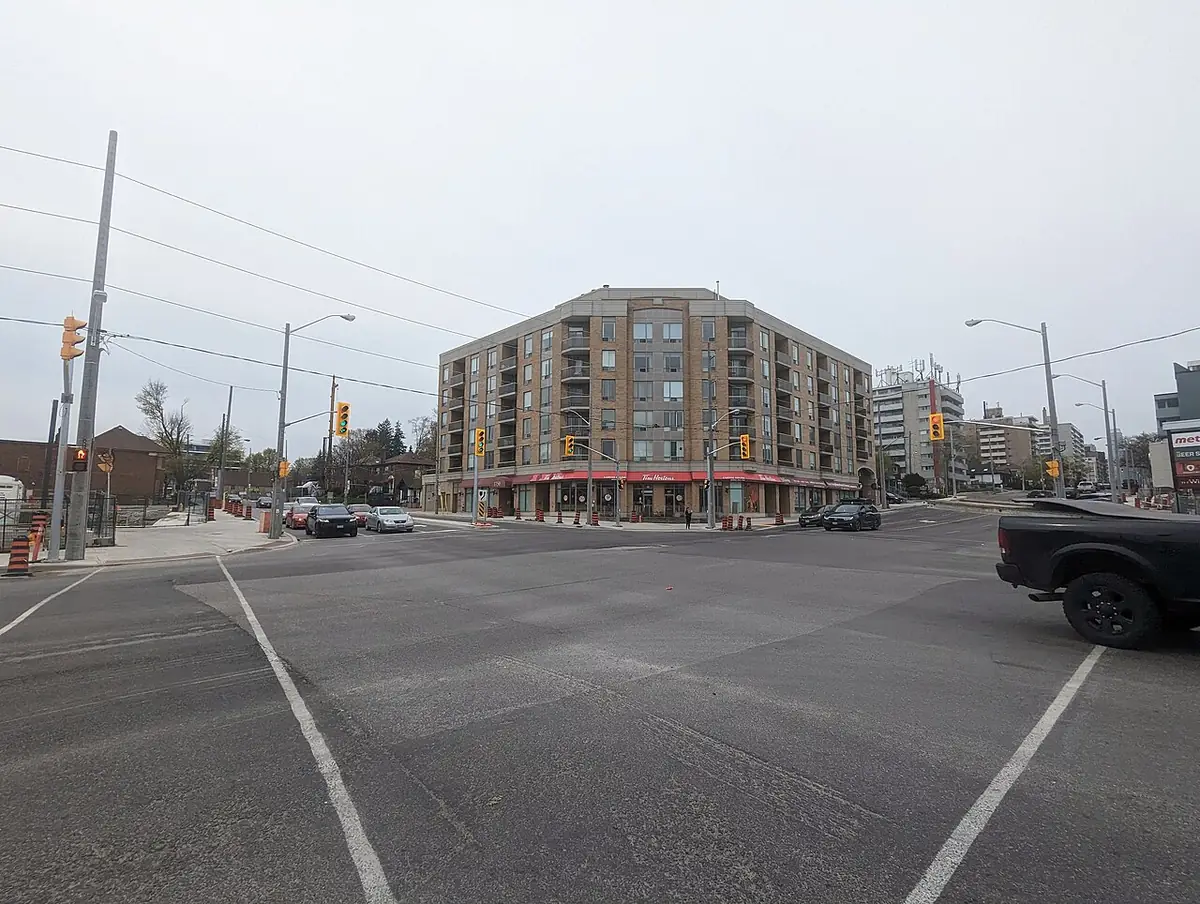
St. Gregory Armenian Catholic Church, a Toronto landmark — Photo: Amakuha · CC BY 4.0 · Wikimedia Commons
Once these principles are absorbed, mapping the districts of the city becomes the way to place your own unit accurately.
Carrying valuation habits from another country straight into the Toronto context leads to misjudgements when the local customs are unknown. Negotiation mechanics, the central role of agents and the way condominiums are structured all rest on distinctly North American legal principles. Anticipating those differences is what keeps your estimate anchored to what the market here will actually pay.
From abroad
A single public official at the centre of the sale, confirming the price
Toronto
Real estate lawyers handling the legal side, with valuation left to the market
In Ontario there is no equivalent of the continental civil-law notary. A real estate lawyer carries out the title searches, prepares the legal documents and handles the transfer of funds at closing, but the number itself comes from comparables and from an appraiser, not from an official scale.
From abroad
Advertised prices that broadly reflect what the seller expects to receive
Toronto
Advertised prices shaped by competition and overbidding
Multiple offers, or bidding wars, are common in sought-after neighbourhoods. The asking price does not always reflect true market value and is sometimes used as bait to attract buyers, so a valuation built on asking prices rather than sold prices will be wrong.
From abroad
A building run by a professional managing agent under a statutory regime
Toronto
Management by a board elected from among the unit owners (condo board)
Condominiums here run on heavy involvement by residents elected to the board. Reading the status certificate closely before you settle on a figure is essential, because it is where the financial and legal health of the building, and therefore a real adjustment to the estimate, becomes visible.
From abroad
Standardised cooling-off periods and conditions written into the contract
Toronto
Firm offers with conditions negotiated case by case
Conditions covering financing or a technical inspection have to be written explicitly into the offer. In a tight market a condition-free offer improves your chances but sharply raises your risk, and the spread between conditional and unconditional prices is something a valuation has to account for.
Which Toronto neighbourhood is your unit really being compared against?
Pricing the acquisition costs and the recurring charges precisely is the step that turns a district-level figure into a usable one.
Toronto is a mosaic of neighbourhoods with strongly marked identities, running from the financial energy of the city centre to the leafier residential feel of the outer districts. Each area strikes its own balance of accessibility, quality of life, building type and long-term value, which is why a comparable drawn from the wrong district will mislead you. Knowing which of these your unit genuinely sits in tells you which sales to measure it against.
Downtown / Entertainment District
A relentless pace, permanent urban buzz and office towers and cultural venues immediately at hand.
Suits
Comparables for younger working owners, for units aimed at strong short and medium-term rental demand, and for buyers who want intense city life.
Trade-off
Prices per square metre among the highest in the city, often small floor areas and a constant level of noise, all of which pull individual estimates in different directions.
King Street West / Fashion District
A fashionable mix of converted industrial lofts, sought-after restaurants, designer boutiques and a young, energetic population.
Suits
Comparables for stylish, well-designed units where the social life of the street is part of what is being paid for.
Trade-off
Strong competition for what comes up, high condominium fees tied to building amenities and pronounced night-time activity, so identical floor plans can value quite differently.
The Annex / Yorkville
Streets lined with mature trees, elegant Victorian houses alongside high-end residential towers, and an intellectual atmosphere.
Suits
Comparables where quiet, security, proximity to prestigious university campuses and durable long-term value dominate the figure.
Trade-off
An extremely selective and expensive market in which family-sized homes and spacious apartments are particularly rare, so comparable evidence is thin and estimates carry a wider range.
Liberty Village / Waterfront
Modern, pared-back developments facing Lake Ontario or arranged around recent parks and pedestrian spaces.
Suits
Comparables for contemporary design, open views over water or green space and planned land-use development.
Trade-off
A marked dependence on transport to reach the historic core and an atmosphere sometimes felt to be impersonal, both of which show up as a discount against equivalent central units.
What the Toronto numbers say before you adjust them for your own unit
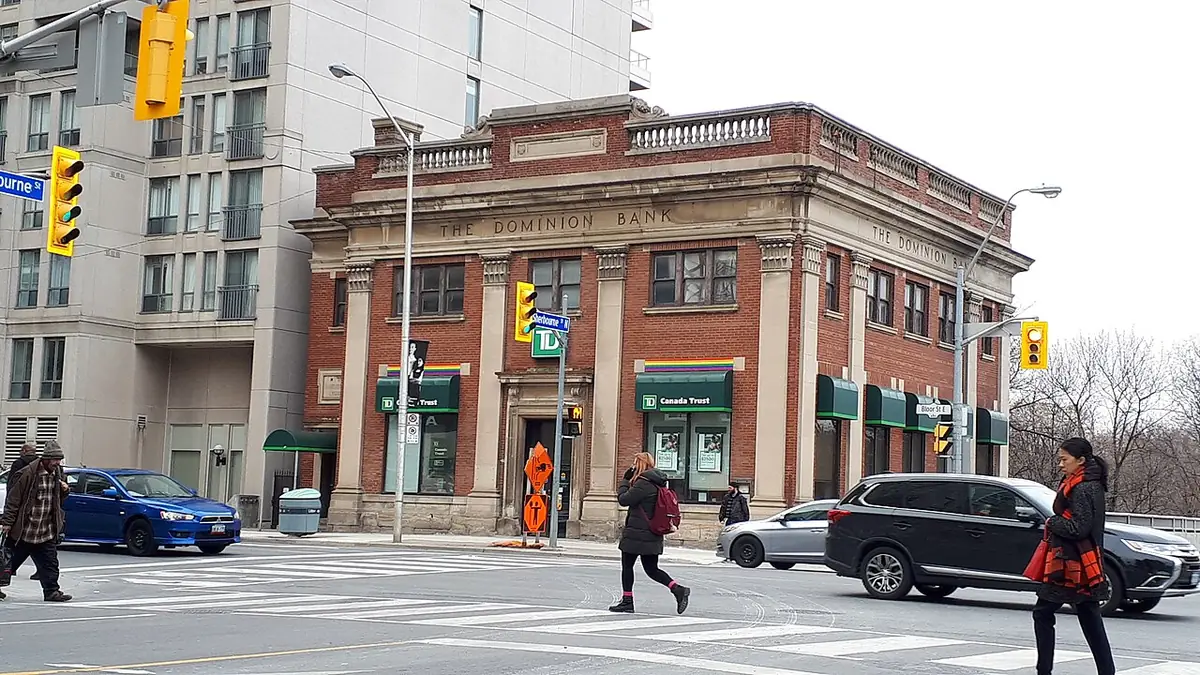
A heritage corner building on a lively Toronto street — Photo: Oaktree b · CC BY-SA 4.0 · Wikimedia Commons
Beyond the purely financial picture, the legal nature of the title you hold deserves close attention, because it decides what is being valued at all.
Valuing property in the Ontario metropolis requires a whole financial picture that goes well beyond the headline figure on a listing. Between municipal and provincial land transfer taxes, legal fees, home insurance and monthly condominium charges, the arithmetic demands real rigour if the estimate is to mean anything. Reading the price ranges by unit type and by neighbourhood gives you the reference points you need before applying any adjustment of your own.
torontoFor saleApartmentestimate
Median price / m²CA$9,975Half the apartments sell below this
Median priceCA$690kthe average is 14% higher — a few very large properties pull it up
Most common1 bedroom48 % of listings
Average size66 m²
By number of bedrooms
Bedrooms
Share of market
Avg price
Price / m²
Avg size
1most common
48 %
CA$578k
CA$11,550 +10 %
50 m²
2
38 %
CA$741k
CA$10,290
72 m²
3
11 %
CA$978k
CA$9,975best value / m²
98 m²
4
3 %
CA$1.25m
CA$9,975best value / m²
125 m²
Each row is an average, compared against the area average of CA$10,500 / m². These are indicative estimates of a typical local market, not a measured sample of live listings. Check current listings before relying on them.
Condominium or co-operative: what exactly is being valued?
With the type of unit identified and the legal frame confirmed, the order in which a valuation is actually assembled needs to be followed closely.
The legal structure of a Toronto apartment determines your rights of use, your financial obligations and how the building is run, and it sets the ceiling on what any estimate can be. The great majority of apartments fall under the condominium regime, but important differences exist between the forms of tenure, and they translate directly into value. Knowing those distinctions stops you from comparing two units that are not, in law, the same thing at all.
The standard condominium regime
You own your unit outright as a freehold unit, together with an undivided share of the common elements of the building, such as the entrance hall, the elevators, the gym and the roof terrace. A condominium corporation runs the whole through an elected board and an appointed professional manager. This frame guarantees shared upkeep but imposes strict compliance with the internal by-laws, and the state of its finances is one of the largest single adjustments a valuer will make.
What it changesYour unit is valued as a straightforwardly comparable, registrable title, discounted for compulsory monthly contributions and for limited freedom over the exterior appearance or any structural change.
Housing co-operatives and other atypical forms
In a housing co-operative you are not buying the real property itself but shares in the co-operative that give you an exclusive right to occupy a specified apartment. Admission criteria for new members are often subject to approval by the general meeting or by the board. This model encourages strong community governance but restricts freedom to resell and access to conventional bank financing, and both of those constraints show up as a persistent discount against comparable condominium units.
What it changesYou should expect a lower and less certain figure: sale evidence is scarce, buyers are pre-screened and lenders are cautious, so market comparison has to be applied with care rather than read straight off condominium prices.
The order to work through before you trust a figure for your Toronto apartment
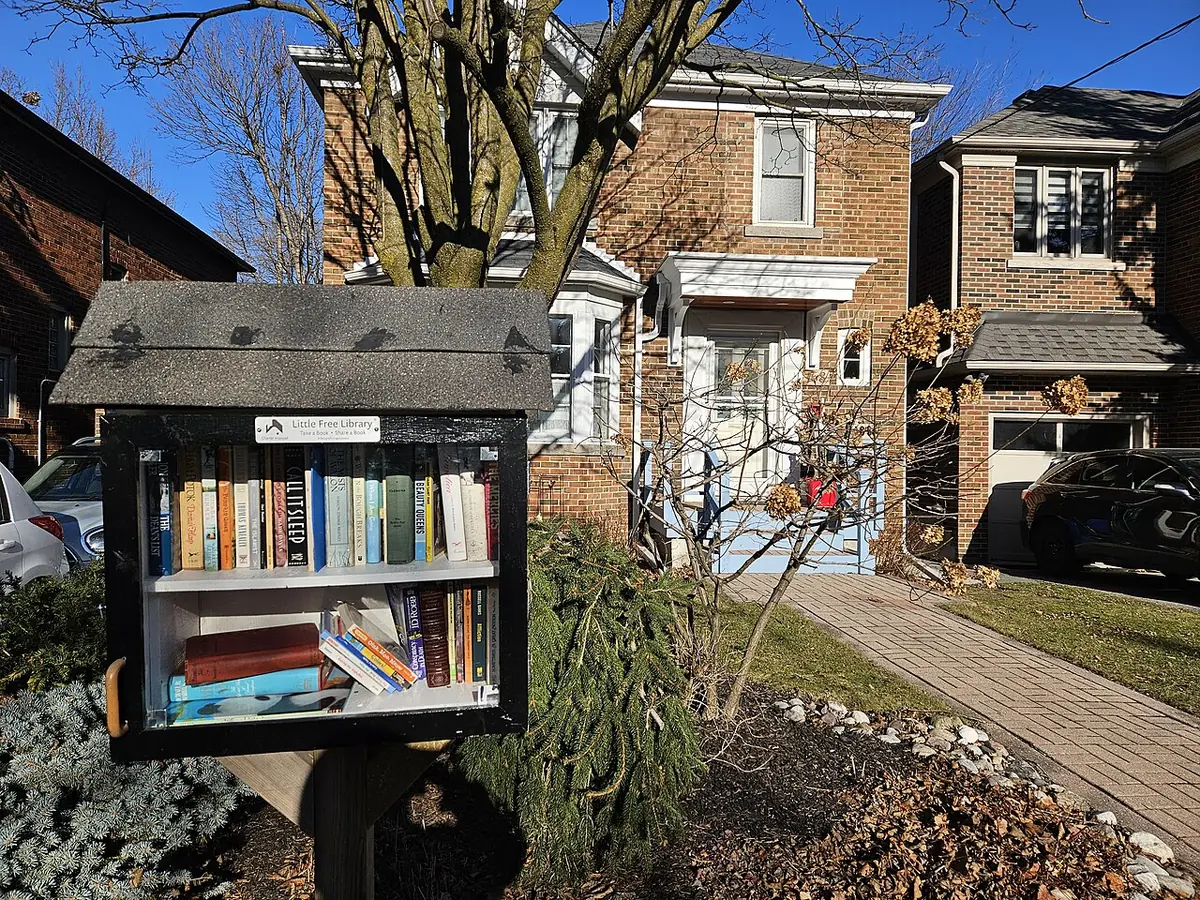
A quiet residential street with a neighborhood book box — Photo: ArthurGron · CC0 · Wikimedia Commons
To run that sequence with confidence, the coordinated involvement of qualified professionals proves indispensable from beginning to end.
Valuing an apartment in Toronto follows a strict sequence in which each step narrows the range around the final number. From the first broad market read through to the closing figure on the day the property changes hands, a single loose assumption can throw the estimate out by tens of thousands of dollars. Following a tested method and surrounding yourself with local experts is the best guarantee that the figure will hold up.
Establish a starting range from recent sold prices for comparable units, not from asking prices.
Assemble the evidence with a real estate agent who knows the specific dynamics of the targeted neighbourhood inside out.
Walk the unit carefully and have your lawyer read the status certificate in detail, since the reserve fund and any special assessment change the number directly.
Adjust the comparables for floor level, exposure, floor area, parking, locker and the condition of the unit against the ones you are measuring it by.
Test the resulting figure against a second opinion, whether an appraiser, a second agent or the municipal assessed value, and account for why they diverge.
Deduct the transaction costs, legal fees and land transfer taxes to convert a market figure into what would actually reach you.
Record the figure with the date and the comparables it rests on, and refresh it if the market moves.
Who does what when a Toronto apartment gets valued?
Arriving at a defensible figure in Toronto means working with an ecosystem of professionals whose roles are strictly defined and complementary. Unlike markets where a single intermediary handles everything, the Ontario system spreads responsibility across agents, lawyers, inspectors and mortgage brokers, and each of them contributes a different piece of the estimate. Understanding what each one is actually for lets you ask the right question of the right person and avoid damaging confusion.
The mortgage brokerWhat a lender will acceptThey review your financial position, compare offers from multiple Canadian financial institutions and negotiate rate and terms, and in doing so they show you the value a lender is prepared to underwrite, which is often more conservative than a listing figure.
The real estate agentComparative market analysisThey guide you through the local market, arrange viewings, assess the fair value of units through a comparative market analysis and negotiate hard on terms, which makes them the fastest source of a market-grounded figure.
The home inspectorCondition adjustmentsThey examine the general state of the unit, the electrical installation, the plumbing and the equipment in detail, to detect hidden defects or urgent work, and each finding is a concrete deduction from a headline estimate.
The real estate lawyerTitle and legal adjustmentsThey carry out the essential title searches, prepare the official transfer documents, handle the flows of money at closing and register your title, and they surface the encumbrances, restrictions and status certificate issues that can quietly cap a value.
The property managerBuilding financial healthActing for the condominium corporation, they keep the building in good order, coordinate maintenance of the common elements and apply the rules voted by the board, and their records on fees, reserves and upcoming work are what a valuer reads to adjust for the building itself.
Apartment or house in Toronto: why the two are valued on different logic
Once that basic distinction is understood, the question of the full running budget and its effect on the figure follows immediately.
Understanding why a condominium apartment, commonly called a condo, and a detached house in Toronto are valued on entirely different logic is the first genuinely structuring insight for any owner trying to price a property. The distinction is not merely a matter of taste or of immediate comfort; it decides which comparables are admissible, which costs a buyer will discount for and how stable the resulting figure is over time. On one side, the downtown apartment market offers unmatched proximity to employment, transport networks and a dense cultural life, while shifting the heavy burden of structural maintenance onto the condominium corporation, which is why apartments are valued largely by unit-to-unit comparison within a small set of similar buildings. On the other, the single-family house or the semi-detached, often located in residential neighbourhoods a little further from the central financial district, carries complete ownership autonomy, no monthly condominium fees and exclusive use of a private lot, and is valued with the land itself carrying much of the weight.
The financial reading of that alternative brings out cost dynamics that pull the two figures in different directions. Where the headline price of an apartment often looks more accessible in sought-after areas such as Downtown or along the subway corridors, the monthly condominium fees, known as maintenance fees, are a permanent charge on the household budget and a permanent drag on what a buyer will pay. Those fees rise inevitably with the age of the building, with energy compliance requirements and with the need to rebuild reserve funds, which means a condo never really stops costing money each month independently of the mortgage, and a valuer who ignores the fee trajectory will overstate the unit. Owning a house in Toronto, by contrast, means absorbing directly the full budget shocks of a roof replacement, a heating system or waterproofing the foundations, interventions whose individual cost frequently runs into several tens of thousands of Canadian dollars, and those are deferred liabilities a careful estimate deducts rather than a fee line anyone can read off a statement.
Beyond the purely monetary, what the two forms deliver day to day feeds straight back into the number. Living in an apartment high above Toronto means accepting shared common spaces, a set of condominium rules that can be strict about pets, Airbnb-style letting or interior alterations, and giving up a private garden at ground level, all of which narrow the pool of buyers and therefore the value. In return, you have integrated services that urban working owners actively pay for, such as secure concierge, an on-site fitness centre, an indoor pool and snow clearance handled entirely for you. Choosing a detached house in residential districts such as The Danforth, Roncesvalles or North York puts you into a domestic routine of tending the grounds in spring, mowing in summer and shovelling icy paths from the first cold of winter, while giving you acoustic calm and spatial independence that carry a measurable premium in every comparable set.
Liquidity is another fundamental parameter to fold into the estimate, because not all property types resell with the same ease across economic cycles, and thin liquidity widens the range around any single figure. Historically, the condominium apartment segment sees sharper swings in volume, influenced both by the flow of new construction delivered by developers and by interest rate movements that bear directly on first-time buyers and rental investors. Single-family houses, whose physical supply is structurally limited and impossible to extend in the heart of the city, show remarkable long-term resilience, sustained by inexhaustible family demand. So if your horizon is under five to seven years, an apartment valuation demands sharper attention to timing, while a house behaves as a more stable and more predictable asset to value.
In the end, your own profile and your plans for the coming decade should shape which figure you actually need. If you value geographic freedom, shorter commutes and the absence of heavy domestic chores, the urban apartment is the functional answer, and a comparative market analysis within your own building will usually get you close. If instead you want to shape your surroundings, to have space that can grow with a family and to capitalise on the pure land value of a Toronto lot, a house, even a modest one or one needing work, will be valued on a different basis entirely, with the land rather than the finish carrying the estimate.
The running costs that a Toronto valuation has to account for
Mastering these figures is essential, but testing them against the commuting patterns and rhythm of Toronto life is the next step.
A Toronto apartment valuation never stops at the headline figure your agent or an online tool produces. To judge honestly what the property is worth to you, you have to map the recurring charges, local taxes and unavoidable transaction costs that come with holding and transferring a home in this city. The tables below set out the orders of magnitude currently seen for a standard apartment, so that the figure you work with reflects the real cash position rather than a screen estimate.
Monthly and annual costs attached to the apartment
Cost item
Average estimated amount
Frequency
Comment and variability
Condominium fees (maintenance fees)
$500 to $900
Monthly
Varies with floor area, the age of the building and the services included (pool, concierge); a high figure here discounts the value of the unit.
Municipal property tax
$3,000 to $5,500
Annual
Calculated on the value assessed by the City of Toronto; rates historically lower than in the outer suburbs, and the assessed value is not the market value.
Owner or landlord insurance
$40 to $80
Monthly
Covers personal property and the third-party liability cover required by the condominium corporation.
Electricity and related services
$80 to $150
Monthly
Often excluded from the condominium fees for private consumption of heating and lighting, so compare fee quotes on a like-for-like basis.
These amounts are indicative and depend closely on the exact location of the building, its floor area in square feet and the financial health of the condominium corporation.
Transfer costs to deduct from a market figure
Nature of the cost
Estimate as a percentage or amount
When it falls due
Land Transfer Tax (provincial and municipal)
1.5% to 3.5% of the purchase price
On the day of signing
Legal fees
$1,500 to $3,000
At closing
Pre-purchase inspection of the property
$400 to $700
During the conditional period of the offer
In Toronto, first-time buyers can claim partial rebates on the municipal land transfer tax, subject to strict eligibility conditions, which affects what a buyer can bid rather than what the unit is worth.
Health, schools, transport: the ordinary Tuesday that a Toronto valuation is really pricing
That daily ease is a real part of the figure, but it should not hide the contractual and technical blind spots that sale documents often leave out.
To judge how much a location contributes to value, nothing replaces walking through an ordinary weekday in it. Between connections on the Toronto Transit Commission network, the availability of local services and the constraints of working life, each neighbourhood sets its own tempo, and buyers pay measurably more for the fluent ones. The stops below describe a typical Tuesday for a resident in a central apartment or one in an area served by the subway, and each stop names something a valuer can point to.
07:30Residential street and access to the subwayLeaving the apartment and a five-minute walk to the nearest subway station. The morning flow is dense but steady, and that reliability, which spares you the stress of the Gardiner Expressway, is one of the clearest premiums attached to a unit within walking distance of a station.
08:30Arrival at the office in the Financial DistrictReaching a workplace in the heart of an office tower through the PATH underground pedestrian network, particularly prized for crossing the worst of winter without a coat or an umbrella; direct PATH access is a value factor buyers name explicitly.
12:30Midday break and neighbourhood servicesUsing the break for food shopping at a local supermarket or seeing a health practitioner in the neighbourhood medical network, often reachable on foot from home. Depth of local services supports the figure across the whole area rather than one building.
17:30Return and local conveniencesComing home by public transport, a quick stop at the pharmacy and collecting the secured parcels taken in by the building concierge during the working day. Concierge service is paid for through the maintenance fees and priced into the unit accordingly.
19:00Evening and neighbourhood lifeGoing out to eat at one of the many neighbourhood restaurants within walking distance, which illustrates the social vitality and cultural mix around the building and is exactly the kind of amenity that separates two otherwise identical estimates.
What no listing will ever tell you about the value of an apartment
Ignoring these invisible elements leads straight to the bitter disappointments many inexperienced owners meet a few months later.
The polished photographs and glowing descriptions written by agencies invariably show a property at its best, deliberately smoothing over structural and legal constraints that a valuation cannot ignore. Behind the apparent brightness of an apartment there are sometimes technical realities with heavy financial consequences for the owner. To keep your figure honest, these are the fundamentals people too often forget to examine before settling on a number.
The true state of the condominium reserve fund
A reserve fund study that is underfunded or out of date exposes owners to massive and unforeseen special assessments as soon as major roof or facade work becomes unavoidable, and that liability comes straight off the value of every unit in the building.
The strict restrictions on short-term letting
The City of Toronto and the internal rules of condominium corporations govern platforms such as Airbnb very severely, and often prohibit them outright, so any income assumption built on short lets should be stripped out of the estimate entirely.
The history of noise complaints and the sound insulation
Many recent buildings put up in lightweight concrete or mixed structure suffer poor acoustic separation between floors, making footsteps and neighbours audible day to day, and units in those buildings consistently underperform comparable stock.
Planned construction in the immediate surroundings
A vacant lot or a low building opposite your window can quickly attract a permit for a forty-storey tower, permanently blocking your view and your light, and view is one of the largest single adjustments in a Toronto apartment valuation.
The valuation mistakes that only surface six months later in Toronto
These disappointments show that a headline figure suits nobody until it has been tested against the specifics of the unit.
Looked likeAn excellent figure, supported by a price per square foot advertised as below the local market average.
Turned outExorbitant and constantly rising condominium fees, voted to make up for years of neglected maintenance on the elevators and the central air conditioning, which pushed the realistic value well below the comparable-based estimate.
Would have caught itHaving an independent specialist read the minutes of the last three annual general meetings in full before you rely on any number.
Looked likeA central, highly active location, valued at a premium for letting you live without a car.
Turned outUnbearable night-time noise from permanent construction sites and constant streetcar traffic beneath poorly insulated windows, a discount the comparables never showed.
Would have caught itVisiting at different times of day and night, including peak hours and weekends, to judge the real ambient noise level before you accept a figure.
Looked likeA private parking space counted in full towards the value of the apartment.
Turned outA cramped, awkward space on the fourth basement level whose layout makes manoeuvring a standard family vehicle difficult, and which buyers valued at a fraction of what was assumed.
Would have caught itPhysically testing access to the garage and parking your own vehicle in the allocated space during a second visit before you price it in.
Looked likeAn optimised living space with large west-facing windows, valued up for natural light.
Turned outSummer overheating that is hard to control even with air conditioning, driving high electricity bills and recurring discomfort through the summer months, and a west exposure buyers discounted rather than paid for.
Would have caught itChecking the energy performance of the glazing, whether solar film is fitted and the true orientation relative to peak afternoon sun.
When a Toronto valuation is the wrong tool for the question you are asking
Once these limits have been examined honestly, it is time to decide whether your own figure is ready to be acted on.
The constant pressure to know what your property is worth sometimes pushes owners to act on a rigid number when their situation calls for a range and a margin of safety instead. The Toronto market, with its regulatory complexity and its heavy upfront transaction costs, punishes decisions taken on a figure that was never robust. The profiles below illustrate situations where treating a valuation as a decision in itself is a strategic error.
The young professional in the middle of an international career move
→Treat any current figure as indicative and postpone acting on it.
Acquisition and resale costs, combined with the high land transfer taxes, immediately wipe out any paper gain if the property changes hands before a minimum period of five years, so the market figure overstates what a short-horizon owner would realise.
The household whose family composition may change quickly
→Value the option to move rather than the unit alone.
Having to move urgently for more space after two years exposes owners to a net loss once brokerage fees and mortgage penalties are counted, which no comparable-based estimate shows on its face.
The investor looking for an immediate, effortless rental return
→Test the figure against the income the unit actually produces before relying on it.
High purchase prices in central Toronto, combined with rent regulation and the weight of condominium fees, compress real net yields sharply, so a valuation built purely on comparable sales can flatter an income property considerably.
So, do you actually trust the figure you now have for your Toronto apartment?
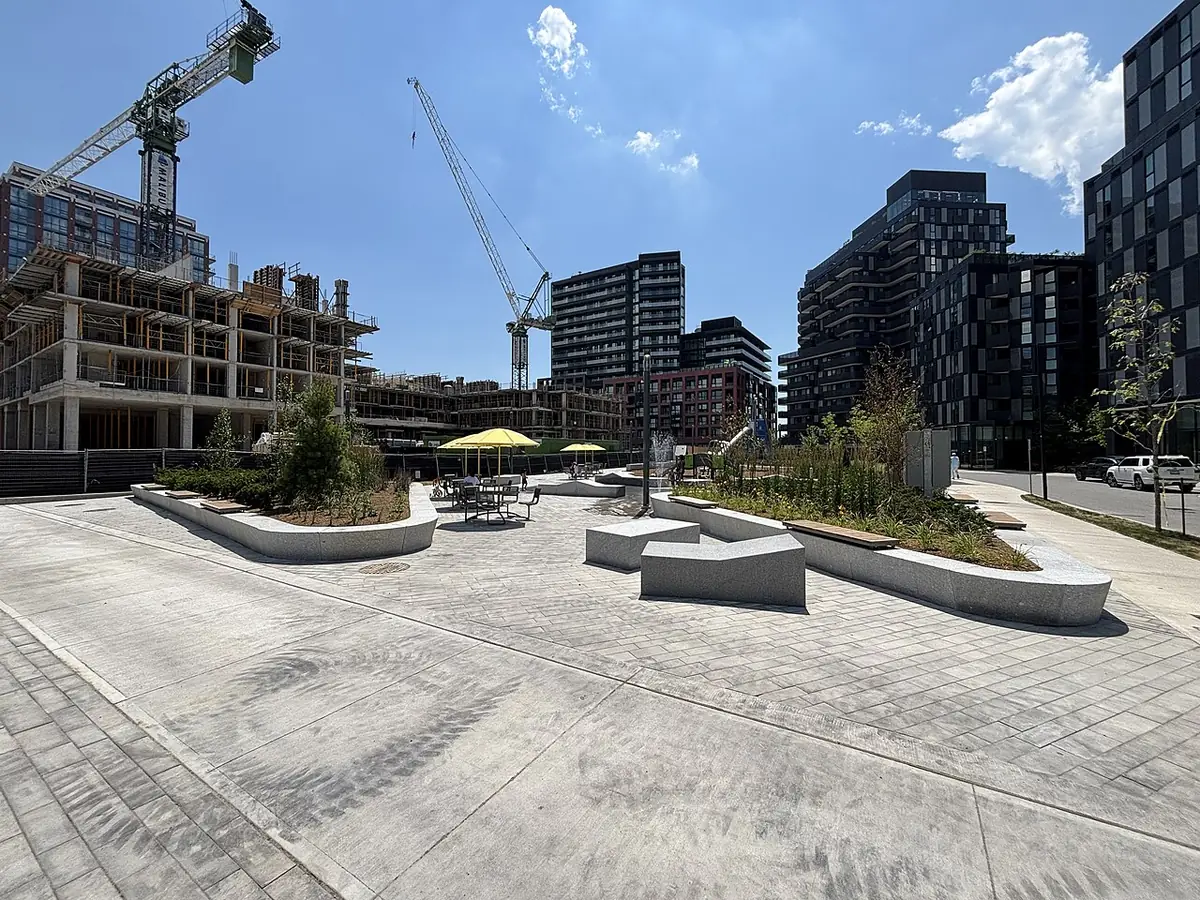
A new public plaza taking shape in Toronto — Photo: Canmenwalker · CC BY 4.0 · Wikimedia Commons
Having worked through the mechanics, the hidden costs and the daily realities of the Toronto market, the moment has come to judge your own number. Valuing an apartment in Toronto is not a purely mathematical exercise, nor is it settled by whatever a lender is willing to advance; it is a judgement you will act on, and it deserves the same care as the purchase itself. If you have measured the reality of the condominium fees, factored in the local taxes and accepted the constraints inherent in vertical condominium living, you now hold the elements you need to test any estimate that is put in front of you and to negotiate from a position of strength.
The key is never to give in to the panic or the artificial urgency that the competitive dynamic of the Toronto market so often manufactures around a figure. Every estimate should be reasoned through, supported by close reading of the building documents and validated by independent professionals who can protect you from hidden defects and unpleasant financial surprises. Keep in mind throughout that a sound valuation is one that lines up with your own time horizon, your plans over the medium term and your tolerance for budget risk, rather than one that flatters the number you hoped to see.
In the end, if your figure rests on recent sold comparables in the same building or the immediate area, if it has been adjusted for the condition of your unit and the health of the reserve fund, and if it survives a second opinion from an appraiser or a second agent, then it is a number you can act on. The Toronto market rewards methodical, patient and well-informed owners who refuse to confuse speed with haste. Take the time to document every adjustment, surround yourself with experts you trust and approach the decision with the clear-eyed assurance of someone who knows exactly what the number is made of.
Related questions
What legal costs should be netted out when you value an apartment in Toronto?
Legal fees for a Toronto property transfer generally run between $1,500 and $3,000 CAD, depending on how complex the file is and the value of the property. Those fees cover the title search, the drafting of the official documents and the handling of the funds on closing day, so an owner reading a valuation as net proceeds should subtract them from the headline figure.
How does Land Transfer Tax in Toronto affect the figure a valuation produces?
In Toronto a transfer attracts a double land transfer tax: a provincial tax and a municipal tax specific to the City of Toronto. The combined total generally represents between 1.5% and 3.5% of the purchase value of the property, payable in full at signing, which is why a valuation stated as a market price is never the same as the cash that changes hands.
Do first-time buyer programs change how a Toronto apartment is valued?
They change what a buyer can afford rather than what the unit is worth. First-time buyers can claim partial rebates on the municipal and provincial land transfer taxes, along with federal home ownership programs such as the tax-free savings account for a first home, and that extra buying power feeds through into demand for the entry-level units a valuation compares against.
What is a condominium reserve fund and why does it move a valuation?
The reserve fund is a compulsory pool of collective savings built up by the condominium corporation to pay for future major work on the building, such as recladding a facade or replacing the elevators. An underfunded reserve fund exposes unit owners directly to heavy special assessments, and a valuer who reads the reserve fund study will adjust the estimate downward when the fund is thin.
Does the right to list an apartment on Airbnb add value in Toronto?
Far less than owners expect. The City of Toronto imposes strict rules that allow owners to let only their principal residence on platforms of the Airbnb type, and the great majority of condominium by-laws flatly prohibit short-term rentals to protect the quiet and security of residents, so any short-let income should be stripped out of a valuation.
How do monthly condominium fees affect what a Toronto condo is valued at?
Unusually high fees, or fees that have risen sharply over recent years, are a major drag on value, because they mechanically shrink the pool of qualified buyers and weigh heavily on the net figure a unit can command. Two otherwise identical units can appraise differently on their maintenance fees alone.
How long does a valuation figure stay reliable in Toronto?
Treat it as a snapshot with a short shelf life. The standard closing period for a Toronto transaction runs between 30 and 90 days after an offer is accepted, depending on what buyer and seller agree during negotiation, and an estimate more than a few months old should be refreshed against current comparable sales.
Do you need an inspection before you can value an apartment?
It is not strictly required in law, but having an apartment inspected by a qualified professional is strongly recommended, because it identifies hidden defects, plumbing problems or insulation faults that are invisible during a viewing. Those findings are exactly what turns a generic price per square foot into a condition-adjusted estimate for your specific unit.
Is the municipal assessed value the same as a market valuation in Toronto?
No. Property tax is calculated by multiplying the assessed value of your property by the rate set each year by Toronto city council, and Toronto rates have traditionally been among the lowest in the province of Ontario compared with suburban municipalities. The assessed value is a tax base, not a selling price, and the two routinely disagree.
Does the form of ownership change how a Toronto apartment is valued?
Yes, and it is worth confirming before you compare anything. In Toronto almost every apartment is held under the condominium corporation regime, where you own your unit outright along with an undivided share of the common elements and hold a separate registrable title, which is what makes unit-to-unit comparison meaningful in the first place.
Property review of ting
No ting properties in Toronto yet
Be the first — share it on ting and it shows up right here.