Putting a credible number on a Houston apartment means reading a market shaped by the absence of traditional zoning and by a distinctive property tax system. This guide sets out what actually drives an estimate here, how condominium rules and running costs feed straight into value, what an owner should gather before asking anyone for a figure, and how to sanity check the number you are given.
Get the app
What nobody tells you.
Real prices, hidden costs and the traps to check before you commit.
Why the value of a Houston apartment holds up even without a strict zoning code
Scroll
Why the value of a Houston apartment holds up even without a strict zoning code
Putting a credible number on a Houston apartment means reading a market shaped by the absence of traditional zoning and by a distinctive property tax system. This guide sets out what actually drives an estimate here, how condominium rules and running costs feed straight into value, what an owner should gather before asking anyone for a figure, and how to sanity check the number you are given.
Written by the ting.ad editorial team ·
Memorial Drive, Houston in Street View: drag to look around.
Once you see how that flexibility gets priced, the next question is which kind of estimate your own situation actually calls for.
The absence of single use zoning in Houston often surprises owners arriving from markets built on rigid administrative boundaries, and it changes how a valuation has to be assembled. A residential building here can sit beside a commercial site or a vacant lot waiting to be developed, which moves the perceived calm of a street and, with it, the number a buyer will accept. That apparent fluidity is not chaos but regulation by the market and by private subdivision restrictions, both of which are legible if you read the recorded documents. Understanding the mechanism is what lets you judge how stable a figure will be over the years you plan to hold the property. In practice it means asking how the immediate surroundings of an apartment can change without the public procedures most valuation habits take for granted.
Complete freedom to build on the land next doorvsReal uncertainty about the future surroundings
The freedom to build lets supply adapt quickly to demand, but it exposes residents to unplanned changes in their immediate neighborhood, and an estimate has to price that risk rather than ignore it. A vacant lot facing your balcony can take a commercial project without you being able to object through the usual regulatory channels, so a figure that quietly assumes the outlook is permanent is a figure built on sand.
Regulation through private covenantsvsDependence on the owners associations
Neighborhood restrictions and HOAs (homeowners associations) replace municipal zoning by dictating strict rules on architecture and use. These private bodies do preserve value, which counts as a genuine positive in an estimate, but they also impose dues and behavioral constraints that can weigh heavily on an owner, so their rulebook and their accounts belong in the valuation file.
Relative affordability against other large marketsvsFast turnover in the kind of building around you
The speed with which developers can densify an area keeps supply plentiful but unsettles the visual and landscape reference points an appraisal normally leans on. Anyone valuing here has to accept that the Houston streetscape reinvents itself in short cycles rather than settling into a fixed historic fabric, which is exactly why recent recorded sales matter far more than a neighborhood's long standing reputation.
Which owner really needs which kind of valuation for a Houston apartment?
Moving from another market's habits to the Texas reality means measuring the cultural and practical gap between your reference points and how value is set here.
Vertical living in Houston does not serve the same audience as the traditional suburban house on its large wooded plot, and the two are not valued the same way either. Between the towers of the business district and the gated residential blocks of the outer neighborhoods, both the daily experience and the pricing logic change completely. Each owner has to be clear about what the number is for, because a sale price, a rental yield and an assessed value all weigh the same evidence differently. Working through concrete situations is the fastest way to see which method, and which evidence, will produce a figure you can defend.
Valuing the urban lifestyle premium
You bought to cut daily commuting time and to enjoy high specification shared facilities such as a gym, a rooftop pool and a concierge service. In dense districts those amenities are a real component of value, and the comparables that matter are units in buildings offering a similar package rather than anything nearby that happens to be the same size. The counterweight is that floor areas are often smaller and there is no private garden of your own, so a straight price per m2 comparison against suburban stock will mislead you in both directions. Treat the amenity package, the floor level and the outlook as explicit line items in the estimate, because that is precisely how the next buyer will read them.
Valuing on the income the unit can actually produce
You hold the property to let it to a mobile population of professionals, researchers and students attached to the major university and medical hubs. Here the apartment is a liquid asset, easy to manage through specialist agencies and supported by sustained rental demand, so the figure has to start from achievable rent rather than from an asking price. Association dues and competition from new developments both bite into the net, however, which is why location and building quality dominate the arithmetic. Your number is only as good as your reading of how the neighborhood is moving and of what standard the market currently demands, and both need rechecking every year.
Valuing a property you manage from a distance
You split your time between several cities, or you arrived in Houston without knowing how long you would stay, so what you need is a defensible figure rather than a listing strategy. A secure building with on site staff and maintenance included takes the heavy upkeep off your hands, and that reliability is worth something to the next buyer as well. The compromise sits in the recurring cost of the shared charges and in the limited freedom to make structural changes, both of which cap how much you can lift the value through works. For this profile the honest approach is to anchor the number on recent closed sales in the same building and then adjust for condition, rather than to rely on any single opinion.
Which reference points do you have to unlearn when you value property in Houston from abroad?
Houston's skyline seen past the rooftops of a nearby neighbourhood — Photo: JAFactsDude · CC0 · Wikimedia Commons
Once those differences are absorbed, the choice of comparison area becomes the cornerstone of any estimate you produce.
In many markets a property purchase sits inside a protective, centralized legal framework where bricks and mortar are a store of value governed by settled rules. In Houston the logic is that of a dynamic contractual market shaped by a culture of immediacy and by near total dependence on the car. Ideas about neighborhoods, shared ownership and the relationship to the city itself all differ deeply from those imported standards, and each difference moves the number. Knowing the gaps in advance saves you from reading a Texas valuation with the wrong instincts.
From abroad
Walkable central districts with local shops a few minutes on foot
Houston
An urban layout designed around the car and structured by major highway corridors
Your building will necessarily have secure parking spaces or access to a structured garage, and that allocation is a priced asset, while walking out for daily errands is a geographic exception rather than the norm.
From abroad
Strong statutory protection for individual owners, with decisions taken in a formal owners meeting
Houston
The discretionary power of the homeowners associations (HOA) and their internal rules
Decisions about the building can be taken far more quickly, but the internal rules (things like the color of blinds or restrictions on letting) are infinitely stricter, and a restrictive rulebook narrows the buyer pool and therefore the price.
From abroad
A view of property as long term family capital passed down through generations
Houston
A view of housing as a functional, liquid asset subject to fast renewal cycles
Wear on materials and the modernity of interior fittings count for more than the historic age of the building, which changes the way you calculate the potential gain on resale.
From abroad
Moderate property taxes capped by local authorities
Houston
High property taxes that fund local services directly
You have to build that recurring, non deductible cost into your annual budget, because it represents a significant share of the total cost of owning the apartment and caps what any buyer can pay for it.
How the different districts compare once you start pricing like with like
These territorial distinctions translate into very concrete financial realities that deserve analysis without approximation.
Houston is not a single center but a mosaic of districts with strongly marked identities and distinct price dynamics. From the relentless energy of Downtown to the more residential feel of Near Northside or Midtown, each area imposes its own rhythm and its own traffic constraints. Reading these micro markets is what stops you pricing a unit against comparables drawn from an area that behaves nothing like it. The address dictates as much of the long term value of your apartment as the unit itself does.
Downtown
A vertical, hyper connected business hub crossed by a network of air conditioned tunnels, and noticeably quieter at the weekend.
Suits
Senior executives and professionals who want to be next to the corporate headquarters and the transit lines, which keeps comparable sales frequent and easy to find.
Trade-off
A higher cost per m2 and limited evening activity outside the targeted entertainment zones, so amenity and floor level adjustments carry a lot of weight here.
Midtown
A young, fashionable, very dense district where the restaurant options and a vibrant nightlife are concentrated.
Suits
Those who want to go out on foot and benefit from strong rental demand among younger tenants, which supports the income based approach to value.
Trade-off
Potential noise, more difficult parking and buildings with fast owner turnover, all of which show up as discounts a careful estimate has to apply.
Museum District and Montrose
A leafy, cultural setting with quieter streets lined by museums, galleries and characterful townhouses.
Suits
Art lovers, families after a village feel in the middle of the metropolis and long term holders, which makes values here comparatively steady.
Trade-off
A thinner stock of available apartments and some of the firmest acquisition prices in the city, so comparables are scarcer and each one needs closer reading.
What the Houston market data says about the level your estimate should land at
A shaded street in Houston, oak trees overhead — Photo: WhisperToMe · CC0 · Wikimedia Commons
Beyond the raw numbers, what you legally own is the next thing an estimate has to take a view on.
Pricing a Houston apartment means looking past the headline figure the agencies advertise. The Texas system rests on a particular fiscal balance, with no state income tax offset by substantial property taxes, and that trade-off sets the level a buyer can realistically support. On top of it sit the monthly condominium dues, often high because of the services modern buildings provide. The benchmarks below give you the orders of magnitude any estimate is measured against before you commit to a number.
houstonFor saleApartmentestimate
Median price / m²US$2,280Half the apartments sell below this
Median priceUS$230kthe average is 14% higher — a few very large properties pull it up
Most common2 bedrooms42 % of listings
Average size96 m²
By number of bedrooms
Bedrooms
Share of market
Avg price
Price / m²
Avg size
1
38 %
US$180k
US$2,640 +10 %
68 m²
2most common
42 %
US$240k
US$2,400
100 m²
3
17 %
US$305k
US$2,256 −6 %
135 m²
4
3 %
US$356k
US$2,160best value / m²
165 m²
Each row is an average, compared against the area average of US$2,400 / m². These are indicative estimates of a typical local market, not a measured sample of live listings. Check current listings before relying on them.
What exactly are you valuing: the unit alone, or a share of the land beneath it?
Once those legal points are absorbed, the process of turning a rough figure into a defensible one follows a strict timetable of its own.
The legal structure of shared ownership in the United States carries subtleties that any arriving owner has to master to avoid unpleasant surprises in a valuation. Depending on the form the development takes, you may own an undivided share of the land or simply a built volume governed by long term leases or more complex arrangements. That technical distinction changes the long term value of your property and the conditions under which it can be resold. Reading the legal framework carefully is what secures the real substance behind the number you are relying on.
The straightforward condominium held in full ownership
You own the walls of your apartment together with an undivided share of the common parts and of the land the building stands on. This structure offers complete legal transparency and direct control through the owners association over how the building is run. It is the most common and the most reassuring model for a buyer arriving from abroad and looking for familiar reference points, and it is also the form that comparable sales data covers best.
What it changesYou take part in decisions that shape the value of the underlying land, which means every dollar invested in the common parts contributes directly to preserving your own capital and is defensible in an estimate.
Shared structures and integrated mixed use developments
The building forms part of a larger scheme where the land belongs to a master entity or a developer that grants long term use rights instead. The charges then include specific ground rent style payments on top of the usual association dues. This arrangement turns up frequently in large mixed use programs combining retail, offices and high end residences, and it makes finding true comparables considerably harder.
What it changesYou need specialist advice on the renewal clauses in those leases and on the use restrictions, otherwise the number you rely on can be undermined by charges you cannot reduce or by resale constraints you did not see coming.
The chain of checks that turns a rough figure into a defensible valuation in Houston
A quiet garden path, a green pause in Houston — Photo: Safety Cap · CC BY 4.0 · Wikimedia Commons
To run that timetable without a stumble, the coordinated involvement of the local professionals is the last piece of the puzzle.
Buying property in Texas is a contractual mechanism framed by standardized forms issued by the state real estate commission, and each stage of it tests the figure you started from. Every phase, from the initial offer (the Earnest Money Contract) through to closing at the title company, runs to strict deadlines that have to be respected. The smallest slip during the due diligence window can cost you the earnest money deposit outright. Understanding this sequence is what gives you full control of the negotiation and of the evidence behind your price.
Selecting the property and confirming the mortgage pre-approval or proof of funds that fixes the ceiling on any figure you can act on.
Signature of the standardized purchase offer and payment of the earnest money deposit to the title company, which fixes the number you are now defending.
The opening of the option period, the inspection and withdrawal window that lets you renegotiate repairs or walk away without penalty if the evidence contradicts the price.
A thorough analysis of the title by the title company (the Title Commitment) to confirm there are no hidden liens or restrictive easements weighing on the value.
Clearing the financing conditions, including the lender's own appraisal, and preparing the final transfer documents.
The closing signature and the official recording of the deed with the Harris County authorities, at which point your agreed price becomes a comparable for the next valuation.
Who produces each figure in a Houston valuation, and in what order
Rather than concentrating every act and every check in the hands of a single public official, a Texas property transaction spreads the roles rigorously across several independent professionals, and each of them touches the number at a different point. From the real estate broker to the title company by way of the licensed inspector, every participant secures one facet of the transaction. Knowing what each is entitled to do lets you see which figure you are actually looking at and how much weight it deserves in your file.
The Realtor (real estate agent)The comparative market analysisPulls recent closed sales of comparable units, adjusts them for size, condition, floor and outlook, drafts offers on the official forms and negotiates the financial terms of the contract.
The Title CompanyLegal security and escrowActs as the neutral trusted third party, verifies the historical validity of the title, holds the escrowed funds and runs the final signature, so that the price finally recorded is the one that enters the public record.
The InspectorThe condition auditProduces a detailed report on the structure, the plumbing, the electrical installation and the air conditioning, which is where downward adjustments and repair requests come from before the price is settled.
The HOA management (association manager)The building's rules and financesSupplies the condominium rules and the building's financial statements and approves the incoming owner, and those documents are what tell you whether the price is carrying a hidden liability.
The Lender (mortgage provider)The appraisal that backs the loanReviews the mortgage application if you borrow locally, checks the buyer's solvency against Texas lending criteria and commissions an independent appraisal, since it will only lend against its own figure.
Apartment in a tower or single family house in Houston: which one values more predictably?
Once the property type is settled, the question of the running costs behind the figure becomes unavoidable.
The choice between a condominium apartment, often in one of the residential towers downtown or in a lively district such as Uptown, and a single family house with a yard in the vast Houston suburbs comes down to your relationship with time and travel, and the two behave very differently in a valuation. In a metropolis where sprawl constantly redefines distance, the apartment offers immediate proximity to the economic and cultural centers and cuts driving time sharply each week, and that convenience is priced in by buyers. Modern towers provide integrated services comparable to a luxury hotel, including a permanent concierge, equipped fitness rooms, rooftop pools and pooled maintenance that frees the owner from any physical responsibility for the building. The counterweight is strict submission to the condominium rules, known as HOA rules, whose monthly dues can be substantial and can move unpredictably from year to year, which is exactly why an estimate has to read the association accounts and not just the floor plan.
A single family house in Houston, by contrast, gives complete independence from immediate neighbors, private outdoor space often including an in ground pool, and relative architectural freedom, although that freedom is frequently constrained by strict subdivision covenants. The formula carries a considerable maintenance burden, whether that is central air conditioning running at full tilt for much of the year, a roof exposed to Texas weather or the independent upkeep of the grounds. Families with children generally prefer this option for the living space and the quiet of residential cul-de-sacs, accepting longer daily journeys to reach the employment zones downtown or in the medical district. For valuation purposes that means deferred maintenance shows up as a much larger adjustment on a house than on a unit in a well run tower.
Strictly in terms of capital value, a Houston condominium apartment behaves differently from a house on the resale market. Units in the most sought after towers keep useful liquidity with a population of young professionals and senior executives looking to avoid logistical constraints, and that liquidity narrows the gap between an estimate and the price actually achieved. Rising association dues, however, can weigh on rental profitability or slow a resale compared with a single family home in a well regarded school catchment, so the dues trajectory is a line item in any honest number. Your reading has to rest on a clear view of your current way of living and of your plans over the medium term, accepting that each option carries financial and organizational trade-offs specific to this Texas urban environment.
The climate dimension also belongs in any comparison of the two property types. High rise condominiums often benefit from centralized backup systems and a reinforced concrete structure that stands up robustly to the extreme weather of this coastal region, and that resilience supports both the insurance premium and the value. Single family houses demand closer attention to lot drainage and to the waterproofing of the foundations, and these are decisive factors in preserving value against local climate variation, which is why flood zone status and drainage history are among the first things to check before you accept any figure.
The cost lines every Houston valuation has to account for
With that financial frame in place, walking through an ordinary week is what confirms whether the location premium in your figure is real.
Assessing what a Houston apartment is worth to hold never stops at the mortgage repayment. Every recurring charge that makes up the total cost of ownership in this Texas metropolis has to be built in, because those charges cap what a buyer can pay. Local property taxes, unusually high in a state with no income tax, are a major line that weighs heavily on an owner's annual cash flow. On top of them come the monthly association dues that cover maintenance of the common parts, security and the shared facilities. Home insurance premiums, driven by the climate risk of this coastal region, complete a financial equation that any owner has to work through rigorously before relying on a valuation.
Estimated monthly and annual costs for an apartment in Houston
Cost line
Typical amount
Payment frequency
Effect on the valuation
Local property taxes
2.2% to 2.8% of assessed value
Annual
High, reassessed every year, and a direct drag on what a buyer can pay
Association dues (HOA)
$350 to $800
Monthly
Varies with the services the tower provides, and a high figure discounts the unit
Home insurance
$120 to $250
Monthly
Needed to cover climate risk, and flood exposure pushes the premium and the discount higher
Electricity and air conditioning
$150 to $300
Monthly
Peaks sharply in the summer months, so insulation and system age feed straight into the estimate
The amounts shown are market averages and can vary significantly with the district and the age of the building.
One-off costs that sit around the valuation figure at the point of sale
Type of cost
Estimated range
When it is paid
Whether it is required
Closing and title company fees
1% to 2% of the purchase price
At signing
Required
Technical inspection of the property
$400 to $700
Before purchase
Strongly recommended
Association reserve contribution
2 months of dues
At completion
Depends on the building's rules
These start-up costs have to be provided for on top of the deposit lenders require, and they are part of the real cost a buyer weighs against your asking figure.
What an ordinary Tuesday tells you about the location premium in your figure
A community garden where Houstonians grow their own vegetables — Photo: Safety Cap · CC BY 4.0 · Wikimedia Commons
Beyond that well oiled routine, many practical details never make it into a developer's brochure or an automated estimate.
Nothing replaces close observation of an ordinary weekday when you are trying to judge what a Houston property is really worth. The rhythm of life is dictated by the sheer size of the city, the highway network and the intensive use of air conditioning in every enclosed space. Your daily schedule depends directly on the distance between home and work, whether that is the downtown business district, the medical center or the technology hubs on the edge of the metropolis. Living in an apartment in a central district changes that equation by cutting travel time, and it is precisely that saving that a location adjustment in a valuation is trying to capture.
07:00Condominium building, central HoustonWaking in the air conditioned apartment with a view over the skyline. A quick check of traffic on the major highway corridors before leaving, and the reliability of that run is one of the strongest location adjustments there is.
08:15The journey to workBy car or on the light rail depending on exactly where the residential tower sits relative to your office, and the difference between those two options is visible in the comparable sales.
12:30Lunch break in the business districtImmersion in local working life, using the many restaurants and services within walking distance of the workplace, a density of amenity that underpins demand for units nearby.
18:00Back at the building, using the shared facilitiesA session in the condominium gym or time by the outdoor pool to shed the pressure of the day, and the condition of those facilities is one of the first things a buyer prices.
20:00Dinner and running the householdCooking in the apartment's open kitchen while enjoying the quiet and the modern sound insulation of recent construction, both of which are worth checking in person before you accept a figure.
22:00NightA calm night in a setting secured by on site staff and strict access control, an amenity that carries a measurable premium in a market where security is priced explicitly.
What brochures and online estimates systematically leave out about Houston
These blind spots are where inexperienced owners most often trip up when they try to price their own property.
The Houston market has operational and regulatory particularities that marketing agencies regularly leave out when they present a figure. Behind the promise of a modern, sunlit way of life sit technical, legal and climate realities that deserve close attention from anyone putting a number on a property. Understanding these hidden factors saves you from serious financial disappointment and lets you judge how durable a valuation really is in a metropolis that keeps expanding.
The absence of a classic zoning code
Houston does not operate a traditional zoned planning system. A quiet residential building can find a commercial project or a construction site opening directly opposite from one month to the next, permanently changing the calm and the light, and no automated model captures that risk in the figure it returns.
The power and autonomy of the owners associations
HOAs hold wide discretionary power to impose rules, approve or refuse interior works and levy special assessments for major repairs, with little effective recourse for an individual owner. A restrictive rulebook narrows the buyer pool, and a pending assessment is a liability that belongs in the price.
The vulnerability of infrastructure to severe weather
Tropical storms and torrential rain put the electricity network and the drainage systems under heavy strain, sometimes causing extended outages that immobilize the elevators in residential towers. Flood zone status and outage history are among the most reliable downward adjustments available to you.
The speed at which local property taxes move
The appraisal district revises the assessed value of your apartment every year, which can bring a sharp and unpredictable rise in the tax bill and directly reduce what a buyer can afford. It also means the assessed value and the market value are two separate numbers that should never be used interchangeably.
The high cost of air conditioning through the summer
Extreme heat and very high humidity for several months of the year push energy bills to levels many first time owners badly underestimate in their forecasts. A buyer who runs those figures will pay less for a unit with an ageing system than for an identical one that has been upgraded.
The valuation mistakes owners regret six months after settling in Houston
Disappointments that concrete naturally raise the question of who should not be relying on a figure at all.
Looked likeAn uninterrupted view from the fifteenth floor balcony, treated as a permanent premium in the price
Turned outA vacant lot below bought by a developer for an even taller tower, closing off the outlook for good and bringing permanent noise, none of which the original figure had allowed for.
Would have caught itRead the recorded deed restrictions and subdivision covenants that apply to the surrounding lots, and check the permits already filed within a few hundred meters, since there is no zoning plan here to do that work for you.
Looked likeModerate, very attractive association dues that made the running cost look light
Turned outA sudden, heavy increase voted by the association to fund urgent roof works and bring ageing elevators up to standard, wiping out the margin the valuation assumed.
Would have caught itInsist on the minutes of the last three association meetings so you can see the true state of the reserve fund and identify the works that have been deferred.
Looked likeAn ideal central location that appeared to justify a walkability premium
Turned outNo essential local shops at all, turning the smallest grocery run into a complicated car journey through saturated traffic, which buyers discount even when they cannot articulate why.
Would have caught itWalk the immediate surroundings yourself at different times of day and map which everyday services genuinely exist before you accept any location premium in the number.
Looked likeModern, high performing central air conditioning presented as a recent upgrade
Turned outAn obsolete and power hungry system whose consumption sends monthly bills soaring as soon as the first spring heat arrives, a defect that costs real money at resale.
Would have caught itHave an independent certified expert carry out a full technical assessment of the heating and air conditioning system before you rely on any figure for the property.
Which owner should not act on a Houston apartment valuation at all?
Now that every facet of the question has been taken apart, it is time to decide what to do with your number.
A valuation in Houston is not a universal answer that suits every personal and professional situation. Some owners are heading for certain disappointment because of financial constraints, ways of living incompatible with condominium rules or an investment horizon that is simply too short for any figure to hold. Identifying those mismatches clearly saves you from damaging commitments and points you toward more sensible alternatives.
The investor looking for an immediate, effortless rental return
→Not to act on a headline valuation for a condominium unit governed by strict rules.
High monthly dues and regular increases in local property taxes cut significantly into the net margin, so a gross figure overstates what the asset will actually deliver without close knowledge of the market.
The first time buyer on a strictly limited budget with no cash reserve
→To wait and build a solid financial cushion before treating any figure as actionable.
The unpredictability of special assessments voted by the association and the annual rise in property taxes can push a household that is only just solvent into default, however accurate the original valuation was.
The professional relocated every two or three years
→Flexible renting rather than a purchase priced off a point in time estimate.
Transaction costs, combined with resale timescales on the Texas market, cannot be recovered over so short a period, which turns even a well valued purchase into a loss making operation.
The owner who wants large private outdoor space and full architectural freedom
→To look at a single family house in the outer suburbs instead.
Living vertically in a community imposes daily compromises that are unbearable for anyone allergic to collective rules, and no valuation, however favorable, compensates for a property that does not suit you.
So, is your figure for a Houston apartment one you can actually act on?
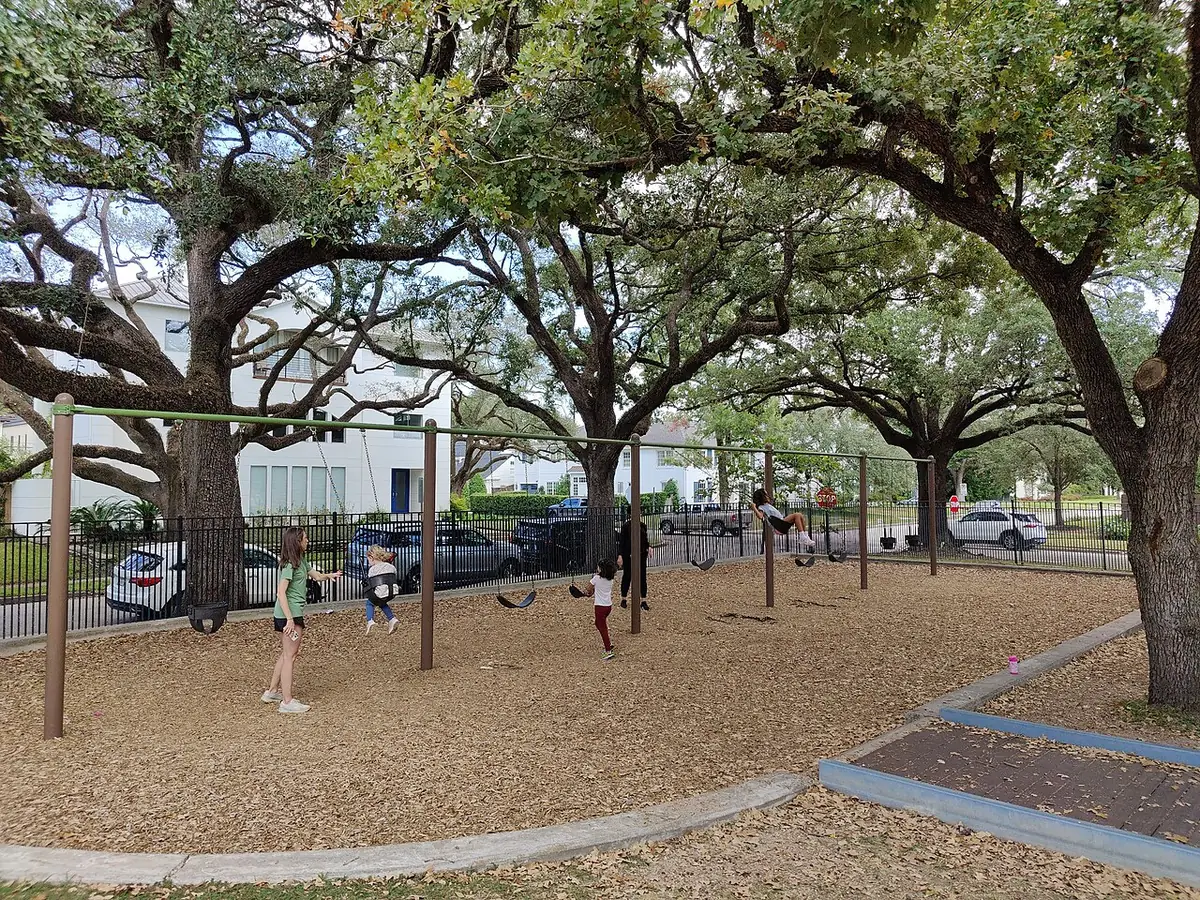
A shaded playground, popular with Houston families — Photo: EvanCarroll · CC BY-SA 4.0 · Wikimedia Commons
At the end of this analysis, putting a number on a Houston apartment is no longer a matter of impulse or of the superficial appeal of a developer's photography. You now have a clear, documented view of the financial realities, the regulatory constraints imposed by the owners associations and the climate and planning particularities of this vast Texas metropolis. A figure you can rely on in this region rests on a careful balance between the property tax burden the market can absorb, the weight of the collective rules and how well the location genuinely matches the way the likely buyer lives.
If your evidence is complete, if the comparable sales you are leaning on are recent and genuinely similar, and if the association accounts and the appraisal district record both support the level you have reached, then the number is ready to be used. An apartment that is well placed in one of Houston's dynamic districts is a defensible asset, and a valuation built on that evidence will hold up against a lender's own appraisal. Take the time to validate every technical point with independent professionals before you commit to any binding figure.
If doubts remain about the stability of your future income, about how long you will stay in the area or about your tolerance for the local regulatory constraints, it is far better to extend your research rather than force a decision on a shaky number. The Texas market offers plenty of opportunities that will still be there once your evidence and your personal situation line up properly. Haste is the worst adviser in property, and knowing when to wait is usually a sign of exemplary financial maturity.
Your next step is to appoint an independent broker and a trusted inspector to examine the property in detail and to reconcile their views with the figure you have. Never rely on a number without having checked the association accounts and the property tax history of the last three years. It is that combination of method and clear sightedness that turns a Houston valuation into something durable and genuinely useful.
Related questions
What closing costs should a Houston valuation allow for?
Closing and transaction costs generally run between 1% and 2% of the total purchase price. They cover administrative services, the official recording of the transfer and the fees of the various professionals involved, and a realistic estimate treats them as part of what a buyer can afford to pay rather than an afterthought.
How do property taxes work for owners in Houston, and how do they affect value?
Local property taxes are calculated as a percentage of the value the appraisal district places on your property. The rate most often sits between 2.2% and 2.8% a year and the assessment is revised annually, which is why the assessed figure and the market figure drift apart and should never be treated as the same number.
Is membership of an owners association compulsory, and does it change what a unit is worth?
Yes, membership of the owners association is automatic and compulsory as soon as you acquire an apartment in a tower or a horizontal condominium. That body runs all the shared areas and enforces a strict rulebook, so its finances and its restrictions show up directly in what buyers are willing to pay.
Which climate risks does a Houston valuation have to take into account?
Because of its coastal position, Houston is exposed to tropical storms and heavy rainfall. Full home insurance including specific cover for water damage and flooding is strongly advised, and the premium a building attracts, together with its flood exposure, is one of the clearest adjustments applied to an estimate.
Do short term letting rules affect the value of an apartment bought in Houston?
Seasonal or tourist letting is tightly controlled, and often banned outright, by the internal rules of many Houston condominiums. Checking those restrictive clauses matters before you assume any short term rental income, because a figure built on income the building does not permit will not survive scrutiny.
What effect does the absence of strict zoning have on the value of a property?
The absence of traditional zoning in Houston means the immediate surroundings of a building can change quickly as new sites are developed. That planning flexibility can affect how quiet an area feels, although residential neighborhoods do have specific protections, and it is one reason a location premium here needs testing rather than assuming.
How long does it take to go from an agreed figure to a completed sale here?
The full process, from acceptance of the offer through to the final signature at the title company, usually takes between thirty and forty five days, depending on how quickly the technical checks are completed and how fast the lender's financing comes through.
Can association dues rise unpredictably, and should an estimate allow for that?
Yes, monthly dues can be raised each year to keep pace with maintenance cost inflation. On top of that, special assessments can be levied to fund heavy structural work on the building, and a property whose reserve fund is thin is routinely discounted by informed buyers.
Is the advertised price of an apartment on the Houston market negotiable?
The room to negotiate depends directly on how tight the local market is, how long the listing has been online and how motivated the seller is. Working with an experienced real estate agent is what lets you establish the fair value of the property accurately before making an offer.
What documents do lenders require, and why do they matter to the valuation?
Lenders systematically ask for the last two years of tax returns, complete bank statements showing where the deposit came from, and a detailed statement of your existing financial commitments. They also commission their own appraisal, and it is that figure, not the asking price, that they will lend against.
Property review of ting
No ting properties in Houston yet
Be the first — share it on ting and it shows up right here.