Putting a credible figure on an apartment in Philadelphia calls for a close reading of its neighbourhood, of local taxation and of the specific rules of the American housing market. This practical guide walks you through valuing your property step by step, from what the exact location does to the number all the way to the figure you can defend at closing.
Get the app
What nobody tells you.
Real prices, hidden costs and the traps to check before you commit.
What you are really valuing when you put a price on a Philadelphia apartment
Scroll
What you are really valuing when you put a price on a Philadelphia apartment
Putting a credible figure on an apartment in Philadelphia calls for a close reading of its neighbourhood, of local taxation and of the specific rules of the American housing market. This practical guide walks you through valuing your property step by step, from what the exact location does to the number all the way to the figure you can defend at closing.
Written by the ting.ad editorial team ·
John F. Kennedy Boulevard, Philadelphia in Street View: drag to look around.
Before you settle on a figure, it is worth testing your own assumptions about the property against the realities of the local market.
Valuing an apartment in Philadelphia is not a matter of multiplying square metres by a headline rate for a historic city on the American East Coast. Behind the appeal of a market more affordable than New York or Boston sits a contrasted urban reality in which each neighbourhood imposes its own planning rules, its own local taxation and its own street level dynamics. To understand what you are really pricing, you have to weigh the coexistence of the old red brick stock typical of the row houses against the contemporary schemes redrawing certain districts. That gap between the postcard image and the actual structure of the housing stock shapes both daily experience and the long term value of the property.
The promise of a historic city with preserved architectural charm, where the price per square metre still sits below the other big economic centres in the region.vsThe reality of a mixed housing stock in which older buildings often need major spending on insulation, on bringing electrics up to standard and on the running of the condo association.
Heritage appeal masks structural charges that can run high in older buildings, so a valuation that skips a careful technical review will overstate the figure.
The idea of a stable, immediately profitable rental asset thanks to prestigious universities and a lively employment base.vsThe local administrative and tax complexity, in particular the municipal property tax and the specifics of condo associations, which weigh heavily on the net return.
A gross yield calculation is often misleading in Philadelphia if you ignore local taxation and the real cost of maintaining the common parts in managed buildings.
The feeling of settling in a vibrant cultural city where every neighbourhood offers a self contained, walkable life of its own.vsThe wide disparity in public services, safety and cleanliness from one street to the next, which turns the exact address into the decisive factor in what a property is worth.
The idea of a central neighbourhood in Philadelphia is very granular: two adjacent streets can show radically opposed value trends and noise levels, which is why comparables have to be drawn tightly.
Which reading of value fits your property and your reason for asking?
To gauge how much the local context changes things, it helps to set the practice of valuation here against the reference points people bring with them.
Philadelphia's residential market draws very varied profiles, from young professionals attracted by the cultural energy to international investors looking for an alternative to saturated markets. Yet the city's urban structure, its climate of hard winters and humid summers, and its organisation into quadrants dictate a very particular way of living. Valuing an apartment here means accepting that the figure depends on the use behind the question. Expectations about floor area, parking and building services have to be calibrated against the reality of local infrastructure, because that is exactly what the comparables will reflect.
Valuing on centrality
Your comparables come from dense districts such as Center City, Rittenhouse Square or Midtown Village. In these areas the stock is mostly apartments in converted older buildings or in recent residential towers, and the two behave differently: a converted floor plate and a purpose built tower unit are not interchangeable comparables even on the same block. Value here is carried by walkability, by SEPTA access and by the immediate presence of shops and restaurants. Set against that, the figure has to absorb smaller floor areas, the frequent absence of included private parking and an above average level of street noise. Price the access, then discount honestly for the space and quiet the unit does not have.
Valuing on residential and family appeal
Areas such as Fairmount, Queen Village or Chestnut Hill call for a different comparable set. Here the urban fabric changes completely: apartment blocks give way to townhouses divided into flats or to small scale condominiums. The value drivers become the calmer setting, schools with a good reputation in certain catchments and a local life built around parks and neighbourhood shops. The offsetting factors are a sometimes longer commute into the financial core of Center City and a tighter market in which good quality properties are taken very quickly. Fast absorption is a signal to read carefully: it can justify pricing at the top of the comparable range rather than the middle.
Valuing a held investment
Your reference points are the areas with strong value potential close to the big university campuses such as University City, or districts gentrifying quickly such as Fishtown. The value there rests on steady rental demand from students, researchers and young professionals. This reading demands real rigour about who manages the property and close attention to the condo association's rules on furnished or short term letting, since a restrictive rule narrows the buyer pool and with it the price. You also have to accept that the number depends as much on control of association charges as on potential capital growth over a five to ten year horizon.
Valuing from abroad: what changes fundamentally in how the number is arrived at
Once those reference points are in place, the central question becomes which part of the city your comparables should come from.
Property in the United States, and in Philadelphia in particular, follows legal, financial and practical conventions that differ sharply from what most owners arriving from abroad are used to. If you come with the reflexes of a first time buyer or an investor formed in another system, you will find a world in which the protection of value rests far more on contractual due diligence than on a centralised official who certifies the deal. From the central role of real estate agents to the mechanics of closing and to recurring local taxation, each stage of the transaction shapes the figure your property can actually command.
From abroad
In many systems a single neutral public officer certifies the deed, verifies the chain of ownership and holds the funds until registration, so title questions rarely surface in a valuation.
Philadelphia
In Philadelphia the transaction is handled by a title company and by specialist lawyers, with no single official centralising all the legal guarantees in the same way.
You have to instruct your own adviser or lawyer to examine the title and confirm that no hidden mortgage or easement sits on the property, because an encumbrance nobody found is a valuation that will not hold.
From abroad
Elsewhere, transfer duties and regulated fees are often bundled into a single figure of roughly 7% to 8% on an older property, paid by the buyer as a matter of course.
Philadelphia
In Philadelphia, closing costs generally represent between 2% and 5% of the purchase price, shared or negotiated between buyer and seller according to local practice.
The overall acquisition budget has to include these costs from the outset, remembering that they cover different services such as title insurance and local transfer taxes, and that whoever absorbs them is part of what the headline price really means.
From abroad
In many countries property tax falls due once a year and is worked out from cadastral values that have drifted far away from real market prices.
Philadelphia
In Philadelphia the real estate tax is assessed by the Philadelphia Office of Property Assessment on the basis of estimated market value and can be a substantial annual charge.
You must build this recurring cost into your monthly cash flow, and treat the assessed value as a public cross-check on your own figure rather than a substitute for it.
From abroad
In many systems the preliminary sale agreement binds the buyer firmly once a legal cooling off period of ten days has passed, with no reason required.
Philadelphia
In the United States the process rests on contingencies (financing, inspection and appraisal conditions) that allow the parties to renegotiate or withdraw during the due diligence phase.
The technical inspection becomes the critical moment at which a figure is tested: hidden defects found there are the grounds on which a price is reduced or work demanded.
Which part of Philadelphia should your comparables come from?
Knowing the neighbourhoods tells you where to look for comparables; it is the disciplined reading of prices and charges that turns them into a defensible figure.
Philadelphia is a mosaic of neighbourhoods with very distinct identities, each striking its own balance between accessibility, cultural energy, architectural quality and long term value potential. Whether it is the financial bustle of Center City, the historic charm of Society Hill, the creative energy of Fishtown or the residential calm of Chestnut Hill, location decides both daily comfort and the future liquidity of the property. Comparing these areas side by side is how you work out which sales genuinely stand as comparables for the apartment in front of you.
Center City & Rittenhouse Square
A sophisticated urban atmosphere, paced by office activity, upmarket shops, busy parks and cultural venues reachable on foot at any hour of the day.
Suits
Valuations that lean on deep comparable evidence, since demand is constant, resale liquidity is high and sales data is dense enough to narrow the range.
Trade-off
Among the highest prices per square metre in the city, substantial condo charges in the residential towers and a smaller living area, all of which have to be netted off the headline rate.
Fishtown & Northern Liberties
A bohemian, fashionable feel, marked by former industrial spaces converted into lofts, art galleries, craft breweries and specialty coffee shops.
Suits
Reading value where gentrification is moving quickly and recent sales may already sit below what the street will fetch in the next quarter.
Trade-off
Marked variation from one street to the next, persistent pressure on surface parking and potential volatility in the rental market by sub area, so comparables have to be drawn from a very tight radius.
Fairmount & Art Museum Area
A harmonious balance between city life and green space, backing onto the wide expanse of Fairmount Park and the art museum, with very photogenic brick townhouse architecture.
Suits
Properties where calm, greenery and a family friendly setting carry a premium, while staying ten minutes from the centre of the city by public transport.
Trade-off
An older stock in which renovated apartments with outdoor space or a private garage are keenly contested, so condition adjustments between two nearby sales can be large.
University City
An intense intellectual and scientific environment, shaped by the presence of the University of Pennsylvania and Drexel, with a very active student and medical population.
Suits
Valuing on durable, well secured rental demand, where an income based cross-check on the figure carries real weight.
Trade-off
A strongly seasonal market driven by the academic calendar and price movements concentrated around the main institutional corridors, so the date of a comparable matters as much as its address.
What the market data says an apartment in Philadelphia is worth, and what charges sit behind it
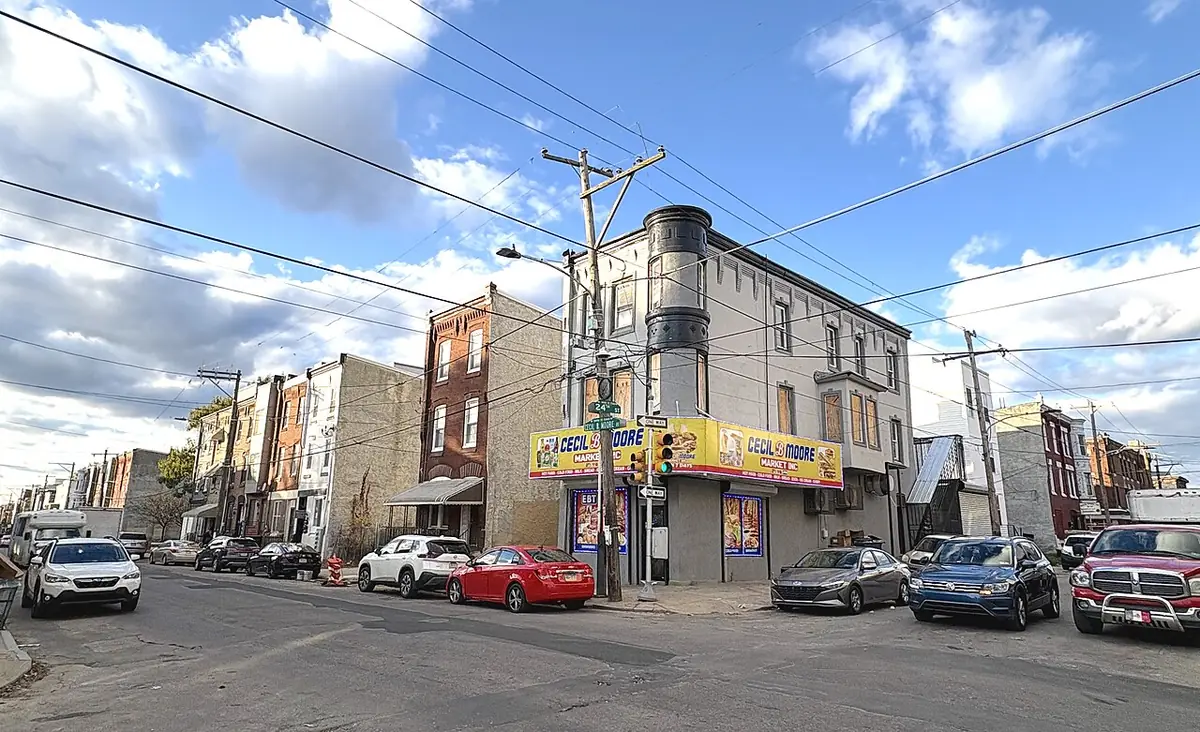
A lively commercial street lined with rowhouses and shopfronts — Photo: Moriah Levin · CC BY-SA 4.0 · Wikimedia Commons
Beyond the pure figures, the legal nature of what is actually owned deserves particular attention, because it changes the value directly.
Valuing an apartment in Philadelphia cannot stop at the asking prices displayed on property portals. The market shows wide variation depending on the type of property, its age and above all its micro location. On top of that, the financial structure of ownership in the United States includes specific items such as monthly condo or HOA fees, the municipal property tax and compulsory insurance. A clear view of these indicators is what lets you turn a rate per square metre into a figure that survives contact with a lender and a buyer.
philadelphiaFor saleApartmentestimate
Median price / m²US$2,945Half the apartments sell below this
Median priceUS$280kthe average is 14% higher — a few very large properties pull it up
Most common2 bedrooms40 % of listings
Average size90 m²
By number of bedrooms
Bedrooms
Share of market
Avg price
Price / m²
Avg size
1
32 %
US$214k
US$3,565 +15 %
60 m²
2most common
40 %
US$279k
US$3,100
90 m²
3
20 %
US$357k
US$2,852 −8 %
125 m²
4
8 %
US$450k
US$2,728best value / m²
165 m²
Each row is an average, compared against the area average of US$3,100 / m². These are indicative estimates of a typical local market, not a measured sample of live listings. Check current listings before relying on them.
What is actually being valued: condominium ownership and the association rules attached to it
Understanding these legal rules leads directly to the order in which a valuation is built and tested.
When you own an apartment in the United States, the legal structure of ownership dictates your rights, your obligations and your freedom to act, and each of those feeds into the price. In Philadelphia the great majority of apartments held in common ownership are condominiums, but it is essential to grasp how the association's rules differ from one building to the next, because unexpected restrictions on letting or on alterations narrow the pool of buyers. That legal distinction directly influences liquidity and, through it, the figure a valuation can defend.
Condominium status (the condo)
You own your private volume (the apartment) outright, together with an undivided share of the building's common parts. You hold an individual deed recorded with the city, which gives you wide latitude to sell or let the property within the association's general rules.
What it changesThis status supports a firmer valuation: it gives investors flexibility and makes bank financing straightforward, since lenders know the mechanism well and their appraisers have ample comparable evidence to work from.
The rules and restrictions of the association (HOA / condo association)
Even as the owner of your own walls, you are bound by the condo association's rules. That document governs interior and exterior works, moving hours, pets, and above all the strict limits on short term or long term letting.
What it changesYou must go through the minutes of recent general meetings and the association's reserve accounts before relying on any figure, because a looming special assessment is a direct deduction from the value of the unit.
The rule to understand before you act on a valuation of a Philadelphia apartment
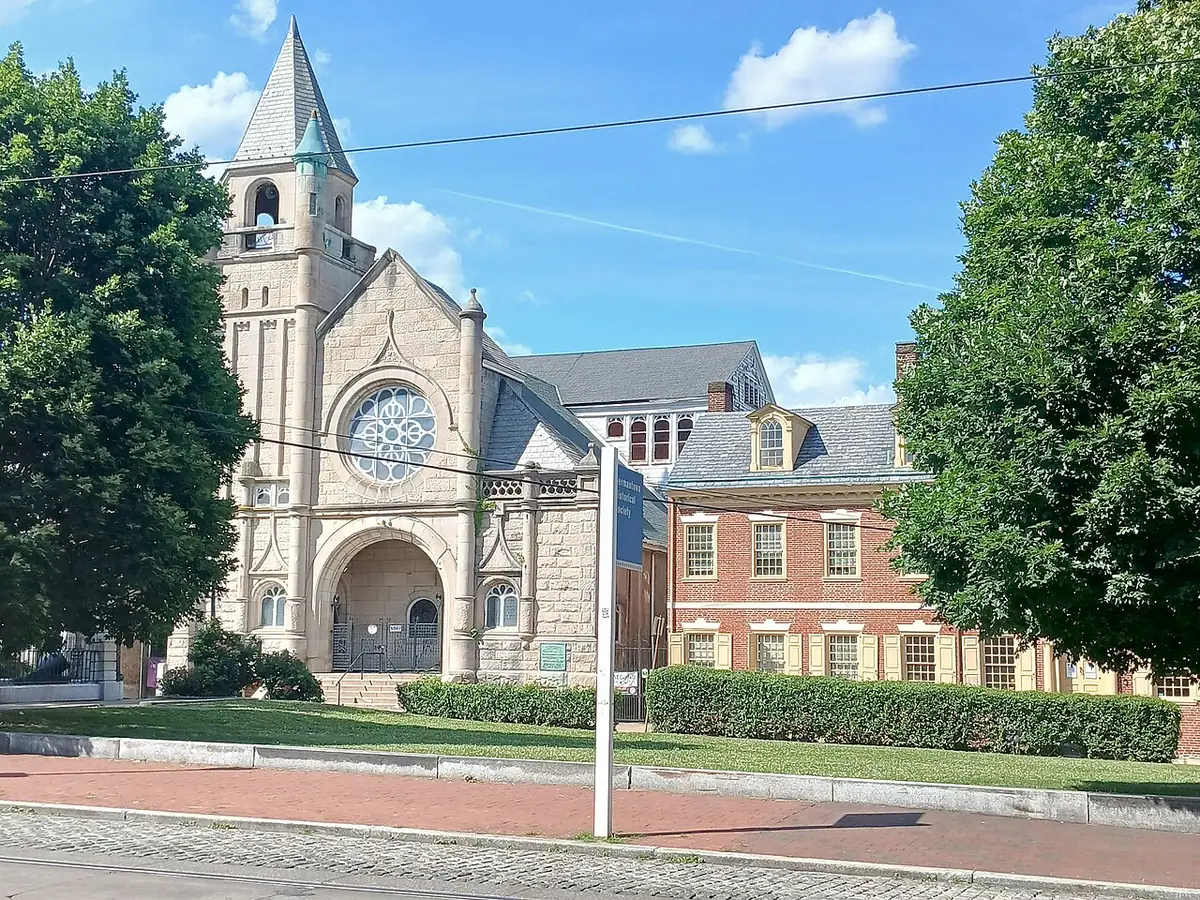
Market Square in Germantown, a historic corner of the city — Photo: Kreuz und quer · CC0 · Wikimedia Commons
To run that sequence without a false note, it is worth looking at the people involved and what each of them contributes to the number.
In the American property system, a figure does not become real because a portal displays it; it becomes real through a rigorous sequence in which each contingency plays a protective part. Acting on an estimate without testing it against inspection, association accounts and a lender's own appraisal exposes an owner to a valuation that collapses at exactly the wrong moment. Understanding the order of these checks is the best assurance that the number you are working with in Philadelphia will hold.
You start from a comparative market analysis of recent comparable sales, drawn tightly around the property, before any figure is committed to paper.
Open the condition review and commission a home inspection from a certified professional to audit the structure, the plumbing and the electrics, since each defect found is an adjustment to the figure.
Work through the condo documents in depth, including the financial statements, the operating budget and the level of reserve funds, and deduct for anything the building has not provisioned for.
Test the figure against what a lender will accept, since the mortgage contingency rests on an independent appraisal of the property commissioned by the lender.
Reconcile the differences in writing, setting your comparables, the condition adjustments and the appraisal against each other until one defensible number remains.
You end with a figure you can defend line by line: the comparable evidence behind it, the adjustments made to it, and the carrying costs a buyer will read alongside it.
Who produces the numbers in Philadelphia, and what each of them is actually measuring
A reliable valuation in Philadelphia rests on the smooth coordination of several specialists who intervene at precise moments. Contrary to a common assumption, an owner is never left alone with a portal estimate: a well structured ecosystem frames each stage, from the first viewing through to the official recording of title. Knowing what each of them measures lets you see why their figures differ and which one answers your question.
The buyer's agentComparative market analysisThe agent selects recent sales matching the property's criteria, analyses the market comparables and translates them into a price and terms, which is the fastest reading of value but also the one most shaped by what the market will bear this month.
The home inspectorCondition auditThe inspector goes through the whole apartment and the building to find hidden defects, water ingress risks or worn out equipment needing urgent repair, and every item found becomes a downward adjustment you can quantify.
The mortgage broker or lender, and the licensed appraiser they instructFinancing and formal appraisalThe lender assesses borrowing capacity against strict American market criteria and commissions an independent appraisal of the property, which is the figure the loan is actually written against rather than the one the parties agreed.
The title companyLegal verificationIt carries out the search on the chain of title, confirms the absence of unpaid liens or mortgages and issues the title insurance, because an encumbrance nobody found undoes any valuation.
The specialist lawyer or closing agentFinal closingThey prepare and supervise the signature of the final legal documents, work out the pro rata apportionment of taxes and coordinate the secure transfer of funds, turning the agreed figure into what each side actually pays or receives.
Condo or townhouse in Philadelphia: which one is easier to value, and why the numbers behave differently
Valuing a condominium apartment and valuing a townhouse in Philadelphia are two different exercises, because the two carry their costs in different places. Condos in dense neighbourhoods such as Center City or Rittenhouse Square often come with worthwhile shared services, a doorman, a gym and a roof terrace, while the burden of roof and facade work falls on the condo association rather than on the individual owner. That makes the visible figure cleaner, but those advantages come with monthly association charges that can run high and that rise steadily with inflation and the cost of urban services. A buyer prices those charges into what they will pay, so two units with identical floor areas and different monthly fees are not worth the same amount.
A traditional townhouse in residential areas such as Society Hill, Fairmount or Queen Village works the other way round. There are no recurring association charges, decisions rest entirely with the owner, and there is often private outdoor space in the form of a patio or an urban garden. In exchange the owner carries the full financial and logistical responsibility for maintaining the building, from repointing the historic brickwork characteristic of the local architecture through to replacing heating systems that are often old. Those deferred items are exactly what a condition adjustment has to capture. The Philadelphia market sometimes penalises condo resales when supply in the same segment becomes plentiful, whereas well maintained townhouses generally hold steady demand from local families and from buyers arriving from New York.
Comparing the two types also means taking in local taxation and the assessment carried out by the city's Office of Property Assessment. Property taxes apply to the assessed value of the property, and condos sometimes benefit from a temporary abatement programme (the well known ten year property tax abatement) where the building has undergone heavy renovation or recent new construction. An abatement with years left to run is worth money to a buyer and belongs in the figure; one about to expire is a cost about to arrive. For an older townhouse the cost structure is more predictable but calls for a personal reserve against the structural surprises that are common in Pennsylvania's historic stock.
In the end, which figure you can trust depends on how much of the building's future spending is visible to you. If the property is a managed residence with published accounts, reserves and a clear schedule of works, the valuation can be built almost entirely from comparables and association documents. If it is a townhouse whose maintenance history lives only in the owner's memory, the comparables give you a starting range and the condition survey does the rest of the work. Neither is harder to value than the other; they simply put the uncertainty in different places, and knowing where it sits is what separates a number you can defend from one you merely hope for.
The figures that feed a Philadelphia apartment valuation, from purchase costs to monthly charges
With these financial reference points in place, it is time to look at how an ordinary day in the city shapes what a buyer will pay.
The value of an apartment in Philadelphia is not the number printed on a listing or on an online portal. Any figure worth defending has to absorb the invisible spending as well: the very specific local property taxes, the monthly condo charges, the insurance and the energy bills. The tables below set out the orders of magnitude observed in the current market so that you can test your own estimate against them and see where your property sits relative to the range.
Purchase side costs and taxes that shape the figure
Cost item
Estimated amount or range
Effect on the valuation
Median price per m2 (condo)
$3,200 to $4,800
Varies sharply with proximity to Center City
Property tax (effective rate)
About 1.398% of the assessment
Calculated on the value assessed by the city
Closing costs (title company and transfer)
2% to 4% of the purchase price
Borne solely by the buyer in Pennsylvania
Owner's insurance (HO-6)
$600 to $1,200 per year
Essential to cover the interior and liability
The tax figures rest on the rates in force from the City of Philadelphia and can change at the triennial revisions.
Recurring monthly charges for a standard apartment
Type of charge
Monthly range
What is included or excluded
Association charges (HOA / condo fees)
$300 to $900 / month
Covers upkeep of the common parts, water and sometimes heating
Electricity and air conditioning (PECO)
$120 to $250 / month
Rises steeply in summer with heavy air conditioning use
Internet and telecoms
$60 to $110 / month
Depends on the local provider and the speed chosen
Parking in a secure garage
$200 to $450 / month
Rarely included in the base price of a city centre apartment
Any assessment of association charges must include a review of the building's reserve accounts, since an underfunded reserve is a special assessment waiting to happen and a deduction from value.
Health, schools and transport: how an ordinary Tuesday in Philadelphia shows up in the price
St. Helena Catholic Church anchoring its Philadelphia block — Photo: Farragutful · CC BY-SA 4.0 · Wikimedia Commons
Beyond that well oiled routine, the Philadelphia market holds technical particularities that marketing brochures carefully leave out.
Reading the value of a Philadelphia neighbourhood means observing the daily rhythm of the people who live there, from the morning commute on public transport to the services reachable on foot. The efficiency of SEPTA (Southeastern Pennsylvania Transportation Authority) and the closeness of health centres feed directly into quality of life, and buyers pay for both. Following an ordinary working day hour by hour shows where an address flows smoothly and where the friction is, which is precisely what separates two apartments with the same floor area.
07:30SEPTA Market-Frankford Line stationThe start of the morning journey towards the Center City business district, with moderate but constant crowding on the platforms. Walking distance to a station is one of the clearest premiums in the comparable set.
08:15A neighbourhood cafe in Center CityA quick coffee before the office, and a good moment to read the local economic mood that sits behind the recent sales figures.
12:30Near the health institutions (Penn Medicine / Jefferson)Checking medical cover and the immediate accessibility of emergency care and recognised specialists, which supports demand from the medical population.
17:30A local supermarket or covered market (Reading Terminal Market)End of day shopping for fresh produce from the city's traders, the kind of everyday convenience that keeps a district's prices firm.
19:00Getting home and parkingThe decisive moment of hunting for a space on the street or using the condominium's secure underground garage. A deeded space is one of the few features that can be priced almost line by line.
What the listing will never tell you about the value of your Philadelphia apartment
Knowing these blind spots is what stops a figure being set six months before the market corrects it.
Online listings showcase freshly polished floors, modern fitted kitchens and light flooding through the living rooms. What they deliberately leave out are the structural constraints, the history of the association's decisions and the quirks of urban zoning that weigh heavily on daily life and on price. Here are the four things to examine closely before you commit to any figure, because each of them is an adjustment nobody applies for you.
The real state of the condo association's finances and reserve fund
Many older buildings show artificially low monthly charges to attract buyers, while failing to set aside the sums needed for future major works on the roof, the facade or bringing lifts up to standard. A careful reading of the financial documents (the condo questionnaire) by your lawyer or broker is essential, because the day those works are voted through, every unit in the building is worth less than the listing said.
Urban noise and proximity to major traffic routes
Philadelphia's energy comes with significant traffic noise, notably along I-95, I-76 or wide cross streets such as Broad Street. Poor quality double glazing or old windows with no acoustic insulation will make your nights miserable, a detail that midday viewings often hide, and one that shows up as a discount against otherwise identical comparables a few streets away.
Strict residential parking rules and street permits
Owning a vehicle in Philadelphia without a private parking space attached to your apartment obliges you to obtain a Residential Parking Permit from the Philadelphia Parking Authority. That permit in no way guarantees a free space near your home after 7pm, which is why an apartment with a deeded space and one without are never the same number, however similar the floor plans look.
Nearby development schemes and construction sites
Philadelphia's property momentum shows up in numerous demolition and construction sites for new investment buildings. Valuing an apartment on the strength of an open view over a vacant lot or a surface car park carries the major risk of a tall scheme rising there, blocking the light and generating site noise for several years. A view that can be built out is worth less than the same view protected.
The valuation mistakes owners only discover six months later
These hard won lessons show that a headline number is only as good as the checks behind it.
Looked likeA charming older condominium full of historic character and period woodwork in a highly sought after central neighbourhood, priced off the district's average rate.
Turned outA worn out heating system and lead or corroded cast iron pipework, producing astronomical energy bills and recurring breakdowns in the middle of winter. None of it was in the figure.
Would have caught itInsisting on a full technical inspection by a certified professional and reviewing the building's complete maintenance history before applying any neighbourhood rate to the property.
Looked likeAn up and coming neighbourhood with purchase prices still affordable compared with Rittenhouse Square, and a value forecast built on that gap closing.
Turned outNo local shops open in the evening, a sense of insecurity after dark and stagnant property values over the medium term, so the gap never closed.
Would have caught itWalking the neighbourhood at different times, including late in the evening, and asking local traders how the area has actually been changing rather than assuming the trend continues.
Looked likeA top floor apartment with an unobstructed panoramic view over the city skyline and nobody living above, valued at a premium for the view.
Turned outInsufficient thermal insulation under the flat roof, making it stifling in summer, and recurring water ingress during heavy rain storms, both of which cost more than the view was worth.
Would have caught itChecking the state of the roof, asking for summer energy bills and confirming that the association has a funded plan for waterproofing work before paying the top floor premium.
Looked likeA quick decision with no negotiation, made to get ahead of other buyers in a tight and fiercely competitive market.
Turned outA clear overvaluation of the property against recent comparable sales, making any short term resale loss making.
Would have caught itCommissioning an independent comparative market analysis from a neutral broker, or a formal opinion from a licensed appraiser, before committing to a firm figure.
Who should not act on a Philadelphia apartment valuation right now?
Having weighed the risks, the costs and the daily realities honestly, it is time to decide what your figure is worth to you.
A valuation is often treated as a green light, but for certain profiles it is the wrong number to act on even when it is accurate. The rigidity of Philadelphia's residential market, combined with upfront transaction costs and local taxation, means a figure that looks healthy on paper can still leave an owner worse off. Absolute clarity about your own situation matters as much as the accuracy of the estimate.
Professionals whose location over the next few years is uncertain
→Treat the valuation as information only and stay with flexible renting
Closing costs (title and settlement work, plus municipal and state transfer taxes amounting to more than 4% in total) require a minimum holding period of five to seven years before potential capital growth and saved rent absorb them. Selling in a hurry after two years almost always ends in a net financial loss, whatever the estimate said.
Households whose emergency savings are too thin once the deposit is paid
→Build a solid cash cushion before relying on the figure
Owning an apartment in Philadelphia, whether a condo or an older house, exposes you to major unforeseen spending (boiler replacement, roof leak, works voted through by the association). An owner with no immediately available cash is quickly in financial distress, and a valuation says nothing about that risk.
Owners who want a value they never have to think about again
→Look instead to diversified market investments such as ETFs or listed real estate funds
The value of a physical residential property has to be actively maintained: following the association's general meetings, paying local taxes and coordinating maintenance all bear on the figure. A number left unattended for years is simply out of date, and the underlying asset is in no sense a hands off investment.
So, do you now have a figure for your Philadelphia apartment that you can defend?
The Betsy Ross Bridge crossing the Delaware River — Photo: SnowFire · CC BY 4.0 · Wikimedia Commons
Valuing an apartment in Philadelphia is a structural piece of work that should come neither from a momentary impulse nor from whatever an online tool displays. Between the complexity of local property taxation, the subtleties of association charges and the particularities of each neighbourhood, arriving at a number demands methodical preparation and complete clarity about why you are asking. If you have measured all the ancillary costs, accepted the constraints of maintaining an urban property and checked your comparables against the property in front of you, the conditions for a reliable figure are in place.
The Philadelphia market rewards patient, well informed owners who can look past the marketing language of online listings. By surrounding yourself with straightforward professionals (independent inspectors, specialist brokers, a licensed appraiser and a rigorous title company), you turn a vague estimate into a number that holds up under a lender's scrutiny. Take the time to verify every figure, to visit properties at varying hours and to check the financial strength of the condo association before you treat any valuation as settled.
The quality of your figure rests on your ability to anticipate the unforeseen and never to give in to the pressure of a quick answer. Philadelphia is a city of character, rich in a unique architectural history and a vibrant neighbourhood life, and it rewards those who read it carefully. The number you need is within reach, provided you approach it with the rigour and pragmatism the current market demands.
Related questions
What do closing costs come to in Philadelphia, and how do they change the figure an owner actually nets?
Closing costs in Philadelphia generally run between 2% and 4% of the total purchase price. They cover the municipal and state property transfer tax, the title company's fees and the administrative cost of recording the deed. A valuation tells you what the apartment is worth; subtracting these costs tells you what the sale leaves in your hands.
How does property tax work for an apartment in Philadelphia, and is the assessed value the same as market value?
Property tax is calculated each year by the City of Philadelphia (Office of Property Assessment), which applies a single rate to the assessed value of your property. That assessment is a tax figure, not a market appraisal, so treat it as a cross-check rather than an answer. Check as well whether the property carries a temporary tax abatement, because that changes carrying costs and therefore what a buyer will pay.
Does a Philadelphia condo need its own owner's insurance policy, and does that feed into the valuation?
Yes. Owning an apartment in a condominium requires a specific policy known as an HO-6. It covers the interior walls, your personal belongings and your liability, completing the master policy the condo association takes out for the building structure as a whole. It belongs in the monthly carrying cost that any honest valuation puts alongside the headline figure.
Which Philadelphia neighbourhoods hold their value best?
Center City, Rittenhouse Square, Society Hill, Washington Square West and Fairmount are among the most sought after, for their safety, the quality of their infrastructure, their closeness to SEPTA transport and the abundance of local shops. Demand of that kind is what keeps comparable sales dense and a valuation reliable.
How do I check a condo association's financial health before trusting a valuation?
Ask for the association's official documents and read them closely: the current year's operating budget, the level of available reserves (the reserve fund study) and the minutes of recent general meetings, which reveal work already voted through or unpaid dues. Thin reserves are a straightforward downward adjustment to the value of every unit in the building.
Is an apartment bought in Philadelphia easy to sell again quickly?
How liquid an apartment is depends directly on its exact location, on how its asking price sits against market comparables and on how well the condo association is run. A well located, well maintained property usually finds a buyer within a reasonable time, while a badly managed one can sit on the market for many months. Time on market is the clearest signal that a valuation was set too high.
What should I look for in an older Philadelphia property when adjusting a valuation for condition?
Pay particular attention to the state of the roof, to any damp in the cellars, to the age of the electrical and plumbing installations, and to how well sound is kept out from the street or from adjoining neighbours. Each of these is a condition adjustment that moves the figure away from the neighbourhood average.
Do I have to go through a real estate agent to get a property valued in Philadelphia?
Pennsylvania state law does not require you to use an agent, but having an independent professional prepare a comparative market analysis is strongly recommended, and a licensed appraiser gives you a formal opinion of value. On a sale the agent's services are generally paid out of the seller's side, and their reading of the comparables protects you during contract negotiations.
How does residential street parking work in Philadelphia, and does it affect value?
On street parking in dense residential areas requires an annual permit issued by the Philadelphia Parking Authority (PPA), granted on proof of address and a vehicle registration in your name in Pennsylvania. Whether an apartment comes with dedicated parking or leaves you dependent on that permit is one of the things that separates two otherwise comparable units.
Which legal documents record the price once a valuation turns into a deal (the Agreement of Sale)?
The Agreement of Sale formalises the offer, setting out the price agreed, the earnest money deposit held in escrow, the contingencies covering mortgage approval and technical inspection, and the date set for closing. The lender's own appraisal sits inside that mortgage contingency, which is where an over optimistic valuation usually comes undone.
Property review of ting
No ting properties in Philadelphia yet
Be the first — share it on ting and it shows up right here.