Valuing a house in New York calls for a rigorous grasp of local specifics, of the running costs an owner actually carries, and of the American legal framework the figure sits inside. This guide walks you through the process step by step so you can arrive at a defensible number on your own, free of received wisdom.
Get the app
What nobody tells you.
Real prices, hidden costs and the traps to check before you commit.
What does a valuation on a New York house really tell you, given the constraints?
Scroll
What does a valuation on a New York house really tell you, given the constraints?
Valuing a house in New York calls for a rigorous grasp of local specifics, of the running costs an owner actually carries, and of the American legal framework the figure sits inside. This guide walks you through the process step by step so you can arrive at a defensible number on your own, free of received wisdom.
Written by the ting.ad editorial team ·
Park Avenue, New York in Street View: drag to look around.
That first tension between space and constraint shows up concretely in how the figure has to be read against your daily life.
Valuing a house in New York is not a matter of applying a simple asset-value logic. Between Manhattan's strict planning rules, the scarcity of the product and local property taxes, the financial equation demands a clear head. You are not pricing a roof, you are pricing a right of use in one of the densest cities in the world. The number has to arbitrate between living space and the complexity of running the place day to day.
The illusion of a free-standing single-family housevsThe reality of attached townhouses and historic constraints
Owning a single-family house in New York, particularly in Brooklyn or Queens, usually means complex party walls. You share structure and sometimes easements, and a valuer will discount for the autonomy the type is assumed to carry but does not.
The promise of long-term appreciationvsThe permanent weight of property taxes and upkeep costs
New York bricks and mortar enjoy inexhaustible structural demand. Even so, local taxation and the cost of labour for renovation absorb a significant slice of any paper gain, so a valuation read without a holding period attached tells you very little.
Space that is scarce compared with Manhattan apartmentsvsGeographic distance and longer journey times
Gaining m2 and direct access to a small garden is paid for with a more peripheral position. That trade between surface and accessibility is exactly the axis along which comparable sales diverge, and it is where a machine estimate goes wrong most often.
The apparent freedom to manage the building as you wishvsThe strict framework of the Landmarks Preservation Commission
If your house sits in a protected area, the smallest change to a facade or to joinery needs complex permissions. Architectural independence is heavily framed by the city, and a landmark-district adjustment belongs in the estimate rather than as a footnote to it.
Which kind of valuation matches the way you actually use the house?
Moving from an outside frame of reference to the New York reality means measuring precisely which of your assumptions the figure has to absorb.
How you use a New York house feeds straight into what it is worth to the next owner. Whether you commute in person to the central business district or run a hybrid working life, the structure of the home either supports or fights the buyer pool that sets the price. Residential districts offer calm but demand rigorous transport discipline to reach the main centres of activity, and that discipline is priced.
The hyper-active profile
For a professional whose day starts early and ends to the rhythm of business meetings, being far from express subway lines is a trap, and buyers in that pool price it as one. An out-of-the-way house in Queens or in the more distant parts of Brooklyn produces chronic fatigue from changing lines, which shows up as a longer time on market and a softer figure. When you value such a house, weigh access to the fast routes as heavily as floor area, or expect the comparables to punish you.
The family profile
If the absolute priority is separate bedrooms, private outdoor space and access to neighbourhood parks, the house type earns its premium. Areas such as Park Slope or Riverdale answer that demand, but the figure has to carry a substantial line for local taxes and schooling. Here the valuation swings less on journey time than on the quality of the immediate environment, which is why a broker's comparative market analysis on this profile stays tight to a few streets.
The hybrid profile
A separate ground floor or a rear extension turns a New York house into a serious professional asset, and appraisers treat that as a genuine adjustment rather than a decorative one. You avoid forced proximity with immediate neighbours and gain the freedom to lay out a working space. On a price per m2 basis this is the configuration that reads best against a large apartment in a managed building, so it deserves its own set of comparables.
Valuing here when you have arrived from abroad: what genuinely changes
The city's most famous view, Liberty and the skyline together at dusk — Photo: Dillan Payne · CC BY-SA 4.0 · Wikimedia Commons
Once those reference points are absorbed, the central question becomes which district your comparables should come from.
In many countries a property transaction rests on protective deed-based guarantees and on long but tightly framed timetables. In New York the system shifts most of the legal verification onto attorneys and onto experts the buyer instructs. Liability, shared ownership and recurring charges have no strict equivalent elsewhere, either in what they cost or in how they are calculated, and each of them lands inside the estimate.
From abroad
Legal certainty carried by a single deed signed before a public officer
New York
Title insurance and verification of title by specialist real estate attorneys
You have to fund specific insurance to protect yourself against hidden defects or historic disputes over ownership of the land, a cost that belongs in any honest net figure.
From abroad
Moderate, smoothed building charges
New York
High property taxes that the city can revise unilaterally under its property tax classes
The long-term cost of ownership does not depend only on the initial purchase price but on how local taxation and public services evolve, so a valuation with no tax line is only half an answer.
From abroad
Tightly regulated leases and landlord-tenant relations
New York
A very dynamic rental market subject to specific local rules (Rent Stabilization)
If you are counting rent from part of the house in the value, regulatory compliance is imperative, both to avoid heavy disputes with tenants and to keep the income defensible.
From abroad
Traditional construction standards in stone or concrete
New York
A significant share of timber structures (balloon frame) in some single-family houses
A technical inspection before purchase (Home Inspection) is absolutely essential to establish the state of the foundations, plumbing and electrics, and it is the single most common source of a condition adjustment.
Which district should your comparables come from?
Reading the districts leads straight to the financial question and to the orders of magnitude behind the figure.
The New York residential market splits into districts with very distinct identities. Each borough sets its own price rules, its own social mix and its own journey times to the main business centres. The point is not to find the perfect district but the one whose trajectory matches what you are trying to establish, whether that is a figure to live with or a figure to sell against.
Brooklyn (Park Slope, Prospect Heights)
The atmosphere of a busy village, tree-lined streets, local families and an active neighbourhood life around the parks.
Suits
Owners whose value case rests on historic charm, a rich cultural life and well-regarded schools.
Trade-off
A price per m2 among the highest outside Manhattan and fierce competition for every scarce property, which makes recent comparables both few and volatile.
Queens (Astoria, Forest Hills)
A dynamic cultural melting pot, more open space, more heterogeneous architecture and a varied set of local shops.
Suits
Owners whose figure has to be justified on living space per dollar while staying connected to the subway network.
Trade-off
Journey times to lower Manhattan that can run longer, and an abrupt urban transition between wide avenues and side streets that makes two nearby sales poor comparables for each other.
Upper Manhattan and Riverdale (Bronx)
An unexpected pocket of greenery, houses with character on large plots and a rare residential quiet.
Suits
Owners pricing absolute calm, greenery and substantial house volumes with no compromise on space.
Trade-off
Clear geographic distance from the city's centres of activity and resale liquidity that can be more selective, which widens the range any honest estimate has to quote.
What do the recorded figures say a New York house is worth?
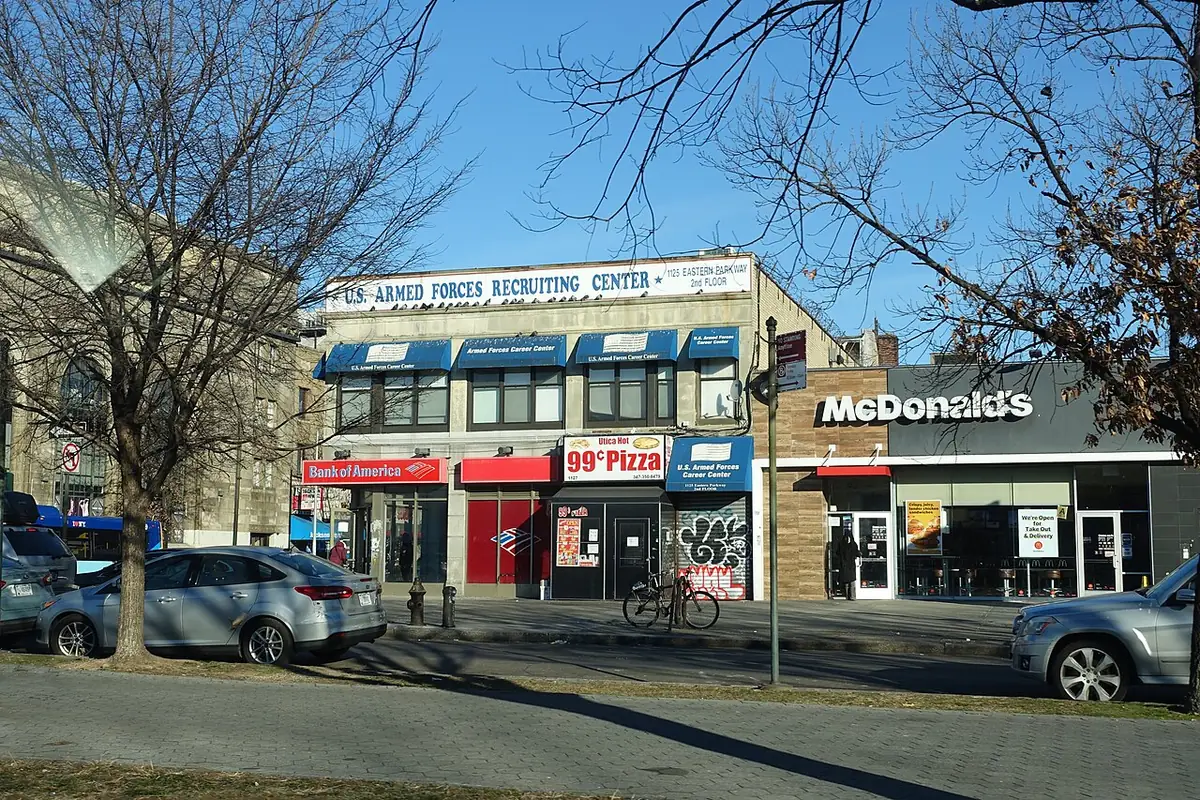
Avenues like this carry the daily mix of shops New Yorkers rely on — Photo: Tdorante10 · CC BY-SA 4.0 · Wikimedia Commons
Beyond the raw figures, the legal structure of the property decides what you can really own and change, and therefore what it is worth.
The New York market tolerates no budgetary approximation. Advertised prices never reflect the full cost once transfer taxes, legal fees and works to meet energy or structural standards are counted. Reading the ranges is what keeps a valuation from collapsing the moment a financing plan is drawn up around it.
new-yorkFor saleHouseestimate
Median price / m²US$7,790Half the apartments sell below this
Median priceUS$1.15mthe average is 14% higher — a few very large properties pull it up
Most common2 bedrooms55 % of listings
Average size140 m²
By number of bedrooms
Bedrooms
Share of market
Avg price
Price / m²
Avg size
2most common
55 %
US$1.09m
US$8,200
133 m²
3
33 %
US$1.4m
US$7,790best value / m²
180 m²
4
12 %
US$2.12m
US$8,200
259 m²
Each row is an average, compared against the area average of US$8,200 / m². These are indicative estimates of a typical local market, not a measured sample of live listings. Check current listings before relying on them.
What you actually own: full title versus the regulatory frame
That legal distinction leads directly to the strict chronology any transaction here imposes on the figure.
What ownership means in the United States varies with the legal status of the land. Between outright ownership of the ground (fee simple) and the heritage constraints of historic districts, an owner's room for manoeuvre is tightly framed by the local authority, and the gap between the two is one of the clearest adjustments in a New York valuation.
Autonomous full ownership (Fee Simple)
You own both the building and the land it stands on. That gives you total freedom over the internal layout and organisation, subject to complying with New York City's planning code.
What it changesYou carry the entire burden of structural maintenance, with no collective reserve fund to absorb major roof or facade work, so the figure has to be read net of a repair reserve you fund yourself.
Ownership in a protected area (Historic District)
Your house has architectural interest recognised by the city. Every external change, from the choice of paint to roofing materials, has to be approved by a specialist municipal commission.
What it changesTimescales for works stretch considerably and upkeep costs rise because approved techniques and materials must be used, which is why a landmark-district adjustment usually cuts both ways in the estimate.
The critical rule to grasp before you trust a New York figure
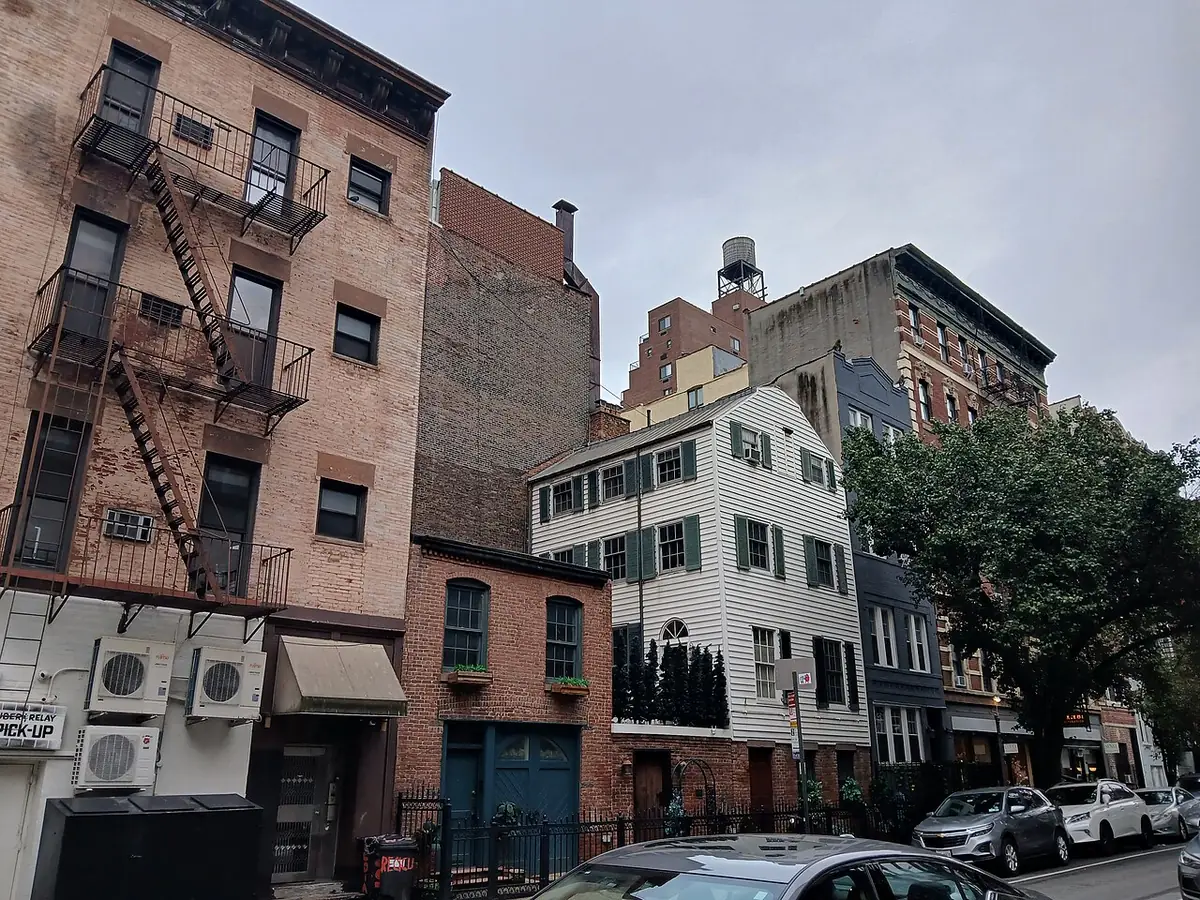
Fire escapes and brick walk-ups like these define classic New York blocks — Photo: Epicgenius · CC BY-SA 4.0 · Wikimedia Commons
Each of those stages brings in specific people whose exact role you need to understand.
Unlike markets where a verbal offer or an agreement in principle quickly binds the parties, a New York transaction follows a strict contractual sequence in which nothing is settled until signatures are actually exchanged on the contract of sale and the 10% deposit is paid. Until that moment, every figure in circulation is an opinion rather than evidence.
Identifying the property and confirming your financial capacity with a bank or a local broker, which sets the ceiling any estimate has to respect.
Drafting and submitting a written offer (Offer Letter) through your agent, usually backed by a broker's comparative market analysis of recent recorded sales.
The crucial Home Inspection stage, auditing the real technical condition of the house so that condition adjustments can be negotiated rather than assumed.
Detailed review of title and of the legal position by your specialist attorney (Real Estate Attorney), against the sales recorded on ACRIS.
Formal signature of the definitive contract of sale together with the 10% deposit held in escrow on a dedicated account.
Closing, which marks the effective transfer of ownership and the handover of the keys, and which is the only figure that ever becomes a comparable.
Who sets the number, step by step, and what does each of them actually do?
That methodical organisation is what makes a New York figure defensible rather than decorative.
A sound New York valuation rests on rigorous coordination between professionals with strictly defined roles. Ignoring who does what exposes an owner to damaging delays or to avoidable extra cost, and more often to a number nobody will stand behind.
The OwnerSetting the budget and selecting the criteriaGathers the financing plan and the search area in advance, along with the deeds, the plot dimensions and the works history the figure will be built from.
The Buyer's AgentSearch and price negotiationRepresents your interests alone against the other side and reaches the unified market databases where comparable sales are found.
The Attorney (Real Estate Attorney)Securing the contract legallyDrafts and negotiates the clauses of the contract of sale, checks title and supervises the legal side of closing, any of which can move the figure.
The Inspector (Home Inspector)Technical audit of the buildingTakes apart the state of the structure, plumbing, electrics and roof to identify hidden defects, which is where condition adjustments come from.
The Bank or mortgage brokerPutting the financing in place (Mortgage)Assesses the loan file against the strict solvency criteria in force in the United States and will normally instruct a licensed appraiser of its own.
The Title CompanyInsuring title to the propertyGuarantees the absence of hidden liens or prior mortgages on the property, an encumbrance that would otherwise sit undetected inside the figure.
House or apartment in New York: how are the two valued differently?
With the property type settled, we can turn to a realistic reading of what it costs to hold, which is what turns a headline figure into a usable one.
Choosing between a single-family house and an apartment in New York commits you well beyond the simple question of available m2, and the two are valued by different logics. In outer districts such as Riverdale in the Bronx or Douglaston in Queens, the house offers rare privacy, a private plot and the complete absence of neighbours above your ceiling. It is the preferred choice of families looking for an almost suburban atmosphere while remaining technically inside the city limits. That independence carries a considerable logistical and financial cost, notably in upkeep, roofing, individual heating and management of the grounds, all of which rest entirely on the owner and all of which a valuer prices as future spending.
An apartment in a managed building, whether a modern condo in Long Island City or a classic co-op on the Upper West Side, delegates most of the material trouble to a management company. The roof, the facade, security at the entrance and the upkeep of common parts are shared among all the owners. In exchange you accept strict rules set by the board, monthly charges that are sometimes high and rise every year, and an acoustic or visual proximity that is unavoidable in dense buildings. The number therefore turns less on your ideal floor area than on your tolerance for collective compromise, and on how a buyer discounts that tolerance.
On liquidity and long-term investment, the two types react differently to New York's economic cycles, which is exactly why comparables must be drawn from the same type. Well-located apartments in Manhattan and in fashionable parts of Brooklyn benefit from constant rental and purchase demand, carried by an international and local clientele looking for centrality. Houses, rarer in the city's overall inventory, tend to appreciate more steadily but address a narrower pool of buyers at resale, because many first-time buyers prioritise immediate proximity to heavy transport and urban energy. A thin pool means fewer recent sales, and fewer recent sales mean a wider honest range.
Finally, day-to-day life changes radically with the option taken, and that feeds the figure too. Living in a house in New York often means owning a car, dealing with longer public transport journeys to the Manhattan business centres, and accepting relative isolation once evening comes. Living in an apartment means embracing the city's relentless rhythm, having shops, parks and subway stops a few minutes' walk away, but giving up for good the barbecue in your own garden and the near-infinite storage of a basement or private garage. Every one of those differences is something a valuer can point at when asked to justify a number.
What the estimate leaves out: the full cost of holding a New York property
With those figures in place, it is worth seeing concretely what daily life looks like for a New York resident, because location habits feed the comparables.
Owning a property in New York never comes down to the monthly mortgage repayment alone, and a valuation that stops at the headline price is doing half the job. You have to fold in a range of local taxes, one-off transaction fees and recurring charges that owners arriving from other regions routinely underestimate. The tables below set out the one-off acquisition costs on one side and the annual running costs on the other, so that a figure can be turned into a solid financing plan and no unpleasant surprises follow the closing.
Estimated initial and acquisition costs
Cost item
Estimated range
Analytical comment
Personal contribution
20% to 50% of the price
Required by most banks and by co-op and condo boards before a purchase file is approved.
Mansion Tax
1% to 3.9% of the price
A progressive tax applying from one million dollars of property purchase in New York State.
Attorney and legal fees
0.5% to 1.5% of the price
Payment of the attorneys representing buyer and seller, indispensable in the New York legal system.
These costs are added to the advertised price and must be paid in cash on the day of final signature, so they belong beside any valuation rather than after it.
Running and recurring costs
Type of cost
Average monthly amount
Long-term effect on the budget
Building charges (Common Charges / Maintenance)
$800 to $2,500+
Varies with the services in the building (doorman, lift, gym, shared terrace).
Property Tax
$500 to $2,000+
Calculated from the city's assessment of the property and its tax class; often included within co-op maintenance.
Home insurance and sundries
$150 to $400
Covers letting risks, the water damage that is common in older buildings, and public liability.
Building charges have historically risen by 3% to 5% each year to meet inflation in maintenance costs, which is why a figure quoted today ages faster than owners expect.
Health, schools, transport: what does an ordinary Tuesday in New York look like?
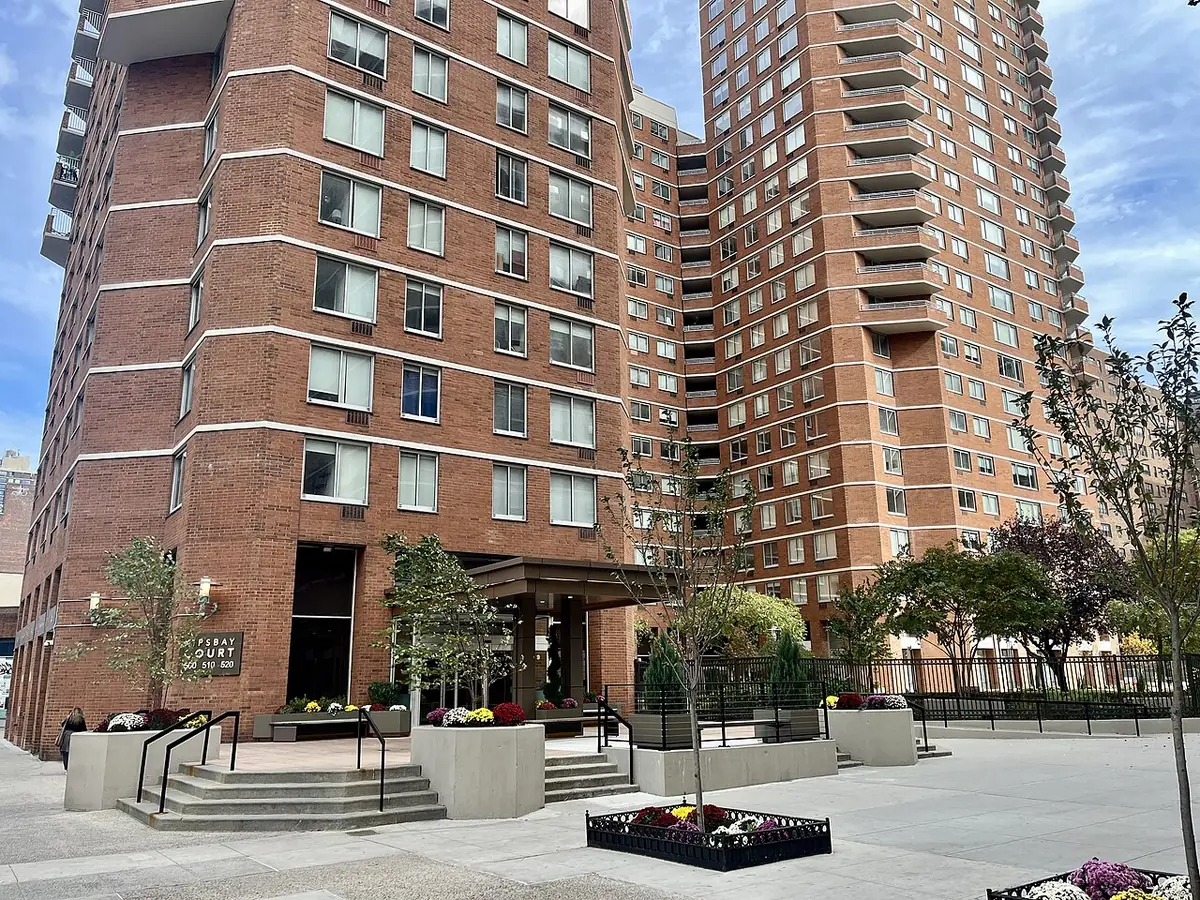
Tower complexes like this are a major part of the city's housing stock — Photo: Transpoman · CC BY-SA 4.0 · Wikimedia Commons
Beyond that well-oiled routine, many invisible factors deserve close attention before you commit to a number.
The reality of a New York life is not measured only in m2 or in the interest rate on a loan, and neither is the value of the house that holds it. Between journeys on public transport, access to primary healthcare and managing children's schooling, every day calls for rigorous anticipation. This hour-by-hour account of an ordinary Tuesday shows the logistical trade-offs and the opportunities of settling for the long term in the American metropolis, and each of them is something a buyer will pay for or discount.
07:30Local subway stationThe travelling day begins with an OMNY card, hoping for no technical incidents on the line; distance to the station is one of the sharpest location adjustments there is.
08:30Office or coworking spaceArrival at work after an average journey of 35 minutes across the city's different boroughs, the figure most buyers test a house against first.
12:30Local shops and pharmacyQuick errands and neighbourhood health needs handled over the midday break in a very dense environment, which is what a valuer means by local amenity.
17:00School or nurseryCollecting the children, often organised through private after-school programmes or neighbourhood association activities, and catchment strength shows up in prices street by street.
19:30Local restaurant or delicatessenEating out or buying fresh produce from a local bakery to enjoy New York's cultural life, the kind of amenity that separates two otherwise identical houses.
What no estimate will ever tell you about a New York property
Knowing these invisible traps is what lets you anticipate the classic errors inexperienced valuers make.
New York listings shine with superlatives and flattering wide-angle photography, and automated estimates inherit both, but they systematically omit the structural and regulatory constraints that make local life what it is. To avoid disillusionment after the purchase, you have to examine carefully what the commercial material passes over in silence. Here are the four fundamental items every owner should audit and gather before accepting any figure.
The financial health of the building (Financial Statement)
A building showing abnormally low charges often hides a lack of reserves for major works. If the roof has to be redone or the facade restored, you receive an exceptional bill of several tens of thousands of dollars overnight, and no automated estimate has ever seen that document.
The strict rules of co-op and condo boards (Board Approval)
In co-op buildings the board has the legal power to refuse your purchase file without giving reasons. Even with solid bank approval, a profile judged too unusual or income seen as fragile can stop a deal dead, which narrows the buyer pool and therefore the realistic figure.
Ambient noise and period sound insulation
Many New York buildings have old timber floors and older structures with poor acoustic separation. Noise from the neighbours above, night-time emergency sirens and traffic can lastingly degrade quality of life if the property has no recent double glazing, and a valuation drawn from floor plans alone will never register it.
Strict restrictions on short-term letting
New York law and building rules prohibit Airbnb-style short-term letting almost everywhere. If you were counting on offsetting the property by letting it occasionally while you are away, the law forbids it on pain of heavy fines, so any income assumption resting on it should come straight out of the figure.
The regrets owners discover six months after moving in to New York
Despite those pitfalls, this market does not suit everyone; it matters to know whether your profile fits.
Looked likeAn exceptional financial opportunity, on the strength of a price per m2 advertised as very attractive.
Turned outA monthly financial sinkhole, thanks to exorbitant building charges and unforeseen insulation works that no headline estimate had priced.
Would have caught itRequiring the full history of charge increases over the past five years and having the accounts audited by an independent accountant before you settle on any figure.
Looked likeA fashionable, lively district with plenty of busy bars and restaurants at the foot of the building.
Turned outUnbearable night-time noise, deliveries from first light and no possibility at all of sleeping with a window open, none of which appears in a desk valuation.
Would have caught itVisiting the property at several key moments of the week, notably a Friday and a Saturday evening, to judge the real feel of the neighbourhood before you trust the comparables.
Looked likeAn apartment flooded with light thanks to large windows facing the street.
Turned outA total absence of privacy, forcing the blinds to stay closed permanently, and very high summer energy bills.
Would have caught itChecking the exact orientation of the sun at different hours and observing the distance to the buildings opposite, both of which separate two otherwise identical comparables.
Looked likeProfessional, responsive management of the common parts by a large property agency.
Turned outHeavy bureaucracy, response times of several weeks for urgent repairs and a complete failure to listen to residents.
Would have caught itTalking directly to several current neighbours in the lift or the lobby to learn how the building is really governed, since governance quality moves resale value more than finishes do.
Who should not act on a New York valuation today?
The moment has come to take stock overall and decide whether you act on the figure.
Owning property in New York is often presented as the ultimate confirmation of financial success, but it is a formidable trap for the wrong financial or professional profile, and a flattering estimate is what usually springs it. The rigidity of the local market, combined with very high costs of entry and exit, demands particular stability and holding horizons. The cases below identify clearly the situations in which holding off and renting remains the wisest and most protective decision for your savings, whatever the number says.
The professional on international assignment, unsure of being here in the medium term
→Postponing the purchase and taking a flexible long-term rental instead.
Reselling a New York property before five to seven years of ownership almost always produces a net loss, because total transaction costs approach 8% to 10% on resale (agency commission, state and city transfer taxes), which is the gap between a valuation and what you would actually clear.
The first-time buyer whose budget only just works, with no safety savings
→Continuing to rent while building a cash cushion equal to at least twelve months of charges.
New York boards require substantial post-closing liquid reserves. A buyer with no emergency savings after the initial contribution is one plumbing failure or one job loss away from personal insolvency, no matter how favourable the estimate looked.
The investor looking for a high, immediate gross rental yield
→Turning to other American metropolitan markets that are more dynamic on cash flow.
In New York, purchase prices per m2 are so high and building charges so heavy that net rental yield rarely exceeds 2% to 3% a year, which makes New York property an instrument for preserving capital rather than generating income and reframes what the valuation is even for.
So, do you have a figure you can actually stand behind?
Playgrounds tucked between buildings like this are part of everyday city life — Photo: Transpoman · CC BY-SA 4.0 · Wikimedia Commons
Valuing a New York property is neither an exact science nor a simple arithmetic of short-term return. It is an assessment of a way of life, of a city unlike any other and of a rhythm that demands energy, method and a solid tolerance for administrative surprises. If you have measured the reality of building charges, accepted the constraints imposed by boards and secured a financial contribution that includes a comfortable margin, then the number you have arrived at is one you can defend, and the New York market opens up as a first-rank asset and an incomparable place to settle.
If any doubt remains about your professional stability over five years, however, or if the idea of paying high monthly charges for the upkeep of a shared building troubles you, renting stays a perfectly respectable and financially shrewd alternative. In New York, renting is not throwing money out of the window: it is buying geographic freedom and sparing yourself the cold sweats of a complex market where a single mistaken structural diagnosis can cost a great deal.
Take the time to visit several districts, talk to local specialist attorneys and audit every line of the financial documents before you sign anything or settle on a figure. The New York market always rewards patience, rigour and careful preparation, while punishing haste and the unconsidered impulse purchase severely. Your project deserves that discipline if the estimate on paper is to become a durable and untroubled result.
Related questions
What are the average legal and closing fees on a New York property transaction?
Attorney and legal fees in New York generally come to between 1.5% and 4% of the total purchase price. They cover each side's attorney, local and state transfer taxes, and the cost of recording the deed with the city, which is why a valuation quoted as a headline figure never equals the money that changes hands.
What is a 'Co-op' as opposed to a 'Condo' in New York, and why does it change the value?
In a Co-op you buy shares in a corporation that owns the building and receive a proprietary lease, which gives the board very tight control over who may buy. In a Condo you own your unit outright and the rules on resale or letting are markedly looser. That difference in saleability is one of the largest single adjustments an appraiser makes.
How long does a New York property transaction take on average?
The full process, from the accepted offer through to handover of the keys, generally runs between 60 and 90 days. The delay comes mainly from the complexity of obtaining an American mortgage and from the mandatory approval of the file by the building's board, so a valuation you commission today is being tested against a market two to three months out.
Can a non-resident own and have a property valued in New York?
Yes, foreign investors and non-residents can acquire New York property with no major legal restriction. Banks often require a larger personal contribution, sometimes between 40% and 50% of the property's value, and the tax structures call for a specialist accountant, both of which narrow the buyer pool a valuer weighs when pricing your house.
What is the Mansion Tax and from what figure does it apply?
The Mansion Tax is levied by New York State on transactions where the price reaches or exceeds one million dollars. The rate is progressive, from 1% on properties between one and two million dollars up to 3.9% on luxury properties above 25 million dollars. Because it steps at round thresholds, an estimate that lands just over a step is worth checking twice.
How are Property Taxes calculated in New York?
Property taxes are calculated by the New York City Department of Finance from an official assessed value of the property, not from its actual purchase price. Rates vary by property tax class and the assessment can be revised each year by the city, so the city's own number and a market valuation are two different figures that rarely match.
Does the ban on short-term letting affect what a New York apartment is worth?
New York City law is extremely restrictive on short-term letting. Save for very rare exceptions where an owner-occupier lets a room for more than 30 consecutive days while present, Airbnb-style letting is prohibited in the great majority of buildings, so any valuation that leans on nightly-rate income is resting on a use the city does not permit.
What impact do common charges have on the value of an investment?
Common charges (called Common Charges or Maintenance) are paid monthly and are never recoverable. In New York they can take a substantial share of the total budget and cut sharply into gross rental yield when they are high relative to the rent collected, which is why two units with the same asking price can appraise very differently.
Why does a New York valuation always involve an attorney?
Unlike other regions where estate agents draw up the sale agreement, the New York system rests entirely on attorneys specialising in real estate law. Each side, buyer and seller, must be represented by its own counsel to review the contract of sale and audit the building's accounts, and that audit routinely moves the number.
Which New York districts offer the best price-to-space ratio when you are gauging value?
First-time buyers traditionally look at parts of Brooklyn such as Sunset Park or Crown Heights, at Queens (Long Island City, Astoria), or at northern Manhattan (Harlem, Washington Heights). These areas still show more accessible prices per m2 while keeping good subway connections, which supports both the comparables you will find and the resale case.