Buying an apartment in New York calls for a rigorous grasp of how the local market works, from the difference between co-ops and condos to the fine print of monthly charges. This guide walks you through your purchase step by step so you can structure it methodically and with clear eyes.
Get the app
What nobody tells you.
Real prices, hidden costs and the traps to check before you commit.
What you actually get when you buy an apartment in New York
Scroll
What you actually get when you buy an apartment in New York
Buying an apartment in New York calls for a rigorous grasp of how the local market works, from the difference between co-ops and condos to the fine print of monthly charges. This guide walks you through your purchase step by step so you can structure it methodically and with clear eyes.
Written by the ting.ad editorial team ·
Park Avenue, New York in Street View: drag to look around.
These basic trade-offs land very differently depending on your profile and the way you live in the city.
Buying an apartment in New York means getting past the postcard and looking hard at the reality of charges and space. The New York market runs on strict zoning and building governance rules that redefine what ownership even means. Between floor area and long-term value, every choice involves a demanding financial and day-to-day trade-off. Understanding that mechanism is what keeps local constraints from turning into unpleasant surprises, and lets you invest with your eyes open.
Raw living spacevsMonthly building charges
The more central the space you want, the more heavily the monthly charges, called maintenance or common charges, weigh on the overall budget. They rise steadily to fund upkeep in older buildings or the high-end services of newer towers.
An iconic locationvsFreedom in how you use it
Buying in the most sought-after neighborhoods guarantees excellent liquidity, but it usually comes with severe restrictions imposed by the building's board, banning short-term rentals or running a professional practice from home, for example.
Historic charactervsRenovation costs
Older buildings have undeniable architectural charm but often need expensive work to bring them up to code, and that work is subject to the fussy approval of the people who run the building.
Does this place fit the New York life you want?
The gap between the habits you brought with you and the reality of New York is worth measuring precisely.
Living in an apartment in New York changes your relationship to domestic space and to public space alike. The city offsets compact homes with a constant supply of cultural, professional and social life right outside the front door. Whether you are arriving alone for work or as a family settling in for the long run, fitting into the urban rhythm calls for a clear-eyed look at your own priorities.
Choosing centrality and immediacy
You want a pied-a-terre or a main home where commuting time is cut to the bare minimum. Manhattan, or the parts of Brooklyn closest to it, gives you an instant connection to the city's economic and cultural networks. In exchange, you accept smaller spaces where the kitchen is often reduced to a minimal galley, offset by the habit of eating out. Building management is handed to professional managing agents, which simplifies daily life but limits how much say you have over the shared areas.
Choosing residential neighborhoods and green space
You put parks, well-regarded schools and quieter neighbors first. Areas like Park Slope in Brooklyn or parts of Riverdale in the Bronx offer a smooth transition to a calmer pace. Apartments there are generally larger, often in buildings with an elevator and sometimes a shared garden. The compromise is a longer trip to the business districts and an extremely competitive market for family-sized homes.
Choosing liquidity and delegated management
Your main aim is to put capital into a tangible asset while keeping a base for work trips. You will naturally look at newer condominiums or buildings that permit furnished rentals within strict legal limits. You need to factor in the local rules, in particular the severe restrictions on short-term leases, which demand disciplined management and significant running costs.
Living here when you have come from abroad: what changes radically
The city's most famous view, Liberty and the skyline together at dusk — Photo: Dillan Payne · CC BY-SA 4.0 · Wikimedia Commons
Beyond the paperwork, the neighborhood you pick determines the very nature of your investment.
The American property system, and the New York one in particular, runs on legal and financial concepts that sit a long way from what most buyers arriving from abroad are used to. From how prices are quoted to the recurring charges and the central role of the building's board, every stage of the purchase unsettles the usual reference points. Anticipating those gaps keeps misunderstandings out of your application file.
From abroad
A legally standardised measure of habitable floor area, and advertised prices quoted as a clean net-to-seller figure.
New York
Floor areas in New York often include a share of the common areas and the exterior walls, with no single national standard.
It is essential to have the apartment measured by an independent surveyor and not to take the figures in sales brochures on trust.
From abroad
A single public official who guarantees the legal security of the deal and is the sole collector of transfer taxes.
New York
The transaction rests on title insurance companies and on real estate attorneys representing each side.
Closing costs and legal fees are higher, and negotiating the contract demands much closer attention to the contingency clauses.
From abroad
Building charges calculated as a pro rata share of the common parts, covering routine upkeep.
New York
The co-op system imposes monthly maintenance that often includes a share of the building's property taxes and sometimes its underlying mortgage debt.
The building's financial liabilities become yours; poor collective management hits both your resale prospects and your monthly budget.
From abroad
Access to ownership decided mainly on your declared income and the size of your own down payment.
New York
A co-op board demands an exhaustive financial package, sometimes reviewed by accountants, with very strict debt-to-income ratios.
Even with a substantial down payment your application can be refused with no reason given, which makes working with a local broker indispensable.
Which New York neighborhood suits your purchase?
These local dynamics translate into price levels that deserve careful analysis before you make an offer.
New York is not one homogeneous city but an archipelago of micro-markets, each with its own dynamics. Every area answers a specific set of expectations around quiet, rental yield or long-term appreciation. Choosing where to settle means looking not only at the existing building stock but also at the development projects under way across the boroughs.
Manhattan (Downtown and Midtown)
A relentless pace, constant energy at the foot of iconic buildings, and the densest concentration of high-end services anywhere.
Suits
Buyers after maximum liquidity and a secure store of value at the heart of global business activity.
Trade-off
Prices per square meter among the highest in the world, and very heavy building charges that eat into gross rental returns.
Brooklyn (North and Downtown)
A creative, residential atmosphere mixing tree-lined streets, converted industrial architecture and real cultural energy.
Suits
Those who want a balanced setting, bright apartments in human-scale buildings and an active local community.
Trade-off
Fierce competition for quality homes and fast-rising prices that leave few undervalued opportunities.
Queens (Long Island City and Astoria)
A modern compromise between residential towers facing the East River and multicultural neighborhoods in the middle of a transformation.
Suits
Investors and first-time buyers looking for a better space-to-price ratio while staying minutes from Manhattan by subway.
Trade-off
Less architectural coherence, and pockets that are still unfinished where back-to-back construction sites create temporary disruption.
What does an apartment in New York really cost?
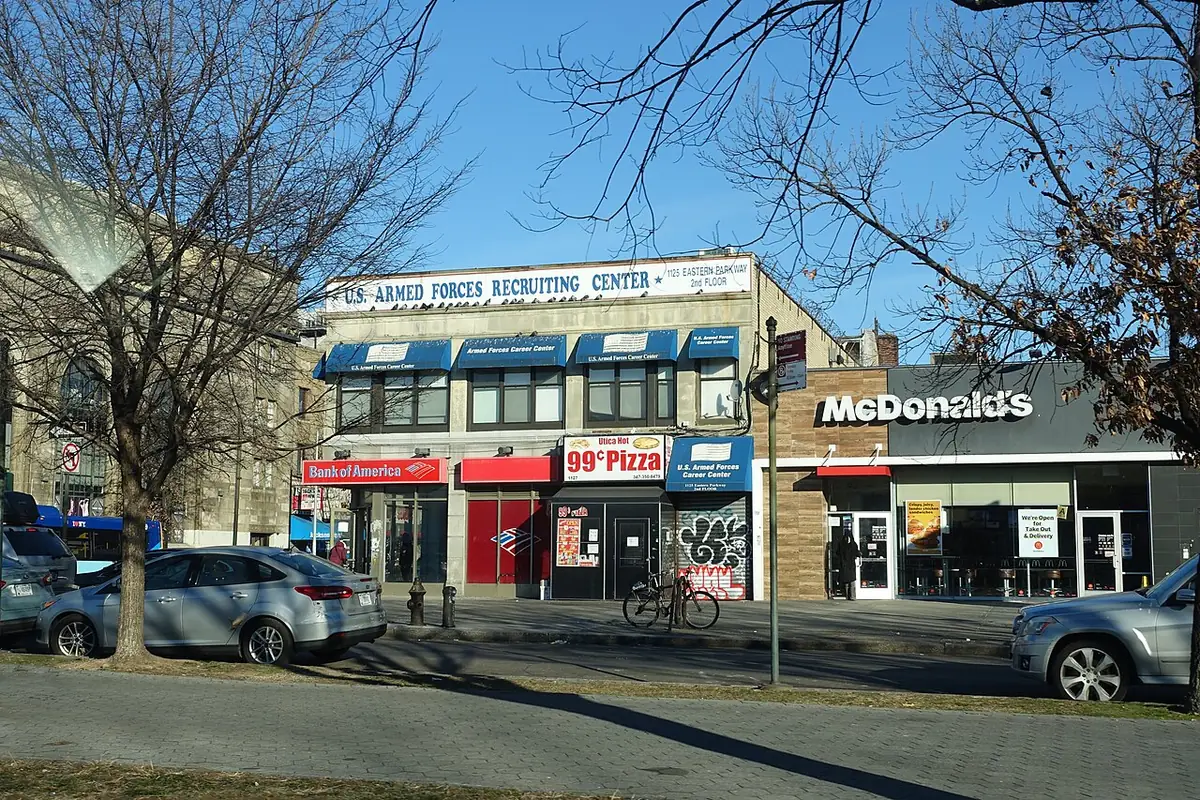
Avenues like this carry the daily mix of shops New Yorkers rely on — Photo: Tdorante10 · CC BY-SA 4.0 · Wikimedia Commons
Beyond the headline figure, the legal form of what you are buying directly conditions your ownership rights.
Working out what a purchase in New York costs goes well beyond the asking price shown on listing portals. Local taxes, closing costs, the fees of the various advisers and the recurring monthly charges all reshape the financial equation. The ranges below reflect the orders of magnitude seen in the market for standard homes, exceptional cases aside.
new-yorkFor saleApartmentestimate
Median price / m²US$9,500Half the apartments sell below this
Median priceUS$800kthe average is 14% higher — a few very large properties pull it up
Most common2 bedrooms36 % of listings
Average size80 m²
By number of bedrooms
Bedrooms
Share of market
Avg price
Price / m²
Avg size
1
34 %
US$610k
US$11,500 +15 %
53 m²
2most common
36 %
US$760k
US$10,000
76 m²
3
22 %
US$979k
US$9,500best value / m²
103 m²
4
8 %
US$1.48m
US$10,000
148 m²
Each row is an average, compared against the area average of US$10,000 / m². These are indicative estimates of a typical local market, not a measured sample of live listings. Check current listings before relying on them.
What you actually own: condo versus co-op
That legal structure directly shapes how the transaction unfolds, from the offer through to the final signature.
In New York, the legal distinction between a condominium (condo) and a cooperative (co-op) is fundamental for any buyer. The great majority of older apartments sit in cooperatives, while newer construction adopts the condominium form. That structural choice affects how freely you can manage the home, your options on resale, and how heavy the board's vetting will be.
The cooperative (co-op) structure
You buy shares in the corporation that owns the building, paired with a long-term proprietary lease on your specific apartment. The board has complete discretion to approve or reject your purchase application without having to explain itself. Sublet rules are extremely restrictive, often capping renting out at a few years across your whole period of ownership.
What it changesThe system delivers a very stable resident body and protects the building's value, but it drastically reduces your flexibility if your professional or personal situation changes.
The condominium (condo) structure
You own your home outright, with an individual deed and a share of the common elements. Board approval is generally lighter and more procedural, usually amounting to a right of first refusal that is rarely exercised. Restrictions on furnished rentals or buy-to-let are far looser, even if some condominiums do vote in strict house rules.
What it changesYou get more freedom of use and better resale liquidity, but the purchase price per square meter is almost always higher than in a comparable co-op.
The rule to understand before you hand over a deposit
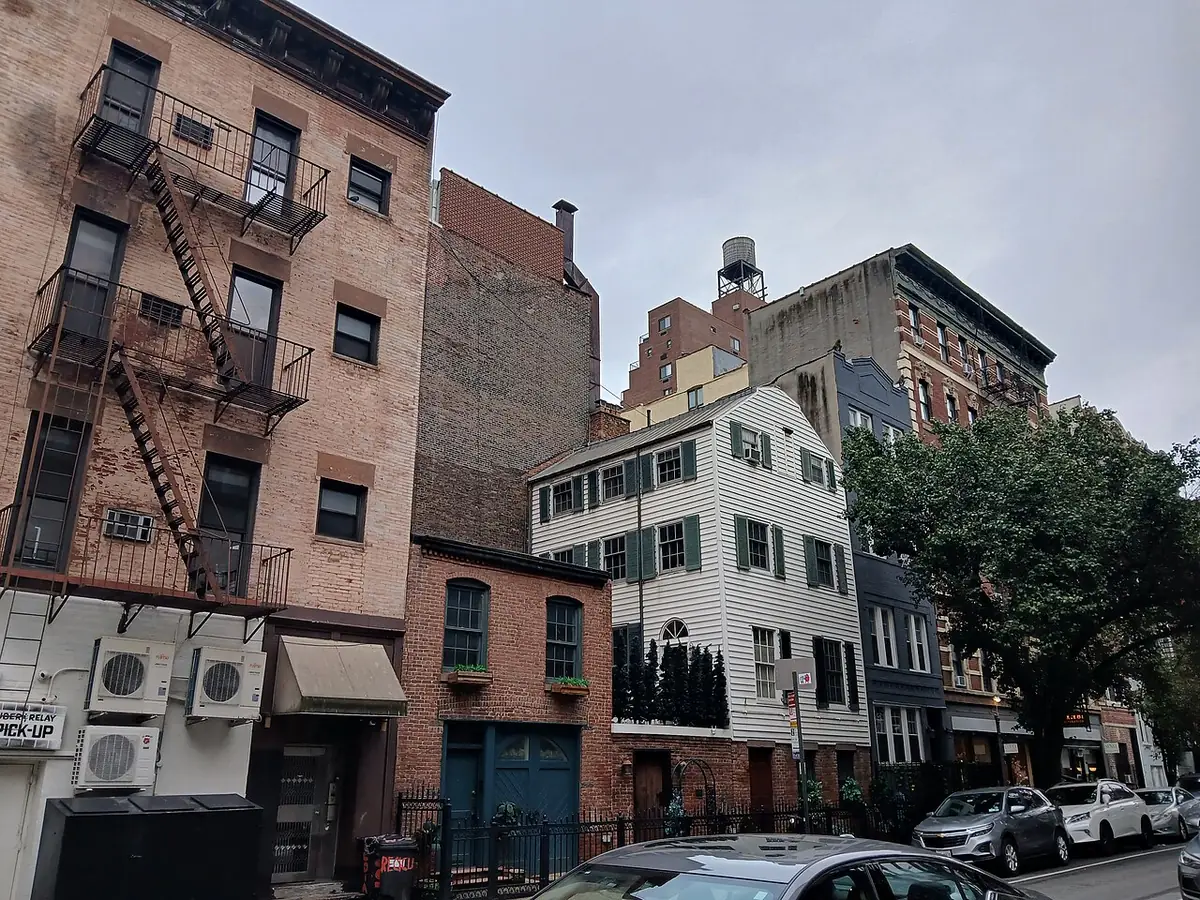
Fire escapes and brick walk-ups like these define classic New York blocks — Photo: Epicgenius · CC BY-SA 4.0 · Wikimedia Commons
To get through this mapped-out process, each participant plays a precise role that has to be coordinated without rushing.
In the New York market, the financial commitment comes well before the deed is signed. Understanding the payment schedule and the contingency clauses in detail protects a buyer from having large sums tied up for no good reason. The process demands close coordination between your attorney, your mortgage broker and your inspector.
Submitting a written offer through your real estate agent.
Negotiating and agreeing the term sheet and the preliminary memorandum of understanding.
Running the technical inspections and having your attorney review the building's board minutes in depth.
Signing the final contract of sale together with an escrow deposit, generally 10% of the purchase price.
Assembling and submitting the complete application package to the building's board.
Receiving formal board approval and releasing the funds for the closing.
How a New York property transaction unfolds, step by step
By following these steps and surrounding yourself with the right experts, your New York purchase rests on solid, durable foundations.
A property transaction in New York follows a rigorous protocol involving several professionals with clearly separate roles. Unlike markets where a single public official centralises the whole operation, the American system rests on each side being privately and independently represented. Knowing every participant and their remit lets you steer your own timeline calmly.
The buyer and their agentSearching and shortlistingViewings, comparative analysis of the local market and selection of the opportunities that strictly match the agreed brief.
The real estate attorneyLegal review and due diligenceClose examination of the building's accounts, checks for pending litigation, and drafting the clauses that protect you in the contract of sale.
The mortgage brokerPutting the financing togetherSecuring a solid pre-approval letter and assembling the creditworthiness file that American banks and co-op boards demand.
The inspectorPhysical inspection of the homeChecking the state of the electrical wiring, the plumbing and the appliances, and looking for any hidden defects.
The boardReview of the application packageA thorough assessment of the buyer's financial standing, professional references and suitability to live in the building.
The parties and their attorneysThe closingFinal signature of the transfer documents, disbursement of funds and formal handover of the keys.
Apartment or house: what to choose in the middle of New York?
Once you have settled on the type of home, the central question of total cost of acquisition and ownership arrives immediately.
In New York, the choice between an apartment and a house is not only about personal comfort; it follows from how the city is built and how property is financially managed. In dense boroughs like Manhattan or northern Brooklyn, the apartment dominates the market almost entirely, whether it is a condo or a co-op with sometimes severe rules. That option means exterior maintenance is handled entirely for you, along with doorman services and reassuring security, but it imposes recurring and often steep monthly charges, called common charges or maintenance fees, which inevitably rise over the years without your having any control over the board's decisions.
The single-family house or town house, by contrast, turns up more rarely, in the residential parts of Queens and Staten Island or in certain preserved pockets of Brooklyn such as Park Slope or Prospect Lefferts Gardens. Buying one means you take on full responsibility for the roof, the boiler, the foundations and the land, with none of the costs shared out among neighbors. It appeals to families after space of their own, a private garden and complete freedom over renovation work, escaping the fussy approval committees typical of the most selective New York co-ops.
On liquidity and long-term value, the two types respond differently to the city's economic cycles. Well-located apartments in lively neighborhoods enjoy steady rental demand and generally resell faster, because they appeal to a broader pool of buyers, including young professionals and international investors. Houses, being rarer, are exceptional long-term stores of value but carry a much bigger entry ticket and speak to a narrower set of buyers on resale, which can stretch out the timeline if the market slows sharply.
Your final decision therefore has to weigh the total cost of ownership, including the heavy local property taxes, against your tolerance for neighbors and for maintenance. Living in an apartment in New York means accepting a communal life governed by strict rules in exchange for absolute centrality and a minimum of practical hassle. Buying a house means betting on genuinely private space at the price of a much heavier daily logistical load and, usually, a longer distance from the main business districts of Manhattan.
What budget do you really need to live in New York long term?
That overall budget shows up concretely in how you organise your days and get around the city.
Assessing a property budget in New York means going well past the headline price per square meter to take in ownership costs that are often overlooked. Property taxes, monthly building charges and closing costs weigh heavily on your cash flow. That unusual cost structure makes this a market where your monthly capacity to pay often matters more than your initial down payment.
Estimated upfront costs of buying in New York
Cost item
Percentage of price
Estimated budget impact
Minimum down payment
20% to 30%
Standard bank requirement for a mortgage
Closing costs and taxes (Mansion Tax)
1.5% to 3.5%
Transfer taxes that rise in steps with the total amount
Loan application and appraisal fees
0.5% to 1%
Underwriting the credit file and appraising the property
Buyers of homes above one million dollars also have to pay the additional Mansion Tax.
Recurring monthly charges for a standard apartment
Type of charge
Average monthly amount
What it covers
Maintenance / common charges
$800 to $2,500
Upkeep of the common areas, doorman, building management
Property tax
$500 to $1,800
Local tax levied by the city based on the assessed value
Homeowner insurance
$50 to $150
Cover against water damage, fire and personal liability
These monthly charges are not deductible the way mortgage interest is, and they go up every year.
Health, schools and transport: what does an ordinary Tuesday look like for a resident?
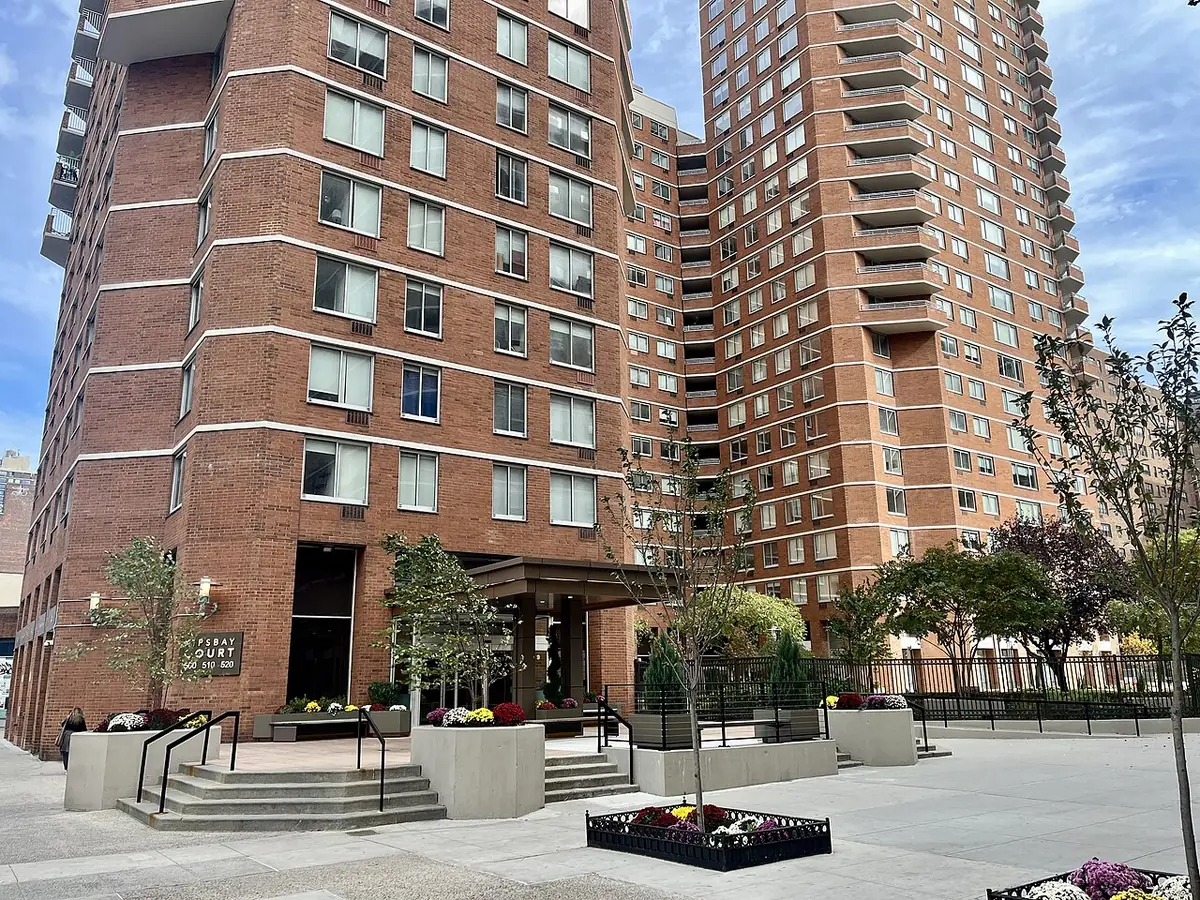
Tower complexes like this are a major part of the city's housing stock — Photo: Transpoman · CC BY-SA 4.0 · Wikimedia Commons
Beyond that well-oiled routine, plenty of things you do not notice at first deserve close attention.
Daily life as an owner in New York is measured by how easily you reach transport and local services. An ordinary Tuesday tests the efficiency of the subway network and the vitality of the shops nearby. How you organise your time depends directly on how smoothly the connections run and how far home is from work in Manhattan.
07:30Local subway stationDown to the platform to catch the express train, the pivotal moment when the network's reliability decides whether you reach the office on time.
08:45Arrival in the business districtThe transition across town ends with a brisk walk through the busy avenues of central Manhattan.
12:30Lunch break in the neighborhoodA dip into neighborhood life to eat, at local outlets and independent fresh produce markets.
18:15Home again, with errands on the wayA stop at the deli on the ground floor to pick up the essentials before the shops close.
20:00Dealing with building servicesA word with the superintendent to confirm a package has arrived and flag a small technical fault in the common areas.
What the beautiful listing photos never tell you
Those frequent omissions are what lead inexperienced buyers into decisions they come to regret.
Virtual tours and glossy brochures present an idealised version of New York homes that deliberately leaves out the structural constraints of older buildings and of city management. Behind an immaculate cosmetic renovation there can sit technical realities with serious financial consequences. Knowing about these invisible factors protects a buyer from nasty surprises after the purchase.
The real state of the building's reserve fund
A building advertising artificially low charges may in fact be badly short of reserves to pay for the major work it is obliged to carry out, which will inevitably translate into very heavy one-off assessments for owners.
How close the noisy infrastructure and traffic arteries are
The charm of a neighborhood can be badly undercut by subway lines running underneath or by direct exposure to steam vents in the street, producing noise and smells that no amount of double glazing will remove.
The strict rules on using the common areas and on renting out
The house rules often ban pets, drastically limit short-term rentals, or impose strict hours for every move-in and every painting job.
Hidden defects in prewar buildings
Historic buildings put up before the 1960s frequently conceal lead plumbing, ageing electrical systems or traces of asbestos, and the required abatement falls entirely on the owners.
The classic traps you only discover after six months of New York life
Faced with these particular demands, some buyer profiles would be better off not investing here at all.
Looked likeA financial bargain, with building charges unusually low compared with everything else on the local market.
Turned outCatastrophic financial management of the building, leading to a sudden and brutal rise in charges to repair the facade.
Would have caught itInsisting on access to the last three years of board minutes so you can audit the building's financial health before making any offer.
Looked likeAn exceptionally bright, quiet apartment in the middle of a fashionable neighborhood on the rise.
Turned outRepeated sleepless nights because noisy restaurant terraces were about to open under the bedroom windows.
Would have caught itVisiting at different times of the week, especially late on Thursday, Friday and Saturday evenings, to test what it actually sounds like.
Looked likeA well-optimised layout with a modern open kitchen giving onto the living room, ideal for having friends over.
Turned outNo closed storage at all and ventilation so weak that cooking smells quickly fill the whole apartment.
Would have caught itChecking for deep built-in closets and for an extraction system that vents fumes directly outside the building.
Looked likeA quick, simplified purchase with no fussy intervention from a condo board or a co-op managing agent.
Turned outA badly run building where neighbors respect no ground rules at all, producing constant disputes with nobody to arbitrate.
Would have caught itFavouring rigorously governed buildings whose board actively screens applicants to protect everyone's peace and quiet.
Who really should not buy property in New York right now?
It is time to pull these threads together so you can make your final decision clearly.
Buying property in this megacity is in no way a universal solution, and it is entirely unsuited to certain personal or professional situations. The rigidity of the local market demands a geographic and financial stability that not everyone has. Recognising these contraindications spares you a major disappointment.
The professional who will move on within a few years
→Insisting on buying as soon as they arrive, to build wealth quickly.
The extremely high upfront transaction costs require a holding period of seven to ten years before capital growth fully absorbs them.
The investor allergic to regulatory constraints
→Buying an apartment in order to run it as a short-term tourist rental.
Local city law formally bans furnished lettings of under thirty days, which makes that model illegal and heavily penalised.
The tight-budget household with no emergency savings
→Committing every last bit of savings to meet the minimum down payment.
The smallest shift in interest rates, a job loss, or a one-off assessment for building work would immediately put the household's solvency at risk.
So are you really ready to take the plunge and buy in New York?
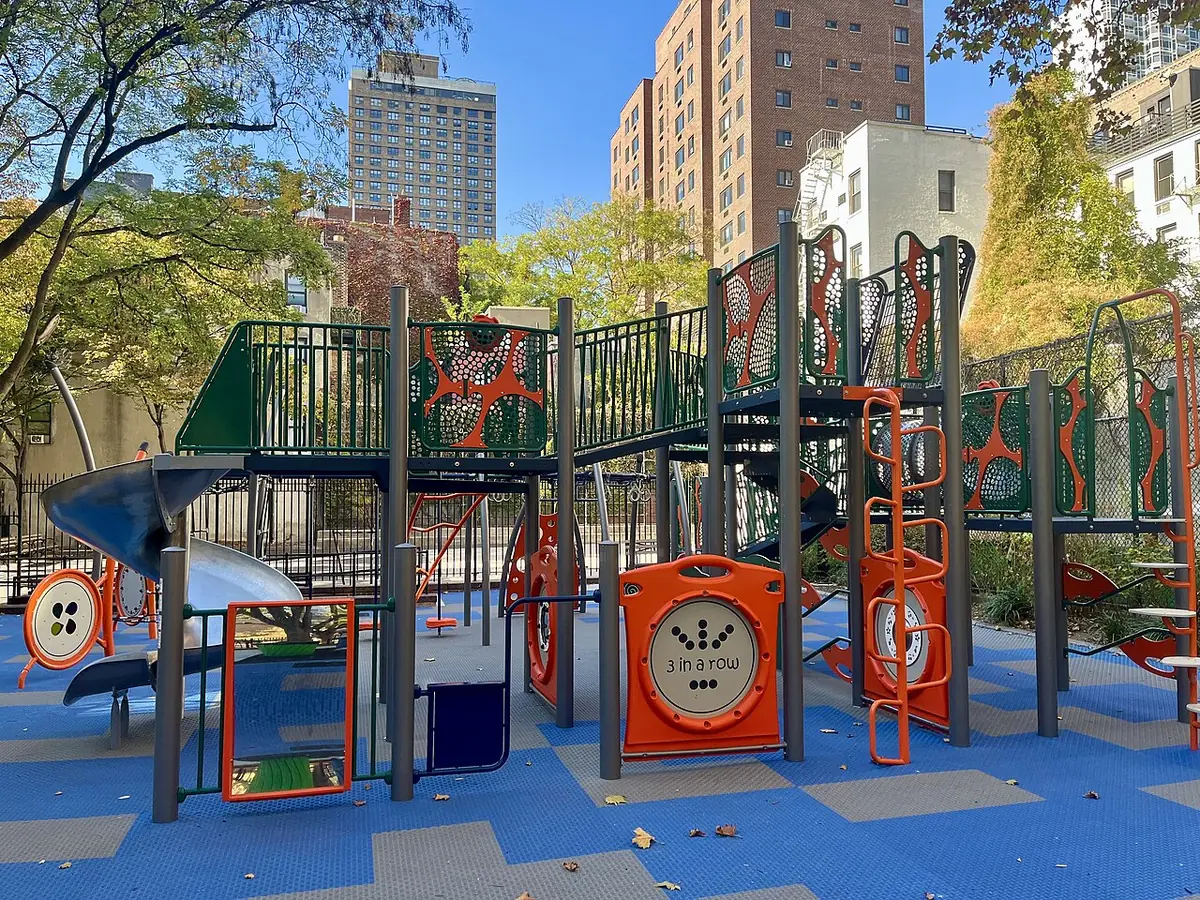
Playgrounds tucked between buildings like this are part of everyday city life — Photo: Transpoman · CC BY-SA 4.0 · Wikimedia Commons
Buying an apartment or a house in New York does not come down to a simple return calculation or to falling for a photograph. It is a deep commitment that demands you accept the rhythms, the constraints and the singular energy of this city. If you fully grasp the weight of the monthly charges, the rigour of the building rules and the need for a long-term view, then you are starting from sound and constructive foundations.
The New York property market always rewards patience, disciplined financial analysis and clarity about what you want. The buyers who get it right are the ones willing to look past the marketing to assess coolly the technical state of the building, the financial strength of the board and its managing agent, and whether the location really fits their daily life. This is not a market for hurried speculators, but an outstanding place for people building wealth methodically.
Take the time to check every stage of your financing plan with recognised local professionals, whether that is a real estate attorney or an independent broker who knows the fine points of co-ops and condos. Settling in New York should be the result of a considered decision, with no artificial rush. When the financial, logistical and personal boxes are all ticked, taking the plunge becomes one of the most stimulating property adventures there is.
Related questions
What are the average closing costs on a property purchase in New York?
Transaction costs, including the city and state transfer taxes and the Mansion Tax, generally run between 1.5% and 3.5% of the total purchase price. They vary noticeably depending on whether the deal crosses the one million dollar threshold.
What is the fundamental difference between a condo and a co-op in New York?
With a condominium (condo) you buy real property outright, with an individual deed in your own name, whereas in a co-op you buy shares in the corporation that owns the building, which gives you the right to occupy one specific apartment while handing the board absolute discretion over your application.
Can a foreign non-resident buy property in New York?
Yes. New York law lets foreign buyers acquire property with no discrimination by nationality, although local banks generally require a larger down payment, often between 30% and 40% of the total amount.
How do monthly building charges work in the city?
Monthly charges, called common charges in condos and maintenance in co-ops, cover upkeep of the shared areas, building staff wages and sometimes part of the property taxes, and they rise steadily from year to year to keep pace with inflation.
How long should you plan to hold a property for the purchase to pay off?
Given how heavy closing costs are on the way in and brokerage commissions on the way out, experts recommend holding the property for at least seven to ten years to absorb the full weight of the transaction costs.
Are pets allowed in every New York building?
Absolutely not. Every building has its own strict house rules, which may ban dogs outright, cap their weight severely, or require prior approval from the building's board.
What is a building assessment when you buy an apartment?
An assessment is a one-off, temporary levy voted by the building to fund major and urgent work, such as replacing the roof or the heating system, and it is charged on top of the ordinary monthly charges.
Which New York neighborhoods are best for a first purchase?
The answer depends mostly on your own priorities, but areas such as parts of Brooklyn, Long Island City in Queens, or Upper Manhattan have traditionally offered better value per square meter than the most central parts of Manhattan.
Do you have to be represented by an attorney in a transaction?
The law does not formally require it in every case, but settled practice in New York is that each side is represented by a real estate attorney who drafts and reviews the contract of sale and secures the transfer of ownership.
How does the city assess property taxes?
New York City assesses the taxable value of property using complex methods based on the type of building and its location, and that assessment determines the annual property tax the owner owes.