Buying property in New York is a complex commitment that leaves no room for a loose method. This guide sets out the financial, legal and structural realities you need in order to secure your investment in a demanding metropolis.
Get the app
What nobody tells you.
Real prices, hidden costs and the traps to check before you commit.
Why the New York property market forces you to rethink what livable space means
Scroll
Why the New York property market forces you to rethink what livable space means
Buying property in New York is a complex commitment that leaves no room for a loose method. This guide sets out the financial, legal and structural realities you need in order to secure your investment in a demanding metropolis.
Written by the ting.ad editorial team ·
Park Avenue, New York in Street View: drag to look around.
This clash between the idea of buying and the New York reality shows up as soon as you look at buyer profiles.
Buying a house in New York means reassessing every square meter against criteria that bear no comparison with European standards. Scarce land turns every bit of space into a highly speculative commodity where structural compromises are constant. What looks like a layout flaw often hides decades of architectural optimization particular to the city's history. Understanding that saves you from financial surprises when you sign at the closing table.
A floor area advertised as generous in the marketing brochurevsA real volume often cut back by the constraints of an older structure and by circulation space you cannot use
Methods for calculating floor area vary sharply from one state to another and sometimes include areas that are not exclusively yours. It is worth hiring an independent surveyor to measure the genuinely livable space before you make a firm offer.
The promise of an asset immediately made safe by demandvsMonthly holding and maintenance costs that can quickly erode the net return you were counting on
The fixed costs of a condo or co-op building, or of maintaining a city house in New York, rise faster than general inflation. That dynamic makes a substantial annual contingency budget essential.
The romantic pull of a historic district with preserved facades and singular charactervsHaving to work within insulation and renovation rules that local commissions police closely
Changing the exterior appearance of a property in a protected district takes months of paperwork and considerable contractor costs. Historic charm is paid for in day-to-day rigidity, and there is no arguing with it.
What kind of buyer are you against the demands of the New York housing market?
Those lifestyle choices land differently again when you arrive with a set of habits formed somewhere else.
Buying a house somewhere as dense as New York answers very different motives depending on whether you want a lasting main home or a strategic base. Each situation forces precise trade-offs on commuting time, day-to-day management and how deeply you root yourself in a neighborhood. Buyer profiles differ above all in how much city noise they will tolerate in exchange for being right in the middle of everything.
Family main home
Families who decide to buy a house in New York have to weigh being close to Manhattan against the relative quiet of well-connected outer neighborhoods. That decision means accepting longer daily journeys on public transit in return for a less oppressive setting. Access to schools and local parks then becomes the deciding criterion, ahead of any short-term gain in value.
Pure investment purchase
For a buyer at a distance, letting out a house in New York effectively requires a specialist management agency, given how complex local regulation is. The income has to be set against aggressive local taxation and unusually high property taxes. This kind of investment horizon calls for a long view, one that can absorb the economic cycles of the American market.
A demanding pied-a-terre
The owner who lives between cities wants security, a home that is easy to lock up and leave, and faultless concierge or outsourced maintenance. In that scenario, buying a single-family house often proves more complicated than buying a centrally managed apartment in a condo or co-op building. You have to plan for technical emergencies while you are away, which means building solid, trusting relationships with local trades.
What changes radically in the way you approach property when you arrive from abroad
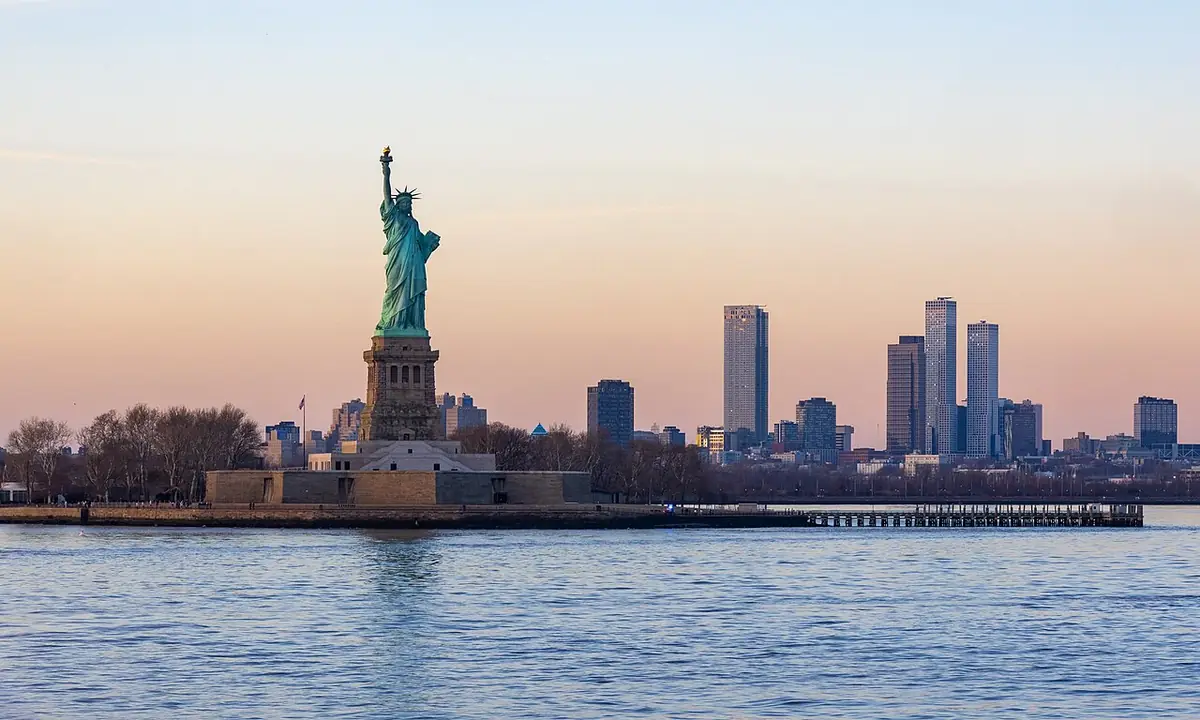
The city's most famous view, Liberty and the skyline together at dusk — Photo: Dillan Payne · CC BY-SA 4.0 · Wikimedia Commons
Once those reference points are reset, the central question becomes exactly where in the city you want to be.
Carrying the reflexes of a buyer from another country into the New York property system leads to strategic misreadings. Ideas about buyer protection, about who drafts and holds the deal together, and about how negotiation unfolds are fundamentally different here. Understanding those cultural and legal gaps lets you approach a transaction with the pragmatism local business culture expects.
From abroad
A single neutral official who drafts the deed and protects both sides, as in many civil-law countries
New York
Real estate attorneys everywhere, representing each side separately from the very first offer
Legal negotiation is far more adversarial and far faster; you need your own attorney from the moment the purchase contract is drafted so you do not sign one-sided clauses.
From abroad
Prices posted publicly and transparently as a clean figure to the seller on listing portals
New York
A negotiating culture in which property taxes and associated charges change the real cost dramatically
The asking price never reflects an owner's full financial commitment, which means working out the total cost of ownership over ten years before you settle on a budget.
From abroad
Relatively rigid mortgage contingency conditions tightly framed by statute
New York
Extremely strict contracts of sale in which the deposit (usually 10%) is paid very early
Walking away without cause after signing the contract means losing that deposit outright, so your financing has to be locked down beforehand.
From abroad
Heavy weight given to a precisely measured livable floor area certified under a statutory method
New York
Square footage that is often approximate and may fold in shares of common areas or basement space
Never rely on the measurements printed in a sales brochure without a physical check by an independent surveyor or architect.
How to weigh up New York's different neighborhoods before you commit
This map of the neighborhoods leads straight into the budget reality and the price structure behind it.
Choosing the right area to buy a house in New York depends less on the prestige of the address than on whether it fits your working and personal life. Each borough has its own rhythm, its own community fabric and its own long-term outlook on value. Reading those neighborhood dynamics helps you avoid the classic mistake of chasing only the areas that get the most coverage and are already saturated.
Brooklyn (Park Slope and nearby)
A leafy residential feel, paced by park life and a strong presence of local families.
Suits
Buyers after historic townhouses with a settled neighborhood fabric and good schools.
Trade-off
Prices per square meter that now rival parts of Manhattan, for a commute that can be longer.
Queens (Astoria and Forest Hills)
A lively cultural mix, with more open living space and a surprising range of architecture.
Suits
Those on a measured budget who still refuse to be far from fast transit routes into the center.
Trade-off
Slower appreciation in value and less consistency in the built environment from street to street.
Manhattan (Upper West Side and Harlem)
A constant balance between urban cultural energy and the relative calm of the riverside parks.
Suits
Buyers who prize absolute centrality and maximum liquidity if they need to resell quickly.
Trade-off
Holding costs and property taxes among the highest in the North American market, and less space for the money.
What buying a house in New York really costs, area by area
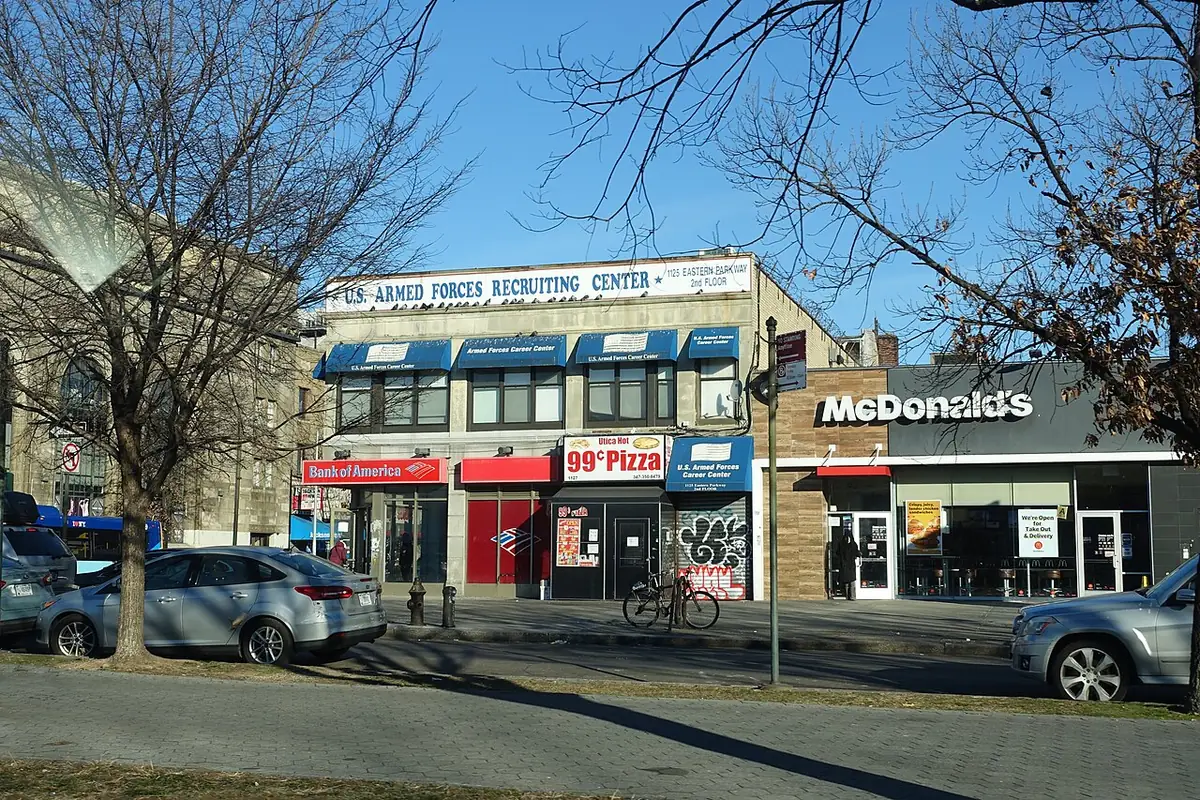
Avenues like this carry the daily mix of shops New Yorkers rely on — Photo: Tdorante10 · CC BY-SA 4.0 · Wikimedia Commons
Beyond the raw numbers, the legal nature of what is actually for sale deserves close attention.
Reading New York property prices is not just a matter of the headline figure on the contract signed in your attorney's office. Property taxes and the contributions that keep shared infrastructure running weigh heavily on an owner's annual budget. The ranges below summarize the trends observed for standard properties needing no immediate major work.
new-yorkFor saleHouseestimate
Median price / m²US$7,790Half the apartments sell below this
Median priceUS$1.15mthe average is 14% higher — a few very large properties pull it up
Most common2 bedrooms55 % of listings
Average size140 m²
By number of bedrooms
Bedrooms
Share of market
Avg price
Price / m²
Avg size
2most common
55 %
US$1.09m
US$8,200
133 m²
3
33 %
US$1.4m
US$7,790best value / m²
180 m²
4
12 %
US$2.12m
US$8,200
259 m²
Each row is an average, compared against the area average of US$8,200 / m². These are indicative estimates of a typical local market, not a measured sample of live listings. Check current listings before relying on them.
What you actually own in legal terms when you buy in New York
That legal caution comes to a head at the moment you secure the deal with a deposit.
The American legal system offers ownership structures with no exact equivalent in many other countries. Between outright ownership of the land and the building (fee simple) and collective co-operative forms, an owner's freedom of action varies completely. Knowing precisely what you hold protects you from house rules that can be very strict indeed.
Outright ownership (fee simple townhouse)
You buy the building and the land it sits on, with no outside board to answer to on structural decisions. You look after the roof, the facade and the utility connections yourself, and you carry every cost that comes with them.
What it changesComplete autonomy comes with direct financial responsibility and full exposure to the hazards of heavy maintenance.
Shared ownership (condo or co-op)
The purchase sits inside a regulated structure where a board approves each buyer and imposes strict rules on renting out or on renovation. Architectural decisions that change the exterior go to a mandatory vote first.
What it changesYou gain the ease of collective management but give up part of your sovereignty over your own property.
The one legal rule to understand before you hand over a deposit in New York
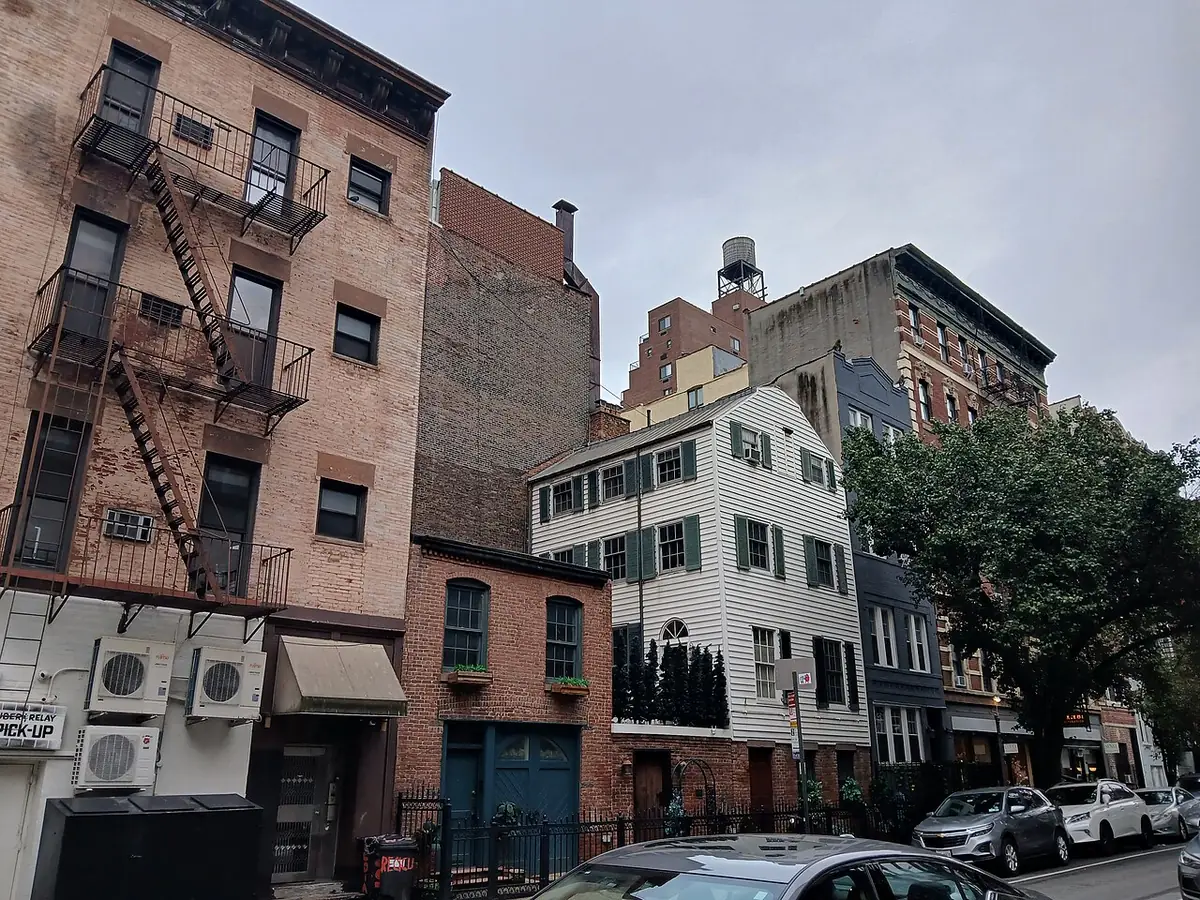
Fire escapes and brick walk-ups like these define classic New York blocks — Photo: Epicgenius · CC BY-SA 4.0 · Wikimedia Commons
That procedural rigor runs through the whole operational calendar of the transaction.
In the New York buying process, signing the purchase contract almost always goes hand in hand with paying a deposit into escrow. That sum, often set at 10% of the total price, is not an administrative formality but money immediately at risk if you back out. Mastering this sequence keeps you from losing considerable amounts through simple unfamiliarity with local practice.
The seller accepts the initial offer, opening a period in which the attorneys check title and run technical due diligence.
The seller's attorney drafts the final contract of sale, incorporating all the negotiated terms.
Your own counsel reviews the package and the 10% deposit is paid into the designated escrow account.
Both parties sign the contract, which makes the deposit conditional but legally binding.
Contingencies tied to mortgage financing and to the absence of major hidden defects are cleared one by one.
The deed is completed at closing and ownership passes, releasing the funds to the seller.
How a New York property transaction actually unfolds, step by step
Follow that method rigorously and your New York property investment rests on durable ground.
Seeing a New York purchase through means coordinating a number of professionals whose roles are strictly separated. From the broker to the inspector by way of the attorneys, each one secures a specific facet of the transaction. Following the sequence closely keeps a process that usually spans several months running smoothly.
The buyer and their brokerSelecting properties and drafting the offerSetting out precise requirements and issuing a written proposal that formalizes the price and the terms you want.
The buyer's attorneyDue diligence and title reviewCareful checking of the property's history, any disputes, and whether earlier construction work was properly permitted.
The independent inspectorFull physical inspection of the buildingDetailed analysis of structure, plumbing, electrics and roof to identify work that is not visible.
The attorneys for both sidesNegotiating and signing the contract of saleFine-tuning the specific clauses and paying the deposit into a secured escrow account.
The lenderFinal underwriting of the mortgageDefinitive approval of the loan security and release of the funds needed to close the sale.
All parties togetherClosing and transfer of ownershipSigning the final documents, recording the transaction publicly and handing the keys to the new owner.
House or apartment in New York: how do you decide, given how you live?
Now to the detailed analysis of the running costs and prices that turn this plan into something concrete.
Choosing between a single-family house in New York and an apartment in a serviced building changes your daily life in the city completely. Houses are found mainly in outer residential neighborhoods such as Queens, Brooklyn or Staten Island, offering quiet, space and a private yard, but committing you to considerable daily travel. An apartment in a condo or co-op in Manhattan and the dense districts, by contrast, puts you in the middle of the buzz, with services built in but obvious closeness to other people.
Maintenance is where the two options diverge most sharply in New York. In a house, every repair from the roof to the heating system falls entirely to the owner, which calls for an upkeep budget that is unpredictable but very real. In an apartment, the monthly common charges or maintenance pool those costs and hand management of the shared areas to a professional building manager, though the fees do rise steadily year after year.
The financial and spatial trade-off also plays out in liquidity and resale. New York apartments, co-ops in particular, trade in an extremely active market but under strict admission rules imposed by the boards. Houses offer complete freedom to transact, along with land whose value often appreciates on its own logic, driven by the scarcity of space in an island city.
Your tolerance for noise and your relationship with neighbors should guide the final call. Living in a house frees you from footsteps on the ceiling and from neighbors across the hall, creating a bubble of privacy that is rare in this city. In exchange, you give up the immediate security of a doorman, centralized package delivery and the sense of belonging to a tight vertical community.
In the end the decision rests on which set of logistical constraints you can accept. If domestic calm and structural independence matter most, the house wins despite the commute. If you want urban efficiency, centrality and less time in transit, the apartment remains the way to live at New York's pace.
What budget do you really need to buy and live in New York?
Let us look concretely at what a New York owner's day actually looks like.
Buying property in New York comes to far more than the asking price shown on the portals. You have to factor in a range of local taxes, specific closing costs and recurring charges that reshape the financial equation. The tables below break down the upfront and monthly outlays so you can calibrate your financing plan with no blind spots.
Upfront costs and taxes at purchase
Cost item
Order of magnitude
Explanatory comment
Minimum down payment
20% to 50%
Required by American lenders and often set at 30% or 40% by co-op boards.
Mansion tax (properties over $1M)
1% to 3.9%
A progressive state tax added to the purchase price in strict bands set by New York State.
Closing costs
2% to 5%
Cover title insurance, attorney fees, recording taxes and the appraisal of the property.
Building reserve contribution
1 to 6 months of charges
Often requested by the building to confirm the buyer's immediate financial strength.
These upfront costs are payable in cash at the final signing and generally cannot be folded into the mortgage.
Monthly running budget
Recurring item
Estimated range (USD)
Nature of the expense
Common charges or maintenance
$800 to $2,500+
Varies with floor area, the building's services and whether property tax is included.
Property tax
$500 to $2,000
Particularly high for houses and condos, and often folded into maintenance in co-ops.
Home and liability insurance
$50 to $150
Essential cover for water damage and the liability insurance most buildings require.
Utilities (electricity, gas, internet)
$150 to $400
Depends heavily on how much you run central air conditioning through New York's very hot summer months.
Common charges have historically risen by 3% to 5% a year to keep pace with inflation in maintenance and labor costs.
Health, schools and transport: what does an ordinary Tuesday in New York look like?
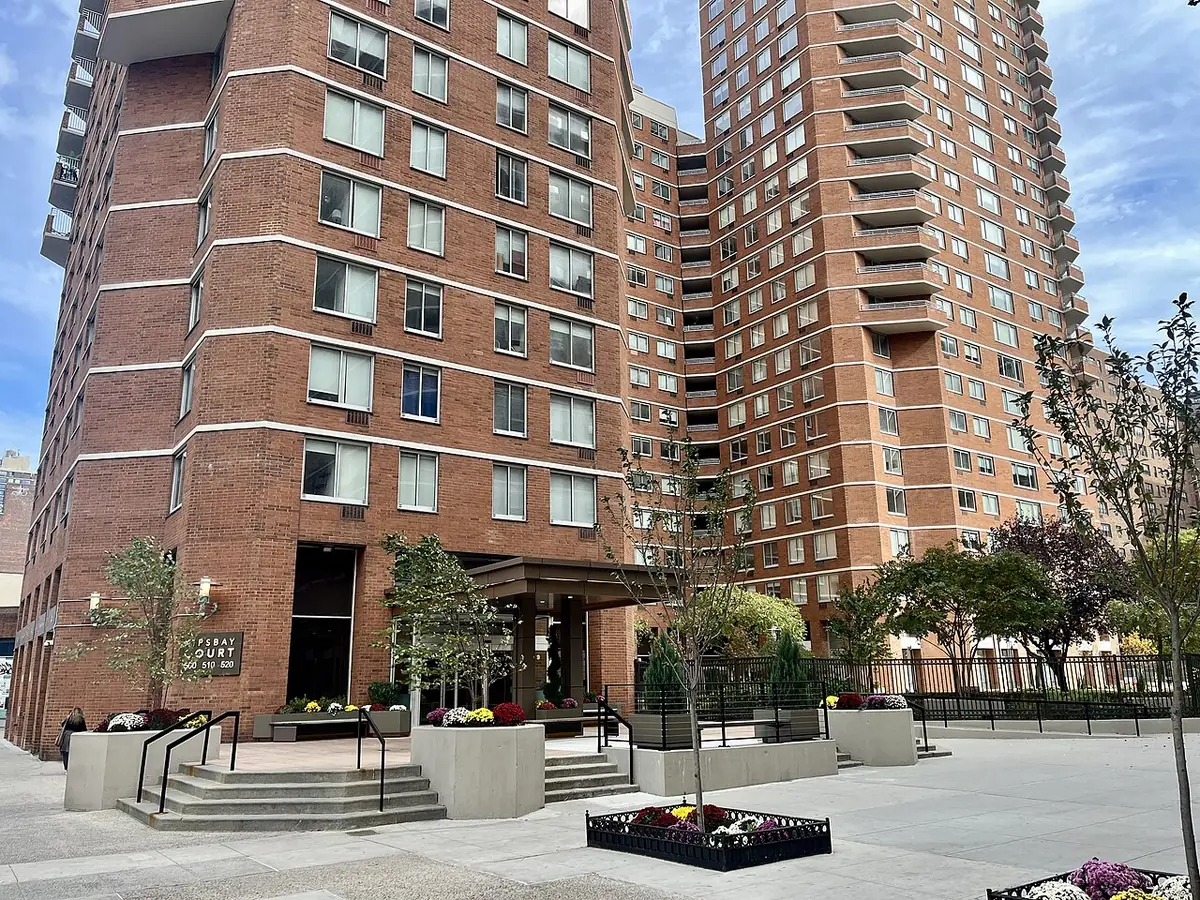
Tower complexes like this are a major part of the city's housing stock — Photo: Transpoman · CC BY-SA 4.0 · Wikimedia Commons
Beyond what you can see, plenty of hidden details weigh heavily on the decision to buy.
Living in New York means synchronizing your movements and family obligations carefully. The transit network, the school system and access to healthcare set the rhythm of your days. This hour-by-hour account of an ordinary Tuesday drops you into the logistical reality of a settled resident.
07:30Local public school or private schoolDropping off the children. In New York, school assignment depends strictly on the zoned district, which directly shapes which neighborhood you buy in.
08:45Subway stationThe commute to the business district. The network runs 24 hours a day but demands constant attention to delays and modernization work.
12:30Neighborhood urgent care centerWhen you need care quickly, local clinics take the place of a long-standing family doctor for routine visits without a long-booked appointment.
17:30Local supermarket or neighborhood organic marketLast-minute food shopping. Small New York kitchens force you to shop more often and in smaller quantities.
19:00Home and building mattersBack at the front door. A word with the super to collect the many packages delivered during the day and check the mail.
What the listings do not tell you about New York
Those blind spots often turn into sharp regrets that only register after several months of living there.
The handsome photos in New York listings deliberately leave out major technical and regulatory realities that can turn your investment into a financial nightmare. Reading between the lines of the sales copy is essential if you want to anticipate the structural constraints particular to this city.
The building's overall and often hidden financial health
A listing flatters a bright apartment but omits that the building faces heavy facade work in the near future. Those extraordinary costs, known as assessments, are voted by the building and passed straight through to owners, and can run to tens of thousands of dollars per unit.
Strict sublet policies
Many buyers assume they can rent their place out on Airbnb or on a long lease if they have to leave the city. In New York, and especially in co-ops, the house rules often prohibit any letting for the first three to five years, or impose penalties steep enough to deter it.
The acoustic reality and thermal insulation
The architectural charm of older buildings and the concrete structures of modern towers can both conceal severe sound insulation problems. Traffic noise, constant sirens and the neighbors above can wear down your quality of life for good if double or triple glazing has not been fitted.
Tax history and tax abatements
Some new developments benefit from temporary tax abatements that keep property taxes very low for ten or fifteen years. When those benefits expire, taxes jump sharply, which hits both resale value and the future monthly budget.
The buying mistakes you only discover after six months of New York life
Given demands this exacting, not everyone is equipped to settle into this market for the long run.
Looked likeA fashionable, lively neighborhood, perfectly central for going out in the evening and getting to work easily.
Turned outAn extremely noisy area at night because of the bars and early-morning delivery trucks, making sleep difficult during the week.
Would have caught itViewing the property at different times, especially late on a Friday evening and early on a Saturday morning, to gauge the real noise level and the night-time atmosphere.
Looked likeA compact but functional kitchen, ideal for cooking quickly in the evening after work.
Turned outA completely under-equipped space with no proper extraction for cooking fumes and miniature appliances unsuited to what you need.
Would have caught itChecking that the hood vents to the outside and measuring the cupboard storage precisely before you sign the offer.
Looked likeA discreet, transparent board that lets owners get on with their lives.
Turned outA fussy, bureaucratic management structure that demands endless approvals for the smallest interior change.
Would have caught itInsisting on seeing the last two years of board meeting minutes to spot internal tensions and unreasonable rules.
Looked likeCommon charges that were stable and consistent with the services the building provided.
Turned outA sudden and substantial rise in charges to cover the building's shortfall on energy management.
Would have caught itGoing through the building's financial history with a real estate attorney or an accountant before you commit to the transaction.
Who should absolutely not buy property in New York?
Time for the last essential question to close out your thinking.
Buying property in New York demands professional and personal stability, plus a high tolerance for administrative friction. This market does not suit every path through life. Some profiles are far better off renting to protect their flexibility and their capital.
The professional on a short international posting
→A flexible rental rather than a purchase
Closing costs on both the purchase and the resale swallow any potential gain over a period shorter than five to seven years, leaving you out of pocket.
The investor with no patience for administrative weight
→Other, less regulated property markets
New York building boards apply drastic selection criteria and turn down applications regularly without having to explain themselves.
The household on a tightly calculated budget with no safety savings
→Staying in a rental with costs under control
Unpredictable rises in property taxes, common charges and compliance work expose financially stretched owners to serious dead ends.
So are you genuinely ready to take the step and buy in New York?
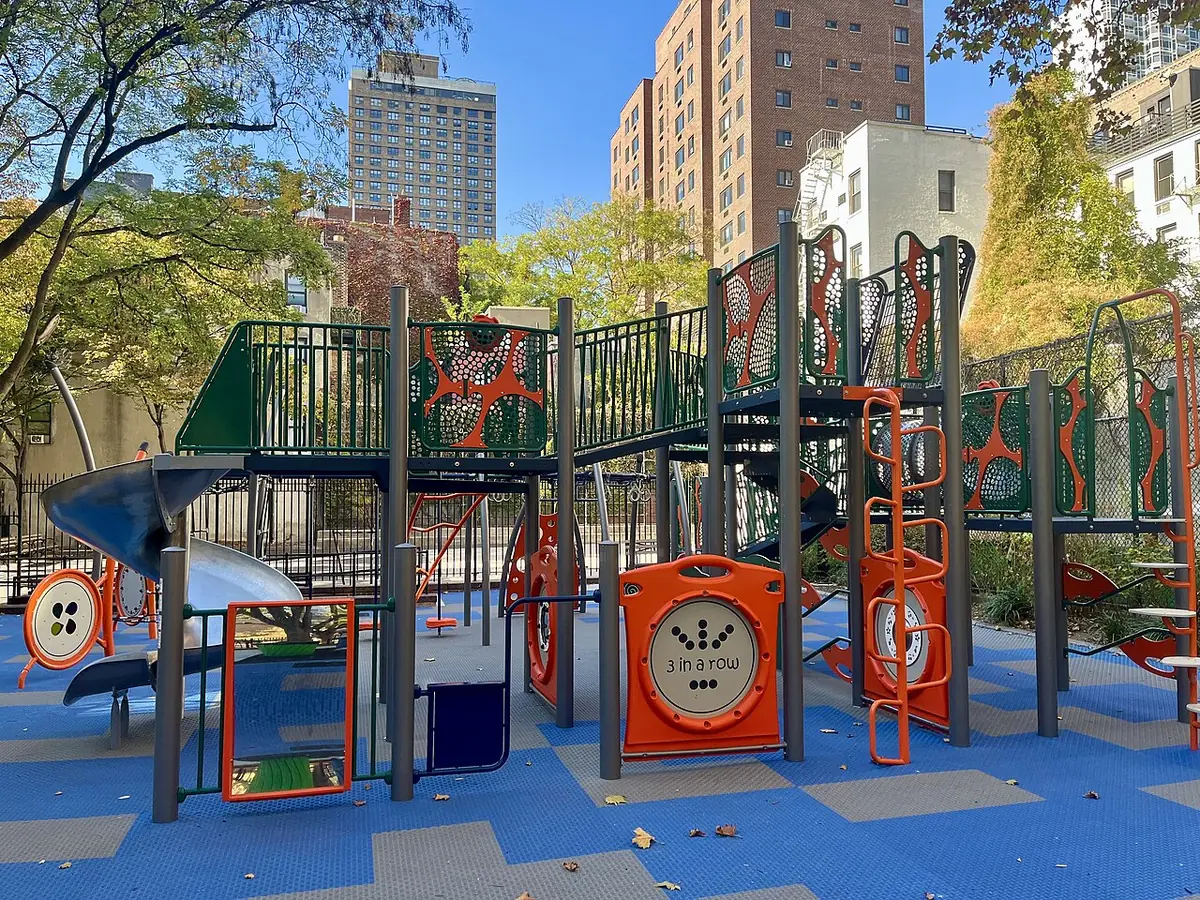
Playgrounds tucked between buildings like this are part of everyday city life — Photo: Transpoman · CC BY-SA 4.0 · Wikimedia Commons
Deciding to buy property in New York marks a major turning point in your financial and personal life. This uniquely demanding market rewards patience, financial discipline and a clear-eyed view of hidden costs. If you have analyzed the common charges, accepted the compromises on space and secured a solid down payment, the groundwork for a durable investment is in place.
Even so, buying in this city should never be driven by urgency or by the fear of missing a marketed opportunity. Every neighborhood has its own balance, its own transport constraints and its own building rules, all of which deserve careful investigation. Your ability to absorb logistical and regulatory surprises will make the difference between a good experience and a permanent source of stress.
Take the time to have every financial document validated by independent professionals, whether a real estate attorney or a local tax adviser. The New York property market offers exceptional long-term prospects for those who approach the transaction with method, clear judgment and a firm grasp of what they actually need from the city.
Related questions
What are the average transaction fees on a property purchase in New York?
Closing costs generally run between 2% and 5% of the total purchase price for a buyer. They cover city and state taxes, attorney fees, title insurance and the lender's appraisal of the property.
What is the difference between a co-op and a condo in New York?
In a co-op you buy shares in the corporation that owns the building plus a proprietary lease, which comes with very strict admission rules. In a condo you fully own your unit with a conventional deed, which gives you more flexibility but often at a higher price.
Can a foreign buyer purchase an apartment in New York easily?
Yes, foreign investors and buyers can acquire property in New York with no restriction based on nationality. That said, lenders often ask for a larger down payment, sometimes 40% to 50% of the total, and applications are examined in detail.
How does the famous mansion tax work in New York?
The mansion tax is a progressive tax levied by New York State on property transactions where the purchase price reaches or exceeds one million dollars. The rate ranges from 1% to 3.9% according to price bands clearly set out in state law.
What are maintenance charges or common charges?
These are the monthly fees each owner pays to cover upkeep of the common areas, the building staff's wages and general management. In co-ops, those charges often include a share of the building's overall property tax bill.
How long does a property purchase in New York usually take?
Between signing the contract of sale and the actual closing, allow roughly 60 to 90 days. That timeline often stretches for co-ops because of the time needed to prepare the board application package and have it approved.
Can you rent your apartment out on Airbnb after buying it?
New York City law is extremely restrictive on short-term rentals, prohibiting the rental of an entire home for fewer than 30 days without the owner present. On top of that, building house rules almost always forbid the practice outright.
What minimum down payment do you need to obtain a mortgage?
Most American lenders require a minimum down payment of 20% of the purchase price. Many building boards, however, insist on 30%, 40% or even 50% to satisfy themselves that new residents are financially solid.
Are property taxes negotiable or open to review in New York?
Property taxes are calculated by the City of New York on the basis of an official assessment of the property's value. You can challenge that assessment each year with expert help if you believe it is overstated relative to the market.
Which New York neighborhoods suit a first family purchase?
Families often favor parts of Brooklyn such as Park Slope or Brooklyn Heights, along with some residential pockets of Queens or Manhattan, valued for the quality of their schools and a calmer setting.