Buying a house in Manchester calls for a careful reading of neighbourhoods, the particulars of English property law and the real cost of acquisition. This guide walks through each stage so you can carry out your plan with full visibility.
Get the app
What nobody tells you.
Real prices, hidden costs and the traps to check before you commit.
What you are really getting when you buy a house in Manchester
Scroll
What you are really getting when you buy a house in Manchester
Buying a house in Manchester calls for a careful reading of neighbourhoods, the particulars of English property law and the real cost of acquisition. This guide walks through each stage so you can carry out your plan with full visibility.
Written by the ting.ad editorial team ·
Albert Square, Manchester in Street View: drag to look around.
Buying a house in Manchester is not simply a matter of square metres or a rough gross yield calculation. Between the pull of regenerated industrial quarters and the reality of urban renewal funding, every district sets its own pace of value growth. Buyers quickly discover that floor area is only one variable among many in a city undergoing deep architectural and demographic change.
The promise of generous spacevsThe reality of upkeep and insulation
Victorian and Edwardian houses offer fine proportions and period character, but they demand steady spending to bring them up to modern thermal standards. Buyers often underestimate the cost of roof work and double glazing needed to make a house properly weathertight.
Being right next to a lively centrevsThe trade-off on quiet and parking
Living close to the central corridors buys you an animated neighbourhood and quick access to public transport, but it also means congested streets and a chronic shortage of off-street parking. Moving further out brings quiet at the cost of longer daily journeys.
Long-term potential for capital growthvsHow slowly local regeneration actually moves
Major regeneration schemes announced by the council fuel investor optimism, but delivery often takes years. During that interim period, construction noise and an unevenly changing neighbourhood weigh directly on daily life for residents.
Does this place really suit the life you live now and the one you are planning?
Where you choose to live depends on more than the budget you have on the day you sign. Your working week, your travel habits and your personal plans over the next few years all determine whether a purchase will hold up. Being honest about your own profile avoids the classic mistake of buying a property that does not fit what you actually want.
The connected residential profile
Manchester's leafier outer neighbourhoods, well served by rail, offer the best compromise between a comfortable home working space and quick access to the technology hubs. You get more floor area to set aside a dedicated study, while staying within reasonable reach of the main stations for the trips you do have to make. This arrangement keeps a clear boundary between work and residential calm, well away from the noise of the city centre.
The mobile urban profile
Living within easy reach of the main employment areas transforms how you manage your day by removing commuter traffic from the equation. You give up the large house with a private garden in favour of an efficient terraced or compact town house, but you gain immediate access to services, cultural venues and the tram network. This is the choice of ease and immediacy, and it suits young professionals and couples without children particularly well.
The family and long-term profile
Location then follows the reputation of local schools and the presence of safe places for children to play. Residential areas with active community life and well kept parks become the priority, even where that means higher prices per square metre and stricter lending requirements. You are investing in the stability and safety of a lasting environment for the people close to you.
Living here when you arrive from abroad: what genuinely changes
New builds sit right beside Manchester's older stone architecture — Photo: Benjamin Shaw · CC BY-SA 4.0 · Wikimedia Commons
The British property system and the local habits of home life differ in structural ways from what most newcomers are used to. From how hot water systems are configured to the unwritten rules of neighbourly conduct, moving here requires both cultural and practical adjustment. Understanding these mechanics in advance avoids a good deal of friction when you move in.
From abroad
A centralised, notary-led conveyance with tightly framed legal guarantees
Manchester
The British conveyancing system, built on direct negotiation between each side's specialist solicitors
Completion timescales are noticeably longer and less certain, with a constant risk that the property chain breaks before contracts are exchanged.
From abroad
Universal high performance double glazing and standardised thermal insulation in the housing stock
Manchester
A large stock of older housing with widely varying energy performance (EPC ratings)
You should budget as a matter of course for insulation work and expect energy bills that run higher through the winter months.
From abroad
A concentric city plan with a dense historic centre and uniform public services
Manchester
A polycentric conurbation made up of autonomous boroughs with contrasting local policies
Council Tax and the quality of local services vary sharply from one street to the next, feeding straight into the cost of daily life.
From abroad
Long leases on land that are rare and tightly regulated, reserved for specific development cases
Manchester
A routine distinction between outright ownership (freehold) and time-limited ownership of the land (leasehold)
For a house, check the legal title carefully to avoid annual ground rent charges and restrictions on what you may alter.
Which Manchester neighbourhood fits your priorities?
Manchester is not one property market but a mosaic of neighbourhoods with sharply contrasting identities and price dynamics. From a fashionable cultural hub to quieter, greener residential streets, each area answers a particular combination of budget and lifestyle. Weighing the trade-offs of each zone is essential before you narrow your search.
Didsbury and Chorlton
A busy village atmosphere with independent cafes, tree-lined parks and strong family demand.
Suits
Families and buyers who want green surroundings without cutting themselves off from cultural life.
Trade-off
Prices per square metre among the highest in the conurbation and fierce competition for every property listed.
Altrincham and Sale
Notably good schools, a lively market hall and a strong sense of residential security.
Suits
Those who put their children's education and the quality of public services at the top of the list.
Trade-off
Relative distance from Manchester's business core and longer journey times at peak hours.
Ancoats and the Northern Quarter
A fashionable, creative and firmly modern urban hub, driven by innovation and food.
Suits
Urban professionals and investors backing areas in the middle of a technology-led revival.
Trade-off
Very few houses on the market, with flats dominating, and noise late into the night.
Salford and the Quays
Redeveloped waterfronts, expanding media employers and ambitious regeneration schemes.
Suits
Buyers looking for medium-term growth in value on a mid-range budget.
Trade-off
Markedly mixed architecture and pockets of persistent deprivation right beside the modern developments.
What does buying a house in Manchester really cost?
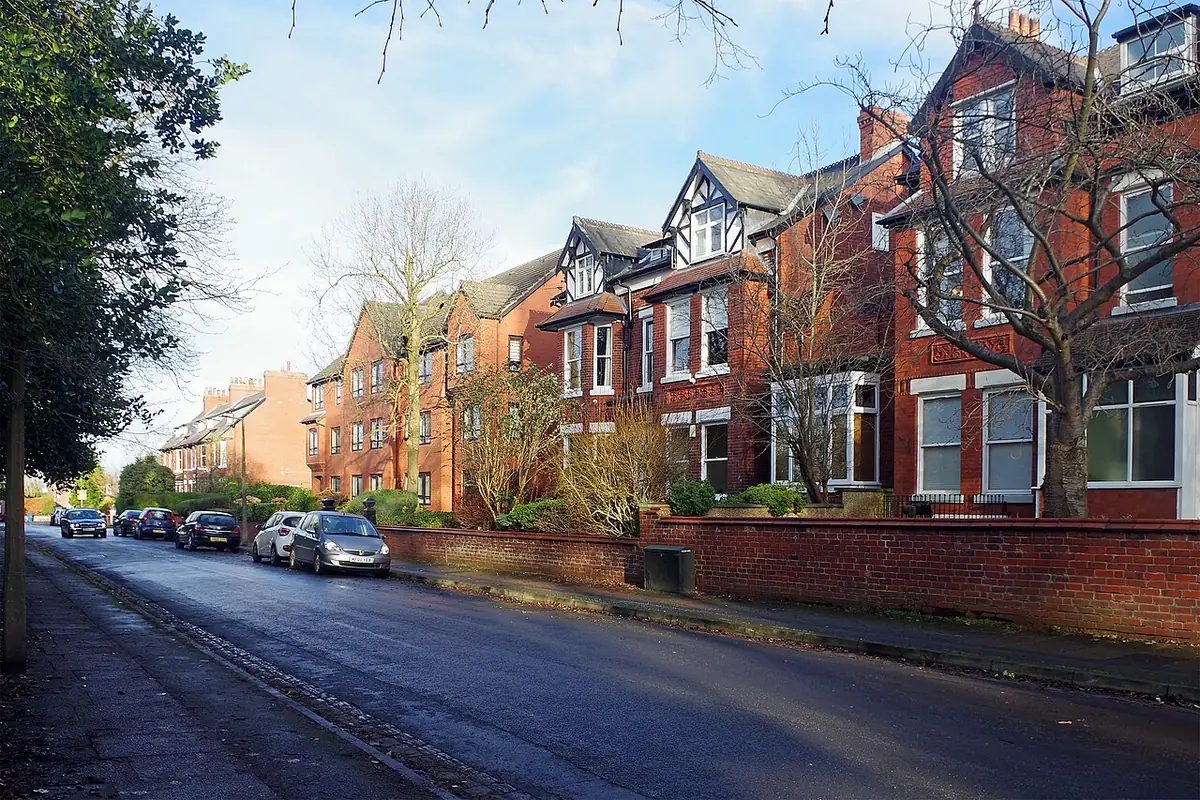
A quiet tree-lined corner in Didsbury, Manchester — Photo: Tom Jolliffe · CC BY-SA 2.0 · Wikimedia Commons
Working out your acquisition budget cannot stop at the price shown by the agent or the online portal. The Manchester market shows clear regional variation, on top of which sit transaction costs specific to English property law. Anticipating all of these lines is what makes a financing plan stand up to a lender's scrutiny.
manchesterFor saleHouseestimate
Median price / m²£2,804Half the apartments sell below this
Median price£336kthe average is 14% higher — a few very large properties pull it up
Most common2 bedrooms75 % of listings
Average size114 m²
By number of bedrooms
Bedrooms
Share of market
Avg price
Price / m²
Avg size
2most common
75 %
£351k
£2,952
119 m²
3
22 %
£442k
£2,745 −7 %
161 m²
4
3 %
£535k
£2,657best value / m²
201 m²
Each row is an average, compared against the area average of £2,952 / m². These are indicative estimates of a typical local market, not a measured sample of live listings. Check current listings before relying on them.
What you can actually own: freehold and leasehold
Ownership of property in the United Kingdom rests on legal distinctions that have no exact counterpart in many other countries. Confusing the two regimes exposes a buyer to unexpected recurring charges and to binding restrictions on how the property may be used. Getting these concepts straight is essential before you put in any offer.
Outright ownership (freehold)
You own both the building and the land it stands on, with no time limit and no periodic ground payment to a third party. This is the status most sought after for a house, because it gives you full freedom to extend or alter the structure, subject only to the usual local planning consents.
What it changesYou control the whole of the asset and its future resale value, without exposure to rising ground rents.
Time-limited ownership (leasehold)
You buy the right to occupy the property for a fixed term (often several decades or centuries), while a third party, the freeholder, owns the land. This arrangement involves an annual ground rent and sometimes service charges for communal areas, along with an obligation to seek consent before altering the property.
What it changesYou must watch the remaining lease length closely, because falling below 80 years causes a sharp drop in value and very high extension costs.
The rule to understand before you put money down on a property
Terraced streets like this make up much of Manchester's housing — Photo: Stephen McKay · CC BY-SA 2.0 · Wikimedia Commons
The British buying process is marked by a long period of legal uncertainty between offer acceptance and exchange of contracts. During that phase neither buyer nor seller is legally bound, which leaves transactions open to practices such as gazumping. Knowing the exact sequence of commitments protects your money from being spent for nothing.
The seller accepts your offer, subject to checks.
Instruct a conveyancing solicitor to begin the legal searches and examine the title.
Commission an independent home survey to identify hidden defects and damp problems.
Finalise the mortgage offer by supplying every piece of financial evidence the lender asks for.
Wait for exchange of contracts, the point at which the transaction becomes legally binding.
Completion takes place, you collect the keys and you are formally the owner.
How a Manchester purchase unfolds, step by step
Seeing a Manchester purchase through means coordinating several professionals against a fairly tight calendar. Each of them plays a defined technical role in making your purchase safe. Knowing how long each stage takes is what keeps last-minute pressure out of the process.
The buyerGetting an Agreement in PrincipleEstablish exactly how much you can borrow, through a broker or a lender, before you start viewing properties.
The estate agentViewings and offer submissionView the properties on your list and put a written offer to the agent, who acts for the seller.
The conveyancing solicitorSearches and enquiriesCheck the title history, any easements, the absence of harmful infrastructure plans and compliance with consents.
The surveyorHome survey of the buildingProduce a detailed report on the condition of the structure, the roof, the plumbing and the insulation.
Both sides' solicitorsExchange of contractsPayment of the deposit (usually 10%) and signature of binding commitments that fix the completion date.
The buyer and their advisersCompletion and handover of keysThe solicitor transfers the balance of funds to the seller, registers the title with HM Land Registry and the keys change hands.
House or flat in Manchester: should you choose space or a central location?
Once you have settled on the type of property, it is worth looking closely at what it actually costs to run.
Choosing between a red brick Victorian house and a modern flat in a converted warehouse in Manchester's Northern Quarter shapes your daily life directly. The house generally offers more living space, often with a private garden or a back yard, which changes family life completely. In exchange it demands regular attention to the roof, the timbers and the exterior walls, and those are not small costs under the wet climate of northern England. The flat, for its part, appeals through its central location, better security and the absence of direct structural upkeep, since the communal areas are handled by a managing agent.
Financially, buying a house in Manchester usually carries proportionally heavier conveyancing costs and Stamp Duty Land Tax at the outset, but long-term gains often sit in owning the land itself. City centre flats, much sought after by young professionals and buy-to-let investors, are easier to sell quickly, yet they carry service charges that can be steep and tend to rise over the years. So you have to look not only at the headline purchase price but at the total cost of ownership over a five to ten year horizon if you want to avoid nasty surprises.
Your way of living also drives the final decision, depending on whether you work from home or need to be in the Spinningfields business district every day. Living in a house often means moving slightly away from the ultra-central corridors towards residential areas such as Chorlton or Didsbury, where quiet comes first but tram and bus journeys get longer. A flat in Ancoats or Deansgate, by contrast, puts every service, restaurant and gym within a few minutes on foot, at the price of greater urban density and sometimes tighter interior space.
Finally, how your household is likely to change weighs heavily in the Manchester balance. A couple without children will find an urban flat an ideal base, while a growing family or one with school-age children will naturally look towards a house with three bedrooms and secure outdoor space. Anticipating your needs a few years out is the best guide to not having to sell in a hurry after only two or three years, which would wipe out the benefit of your original purchase through transaction costs alone.
What overall budget do you need to buy and live in a property in Manchester?
With those figures in place, here is what an ordinary day in the city actually looks like.
Buying a home in Manchester amounts to a good deal more than the mortgage your bank agrees. You have to fold in local taxes, the insurance you are required to hold and the service charges specific to the British market. Service charges on flats and Council Tax are recurring budget lines that should never be underestimated. Planning carefully from the start is what keeps a purchase sound through economic swings.
Upfront and acquisition costs for a property
Cost item
Estimated amount or range
Compulsory?
Conveyancing and legal fees
GBP 1,500 to GBP 3,000
Compulsory
Stamp Duty Land Tax (SDLT)
Varies with price and buyer status
Compulsory
Survey (HomeBuyer Report)
GBP 400 to GBP 900
Strongly recommended
Mortgage arrangement fee
GBP 0 to GBP 1,500
Depends on the mortgage offer
Legal fees vary with the complexity of the title, particularly where the property is leasehold.
Recurring annual and monthly costs
Type of cost
Typical amount
Frequency
Council Tax (bands B to D)
GBP 1,400 to GBP 2,200
Annual
Service charge
GBP 1,200 to GBP 3,000
Annual (for flats)
Home insurance (buildings and contents)
GBP 250 to GBP 500
Annual
Energy bills (gas and electricity)
GBP 1,800 to GBP 2,800
Annual
Council Tax depends strictly on the area and on the historic assessed value of the home.
What an ordinary Tuesday in Manchester looks like, from transport to schools and services
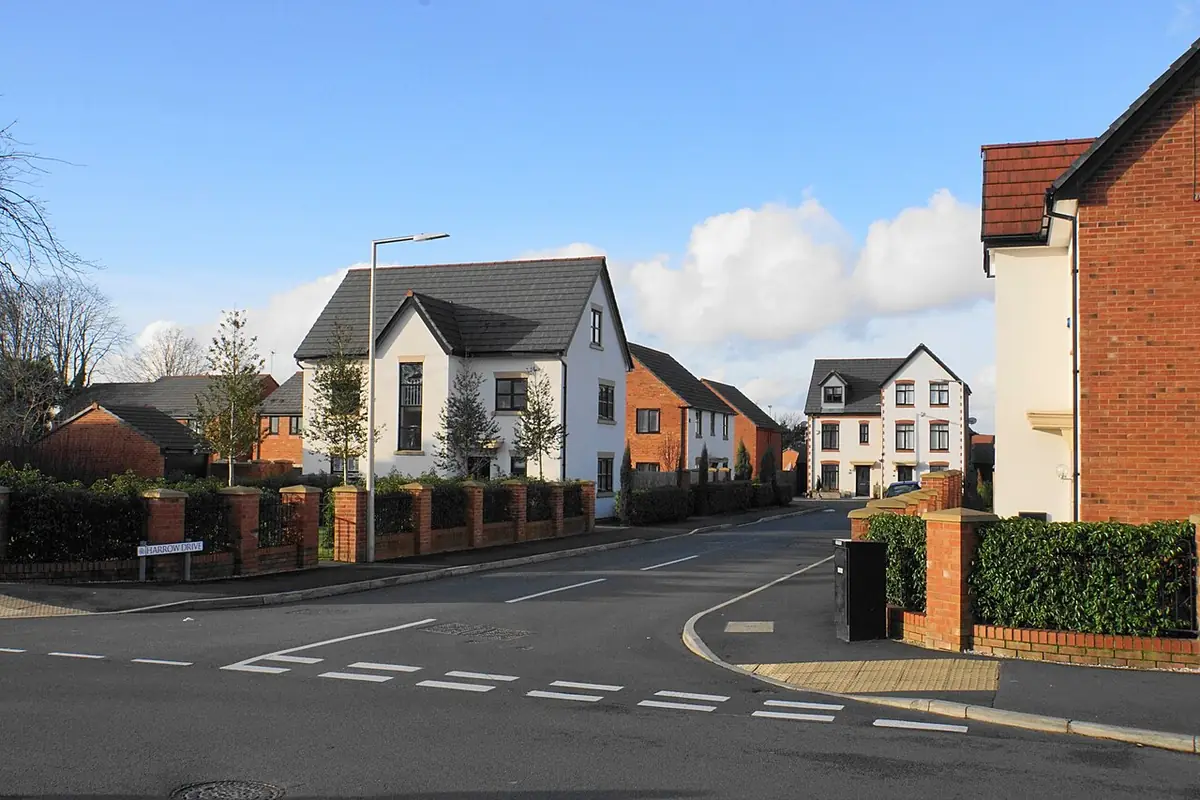
New-build streets like this add to Manchester's newer housing supply — Photo: Bill Boaden · CC BY-SA 2.0 · Wikimedia Commons
Beyond that apparent routine, plenty of hidden aspects deserve your attention before you sign.
Nothing tells you more about where you are thinking of buying than watching an ordinary weekday unfold. Between commuters filling the Metrolink, the school run and traffic at the health centres, the Manchester rhythm is brisk. Each neighbourhood has its own patterns of movement and its own access to public infrastructure, which subtly changes daily quality of life. Here is how an ordinary Tuesday runs for a resident of the city.
07:45Local Metrolink stopTrams fill quickly with people heading for the Spinningfields business district or Piccadilly. How reliable the service feels depends heavily on which stop and which line you are on.
08:30Neighbourhood schoolParents walk or cycle their children to the local primary schools. Schools with strong Ofsted ratings put noticeable upward pressure on property prices within their catchment.
12:30GP surgeryThe middle of the day is when routine health appointments get dealt with. Registering with a local GP is one of the first administrative steps to take once you move in.
17:00Neighbourhood high streetResidents pick up last-minute shopping at convenience supermarkets or independent shops. How busy a high street feels differs completely between the leafy outskirts and the city centre.
19:30Public park or municipal green spaceA quiet end to the day in city parks such as Platt Fields or Heaton Park. These green lungs are a decisive criterion for families choosing where to buy.
What do estate agents in Manchester often leave out?
Knowing these traps prevents disappointment, but it is worth turning now to what buyers most commonly regret.
The Manchester market holds technical and regulatory quirks that never appear in a glossy brochure. Between the form of ownership, the real condition of underground infrastructure and planning schemes already in motion, it pays to dig into every detail. Ignoring them can turn an apparent find into a money pit or a lasting source of conflict with neighbours. Here are the blind spots you should audit before committing.
The complexity of leasehold versus freehold
Many flats and even some new houses are sold leasehold, meaning you buy the building but not the land. Freeholders can charge annual ground rent, sometimes index-linked, and those amounts can escalate to the point where the property becomes hard to sell on.
The noise and visual impact of construction sites already under way
Manchester is among the European cities with the most intense construction boom. A quiet vacant plot in front of your future window can become a thirty storey residential tower the following year, taking your light and generating heavy noise.
The state of insulation and the EPC rating
Many older buildings have poor energy performance, rated E, F or G. Bringing a Victorian home up to standard to cut punishing gas bills requires substantial and costly insulation work, and that cost should be negotiated at the offer stage.
Strict planning rules in conservation areas
If the property sits in a conservation area, you will not be able to replace windows or alter the exterior as you please. Every cosmetic change requires exacting council consent and the use of specific, expensive materials.
What do buyers most regret six months after moving to Manchester?
That experience leads naturally to the question of whether buying in Manchester really suits everyone.
Looked likeA fashionable, lively neighbourhood with busy nightlife right on the doorstep
Turned outA constant source of night-time noise, disturbance and weekend parking problems
Would have caught itVisiting the area on a Friday and a Saturday night between 10pm and 2am to hear what it is actually like before you sign.
Looked likeAn excellent deal thanks to a very attractive advertised price per square metre
Turned outA property needing enormous structural remedial work that a quick viewing never revealed
Would have caught itAlways instructing an independent surveyor to carry out a full RICS Level 3 Building Survey.
Looked likeA perfectly smooth commute into the city centre by public transport
Turned outCongested connections at peak times and regular rises in the cost of travel passes
Would have caught itTesting the exact journey at real peak times on a weekday morning before you formalise your offer.
Looked likeA well run building with stable, predictable service charges
Turned outAn empty reserve fund and emergency roof works voted through in the first month
Would have caught itInsisting on the minutes of the last three owners' meetings so you can review the financial history.
Which buyers should think twice about buying in Manchester?
Once past these filters, it is time to decide, clear-eyed.
Buying property in Manchester is a substantial financial and geographic commitment that does not fit every life path. Local market constraints, the potential volatility of interest rates and the particulars of British urban life all demand a good match with your own circumstances. Knowing when to hold off, or to rent instead, is sometimes the wisest and most protective decision for your savings. Here are the profiles for which buying in this city is strongly inadvisable.
The professional on a short international posting
→Not to buy, and to rent flexibly instead
Upfront transaction costs (conveyancing, SDLT, agency fees) combined with the average time to sell mean you need at least five years here to recover the outlay without a net loss.
The investor with no appetite for regulatory and administrative work
→To avoid the Manchester residential market in favour of other investments
The complexity of leasehold titles, constantly evolving British lettings legislation and strict rules on service charges all demand rigorous administrative and legal involvement.
The household with too thin a financial cushion
→To postpone buying until a solid reserve is in place
A single unforeseen failure in an older property (boiler, roof, water ingress) can swallow several thousand pounds at once and put your mortgage payments at risk.
So are you genuinely ready to buy in Manchester?
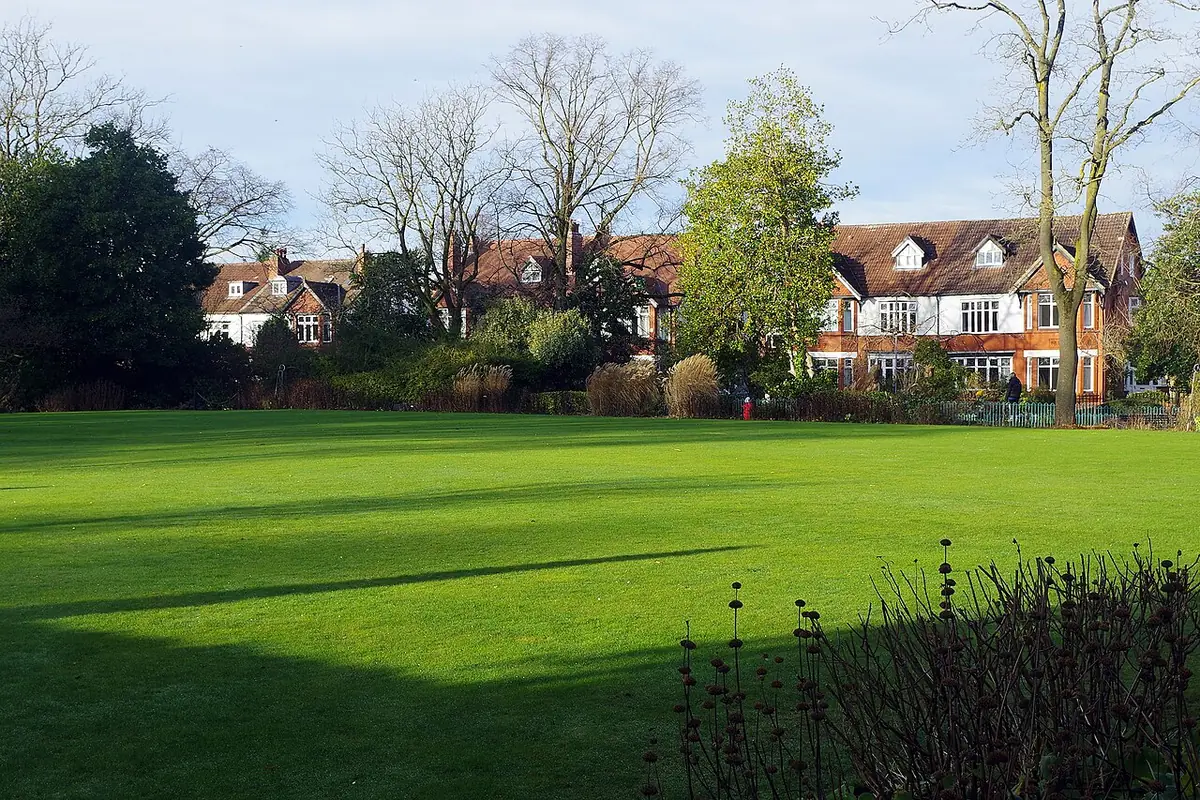
Green spaces like this sit within easy reach of the surrounding streets — Photo: Stephen McKay · CC BY-SA 2.0 · Wikimedia Commons
Reaching the end of this exercise means you now see Manchester in its full complexity, well beyond the appealing marketing photographs. Buying a home here is neither a risk-free speculation nor an impossible adventure: it is a structured life choice that calls for method, patience and financial clarity. If you have confirmed you can carry the hidden costs, accepted the particulars of the local market and identified the neighbourhood that matches your daily rhythm, you have everything you need to make it work.
The Manchester market consistently rewards meticulous buyers who refuse to give in to haste or to manufactured pressure from agents. Taking the time to read survey reports, to check the real financial state of a building's management and to think about your needs five or ten years out is your best protection against disappointment. Your purchase should sit comfortably within your professional and personal path, so that the home becomes a genuinely stable anchor.
All that remains is to formalise the process with capable professionals around you: an independent broker, a thorough conveyancing solicitor and a conscientious surveyor. Every stage completed carefully strengthens the purchase and brings you calmly closer to collecting the keys. Manchester is a city in full swing, and it offers an exceptional place to live to those who approach it with the right information and the right priorities.
Related questions
How long does it typically take to complete a property purchase in Manchester?
The UK buying process, from offer acceptance through to completion, usually takes between three and six months. The timescale reflects the legal checks carried out by each side's conveyancing solicitor and the time needed to put mortgage finance in place.
What exactly does leasehold mean in Manchester?
Leasehold is a legal arrangement in which you buy the right to occupy a property for a fixed term (often 125 to 999 years) without owning the land beneath it. It involves an annual payment to the owner of the land plus service charges towards the upkeep of the building.
How is Council Tax calculated?
Council Tax is set by Manchester City Council according to the property's assessed value on 1 April 1991. Homes are placed in bands running from A (the cheapest) to H (the most expensive), which determines the annual amount due.
Is a building survey compulsory before buying?
A survey is not strictly required in law, but every professional strongly recommends one. A detailed inspection report such as a RICS HomeBuyer Report will pick up hidden defects, damp problems or major structural faults.
Which Manchester neighbourhoods are most sought after by buyers?
The city centre (Northern Quarter, Deansgate, Ancoats) draws people who want fast-moving urban life, while southern residential districts such as Didsbury, Chorlton and Withington are especially popular with families for their green space and the quality of their schools.
Can you negotiate the asking price of a property in Manchester?
Yes, negotiation is a normal part of the Manchester market. Asking prices set by agents often build in room for discussion, and the condition of the property as revealed by the survey is a powerful lever for bringing an offer down.
What extra costs should you budget for at completion?
Alongside your solicitor's fees and any mortgage arrangement fee, you must budget for Stamp Duty Land Tax (SDLT), the property transaction tax whose rates vary with the purchase price and with your status as a buyer.
How does the Metrolink network work for commuters?
Metrolink is the light rail tram network serving Greater Manchester, linking the city centre with the main residential suburbs. Services run frequently at peak times, which makes getting around without a car far easier.
What warranties come with buying a newly built property?
Buying a new build, including off-plan, normally comes with a ten-year builder's warranty such as NHBC cover, which protects against major structural defects and provides useful legal reassurance during the early years.
Is it worth buying a property in the area that needs full renovation?
Buying a renovation project can be very profitable provided you have a firm grip on local trade costs and obtain precise quotes before you buy. Delays on site and rising material costs are common risks that must be provisioned for.
Property review of ting
No ting properties in Manchester yet
Be the first — share it on ting and it shows up right here.