Putting down lasting roots in the economic capital of New South Wales calls for a thorough grasp of how the local housing market really works. Between exceptional coastal opportunities and tight budget constraints, every decision shapes your long-term wealth. This practical guide walks you step by step through your purchase, so you can see it through with your eyes open.
Get the app
What nobody tells you.
Real prices, hidden costs and the traps to check before you commit.
Buying a house in Sydney: the promise of space against the reality of the market
Scroll
Buying a house in Sydney: the promise of space against the reality of the market
Putting down lasting roots in the economic capital of New South Wales calls for a thorough grasp of how the local housing market really works. Between exceptional coastal opportunities and tight budget constraints, every decision shapes your long-term wealth. This practical guide walks you step by step through your purchase, so you can see it through with your eyes open.
Written by the ting.ad editorial team ·
Sydney in Street View: drag to look around.
Buying a home in the capital of New South Wales means weighing every financial and geographical factor with care. Prospective buyers face an intensely competitive market where the scarcity of land sets the rules. Understanding the real dynamics of this coastal city helps you avoid disappointment when it is time to sign the contract. A clear-eyed look at the forces at play remains your best ally for securing a long-term investment without giving in to panic.
Being right next to the iconic beaches and the business districtvsConsiderable financial pressure and very high purchase budgets
The coastal suburbs offer an exceptional way of life, but they demand unusually strong finances if you hope to settle there for good. This constant tension between quality of life and the cost per square metre shapes every buying strategy in the region.
A varied housing stock, from heritage bungalows to contemporary villasvsRenovation and maintenance costs that new arrivals often underestimate
Older homes need regular and costly upgrades, particularly to cope with the local climate. Anticipating these hidden expenses keeps you from being caught out by unexpected bills in your very first year.
A strong economy backed by an international job marketvsVolatile interest rates that directly affect how much households can borrow
The city's overall economic health supports property values over the long term. Even so, swings in mortgage lending call for a comfortable financial safety margin before you commit.
An outdoor lifestyle with nature on your doorstep every dayvsCommutes that can get long if you stray too far from the main transport corridors
The sheer size of the metropolitan area means you need to look closely at access to the train and ferry networks. A location that works badly for daily travel can quickly take the shine off living in a big house.
What kind of buyer are you, and where will you settle in Australia's largest city?
Sydney's harbour setting makes waterside living part of daily life — Photo: Dicklyon · CC BY-SA 4.0 · Wikimedia Commons
Once you have identified your profile, it is worth measuring the cultural and practical gap between the country you come from and the reality here.
Choosing a main residence is not purely a matter of finance or accounting. Your working life, your family plans and how much commuting you can tolerate completely redraw the ideal area to settle in. Every personal situation finds its match in a different part of this vast metropolitan region. Looking honestly at how you live today lets you pinpoint the area that will give you the balance you are after.
The family and residential option
You will naturally lean towards the leafy residential suburbs set further back from the financial centre. These areas offer more generous blocks of land and schools with a strong reputation for teaching quality. In return, your daily trips to the business district will need careful planning around the public transport network. It is the classic compromise for giving your family a fulfilling setting without giving up essential urban amenities.
The urban and central option
Your search will focus on the inner rings or the medium-density suburbs linked directly by fast train lines or ferries. The homes available there are more compact, often semi-detached or on smaller blocks, but immediate access to city life more than makes up for it. You win back valuable time every day at the expense of raw living space. This approach suits busy professionals who put a smooth daily routine at the top of their priorities.
The wealth-building and strategic option
You will target so-called "prime" locations first, known for holding up historically through economic downturns. The absolute scarcity of land in these areas guarantees steady demand from wealthy buyers, both local and international. Even if the entry price reaches dizzying heights, the security of the asset reassures cautious investors. This strategy calls for a long-term view and careful handling of the tax aspects of owning property in Australia.
The coastal and beachside option
Your property plans revolve around the superb stretches of coastline to the north and east of the city. Salt air, sand just steps away and the relaxed feel of beachside communities set the pace of your life. Prices there reach record levels because of universal demand and an extremely limited supply of homes. It is a bold lifestyle choice that puts nature first, at the expense of living space or proximity to the big employment hubs.
Settling in Australia when you arrive from abroad: the real changes to prepare for
Beyond the regulations, choosing the right area remains the cornerstone of your search.
The Australian property system runs on legal and cultural rules that can be very far from what you are used to back home. From the way contracts are drafted by local conveyancers to the very structure of the houses, familiar reference points quickly fall away. Understanding these structural differences from the outset prevents misjudgements with heavy financial consequences. Here are the main points of friction and adjustment every buyer arriving from abroad needs to take on board.
From abroad
A highly secure sales process handled by a notary or lawyer, with cooling-off periods and tightly framed legal protections.
Sydney
Very frequent public auctions where the sale is firm, final and carries no finance condition.
You absolutely must have final approval from your bank and have the property inspected by a professional before you raise your hand in public.
From abroad
Houses traditionally built to last from heavy materials such as stone or reinforced concrete.
Sydney
Often lighter construction combining brick, timber and internal stud walls, with different insulation requirements.
Pay very close attention to orientation towards the sun, natural ventilation and any sign of pests during the building inspection.
From abroad
Transfer taxes and registration fees calculated in a straightforward way from the value of the property.
Sydney
Payment of "Stamp Duty", a heavy state tax added straight on top of the purchase price that eats into your deposit.
Your overall budget must include this substantial tax so you are not left short of cash when it is time to complete the transaction.
From abroad
Shared buildings and neighbourly relations governed by uniform national laws and a highly protective civil code.
Sydney
Strict local "Strata" rules, run by professional managers, with owners' meetings whose decisions can be binding.
Reading the minutes of previous general meetings carefully is essential to spot any major building works on the way.
From abroad
A tightly regulated rental market with long leases and controlled rent increases.
Sydney
An extremely dynamic but flexible rental market, with short leases and fierce competition between applicants.
If you are buying to let, or need to rent for a while yourself, speed and a flawless application are absolutely non-negotiable.
How do you find your way around the city's main residential areas?
Once you have found the right area, you need to look closely at the hard numbers behind property sales.
The city's geography is shaped profoundly by its magnificent harbour and its natural transport corridors. Each area has its own identity, its own pace and its own distinctive type of housing. Choosing a suburb means accepting its advantages along with its built-in drawbacks for traffic and services. Weighing these options methodically will help you focus your search on the ground.
The Eastern Suburbs
Constant coastal buzz, an active lifestyle turned towards the sea and prestigious addresses.
Suits
Buyers with very solid budgets who want to be right next to the famous beaches and the life of the city.
Trade-off
A cost per square metre among the highest in the southern hemisphere, and heavily congested roads at rush hour.
The North Shore
Utter residential calm, leafy streets lined with mature trees and a strongly family-oriented feel.
Suits
Families who put school quality, safety and a peaceful setting close to the national parks first.
Trade-off
An atmosphere some find too conventional, and property prices that stay extremely high despite being further from the ocean.
The Inner West
A lively cultural melting pot, charming Victorian architecture and a vibrant arts scene.
Suits
Creative professionals, young couples and anyone who loves a busy neighbourhood life with independent cafés and small shops.
Trade-off
An often ageing housing stock that needs major renovation work, and dense urban traffic.
The Northern Beaches
A holiday-village spirit every day, vast stretches of fine sand and a way of life built around the outdoors.
Suits
Water sports and surfing enthusiasts, and anyone seeking an unspoilt natural sanctuary for their home.
Trade-off
Marked geographical isolation from the city's financial centre, made worse by road links that are often clogged.
What does buying a house in Australia's largest city really cost?
Beyond the asking price, the legal nature of what you actually own deserves your full attention.
Tackling the money question calls for complete transparency about the prices being paid and the compulsory extra costs. The city's property market shows considerable gaps depending on how far a home sits from the business district and the ocean. The data below summarises the ranges observed, to help you calibrate your financing plan. These are not predictions, but factual reference points you need in order to structure your purchase.
SydneyFor saleHouseestimate
Median price / m²A$10,283Half the apartments sell below this
Median priceA$1.8mthe average is 14% higher — a few very large properties pull it up
Most common2 bedrooms50 % of listings
Average size166 m²
By number of bedrooms
Bedrooms
Share of market
Avg price
Price / m²
Avg size
2most common
50 %
A$1.52m
A$10,824
140 m²
3
34 %
A$2.02m
A$10,283
196 m²
4
16 %
A$2.79m
A$9,958best value / m²
280 m²
Each row is an average, compared against the area average of A$10,824 / m². These are indicative estimates of a typical local market, not a measured sample of live listings. Check current listings before relying on them.
Owning the land or holding a long lease: what can you really own?
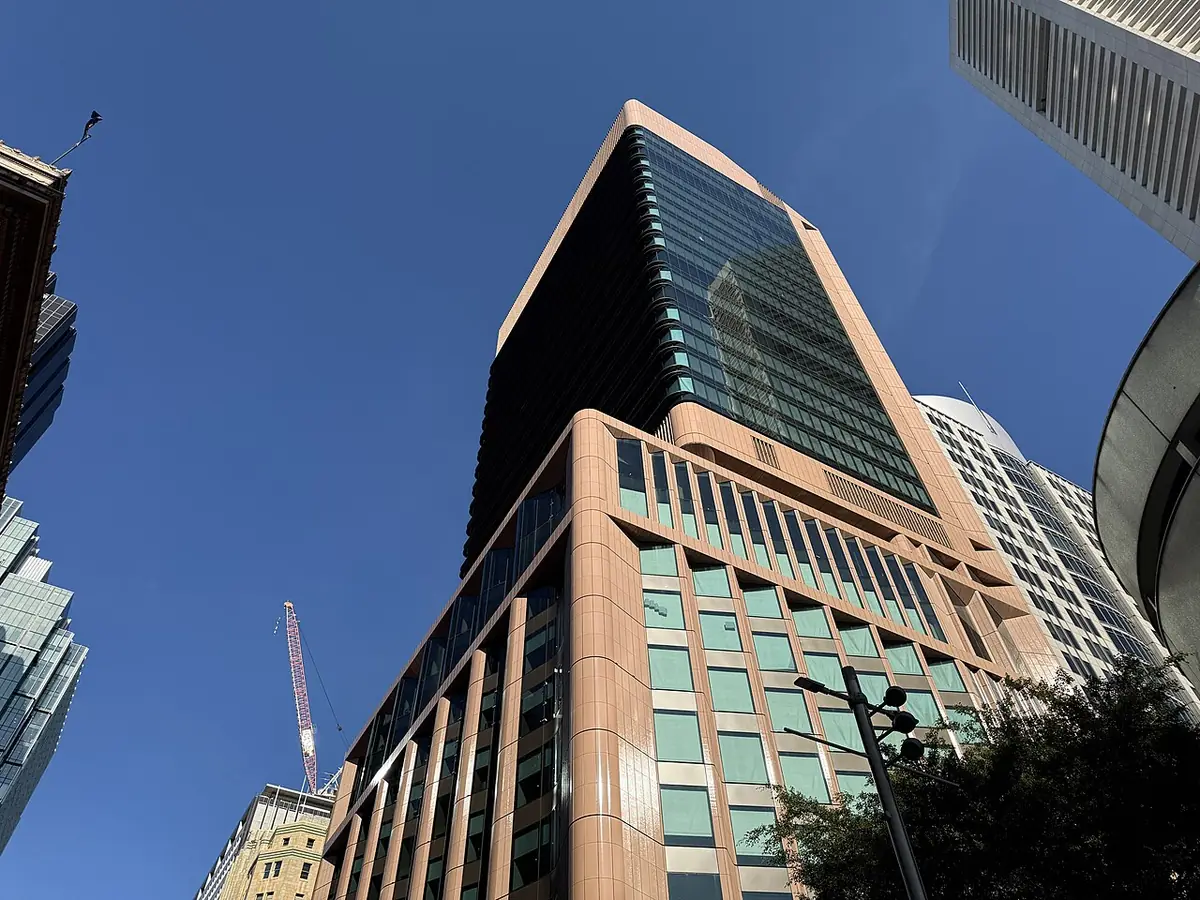
Martin Place sits at the heart of Sydney's financial district — Photo: Klauskazamias · CC0 · Wikimedia Commons
With that legal picture clear, it is time to look at how a property transaction actually unfolds.
Under Australian property law, the distinction between the different forms of title is crucial to the security of your investment. Contrary to some common assumptions, owning the walls of a house does not always guarantee full ownership of the land beneath it. Mastering these legal subtleties protects you against major setbacks to your wealth over the long term. Let us look at the two main categories of title you will come across on the market.
Full outright ownership ("Freehold / Torrens Title")
This system guarantees that you own both the physical building and the land it stands on, with no outside ground rent of any kind. It is the absolute standard for the vast majority of ordinary detached houses in the city's residential suburbs. The title is registered centrally and securely with the state land registry.
What it changesYou have complete freedom to alter, renovate or rebuild your property as you wish, within the strict limits of local planning rules.
Shared horizontal ownership ("Strata / Community Title")
Common in townhouse complexes and gated estates, this form combines exclusive ownership of your home with shared, undivided ownership of the common areas (internal roads, shared gardens, leisure facilities). You must pay regular contributions to the owners' corporation for the upkeep of this shared infrastructure.
What it changesYou have to accept restrictions on use that can be strict, covering the external appearance of your house, and you must take part in collective maintenance decisions.
The golden rule to understand before you hand over a single cent of deposit
Now that the basic precautions are in place, let us see how the timeline of a purchase fits together.
The property buying process in Australia forgives no administrative or financial sloppiness on the buyer's part. A commitment made too quickly, without first taking qualified legal advice, can bind you permanently and irreversibly. Due diligence follows strict stages that are vital to respect. Here is the logical chain of precautions to take to protect your capital.
You spot a house that matches your search criteria for location and budget.
Have a full independent building inspection carried out straight away to uncover any hidden defects or major structural problems.
Consult a specialist in local property law (a "conveyancer") to analyse the clauses of the contract of sale and any easements affecting the land in depth.
Get final written confirmation from your bank of the maximum amount you can borrow before you sign or bid.
Check future planning schemes with the local council to make sure no major infrastructure project will drag down the value of your surroundings.
You go into the transaction with peace of mind, backed by complete information checked by professionals.
How does a property transaction actually unfold, step by step?
Buying property in New South Wales follows a rigorous process involving several professionals with clearly defined roles. From the estate agent appointed by the seller to the conveyancer who makes sure the transfer of ownership is sound, each one secures a link in the chain. Knowing this timeline keeps you in control of your project at every stage. Here is how a successful purchase typically unfolds.
The prospective buyerSearching and actively shortlistingYou view the properties on the market, go to open homes and sharpen your sense of the real prices being paid in the suburb you are targeting.
The independent building inspectorA thorough check of the building and the groundA qualified professional examines the structural condition of the house, the roof and the foundations, and looks for any sign of termites or damp.
The legal adviser ("Conveyancer")Careful review of the contractsYour representative examines the title, any charges on the land and planning restrictions, and makes sure there are no hidden legal disputes.
The bankFinal approval of the financeThe bank issues its formal loan approval after assessing the market value of the property through its own valuers.
The selling agent or auctioneerMaking the offer or bidding at auctionYou put your offer in writing with the negotiated conditions, or take part in person in the public auction to secure the property.
The conveyancer and legal representativesTransfer of ownership and final settlementThe balance of the price and the related taxes are paid, allowing the new title to be officially registered in your name.
House or apartment in Sydney: weighing space against upkeep
Once that fundamental choice between house and apartment is made, a rigorous look at the financial realities comes next.
Buying property in Sydney forces an immediate trade-off between a detached house with a garden, often in the outer rings or the residential suburbs, and a strata apartment, concentrated in the busy centres and along the rapid transport corridors. This decision commits not only your initial purchase budget but also your weekly time for maintenance, because the subtropical climate of New South Wales is hard on outdoor areas, roofs and stormwater drainage. Buyers arriving from abroad regularly underestimate how fast vegetation grows and how quickly salt-laden sea air attacks window frames and joinery once you get close to the Pacific coast, whether in Bondi, Manly or around the harbour foreshore.
On one side, the detached house offers complete freedom to shape your home, no recurring strata levies and historically stronger land value growth, since buildable land is increasingly scarce across greater Sydney. That independence comes at a direct cost in time and equipment, though: you have to clear the gutters yourself ahead of the seasonal bushfires, treat timber against the termites that are very active in the region, and mow a lawn that grows all year round. Houses with a pool also require rigorous checks on the safety fencing to meet very strict local standards, with heavy fines if they fall short.
On the other side, an apartment or townhouse in a shared complex removes these physical running costs in exchange for monthly or quarterly contributions (the strata levies) paid to the owners' corporation. In Sydney these charges can be extremely high, especially in recent towers with concierge services, gyms, heated pools and complex lifts whose maintenance weighs heavily on residents' budgets. Even so, choosing an apartment lets you live right next to the suburban rail stations (Sydney Trains) or the ferries at Circular Quay, drastically cutting a daily commute that remains one of the sore points of big-city life in Australia.
The final choice therefore depends less on aesthetic taste than on where you are in your working and family life cycle. Young professionals and couples without children overwhelmingly favour the security, central location and outsourced maintenance of two-bedroom apartments in the Inner West or the Lower North Shore. By contrast, as soon as the family grows and the children start school, the search for private outdoor space and quiet residential streets pushes people irresistibly towards the Outer West or the Sutherland Shire, even if it means an hour on public transport every morning to reach the Central Business District.
What real budget do you need to buy and maintain a property in Sydney?
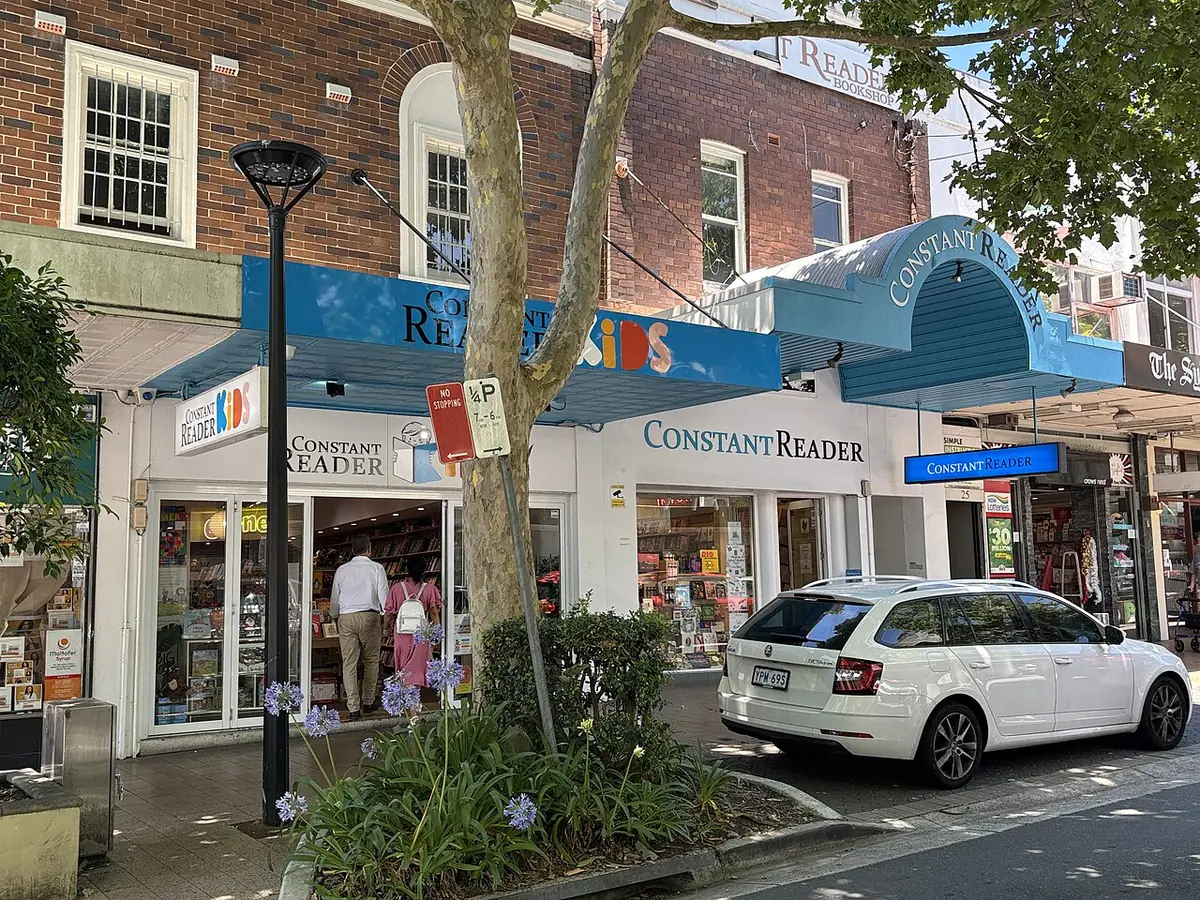
Independent shops like this line many of Sydney's lively local streets — Photo: Nick-D · CC BY-SA 4.0 · Wikimedia Commons
Getting these financial balances right lets you approach the practical organisation of a typical week in the city with confidence.
Budgeting in Sydney does not stop at the headline price shown on online listing portals such as RealEstate.com.au or Domain. Buyers have to factor in a series of taxes specific to New South Wales, including transfer duty (stamp duty), which varies with the value of the transaction and the buyer's profile. On top of that come local conveyancing fees, compulsory insurance and recurring maintenance costs that weigh heavily on household cash flow during the first years after moving in.
Upfront and recurring costs of buying property in Sydney
Cost item
Estimated amount or range
Comment and impact for the buyer
Transfer duty (Stamp Duty NSW)
3% to 5.5% of the purchase price
A state tax that scales with the value of the property, with partial exemptions for first home buyers on certain new or established homes.
Conveyancer or solicitor fees
AUD 1,500 to AUD 3,500
Payment for the legal professional who checks the title (Torrens title) and prepares the contract of sale under local law.
Home insurance (Home & Contents)
AUD 1,800 to AUD 3,500 a year
An essential annual premium that always includes cover against bushfire and violent summer storms.
Owners' corporation charges (Strata Levies)
AUD 800 to AUD 2,500 a quarter
Applies only to apartments and townhouses; covers upkeep of the common areas, building insurance and the capital works fund.
The amounts shown are indicative and depend directly on the exact location of the property and its living area.
Estimated monthly budget for a home-owning household in Sydney
Spending category
Average monthly budget
Factors affecting the cost
Food and everyday essentials
AUD 800 to AUD 1,400
Spending is heavily concentrated in the major supermarkets (Coles, Woolworths) and local neighbourhood markets.
Transport (Opal card / fuel)
AUD 250 to AUD 600
Can vary threefold depending on whether you use combined public transport (train, ferry, bus) or run your own car with motorway tolls.
Energy (electricity and natural gas)
AUD 200 to AUD 450
Rises noticeably in the winter months (June to August) for heating and the summer months (December to February) for essential air conditioning.
Communications (NBN fibre internet and mobiles)
AUD 120 to AUD 200
Fixed broadband subscriptions and national phone plans with generous mobile data allowances.
The cost of living in Sydney remains one of the highest in Australia, so cash flow needs to be planned carefully.
Health, schools, transport: what does an ordinary Tuesday in Sydney actually look like?
This well-oiled daily rhythm should not hide the legal and contractual subtleties of the Australian property market.
Living in Sydney means working with transport infrastructure that performs well but is heavily used at peak times. An ordinary Tuesday starts early, set to the rhythm of suburban trains or the metropolitan road network as people head for the employment hubs of the Central Business District or Macquarie Park. Quality of life depends a great deal on being close to health services and schools, whether that means public schools tied to a strict catchment area or the religious and independent private schools that are very common across the country.
07:30Leaving home and the morning commuteTapping on with the Opal card to get onto the suburban rail network or express bus routes, and avoiding peak-hour fares by setting off a few minutes earlier.
08:30Dropping the children at the local schoolArriving at the neighbourhood school, whether a public school or a private college, where before-school activities start first thing in the morning.
12:30Lunch break and local shoppingQuick purchases in shopping centres or neighbourhood convenience stores to pick up fresh food for the day and deal with small everyday errands.
17:00Heading home and running the householdA journey home that often coincides with traffic gradually easing, with a stop at the well-kept council parks to unwind at the end of the day.
19:30A doctor's visit or the late-night pharmacyAccess to Medical Centres, which often see patients without an appointment for minor medical problems and repeat prescriptions.
What estate agents' listings consistently fail to mention
These contractual grey areas lead straight to the regrets new buyers so often express after a few months.
Sydney's property market runs on contractual rules and professional customs that differ noticeably from those you may know back home. The marketing material agencies publish highlights natural light, interior finishes and closeness to beaches or parks, while pushing major regulatory and environmental constraints into the background. Understanding these blind spots helps you avoid dramatic financial setbacks after the contract becomes binding.
Easements and planning restrictions (Easements & Covenants)
Many blocks in Sydney carry underground easements for sewerage or electricity networks, which strictly prohibit building pools, extensions or even light pergolas without express permission from the local authorities.
Classification as bushfire risk land (Bushfire Prone Land)
Several residential suburbs close to the national parks (Ku-ring-gai, Northern Beaches) impose extremely strict and costly building standards for fire resistance, which considerably increase the cost of future works.
Damage history and rising damp (Rising Damp)
Because of the humid subtropical climate and heavy summer rainfall, poorly ventilated older homes suffer chronic water ingress and mould problems, sometimes hidden under fresh coats of paint during home staging.
Upcoming infrastructure projects in the immediate area
The rapid expansion of major transport networks (Metro West, the WestConnex underground motorways) can radically change the peace of a residential suburb, creating noise and a temporary or permanent fall in the property's market value.
The real financial health of the strata scheme (Strata Report)
Buying an apartment without first studying a specialist strata report in depth exposes the buyer to the sudden discovery of compulsory facade or fire-safety works that have been voted through but not yet paid for.
The disappointments and misjudgements you discover six months after moving in
Faced with these risks of disappointment, it is just as important to work out objectively who should stay away from buying here.
Looked likeA charming, authentic Victorian cottage full of character in the Inner West
Turned outA poorly insulated, draughty house, extremely noisy because of aircraft traffic and infested with termites hidden in the old beams.
Would have caught itAlways commissioning independent inspectors to produce a full building and pest report before the conditions are removed.
Looked likeAn ultra-modern apartment with panoramic views and high-end facilities in a skyscraper
Turned outStrata fees that rose by thirty per cent in a single year to pay for repairing defects in the lifts and the facade.
Would have caught itInsisting on access to the minutes of the last three strata general meetings to identify ongoing disputes and unpaid levies.
Looked likeA large family home in total peace and quiet in a leafy outer suburb
Turned outComplete geographical isolation, forcing the parents to spend three hours a day behind the wheel driving the children to activities and to high school.
Would have caught itTesting real journey times at rush hour on a weekday before submitting a firm offer to the agency.
Looked likeAn ideal rental investment needing little immediate cosmetic renovation
Turned outCompulsory electrical and plumbing upgrades demanded by insurers before they would cover the property against water damage.
Would have caught itSetting aside a minimum contingency fund worth ten per cent of the purchase price to absorb the inevitable technical surprises.
Unusual profiles and personal circumstances: who should hold off buying in Sydney?
Once these warning signs have been weighed with a clear head, it is time to make the final decision.
Sydney's property market exerts strong psychological and financial pressure, turning home ownership into something close to a social obligation. Yet taking on a highly leveraged purchase does not suit every path in life. Some buyer profiles expose themselves to liquidity risks or career mobility constraints out of all proportion to the wealth benefits they can expect in the medium term.
Expats and professionals on temporary assignments of less than four years
→Flexibly renting a furnished apartment
High purchase costs (stamp duty, agents' fees on buying and on selling) combined with economic volatility wipe out any financial gain if you have to sell in a hurry.
First home buyers with a deposit of less than ten per cent
→Saving more and keeping their financial flexibility
They would have to take out expensive Lenders Mortgage Insurance and be directly exposed to the slightest turn in the central bank's interest rates.
Investors looking for immediate, high gross rental yields
→Turning to other regional markets or other state capitals
Net rental yields in Sydney are among the lowest in the country, because very high land values have left rents disconnected from the headline value of properties.
Decision summary: are you truly ready to take the plunge and buy in Sydney?
Reaching the end of this analysis shows that buying property in Sydney is not a matter of emotional impulse but of a carefully considered wealth strategy. The Australian market rewards patience, rigour in examining the legal documents and a clear view of the region's geographical and climatic constraints. If you have confirmed that you can absorb swings in interest rates, if you accept the maintenance demands that come with the type of property you have chosen and if your investment horizon stretches well beyond the short-term economic cycle, then the foundations of your project are sound.
The next step is to formalise your approach by surrounding yourself with independent professionals: an accredited mortgage broker to structure your financing plan, a licensed conveyancer to secure the legal side of the contract of sale, and a building inspector to rule out any major hidden defect. Never forget that in the Sydney market haste is the worst adviser, and that missing an opportunity is infinitely better than committing to a second-rate purchase whose regrets will be felt for decades.
Take the time to visit several properties at the same time of day, watch how smoothly transport flows in the surrounding area, talk to future neighbours to gauge how quiet the street really is, and check the financial health of the strata scheme carefully if you opt for an apartment. That, and only that, is how your move to Sydney will become a lasting success for you and your family, anchoring your life plans in one of the most dynamic urban environments in the Pacific world.
Related questions
What additional costs should you plan for when buying property in Sydney?
The unavoidable extra costs include transfer duty (stamp duty) collected by the State of New South Wales, the fees of your solicitor or conveyancer, compulsory home insurance and, where relevant, the quarterly owners' corporation charges known as strata levies. It is wise to budget between five and seven per cent of the total purchase price to cover all of these required items.
Can you buy property in Sydney as a non-resident?
Yes, non-resident investors can buy property in Sydney, but they must first obtain approval from the FIRB (Foreign Investment Review Board). Specific tax surcharges also apply on purchase and on resale for buyers who are not permanent residents or Australian citizens.
How does the auction system work when buying a house in Sydney?
Public auction is the dominant way property is sold in Sydney. On the day, registered bidders bid openly in front of the property. If bidding reaches or passes the reserve price set by the seller, the sale becomes unconditional and binding immediately, with no cooling-off period at all. That is why it is essential to have your finance approved beforehand.
What is the difference between a 'Torrens title' and a 'Strata title'?
Torrens title applies to detached houses and gives you full ownership of both the land and the building, with no shared ownership or collective levies. Strata title covers apartments and townhouses, where you own your private lot while sharing ownership and upkeep of the common areas with the other owners through a strata manager.
How do you assess the flood or bushfire risk of a plot of land?
Each local council issues planning certificates (the Section 10.7 certificate) that state precisely whether the parcel sits in a flood zone or is exposed to bushfire risk. Reading this official document is an essential step before you sign anything binding.
What does a conveyancer do in a property transaction in New South Wales?
The conveyancer is the licensed legal specialist or solicitor who drafts or reviews the contract of sale, carries out the necessary title and mortgage searches, calculates the taxes owed and coordinates the day of final financial settlement between the banks and all the parties involved.
Do Australian banks lend easily to new arrivals and expats?
Australian banks apply strict lending criteria. For new arrivals on a temporary work visa, lenders generally require a larger deposit, proof of stable income and a rigorous assessment of repayment capacity based on their own regulatory stress-test rates.
Which are the main banks, and how do you keep track of interest rates in Australia?
The Australian banking market is dominated by the four big national banks (Commonwealth Bank, Westpac, ANZ and NAB). Mortgage rates move in direct response to monetary policy decisions by the Reserve Bank of Australia (RBA), which meets regularly to adjust the official cash rate.
How does the cooling-off period work in New South Wales?
For private treaty sales there is generally a statutory cooling-off period of five business days after contracts are exchanged, during which the buyer can pull out in return for a small financial penalty (usually 0.25 per cent of the price). No such period exists when you buy at auction.
Where can you check the price history of past property sales in Sydney?
The state agency Valuer General NSW records every registered property transaction in the region. On top of that, consumer platforms such as Domain and RealEstate.com.au publish recent sales history by street and by suburb to help buyers gauge real market value.
Property review of ting
No ting properties in Sydney yet
Be the first — share it on ting and it shows up right here.