Buying a house in Sydney is far more than a simple wealth investment: it is a complete shift in how you live and how you manage your money. This guide takes a careful look at the deeper workings of this demanding market, the local legal specifics and the essential criteria for getting your project right without missteps.
Get the app
What nobody tells you.
Real prices, hidden costs and the traps to check before you commit.
Why the value of a house in Sydney defies familiar reference points
Scroll
Why the value of a house in Sydney defies familiar reference points
Buying a house in Sydney is far more than a simple wealth investment: it is a complete shift in how you live and how you manage your money. This guide takes a careful look at the deeper workings of this demanding market, the local legal specifics and the essential criteria for getting your project right without missteps.
Written by the ting.ad editorial team ·
Valuation House Sydney in Street View: drag to look around.
Beyond these figures and paradoxes, it is your everyday way of life that will really be put to the test on Australian soil.
Approaching Sydney's property market with the yardsticks you bring from abroad almost always leads to major misjudgements. The structure of ownership, the scarcity of land and the dynamics of the coastal suburbs create valuation mechanisms that are entirely their own. What looks like a speculative bubble from overseas actually reflects deep structural demand and geographical constraints that cannot be squeezed. Understanding these invisible forces is the essential first step before committing any capital to buying a house.
A floor area that feels modestvsA price per square metre among the highest in the world
Buyers from abroad often expect huge floor areas for an equivalent budget, forgetting that the scarcity of urban land in Sydney ruthlessly dictates valuations.
A sense of being far from the centrevsA transport network that redefines what central means
Geographical distance gives way to actual journey time, often shortened by the ferries and fast train lines that connect the residential suburbs.
Exterior architecture that is sometimes traditionalvsInteriors and land that are tightly regulated
The exterior of a house is often protected as heritage, while the interiors undergo cutting-edge technological and environmental renovations.
Does Sydney match the way you actually live day to day?
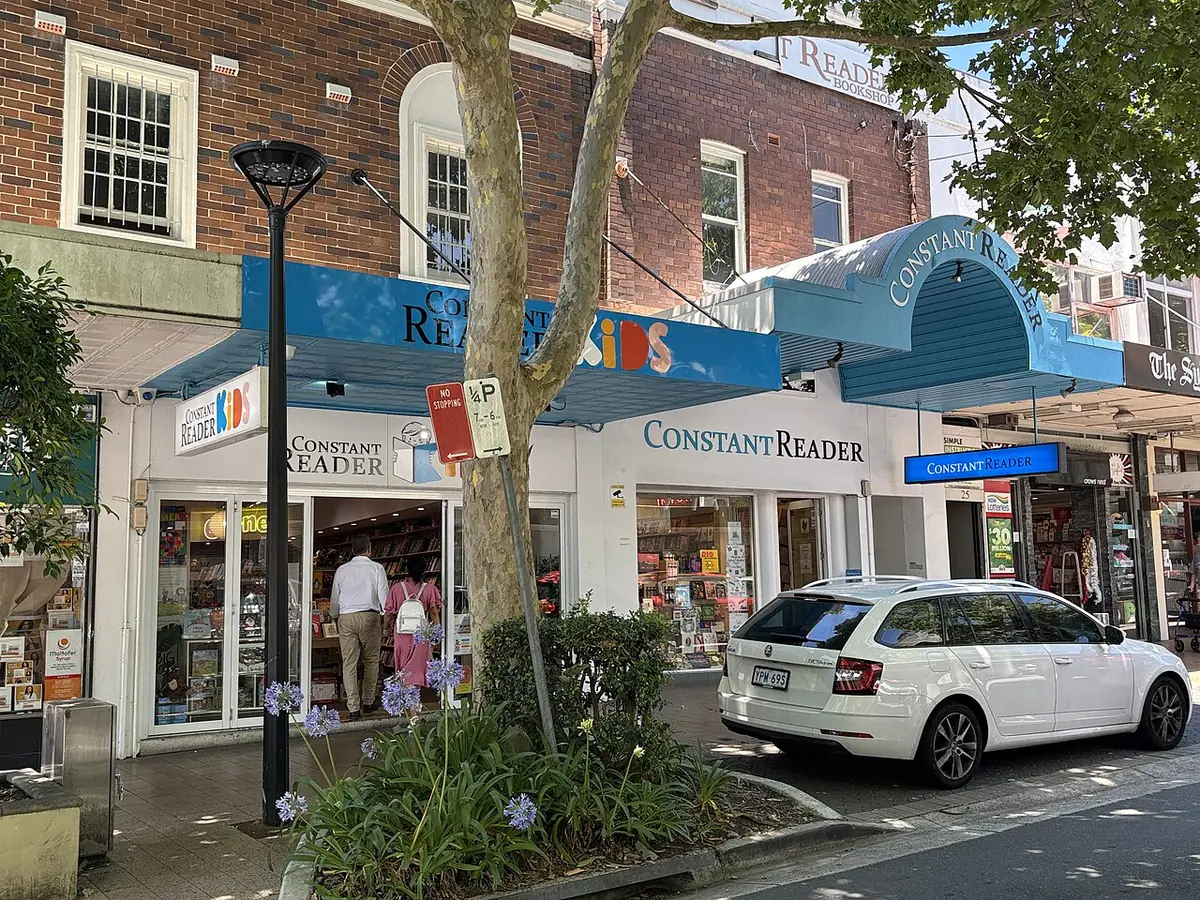
Independent shops like this line many of Sydney's lively local streets — Photo: Nick-D · CC BY-SA 4.0 · Wikimedia Commons
This shift to the Australian way of life comes with a deep cultural and administrative break for any newcomer.
Life in Sydney is not just the postcard images of the Opera House or the famous beaches of Bondi and Manly. Between the pace of work, the demands of family life and the central place given to the outdoors, everyday life is organised around a very particular balance. Every type of buyer should weigh their priorities coolly before committing, because the distance from home and the local specifics call for a real ability to adapt day to day.
The active, coastal profile
Buyers who value a morning surf and green space before heading to the office will find a way of life here that is hard to match. That balance does, however, require careful organisation given commute times and the intensity of the local job market. The middle-ring suburbs offer this ideal compromise, provided you accept compromises on living space.
The savvy investor profile
For those planning to hold for a decade or more, Sydney's structural strength rests on steady population growth and strict planning constraints. The immediate gross rental yield may seem moderate, but the potential capital gain driven by land scarcity more than makes up for it for patient capital.
The demanding family profile
Education and the quality of public infrastructure dictate the choice of residential neighbourhood, often on the northern shores or in the 'Lower North Shore'. Competition to buy a house in these coveted school catchments is fierce and requires impeccable financial preparation before any viewing.
Living here when you arrive from abroad: what changes radically
Once these differences have sunk in, the crucial question of choosing a precise location comes sharply into focus.
Leaving your familiar reference points behind to settle long term in Sydney means getting to grips with new administrative, cultural and social rules. The legal system, inherited from British law, and local customs differ profoundly from the practices you may know back home. Anticipating these gaps avoids plenty of disappointments when signing contracts and moving into your future house.
From abroad
Back home, a notary or a single legal professional may centralise all the checks and safeguard the balance of the sale contract.
Sydney
'Conveyancers' or specialist solicitors each represent one party and formalise the deal without negotiating its substance.
You need to appoint your own technical and legal experts to audit the property thoroughly before contracts are exchanged.
From abroad
Property negotiation traditionally allows plenty of room for discussion on the asking price.
Sydney
Public auctions or sealed-bid offers impose brutal transparency and quick decisions.
Properties often sell well above the initial estimate when demand is strong, which makes a prior valuation crucial.
From abroad
Building standards favour stone, concrete and heavy thermal insulation.
Sydney
Residential architecture relies heavily on timber, lightweight walls and natural ventilation throughout.
Thermal comfort responds differently to seasonal changes in climate, so you need to pay attention to heating and cooling equipment.
From abroad
Bank lending rests on stable criteria and rates that are often fixed for long periods.
Sydney
Australian banks assess borrowing capacity with extreme rigour and very dynamic variable rates.
Securing a solid 'pre-approval' is an absolute prerequisite before bidding on a house.
Which area should you target to put down roots in Sydney?
These location choices translate immediately into budget realities that deserve careful analysis.
Sydney is not a uniform block but an archipelago of neighbourhoods with radically different identities and dynamics. Between the buzz of the eastern beaches, the leafy calm of the north and the changing energy of the west, each area answers very specific budget and lifestyle criteria. Analysing the trade-offs built into each area will stop you investing somewhere that is out of step with what you want.
The Eastern Suburbs
Constant coastal buzz, direct access to iconic beaches and a very active social life.
Suits
Buyers seeking a prestigious beachside lifestyle and strong long-term liquidity for their asset.
Trade-off
A sky-high cost per square metre and traffic that is especially congested at peak hours.
The North Shore
Complete residential calm, tree cover everywhere and first-rate schools.
Suits
Families who value peace, space, safety and their children's academic success.
Trade-off
An atmosphere some find too conventional and commute times to the CBD that are far from negligible.
The Inner West
A lively cultural melting pot, charming Victorian architecture and a thriving arts scene.
Suits
Lovers of busy neighbourhood life, specialty coffee and being close to major employment hubs.
Trade-off
Exposure to urban noise and terraced houses on smaller plots of land.
What does buying a house in Sydney really cost?
Beyond the headline amount of the transaction, the legal nature of what you are buying deserves your full attention.
Price advertising in Australia follows strict transparency rules, but the overall budget never stops at the amount of the winning offer. Between transfer duty, professional fees and any compliance work, the final bill requires careful financial planning. The ranges below reflect the trends observed for standard residential properties.
SydneyFor saleHouseestimate
Median price / m²A$10,283Half the apartments sell below this
Median priceA$1.8mthe average is 14% higher — a few very large properties pull it up
Most common2 bedrooms50 % of listings
Average size166 m²
By number of bedrooms
Bedrooms
Share of market
Avg price
Price / m²
Avg size
2most common
50 %
A$1.52m
A$10,824
140 m²
3
34 %
A$2.02m
A$10,283
196 m²
4
16 %
A$2.79m
A$9,958best value / m²
280 m²
Each row is an average, compared against the area average of A$10,824 / m². These are indicative estimates of a typical local market, not a measured sample of live listings. Check current listings before relying on them.
What you can actually own: freehold vs leasehold and strata
Sydney's harbour setting makes waterside living part of daily life — Photo: Dicklyon · CC BY-SA 4.0 · Wikimedia Commons
Securing your property legally is part of a highly codified transaction process that should not be underestimated.
Under Australian law, a clear title is paramount to securing your investment over the long term. Unlike some Asian or island markets, the vast majority of detached houses in Sydney are bought outright as full freehold. Some urban structures or shared landscaped estates do, however, introduce legal nuances that you must fully understand before signing.
Full outright ownership ('Torrens Title')
You own both the building and all the land it stands on, with no ground rent and no shared structure with third parties. This system offers maximum legal security and complete freedom to carry out renovations or extensions, provided you respect local planning schemes.
What it changesYou keep the entire gain in land value and avoid the restrictive decisions of an owners' meeting about the upkeep of your property.
Integrated estates with common property ('Strata or Community Title')
Some houses in gated estates or managed residential complexes involve sharing common areas such as private roads, parks or sports facilities. An owners' corporation manages these elements and collects mandatory periodic levies for their maintenance.
What it changesYou benefit from shared services and well-kept landscaping, but you have to abide by strict by-laws on external appearance and alterations.
The one rule to understand before paying a deposit
Once these legal principles are clear, here is the exact chronological course of a purchase.
The financial commitment process in Australia has some formidable specifics for an unwary buyer, particularly when it comes to conditions. Signing a sale contract binds the parties almost irrevocably once the official exchange has taken place. Knowing the timing and the scope of each step protects your capital effectively against rash moves.
Identifying the right property and carrying out the essential technical checks beforehand.
Negotiating the terms of the contract through your 'conveyancer' or solicitor.
Paying a deposit held in trust, usually set at ten per cent of the total price.
The formal exchange of signed contracts between the parties, marking the legal point of no return.
Satisfying the final conditions and paying the balance on completion day ('settlement').
How a transaction unfolds, step by step
In the end, approaching this market with method and clear eyes remains the key to a successful property project.
Seeing a property purchase in Sydney through requires following a precise administrative and technical choreography. Every player in the chain, from the estate agent to the mortgage broker and the building inspector, has a specific role that needs coordinating. This methodical timeline ensures a smooth path through to receiving the keys to your new home.
The mortgage brokerGetting bank pre-approvalThey confirm your real borrowing capacity against the strict criteria of Australian financial regulators before any viewing.
The building inspectorThe structural and pest inspectionThey hunt for rising damp, termites and hidden defects in the roof frame and foundations.
The 'Conveyancer'Checking the titleThey review the easements, the survey plans and the planning restrictions that affect the plot in question.
The buyer or their agentThe public auction or final negotiationThey make the purchase offer official or bid at auction with absolute budget discipline.
The financial institutionsFinal payment and 'Settlement'The funds are transferred, the title is updated in the New South Wales land registry and the keys are handed over.
Apartment or house in Sydney: weighing central strata living against owning your own land in the suburbs
Once this fundamental choice between shared and individual living is made, the central question of financial balance comes sharply into focus.
Choosing between an apartment in the heart of Sydney and a detached house on the outskirts involves far more than a simple calculation of living space or initial budget. The property market of the New South Wales capital forces deep structural trade-offs between being close to the CBD's employment hubs and having full control of your own land. On one side, an urban apartment offers life without outdoor maintenance, sought-after shared facilities such as a pool or gym, and immediate access to ferry and train lines. On the other, a detached house brings that precious architectural freedom, no often unpredictable strata fees, and the confidence of seeing the land appreciate over the long term in leafy residential neighbourhoods.
The question of shared building costs, known locally as strata levies, is a decisive part of this choice. In recent buildings with lifts and high-end services, these contributions can reach considerable amounts, especially if waterproofing or fire safety compliance works turn out to be necessary. By contrast, buying a house means that every roof repair, every facade restoration and every bit of garden upkeep falls to the owner alone. You therefore need to judge clearly whether you can absorb these running costs without eroding your emergency savings, while bearing in mind that the supply of well-located houses within ten kilometres of the historic centre is structurally shrinking.
The buyer's profile usually settles the question. Young professionals and investors who value quick liquidity naturally turn to apartments well served by the transport network, which rent out or resell remarkably smoothly. Families looking for long-term stability and a setting where children can thrive, on the other hand, readily accept longer commutes to enjoy a private garden and complete independence. This trade-off between commute time and residential quality of life is the real heart of the property decision in Sydney, far from purely aesthetic considerations or fleeting crushes on a property.
What budget do you really need to settle in Sydney for the long term, by area and property type?
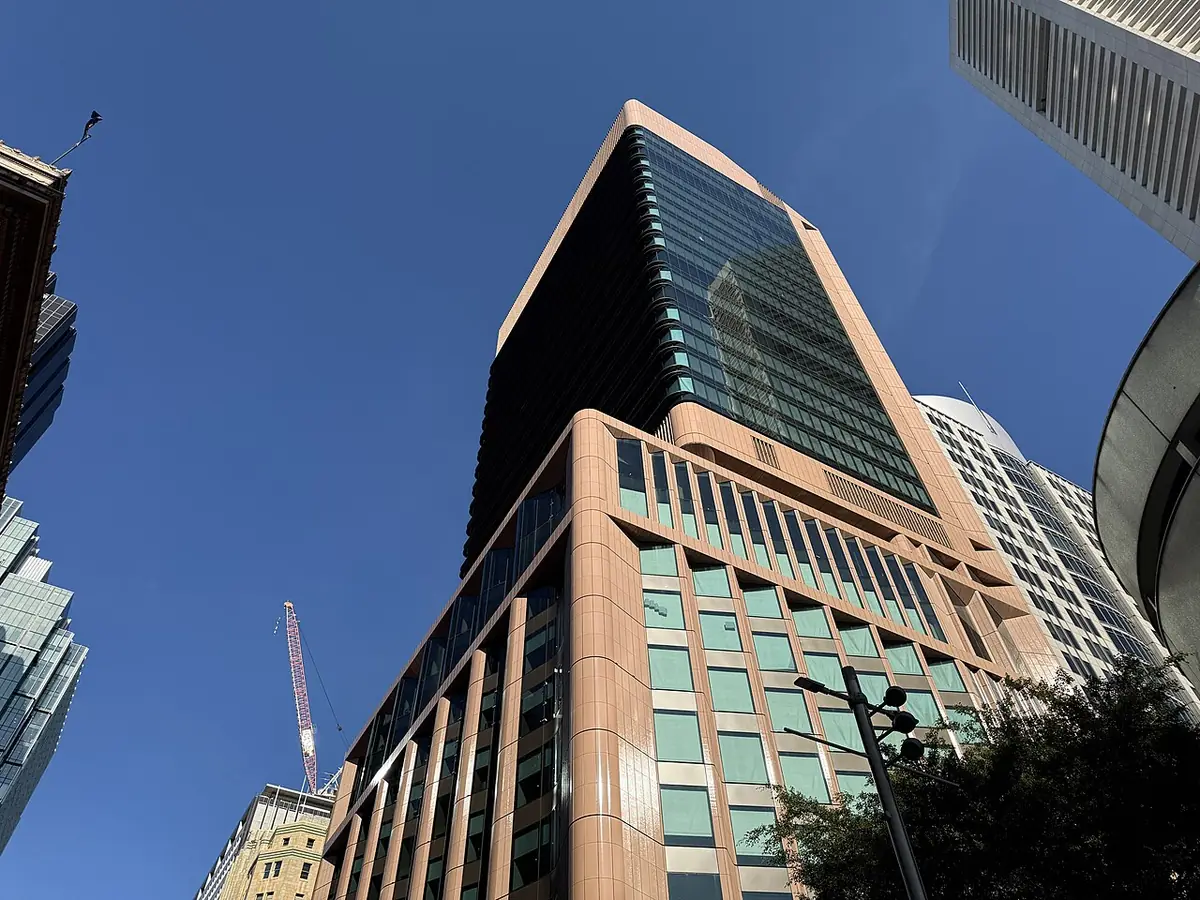
Martin Place sits at the heart of Sydney's financial district — Photo: Klauskazamias · CC0 · Wikimedia Commons
Beyond the purchase itself, the day-to-day reality of a household is shaped by its routines and its infrastructure.
Getting a grip on Sydney's property market means coolly analysing the price ranges seen by area and type of property. Historical and recent data show a persistent divide between the eastern coastal suburbs, the dynamic areas of the north and the more affordable parts of western and south-western Sydney. This financial equation must also include the unavoidable extra costs, such as transfer duty and legal fees, which weigh heavily on the overall budget of the savvy buyer.
Indicative price ranges by property type and area in Sydney
Area
Apartment (2 bedrooms)
Detached house
Market trend
Eastern Suburbs / Bondi
AUD 1,100,000 to AUD 1,800,000
AUD 2,500,000 to AUD 4,500,000+
High pressure, scarce land
Lower North Shore
AUD 1,000,000 to AUD 1,600,000
AUD 2,200,000 to AUD 4,000,000
Sustained demand, family setting
Inner West (Newtown, Marrickville)
AUD 850,000 to AUD 1,300,000
AUD 1,600,000 to AUD 2,500,000
Urban renewal, dynamism
Western Sydney (Parramatta and beyond)
AUD 550,000 to AUD 850,000
AUD 900,000 to AUD 1,400,000
Infrastructure development
These ranges are based on transactions recorded by Valuer General New South Wales and exclude major cyclical swings. Renovated properties or those with outstanding views consistently sit at the top end of each estimate.
What does a resident's daily life actually look like, between transport constraints and local services?
While the practical side can be checked day by day, many legal and structural aspects remain invisible during viewings.
Assessing a property's location is not just about its price per square metre; it is tested by how smooth the morning journey is and the quality of the services within walking distance. The metropolitan transport network, combining suburban trains, light rail and iconic ferries, shapes the urban space relentlessly. Breaking down an ordinary Tuesday lets you measure the real impact of commute times on quality of life, far from the marketing promises of development brochures.
07:30Local station or ferry wharfThe morning departure shows how efficient the links to the Central Business District are. The reliability of transport directly affects weekly fatigue and family organisation.
08:45Arriving at the office in the CBDWorking life happens at the heart of the city's economic hubs. Direct links from the Inner West or the North Shore lastingly boost the value of properties close to stations.
12:30Lunch break and local shopsThe vitality of neighbourhood high streets reflects the quality of life on foot. Having fresh produce markets and local health services nearby makes a radical difference to weekly comfort.
17:30Heading home via school or childcareBeing close to local public schools or independent options is a non-negotiable criterion for parents. End-of-day traffic flows call for a carefully considered location.
19:00Unwinding in the park or along the coastAccess to Sydney's green spaces and coastal walks provides a welcome counterweight to the intensity of work. Living less than fifteen minutes from a natural space profoundly transforms everyday wellbeing.
Which administrative and technical details do brochures always leave out when you buy?
These grey areas explain why some investments prove disappointing with hindsight.
Behind the flattering staging of marketing photos and the superlatives of sales agents lie crucial technical and regulatory realities. Australia's land system and local building practices demand extreme vigilance from the buyer. Ignoring these invisible factors exposes you to massive financial setbacks when the first major maintenance jobs arrive or the neighbourhood changes.
Heritage Conservation Area restrictions
Many of Sydney's historic neighbourhoods impose extremely strict architectural rules. Altering a facade, installing solar panels or knocking down a wall can turn into a costly legal obstacle course with local councils.
Claims history and flood risk
Some low-lying pockets or areas near waterways suffer intense run-off during summer storms. Checking local planning certificates helps you avoid buying a property that cannot be built on or is hard to insure.
The financial health of the strata accounts
A building with abnormally low monthly levies often hides an insufficient reserve fund. Owners then suddenly find themselves liable for very heavy special levies to fund major structural repairs.
Future infrastructure and densification projects
The rapid expansion of transport networks and the construction of new residential towers can drastically change the sunlight, the view and the quiet of a peaceful street. You must analyse the area's ten-year planning schemes.
What are the most common disappointments that hit buyers six months after getting the keys?
Faced with these pitfalls, it is just as crucial to know when to walk away from a project if your personal profile does not match local demands.
Looked likeA charming old house full of character, with period floorboards and high ceilings.
Turned outA poorly insulated, draughty home, overrun by winter damp and needing full restumping to stop the subsidence.
Would have caught itAlways commission an independent structural and thermal inspection by a certified expert before any condition is lifted.
Looked likeA bright top-floor apartment with an open view over the city's rooftops.
Turned outAn oven in summer because of the lack of double glazing and direct sun exposure, combined with night-time noise that was impossible to foresee during the Saturday viewing.
Would have caught itVisit the property at different times of the week, especially at traffic peak hours and late in the day, to test how it holds heat.
Looked likeAn affordable purchase in an up-and-coming neighbourhood promised rapid gentrification.
Turned outAn area cut off from good-quality main transport routes, condemning residents to endless daily traffic jams to get to work.
Would have caught itWork out the door-to-door journey time precisely at real office hours and test the route on public transport before signing the purchase offer.
Looked likeA turnkey rental investment managed by an agency promising an immediate, hassle-free return.
Turned outHigh management fees, repeated vacancies between leases and unpaid strata levies weighing heavily on the expected net return.
Would have caught itTemper yield projections by allowing a prudent four weeks of vacancy a year and by going through the minutes of the owners' general meetings.
For which buyer profiles is buying property in Sydney a strategic dead end?
With these filters in place, the moment of truth arrives to go ahead with or postpone your plan to settle.
Owning property in Sydney is neither an end in itself nor a universal requirement for building wealth. For some profiles, committing to a property purchase in the current economic climate weighs heavily on freedom of movement and financial health. Recognising objectively that the market does not suit your personal situation avoids years of constraints and needless stress.
The mobile young professional whose international or interstate career is moving fast
→Flexible renting rather than a rigid purchase
High transaction costs on buying and selling (transfer duty such as stamp duty, agency fees) wipe out any return if the property is sold before a minimum of five to seven years.
The household with a deposit that is only just sufficient and no substantial safety savings
→Building up an emergency cushion before any commitment
The slightest change in the cash rate or unexpected strata works would immediately put the ability to repay the mortgage at risk.
The investor seeking high, immediate gross rental yields
→Diversified financial investments or other regional markets
The ratio between Sydney's high purchase prices and the rents charged produces traditionally low gross rental yields, often between 2% and 4% a year.
How can you approach turning your property project in the Australian metropolis into reality with confidence?
Deciding to buy property in Sydney demands complete clarity about the financial and logistical demands of this exceptional market. If you have measured the reality of commute times, factored in the true cost of maintenance or strata levies, and secured emergency savings able to absorb economic shocks, then your plan rests on solid foundations. Far from speculative frenzy and from alarmist or euphoric talk, the success of a property project depends above all on the fit between your life horizon and the location you choose.
It is vital never to give in to the artificial urgency that local estate agencies try to create. Sydney's market offers regular cyclical opportunities to those who know how to be methodical, analyse inspection reports rigorously and turn down properties with hidden defects or unclear administrative situations. Your absolute priority must remain protecting your everyday quality of life, making sure excessive debt does not turn your home into a source of constant stress.
Take the time to visit several neighbourhoods at contrasting times of day, talk to long-standing residents and consult the council's planning services before making any formal offer. Buying a house or an apartment in Sydney should be a lever for personal fulfilment and a calm anchor in this dynamic metropolis, not a source of financial regret. If your project survives these rigorous checks, you then hold all the cards to take the plunge with complete confidence.
Related questions
What conveyancing costs and taxes should you plan for when buying property in Sydney?
In New South Wales, purchase costs mainly consist of transfer duty (stamp duty), charged on a sliding scale according to the value of the property, plus conveyancing fees for the legal checks. You should generally budget an extra 3% to 5% of the purchase price to cover all of these mandatory taxes and charges.
Can you buy property in Sydney as a non-resident?
Non-residents need prior approval from the FIRB (Foreign Investment Review Board) and can generally only buy new dwellings or off-the-plan properties. Specific surcharges also apply to foreign investors, both at purchase and on annual land tax.
How does the auction system work when buying a house in Sydney?
Public auction is the dominant way detached houses are sold in Sydney's sought-after neighbourhoods. It is unconditional, which means the winning bidder must pay a 10% deposit immediately and cannot include any finance or building inspection conditions.
What are strata levies on an apartment in Sydney?
Strata levies are quarterly contributions paid by owners to fund the upkeep of common areas, building insurance and a reserve fund for major works. The amount varies considerably depending on facilities such as a lift, a pool or a concierge.
How do planning schemes affect the value of a property?
Changes to the Local Environmental Plan can allow high-rise buildings right next to a detached house, drastically altering the sunlight and the value of the area. It is therefore essential to review the council's current projects before you sign.
How long does a property purchase take on average, from viewing to handing over the keys?
For a private treaty sale, the standard period between the offer being accepted and settlement (final completion) is generally six weeks. With an auction, the period can be shortened or negotiated directly with the vendor according to what is agreed on the day.
Are building reports mandatory before a sale in Australia?
Unlike in some other jurisdictions, the vendor is not legally required to provide a full set of building reports, apart from the basic contract for sale prepared by their solicitor. It is therefore up to the buyer to commission building and pest inspections on their own initiative.
Which areas of Sydney offer the best balance between price and access to the CBD?
The Inner West (around Newtown, Marrickville or Ashfield) and parts of the Lower North Shore or southern Sydney offer reasonable commute times to the financial centre while showing noticeably more moderate prices per square metre than the eastern coastal suburbs.
How do Reserve Bank of Australia interest rates influence the local market?
The central bank's decisions on the cash rate directly affect households' borrowing capacity and buyers' ability to pay. A rise in rates generally leads to slower demand and a levelling off, or even a temporary correction, in asking prices.
Should you use a buyer's agent in Sydney?
Using an independent buyer's agent is particularly useful for overseas buyers or people short of time, because they understand auction tactics, can access off-market properties and negotiate directly with selling agents to avoid overpaying.
Property review of ting
No ting properties in Sydney yet
Be the first — share it on ting and it shows up right here.