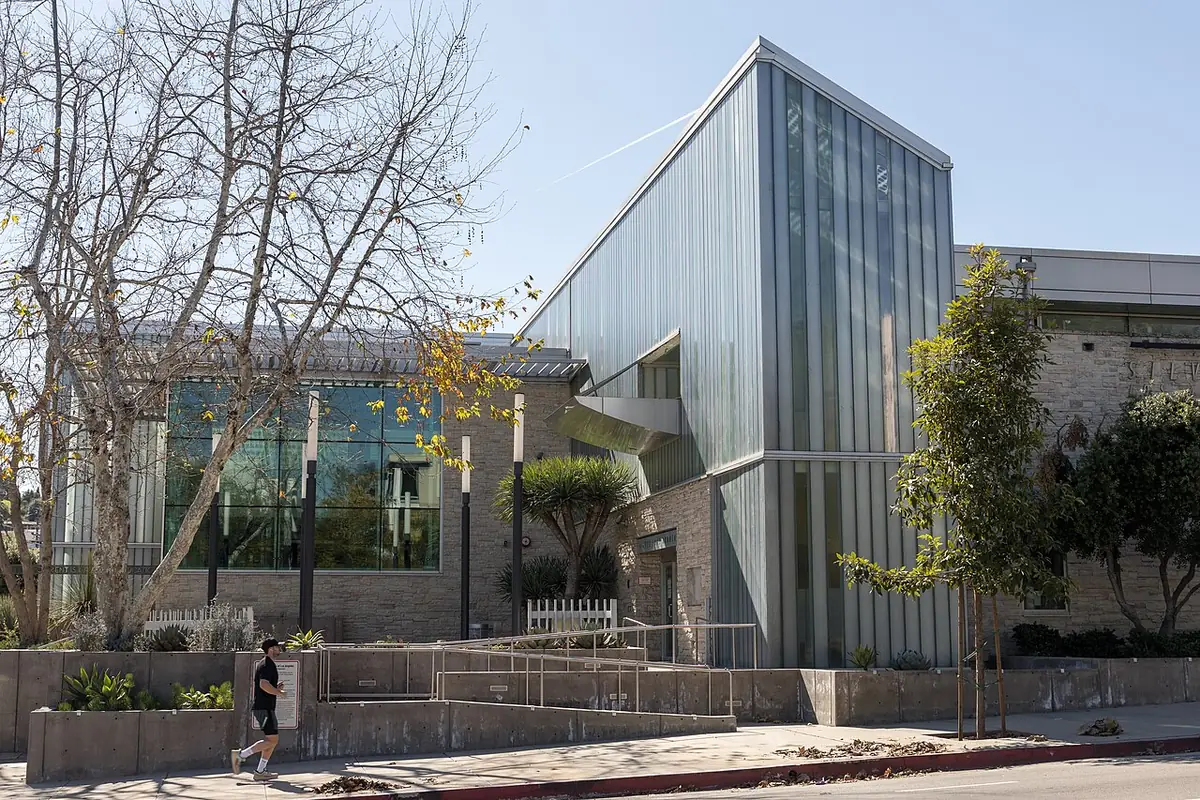
Putting a defensible number on a house in Los Angeles takes a close reading of how the Southern California market actually prices property. This guide sets out what drives an estimate here, the costs hidden behind the headline figure and the checks that turn a rough number into one you can stand behind.
Get the app
What nobody tells you.
Real prices, hidden costs and the traps to check before you commit.
What valuing a house in Los Angeles really involves
Scroll
What valuing a house in Los Angeles really involves
Putting a defensible number on a house in Los Angeles takes a close reading of how the Southern California market actually prices property. This guide sets out what drives an estimate here, the costs hidden behind the headline figure and the checks that turn a rough number into one you can stand behind.
Written by the ting.ad editorial team ·
West 1st Street, Los Angeles in Street View: drag to look around.
Beyond these practical points, how well a property fits the way people here actually live is the next thing any estimate has to account for.
Pricing a property in Los Angeles means pricing space, distance and the upkeep of a plot of land, not simply a number of rooms. The promise of permanent sunshine and a Californian way of living runs quickly into structural realities that any serious estimate has to anticipate. Between a private lot, architectural independence and the constraints of local zoning, value here is assembled differently from any other major metropolitan area. Every square metre built or landscaped demands constant attention and a running budget in proportion to the scale of the region, and a figure that ignores that is a figure that will not hold.
Complete architectural independence, with no neighbour directly above or belowvsSole responsibility for the roof, the foundations and every exterior system
A detached house offers freedom of movement and personalisation that shared ownership cannot match, and buyers pay a premium for it. In exchange, every technical item, from plumbing to air conditioning, falls on the owner with no way to spread the cost across a group of co-owners, which is why deferred work on those systems comes straight off an estimate rather than being averaged away.
A private lot and an outdoor living space that stays green all yearvsA legal duty to maintain the garden and to respect strict watering quotas
Having your own green space under the Californian sun is a real advantage for quality of life and reads as one in the comparables. Against that, municipal rules on water and on the management of outdoor areas require regular spending to keep planting in good condition without breaching environmental restrictions, so a neglected garden and a maintained one are not the same asset.
A firm anchor in a quiet residential streetvsTotal dependence on a car for every daily errand
Settling into a house in Los Angeles often means moving away from purely urban corridors to gain calm. The other side of that trade is that walking to the shops or to leisure is close to impossible, which turns every outing into a drive, and it is why comparables have to be drawn from the same drive-time band rather than simply the same postcode.
Does this kind of house fit your life, and what does that do to its value?
How valuations are produced elsewhere, compared with how they are produced in Southern California, deserves a close look as well.
The Los Angeles market does not treat every owner profile the same way. Whether you are looking for a permanent home office, a base for long stays or a lasting family anchor, the same house will read differently in your hands and in the estimate you should be working from. Traffic constraints, the structure of the neighbourhoods and the nature of the housing stock all demand complete honesty about your daily habits before you attach a figure to a property.
The remote worker looking for space
If your work does not force a daily commute to a central office, Los Angeles offers an exceptional environment. A house with a separate office and outdoor space lets you build your days around a rare quality of life, and both features are things a valuer can point to in the comparables. You enjoy the climate and the leisure infrastructure without the stress of the main road corridors at peak hours. This is the profile that gets the most out of Californian detached housing, provided the area chosen has amenities reachable by bike or a few minutes by car, since that accessibility is exactly what separates two otherwise identical houses on paper.
The family looking for a residential anchor
For families, the value of a house in Los Angeles is read first through the quality of the school districts and the safety of the area. The logistical demands are high, because school runs, after-school activities and domestic routines all have to fit around driving times. Established residential neighbourhoods and outer districts offer parks and quiet streets but require rigorous organisation to avoid exhaustion in the metropolitan area's legendary traffic. School catchment and commute are also the two variables that move family-sized comparables furthest, so they belong at the front of any estimate rather than in a footnote.
The investor or part-year resident
Owning a house you occupy only part of the year brings specific challenges around maintenance and security. An empty house needs closer supervision and standing contracts for the garden, the pool and the alarm systems. This suits owners looking for a solid asset in a high-demand area, provided they accept the significant fixed costs that come with partial vacancy. Those costs matter to the valuation too: a property that has sat unoccupied and lightly maintained will not present, or price, like one lived in continuously.
Valuing property here when you have arrived from abroad: what changes fundamentally
To read the figures properly, you then need an accurate map of the different parts of the metropolitan area.
Moving from most other property markets to Southern California unsettles every familiar reference point. Construction standards, consumer protection and even the meaning of proximity all work differently, and each of those differences lands somewhere in the estimate. Understanding them avoids unpleasant surprises when viewing properties and when drafting offers, where every detail counts in securing the house at a price that reflects what it is really worth.
From abroad
A market framed by strict mandatory technical reports and strong statutory protection at the point of sale
Los Angeles
A system built on speed, on the as-is clause and on verification carried out at the buyer's expense
You have to appoint your own experts to inspect every corner of the house, because the seller does not carry the same warranty obligations. The cost of that audit is part of what the property really costs you, and its findings are the raw material for the condition adjustments in your estimate.
From abroad
Dense city centres where everything is done on foot, with public transport everywhere
Los Angeles
A sprawling urban structure organised around the exclusive use of a private car
Location has to be judged against your own tolerance for time in the car. Distance is measured in driving minutes rather than kilometres, which redefines what counts as central and means a comparable three kilometres away can belong to a different market entirely.
From abroad
Traditional stone or concrete construction with high thermal mass
Los Angeles
Architecture often built as timber frame, lighter and more sensitive to climatic swings
Sound and thermal insulation answer to different standards. The upkeep cost of a timber structure and protection against specific natural hazards call for extra care during the technical survey, and both feed directly into the age and condition adjustments applied to the figure.
From abroad
Uniform national planning rules and prescriptive local development plans
Los Angeles
Strong homeowners' association (HOA) powers and strict zoning regulations
Changing the exterior of your house, adding a room or reworking the lot depends on complex local approvals that can sharply limit renovation plans. Because a large part of the value here sits in the land and what may legally be built on it, those limits set a ceiling on the estimate.
Which areas hold their value, and what do they ask in return?
Once an area is identified, the question of price becomes pressing, given how the local market is structured.
The variety of neighbourhoods in Los Angeles forms a mosaic of micro-markets with very different atmospheres, safety profiles and valuations. Choosing the right area depends not only on your financial capacity but on your tolerance for traffic, your need for greenery and your way of living. Each geographic zone has its own price dynamic and its own planning constraints, and both have to be examined carefully before a figure is attached to any individual property.
The Westside
A lively atmosphere close to the ocean, marked by strong demand, high prices per square metre and busy neighbourhood life.
Suits
Buyers looking for proximity to the sea, a climate tempered by coastal breezes and an asset that resells quickly.
Trade-off
A very high financial entry point for sometimes modest floor areas, and particularly heavy road traffic.
The hills and central residential areas
A green, steep setting offering spectacular panoramic views and relative quiet in the middle of the metropolitan area.
Suits
Those who value privacy, architectural character and closeness to the cultural and artistic centres.
Trade-off
Winding access roads, heightened fire risk and homeowner's insurance costs that are significantly higher, all of which weigh on the figure.
The inland valleys (San Fernando Valley)
A more residential, family-oriented setting, with more generous lots and maximum sunshine.
Suits
Families looking for larger houses, bigger gardens and a more favourable ratio of floor area to price.
Trade-off
Noticeably higher summer temperatures and a longer distance from the coastal business districts.
What does a house here actually cost?
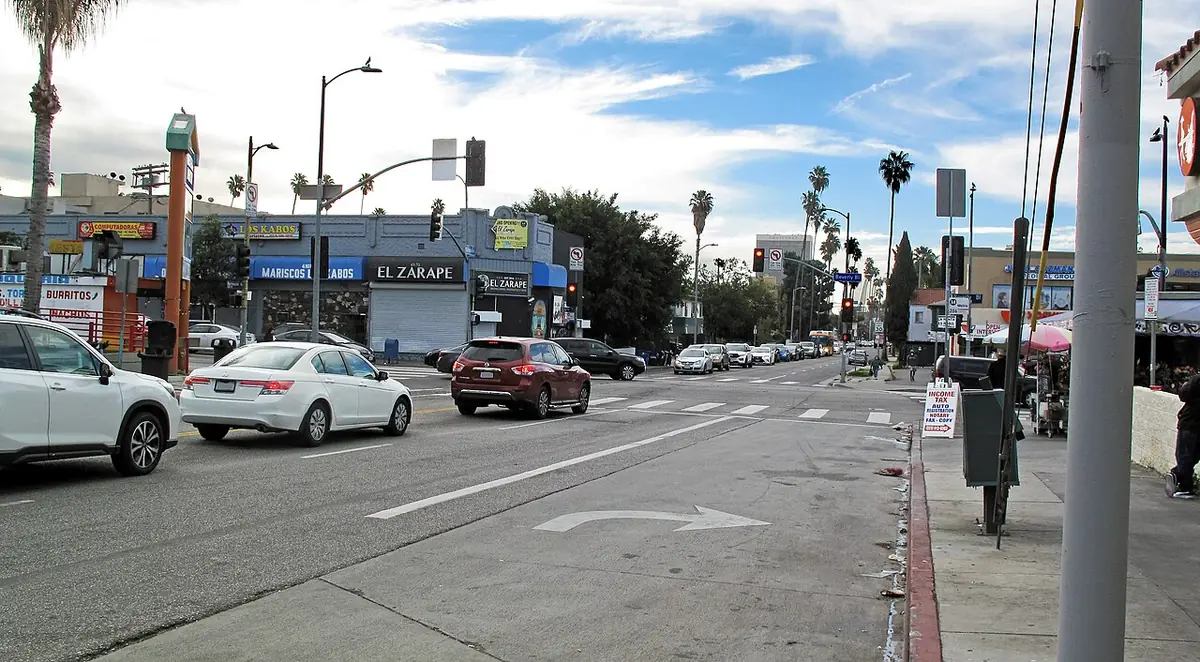
A lively corner of Los Angeles, shops and traffic side by side — Photo: Downtowngal · CC BY-SA 4.0 · Wikimedia Commons
Beyond the purely monetary side, the legal nature of what is being valued deserves particular attention.
The cost of a house in Los Angeles is not summed up by the figure displayed on the listing portals. The full total includes specific property taxes, high transaction costs and insurance premiums that vary sharply with the exact location of the property. Working through each line carefully is what turns a headline market average into a starting anchor you can adjust with confidence.
los-angelesFor saleHouseestimate
Median price / m²US$5,064Half the apartments sell below this
Median priceUS$886kthe average is 14% higher — a few very large properties pull it up
Most common2 bedrooms59 % of listings
Average size166 m²
By number of bedrooms
Bedrooms
Share of market
Avg price
Price / m²
Avg size
2most common
59 %
US$886k
US$5,330
166 m²
3
32 %
US$1.11m
US$5,064best value / m²
219 m²
4
9 %
US$1.42m
US$5,064best value / m²
280 m²
Each row is an average, compared against the area average of US$5,330 / m². These are indicative estimates of a typical local market, not a measured sample of live listings. Check current listings before relying on them.
What you actually own and control in law, and how that shapes the figure
The same legal rigour applies to the sequence of the transaction, which follows a codified process.
In Californian property law, outright ownership comes with planning rules and easements that closely govern how a property may be used. Rather than absolute freedom, owning a house means working around local bodies and third-party rights of access. Separating what is genuinely yours to decide from what depends on others is essential, because restrictions that survive the sale travel with the property and show up in its value.
Outright ownership of building and land (fee simple)
You hold the land and the structure permanently, with the freedom to alter, renovate or pass on the property under local inheritance rules. This is the highest standard of legal security available to an individual owner.
What it changesYou keep full control of the asset, subject to strict compliance with the city's building codes and any environmental restrictions, and fee simple title is the baseline against which every lesser form of ownership is discounted.
Easements and use restrictions (easements and CC&Rs)
Many properties carry rights of way for utilities or neighbourhood covenants, conditions and restrictions that limit certain external uses or types of construction.
What it changesHave every title reviewed by a specialist attorney or a title company to identify hidden constraints before signing, because a covenant that blocks an extension or an ADU removes the buildable upside a valuation would otherwise credit to the lot.
The rule to understand before you trust any number
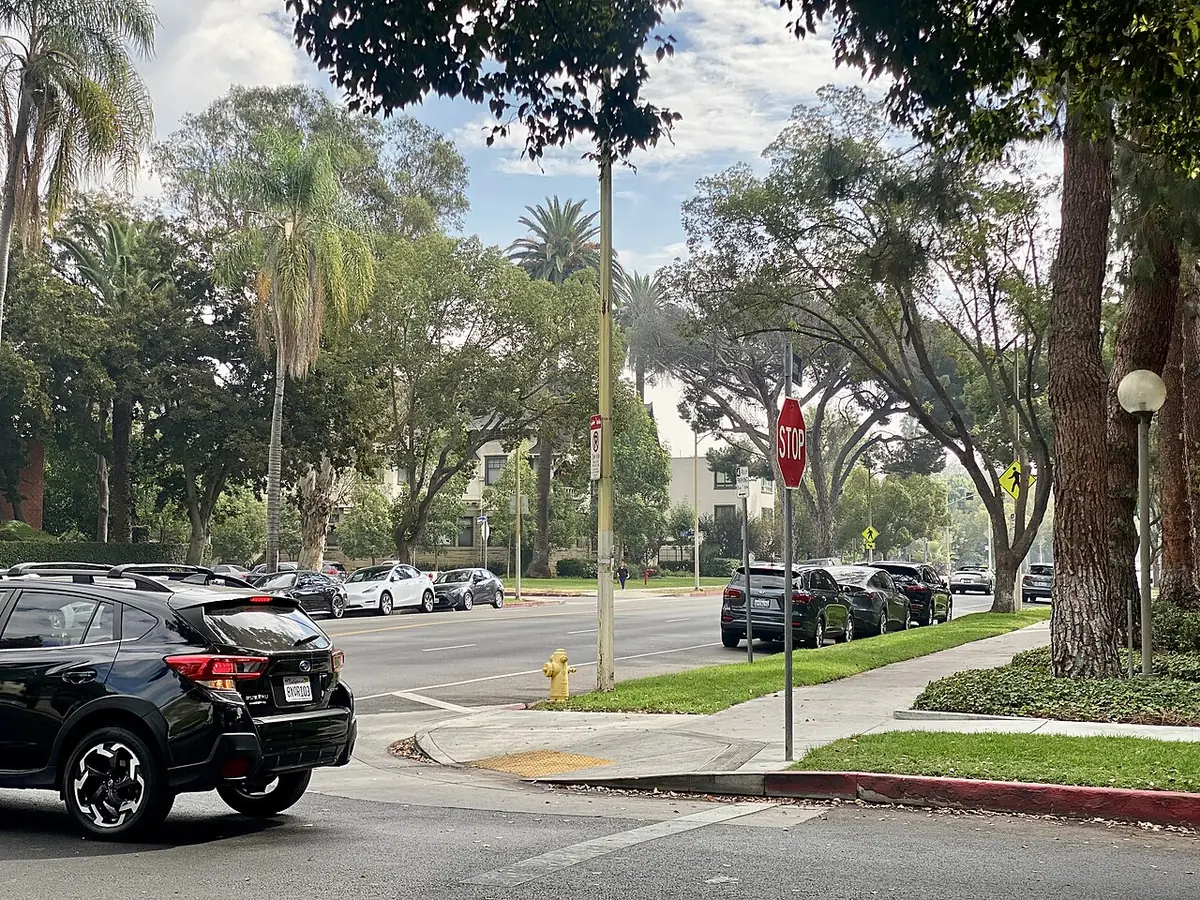
A quiet, palm-lined street in the University Park neighbourhood — Photo: EEJCC · CC0 · Wikimedia Commons
To carry that through, each party to the transaction plays a precise role that has to be coordinated.
Property transactions in California run on a strict calendar of inspection periods and conditions set out in standardised contracts. An asking price is an opinion until money and deadlines are attached to it, and from the moment an offer is accepted the figure starts being tested by inspectors, by the lender and by the appraisal. Following that sequence is what protects you from paying for a number nobody has verified.
An offer accepted by both sides, which gives the first real market reading of the property
An earnest money deposit (generally 1% to 3% of the purchase price) placed with a secure third-party escrow account in the days after the agreement, which turns an asking figure into a committed one.
The opening of the physical inspection period (due diligence), during which independent professionals examine the property and put a cost on its true condition.
The release or renegotiation of the contingencies tied to the state of the building, to the financing and to the lender's appraisal of the property, which is where an overstated price is usually corrected.
The final transfer of the remaining funds and the official recording of the deed with Los Angeles County, at which point the agreed price becomes public and feeds the next round of comparables.
A recorded sale price that stands as evidence of value for the whole street
How a valuation is built, step by step
Valuing a house in Los Angeles draws on an ecosystem of specialists whose coordination is what makes the resulting figure defensible rather than decorative. From the first search to the final recording, each party secures a particular facet of the process. Understanding that structure lets you meet the tight deadlines sellers impose in the Californian market without skipping the checks that keep the number honest.
The ownerAssembling the property file and setting a realistic starting rangeThis preparatory step means gathering the deed, the tax bill, permits for past work, receipts for improvements and the exact floor area, which is what an agent or appraiser needs before any figure can be discussed.
The real estate agentProducing a comparative market analysis from recent local salesYour representative selects genuinely comparable recent sales, adjusts them for lot size, age and condition, and explains how the local market currently rewards or penalises each of those differences.
The home inspectorFull audit of the structure, the roof and the installationsThe inspector produces an exhaustive report on hidden defects, on the remedial work needed to meet current standards and on the risks attached to the building, and each item becomes a deduction from the headline figure.
The escrow and title companyHolding the funds and verifying that title is cleanA neutral, independent third party, it confirms that no lien, easement or unrecorded claim quietly reduces what is being valued, and releases money only once every transfer is legally sound.
The county recorder and assessorOfficial recording of the deed of saleThe deed is recorded publicly with Los Angeles County, which confirms ownership and publishes the price, while the assessor sets the assessed value used for tax, a figure that is related to but distinct from market value.
The detached house in Los Angeles: where the appeal of independence meets the cost of daily upkeep
With the nature of the property established, it is worth facing the running costs that sit behind any estimate.
Valuing a detached house in Los Angeles is never simply a matter of counting rooms; it means pricing a way of living shaped by space, light and the constant search for privacy inside a sprawling metropolitan area. Unlike dense shared buildings, the single-family house offers that rare freedom of living with nobody immediately overhead, with direct access to a lot, however modest, and the ability to adapt the outdoor space at will. It is the option favoured by those looking to root a household lastingly in a residential neighbourhood, away from the noise of the main urban corridors, and the market prices that preference plainly.
That independence, geographic and structural, carries a financial and organisational cost that should never be understated when a figure is being set. In Los Angeles, owning the walls and the roof means every repair, from a roof damaged by intense summer heat to ageing plumbing, falls entirely on the owner. There is no shared building management to spread the cost of major work, which puts the whole risk on your shoulders and makes a contingency fund essential from the first months of ownership. It is also why a careful estimate discounts a house with deferred repairs far more sharply than a casual comparison of asking prices would suggest.
Another decisive factor in the value of a house here is the management of the outdoor space and of water use, a particularly sensitive subject in Southern California. Keeping a garden green or a pool in service takes considerable time or a substantial budget for professional maintenance. Local drought and landscaping regulations impose technical constraints that have to be absorbed into daily life to avoid heavy bills or administrative fines, and a mature, compliant, well-planted lot is genuinely worth more than a bare one that would need reworking.
Despite the upkeep, the appeal of the detached house remains intact for families and for owners looking to capitalise on the scarcity of land in Los Angeles. The land under the building has historically tended to appreciate faster than shared property, which is a significant long-term protection and a large part of why two houses of identical floor area can be worth very different amounts on different lots. The trade is a permanent one, between the mental load of day-to-day management and the satisfaction of owning a property outright from the ground up.
In the end, valuing a house in Los Angeles means accepting that the figure describes a small piece of infrastructure as much as a home. If you are prepared to take on that role and to accept the swings in maintenance costs that the Californian climate imposes, the property will reward you, but only an estimate that has priced the roof, the systems, the lot and the location honestly will tell you by how much.
What running costs sit behind the value of a house in Los Angeles?
Once the financial picture is clear, the concrete effect of geography on a weekly routine has to be understood.
Working out the real cost of a house in Los Angeles is not a matter of calculating the monthly mortgage repayment alone. It means allowing for local tax rules, in particular the property tax governed by Prop 13, and for homeowner's insurance costs that have risen sharply because of fire risk in some hillside areas. Ignoring these recurring charges leads inevitably to cash-flow strain in the first year, and it also distorts any estimate of what the property is genuinely worth to hold.
Estimated upfront and acquisition costs for a house
Cost item
Estimated range in USD
Analysis
Down payment (20%)
$150,000 - $300,000
Needed to obtain the best rates and to avoid private mortgage insurance.
Closing costs and transfer taxes
$15,000 - $30,000
Cover the agency commission, the escrow and recording fees, and title insurance.
Reserve fund for urgent repairs
$20,000 - $40,000
Essential for the structural surprises that surface as soon as you move in.
These amounts vary sharply with the neighbourhood chosen within the vast Los Angeles conurbation.
Recurring monthly costs of ownership
Type of cost
Average monthly amount
What moves it
Property tax
$800 - $1,500
Based on the initial purchase value and capped by Californian law.
Homeowner's insurance
$150 - $400
Rising noticeably in wildfire risk zones.
Maintenance and gardening
$300 - $700
Varies with lot size, the presence of a pool and the age of the building.
These estimates exclude repayment of principal and interest on the main mortgage.
Health care, schools and commuting: the ordinary Tuesday that sets what a location is worth
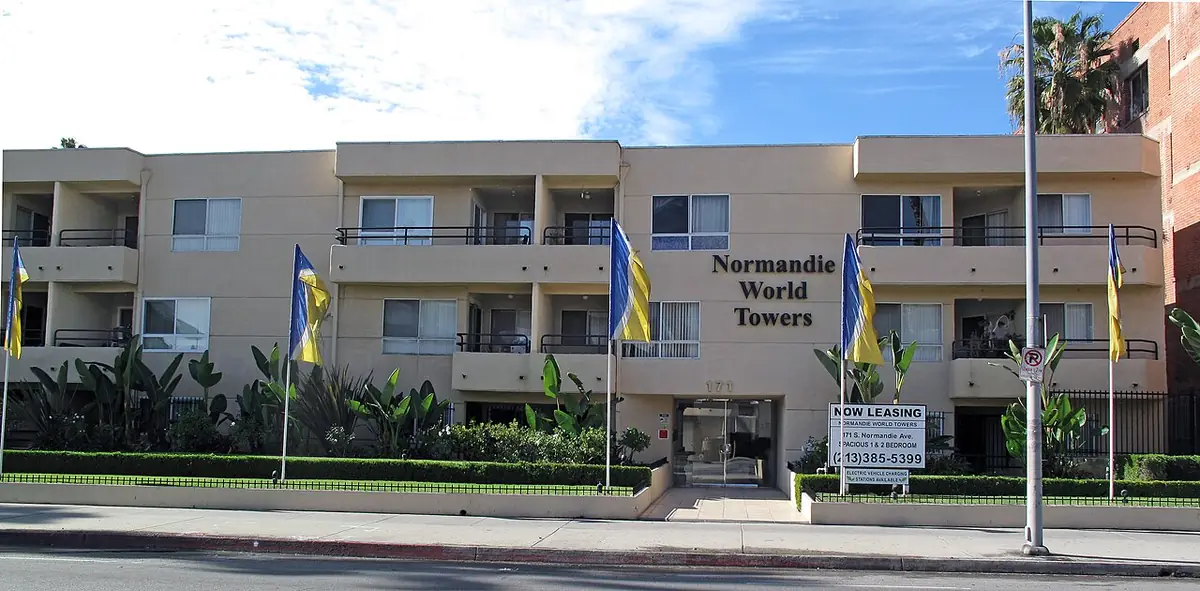
An apartment tower typical of Koreatown's housing stock — Photo: Downtowngal · CC BY-SA 4.0 · Wikimedia Commons
Beyond that visible routine, many structural factors stay invisible during a first viewing.
The reality of life in Los Angeles is measured through travel and daily organisation in a city built for the car. An ordinary Tuesday tests a location by revealing how your journeys really flow and how easily local amenities can be reached. Anticipating those flows is the key to avoiding exhaustion, and it is also the most honest way to check whether the premium attached to an address is one the street actually earns.
07:00The residential street you start fromWaking and getting ready in the calm of a detached house, with a first look at traffic conditions on the usual apps.
07:45The local schoolDropping the children at the neighbourhood school, a moment when the traffic around school gates calls for patience and one that tells you how the catchment really performs.
08:30The main freewayMerging into heavy commuter flows towards the major business districts such as Downtown or Century City.
09:30Arrival at the office or coworking spaceSettling in after a sustained drive that underlines how much living reasonably close to work is worth in this market.
18:00The local supermarket or organic marketEnd-of-day shopping for the household, often combined with a stop at a filling station where local prices fluctuate.
19:30Back home and parkingEasy parking in your own driveway or garage, a clean break with the bustle outside and a feature that off-street parking-poor comparables cannot match.
What the listing will never tell you about the real condition of houses in Los Angeles
These blind spots explain why some owners are disappointed only a few months after moving in.
Handsome marketing photographs and glowing agency descriptions deliberately leave out major technical and regulatory factors that shape the long-term value of a property. In Los Angeles, the market has geological and administrative particularities that only thorough surveys bring to light. Ignoring them exposes you to serious financial disappointment after the keys change hands, and each of them is a measurable adjustment to any estimate.
The state of the foundations and local seismic activity
Many older buildings sit on ageing concrete foundations that need very costly seismic retrofitting to guarantee the structural safety of the building in a quake, and that cost comes straight off the value of the property.
City restrictions on short-term letting
The city applies extremely strict rules to Airbnb-style rentals, which prevent a second home being operated that way and sharply limit the additional income expected, so any figure built on assumed nightly revenue collapses.
The age of the sewer laterals and water lines
The connection between the house and the municipal sewer is the owner's responsibility alone; if mature tree roots have invaded it, full replacement can run to several tens of thousands of dollars.
Planning proposals and future densification
Recent laws encouraging accessory dwelling units (ADUs) in back gardens change the quiet, the overlooking and the street parking of many calm residential areas, which cuts both ways: added buildable potential on your own lot, added density on the street.
The misjudgements owners only discover six months into their new house
Faced with these traps, it is fair to ask whether this kind of purchase really suits your own profile.
Looked likeA picturesque, quiet neighbourhood perched on the green hills above the city
Turned outAn extremely isolated area in a fire, with winding roads that make evacuation difficult and prohibitive insurance costs.
Would have caught itChecking the wildfire hazard severity map without fail and obtaining insurance quotes before committing to a figure, because an uninsurable house is worth far less than the view suggests.
Looked likeA charming older house full of 1930s architectural character
Turned outA thermally leaky building with an obsolete electrical system unable to support modern air conditioning.
Would have caught itCommissioning an extremely rigorous independent inspection aimed specifically at the electrical panel and the roof insulation, then deducting the full cost of the upgrade from the price.
Looked likeA large sunny garden, ideal for putting in a pool quickly
Turned outClay soil subject to severe excavation restrictions and very high water connection costs.
Would have caught itRequesting a preliminary geotechnical report and consulting local planning officers to confirm what can actually be built, since unbuildable land adds far less value than it appears to.
Looked likeA central location putting every point of interest within easy reach
Turned outA position suffering constant noise from a busy major road immediately alongside.
Would have caught itVisiting at different times of day, particularly the morning and evening peaks, to judge the real noise level and how much it should reduce the figure against quieter comparables.
Unusual profiles: who should not act on a valuation of a house in Los Angeles
It is time to take stock of your own priorities and confirm how ready you really are.
Home ownership in Los Angeles is presented as the ultimate goal, but for some profiles it is a financial trap however attractive the estimate looks. The rigidity of the market and the weight of transaction costs demand a long horizon and proven professional stability. Here are the situations in which a favourable valuation is still not a reason to buy.
The young professional on an internationally mobile career
→Continuing to rent a furnished apartment in a lively district
Reselling a property within five to seven years produces considerable dead losses through agency commissions and transfer taxes, wiping out any expected gain, so the value has to grow substantially just to break even.
The buyer on a very tight budget with no safety savings
→Keeping capital in liquid, secure holdings
A single major structural failure on an older house, unbudgeted at the outset, can lead to personal insolvency or a forced sale in poor market conditions, well below any estimate.
The lover of walkable, cultural city living
→Renting a well-placed loft in the dense parts of the city
Taking on the upkeep of an outlying single-family house and then spending three hours a day at the wheel brings no tangible improvement in daily life, whatever the figure on the property says.
Decision review: can you stand behind the figure you have for a house in Los Angeles?
Reaching the end of this analysis shows that valuing a house in Los Angeles is not an impulse but a considered exercise. Between the true cost of ownership, the maintenance demands and the reality of daily travel, arriving at a number you can defend takes a full personal and financial commitment. If you have accepted that Californian property demands rigour as much as it offers stability, you have what you need to test any estimate put in front of you.
The Los Angeles market consistently rewards those who take a long view and refuse the lure of short-term speculation. By working from a property whose location and technical condition have been rigorously audited, you protect yourself against local economic swings while securing an exceptional setting. The key is the match between your real financial capacity, your tolerance for the demands of a detached house, and a figure built from comparables rather than from hope.
Take the time to review your family priorities, to build your cash contribution beyond the bare minimum required, and to see the target neighbourhood in every kind of weather and at every hour. Cross-check the agent's comparative analysis against a licensed appraiser's view and against the county assessor's record, and if every box is ticked in full awareness of the trade-offs, the number you sign against will mark not a risky leap but the start of a lasting, calm footing in Southern California.
Related questions
What closing costs usually surround the sale of a house in Los Angeles?
Closing costs, including transfer taxes and assorted fees, generally run between 1% and 2% of the total purchase price of the property. They are split between buyer and seller according to local custom negotiated in the initial offer through the agents, so a valuation that ignores them overstates what the owner actually walks away with.
How does property tax work in California under Prop 13, and how does it differ from market value?
California law caps the annual increase in the taxable base of the property tax at 2% for as long as the property does not change hands. That protects owners from sharp jumps in local tax, but it also means the county assessor's assessed value drifts far below market value over time, so an old tax bill is never a reliable guide to what a house is worth today.
Does earthquake insurance affect what a house in Los Angeles is worth?
Earthquake cover is not strictly required to obtain a conventional mortgage, unlike standard homeowner's insurance. Given the seismic activity in the region, carrying it is essential financial protection against ruin after a major event, and the premium is part of the holding cost any careful estimate of a property has to net out.
How much of a down payment do lenders expect, and where does the appraisal fit in?
Banks generally require a down payment of between 20% and 30% of the acquisition price for residents, and sometimes more for non-residents. The lender also orders its own appraisal by a licensed appraiser, and if that figure comes in below the agreed price the loan is sized on the appraisal, which is why an inflated estimate rarely survives contact with financing.
Which residential areas support the strongest values for a detached house in Los Angeles?
Sought-after districts include areas such as Silver Lake, Los Feliz, Santa Monica and parts of the San Fernando Valley, each offering a different balance of cultural life, public school quality and architectural calm. Those balances, more than the city average, are what separate one comparable from another.
Can an accessory dwelling unit (ADU) be built on the lot, and does that add value?
Yes. California state law strongly encourages the construction of accessory dwelling units to address the housing shortage. Local planning rules on floor area, height and utility connections still have to be followed to the letter, and it is the buildable potential of the lot, not the plan on paper, that a valuation can credit.
How long does the process take from accepted offer to keys, and when is the value fixed?
The standard timeline for completing a property transaction in California generally runs between 30 and 45 days. That window covers the technical inspections, the finalising of the loan file and the verification of title, and the price can still move within it if the inspections or the appraisal contradict the original figure.
What disclosures must the seller provide, and how do they move the estimate?
The seller has to hand over a full file covering natural hazards (seismic, flood and fire), the possible presence of lead paint in older properties, and a detailed report on the condition of the timber against pests. Each finding is a line item a buyer prices back out of the offer, so the disclosure package is one of the most direct influences on the final number.
How do current interest rates influence property values in Los Angeles?
Rises in the Federal Reserve's benchmark rates mechanically increase the monthly cost of credit, reducing the maximum amount buyers can borrow. That often forces purchasers to scale back their expectations on floor area or to increase their cash contribution, and the pressure feeds through into the prices comparable houses actually achieve.
What should an inspection of an older California house look at most closely?
Pay very close attention to the condition of buried water lines, the compliance of the storm water drainage system and the presence of unreinforced foundations. An independent expert is essential to cost the remedial work precisely, because that cost is the single largest condition adjustment on most older properties.