Preparing to buy a house in Los Angeles means getting to grips with what makes the California property market distinctive, from its sharply contrasting neighborhoods to its financing rules. This practical guide walks you step by step through structuring your purchase with clear eyes.
Get the app
What nobody tells you.
Real prices, hidden costs and the traps to check before you commit.
What owning a house in Los Angeles means day to day
Scroll
What owning a house in Los Angeles means day to day
Preparing to buy a house in Los Angeles means getting to grips with what makes the California property market distinctive, from its sharply contrasting neighborhoods to its financing rules. This practical guide walks you step by step through structuring your purchase with clear eyes.
Written by the ting.ad editorial team ·
West 1st Street, Los Angeles in Street View: drag to look around.
Moving from the general idea to your own daily reality means working out whether your profile matches what this sprawling city demands.
Buying a house in the California metropolis gives you generous living space and an architectural independence that is rare in big cities. That freedom comes with the disciplined management of local constraints, though, from structural safety to maintaining the outdoors under a demanding climate. Where you buy completely redefines the texture of your daily life, somewhere between the promise of residential calm and the reality of the time it takes to cross town.
Generous living space and a plot of your ownvsComplete dependence on the car for even the shortest errand
Properties often come with gardens and patios, but the way the city is laid out means every trip to a hub of activity has to be planned around driving.
An outdoor life made easy by an exceptional climatevsHigh upkeep costs for green space and air conditioning
Constant sunshine lets you live outdoors all year, which in turn means heavy water use and constant attention to outdoor equipment.
A solid store of value in a dynamic marketvsParticularly heavy tax charges and insurance obligations
Property values in the region have historically held up well, but local property taxes and home insurance premiums call for a rigorous forward budget.
Is this California way of living really a fit for what you want?
To measure how far you have travelled once you settle in, it helps to set the reference points you arrived with against local administrative and cultural realities.
Every neighborhood in the city sets its own rhythm and its own logistical constraints. Whether you are after a walkable neighborhood life, a quiet retreat tucked into the hills or immediate proximity to the technology and creative employment hubs, the effect on your timetable will be radically different.
Remote work and residential calm
Neighborhoods up in the hills or out in the outlying valleys offer the silence and the space to set up a home office full of light. You get architecture that opens onto the outdoors and feeds creativity. The trade-off is that the smallest daily errand means taking the car along winding roads or down onto the flat.
Close to the main routes and employment hubs
Settling near the major traffic arteries or transit nodes cuts a commute that weighs heavily on quality of life. Houses there tend to be more compact with smaller plots, but you win back precious hours every week. It is the trade-off you have to make to protect the balance between your working life and your personal one.
Urban immersion and a lively neighborhood
Some historic districts let you live within walking distance of local shops, cafes and city parks. Houses there are older and full of character, but they often need substantial work to meet current standards. You accept closer neighbors and smaller outdoor space in exchange for a rich and varied social life without reaching for the car every time.
What changes radically when you settle here from another country
Once those reference points are in place, picking the geographic area becomes the cornerstone of your purchase.
The American property system rests on legal, financial and cultural mechanisms that are a long way from what buyers know elsewhere. Understanding those fundamental differences from the outset spares you disappointment when you assemble your purchase file and come to the final negotiation.
From abroad
A lending system built around traditional banks, with rates that are often fixed and regulated
Los Angeles
A mortgage market dominated by specialist brokers and flexible financial products
You need to present a very detailed creditworthiness file, including your local or international credit history, well before you make an offer.
From abroad
A protective legal framework in which a state-appointed public officer handles every conveyance
Los Angeles
A transaction steered by real estate agents and closed by independent title companies
There is no equivalent of that public conveyancing officer here; confirming clear title and any charges on the property falls to title experts.
From abroad
Standardised technical surveys that are compulsory and are centralised by the seller
Los Angeles
A thorough inspection phase entirely at the buyer's cost and on the buyer's initiative
You have a strict contractual window in which to bring in inspectors specialising in structure, electrics, plumbing and natural hazards.
From abroad
Local taxation largely folded into national income tax
Los Angeles
A substantial local property tax calculated on the purchase value and reassessed under specific rules
The recurring cost of holding your property includes a high local tax that weighs heavily on the household's annual budget.
How to find your bearings among the city's different residential areas
That geographic variety translates into hard pricing realities that deserve to be looked at without any guesswork.
The urban geography is a mosaic of neighborhoods with sharply defined identities, offering very different atmospheres and very different prospects for how your asset will hold value. Your choice has to reconcile your budget, your tolerance for travel time and what you want from your surroundings.
The hills and elevated residential areas
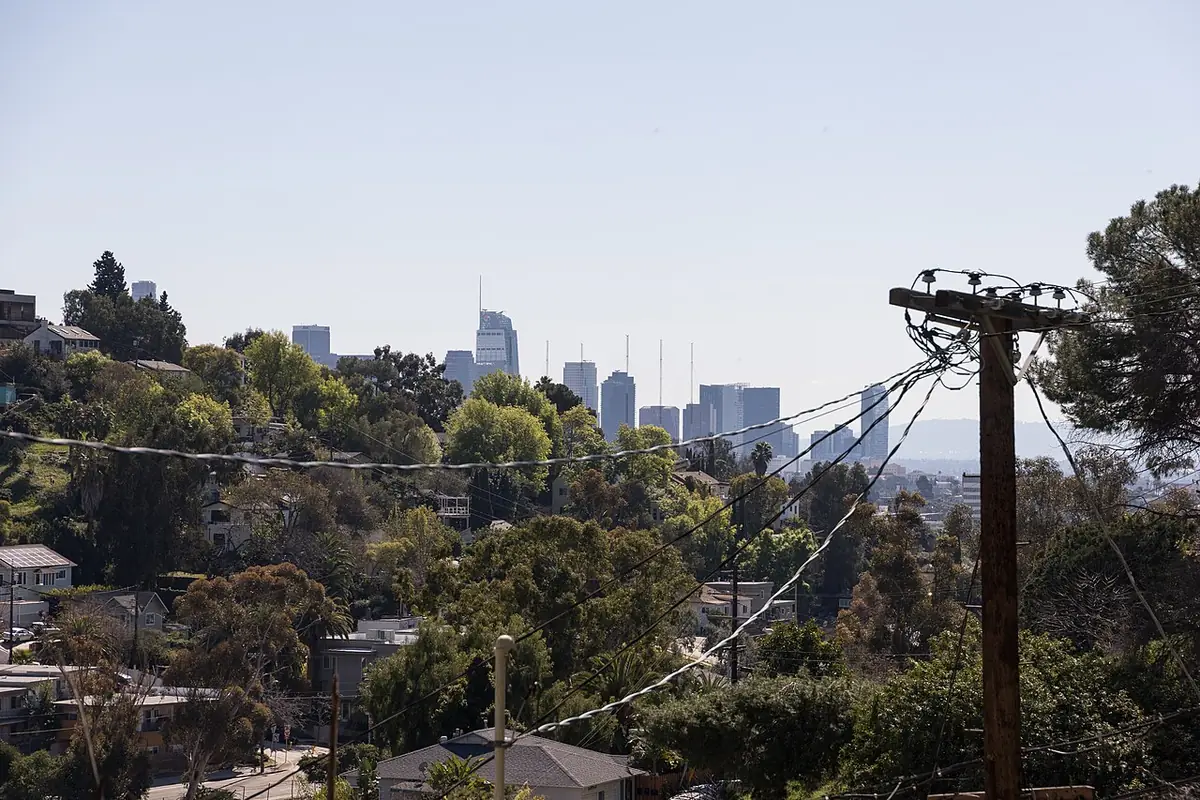
A peaceful, resort-like atmosphere, set by the surrounding nature and wide panoramic views over the metropolis.
Suits
Buyers after absolute quiet, greenery and a private setting well away from the bustle of the city.
Trade-off
Winding access roads, greater exposure to local natural hazards and total dependence on the car for every errand.
Central neighborhoods under urban renewal
Constant energy, a pronounced architectural mix and immediate proximity to the new cultural hubs.
Suits
Those who want to take part in neighborhood life, shorten their work commute and enjoy a dense cultural offering.
Trade-off
Heavy traffic density, smaller plots and prices per square meter that are often very high.
The residential areas of the west side and near the coast
Bracing sea air, constant light and a rhythm of life turned towards the outdoors and sport.
Suits
Those who love wide coastal spaces and a relaxed way of life close to the ocean.
Trade-off
An extremely competitive market with particularly high financial barriers to entry for single-family houses.
Reference points for placing the financial reality of a purchase here
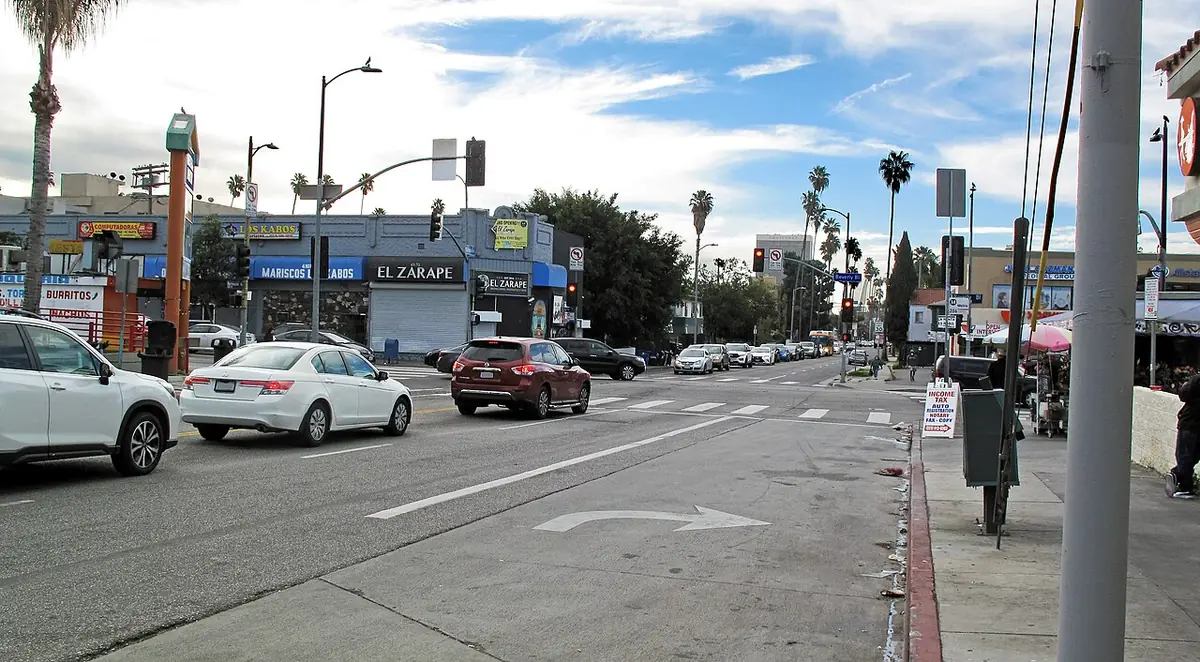
A lively corner of Los Angeles, shops and traffic side by side — Photo: Downtowngal · CC BY-SA 4.0 · Wikimedia Commons
Beyond the purely financial side, the legal structure of property ownership sets strict rules on what you can actually own.
The regional property market is marked by a wide spread of prices depending on the exact location, the condition of the building and the size of the plot. With no single price to point to, only broad ranges and an analysis of structural trends let you approach your financing plan calmly.
los-angelesFor saleHouseestimate
Median price / m²US$5,064Half the apartments sell below this
Median priceUS$886kthe average is 14% higher — a few very large properties pull it up
Most common2 bedrooms59 % of listings
Average size166 m²
By number of bedrooms
Bedrooms
Share of market
Avg price
Price / m²
Avg size
2most common
59 %
US$886k
US$5,330
166 m²
3
32 %
US$1.11m
US$5,064best value / m²
219 m²
4
9 %
US$1.42m
US$5,064best value / m²
280 m²
Each row is an average, compared against the area average of US$5,330 / m². These are indicative estimates of a typical local market, not a measured sample of live listings. Check current listings before relying on them.
Building and land: what you actually hold
That legal clarity does not excuse you from following the chronological steps of a transaction to the letter to protect your investment.
Buying a single-family house in the United States most often means outright ownership of both the land and the structure, a protective legal status that nonetheless carries direct responsibilities in planning and neighborly matters. It is essential to separate what falls exclusively to you from what is subject to collective rules.
Outright ownership of land and structure
You buy both the building and the parcel of land it stands on, which gives you complete freedom to undertake improvement works, subject to local building permits and municipal planning codes.
What it changesYou carry the full cost of maintenance, of bringing the property up to energy standards and of protecting it against the environmental hazards specific to the region.
Easements and homeowners association rules
Some subdivisions and residential developments are run by homeowners associations that impose strict rules on the external appearance of houses, the landscaping of gardens and the use of shared amenities.
What it changesYou have to pay compulsory monthly dues and abide by a set of covenants that can be restrictive and that limits your architectural freedom.
The fundamental rule to master before you put down the first deposit
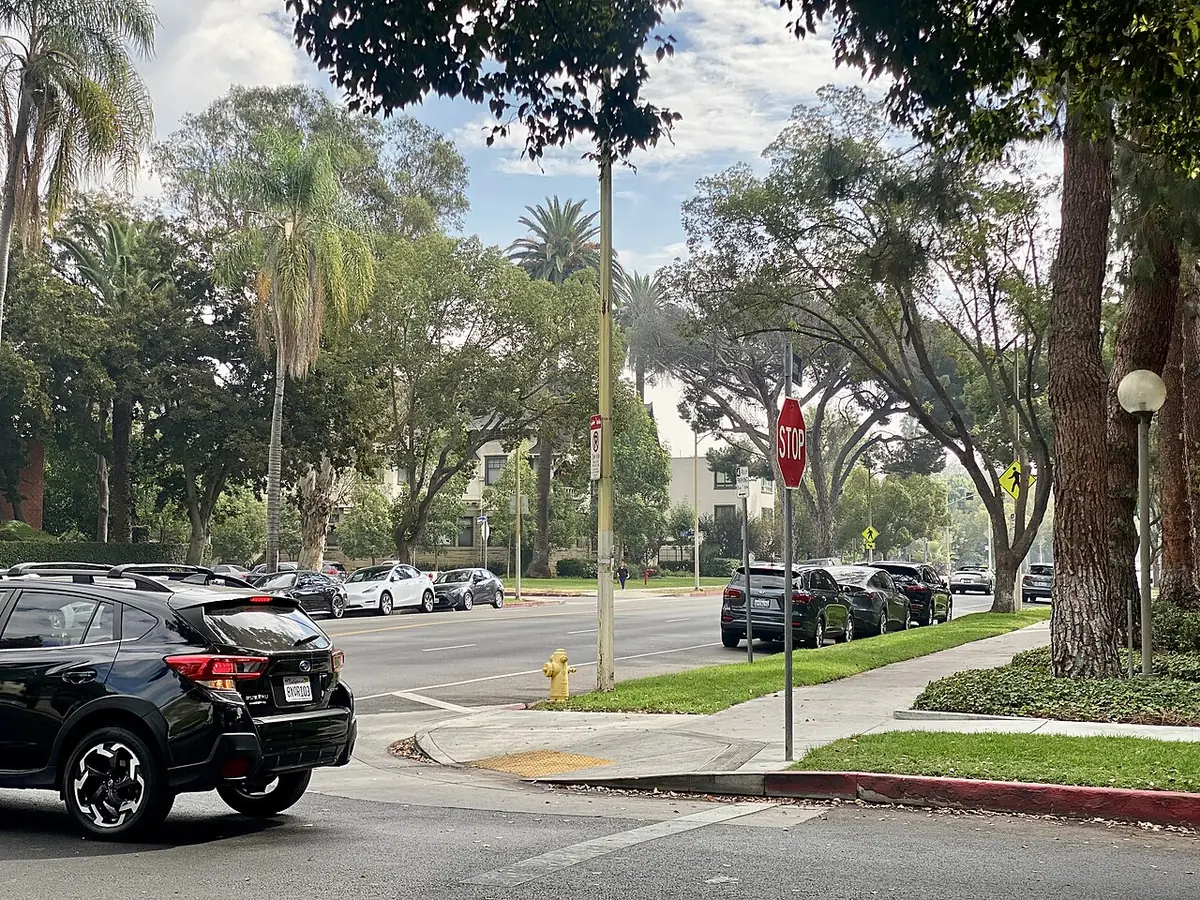
A quiet, palm-lined street in the University Park neighbourhood — Photo: EEJCC · CC0 · Wikimedia Commons
To orchestrate all of these steps without a misstep, the transaction follows a precise calendar.
The property purchase system rests on conditional verification periods that the contract defines tightly. Never committing funds irrevocably before you have exhausted every one of your technical and financial investigation rights is the absolute key to a calm transaction.
Signing an initial purchase offer binds the parties subject to carefully negotiated contingency clauses.
A formal offer is made and accepted by the seller, with a first earnest money deposit placed in a secure third-party account.
An in-depth technical inspection period opens, allowing independent experts to examine the building.
Contingencies are released or renegotiated according to the defects the professionals have found and costed.
The lender gives final approval on the loan offer and the documents transferring ownership are drawn up.
The effective transfer of title, recorded with the local land records office, makes the transaction official.
How a property transaction unfolds, step by step, in this region
A successful purchase in the California metropolis follows a methodical protocol in which each participant has a precise role. Knowing the order of these stages lets you keep control of the calendar and handle the unexpected.
The buyerPreparation and financial pre-approvalAssembling a creditworthiness file with a local broker to obtain the proof of financing that is indispensable before any viewing.
The real estate agentShortlisting properties and targeted viewingsIdentifying properties that match your criteria and running a comparative analysis of the local market so you can make a realistic offer.
The buyer and the sellerDrafting and negotiating the purchase offerSigning the preliminary contract that sets the price, the inspection deadlines and the contingencies protecting the buyer.
The home inspectorSurveys and in-depth checksProducing a full report on the condition of the structure, the electrical systems, the plumbing and the natural hazards.
The title companyTitle search and legal protectionVerifying that there are no liens, hidden mortgages or disputes over the property before the funds move.
All partiesClosing the sale and handing over the keysFinal signature of the deeds before a notary public or at the title company, wiring of the funds and official public recording of the deed.
House or apartment in Los Angeles: weighing space against shared ownership
Once that first choice between house and apartment is settled, the central question of the real budget presses in.
Buying property in Los Angeles starts with a deep structural choice between the single-family house and the condominium apartment, two ways of living at opposite ends of the scale. The single-family house embodies the California ideal, offering a private plot, complete architectural freedom and no immediate neighbors above or below. That independence carries a considerable financial and logistical cost, though, particularly in maintenance, garden management and security. Older houses from the 1920s or the 1950s often need heavy structural renovation to meet current seismic and energy standards.
The condominium apartment, by contrast, completely redefines the urban experience in Los Angeles by pooling the constraints. Found mainly in dense neighborhoods such as West Hollywood, Santa Monica or Downtown, condos come with monthly charges (HOA fees) that cover upkeep of the pool, the gym, the roof terrace and security. The formula appeals to buyers who want a base in the city without maintenance worries, but it imposes association rules that can be strict. It is essential to examine the financial health of the HOA before signing, because collective arrears or facade compliance works can trigger very high special assessments.
In terms of how value holds up, the single-family house in Los Angeles has historically gained more, because land is scarce, particularly in the hills or on the west side. Bare land appreciates organically, while apartments face competition from a more plentiful stock of new or renovated units. All the same, for a first purchase or a mid-range budget, the condo remains the most realistic way into areas where the price per square meter of bare land puts a house out of reach for middle and upper-middle incomes.
Daily life also drives the decision between the two options, according to how much driving you can stomach. Living in a house in the outer neighborhoods or the San Fernando Valley often means long hours in traffic to reach the economic centers on the west side. A well-placed apartment, on the other hand, lets you walk and reach local shops immediately, cutting your dependence on the car. Your way of life, how averse you are to collective charges and your long-term view of the market will decide which type of property best protects your California investment.
What total budget should you plan for to live comfortably in your own property in Los Angeles?
Understanding these financial charges makes it possible to look concretely at what an ordinary Tuesday feels like and at how location shapes daily life.
Buying property in Los Angeles is not just the asking price shown on the listing portals. You have to build in a whole range of permanent extra costs and specific local taxes that weigh heavily on an owner's annual budget. Property tax, governed by the famous Proposition 13, is calculated on the initial purchase price and rises within a capped limit, but it still represents roughly one percent to one and a half percent of the assessed value every year. On top of that come home insurance, which is particularly expensive because of wildfire risk in some hillside areas, and regular maintenance costs.
Annual cost items for an owner in Los Angeles
Cost item
Estimated amount (House)
Estimated amount (Apartment / Condo)
Impact and frequency
Property tax
1.1% to 1.25% of the purchase value
1.1% to 1.25% of the purchase value
Annual, reassessed only slightly each year
Homeowners association charges (HOA)
None or minimal (neighborhood association)
$400 to $1,200 per month
Monthly, covers upkeep and amenities
Home insurance
$2,500 to $6,000 per year
$600 to $1,500 per year
Annual, varies sharply with wildfire risk
Maintenance and repairs
1% to 2% of the property value per year
Included for the common areas, 0.5% for the interior
Variable, essential to preserving value
These estimates are based on averages observed on the Los Angeles market and can vary with the exact location and the age of the building.
What does an ordinary Tuesday actually look like in Los Angeles, between travel constraints and everyday surroundings?
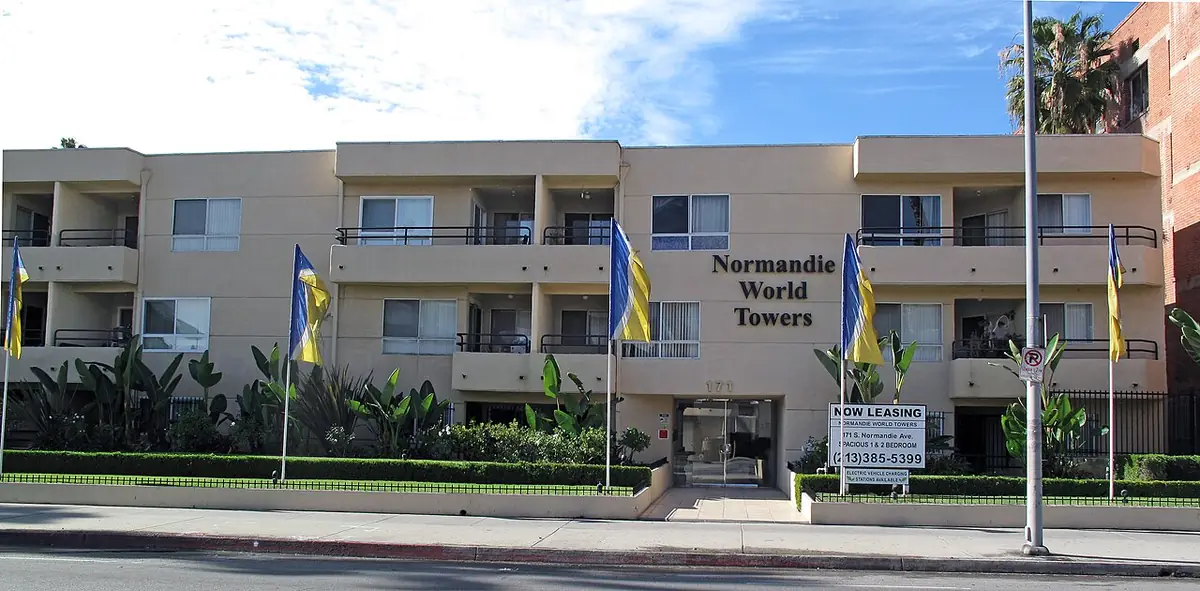
An apartment tower typical of Koreatown's housing stock — Photo: Downtowngal · CC BY-SA 4.0 · Wikimedia Commons
Beyond the daily routine and the official figures, plenty of hidden aspects of the local property market deserve close attention.
Living in Los Angeles means organising your day around the legendary traffic flows of the metropolis. The neighborhood you live in completely redefines your relationship with time, with your health and with your working life. An ordinary Tuesday illustrates the constant tension between residential quality of life and the reality of getting around on major freeways such as Interstate 405 or U.S. Route 101. Walking through a typical day shows just how crucial it is to be close to amenities relative to where you work.
07:30Residential neighborhood and departureMorning routine and a check of the traffic apps to anticipate jams on the main routes before joining the freeway.
08:30Commute on the freewayAn unavoidable journey time swinging between thirty minutes and more than an hour depending on the distance between the residential areas and the employment hubs.
12:30Lunch break in the business districtImmersion in local life, whether at upmarket fast-casual places or at the urban farmers markets that are so popular in California.
18:00Home again and local shoppingA stop at a large local store or an organic supermarket to restock the household while avoiding the worst of the rush hour.
20:00Winding down at homeMaking the most of the exceptional Los Angeles climate, whether in a private garden or on the terrace balcony of a condominium, away from the bustle of the city.
What those beautiful listing photographs deliberately leave out in Los Angeles
These blind spots explain why some buyers voice deep regrets six months after taking the keys.
The Los Angeles property market is known for aggressive marketing and flattering staging of homes on the digital platforms. Behind the bright open spaces and the fitted kitchens sit technical, planning and environmental realities that sellers are careful not to highlight. Knowing about these invisible elements spares you massive financial disappointment after the deed is signed and the escrow holder closes the file.
The failing sound and thermal insulation of older construction
Many single-family houses built in the middle of the twentieth century have very thin walls and single glazing, which makes air conditioning expensive in summer and lets the ceaseless noise of city traffic through.
Rights of way and strict rules on shared boundaries
Buying a plot sometimes comes with rights of way for neighbors or severe restrictions on building height, which limits any future plan to extend or to put in a pool.
Overhead power lines and transformers
Very common on residential streets in Los Angeles, this infrastructure affects the look of the street, the peace and quiet and sometimes the long-term resale value of the property.
The constraints of historic preservation zones (HPOZ)
If you buy in a neighborhood with preserved architectural character, every change to a facade, every paint choice and every window replacement is subject to the exacting approval of a specialist city commission.
Geological risks tied to landslides and seismic faults
Some hillside parcels, or plots on loose soils, require in-depth geotechnical surveys and very expensive insurance policies to cover the risk of ground movement.
The post-purchase disappointments new Los Angeles owners discover six months after moving in
Given these demands and these risks, it matters just as much to know whether investing in Los Angeles property really suits your profile.
Looked likeA quiet, peaceful neighborhood on a Sunday afternoon viewing
Turned outAn ultra-noisy bypass route overrun by delivery trucks and commuter traffic from Monday to Friday.
Would have caught itVisiting the property at different times of day, particularly at the morning and late-afternoon peaks on a weekday.
Looked likeA tremendous low-cost renovation opportunity with real potential
Turned outA bottomless money pit, because skilled labor is scarce and works permits in Los Angeles are complicated to obtain.
Would have caught itBringing in a licensed contractor to cost the works precisely before you release the inspection contingency.
Looked likeReasonable association charges guaranteeing quality services
Turned outA disastrously run homeowners association with chronic arrears and no reserve fund at all for major works.
Would have caught itInsisting on a careful review of the last two years of association meeting minutes by a specialist legal adviser.
Looked likeAn acceptable commute to work, as estimated on the maps
Turned outA daily two-hour hell each way, caused by changes to traffic plans and permanent freeway roadworks.
Would have caught itActually driving the commute at real office hours on a weekday before submitting a final purchase offer.
Why some buyer profiles should categorically give up on buying property in Los Angeles
It is time to pull all these factors together to answer the ultimate question: are you genuinely ready to take the plunge?
The Los Angeles property market does not suit every investor or every private buyer. The financial rigidity of the local market, combined with high ownership costs and the regulatory complexity of California, can turn home ownership into a trap for your wealth. Clearly identifying the profiles for whom this investment is a poor fit helps you avoid capital allocation mistakes with lasting consequences for your financial health.
The short-term investor after immediate rental yield
→Not to invest in Los Angeles residential property
The ratio between the high purchase price of properties and strict rent regulation (the Tenant Protection Act) does not allow an attractive net return in the short term without a large capital gain on resale.
The buyer with a down payment that is only just sufficient and no emergency savings
→To keep renting and build up savings
Unforeseen maintenance costs, property tax increases and the likelihood of heavy repairs demand a solid cash cushion that first-time buyers systematically underestimate.
The professional who prizes absolute quiet and cannot stand driving
→A hyper-dense urban way of life or another metropolis
The spread-out geography of Los Angeles imposes an almost complete dependence on the car and a permanent confrontation with traffic saturation, which is incompatible with a search for calm.
The owner in a hurry who wants to alter the property without administrative constraints
→To avoid the California market and its planning rules
The heavy procedures for obtaining building permits (Department of Building and Safety) and strict environmental requirements turn any project into an obstacle course.
The moment of truth: are you objectively ready to go ahead with your Los Angeles property plan?
Deciding to buy property in Los Angeles calls for absolute clarity about your deeper motivations, your financial solidity and your investment horizon. This market forgives neither improvisation nor a purchase driven by emotion or haste. If you have analysed the real costs beyond the headline price, if you accept the reality of the travel constraints and if your safety capital is firmly in place, then the move makes complete sense. California property rewards patience and a long-term view for those who go about it methodically.
It is essential to see your purchase not as a short-term speculative refuge but as an anchor for your life or a diversified asset. The Los Angeles market cycles through phases of stagnation and phases of intensity, but the structural scarcity of space in sought-after areas always ends up supporting the value of quality properties. Your ability to absorb economic swings and to shoulder the responsibilities of an owner, whether you live there or let it out, will make all the difference between a successful operation and a permanent source of stress.
Before you sign any binding document or pay a deposit into an escrow account, take the time to test every assumption with independent professionals, whether that is an honest inspector or a tax adviser who knows the fine print of California law. Buying property in Los Angeles is an exhilarating but demanding adventure. If you tick every box on preparation and financial clear-headedness, you are ready to write your name into the story of this one-of-a-kind metropolis.
Related questions
What is the average property tax on a house in Los Angeles?
Property tax generally works out at between one percent and one and a quarter percent of the original purchase value of the property. It is governed by State of California law and rises only very slightly from one year to the next for as long as the owner does not sell.
What are the HOA fees in a Los Angeles condominium?
HOA fees (Homeowners Association fees) are monthly contributions paid by owners to fund the upkeep of common areas, security, collective insurance and sometimes concierge services or the building's fitness facilities.
Is it compulsory to have a house inspected before buying it in California?
Although technically optional, a physical inspection of the building by a certified professional is an absolutely essential step in the transaction. It brings hidden defects to light and establishes the condition of the roof, the foundations and the electrical systems.
How does the escrow process work when buying property in Los Angeles?
Escrow is a neutral holding account run by an independent third party that secures the buyer's funds and the seller's legal documents for the whole of the legal, administrative and financial verification of the transaction, right up to the transfer of ownership.
Which neighborhoods are most sought after for property investment in Los Angeles?
The most prized areas include the west side of the city, such as Santa Monica, Brentwood, Beverly Hills and West Hollywood, along with fast-gentrifying eastern neighborhoods such as Silver Lake and Echo Park, very popular with young professionals.
Can a non-resident foreign buyer purchase property easily in Los Angeles?
Yes, California law imposes no nationality restriction on acquiring real estate. Non-residents do, however, have to meet specific financing requirements and particular tax rules when they sell on.
What is Proposition 13 in California, and what is its effect on property?
Proposition 13 is a landmark California law that caps the annual increase in the assessed value used for property tax at a maximum of two percent for as long as the property does not change owner, which protects residents from runaway tax bills.
What effect do wildfire risks have on home insurance in Los Angeles?
In areas classified as high wildfire risk, particularly close to the hills and canyons, home insurance premiums have risen spectacularly and some carriers now refuse to cover new properties.
How long does it usually take to complete a property transaction in Los Angeles?
A standard property transaction generally takes between thirty and forty-five days from the seller accepting the purchase offer to the final signing of the deed transferring ownership at closing.
Is it possible to negotiate the asking price of a house on the Los Angeles market?
How much negotiating room there is depends entirely on how tight the local market is and on the neighborhood in question. In very competitive areas, and for quality properties, offers at or above the asking price, with bidding wars, remain common.