Buying an apartment in Dallas means getting to grips with the specifics of the Texan market, from its high property taxes to the way its condominium buildings are run. This guide sets out the financial, legal and urban mechanics you need to secure your purchase with your eyes open.
Get the app
What nobody tells you.
Real prices, hidden costs and the traps to check before you commit.
What you are really buying when you buy an apartment in Dallas
Scroll
What you are really buying when you buy an apartment in Dallas
Buying an apartment in Dallas means getting to grips with the specifics of the Texan market, from its high property taxes to the way its condominium buildings are run. This guide sets out the financial, legal and urban mechanics you need to secure your purchase with your eyes open.
Written by the ting.ad editorial team ·
Main Street, Dallas in Street View: drag to look around.
Understanding those financial and urban trade-offs leads naturally to looking at your own situation against this market.
Buying an apartment in Dallas is not simply a matter of acquiring square footage in a fast-growing Texan metro. Behind the tax appeal and the energy of the local property market sit contrasting urban dynamics that deserve methodical analysis. Prospective buyers have to weigh proximity to the business districts against the reality of the association fees attached to residential towers. Working through those trade-offs is what prevents the disappointment that comes from hidden costs and from the upkeep of common areas in a demanding climate.
The promise of quick appreciation, driven by the steady flow of people and companies into Texas and by the creation of white-collar jobs.vsThe reality of a highly competitive market in which local property taxes weigh heavily on net returns.
Property tax rates in Texas are among the highest in the United States, which directly offsets the absence of a state income tax. A buyer has to build that recurring charge into any long-term profitability calculation or watch the margin erode.
The modern comfort of secured residences with built-in amenities and shared pools.vsParticularly high association fees that rise predictably every year to fund maintenance.
HOA fees in Dallas buildings at the higher end cover central air conditioning, security and the upkeep of the amenities, but they represent a monthly budget line that is far from trivial and that generates no direct return on investment.
A lively urban life at the heart of cultural districts in full transformation, such as Uptown or Deep Ellum.vsA structural dependence on the car, despite the effort put into light transit such as DART.
Even in the densest parts of the city, the urban layout is still built around the car. Reaching everyday amenities without a vehicle takes careful organisation and sharply narrows your choice of location.
The apparent liquidity of a young, standardised housing stock that appeals to a mobile working population.vsExposure to regional economic cycles closely tied to swings in the energy industry and in the large corporate employers.
The Dallas economy rests on powerful but cyclical sectors. If white-collar or tech hiring slows, reselling an apartment quickly can prove harder than the headline growth statistics suggest.
Does this place really match your way of life and your plans?
How well your expectations line up with local reality also depends on the cultural and geographic starting point you are coming from.
Settling into an apartment in Dallas means accepting a rhythm shaped by the sheer scale of the city and by Texan corporate culture. Whether you arrive on your own to launch a business, as a couple looking for a manageable home, or as a distant investor, the criteria that matter are not the same. Every buyer profile has to test its daily habits against the real constraints of the local market to make the move work.
The central working life
You are aiming at Uptown or Downtown to cut your daily commute and feed off the economic energy of the metro. Day to day life revolves around high-rise apartments with direct access to the freeways and to coworking space. The trade-off is accepting less living space and dense traffic at peak hours, which calls for a real tolerance of city noise.
The calm, tree-lined neighbourhoods
You would rather look at areas such as Lakewood or the edges of White Rock Lake, where low-rise buildings sit in greener surroundings. That choice favours quality of life, closeness to nature and quieter neighbours, at the cost of a longer daily commute to the business districts and a heavier reliance on the car for even the smallest errand.
Delegated management of an asset
Your main goal is to secure capital and collect steady rental income without day-to-day management. That means handing supervision to local management companies whose fees cut into the headline gross yield. This approach demands careful selection of the building, so that the rules allow flexible or long-term letting without excessive restrictions.
Living there when you arrive from abroad: what changes the most
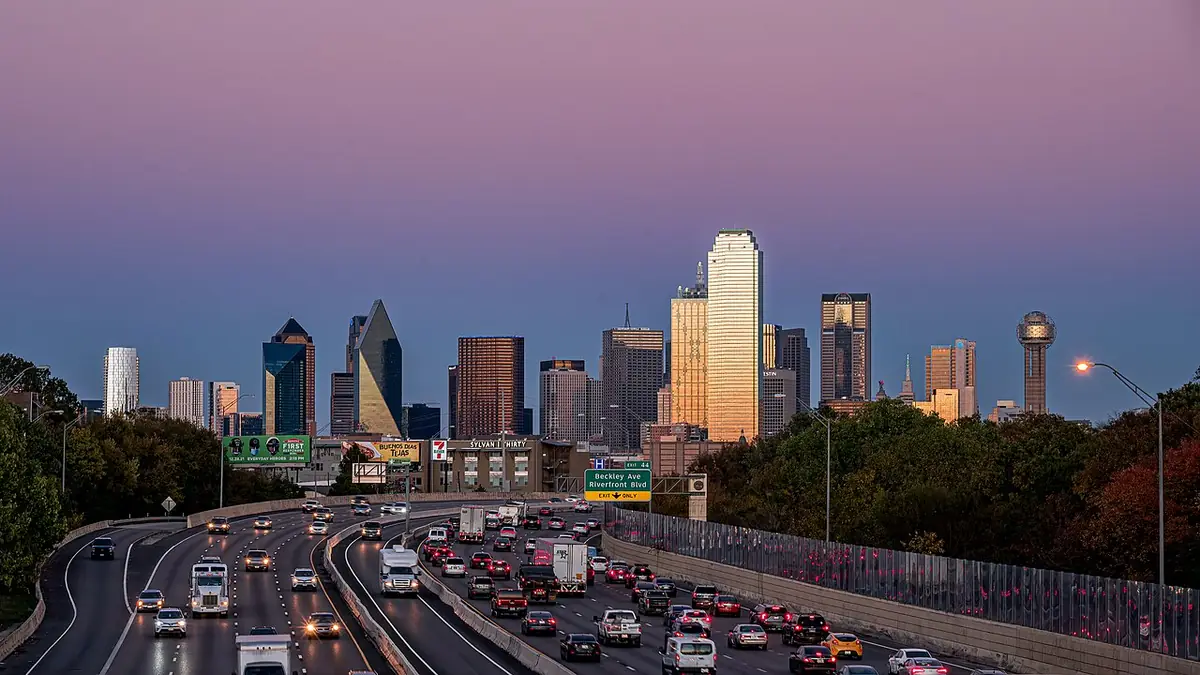
Downtown Dallas glows at dusk above a curving highway — Photo: Shiva Shenoy · CC BY 2.0 · Wikimedia Commons
Once those reference points are in place, the choice of neighbourhood becomes the next critical step.
The gap between a dense, walkable urban life and the Texan reality is considerable, in architecture as much as in the way everyday services are organised. Familiar assumptions about pedestrian density, social protection and the running of shared buildings fall apart within the first few months. Grasping those structural differences is essential to settling in without living through a permanent adjustment shock.
From abroad
A dense, historic urban setting where walking and public transport replace the car for daily needs.
Dallas
A vast grid of urban freeways in which any journey on foot is complicated, if not impossible.
You have to budget for buying or leasing a vehicle from the day you arrive, along with the insurance and parking costs that come with it, which completely redefines your transport budget.
From abroad
Building charges framed by protective legislation and by tightly regulated owners' meetings.
Dallas
A system of Homeowners Associations (HOA) with near-executive powers to set the rules of the building and to raise the dues.
The local board can impose strict restrictions on exterior appearance, short-term letting or pets, which reduces your autonomy as an owner.
From abroad
A health system with broad public coverage and moderate top-up insurance.
Dallas
Complete reliance on complex private insurance, often tied to employment, with high deductibles.
Your ability to house yourself and to invest has to accommodate this major expense, which presses on the household budget far more aggressively than you are likely to be used to.
From abroad
A tax burden resting on progressive but predictable income tax rates.
Dallas
No state income tax, offset by very high local property taxes that are reassessed every year.
The value of your property directly dictates your annual tax bill, which makes anticipating future costs harder than in most systems you may be arriving from.
From abroad
An administrative culture built on long-term contracts and very strict letting procedures.
Dallas
Apparent contractual flexibility, framed in practice by rigorous local commercial habits and thorough creditworthiness checks.
Putting together a purchase or rental file means proving your income and your credit history to specifically American standards that take no account of your banking record back home.
Which neighbourhood suits your lifestyle in Dallas?
Reading the map leads straight to the central question of what property on this market really costs.
Dallas offers a mosaic of neighbourhoods with strong identities, from the vertical buzz of Uptown to quieter, greener residential pockets. Where you choose to settle, or to place your money, decides not only your daily life but also how easily you will sell later. Each area strikes its own balance between accessibility, cultural energy and safety.
Uptown
An extremely lively district, very walkable by local standards, driven by professionals who want to be close to restaurants and parks.
Suits
Young professionals, investors looking for strong rental demand, and anyone drawn to modern city living.
Trade-off
Prices per square foot among the highest in the city, and a fast turnover of neighbours that can leave the area short on community roots.
Downtown
The financial core, marked by imposing towers now being converted to residential use and a very corporate atmosphere on weekdays.
Suits
Those who want to live at the heart of the city's architectural history and enjoy quick connections to the main transport routes.
Trade-off
A district that partly empties in the evening and at weekends, with fewer traditional neighbourhood shops than the outlying residential areas.
Deep Ellum / Arts District
A vibrant arts and culture hub, defined by murals, music venues and a strongly creative atmosphere.
Suits
Buyers drawn to cultural energy, nightlife and the architectural character of converted lofts.
Trade-off
Heavier night-time noise and safety that varies from one street to the next, which calls for extra care when choosing the building.
Oak Lawn / Medical District
An established, inclusive and central residential area, striking a good balance between tree-lined streets and immediate proximity to the major hospitals.
Suits
Healthcare professionals and couples looking for a stable, central setting without the excess bustle of Uptown.
Trade-off
A mixed housing stock, where very well maintained buildings sit alongside older ones that need bringing up to standard.
What does an apartment in Dallas really cost?
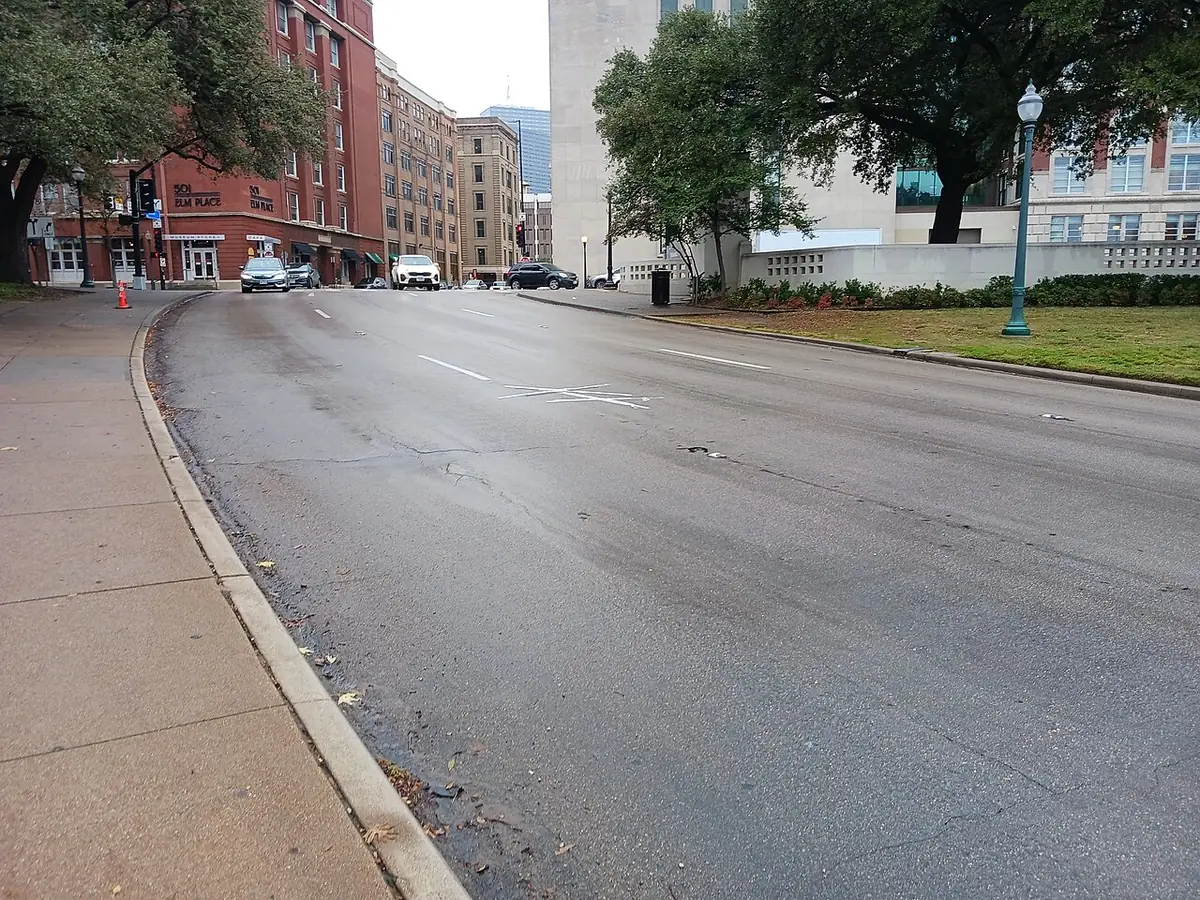
A quiet stretch of downtown Dallas streets, framed by red brick and trees — Photo: Jidanni · CC BY-SA 4.0 · Wikimedia Commons
Beyond the raw figures, the legal nature of what you are buying deserves close attention.
Setting a purchase budget in Dallas cannot rest on a single citywide average per square metre. Prices vary considerably with the age of the building, the presence of amenities such as a concierge or a pool, and above all the exact location relative to the employment centres. On top of that, property taxes and monthly association dues deeply change the real financial effort a buyer carries over the years.
dallasFor saleApartmentestimate
Median price / m²US$2,755Half the apartments sell below this
Median priceUS$260kthe average is 14% higher — a few very large properties pull it up
Most common2 bedrooms44 % of listings
Average size90 m²
By number of bedrooms
Bedrooms
Share of market
Avg price
Price / m²
Avg size
1
30 %
US$201k
US$3,248 +12 %
62 m²
2most common
44 %
US$267k
US$2,900
92 m²
3
22 %
US$341k
US$2,726best value / m²
125 m²
4
4 %
US$459k
US$2,784
165 m²
Each row is an average, compared against the area average of US$2,900 / m². These are indicative estimates of a typical local market, not a measured sample of live listings. Check current listings before relying on them.
What you can actually own: condominium versus full ownership
That same legal rigour applies to every stage of the transaction itself.
Buying an apartment in the United States follows specific legal rules that differ noticeably from shared-ownership law in most European countries. Understanding the distinction between condominium structures and the rules laid down by owners' associations is crucial if you want to avoid unpleasant legal and financial surprises. Your freedom to use the property, and your right to dispose of it, depend entirely on those arrangements.
The condominium model (classic shared ownership)
You privately own the interior of your apartment plus an undivided share of the common areas and the land. The board runs the building through strict rules that govern letting rights and exterior alterations.
What it changesYou have to submit any significant renovation project to the board for prior approval and respect the letting quotas imposed to keep the building residential in character.
The Homeowners Association (HOA) framework
Beyond the building itself, management is often subject to a community association overseeing the whole residential complex, including landscaping, internal roads and sports facilities.
What it changesThe association has the legal power to levy special assessments to fund heavy compliance works, and you cannot opt out of them without facing financial penalties.
The rule to understand before you put a deposit on a property
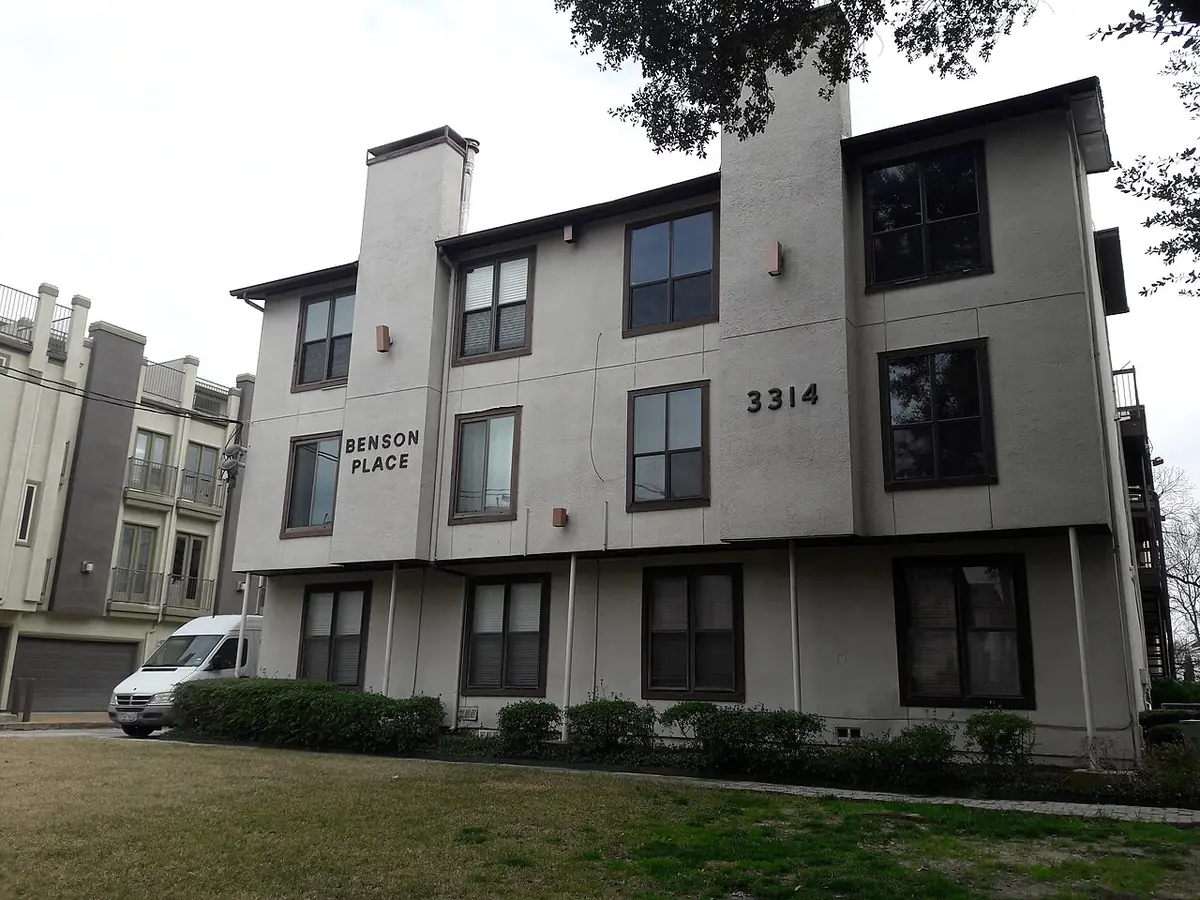
A modern low-rise apartment building typical of Dallas infill housing — Photo: Usernet123u · CC BY-SA 4.0 · Wikimedia Commons
With those legal precautions taken, the transaction itself follows a well-established sequence.
Committing funds on the Dallas property market without understanding earnest money and the inspection window exposes a buyer to losing the deposit outright. The American transaction system rests on standardised but extremely strict contracts, in which every conditional clause has to be drafted with surgical precision. Here is the logical order in which the protections are locked in.
Signing the purchase agreement, drawn up by the real estate agent.
Paying the earnest money (usually 1% to 2% of the purchase price) into an escrow account held by an independent title company.
The opening of the option period, a negotiated window (often 7 to 10 days) during which the buyer can withdraw for any reason at all.
Detailed technical inspections of the property (structure, roof, air conditioning, plumbing) by a certified professional.
Negotiating repairs, or a credit against the final price, based on the defects noted in the inspection report.
Releasing the contingencies and moving to the final closing, run by the title company.
How a property transaction unfolds in Dallas, step by step
That administrative rigour is what protects your investment in the Texan urban landscape.
Buying an apartment in Dallas does not involve a civil-law notary. Instead there is a specific ecosystem of real estate agents, title companies and mortgage lenders. The process is designed to be fast, but it demands constant responsiveness from the buyer. Each player has a precise role in making the transfer of ownership legally secure.
The buyer (you)Financial pre-approvalObtaining a pre-qualification letter from an American lender in advance, or certified proof of funds, to establish that you can pay.
The real estate agent (Realtor)Selecting and viewing propertiesIdentifying apartments that match your criteria through the MLS (Multiple Listing Service) and drafting offers on the state's standard forms.
The title companyChecking title to the propertyA thorough search of the land records to guarantee the property is free of any hidden lien or prior dispute before funds change hands.
The inspectorA full audit of the buildingA careful examination of the general condition of the apartment, of the electrical installation and of the air conditioning systems that are essential in the Texan climate.
The lender or bankThe appraisalValidation of the market value of the property by an independent appraiser instructed by the bank, to confirm that the loan amount matches market reality.
The title companyClosing and final signatureSigning the deed and the loan documents, wiring the funds and formally recording ownership with Dallas County.
High-rise apartment or house with a yard in Dallas: how do you decide?
Now that you are weighing the vertical apartment against the suburban house, let us look closely at the financial reality of the investment.
Choosing between an apartment in a glass tower in Uptown and a large single-family house in the residential suburbs of Dallas is not a matter of aesthetic preference. It is a deep trade-off about how you want to live day to day. Uptown, Downtown and the Design District offer modern buildings with built-in services: rooftop pools, a concierge, gyms and no exterior maintenance at all. That option appeals to professionals who want to cut their commute to the business districts and enjoy a walkable urban life, which remains rare in Texas. The association dues, known as HOA fees, can nonetheless weigh heavily on the monthly budget and rise steadily over the years, which reduces the financial predictability of your investment in the long run.
Choosing a detached house in areas such as Lakewood or Munger Place, or out along the main corridors of North Dallas, offers incomparable freedom of space, tree-lined parks and floor areas that are often double, sometimes at a comparable price per square foot. The direct counterpart of that independence is the constant upkeep a Texan property demands: roofs hammered by hailstorms, foundations on clay soil that need sophisticated watering systems to avoid cracking, and full responsibility for large areas of landscaping. You are buying space and independence, and accepting in exchange a logistical burden that apartment owners hand over entirely to the building's management.
Resale and liquidity also weigh heavily in the balance, depending on the area you are targeting. Urban apartments sometimes go through more volatile market cycles because of the constant supply of new construction in central Dallas, while well-placed houses in established neighbourhoods generally hold their value thanks to the scarcity of land. Your professional profile, the size of your household and your tolerance for maintenance should guide this initial decision, because switching from one format to the other later carries high transaction costs in the Texan tax context.
What total budget do you really need to live in an apartment in Dallas?
With those figures set out, let us look at what an ordinary day actually looks like in these urban neighbourhoods.
Buying an apartment in Dallas never comes down to the mortgage repayment alone. You have to allow for a very specific local cost structure, dominated by high Texan property taxes and by monthly association dues. A rigorous look at each line of spending will spare you financial surprises in your first year in the new home.
Monthly and annual costs for an apartment in Dallas
Cost item
Estimated amount
Details and budget impact
Property tax
1.8% to 2.4% of value per year
Calculated on the annual Dallas County assessment, payable at the end of the year.
Association dues (HOA)
$300 to $800 per month
Varies with the building's amenities, security and size.
Home insurance (HO-6)
$800 to $1,500 per year
Essential to cover the interior of the unit and personal liability in a shared building.
Energy and air conditioning
$150 to $300 per month
Heavily affected by the summer months, when the air conditioning runs continuously.
The amounts shown are indicative averages based on the current Dallas property market and can vary with the exact standard of the building.
Purchase price ranges in the sought-after neighbourhoods of Dallas
Dallas neighbourhood
Average price per square foot
Range for a one to two bedroom
Uptown / Downtown
$350 to $500
$350,000 to $750,000
Deep Ellum
$250 to $380
$280,000 to $520,000
Oak Lawn
$220 to $340
$240,000 to $450,000
Medical District
$180 to $270
$190,000 to $350,000
Prices per square foot exclude conveyancing and closing costs, which traditionally represent 2% to 3% of the total purchase price.
What does an ordinary Tuesday actually look like when you live in Dallas?
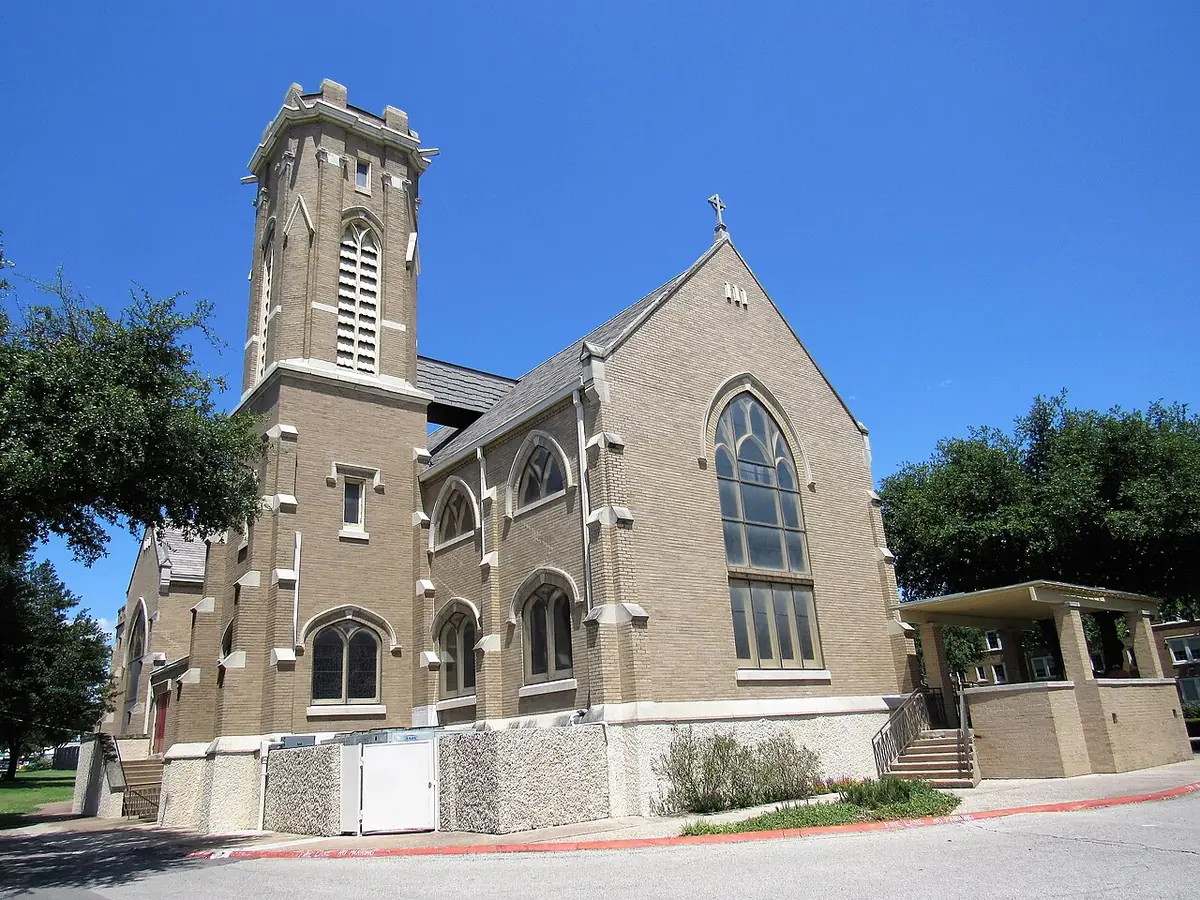
St. Matthew's Cathedral, a Gothic landmark in the heart of Dallas — Photo: Farragutful · CC BY-SA 4.0 · Wikimedia Commons
That appealing routine nonetheless hides aspects that the sales brochures carefully leave out.
Getting the measure of a new place means picturing the real rhythm of journeys and daily routines. Between major freeways such as I-35 or the Dallas North Tollway and the use of local transit, how you organise your time will shape your quality of life. Here is exactly how an ordinary Tuesday unfolds for a resident in a Dallas apartment.
07:30The building's gym or a neighbourhood cafe in UptownThe day often starts with a visit to the shared spaces of the building, or an iced coffee from one of the local chains before the first meetings.
08:45The commute to the Central Business District or out to the Legacy areaMorning traffic on the urban freeways calls for good anticipation, although living in an apartment downtown cuts that journey considerably compared with the outer suburbs.
12:30A business lunch or a break in the neighbourhoodGood fast options and business restaurants abound around the main activity centres, making it easy to combine working life with a lively lunch break.
18:15Getting home and winding downArriving in the secured lobby, stopping at the front desk to collect the day's parcels, and switching off in an air-conditioned space with a hushed feel.
19:45Dinner and a few groceriesA walk out to the local supermarkets, or an evening on the busy terraces of the neighbourhood, without necessarily having to get back in the car.
22:00The night view from the balcony or the rooftop poolClosing the day with an open view over the lit skyscrapers of Dallas, the strongest visual marker of life in a high-rise apartment.
What the sales brochures will never tell you about property in Dallas
Knowing those blind spots is what lets you avoid the classic traps that catch so many first-time buyers.
The Texan property market has its own unwritten rules and technical subtleties, and they can turn an apparently excellent deal into a source of financial trouble. Marketing material highlights the view and the amenities but skips the structural and regulatory points that matter most. Here is what professionals generally leave out during a viewing.
The fast and unpredictable rise in association dues (HOA)
Many recent buildings advertise attractive initial charges that rise sharply from the third year onward, to fund reserves or the maintenance of lifts and pools. That increase lands directly on top of your monthly loan payments and weighs heavily on your budget.
The complexity of the building's rules (CC&Rs)
Buying an apartment does not mean doing absolutely as you please at home. Restrictions on short-term letting of the Airbnb kind, the hours when common areas can be used, and strict rules about pets can sharply limit how you use the place.
The direct impact of extreme weather on the energy bill
Scorching Texan summers put air conditioning systems under real strain. If the building is poorly insulated, your summer electricity bills can easily double compared with the milder months, a recurring cost that is often underestimated.
Assessment rules and the risk of a property tax reassessment
In Texas, the value used to calculate property tax is reassessed each year by the county. If the local market has risen, your property tax rises automatically, permanently changing the balance of your overall monthly costs.
The classic traps people bitterly regret six months after buying
Now that you have identified the mistakes to sidestep, it matters just as much to know whether this kind of purchase is really for you.
Looked likeAn excellent financial deal, with very low association dues quoted in the listing.
Turned outA complete absence of reserve funds in the association, producing an immediate special assessment of several thousand dollars to repair the roof or restore the facade.
Would have caught itAlways asking for the minutes of the last three owners' meetings and reading the reserve study before you sign the final deed.
Looked likeA hyper-central, extremely lively location where everything can be done on foot.
Turned outUnbearable night-time noise from the immediate proximity of fashionable bars, major roads or permanent construction sites.
Would have caught itViewing the property at different times of day, especially at the weekend and late in the evening, to judge the real noise level of the area objectively.
Looked likeA parking space included in the deed of sale, taken at face value.
Turned outA cramped spot, badly placed next to ventilation shafts, or one that requires a complex car lift system prone to frequent breakdowns.
Would have caught itPersonally testing the space with your own vehicle during a second viewing and checking exactly how parking rights are allocated in the building's rules.
Looked likeA bright, west-facing apartment with magnificent sunsets.
Turned outPermanent overheating in summer, making air conditioning indispensable at all hours and sending the monthly electricity bill through the roof.
Would have caught itAnalysing the precise solar orientation of the unit and checking the quality of the double glazing, as well as whether solar film has been fitted to the windows.
Which kind of buyer should absolutely sit this market out?
With those selection criteria set out, it is time to take a final view of your purchase plan in Dallas.
Buying is never a universal solution, and some personal or professional situations sit badly with the constraints of shared ownership in Dallas. Knowing when to walk away from a plan, or to turn to renting instead, is simply sound management of your assets. Here are the profiles for whom this investment carries too much risk.
Investors looking for an immediate, guaranteed net rental yield
→Buying an apartment in a Dallas condominium with the intention of letting it.
High Texan property taxes and steadily rising association dues eat considerably into net returns, which makes letting less attractive here than in other American metros with lighter taxation.
People whose professional horizon in the city is under three years
→Buying with the idea of reselling quickly if they are transferred.
Transaction costs in Texas, including agency commissions and closing costs, need at least three to five years of appreciation to be absorbed, otherwise the resale produces a net financial loss.
Buyers who will not compromise at all on quiet and independence
→Choosing an apartment in a dense residential building in the heart of Uptown.
Living in a shared building necessarily means sharing walls, corridors and outdoor space with neighbours, which inevitably produces noise and community obligations that are incompatible with an absolute need for peace and quiet.
So, are you ready to take the step and buy in Dallas?
A pocket park offering a green pause in Dallas — Photo: Nightryder84 · CC0 · Wikimedia Commons
Buying an apartment in Dallas commits you well beyond the signing of the deed. It is a life choice that anchors you in the economic energy of a major Texan metro while exposing you to the specific features of its property market. If you have measured the real impact of property taxes, taken the full weight of association dues and accepted the compromises that come with urban living, then you have what you need to approach the project calmly and clearly.
The success of your purchase rests above all on the rigour of your financial preparation and on the support of qualified local professionals who know the subtleties of each neighbourhood. Never let yourself be won over by the look of a brochure alone, or by an agent's manufactured urgency. Take the time to study the financial statements of the buildings you are considering, to visit at different hours, and to confirm that you can absorb changes in running costs over the years.
In the end, investing in property in Dallas is a genuine opportunity to take part in the vitality of one of the most attractive regions of the United States, provided you approach every stage methodically. Armed with these factual reference points, you can now start arranging viewings on solid ground, turning every regulatory constraint into a lever for negotiation that protects your investment over the long term.
Related questions
How much are property taxes on an apartment in Dallas, on average?
Property taxes in Dallas generally run between 1.8% and 2.4% of the assessed value of the property each year. That assessment is carried out annually by the Dallas Central Appraisal District and is one of the largest recurring costs for any owner in the state.
Which neighbourhoods are most sought after for buying an apartment in Dallas?
Uptown, Downtown, Deep Ellum and Oak Lawn are among the most popular areas for buying an apartment. They offer immediate access to the business districts, to restaurants and to cultural venues, and their buildings tend to come with modern amenities.
Are there restrictions on short-term letting in Dallas condominium buildings?
Yes. The great majority of condominium buildings in Dallas regulate Airbnb-style or short-term letting very tightly, and many prohibit it outright. If you are considering that use, reading the building's rules before buying is essential.
What extra costs should you expect when buying a property in Texas?
Beyond the down payment and the mortgage, you should allow for closing costs, which generally come to between 2% and 3% of the purchase price. They cover title fees, appraisal costs and local transfer taxes.
How do association dues (HOA fees) change over time in Dallas?
Association dues rise steadily year after year, often by 3% to 7% annually, to keep pace with inflation in maintenance costs, building insurance and the concierge or security services offered to residents.
Do you really need a car if you live in an apartment in central Dallas?
Although some areas such as Uptown let you handle plenty of errands and outings on foot or by scooter, owning a car remains strongly advisable in Dallas if you want to move efficiently across the wider metro and its suburbs.
How long does a property transaction usually take when buying an apartment?
A standard transaction in Dallas generally takes between 30 and 45 days from the seller accepting the offer to final signature at the title company, subject to the loan being approved and the inspections being completed.
How can you protect yourself against unexpected property tax rises in Texas?
Owners can challenge the assessed value of their property with the Dallas Central Appraisal District every year, often with the help of firms that specialise in property tax reduction, in order to limit the increase in their local tax bill.
Which insurance policies are essential when you buy a condominium apartment?
In addition to the master policy the association takes out for the structure of the building, every owner needs a specific HO-6 policy. It covers the interior of the apartment, personal belongings and personal liability.
Is the Dallas property market favourable to first-time buyers?
The Dallas market offers a wide variety of property, but rising interest rates and competition in the central neighbourhoods call for careful financial preparation. First-time buyers need to pay particular attention to their overall budget, taxes and dues included.
Property review of ting
No ting properties in Dallas yet
Be the first — share it on ting and it shows up right here.