Investing in property in Dubai means understanding the specifics of a fast-moving, heavily regulated market. This guide sets out the essentials for choosing your district, keeping control of your budget and securing your purchase step by step.
Get the app
What nobody tells you.
Real prices, hidden costs and the traps to check before you commit.
What buying property in Dubai actually changes about your daily life
Scroll
What buying property in Dubai actually changes about your daily life
Investing in property in Dubai means understanding the specifics of a fast-moving, heavily regulated market. This guide sets out the essentials for choosing your district, keeping control of your budget and securing your purchase step by step.
Written by the ting.ad editorial team ·
Dubai in Street View: drag to look around.
Beyond the macroeconomic figures, how well your way of life fits the type of district you choose remains the single biggest factor in getting this right.
Investing in bricks and mortar in Dubai means looking past the gross yields printed in sales brochures. Tax treatment and a lively rental market draw many international buyers, but the reality of running a property on the ground calls for a clear-eyed look at charges and liquidity. Understanding that mechanism helps you avoid the disappointment that comes from the costs of day-to-day management and building upkeep. Every purchase decision has to be measured against your time horizon and the use you will genuinely make of the property. This is not simply about buying square metres: it is about entering a particular urban ecosystem where competition between new developments constantly redefines rental value.
An extremely dynamic market carried by steady population growthvsAn oversupply of new completions that can dilute resale value in the short term
The ease of transacting is appealing, but the permanent flow of new schemes means you have to target genuinely scarce locations to preserve your capital.
Gross rental yields among the highest of any major world cityvsService charges that can be substantial and must be built into your net calculation from the start
Built-in amenities, pools and concierge services carry a real cost that weighs on actual profitability if occupancy slips.
No tax on rental income and none on capital gains from propertyvsUpfront purchase costs and agency commissions that have to be amortised over several years
The tax advantage is undeniable, but it does not offset a bad initial purchase or a hurried resale before the entry costs have been absorbed.
Which kind of buyer are you, faced with the realities of the local market?
Moving to Dubai from another country means taking on spatial and climatic reference points that are completely different.
Property in Dubai answers very distinct patterns of use, depending on whether you are looking for a seasonal base, a long-term main home or a pure rental-yield product. The city's infrastructure, the distance from the main arteries and the seasonality of the climate all bear directly on how sound your investment is. Choosing the right district depends as much on your working rhythm as on your tolerance for summer heat and commuting. Working out your profile in advance stops you buying something ill-suited to your real needs, or hard to let when the time comes.
Rental investor
Your main objective is to maximise occupancy and net income without worrying about personalising the space. You should favour studios and one-bedroom units in areas well connected to transport and employment hubs such as Business Bay or JVC. Professional managing agents become essential if you live abroad, which eats into part of the margin but buys peace of mind. You must build those management fees into your projections from the very first offer.
Permanent resident
What you want above all is quality of life, proximity to international schools and green space for your family. Quieter, more structured districts such as villa communities or residential schemes on the greener edges of the city fit your expectations better. Floor area and the quality of the finishes matter more than being immediately next to the business districts. Your buying criteria take in how durable the setting is and how school and medical infrastructure nearby will develop.
Seasonal owner
You need a property that is easy to lock up, in a development offering hotel-style services and faultless security while you are away. Serviced apartments in the coastal areas or in the city centre suit that dual use perfectly. The trade-off lies in sharing income with the operator of the building and in scheduling constraints on your own stays. This formula calls for close reading of the delegated management contracts to avoid nasty surprises over blocked periods.
What changes radically in the way you live compared with where you came from
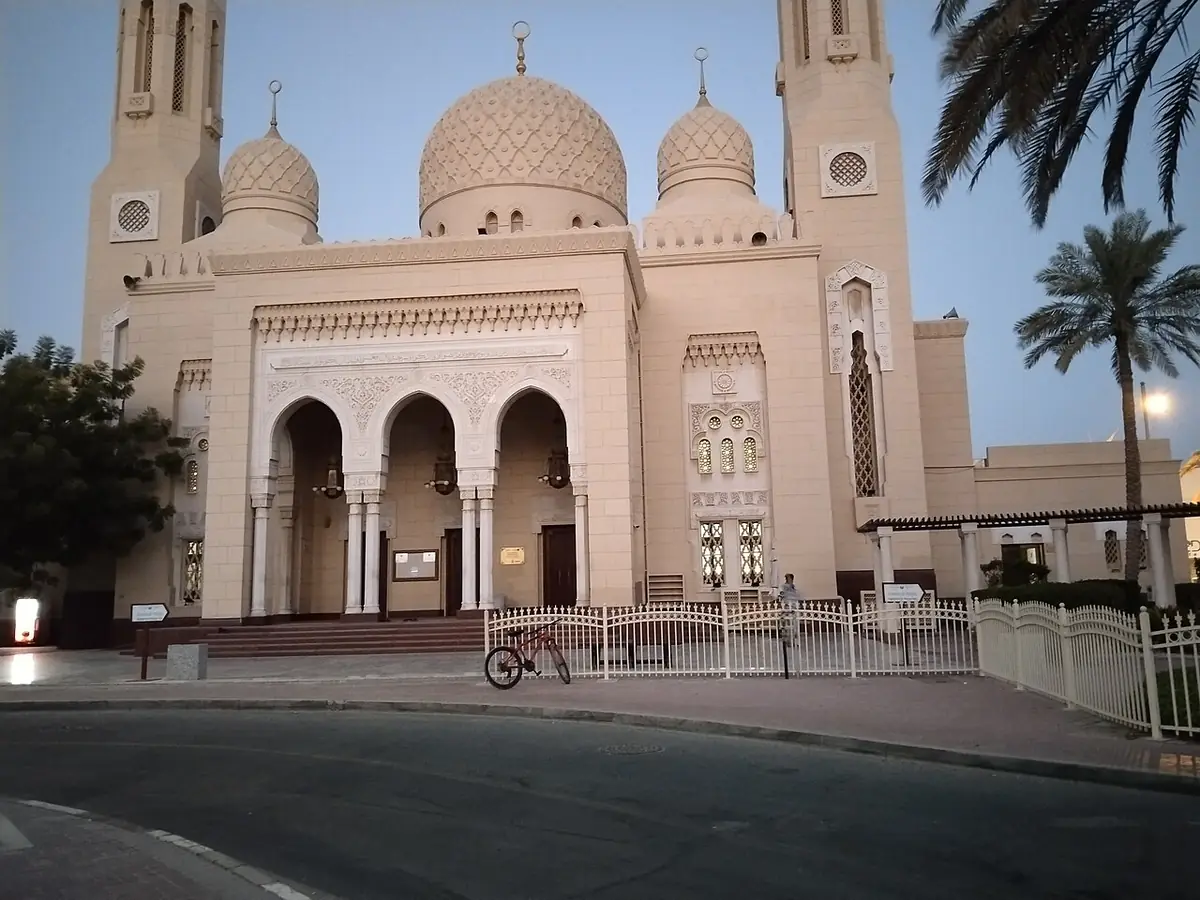
Jumeirah Mosque, a well-known landmark in Dubai — Photo: ZI Jony · CC BY-SA 4.0 · Wikimedia Commons
Once you have those reference points, choosing the geographic area becomes the decisive step in making your investment work.
The urban layout and way of life in Dubai bear no resemblance to the standards of older, traditional cities. The city is designed around the car, major road corridors and air-conditioned activity hubs, which profoundly changes your relationship with public space and with walking. Services built into residential developments take the place of the traditional shops you would find on foot around the corner. Anticipating those cultural and practical shifts will spare you a sense of isolation, or a jarring change of habits, in your first months here.
From abroad
Getting around mostly on foot or on long-established public transport in the heart of the city
Dubai
A way of life built around the car, major motorway arteries and air-conditioned trips from one car park to the next
You absolutely must check how road access flows at peak times from your future home, so your daily journeys do not turn into an ordeal.
From abroad
A dense fabric of neighbourhood shops with bakeries and small local markets
Dubai
Vast shopping malls and retail units built into the ground floor of large residential complexes
Street life gives way to air-conditioned interior spaces, changing how sociable and how spontaneous everyday outings feel.
From abroad
Temperate winters that let you enjoy the outdoors all year round without much constraint
Dubai
Very hot summers where outdoor life retreats entirely into indoor or artificially cooled spaces
The quality of thermal insulation and the performance of your apartment's air-conditioning become absolute comfort criteria.
From abroad
A co-ownership structure framed by strict regulatory law and general meetings that can drag on
Dubai
Management by professional property management companies under the oversight of the local regulatory authorities
Maintenance and refurbishment decisions are taken faster, but the owner has less direct grip on day-to-day management if the managing company underperforms.
How to choose between the main residential and business districts
These district dynamics translate into sharply contrasting price realities that are worth examining in detail.
Dubai's geography is made up of highly specialised micro-markets, running from ultra-prized waterfronts to outlying communities built around greenery. Each area has its own rhythm, its target population and its prospects for rental yield or capital growth. Choosing a district is not about aiming for the most prestigious address, but about identifying the one that matches your budget and your wealth strategy exactly. Public transport infrastructure and the extension of the network regularly shift the relative appeal of these areas.
Downtown Dubai and DIFC
Permanent urban buzz, iconic towers and a concentration of professionals working in finance and international trade.
Suits
Investors after strong rental liquidity, and city dwellers who like being able to walk to the main points of interest.
Trade-off
A high price per square metre, heavy service charges and dense traffic at peak times.
Dubai Marina and JBR
A seaside setting, lively waterside promenades and a large Western expatriate community.
Suits
Those who want to combine beach proximity, nightlife and strong seasonal or short-let rental demand.
Trade-off
Road access often congested at the end of the day and a housing stock that is ageing in places, calling for checks on upkeep.
Jumeirah Village Circle (JVC)
A residential district on a human scale, made up of small buildings and a few villas, offering a calmer and greener setting.
Suits
Buyers on a more measured budget looking for an attractive gross rental yield and a stable pool of resident tenants.
Trade-off
Relatively far from the beaches and the central business districts, which makes daily car use necessary.
Budget benchmarks and the price ranges being recorded
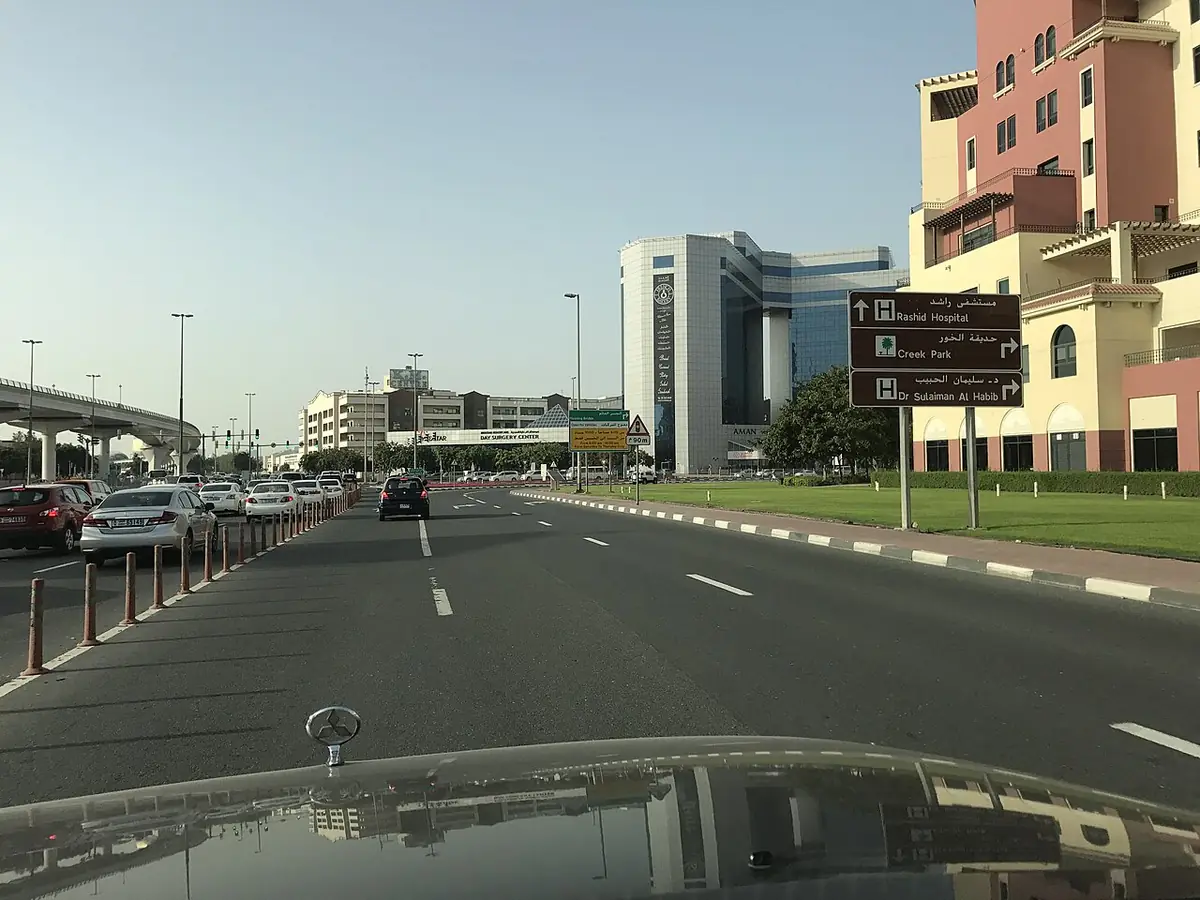
A typical Dubai street, wide and lined with modern buildings — Photo: Darvin.wilson · CC BY-SA 4.0 · Wikimedia Commons
Beyond the purchase amount, the legal structure of your ownership determines what you actually own.
The Dubai property market shows a wide spread of prices depending on the exact location, the quality of the finishes and the developer's reputation. It is essential to distinguish the headline purchase price from the compulsory additional costs, including the land registration fee and agency commission. Anticipating those outlays avoids nasty surprises when you come to sign the final deed of sale before the competent authorities. The tables below summarise the benchmarks observed across the main segments of the current residential market.
dubaiFor saleApartmentestimate
Median price / m²AED 14,250Half the apartments sell below this
Median priceAED 1.57mthe average is 14% higher — a few very large properties pull it up
Most common2 bedrooms37 % of listings
Average size105 m²
By number of bedrooms
Bedrooms
Share of market
Avg price
Price / m²
Avg size
1
36 %
AED 1.14m
AED 16,350 +9 %
70 m²
2most common
37 %
AED 1.56m
AED 14,850
105 m²
3
20 %
AED 1.97m
AED 14,100best value / m²
140 m²
4
7 %
AED 2.99m
AED 15,750 +5 %
190 m²
Each row is an average, compared against the area average of AED 15,000 / m². These are indicative estimates of a typical local market, not a measured sample of live listings. Check current listings before relying on them.
Full ownership or specific regimes: what you can actually hold
Securing your investment also rests on scrupulous respect for the transaction process and the escrow accounts.
Clear ownership rules for foreign investors are one of the pillars of Dubai's property success. It is crucial to understand the distinction between freehold zones and the other specific regimes. That distinction underpins your long-term legal security and shapes what you can do by way of inheritance or resale. Grasping these fundamentals protects you against the confusion some market players are happy to maintain.
Freehold zones (full ownership)
In these zones designated by the government, foreign nationals can acquire full ownership of a property with no time limit, with the title deed officially registered in their name with the Dubai Land Department. This status gives the same rights of enjoyment, letting and resale as in most major Western countries.
What it changesYou hold an asset you can pass on or sell with full legal security, which is the bedrock of most purchases made by international buyers.
Leasehold zones (long lease)
Certain areas or specific property types can fall under a long leasehold regime, granting a right of occupation and use for a fixed period, generally between 30 and 99 years. This legal framework is less common for recent residential schemes but is still found on certain particular projects.
What it changesYou need to pay close attention to the remaining term of the lease when you buy, so you can anticipate the potential discount as it nears expiry.
The golden rule of escrow accounts and staged payments before handover
Knowing the administrative stages lets you approach each phase of the transaction methodically and with foresight.
Buying a property off-plan in Dubai is governed by strict regulation put in place by the official land authority. The mechanism relies on the mandatory use of audited escrow accounts, where every payment the buyer makes is applied exclusively to the construction of the project concerned. Understanding this chain of guarantees lets you invest calmly in the new-build market without fearing that funds paid over will be diverted. Following this procedure is what separates a secure investment from a high-risk one.
Signing the initial reservation contract and paying the first deposit into the developer's official escrow account.
Registering the contract with the Dubai Land Department and obtaining the interim registration certificate (Oqood) for off-plan properties.
Monitoring actual construction progress, certified by an independent engineer appointed by the regulatory authorities.
The triggering of successive payment calls, strictly indexed to the percentages of construction progress recorded and validated.
The thorough final inspection of the property (snagging) at completion, to identify any defects before handover.
Issue of the final Title Deed once the balance of the price is settled and completion is formally recorded.
The chronological run of a property transaction, step by step
By following these steps rigorously and surrounding yourself with licensed professionals, you fully secure your investment plan.
Seeing a property purchase through in Dubai means following a formalised, transparent process involving clearly identified parties. From the initial selection of the property to the final transfer of ownership, each participant plays a precise role that has to be respected. This rigorous structure protects the buyer and guarantees the legal validity of the transaction. Here is the typical path a buyer follows, from the first viewing to moving in.
BuyerSetting the brief and shortlisting propertiesYou set your overall budget including fees and shortlist the schemes or existing properties that match your strategy.
Estate agentDrafting and signing Form F (the MOU)The Memorandum of Understanding formalises the agreement between buyer and seller, fixing the price, the conditions and the timetable for the sale.
BuyerPaying the security deposit into escrowA security cheque for 10% is usually lodged with the agency or the third-party administrator until the transfer is completed.
Developer or sellerObtaining the No Objection Certificate (NOC)The developer or the building management certifies that the current owner is up to date with all charges and authorises the sale.
Dubai Land DepartmentOfficial transfer of ownership and issue of the Title DeedThe transaction is validated at the official counter or through the dedicated app, with payment of the registration fee and the professional fees.
Apartment or villa in Dubai: weighing your way of life against your running costs
Once the type of property is settled, the central question of the overall budget and the additional costs immediately confronts every buyer.
Choosing between an apartment high above the city and a private villa in Dubai is not just a surface calculation about the number of bedrooms or the headline price per square metre. It commits you to a radically different way of living, dictated by the management of outdoor space, air conditioning, and the intensity of daily upkeep under a demanding desert climate. In the centre, in districts such as Downtown Dubai or Dubai Marina, an apartment offers immediate urban ease, security reinforced by permanent concierge desks, and effortless access to shared amenities such as infinity pools and high-end gyms. It is the logistically rational choice for working people whose time is short and who put central location ahead of privacy on their own plot.
Opting instead for a villa or a townhouse in a gated community such as Arabian Ranches or Dubai Hills Estate means accepting a wholly different social and logistical contract. Here the living space expands, children get enclosed parks and private lawns, but the maintenance burden shifts entirely onto the owner's shoulders. Central air conditioning runs flat out, the greenery calls for sophisticated irrigation, and the slightest technical failure on the roof or the pool cannot be handed off to a distant building manager. This commitment translates into service charges (community fees) that can be substantial, funding the upkeep of the artificial lakes, golf courses and private roads that characterise these upmarket residential enclaves.
Purely in terms of wealth, an apartment in a managed building generally shows better liquidity and a higher gross rental yield, and is particularly sought after by a young population of expatriates and digital nomads looking for flexible leases. Modern towers benefit from constant rental demand, stimulated by their immediate proximity to financial hubs such as the DIFC or the business centres of Business Bay. A villa, by contrast, behaves like a long-term capital asset, attracting wealthy family buyers, often long-established residents, who want to shield themselves from rental volatility and anchor their family firmly in the Emirati urban landscape.
The final choice therefore comes down to your investment horizon and your tolerance for day-to-day logistical constraints. If you expect to move on within a few years, or if you refuse to spend your weekends supervising maintenance work, the urban apartment is the obvious functional answer. If, on the other hand, your plan for life in Dubai spans a decade and you put space, residential quiet and architectural independence at the top of your priorities, the villa is the investment vehicle most consistent with your personal and family ambitions.
What budget do you really need to buy and live in an apartment in Dubai?
To see how these costs play out in real life, it helps to follow a typical day in the emirate.
Buying an apartment in Dubai never comes down to the headline price shown on the property portals. The total cost of the operation takes in a series of compulsory fees, regulated by the emirate's government, that start applying the moment you sign the reservation contract. You therefore need to plan for the transfer of ownership, the fees of the various market participants, and the recurring outgoings needed to keep the property in impeccable condition over the years.
Upfront purchase costs and one-off taxes at the point of sale
Cost item
Indicative rate or amount
Recipient and terms
DLD fee (registration fee)
4% of the purchase price
Dubai Land Department, payable in cleared funds on the day of transfer.
Estate agency commission
2% of the purchase price (excluding VAT)
Agent acting for the buyer or the seller, the market standard.
No objection certificate (NOC) fee
Between 500 and 5,000 AED
Payable to the developer or the management company to certify there are no arrears.
Administrative transfer charges
Between 2,000 and 4,000 AED
Processing fees charged by the Dubai Land Department or the registration agent.
These purchase costs are always added to the net price to the seller and must be funded from your own money, even where a bank loan is involved.
Recurring annual charges and running costs
Type of charge
Annual order of magnitude
What the service covers
Community and maintenance fees
15 to 35 AED per square foot
Upkeep of common areas, 24/7 security, pool, gym.
DEWA consumption (water and electricity)
8,000 to 25,000 AED per year
Monthly billing, varying with floor area and air-conditioning use.
Comprehensive home insurance
1,500 to 4,000 AED per year
Cover for contents and the owner's public liability.
Service charges vary considerably with the location of the tower and the quality of the amenities the development offers.
Health, schools, transport: what does an ordinary Tuesday look like for an owner in Dubai?
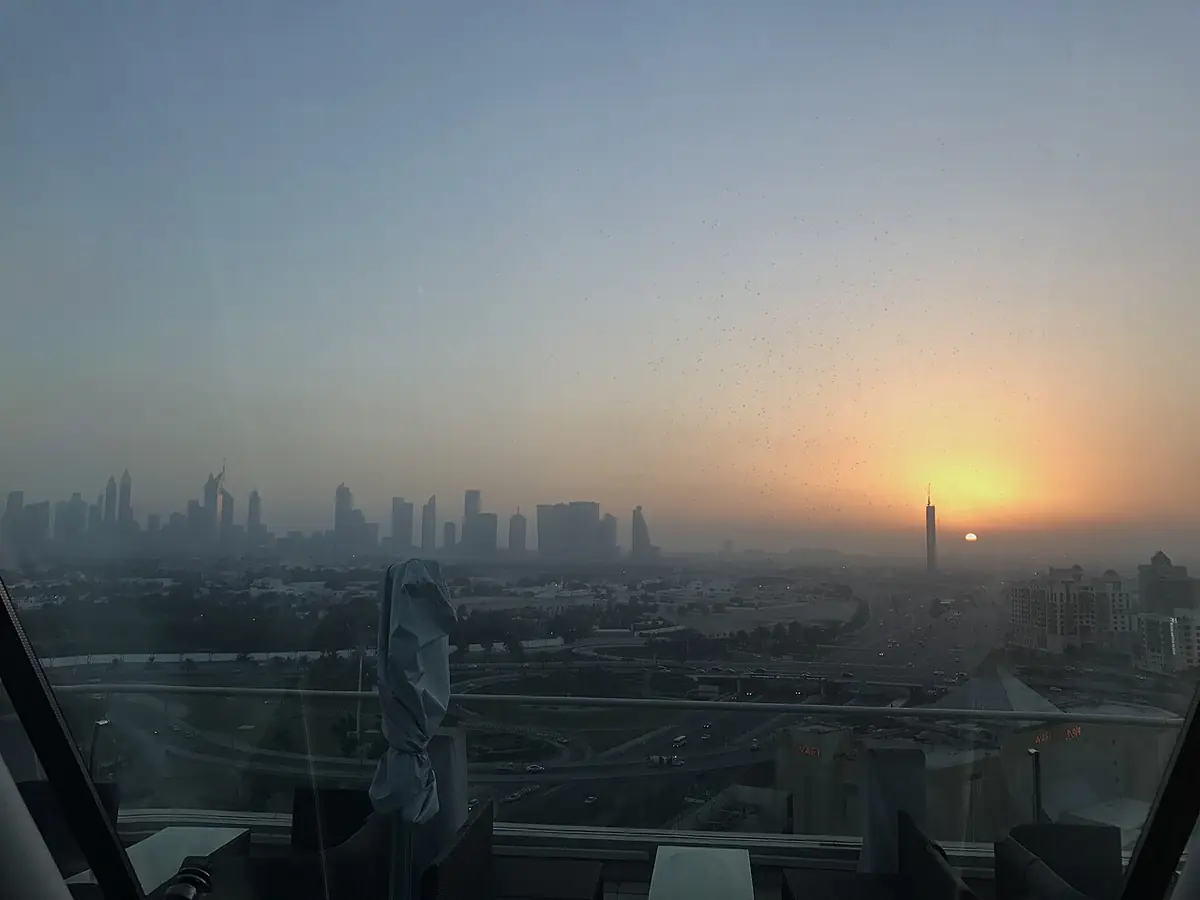
Dubai's skyline at sunset, a fitting close to the day — Photo: Lxs · CC BY 4.0 · Wikimedia Commons
Beyond that apparent ease, the local property market holds subtleties the sales brochures often leave out.
Living in Dubai means building the traffic flows of major arteries such as Sheikh Zayed Road or Al Khail Road into your daily organisation. The rhythm turns on modern, highly connected infrastructure, where every journey is designed to optimise the time between residential areas, the international school hubs and the emirate's core business districts.
07:00Residential district (Dubai Marina or JVC, for example)Waking up and setting off early to avoid the main roads clogging up at peak times.
07:45International schoolDropping the children at one of the emirate's many British, American or IB schools, equipped with first-rate sports facilities.
08:30Business district (DIFC or Downtown Dubai)Arriving at the office and settling into an air-conditioned workspace on high-speed internet, ready for international meetings.
13:00Business lunch or a local breakA professional meeting or a moment of downtime in one of the many restaurants built into the office towers.
17:30Medical centre or local clinicA check-up or routine consultation in an ultra-modern health facility that accepts international insurance cover.
19:00Supermarket or shopping mallLast-minute shopping in a large store open late, stocking goods imported from all over the world.
20:30HomeBack at the apartment, with access to the building's pool to close the day in a calm and secure setting.
What developer brochures and listings leave out in Dubai
Staying alert to what the market leaves unsaid is how you avoid the classic traps that catch new buyers six months after they move in.
The Dubai property market runs on specific regulatory and operational codes that differ noticeably from European norms. Behind the promise of a high yield and an idyllic setting lie technical, contractual and climatic realities you absolutely must identify before signing any reservation cheque with a developer or a private seller.
The direct impact of summer heat on fittings and outdoor areas
Between June and September, extreme temperatures put severe strain on building materials, weather seals and air-conditioning mechanisms. A poorly ventilated apartment, or one fitted with low-grade equipment, will suffer recurring breakdowns, leaving the owner with very high corrective maintenance costs.
The legal reality of delivery delays on off-plan purchases
Buying a property under construction exposes you to frequent schedule slippage from developers, sometimes by several months. You must check that an official escrow account approved by the Dubai Land Department exists, to be sure your funds are protected against any financial failure of the company.
How service charges evolve over the years
Initial charges may look moderate when a new tower is handed over, but they tend to rise as the building ages and the shared plant (lifts, pool pumps, fire systems) needs heavy replacement and specialist attention.
The strict rules governing internal alterations
Knocking down a partition or changing the layout of a bathroom in a Dubai apartment is not simply a matter of personal initiative. It requires official permissions from the building management and the competent authorities, on pain of heavy fines and complications on a future resale.
How volatile yields are with the tourist season
If you intend to use your apartment for short-let holiday rental, bear in mind that the market is strongly seasonal. The winter months show peak occupancy at high rates, while the summer period sees a marked slowdown that weighs on the gross annual return.
The classic traps new owners discover six months after buying
These disappointments are a reminder that property investment in Dubai does not suit every kind of buyer.
Looked likeAn open view over the skyline or over water from the balcony
Turned outA new tower went up on the plot opposite, blocking the view and generating constant daytime noise.
Would have caught itAlways checking the planning maps with Dubai Municipality to identify undeveloped plots and future projects that could affect the outlook.
Looked likeVery attractive service charges quoted by the agent
Turned outAn extraordinary general meeting voted a special levy to fund a complete refurbishment of the facade and the lifts.
Would have caught itInsisting on the minutes of general meetings for the past three years, to spot approved work still pending and the true state of the building's reserve fund.
Looked likeAn estimated ten-minute journey to reach the business district
Turned outA major road bottleneck at peak times turns the daily commute into a forty-five-minute ordeal.
Would have caught itTesting the actual journey at exact peak times (07:30 and 18:00) on a weekday before signing the reservation contract or the final deed.
Looked likeCentral air conditioning included and trouble-free
Turned outRepeated compressor failures and disproportionate cooling bills, caused by poor thermal insulation across the building.
Would have caught itCommissioning an independent technical audit of the air conditioning and checking the energy rating of the building's plant before conditions precedent are lifted.
Who should absolutely hold off buying an apartment in Dubai right now?
With those filters in place, the time has come to decide whether your purchase plan is ready.
Despite the emirate's tax appeal and economic momentum, buying property is not a universal answer. Some profiles expose themselves to major financial risk, or to operational disillusion, if they commit to property without the essential guarantees or enough visibility on their professional future.
The employee on an insecure contract, or an expatriate here less than six months
→Wanting to buy immediately to stop paying rent they see as money down the drain.
Without proven job stability, and without knowing the subtleties of the local market, they risk a forced sale in the short term, which means heavy financial losses given that transaction costs cannot be recovered.
The investor whose funds barely cover the net price
→Borrowing, or counting on a loan, without setting aside the compulsory 6% to 7% in additional costs.
The slightest cash-flow variation or delayed payment puts them in immediate technical default with the developer or the registration authorities, jeopardising the whole transaction.
The buyer looking for a passive investment with no management or follow-up
→Buying off-plan in the hope of automatic capital growth without getting involved in monitoring the build.
A property in Dubai demands active steering, whether that means supervising the letting, keeping an eye on service charges or anticipating how competition in the district will develop.
So, are you ready to take the plunge and buy in Dubai?
Coming to the end of this exercise calls for a clear-eyed look at your deeper motivations, your financial position and your horizon in life. Buying an apartment in Dubai does not reduce to a simple sum about gross yield, nor to an impulse driven by the local tax treatment. It is an act of putting down roots in one of the most dynamic and competitive urban environments on the planet, and it demands method, rigour and a firm grip on what you can genuinely afford beyond the headline price.
If you have worked through every stage, from telling the districts and property types apart to building in all the additional fees, the service charges and the constraints of the summer climate, you now have what you need to decide with confidence. The shrewd investor is not the one chasing a speculative windfall, but the one who secures a quality asset in a good location, whose liquidity and rental demand will ride out the emirate's economic cycles unscathed.
Take the time to audit the cash you have available to cover the registration and transfer fees in full without weakening your emergency savings. View several properties at peak hours, talk to residents who have lived in the target building for years, and insist on total transparency about the accounts and the minutes of general meetings. That level of exactingness is your best defence against disappointment, and it is what makes sure your property investment in Dubai stays a source of calm and of lasting value.
Related questions
What registration and transfer fees apply when buying property in Dubai?
Registration fees payable to the Dubai Land Department (DLD) come to exactly 4% of the purchase price. On top of that you normally pay administrative transfer charges of between 2,000 and 4,000 AED, plus the estate agency commission, traditionally set at 2% of the transaction value.
Can non-resident foreigners buy property freehold in Dubai?
Yes, non-resident foreign investors are entitled to buy property freehold in zones specifically designated by the emirate's government. Such a purchase confers full and permanent ownership, with no time limit, and is officially registrable with the Dubai authorities.
What do service charges (community fees) typically cost in Dubai?
Service charges are calculated on the floor area of the property, usually expressed in square feet (sq ft). They range from 15 to 35 AED per square foot per year depending on the standing of the development, whether there is a pool or a gym, and the quality of the security and maintenance services provided by the building.
Is it possible to get a mortgage in Dubai as a non-resident?
Several local and international banks present in Dubai offer mortgages to non-residents. Lending conditions, however, usually call for a larger deposit, often between 25% and 50% of the value of the property, along with very rigorous documentary proof of income.
What is an off-plan purchase and what are the risks involved?
An off-plan purchase means buying an apartment from a developer before or during construction. The main risk lies in potential delivery delays or, more rarely, in the developer failing. As protection, the law requires buyers' funds to be paid into a regulated escrow account.
Does owning property in Dubai automatically grant a residence visa?
Buying a property worth at least 2 million AED allows you to apply for a long-term residence visa, often called the Golden Visa. For properties valued between 750,000 and 2 million AED, other renewable property visas are also available subject to specific conditions.
What property taxes apply to owners in Dubai?
Dubai levies no annual property tax comparable to European local taxes. There is no tax on rental income either, and no capital gains tax when a residential property is resold, which is one of the emirate's main tax attractions for investors.
How does reselling an apartment work before the mortgage or the construction is finished?
Reselling a property still under construction (an assignment of contract) or still carrying a mortgage is entirely possible, but it requires specific procedures. You need the developer's prior consent, or you must settle the outstanding mortgage with the bank on the day of signing before the official registration agent.
Which Dubai districts offer the best rental yields for an apartment?
Busy districts such as Dubai Marina, Jumeirah Village Circle (JVC), Business Bay and Downtown Dubai have historically shown the most attractive gross yields. These areas benefit from sustained rental demand, fed by a constant arrival of new working residents and international visitors.
What pitfalls should you avoid when signing a reservation contract (MOU)?
The Memorandum of Understanding (MOU), or Form F, is the contract binding buyer and seller. It is crucial to include clear conditions precedent, notably obtaining the developer's no objection certificate (NOC) and verifying that no lien or financial debt is attached to the property.