Buying a house in Montréal calls for a clear-eyed reading of local specifics, winter conditions and Quebec legal rules. This guide walks you through the process step by step so you can structure your purchase on your own, with no blind spots.
Get the app
What nobody tells you.
Real prices, hidden costs and the traps to check before you commit.
Why the size of a house in Montréal tells you little about your day-to-day comfort
Scroll
Why the size of a house in Montréal tells you little about your day-to-day comfort
Buying a house in Montréal calls for a clear-eyed reading of local specifics, winter conditions and Quebec legal rules. This guide walks you through the process step by step so you can structure your purchase on your own, with no blind spots.
Written by the ting.ad editorial team ·
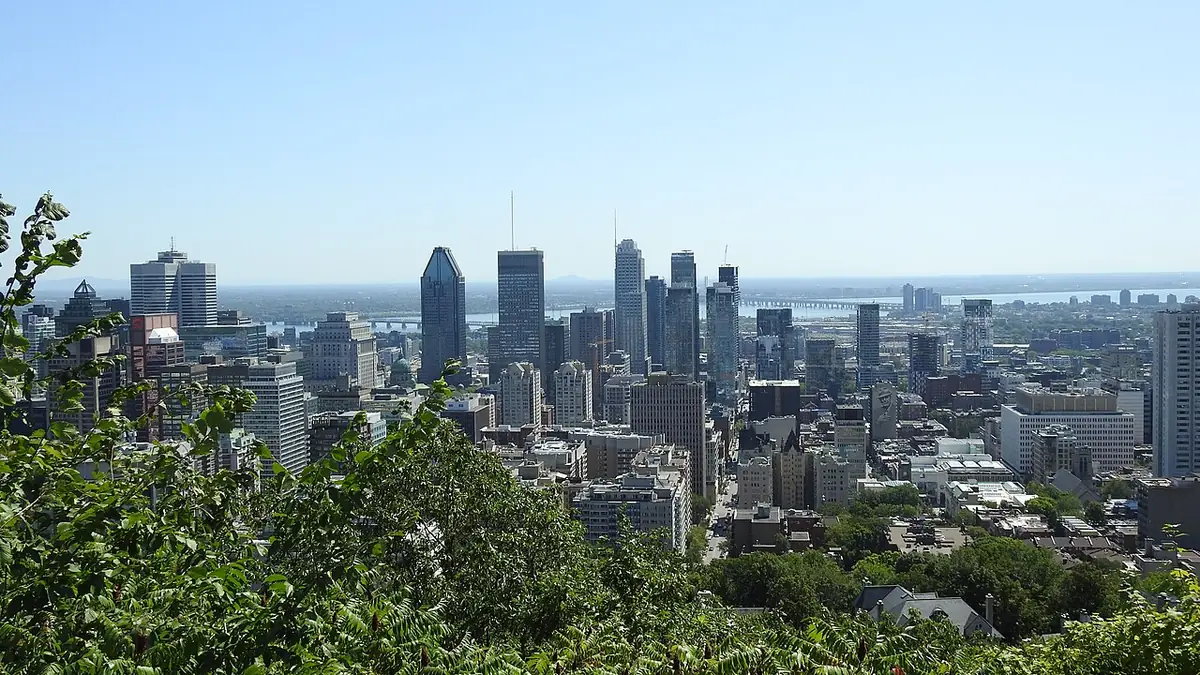
Belvédère Kondiaronk, Montréal in Street View: drag to look around.
Buying a house in Montréal commits you to far more than floor area and room layout. Between the harshness of winter, access to public transport and the real cost of maintaining a property that may be a century old or brand new, the Quebec property equation demands that you look at things squarely. A large lot or a fully finished basement is paid for in insulation constraints, snow clearing and commuting time, all of which need to be measured from the outset if you want to avoid disappointment.
Gross floor areavsReal energy costs
A large, poorly insulated house facing the deep cold of January multiplies the heating bill compared with a more compact, better designed volume. The volume you have to heat weighs heavily on an owner's annual budget.
Residential quietvsDistance from services
Looking for a purely suburban, leafy area often means giving up walking to do the daily shopping and relying entirely on the car for even the shortest local trip.
Period architectural charmvsBringing the building up to code
Period character with woodwork and exposed masonry sometimes hides structures that need major work on the roof, the foundations or the electrical system to meet the city's strict standards.
What kind of everyday life are you actually looking for in Montréal?
Montréal life varies enormously depending on whether you want the buzz of the central boroughs, a neighbourhood with its own shopping street, or the calm of the outer residential belts. Every buyer profile has to test real habits against the climate and logistics of the city, so that the choice does not start to hurt only after signing at the notary's office.
Proximity and active city life
Choosing a single-family house in the central boroughs means significant financial compromises on lot size or on the general condition of the property. You gain hours of sleep and direct access to the structuring transport networks, the metro in particular, but you have to accept sharing more walls with neighbours and outdoor space that is often reduced to its simplest form. This is the choice of daily fluidity over extended private space.
Family space and parks
Outlying residential neighbourhoods and the quieter boroughs offer houses with genuine back yards and immediate access to tree-lined parks. In exchange, your trips to the employment hubs get significantly longer, especially at peak hours and during winter snowstorms. You need to assess how much daily travel by car or heavy transit your household can tolerate in order to reach the centre.
Renovation and heritage
Buying an older property to renovate lets you shape a home that is uniquely yours while taking your place in Montréal's architectural history. That route demands a substantial financial reserve to absorb the surprises of a building site, plus considerable mental availability to manage the local trades. The potential long-term gain is earned through months of demanding project management.
What changes fundamentally when you buy property in Montréal rather than back home
Understanding these administrative and cultural mechanics lets you approach the choice of neighbourhood with a properly sharpened mind.
Moving to Quebec unsettles most of the reference points newcomers bring with them on transactions, financing and building construction. The vocabulary of the notarial system, the central role of the real estate broker and the weight placed on the history of a condominium or an individual building all require a quick learning phase if you want to secure your purchase.
From abroad
Standardised technical surveys and measured floor area
Montréal
An assessment by an independent building inspector engaged by the buyer
The pre-purchase inspection report becomes the cornerstone of every negotiation, replacing the standardised survey certificates used elsewhere with a broad, detailed analysis of the physical condition of the house.
From abroad
The idea of a single closing professional
Montréal
The notary carries the legal security of the transaction and acts for all the parties
The notary checks the titles, carries out the cadastral searches and holds the funds in trust until the keys are officially transferred, which guarantees the validity of the deed of sale.
From abroad
Local taxation and property rates
Montréal
The annual municipal and school assessment levied by the city
Property taxes are a very significant recurring budget line that has to be built into your long-term affordability calculation alongside the mortgage.
From abroad
Simple conditional purchase offers
Montréal
A promise to purchase with strict conditions precedent and precise deadlines
Every clause covering financing, inspection or the sale of another property is framed by non-negotiable cut-off dates that legally bind whoever signs.
How to find your way among the main residential sectors of Montréal
Montréal geography is built around sharply contrasted neighbourhood dynamics, running from the cultural density of the central sectors to the wide-open spaces of the outer boroughs. Every area has its own rhythm, its school infrastructure and its access to the main road or transit corridors, and all of that deserves a cool-headed analysis.
The central and adjacent boroughs
A walkable neighbourhood life, animated by local shops, cafes and a strong cultural mix.
Suits
Buyers who put shorter commutes and a lively neighbourhood ahead of large private green space.
Trade-off
Higher prices per square metre, smaller lots and very limited availability of single-family houses.
The intermediate residential neighbourhoods
A workable balance between residential quiet, tree-lined parks and direct access to the metropolitan network.
Suits
Families looking for a realistic compromise between comfortable living space and connectivity with the centre of the island.
Trade-off
Sustained demand that keeps competition between buyers high, and properties that sometimes need updating.
The outlying sectors and the belts beyond
Large properties on big lots, complete quiet and an environment centred on nature.
Suits
Those who need generous interior volumes, easy parking and a controlled budget for every square foot bought.
Trade-off
Almost total dependence on the car and long daily commutes toward the central employment areas.
A realistic picture of the costs and charges tied to buying a house in Montréal
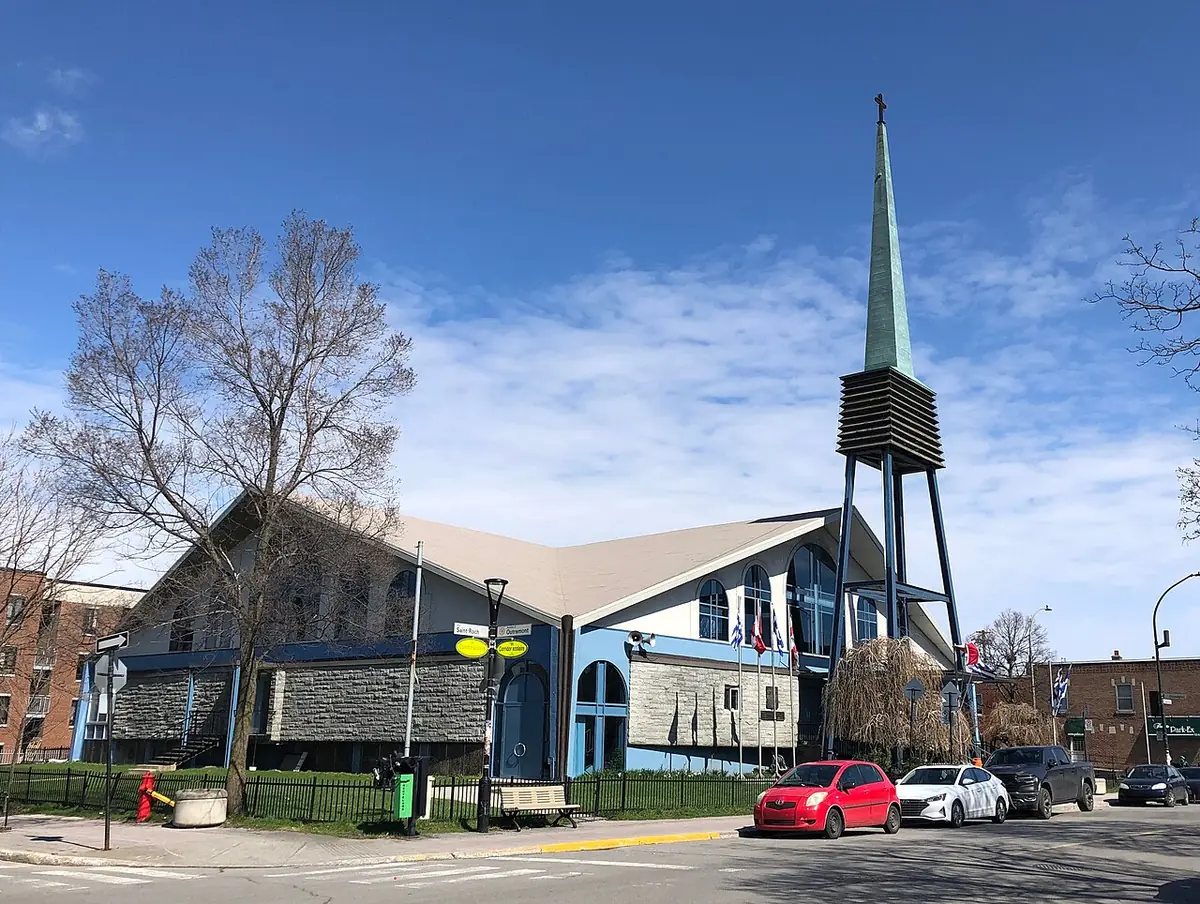
A striking church marks this Montreal street corner — Photo: LenMontreal · CC BY-SA 4.0 · Wikimedia Commons
Once the financial frame is set, it matters to understand precisely the legal nature of the ownership right you are acquiring.
Buying property in Montréal is not just the price written on the promise to purchase. You have to factor in all the additional costs, from the land transfer duty (known locally as the welcome tax) through to the real annual cost of maintaining a building exposed to Quebec's extreme swings in climate.
montrealFor saleHouseestimate
Median price / m²CA$4,129Half the apartments sell below this
Median priceCA$624kthe average is 14% higher — a few very large properties pull it up
Most common2 bedrooms65 % of listings
Average size144 m²
By number of bedrooms
Bedrooms
Share of market
Avg price
Price / m²
Avg size
2most common
65 %
CA$624k
CA$4,346
144 m²
3
31 %
CA$795k
CA$4,129best value / m²
193 m²
4
5 %
CA$1.05m
CA$4,129best value / m²
254 m²
Each row is an average, compared against the area average of CA$4,346 / m². These are indicative estimates of a typical local market, not a measured sample of live listings. Check current listings before relying on them.
What you actually own: full ownership and cadastral realities
Buying a single-family house in Montréal gives you clear ownership rights over the building and the land, but it also carries direct responsibilities on party walls, municipal zoning and compliance with the local planning by-laws that govern any future modification.
Single-family ownership in full title
You hold the entirety of the land and the built structure, which gives you complete freedom of decision to carry out an extension, an energy retrofit or landscaping work, subject to obtaining the required permits from your borough.
What it changesYou alone carry the full financial burden of maintaining the roof, the foundations and the heating systems, with no way of sharing it with other co-owners.
Servitudes and property boundaries
A careful reading of the certificate of location produced by the land surveyor reveals any rights of way, shared fence lines or encroachments that affect how you can actually use your lot.
What it changesIgnoring these elements at the time of purchase exposes the new owner to complicated disputes with neighbours or to unexpected restrictions on developing their own parcel.
The critical sequence to master before you pay a deposit in Montréal
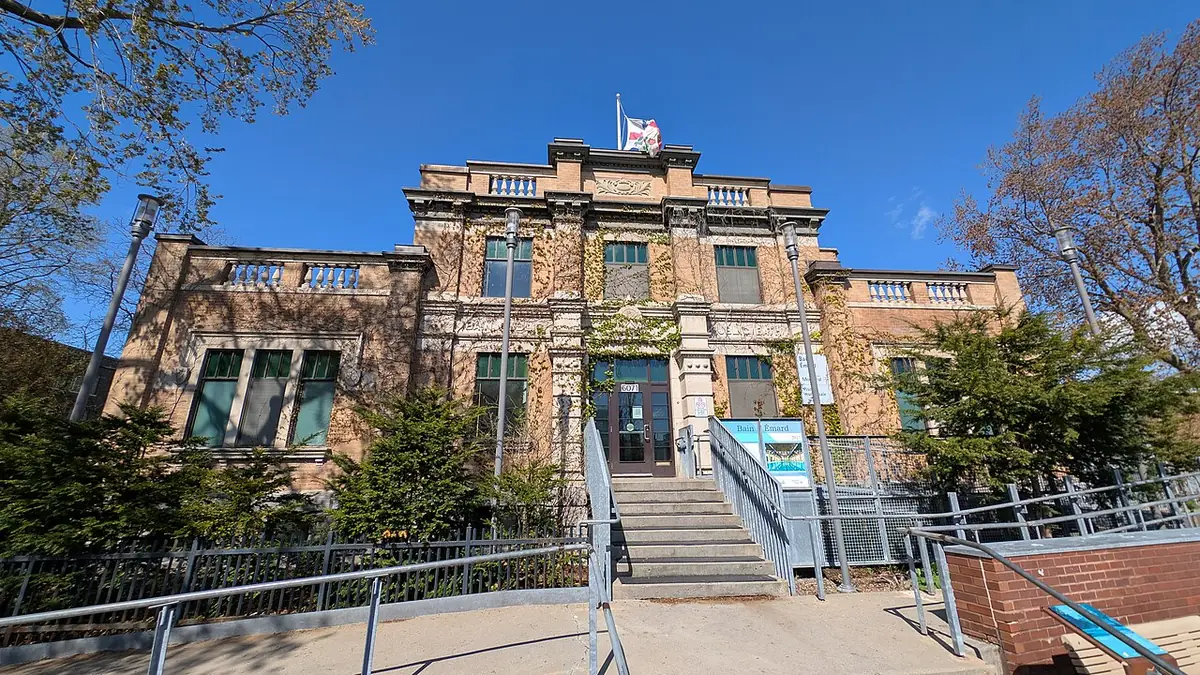
A heritage bathhouse anchoring this Sud-Ouest neighbourhood — Photo: Maxime Laterreur · CC BY 4.0 · Wikimedia Commons
Following this chronology rigorously protects your investment from the beginning right through to the handover of the keys.
Signing a promise to purchase in Montréal starts a precise legal countdown. Each condition precedent has to be formally lifted within the agreed deadlines, otherwise the agreement lapses, or you find yourself committed to a property with latent defects or unresolved financing problems.
Set your maximum budget and obtain a mortgage pre-qualification from a recognised financial institution.
Targeted viewings of the available properties and a comparative analysis of recent sale prices in the area you have in mind.
Drafting and filing a promise to purchase that sets out the price offered along with the conditions precedent you need.
Engaging a professional building inspector to carry out a thorough examination of the structure and the installations.
Formally lifting the conditions once the checks come back satisfactory, and sending the complete file to the notary.
Signature of the official deed of sale at the notary's office, release of the funds and handover of the keys to the property.
The chronological run of a successful property transaction
With these stages methodically cleared, you have everything you need to settle into Montréal with a clear head.
A property transaction in Quebec brings in several regulated professionals whose roles are strictly delimited. Knowing what each one is responsible for lets you orchestrate the process efficiently and never find yourself stranded in front of the province's regulatory requirements.
The real estate brokerGuidance and negotiationThe broker drafts the promise to purchase, protects your interests during price negotiations and makes sure the seller's declarations are accurate.
The building inspectorTechnical assessmentThe inspector goes over the structure, the roof, the plumbing and the insulation in detail, then writes up a documented expert report.
The land surveyorVerification of boundariesThe surveyor produces or updates the certificate of location attesting to the exact dimensions of the lot and to any views over neighbouring land.
The financial institutionGranting the financingThe lender validates the buyer's creditworthiness, assesses the market value of the property and releases the mortgage funds.
The notaryLegal closingThe notary drafts the final deed of sale, carries out the transfers of funds held in trust and proceeds with official publication in the land register.
House or vertical condominium in Montréal: weighing structural independence against shared management
The choice between a single-family house and a condominium in Montréal involves far more than the layout of the rooms or the floor area. On one side, the detached house, strongly rooted in residential neighbourhoods such as Ahuntsic-Cartierville, Rosemont or Notre-Dame-de-Grâce, offers complete autonomy over renovation decisions, over the management of the land and over the absence of monthly condominium fees. It is the option favoured by buyers who want to build an asset they can pass on without having to deal with the rules of a condominium syndicate. That freedom has a direct cost in time and capital, however: every roof repair, every foundation rebuild and every winter chore, including clearing an entire driveway after a Quebec storm, falls entirely on the owner. Financial solitude in the face of structural surprises weighs heavily in the balance during hard winters, when the heating costs of a detached building can climb dramatically.
Conversely, buying a condo or a divided co-ownership unit, whether in a modern downtown tower or a converted triplex in Plateau-Mont-Royal, shifts the cursor toward pooling risks and charges. The condominium syndicate takes charge of the building envelope, the roof, the common insurance policies and, in the larger complexes, access to shared infrastructure such as a rooftop terrace or a secure indoor parking space. This formula suits households whose professional schedule leaves little room for weekly upkeep of a garden or hands-on management of heavy work. That apparent peace of mind nevertheless conceals a complex legal and financial reality: co-ownership means submitting to a strict building by-law, taking part in general meetings that can get heated and, above all, contributing to a mandatory contingency fund whose financial health has to be analysed rigorously by an inspector before any promise to purchase.
The question of liquidity and resale also varies substantially with the type of property you choose in the city. Single-family houses located in central sectors or served by the metro face a structural scarcity that supports their long-term value, even though the high entry ticket narrows the pool of buyers who can afford them. Condominiums, for their part, offer more flexible access to ownership for first-time buyers, but their resale can be slowed by abundant supply in certain new-build sectors, or by past mismanagement of the co-ownership showing up as exorbitant special assessments. The Montréal buyer therefore has to weigh the immediate comfort of condominium living against the latent risk of neighbour disputes and unpredictable rises in common fees imposed under the Quebec rules on reserve funds.
In the end, choosing between these two options in Montréal calls for an honest assessment of your tolerance for risk and of the time you genuinely have for maintaining a building exposed to extreme temperature swings. If you value absolute control over your running costs and the enjoyment of private outdoor space with no monthly levy, the single-family house makes its own case despite its demanding upkeep. If you are looking for an urban base without the chore of shovelling and mowing, the condo remains a sound solution, provided you insist on the maintenance logbooks and the audited financial statements for the last three years before committing legally.
Analysis of the running charges and the total cost of owning a property in Montréal
Buying a property in Montréal is not simply a matter of the monthly mortgage payment agreed with your financial institution. The real cost of ownership takes in a set of unavoidable fixed and variable expenses that start adding up from the first year of occupancy. Between the municipal property tax set by the City of Montréal, the school tax, home insurance premiums suited to a northern climate and the reserves you need for regular upkeep of the building, the gap between the advertised cost of the loan and the budget reality can destabilise an unprepared household. This table sets out the average monthly and annual expense lines observed on the Montréal market for a standard single-family house.
Recurring budget lines for a single-family house in Montréal
Expense line
Estimated amount (monthly)
Estimated amount (annual)
Main factors that move it
Municipal property tax
$350 to $550
$4,200 to $6,600
The city's property assessment and the borough you are in
School tax
$40 to $80
$500 to $950
Single rate set by the Government of Quebec, applied to the assessment
Home insurance
$100 to $180
$1,200 to $2,150
Age of the building, plumbing and sewer backup risk
Maintenance and repair fund
$300 to $600
$3,600 to $7,200
Initial condition of the roof, the foundations and the windows
The amounts shown are indicative averages based on the rates in force in Montréal and can vary with the market value of the property.
Seasonal energy and utility spending
Type of service
Cold season (November to April)
Warm season (May to October)
Technical comment
Electricity (Hydro-Québec)
$250 to $450 per month
$80 to $140 per month
Electric heating dominates, plus summer air conditioning
Water and municipal services
Included in the taxes
Included in the taxes
Managed centrally by the City of Montréal with no individual meter
Snow clearing and grounds upkeep
$120 to $250 per month
$80 to $150 per month
Seasonal contract with a private provider, or buying your own equipment
The severity of the Montréal winter feeds straight through to the electricity bill, which makes signing up for the Hydro-Québec equalized payments plan close to essential.
A day on the ground: the rhythm of a Montréal resident between transport and local services
Street art brings colour to this Montreal façade — Photo: Maxime Laterreur · CC BY 4.0 · Wikimedia Commons
Understanding what buying property in Montréal really means calls for watching an ordinary day unfold, well beyond the marketing promises of the brokers. How easily you move around the city, access to public health facilities, the closeness of essential services and the daily management of the weather all define the true use value of a residential area. This log pulls together the key moments of a typical Tuesday for a household settled in an established neighbourhood, and it highlights how crucial location is relative to the transit network and to everyday necessities.
07:15HomeWaking up and checking the state of the pavements or the driveway after an overnight snowfall of the kind the winter season delivers routinely.
08:00Metro station or main streetWalking to the nearest transit station, or waiting for the scheduled bus that connects to the STM underground network.
08:30Daycare or schoolDropping the children at the neighbourhood school's daycare service or at the subsidised early childhood centre, which underlines the value of a walkable area.
12:30Local shops in the neighbourhoodA quick stop for fresh produce at the independent retailers on the nearby shopping street, an illustration of the vitality of Montréal neighbourhood life.
17:30Medical clinic or pharmacyAn unplanned or scheduled stop to handle family health matters, which depends directly on the medical provision available in the borough you chose.
18:30Back home and household managementPreparing the meal and dealing with the constraints of the municipal separated collections for organic waste and recycling.
The invisible side of Montréal property that listings systematically leave out
A quick look at a listing on the property portals only reveals what the seller wants to put forward to maximise the sale price. Behind the flattering language about full renovation and preserved character lie technical and regulatory realities specific to the Montréal housing stock, much of which is several decades old. Missing these invisible parameters during a viewing can turn a property you fell in love with into an unplanned financial pit. This analysis brings out the crucial elements that an untrained eye does not notice during a thirty-minute open house.
The real state of the lead water service line
Many Montréal homes built before the 1970s still have a lead water entry running from the street to the basement. Replacing it in full is a costly municipal obligation that falls on the owner and calls for major excavation work.
The presence of asbestos in insulation or finishes
Widely used in mid-twentieth-century construction for insulation and fire protection, asbestos requires strict and expensive removal protocols as soon as you start renovation work or take down partitions.
The borough's strict heritage rules
If your future house sits in a protected heritage or historic sector of Montréal, every facade change, window choice or roof replacement has to meet rigorous aesthetic standards that send material costs soaring.
The real capacity of the electrical panel and outdated wiring
Plenty of houses still have fuse-based electrical installations or 100 amp panels that cannot support modern energy needs, the installation of heat pumps or the charging of an electric vehicle.
Sewer backup risk during heavy rainfall
The underground infrastructure in some sectors of Montréal comes under heavy pressure during violent storms. Without a working backwater valve, the basement is exposed to major water damage that some insurance policies do not cover.
Traps and disappointments: the purchase mistakes people regret six months after moving into Montréal
Looked likeA peaceful, tree-lined residential street, ideal for raising a family in quiet surroundings.
Turned outA road turned into a morning bypass route for drivers avoiding congestion on the main arteries, generating constant and dangerous traffic.
Would have caught itVisiting the area at different peak hours on weekdays, not only on a Saturday afternoon when everything is calm.
Looked likeA fully finished basement offering bright, modern additional living space.
Turned outA damp zone hidden behind recent plasterboard, masking chronic water infiltration through the fieldstone foundations.
Would have caught itEngaging a qualified building inspector equipped with a thermal camera and a moisture meter to probe the integrity of the foundation walls.
Looked likeAn outdoor parking space included, with no apparent constraint on the lot.
Turned outA parking space impossible to clear of snow properly because of the layout of the lane, and blocked by municipal snow removal operations.
Would have caught itChecking the rights of way, the borough's overnight parking rules and the real width of the access in winter.
Looked likeA reasonable energy bill quoted by an optimistic previous owner.
Turned outA thermally leaky house with poorly sealed original casement windows, leading to exorbitant electricity bills through the deep cold months.
Would have caught itAsking for the full history of Hydro-Québec bills for the last twelve months before signing the final promise to purchase.
Who should hold off: cases where buying property in Montréal is premature
Ownership is routinely presented as the ultimate goal of financial stability, which hides the situations where buying is a major strategic risk. Current economic conditions on the Montréal market, combined with interest rates and municipal taxation, demand a financial solidity and a geographic stability that some profiles simply do not have. Rather than forcing a risky purchase under social pressure, recognising that a property project is premature protects personal savings from rapid capital losses. This analysis identifies the buyer profiles for whom renting remains a distinctly more rational option.
The worker whose professional and geographic horizon is under five years
→Postponing the purchase of a house and keeping the flexibility of renting.
The upfront transaction costs, including the welcome tax, the notary's fees and the broker's commission on resale, need a long holding period before any increase in value can absorb them.
The household whose savings barely cover the minimum down payment
→Consolidating savings while renting and building a robust emergency reserve.
Having no financial reserve for an urgent repair, such as a failed water heater or a roof replacement, exposes new owners to serious debt within the first few months.
The buyer with no appetite for hands-on maintenance and heavy DIY
→Moving toward managed rental housing, or accepting the rules of a rigorously run condominium.
A single-family house in Montréal demands constant physical availability for seasonal upkeep, gardening and watching over the building envelope against the weather.
The decision in the round: are you really ready to buy property in Montréal?
A shaded path for an easy walk in a Montreal park — Photo: Ptaff · CC0 · Wikimedia Commons
Reaching the end of this analysis shows that buying a house in Montréal is not a matter of impulse or of following a passing trend. It is a long-term financial and logistical commitment that radically changes your daily life, your budget priorities and your relationship with the city. If you have measured the reality of the municipal taxes, anticipated the severity of Quebec winters in terms of heating and snow clearing, and accepted that every repair is now yours alone to handle, then the purchase takes on its full strategic sense.
The key to a successful transaction lies in being lucid about geographic and technical compromises. Accepting that the perfect house does not exist on the Montréal market, and that every sector carries its own advantages and constraints, lets you approach negotiations calmly. By surrounding yourself with professionals of integrity (a rigorous building inspector, a well-briefed notary and a transparent broker), you turn the uncertainty inherent in buying property into a controlled, secure process for the asset you are building.
Take the time to check one last time how much you can still save once all your fixed charges are paid. If the financial equation stays balanced and your horizon in the city goes beyond the five-year mark, you have every favourable indicator you need to move ahead with confidence.
Related questions
How much is the welcome tax on a property purchase in Montréal?
The land transfer duty, known locally as the welcome tax, is calculated on a progressive scale based on the municipal assessment value or the purchase price, with the rate reaching 3% on the portion above $589,200 under the City of Montréal's provisions.
Is it mandatory to hire a building inspector before buying in Montréal?
Although the law does not formally require it, a pre-purchase inspection by a certified professional is absolutely essential to uncover latent defects and to check the condition of the roof, the foundations and the plumbing of a Montréal house.
How does Hydro-Québec electric heating billing work for a house?
Hydro-Québec offers an equalized payments plan that spreads the high cost of the winter heating season across the whole year, avoiding disproportionate bills during the coldest months of January and February.
What are the usual timelines for closing a property transaction in Montréal?
The full process, from acceptance of the promise to purchase through to signing the notarized deed of sale and taking possession, generally runs over a period of 60 to 90 days depending on the conditions negotiated.
Do all single-family houses in Montréal have private parking?
No. Many properties in central neighbourhoods such as Plateau-Mont-Royal or Rosemont have only on-street parking access through a residential permit sticker, with no private driveway.
What is a certificate of location and why is it critical?
The certificate of location is an official document prepared by a land surveyor that describes the state of the property in relation to the lot boundaries, the servitudes and the municipal zoning by-laws in force.
What does buying in a protected heritage area of Montréal involve?
Buying in a historic borough means complying with strict architectural standards for any exterior renovation project, which calls for specific materials and longer municipal approval timelines.
How do you assess the financial health of a Montréal condominium?
You have to go through the maintenance logbook, the contingency fund study, the minutes of the general meetings for the last three years and the audited financial statements in detail, in order to spot any special assessments ahead.
What notary fees should you budget for when acquiring a property?
The notary's fees for the title search, the drafting of the deed of sale and its publication in the land register generally range between $1,500 and $2,500, before taxes and disbursements.
Can you negotiate the asking price of a house on the Montréal market?
The room to negotiate depends directly on local market dynamics, the supply available in the borough and how long the property has been listed on the brokerage platforms.
Property review of ting
No ting properties in Montreal yet
Be the first — share it on ting and it shows up right here.