Buying a house in Montréal is a major turning point, and it demands a clear-eyed reading of the local market, of its administrative particularities and of what the climate asks of a building. Between the reality of the boroughs, the exact calculation of the taxes and the choice of property type, this guide sets out every aspect of the decision ahead of you, without embellishment.
Get the app
What nobody tells you.
Real prices, hidden costs and the traps to check before you commit.
What a house in Montréal actually asks of you, day after day
Scroll
What a house in Montréal actually asks of you, day after day
Buying a house in Montréal is a major turning point, and it demands a clear-eyed reading of the local market, of its administrative particularities and of what the climate asks of a building. Between the reality of the boroughs, the exact calculation of the taxes and the choice of property type, this guide sets out every aspect of the decision ahead of you, without embellishment.
Written by the ting.ad editorial team ·
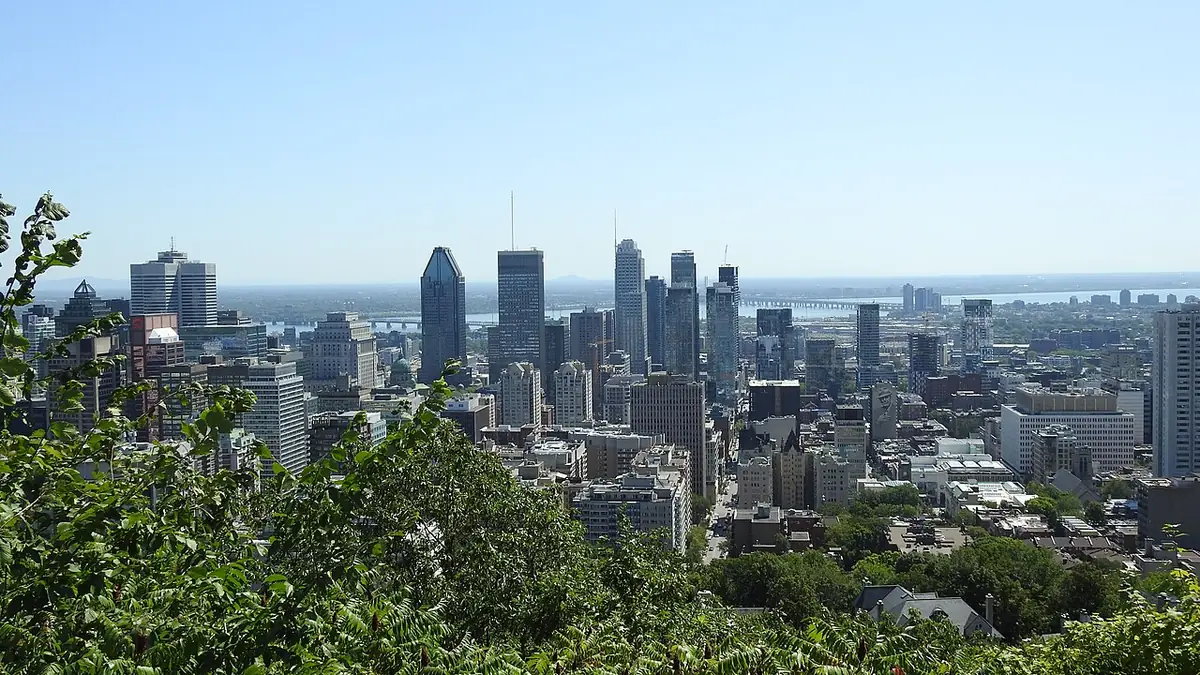
Belvédère Kondiaronk, Montréal in Street View: drag to look around.
Moving from the general idea of ownership to your own circumstances means looking hard at what kind of buyer you are.
Acquiring a single-family house, or any property, in Québec's largest city is not simply a matter of building up an asset over the long run. It is a deep logistical and financial commitment that transforms your relationship with space, with time and with the weather. Between the illusion of total independence and the reality of maintenance under a harsh continental climate, every dollar invested has to be weighed. The promise of a spacious place of your own runs quickly into the management of urban infrastructure, property taxes and the hidden costs of ownership in a country of long winters. Understanding that gap at the outset lets you approach the Montréal market clear-headed, well away from the simplistic marketing talk that forgets the six-month winter.
The promise of private space and complete residential autonomy.vsThe reality of constant structural upkeep, made unavoidable by extreme swings in temperature.
Montréal winters put the foundations, the roof and the building envelope through freeze and thaw cycles that are particularly destructive. What looks like a haven in July demands vigilance at every moment from November onward.
The idea of a stable, predictable long-term asset.vsThe complexity of a market driven by policy interest rates and by high municipal taxes.
Owning a house on the island of Montréal or in the surrounding belts brings recurring carrying costs that newcomers routinely underestimate. Resale value depends closely on the quality of municipal infrastructure and on the real condition of the structure.
The apparent comfort of a mature, tree-lined residential area.vsThe gradual saturation of local services and the possible decay of the water mains.
Several established neighbourhoods still have pipes and electrical installations from another era, and bringing them up to standard is expensive. Buying an older house almost always comes with an obligation to carry out major renovation in the short or medium term.
Which kind of buyer are you, given what Montréal specifically demands?
These profiles show how radically the buying journey changes depending on where you are coming from, geographically and residentially.
Not every residential path meets the Montréal market on equal terms. Whether you are arriving from another country, leaving a rented apartment on the Plateau, or looking to settle on the outskirts with a family, the financial and time trade-offs will not be the same. Working out your own situation is what saves you from the classic mistake: the unprepared purchase made on impulse. Each profile has to deal with questions of accessibility, with commuting times that are usually underestimated, and with a very real ceiling on what can be invested. Defining which category of buyer you belong to spares you months of searching in the wrong areas.
The international first-time buyer
You are discovering a mortgage system and a conveyancing system that work nothing like the ones you grew up with. Canadian banks require strict guarantees and an established credit file, which you may simply not have at first. Do not underestimate the administrative culture shock, nor the need to work with a licensed real estate broker so that your transaction is secured and latent defects do not catch you out.
The tenant looking for stability
You know the neighbourhoods, the metro lines and the rhythm of the boroughs inside out. Your main challenge is the abrupt shift from being a tenant protected by the Tribunal administratif du logement to being an owner answerable for every repair. Your budget has to carry a substantial safety margin for the unforeseen.
The parent moving to the suburbs
Here the compromise sits between being close to downtown and having usable living space. Aiming for the island of Montréal means high prices per square foot for houses that will need work, while the first belt offers more room at the cost of daily commuting time in the traffic on the Champlain Bridge or the Metropolitan expressway.
What fundamentally changes when you buy in Montréal after arriving from abroad
Once those cultural differences are absorbed, choosing the area becomes the critical stage of your plan.
Buying property on the other side of an ocean upsets every reflex acquired at home. Between the central role of the Québec notary, the specifics of divided and undivided co-ownership, and the business of keeping a building warm through a Québec winter, the usual reference points collapse quickly. What seemed obvious elsewhere becomes a path strewn with legal and practical subtleties. Identifying those cultural and technical gaps from the outset is what prevents costly misreadings when the time comes to sign an offer. Here is how the practices diverge in concrete terms.
From abroad
A guaranteed floor-area measurement, and a single estate agent understood to protect the buyer.
Montréal
A brokerage system that may or may not be exclusive, with a pre-purchase inspection that has become all but obligatory and that discharges the seller.
An inspection by a certified professional is your only shield against latent defects. Never give up that clause in your offer to purchase, even in a fiercely competitive market.
From abroad
The near-automatic use of a lawyer or conveyancer for each side, depending on local tradition.
Montréal
A single instrumenting notary drafts the deed of sale and handles verification of title.
The notary in Québec is an impartial public officer who protects the interests of both parties and manages the transfer of funds. Choose one with as much care as you choose the house.
From abroad
Thermal insulation governed by decades of uniform national building regulation.
Montréal
A thermal resistance rating for materials (the R factor) suited to swings from minus 30 degrees Celsius to plus 30 degrees Celsius.
Check the heating system and the attic insulation without fail. A poorly insulated house in Montréal translates straight into punishing electricity bills in January.
From abroad
Local taxes worked out as a single combined occupancy and property charge.
Montréal
Separate municipal and school property taxes, calculated from the City of Montréal's assessment.
These taxes vary sharply from one borough to the next and represent a recurring annual cost that weighs heavily on your monthly budget.
How to choose where to live among the realities of the Montréal boroughs
The neighbourhood you choose directly determines the price structure you will be facing on the market.
The island of Montréal and its immediate surroundings are made up of micro-markets whose dynamics differ enormously. Choosing an area is not just a matter of reading a price map: it means accepting a mode of transport, a population density and a particular kind of neighbour. Whether you are viewing properties in the bustle of Rosemont, the residential calm of Notre-Dame-de-Grâce or the open space of the riverside belts, every choice carries its own set of compromises. Public transport lines, proximity to the main roads and the vitality of the commercial streets dictate the real value of your investment over the years.
Rosemont-La Petite-Patrie and Villeray
The feel of a lively urban village, animated by green alleys, neighbourhood shops and a strong sense of community.
Suits
Buyers looking for a fine balance between urban cultural life, accessible parks and a spirit of mutual support among neighbours.
Trade-off
An older housing stock that often calls for substantial renovation budgets, and fierce competition for the few single-family houses that come up.
Notre-Dame-de-Grâce (NDG) and neighbouring Westmount
A mature residential setting, lined with old trees, well-regarded schools and a long-standing cultural mix.
Suits
Families who put quality schools and green space first while staying connected to downtown by the main arteries.
Trade-off
Prices per square foot among the highest on the island, and substantial municipal taxes.
Ahuntsic-Cartierville and Bordeaux-Cartierville
A comfortable transition between the city and the riverside, paced by the parks that run along the Rivière des Prairies.
Suits
Those who want a real house with a decent-sized lot without moving too far from the orange metro line.
Trade-off
A relative distance from the central business core, and longer journeys at peak hours for those working downtown.
What prices and hidden costs really look like for a house in Montréal
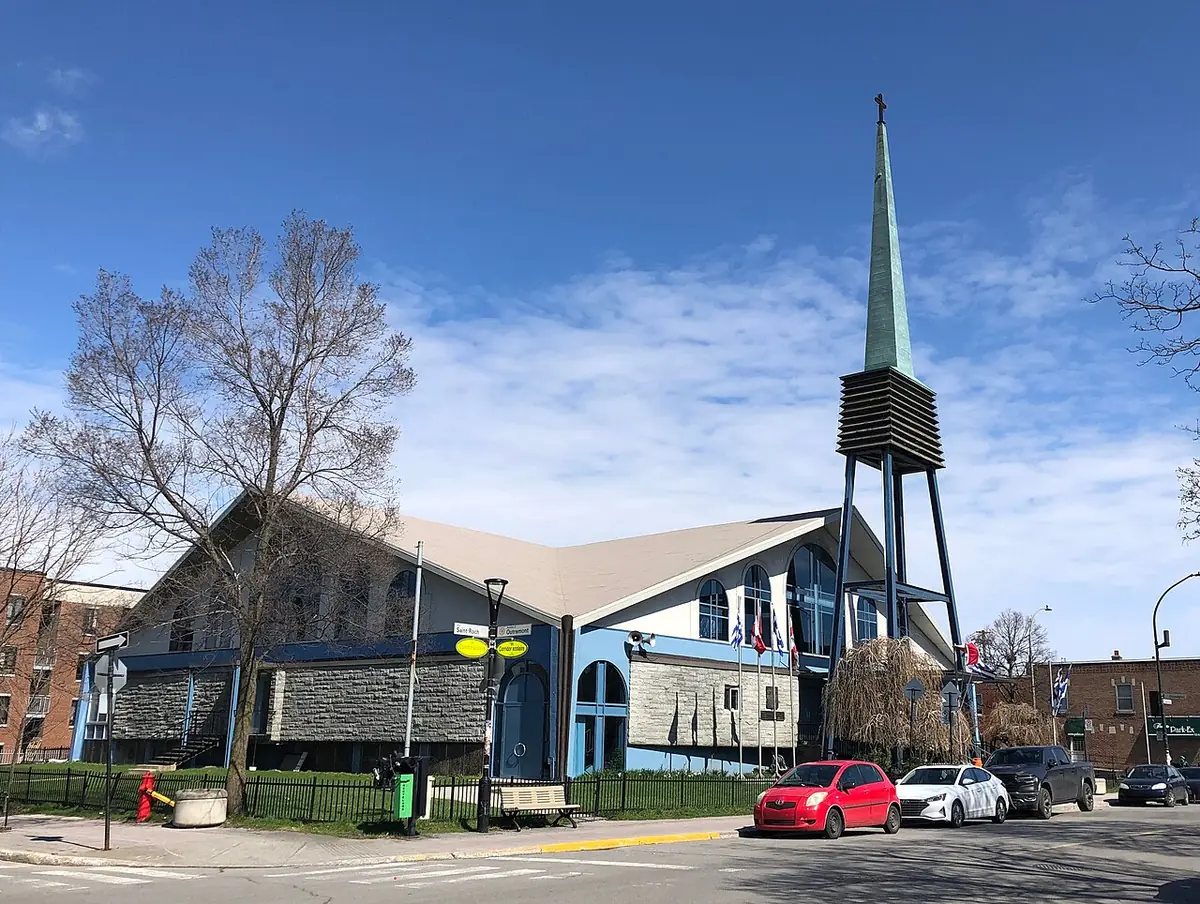
A striking church marks this Montreal street corner — Photo: LenMontreal · CC BY-SA 4.0 · Wikimedia Commons
Beyond the raw figures, the question of legal ownership poses a fundamental choice between forms of title.
Approaching the Montréal market without a clear view of current price ranges is how people get unpleasant surprises at the mortgage pre-qualification stage. Transaction costs in Québec do not stop at the figure written on the promise to purchase: you have to fold in the welcome tax (the land transfer duty), the notary fees, the inspection and the property tax adjustments. The tables below pull together the orders of magnitude observed on the market, so that you can size your overall financial envelope rigorously and objectively, rather than trusting the mirage of an online estimate.
montrealFor saleHouseestimate
Median price / m²CA$4,129Half the apartments sell below this
Median priceCA$624kthe average is 14% higher — a few very large properties pull it up
Most common2 bedrooms65 % of listings
Average size144 m²
By number of bedrooms
Bedrooms
Share of market
Avg price
Price / m²
Avg size
2most common
65 %
CA$624k
CA$4,346
144 m²
3
31 %
CA$795k
CA$4,129best value / m²
193 m²
4
5 %
CA$1.05m
CA$4,129best value / m²
254 m²
Each row is an average, compared against the area average of CA$4,346 / m². These are indicative estimates of a typical local market, not a measured sample of live listings. Check current listings before relying on them.
Single-family house or co-ownership: what you can actually hold
Once you have settled on the type of property, the chronology of the transaction follows strict rules that must not be broken.
The legal structure of your purchase determines both your freedom of action and your long-term financial obligations. In Montréal, the distinction between outright ownership of a lot with a single-family building on it and co-ownership (divided or undivided) is fundamental. Each model carries undeniable advantages and strict regulatory constraints that the future buyer needs to examine carefully. Between looking after your own roof and paying monthly co-ownership fees (the famous condo fees), daily life does not have the same flavour at all.
The detached single-family house
You own the building and the land outright, with no condominium syndicate and no fussy building rules. You alone decide when the roof gets redone, when the windows are replaced, or how the garden is landscaped, according to your own taste and budget.
What it changesYou carry the full cost of every job, with no way to share it. The slightest structural failure falls entirely on your shoulders.
Divided (condo) or undivided co-ownership
You buy a fraction of a building shared with other owners, governed by a declaration of co-ownership and by the contingency fund that recent Québec legislation makes compulsory. The common fees cover maintenance of the shared portions.
What it changesYou depend on the financial health of the other co-owners and on how the syndicate is run. Unforeseen special assessments can arrive if the contingency fund is too thin to cover major repairs.
The critical sequence to follow before you put money down on a property
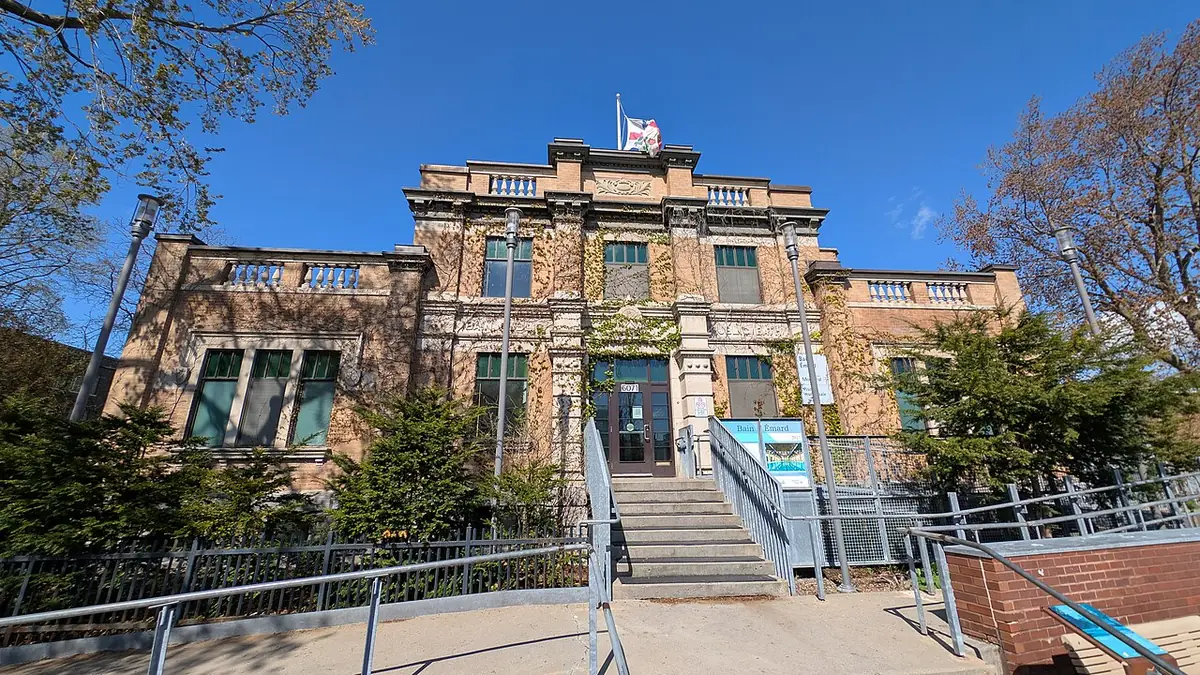
A heritage bathhouse anchoring this Sud-Ouest neighbourhood — Photo: Maxime Laterreur · CC BY 4.0 · Wikimedia Commons
To play that sequence without a false note, let us look in detail at who is involved and what each of them does.
Committing to buy a house in Montréal is a process marked out by precise legal and financial stages. Skipping even one of them to move faster in a competitive market exposes you to serious financial risk, from discovering latent defects to failing to obtain your final financing. From the initial mortgage pre-approval through to the final signature at the notary's office, every link in the chain secures your investment. Understanding that logical progression is what lets you keep control when brokers and sellers apply pressure.
Work out precisely what your real maximum budget is, and obtain a mortgage pre-approval from a recognised Canadian financial institution.
Targeted viewings of the properties that match your criteria, with a critical assessment of the general condition of the building and of its immediate surroundings.
Drafting and filing a conditional promise to purchase, including the verification periods and the conditions precedent you cannot do without.
Engaging a certified building inspector to carry out a full physical inspection with you present.
Lifting the conditions once you have gone through the inspection report and the bank has validated your final mortgage financing.
Signing the official deed of sale at the appointed notary's office and transferring the funds.
Taking possession of the property, connecting the utilities and moving formally into your new Montréal home.
Who does what, and in what order: the role of each player in your Montréal transaction
That rigorous organisation is what keeps your purchase safe from day one through to moving in.
A successful property transaction in Montréal rests on an ecosystem of professionals whose roles are strictly defined by Québec law. From the real estate broker who helps you search, to the notary who formalises the transfer of ownership, by way of the inspector and the chartered appraiser, each one protects a different facet of your investment. Knowing what each is entitled to do stops you from mistaking a seller's advice for a legal guarantee. Here is the score these various players perform across your purchase.
The real estate broker (collaborating or listing)Guidance and negotiation of the promise to purchaseThe broker draws up the OACIQ legal forms, negotiates the clauses of the promise to purchase on your behalf and guides you through the thicket of comparable sales in the neighbourhood.
The certified building inspectorTechnical and visual audit of the property you are afterThe inspector examines the structure, the roof, the plumbing and the electrical system to detect visible anomalies or signs of latent defects that will need urgent correction.
The financial institution or mortgage brokerStructuring the financing and reviewing your credit fileThey assess your borrowing capacity against the debt service ratios in force in Canada and release the necessary funds on the day of signing.
The notary, a member of the Chambre des notaires du QuébecTitle verification and publication of the deed of saleThe notary confirms that the seller really is the sole legal owner, clears the previous mortgages and records the deed of sale at the land registry.
You, the buyerThe final decision, taken and ownedYou are the only one in command when it comes to weighing the risks, validating the compromises and signing the documents that commit your financial and residential future.
Buying a house or an apartment in Montréal: weighing autonomy against management
Once the type of property is settled, you have to map out the financial reality of the purchase precisely.
Buying a single-family house in Montréal means a direct relationship with your land, your roof and your foundations. Unlike a co-ownership, where maintenance decisions are pooled and voted on in a general meeting, a house leaves you entirely alone in the face of whatever the weather does. The cycle of Québec seasons, with its harsh winters and abrupt spring thaws, works the building envelope hard. Handling the snow clearing, the roof repairs or the attic insulation yourself is a significant investment of time and energy for a newcomer.
Choosing an apartment or a condo in Montréal, by contrast, shifts the operational burden onto a condominium syndicate. That formula suits buyers who would rather delegate the upkeep of the common areas, the roof and the facades. This apparent peace of mind has a direct financial and relational cost, however. Co-ownership fees rise steadily to keep up with the inflation in maintenance costs and with the requirement to build a solid contingency fund, made compulsory by recent Québec legislative reforms.
The choice between these two types of property in Montréal therefore comes down to your tolerance for risk and how much time you have for building work. A house offers total architectural freedom and often a stronger appreciation in land value, driven by the scarcity of lots on the island. A condo, for its part, secures the location and limits nasty budget surprises tied to major structural work, provided the building is managed rigorously and transparently. So weigh the value of your free time against the administrative constraints of co-ownership.
It is also worth analysing the demographic structure of the neighbourhoods you are considering before you decide. Central areas such as the Plateau-Mont-Royal or Rosemont favour verticality and dense neighbourhood life, while the outer or riverside districts such as Ahuntsic or the West Island favour residential spread and large private lots. Your daily way of life, whether you have children, and your travel habits will naturally guide this decision, which will shape your assets for years.
What overall budget do you need to buy and keep up a house in Montréal?
Understanding the raw figures is what lets you picture the real pace of life in a Montréal residential area.
Buying a house in Montréal does not stop at the monthly mortgage repayment. You have to fold in the whole tax burden, the municipal and school taxes specific to the city, and the recurring maintenance costs of keeping the property in good condition. A rigorous look at each line of spending is what prevents financial disappointment in your very first year in the province.
Annual cost lines for a single-family house in Montréal
Budget line
Estimated amount (CAD)
Frequency and impact on the budget
Municipal and school taxes
$4,500 to $7,000
Annual; varies sharply by borough and by property assessment.
Home insurance (building and contents)
$1,200 to $2,200
Annual; rising steadily because of increased climate risk.
Maintenance reserve (1% to 2% of value)
$5,000 to $10,000
Spread across the year to absorb unforeseen major repairs.
Heating and electricity (Hydro-Québec)
$2,000 to $3,500
Monthly, with a very pronounced peak through the winter months.
These estimates, based on Montréal market data, exclude mortgage debt service and assume a standard single-family house of average size.
Up-front costs at the time of purchase
Type of cost
Indicative percentage or amount
Role in the transaction
Land transfer duty (the welcome tax)
1.5% to 3.0% of the sale price
Payable to the municipality in a single instalment in the months after the deed.
Pre-purchase inspection
$600 to $1,000
Essential for identifying latent defects and the condition of the roof.
Notary fees and disbursements
$1,500 to $2,500
Needed for the publication of title at the Québec land registry.
Always plan for a cash cushion above the minimum down payment so that you can meet these unavoidable transaction costs.
Health, schools and transport: how an ordinary Tuesday actually unfolds in Montréal
Street art brings colour to this Montreal façade — Photo: Maxime Laterreur · CC BY 4.0 · Wikimedia Commons
The routine may look well oiled, but plenty of crucial things never surface during a standard viewing.
Quality of life in Montréal is measured by how well the neighbourhood infrastructure works and how smoothly the morning journey goes. Between public transport, access to childcare and the proximity of local shops, every minute counts in organising a working day. Here is the typical chronology of an ordinary Tuesday for a household settled in a residential neighbourhood on the island.
07:00Kitchen and the morning routineSetting the smart heating system going and checking the local weather to anticipate the state of the pavements and the roads.
07:45The walk to the neighbourhood schoolA brisk walk, or taking the children to the French-language or English-language public primary school attached to the residential sector.
08:30Onto the transport network (STM)A connection to the nearest metro station, or boarding a frequent bus to reach downtown or one of the employment hubs.
12:30Neighbourhood life and local shopsA midday break to pick things up from the independent traders on the main street and enjoy the green space nearby.
17:15Back home, and the logistics of itCollecting the children from after-school care and the obligatory stop at the borough's sports or community facilities.
19:00Looking after the property in the eveningTime given over to small maintenance jobs, to the municipal recycling bin and to planning the seasonal chores.
What the listing will not tell you about the real condition of Montréal houses
Anticipating these grey areas is how you avoid the classic traps that turn a purchase made on impulse into a financial burden.
Handsome marketing photographs and flattering agency descriptions frequently mask technical and planning realities particular to the Montréal housing stock. Knowing about these invisible aspects protects a buyer from unplanned outlays and from serious administrative disappointment after the deed of sale is signed.
The real state of the lead water service lines
Many older houses built before the middle of the 20th century still have lead water connections, and under the City of Montréal's rules part of the cost of replacing them falls to the owner.
Whether the drainage installations and setbacks comply
The strict planning rules of the Montréal boroughs sometimes prohibit an extension or any added outdoor structure if the house does not meet the setbacks now in force.
Possible latent defects caused by freeze and thaw
Extreme weather cycles damage foundations of poured concrete or fieldstone, causing spring water infiltration that calls for very expensive waterproofing work.
The future impact of major municipal infrastructure works
Water mains, sewers and cycle lanes all being rebuilt at once in your sector can disrupt access to your property and your parking for months on end.
The misjudgements people discover six months after moving to Montréal
Even with meticulous preparation, some personal situations make buying in Montréal a thoroughly bad idea.
Looked likeA charming older house full of architectural character in a neighbourhood on the rise.
Turned outAn energy sieve with an ageing heating system, producing punishing electricity bills in January.
Would have caught itAsking for the last 24 months of Hydro-Québec electricity bills before you put in a firm promise to purchase.
Looked likeA quiet, leafy residential area perfectly served by the main roads.
Turned outA traffic trap at peak hours because of repair work on the nearby bridge or interchange.
Would have caught itVisiting the area around the property at the critical morning and evening hours on a weekday to test how the traffic really moves.
Looked likeA large private lot that appeared to need little upkeep when viewed in autumn.
Turned outA monumental snow clearing chore, plus a legal duty to deal with mature trees damaged by ice storms.
Would have caught itConsulting a local landscaper to assess the health of the large trees and how much snow the lot really accumulates.
Looked likeA purchase price below the local average thanks to some minor cosmetic work said to be needed.
Turned outA sagging floor structure requiring the joists to be fully levelled and the entire electrical system brought up to code.
Would have caught itSystematically engaging an inspector who belongs to a recognised professional association and will search every last corner.
Atypical profiles: who really should not buy a house in Montréal?
If you clear these obstacles with your eyes open, it is time to test how ready you really are.
Home ownership is often presented as the beginning and end of financial success, but it does not suit every life. The Montréal market has structural rigidities and high fixed costs that penalise certain buyer profiles. Spotting those incompatibilities saves you from locking up your money badly.
The nomadic worker or short-term expatriate
→Flexible rental of a furnished apartment in the central neighbourhoods.
The up-front transaction costs and the welcome tax cannot be amortised over anything less than five continuous years in the same property.
The household with no emergency savings
→Renting, with a diversified portfolio and cash that stays immediately available.
The smallest serious failure of the roof or the plumbing on a single-family house calls for tens of thousands of dollars in cash, available overnight.
The person who wants absolute quiet above all else
→Settling deep in the countryside or in a small outlying municipality further out.
Montréal's urban density, the closeness of the transport arteries and the permanent municipal works generate a constant level of noise that is incompatible with a search for total calm.
So are you genuinely ready to go through with buying in Montréal?
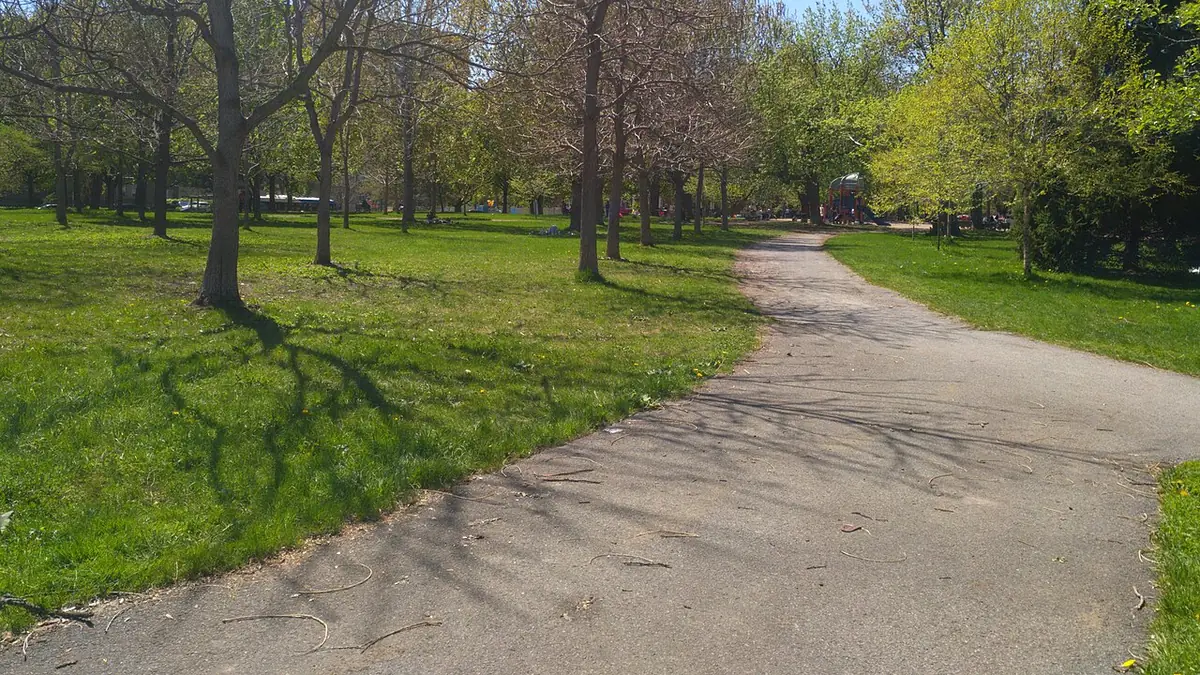
A shaded path for an easy walk in a Montreal park — Photo: Ptaff · CC0 · Wikimedia Commons
Deciding to buy a house in Montréal demands complete clarity about your deeper motivations and your financial solidity. This choice goes well beyond the logic of a stock market investment or the long-run accumulation of assets. It is a strong territorial anchoring in a dynamic, cosmopolitan and demanding city, where the climate and the local regulations set a particular rhythm of life. If your plan rests on staying put for more than seven years, buying makes full sense despite the administrative constraints.
You also need to gauge your real capacity to accept the compromises that living in Montréal imposes. Between managing harsh winters, the regular upkeep of older buildings and accepting the city's property taxation, owning a house asks for constant personal investment. Anyone looking for the simplicity of hotel-style service, or complete freedom from material obligations, will almost certainly find more peace of mind in long-term renting or in a managed co-ownership.
In the end, buying a house in Montréal is a rewarding adventure for anyone who surrounds themselves with the right professionals and anticipates the hidden costs. By validating each stage of the purchase, from the overall budget analysis to a meticulous inspection of the foundations, you turn a risky bet into a solid asset base. Take the time to weigh every parameter before you sign your promise to purchase and give your household a lasting anchor at the heart of the city.
Related questions
What are the average notary fees on a property purchase in Montréal?
Notary fees plus the cost of publishing title at the land registry generally run between $1,500 and $2,500 CAD, depending on the legal complexity of the file and the value of the property being acquired.
How is the welcome tax calculated in Montréal?
The land transfer duty, known locally as the welcome tax, is worked out on a progressive scale based on the higher of two figures: the purchase price actually paid, and the standardized municipal assessment of the building.
Is a home inspection compulsory before buying in Québec?
The law does not formally impose an inspection, but writing a pre-purchase inspection condition into your promise to purchase is indispensable protection. It is how you identify latent defects and negotiate knowing what you are dealing with.
What are an owner's snow clearing obligations in Montréal?
In Montréal, owners of single-family houses are solely responsible for clearing their own steps, balconies and private entrances, while respecting the municipal rules on where snow may be deposited on the public road.
How long does a property transaction in Montréal usually take?
The full process, from the first viewing through to the final signature at the notary's office and taking possession of the property, generally spans a period of 60 to 90 days.
How can I look up the municipal tax history of a Montréal house?
The detailed property assessment and the exact annual tax amount are publicly available online through the City of Montréal's official property assessment roll, by entering the full address.
Do older Montréal houses carry a risk of asbestos?
Yes. Many buildings put up or renovated between the 1940s and the 1980s can still contain insulation or finishing materials incorporating asbestos, which calls for a targeted check during the inspection.
What financial help exists for a first property purchase in Québec?
Eligible buyers can draw on the Home Buyers' Plan (RAP) through their RRSP, as well as the tax-free first home savings account (CELIAPP), to build up their down payment.
How do I judge how well a house is insulated in winter?
Reading a full year of Hydro-Québec electricity bills and commissioning an infrared thermography inspection will pinpoint thermal bridges and heat loss precisely.
Which Montréal boroughs offer the best compromise between space and price?
Areas such as Ahuntsic-Cartierville, Rosemont-La Petite-Patrie or parts of Mercier-Hochelaga-Maisonneuve offer single-family houses across a range of profiles, combining neighbourhood life with accessibility.
Property review of ting
No ting properties in Montreal yet
Be the first — share it on ting and it shows up right here.