Valuing a house in Montréal calls for a close reading of the Quebec market, the real worth of each borough and the legal rules that frame every transaction. This guide sets out what actually moves a figure up or down, so you can arrive at a number you can defend, well away from marketing promises and received wisdom.
Get the app
What nobody tells you.
Real prices, hidden costs and the traps to check before you commit.
Why the value of a Montréal house is not just its floor area
Scroll
Why the value of a Montréal house is not just its floor area
Valuing a house in Montréal calls for a close reading of the Quebec market, the real worth of each borough and the legal rules that frame every transaction. This guide sets out what actually moves a figure up or down, so you can arrive at a number you can defend, well away from marketing promises and received wisdom.
Written by the ting.ad editorial team ·
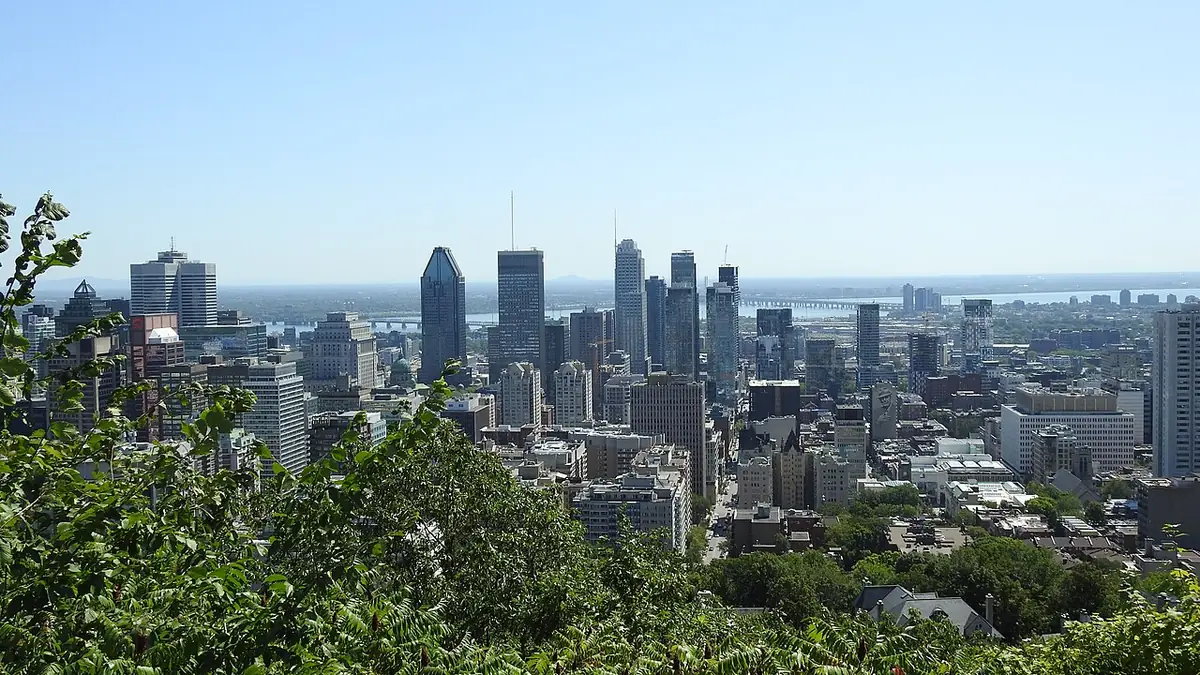
Belvédère Kondiaronk, Montréal in Street View: drag to look around.
That gap between outward appearance and technical reality shows up differently depending on the kind of house an owner is valuing.
Valuing property in Montréal rests on a complex balance between the age of the building, the nature of the ground it sits on and the fast pace at which neighbourhoods change. Unlike uniform markets, the Quebec metropolis forces you to read each sector with surgical care. Owners and prospective buyers alike tend to underrate the effect of invisible structural work in favour of surface appearance. Understanding that is what keeps you out of the overvaluation trap when the time comes to list.
The gross area and the room count printed on the listing sheetvsThe real condition of the poured concrete or fieldstone foundation
A large area that is poorly insulated or subject to chronic water infiltration loses its market value quickly. Well-informed Montréal buyers routinely send an inspector down to the basement, and the report is what reprices the property.
The municipal assessment issued by the Ville de MontréalvsThe real market value dictated by recent comparable sales
The assessment roll often lags the market by several years. Following it blindly leads either to underselling or to setting an unreachable price that discourages viewings altogether.
Being a short walk from a metro station or a major roadvsThe quiet of the residential street and a mature tree canopy
Mobility dominates first impressions, but long-term quality of life depends heavily on how calm the street is and how green its surroundings are, and both feed directly into the resale figure.
Recent cosmetic work in the kitchen and bathroomvsBringing the wiring, the plumbing and the roof up to standard
An on-trend finish sells the first viewing, but obsolete wiring or a roof at the end of its life represents enormous outlay that has to be subtracted from the opening estimate.
Which kind of Montréal house are you putting a number on?
These distinctions matter even more when the person reading the figure is arriving from abroad or from another province.
A Montréal house is valued against the life it makes possible, and that is why the same square metre is worth different amounts across the island. Family requirements, tolerance for a transit commute and the desire for private outdoor ground reshape what a sector is worth to the pool of buyers bidding on it. Each Montréal neighbourhood sells a radically different promise, and the figure you arrive at has to be tested against the buyers that promise attracts.
Valuing on central access
A single-family house or a divided co-ownership unit in a central borough such as the Plateau or Rosemont comes with tighter outdoor space, and any figure that prices it as though it had a large lot will be wrong. What it is paid for instead is unmatched walking access to neighbourhood shops, busy parks and the STM network above and below ground. Price per square foot runs high here and room sizes run small, so comparables have to be drawn from the same few streets rather than from the borough as a whole.
Valuing the family compromise
Sectors such as Notre-Dame-de-Grâce (NDG) and parts of Ahuntsic sit on the balance buyers look for, with streets lined by mature trees and landscaped back yards, and both of those command a measurable premium. The offsetting factors an honest estimate has to carry are strict winter parking management and slightly longer trips into downtown. What holds the value up is an established community, well-regarded schools and a setting that families in search of stability keep bidding for.
Valuing architectural heritage
An ancestral house or a century-old duplex with genuine character carries the constraints of Montréal heritage conservation, and those constraints belong in the figure. Original woodwork, exposed brick walls and high ceilings have an invisible cost in specialised renovation work and compliance with municipal by-laws. Valuing this kind of property means pricing in time, financial reserves and a proven tolerance for site surprises, which narrows the buyer pool and widens the plausible range.
Reading a Montréal valuation when you are arriving from abroad
Once those reference points are in place, the geography of the island becomes the next thing to price.
Property valuation in Quebec follows its own conventions, well away from the notarial and banking habits common elsewhere. From how area is measured to the pre-purchase inspection, the path to a defensible figure runs through specific steps you have to master to avoid a false reading. That transition, cultural and administrative at once, calls for a quick adaptation to local practice in negotiation and in financing.
From abroad
An area figure measured to the millimetre against a strict legal standard for habitable floor space.
Montréal
A gross area that often takes in the finished basement, and sometimes part of the common areas or outbuildings.
You have to check the real dimensions on site and never take the headline number on the listing at face value, because the basis of calculation is fundamentally different and a per-square-metre comparison built on it will be wrong.
From abroad
A notary involved from the moment the promise of sale is signed, whether unilateral or reciprocal.
Montréal
A promise to purchase drawn up by a real estate broker, framed by strict deadlines before the final deed.
In Quebec the notary comes in mainly at the very end, to verify title and sign the deed of sale, while the opening terms, and the price you settle on, are negotiated through standardised forms.
From abroad
A mortgage priced as one negotiated fixed rate arranged directly with your long-standing bank.
Montréal
The Canadian mortgage system, with terms renewable every three or five years and a minimum down payment.
Your financial plan has to allow for interest rates moving when your term renews, and rate movements are also what push the whole comparable set up or down between one valuation and the next.
From abroad
Annual housing and property taxes set by national scales with complex local allowances on top.
Montréal
Annual municipal and school taxes paid directly to the city and the school board on the basis of the assessed value.
These local taxes can amount to a substantial sum, and because they are driven by the assessment roll they are the clearest public signal of what the city thinks your property is worth.
Which Montréal sector sets the benchmark for your valuation?
These geographic gaps translate into hard numbers, and those are best examined against the market data.
Montréal is a mosaic of boroughs with strongly drawn identities, and each sector strikes its own bargain between access, quiet and cultural energy. Weighing those trade-offs carefully is how you decide which sales are genuinely comparable to yours. Market dynamics shift completely from one zone to the next depending on proximity to transport routes and on the type of building stock.
Le Plateau-Mont-Royal and Mile End
Constant cultural energy, green alleyways that come alive in fine weather and a remarkable density of local shops.
Suits
Valuations that rest on an urban, walkable way of life with no need for a car day to day.
Trade-off
Some of the highest prices per square foot on the island, and a chronic scarcity of single-family houses with a large lot, which makes clean comparables hard to find.
Notre-Dame-de-Grâce (NDG) and neighbouring Westmount
A village feel, English and French mixed, with superb tree-filled parks and eclectic residential architecture.
Suits
Properties valued on well-regarded schools and a stable residential setting towards the west of the city.
Trade-off
An extremely competitive market where well-maintained properties routinely draw overbids, so recent sales can sit above what the fundamentals support.
Rosemont-La Petite-Patrie
A fine balance of easy neighbourhood life, busy family parks such as Beaubien and genuine food shops.
Suits
First-time buyers and young families who want real Montréal energy without the frenzy of the centre.
Trade-off
Constant pressure on the supply of houses, which means offers move fast and the comparable set turns over quickly.
Ahuntsic-Cartierville
A calmer, greener atmosphere, bordered by the Rivière des Prairies and paced by large parks and cycle paths.
Suits
Larger living spaces, direct access to nature and comparatively more accessible prices.
Trade-off
Relative distance from the downtown business core, which lengthens the commute for office workers and caps what the sector fetches.
What does a Montréal house actually fetch?
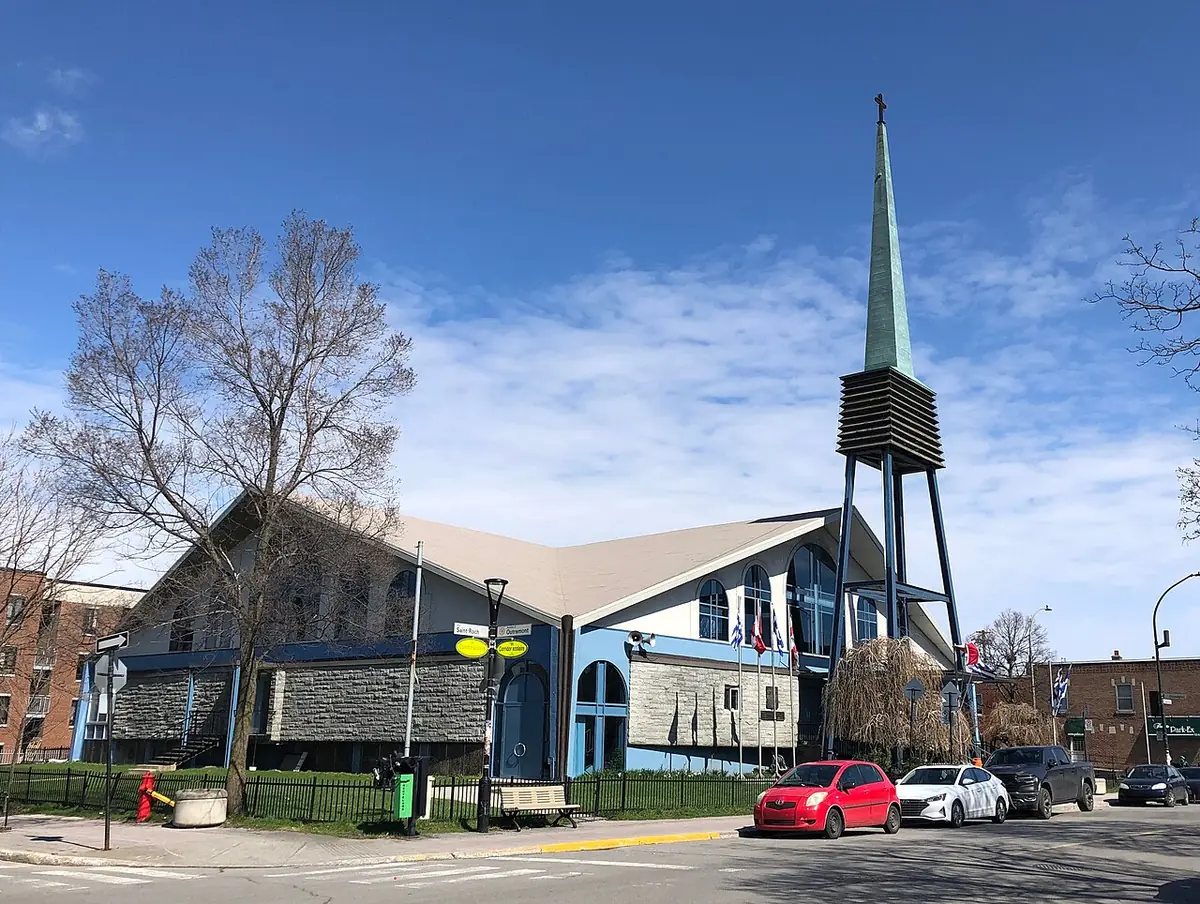
A striking church marks this Montreal street corner — Photo: LenMontreal · CC BY-SA 4.0 · Wikimedia Commons
Beyond the raw numbers, the legal nature of what you own in Montréal deserves particular attention.
Putting a figure on a Montréal house does not stop at the asking price on the listing. Transfer duties, appraisal fees, mortgage insurance and the unavoidable cost of bringing a property up to standard all bear on what the property is really worth. Ranges vary considerably with the borough in question and the general state of preservation of the building. Reading these numbers carefully is what stops a valuation from turning into an unpleasant surprise later.
montrealFor saleHouseestimate
Median price / m²CA$4,129Half the apartments sell below this
Median priceCA$624kthe average is 14% higher — a few very large properties pull it up
Most common2 bedrooms65 % of listings
Average size144 m²
By number of bedrooms
Bedrooms
Share of market
Avg price
Price / m²
Avg size
2most common
65 %
CA$624k
CA$4,346
144 m²
3
31 %
CA$795k
CA$4,129best value / m²
193 m²
4
5 %
CA$1.05m
CA$4,129best value / m²
254 m²
Each row is an average, compared against the area average of CA$4,346 / m². These are indicative estimates of a typical local market, not a measured sample of live listings. Check current listings before relying on them.
What you actually own, and what that does to the figure: co-ownership against outright ownership
That legal precision comes to a head when the official documents are signed and the pre-purchase inspection is done.
The legal structure of property ownership in Quebec dictates your financial autonomy and your obligations towards the building, and any serious valuation starts there. Between the detached single-family house and the divided co-ownership so common in Montréal, the rules change completely. Understanding the distinction is what keeps you clear of neighbour disputes and of nasty surprises tied to the contingency fund.
The single-family house in full ownership
You own both the building and the land it stands on, with no syndicate of co-owners to answer to. Every decision about the roof, the insulation or the landscaping is yours alone, and so is the whole bill. That complete freedom comes with a maintenance liability and no collective safety net, which is why a valuation of a house leans so heavily on its physical condition.
What it changesThe figure turns almost entirely on the building itself: you control the schedule and the spending, and you carry every major structural surprise alone.
Divided or undivided co-ownership
You buy an exclusive fraction of a building while sharing ownership of the common portions with other co-owners. Day-to-day management is governed by a strict declaration of co-ownership and by compulsory monthly contributions to the contingency fund. That arrangement lightens the individual maintenance load but imposes strict rules on communal life and decisions taken in general meeting.
What it changesThe figure depends as much on the building's collective accounts as on your own unit: shared costs cut both ways, and a thin contingency fund shows up as a discount.
The rule to grasp before you act on any Montréal figure
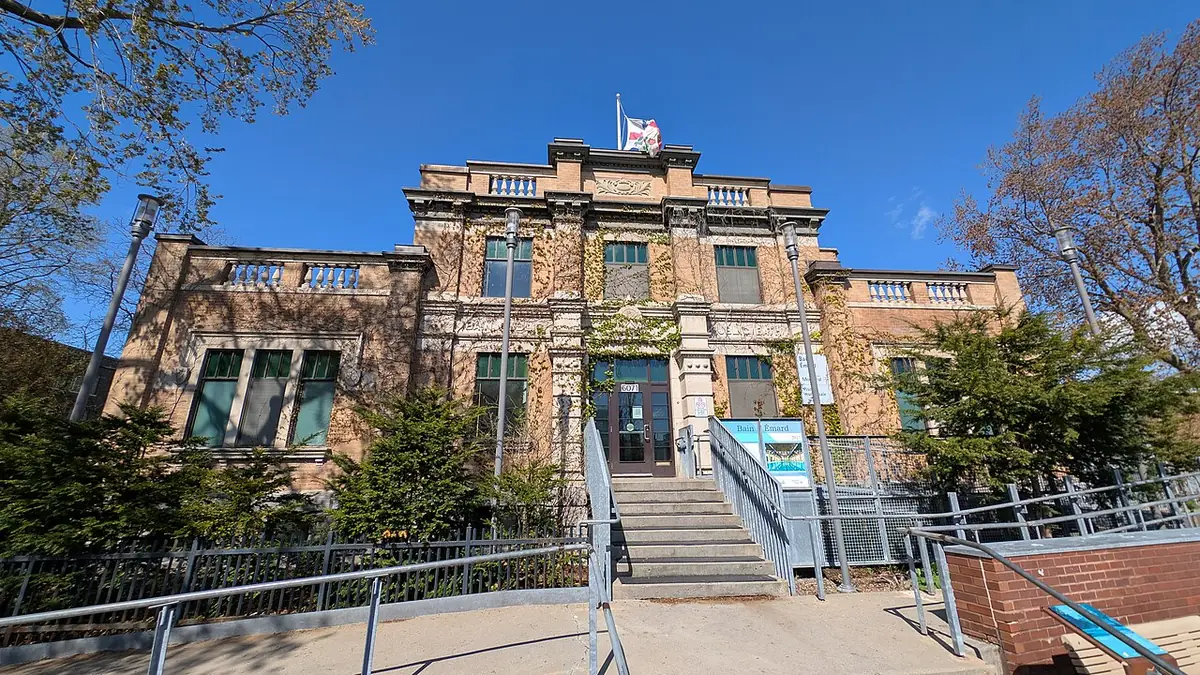
A heritage bathhouse anchoring this Sud-Ouest neighbourhood — Photo: Maxime Laterreur · CC BY 4.0 · Wikimedia Commons
To run that sequence smoothly, it helps to set out exactly what each professional in the transaction contributes.
Property transactions in Quebec are governed by contracts of considerable legal rigidity that leave no room for improvisation, and the same rigidity applies to the value you write into them. An accepted promise to purchase binds the parties formally the moment the suspensive conditions are lifted. Missing the fine print on the inspection or the cancellation clauses can cost you dearly in penalties or litigation. A methodical order of operations is what secures each step, and each step in turn sharpens the figure.
A promise to purchase drawn up by your real estate broker, carrying the suspensive conditions without which no figure can be tested.
Insert the pre-purchase inspection clause, with a certified professional belonging to a recognised Quebec association, so that condition adjustments rest on evidence rather than impression.
Obtain formal final mortgage approval from your financial institution or mortgage broker, whose own appraisal is an independent check on the number you have arrived at.
Have your notary examine a recent certificate of location closely, to pick up any encroachment or right of way that quietly reduces what the land is worth.
Lift the conditions formally within the strict contractual deadlines, at which point the agreed figure becomes irrevocable.
Signature of the final deed of sale before the notary, where the value you defended becomes the recorded price of a Montréal property.
Who establishes what a Montréal property is worth, step by step
A sound Montréal valuation rests on the transparent coordination of several professionals with complementary skills. From the real estate broker to the notary by way of the building inspector, each one pins down a different part of the number. Knowing what each is responsible for lets you steer the exercise calmly and efficiently from start to finish.
The real estate brokerComparable analysis and negotiationThe broker guides you through the comparative market analysis that sets the opening figure, drafts the promise to purchase on OACIQ forms and defends your position when the price is negotiated.
The building inspectorTechnical assessment of conditionThe inspector goes carefully over the structure, the roof, the plumbing and the insulation to produce a detailed report, and it is that report that quantifies the deductions for latent defects.
The mortgage brokerFinancing structure and ratesThe mortgage broker compares offers from several financial institutions to secure the best interest rate and to structure your down payment to Canadian standards, and the lender's own appraisal tests your figure against theirs.
The land surveyorVerification of the property boundariesThe surveyor draws up or updates the certificate of location to certify that the lot boundaries comply with Ville de Montréal zoning by-laws, which is what confirms the land area a valuation is priced on.
The Quebec notaryLegal security and transfer of titleAn impartial public officer, the notary checks that title is clear, draws up the final deed of sale, holds the funds in trust and publishes the transaction at the land register, where the recorded price becomes tomorrow's comparable.
House or apartment in Montréal: how upkeep on a single-family property and management of a co-ownership pull the value in different directions
Once the type of property is settled, the decisive question becomes the total cost of ownership and the municipal property taxes.
Owning a single-family house in Montréal means carrying full responsibility for the building and the land, from a fieldstone foundation under an older property to a roof exposed to the severity of a Quebec winter, and every one of those elements is a line in the valuation. Unlike many dense markets abroad where terraced and party-wall housing is the urban norm, the metropolis has a high proportion of detached houses in outlying boroughs such as Ahuntsic-Cartierville and Mercier-Hochelaga-Maisonneuve, and in the near suburbs on the island. Properties like these are valued for buyers willing to give up weekends to landscaping, to clearing large circular driveways by hand and to building a personal reserve for major structural surprises.
A condo or a divided co-ownership unit in a dense sector such as Le Plateau-Mont-Royal, Rosemont-La Petite-Patrie or Griffintown shifts the operating burden onto a syndicate of co-owners, and shifts the valuation with it. Monthly condo fees pool the upkeep of the roof, the lifts and the common areas, which greatly simplifies day-to-day management for busy professionals or for arriving buyers unfamiliar with the local climate. That apparent calm depends entirely on the financial health of the co-ownership and on the rigour of its administration, and it is a file to audit closely before the deed of sale is signed, because weak accounts and a thin contingency fund show up directly as a lower figure.
Montréal's typical building form adds a further layer with the well-known traditional triplexes and duplexes, where the owner often occupies one dwelling and rents the others to cover part of the mortgage. That arrangement sits somewhere between the house and the condo, and it has to be valued on the rental income it generates as well as on the fabric of the building. It does call for landlord skills and a proven tolerance for the realities of Quebec's housing tribunal, the Tribunal administratif du logement, and a valuation should reflect how far below market any sitting leases are.
On resale and liquidity, single-family houses in sought-after neighbourhoods generally show steady appreciation, carried by the scarcity of land on the island of Montréal, while condos swing more sharply with the abundant supply of new construction downtown. Comparing the two therefore comes down to weighing manual work and the unforeseen on one side against syndicate bureaucracy and shared ownership on the other, while keeping in mind that geographic location is what dictates real long-term value.
What a full Montréal figure has to include, from purchase to running costs
With the financial picture set out, it is worth seeing how location plays out in the daily life of everyone in the household.
What a Montréal single-family house is worth to you is not just the price written into the promise to purchase, or the down payment your lender requires. A complete figure has to take in the municipal transfer duties, commonly called the welcome tax, calculated in progressive brackets on the municipal assessment or the purchase price, whichever is higher. Add to that the notary's fees, the pre-purchase inspection that is essential for uncovering latent defects, and CMHC mortgage loan insurance if the down payment is under twenty per cent. Leaving these items out of the initial calculation exposes an owner to severe cash pressure in the very first weeks after the transaction.
Upfront costs and taxes on acquiring a house in Montréal
Cost item
Estimated amount or formula
Effect on the budget
Transfer duties (welcome tax)
0.5% to 2.5% depending on the price bracket
Payable in a single instalment within three months of the sale
Pre-purchase inspection by an expert
$600 to $1,200 depending on the floor area
Non-refundable, and essential for renegotiating the figure or walking away
Notary's fees for the transaction
$1,500 to $2,500
Covers the title search and registration of the mortgage
CMHC insurance (if down payment < 20%)
2.8% to 4.0% of the amount borrowed
Generally capitalised straight into the mortgage balance
Montréal's municipal transfer duty rates step up in progressive brackets that rise above $500,000 and $1,000,000.
Annual and recurring ownership costs for a Montréal house
Cost category
Average annual cost
What makes it vary
Municipal property taxes
$3,500 to $7,000
Varies sharply with the borough and the assessed value
School taxes on the island of Montréal
$400 to $900
Calculated on the standardised value of the building
Home insurance (building and contents)
$1,200 to $2,500
Influenced by the age of the roof and by the heating system
Reserve fund for upkeep and repairs
1% to 2% of the value of the property
Essential for meeting sudden failures such as the furnace or the roof
Montréal's harsh winters bring heating and snow-clearing costs that weigh heavily on the annual budget.
Health, schools and transport: what an ordinary Tuesday reveals about a Montréal house
Street art brings colour to this Montreal façade — Photo: Maxime Laterreur · CC BY 4.0 · Wikimedia Commons
Beyond that well-drilled routine, close examination of the property often turns up realities the sales brochure leaves out.
What a Montréal house is worth is tested against an ordinary Tuesday, between morning trips on congested roads and the pull of nearby services. Urban infrastructure, whether the metro lines of the Société de transport de Montréal or major arteries such as the Metropolitan expressway, sets the rhythm of the morning departure and shows up in the price per square metre street by street. For families with children, closeness to neighbourhood schools and to municipal parks is a decisive quality-of-life factor that spares long inefficient journeys through metropolitan traffic, and buyers pay for it.
07:00Residential edge and parkingThe day starts with a look outside to check the state of the snow clearing, or for municipal parking restrictions posted for street cleaning; on-street parking pressure is one of the quieter value factors on a Montréal street.
07:45Local public primary schoolChildren walked or driven to the local French-language or English-language school, a good moment to judge the safety of the pedestrian crossings that families price into a street.
08:30Trip to the employment hub (downtown or a technology park)Use of the nearest metro station, or the bridges off the island if the job is on the South Shore, with the traffic variations that come with them; measured commute time is one of the strongest predictors of what a sector fetches.
12:30Local shops and neighbourhood lifeA visit to the artisan bakery, the pharmacy or the neighbourhood public market for lunch errands, a direct read on the commercial vitality that supports values on the surrounding streets.
17:30Home again and household logisticsCollecting the children from after-school care and dealing with outdoor upkeep or municipal waste sorting, the running obligations that a buyer weighs against the asking figure.
19:30Local community or sports activityA trip to the municipal arena, the borough library or the dog park, the kind of amenity within walking distance that keeps demand, and prices, firm.
21:00Planning the weekend in the living roomA quiet moment, well suited to checking the forecast ahead of garden chores or getting the house ready for winter, the upkeep rhythm that decides how the property will present at its next valuation.
What the listing will not tell you about the real condition of Montréal houses
These technical points show how far misleading appearances can lead to real regret when vigilance slips.
Advertising copy on brokerage platforms invariably leads with the cosmetic renovation, the quartz kitchen counter and the light in the rooms. Yet the Montréal housing stock, much of it built between the 1920s and the 1960s, holds technical characteristics that escape an untrained eye and that a serious valuation has to price. Knowing about these invisible items avoids major financial disappointment once the conditions are lifted, and keeps the asset soundly managed over the long term.
The condition of the poured concrete or fieldstone foundation
Many older houses suffer spring water infiltration or ground movement caused by freeze and thaw cycles. An unsealed crack in the foundation can lead to underground repair costs running to several tens of thousands of dollars, which is a direct deduction from any figure.
Asbestos in insulating materials or finishes
Widely used in past decades for its fire-resistant properties, asbestos calls for specialised and expensive removal protocols during renovation work or when load-bearing walls are opened up, and that cost belongs in the estimate.
Compliance of the electrical installation and the type of wiring
Older aluminium circuits or obsolete fuse panels present a real fire risk. Insurers often require an upgrade certified by a master electrician before granting cover, and an uninsurable house cannot be valued as a comparable one.
The real age of the roof and the effectiveness of attic ventilation
A flat or pitched roof with poor ventilation causes internal condensation through the harsh Montréal winter, which encourages mould harmful to the framing and to the occupants' respiratory health, and shortens the remaining life the valuation can credit.
The connection to the municipal sewers and the risk of backflow
Some Montréal sectors have combined sewer networks that are vulnerable during heavy summer rain. Without a working backwater valve, the basement is exposed to considerable wastewater damage, and finished basement area then cannot be counted at full value.
The regrets that surface six months after trusting the wrong number on a Montréal house
These hard lessons show that a headline figure does not suit every plan or every budget.
Looked likeA charming single-family house on a large, private wooded lot in a peaceful sector, and a figure that read as a bargain.
Turned outA daily commute of an hour and a half each way into downtown, because the property sits far from the main transit routes, which is exactly why comparable houses there sell for less.
Would have caught itAlways checking the real journey time in the rush hour on a Tuesday morning before treating a low price per square metre as good value.
Looked likeA very attractive price for a property said to need only a little cosmetic refreshing.
Turned outA cascade of structural latent defects found once the walls were opened, turning a paint budget into a major renovation, and turning an apparent discount into an overpayment.
Would have caught itInsisting on a building inspector belonging to a recognised association, and budgeting a fifteen per cent safety margin for the unforeseen before you settle on a figure.
Looked likeA neighbourhood full of cultural energy, with plenty of fashionable bars and restaurants within walking distance carrying a premium.
Turned outUnbearable night-time noise, chronic difficulty parking on the street and a ban on putting up a temporary winter car shelter, all of which cap what the address is really worth.
Would have caught itReading the borough planning by-laws and visiting the surroundings on a Friday evening to test the real atmosphere behind the premium.
Looked likeA modest energy bill, thanks to a central heating system said to be efficient and modern.
Turned outExorbitant electricity costs during the polar cold snaps of January and February, weighing heavily on the monthly running budget that the purchase figure never allowed for.
Would have caught itAsking the seller for the last twelve months of Hydro-Québec bills, so the real, verified consumption goes into your numbers.
Looked likeA vast storage space in the basement for all the family's belongings, counted as usable area.
Turned outPersistent ambient damp that makes the basement unfit for storage without buying and continuously running industrial dehumidifiers, so that area should never have been valued as living space.
Would have caught itTaking a hygrometer to the open house and checking the baseboards and the lower corners of the walls for any trace of moisture.
Who should not act on a Montréal valuation right now?
It is time to draw the fundamental conclusions that should guide your final decision.
Home ownership is often presented as the absolute proof of personal success, an unquestionable financial article of faith, and a rising valuation is read as an invitation to act. Yet in the specific economic and geographic context of Montréal, moving on a single-family house can be a serious strategic error for certain profiles, however encouraging the estimate looks. Weighing your professional situation, your mobility and your tolerance for risk objectively keeps you from locking yourself into a heavy, illiquid asset that constrains your freedom.
The worker with high professional mobility or on short contracts
→To go on renting a flexible apartment downtown or in the central neighbourhoods.
The upfront transaction costs (notary, transfer duties, brokerage on resale) require a holding period of five to seven years to be absorbed. Selling before then almost always means a net loss of capital, whatever the valuation says the property is worth.
The household with no savings set aside for emergencies
→To keep savings liquid, in safe and accessible investments.
Owning a house exposes you to sudden, costly failures (a water heater, roof infiltration, a broken French drain) that demand immediate cash, and an owner with no cushion cannot meet them no matter how much equity a figure implies.
The person with no appetite for domestic and manual chores
→To favour renting with services included, or a co-ownership managed by an outside firm.
Keeping a Montréal house means hundreds of hours a year on mowing, weeding, cleaning gutters and back-breaking snow shovelling from November to March, and a house that is not kept up loses the value the estimate credited it with.
The buyer on a tight budget betting on mortgage rates falling
→To wait until income is more settled or overall debt is lower.
Borrowing to the very limit of your capacity leaves no room for manoeuvre against the rising cost of living and mortgage renewals at current market rates, and a valuation says nothing about your ability to carry the payments.
So, do you really trust the number you have on your Montréal property?
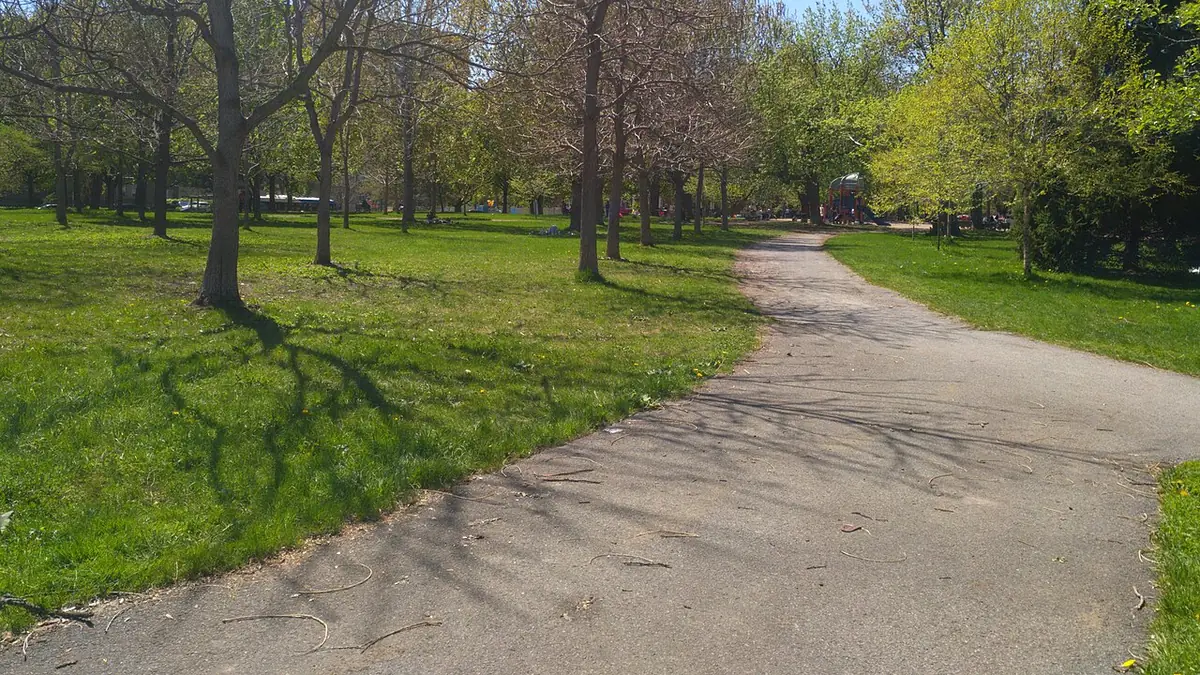
A shaded path for an easy walk in a Montreal park — Photo: Ptaff · CC0 · Wikimedia Commons
Settling on what a Montréal house is worth calls for a clear-eyed self-examination that goes well beyond the enthusiasm of a good open house. The metropolis offers an exceptional setting, combining French-language cultural vitality with a distinctly North American energy, but that balance has a price attached to it. If you have taken the measure of the harsh winters, the commitment an older building demands and the real financial load including municipal taxes, you already have the basis of a figure that will stand up.
The Montréal market rewards patience, methodical rigour and careful financial preparation. The people who get their number right are the ones who refuse to be drawn into irrational overbidding, and who look first at the structure, the foundations and the immediate surroundings rather than at the colour of the walls. How honestly you account for the constraints of Montréal's building stock will decide directly how good your valuation is, and how well the investment serves you for decades to come.
Never forget that owning in Montréal is a marathon and not a financial sprint, and that an estimate is a snapshot rather than a promise. If your working situation is stable, your emergency fund is solidly stocked and you plan to put down roots in your neighbourhood for at least seven years, the lights are green. If not, taking the time to strengthen your finances while you go on renting is not a failure; it is the mark of the financial maturity this economic climate demands.
Take the time to reread your own priorities, to consult the objective data for each borough and to test what you can genuinely repay without compromising your quality of life. The right figure is not the one that impresses your friends; it is the one that lets you sleep soundly every night, whatever the Montréal economy and the weather decide to do.
Related questions
Which Montréal boroughs hold their value best for a family house?
It depends on how you weigh closeness to downtown against green space. Sectors such as Ahuntsic-Cartierville, Rosemont-La Petite-Patrie and Mercier-Hochelaga-Maisonneuve offer a strong balance of parks, neighbourhood French-language schools and quick access to the STM transit network, and that balance is what keeps demand, and therefore values, steady.
How do the transfer duties (the welcome tax) work in Montréal, and what do they say about value?
Transfer duties are calculated by the Ville de Montréal on a progressive scale applied to the higher of the purchase price and the municipal assessment. Rates generally run from 0.5% on the first bracket up to 2.5% on the portion above the upper thresholds, which is why the assessment figure matters even when a sale price is lower.
Do you have to get a house inspected in Quebec, and does it change the valuation?
Quebec law does not formally require an inspection, but it is an unavoidable suspensive condition in any serious promise to purchase, and it is the single biggest source of downward adjustments to a figure. A qualified inspector picks up latent defects, foundation problems and electrical non-compliance that a headline estimate never reflects.
Which costs are most often left out when people put a number on a Montréal property?
Beyond the down payment and the price itself, a realistic figure has to allow for the municipal transfer duties, the notary's fees, the pre-purchase inspection, the adjustment of property taxes with the seller, and home insurance and mortgage insurance premiums where these apply.
Can a temporary winter car shelter be installed anywhere in Montréal?
No. The rules on installing temporary winter shelters vary strictly from one Montréal borough to the next. Some neighbourhoods ban these structures outright on grounds of streetscape appearance and snow-clearing safety, which quietly affects how a driveway is valued.
How long does it take to absorb the transaction costs on a Montréal property?
Between the municipal transfer duties, notary fees and any brokerage fees on resale, it is strongly advisable to plan on holding the property for five to seven years so that these upfront costs are absorbed without a loss.
How do you get reliable information on the history of a Montréal building?
You can consult the Ville de Montréal assessment roll online for the history of taxes and of the assessed value. The notary retained for a transaction will also carry out a full review of the titles at the land register.
What effect do Montréal winters have on the upkeep budget for a house?
Harsh winters mean higher heating costs, an obligation to clear snow regularly (by hand or through a private service), and accelerated wear on the roof and flashing because of repeated freeze and thaw cycles. All three feed straight into the condition adjustments an appraiser applies.
What is the difference between divided and undivided co-ownership in Montréal, and how is each valued?
Divided co-ownership gives an exclusive right of ownership over a private portion plus a share of the common portions, with its own cadastral lot. Undivided co-ownership instead means a single title over the whole building, which usually calls for a larger down payment and a strict notarial agreement, and it typically values lower per square metre for that reason.
Is an older Montréal house or a recent building worth more?
Older houses carry unique architectural character and mature locations in lively central neighbourhoods, but they need a renovation budget that a valuation has to net out. Recent properties demand less immediate upkeep but are often further out, and location is what carries value over time.
Property review of ting
No ting properties in Montreal yet
Be the first — share it on ting and it shows up right here.