Finding and renting a house in Montréal means understanding the particular dynamics of Quebec's largest city, from its residential neighbourhoods to the way its leases work. This guide walks you through the process step by step so you can weigh the real costs, pick the right area and sign your lease with confidence.
Get the app
What nobody tells you.
Real prices, hidden costs and the traps to check before you commit.
What renting a house in Montréal actually involves day to day
Scroll
What renting a house in Montréal actually involves day to day
Finding and renting a house in Montréal means understanding the particular dynamics of Quebec's largest city, from its residential neighbourhoods to the way its leases work. This guide walks you through the process step by step so you can weigh the real costs, pick the right area and sign your lease with confidence.
Written by the ting.ad editorial team ·
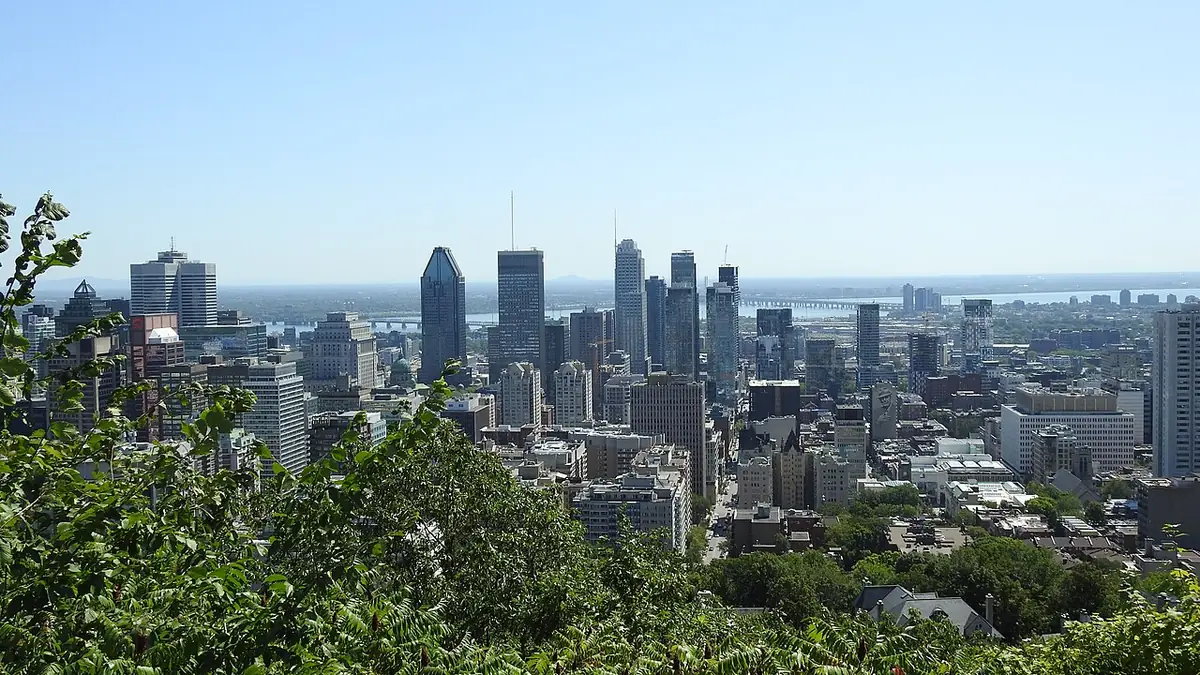
Belvédère Kondiaronk, Montréal in Street View: drag to look around.
Beyond the physical features of the building, your way of life will decide which area suits you.
Renting a house in Montréal is not simply a matter of finding more floor space than an apartment offers. The market here imposes sharply contrasting neighbourhood dynamics between the island and the surrounding ring, demanding winters that test a building's insulation, and a strictly governed residential lease. Understanding those realities is what keeps you clear of nasty surprises over hidden heating costs and distance from the main transit lines. Every area has its own unspoken rules, and online listings generally leave them out.
The floor space and the gardenvsThe upkeep and the snow clearing
Having a yard in Montréal means taking on the winter shovelling and the summer mowing, tasks that are often covered by the charges in a co-ownership but fall entirely to you in a detached house.
The quiet of residential neighbourhoodsvsThe distance from the metro network
Settling in the calmer areas, such as the west of the island or parts of Laval and the South Shore, cuts the urban noise but adds considerably to the time it takes to reach downtown by public transport.
The charm of heritage buildingsvsThe energy bill and the wear
Older houses have an undeniable character, with their woodwork and their red brick, but their period insulation translates into a particularly steep electricity bill through the deep-cold months.
Which part of Montréal really matches the way you live?
If you are arriving from abroad, the move calls for a real reset of your property reflexes.
Montréal's geography is shaped by the Saint Lawrence River, by Mount Royal and by a transit network centred on the metro. Your daily profile (an office worker commuting downtown, a family with children looking for local schools, or a self-employed worker who needs space) instantly narrows down the relevant part of the map. Getting the choice between the island and the neighbouring suburbs wrong is something you pay for every single day in bridge traffic.
Close to the metro
Central areas such as Notre-Dame-de-Grâce (NDG) or parts of Rosemont offer a workable compromise, with townhouses and converted duplexes. You are within immediate reach of the orange or green lines, which removes any dependence on a car. In exchange, rents there are distinctly higher for homes that are often smaller, on very tight lots.
Residential suburb
Municipalities such as Mount Royal and Westmount, or specific pockets of Brossard and Laval, answer that need for space and quiet. Houses there have genuine back gardens and direct access to first-rate schools and sports facilities. You do have to accept a longer commute at peak times and a greater reliance on the car.
Outer ring
Moving out to the north or south ring gets you a modern detached house on a large lot for a monthly rent comparable to a small central flat. This option calls for careful planning around the occasional trip into town, and it means a more spread-out neighbourhood life built around local amenities reached by car.
Renting here when you have come from abroad: what changes completely
With those reference points in place, the next task is to pin down exactly which sort of area fits what you are after.
Moving to Quebec comes with a housing culture shock that few new arrivals see coming. Contractual practice, the structure of the lease and the relationship with owners all differ deeply from what most newcomers are used to. Grasping how it works from the outset saves you misunderstandings when the lease is signed or when the condition of the home is recorded, an exercise that is far less formalised here than in many other countries.
From abroad
A rent guarantor and a strict application dossier
Montréal
The credit check and your financial history
In Quebec a security deposit is illegal. Owners instead run a thorough credit check as a matter of course, and may ask for references from employers or previous landlords in order to judge how reliable you are.
From abroad
A single autumn date around which everyone moves
Montréal
The 1 July tradition, known as moving day
The large majority of residential leases in Quebec end on 30 June and restart on 1 July. That unique concentration creates intense logistical pressure, a temporary shortage of removal trucks and sharp price rises across moving services.
From abroad
Floor area stated in square metres
Montréal
A count of rooms (the numbers, as in 5 1/2)
Homes are almost never advertised with their exact floor area in square feet or square metres. The convention counts rooms instead (closed bedroom, living room, kitchen and so on), which takes a practised eye if you want to estimate the real space.
From abroad
Rents tightly capped by statute
Montréal
The opening rent set freely by the owner
The Tribunal administratif du logement (TAL) does govern rent increases over the course of a lease, but the owner sets the starting price freely on a new letting, with no direct ceiling based on floor area.
Which Montréal neighbourhood should you target for renting a house?
Those choices of area translate into precise budget realities, which are worth examining without a filter.
The neighbourhood you pick shapes your whole daily life in Montréal, from the commute to what you do at the weekend. Each part of the city and its wider region has its own identity, combining access to green space, a particular commercial atmosphere and very different travel times into the heart of the city.
Notre-Dame-de-Grâce (NDG)
A village feel in the middle of the island, with streets lined by mature trees, busy parks and a pronounced cultural mix.
Suits
Families who want to combine city life, bilingualism and proximity to the main transport routes without cutting themselves off.
Trade-off
The housing stock is ageing, and rents call for a substantial budget if you want a well-maintained house.
Laval (Chomedey or Sainte-Dorothée)
A semi-urban setting built around open space, local shopping centres and recently built subdivisions.
Suits
Anyone looking for a spacious detached house with a large lot and easy parking.
Trade-off
The distance means daily use of a car and a longer run onto the island at peak times.
The South Shore (Brossard and Longueuil)
Quiet residential living, connected to downtown by the Réseau express métropolitain (REM) or by the road bridges.
Suits
Working households who want a modern house with an excellent space-to-price ratio and quick access to fast transit.
Trade-off
The streetscapes can look uniform, and walkable neighbourhood life is thinner than inside Montréal itself.
What does renting a house in Montréal really cost?
A striking church marks this Montreal street corner — Photo: LenMontreal · CC BY-SA 4.0 · Wikimedia Commons
Beyond the figure written on the lease, the legal nature of the home you rent deserves close attention.
Montréal's rental market is under pronounced pressure across every segment, and detached houses are no exception. Prices vary by a factor of two depending on how close the metro is, how old the building is and whether it has been substantially renovated. The table below sets out the ranges observed, so you can plan your finances without unpleasant surprises.
montrealTo rentHouseestimate
Median price / m²CA$19Half the apartments sell below this
Median priceCA$2.82kthe average is 14% higher — a few very large properties pull it up
Most common2 bedrooms65 % of listings
Average size144 m²
By number of bedrooms
Bedrooms
Share of market
Avg price
Price / m²
Avg size
2most common
65 %
CA$2.82k
CA$20
144 m²
3
31 %
CA$3.6k
CA$19best value / m²
193 m²
4
5 %
CA$4.74k
CA$19best value / m²
254 m²
Each row is an average, compared against the area average of CA$20 / m². These are indicative estimates of a typical local market, not a measured sample of live listings. Check current listings before relying on them.
What you can actually sign: the standard lease or a separate agreement
The same contractual rigour applies to the order in which your move-in unfolds.
In Quebec the Tribunal administratif du logement imposes a compulsory lease form on every residential rental. That framework protects both parties, but it carries subtleties you need to master before you put your name to it. Between the automatic renewal clauses and the strict rules on pets or on subletting, reading every line closely is not optional.
The official lease of the Tribunal administratif du logement
Quebec's standardised rental contract carries legal provisions the parties cannot contract out of, notably on the grounds for repossession and the rules for rent increases. It renews automatically each year on the same date unless a notice of non-renewal is sent within the periods the law prescribes.
What it changesYou get strong security of tenure, but you have to respect the time windows scrupulously if you want to give notice of your departure or negotiate the terms of a renewal.
The building rules and agreements appended to it
Owners of houses held in co-ownership or inside managed complexes often add specific rules covering the use of shared spaces, winter parking or a ban on smoking indoors. Those annexes become an integral part of your contractual obligations the moment you sign.
What it changesRead every appended rule before you commit, because a repeated breach can lead to lease termination proceedings before the competent authorities.
The rule to understand before you hand over any money or sign anything
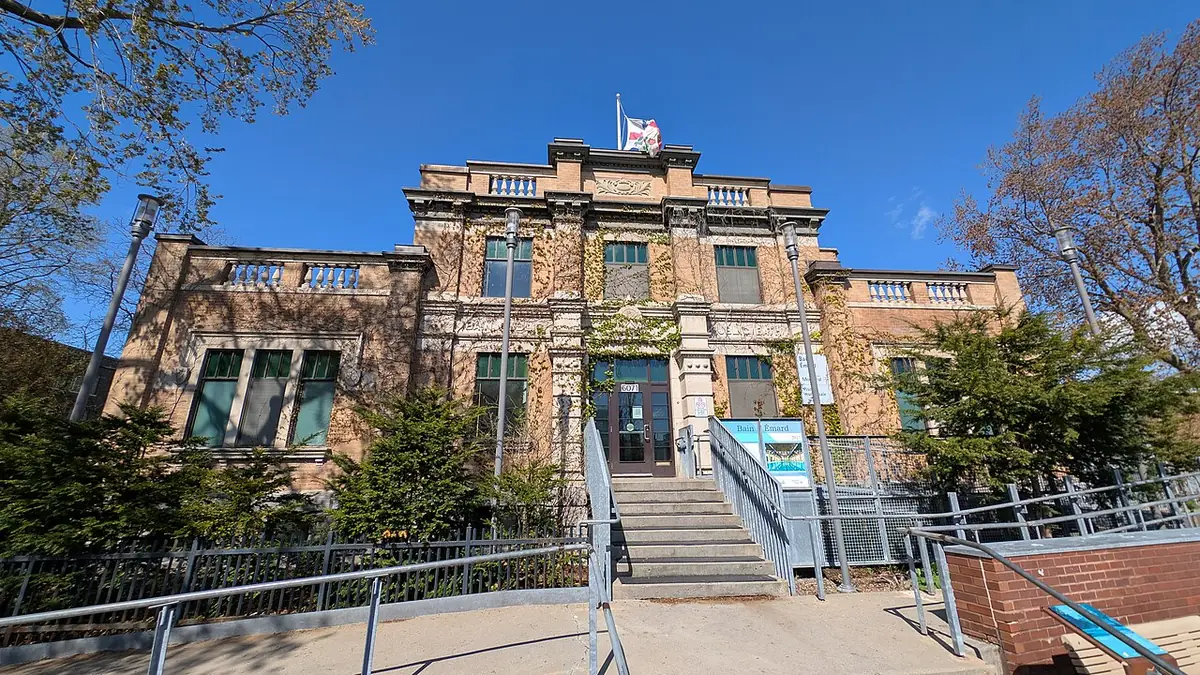
A heritage bathhouse anchoring this Sud-Ouest neighbourhood — Photo: Maxime Laterreur · CC BY 4.0 · Wikimedia Commons
To run all of this smoothly, you need a clear view of the timeline.
Selecting a tenant in Quebec follows a precise sequence in which financial transparency comes first. Unlike the practice in some other markets, no deposit of any kind may be demanded of you. Following that order protects your interests and makes your application credible in the owner's eyes.
Viewing the property and confirming that the area works for you.
Fill in the rental application form with your personal and professional details.
Formally authorise the check on your credit record and your financial standing.
Obtain the owner's approval on the basis of your complete, verified file.
Sign the official lease of the Tribunal administratif du logement, with no security deposit paid.
Keys handed over on 1 July (or on the agreed date) and payment of the first month's rent.
How a rental transaction unfolds, step by step
Anticipating the phases of your rental project in Montréal is the key to a move that goes well, particularly if you arrive around the 1 July peak. Each party involved, from the broker or owner through to the municipal services, plays a defined role at each milestone.
The prospective tenantSetting criteria and shortlisting neighbourhoodsWork out what you need in terms of transport, floor area and budget before you start searching the specialist listing platforms.
The owner or brokerViewings and submission of the applicationView the available homes and prepare a complete file, with proof of income and references, so the decision can be made quickly.
The screening servicePre-tenancy enquiry and credit checkThe manager assesses your financial standing and checks your payment history with the authorised credit reporting agencies.
Both partiesSignature of the official residential leaseConfirmation of the contract terms, the occupancy dates and any specific conditions appended to the lease of the Tribunal administratif du logement.
The tenantMoving logistics and transfer of servicesOpening the electricity account with Hydro-Québec and booking the removal service well ahead of the fateful date.
House or co-ownership in Montréal: weighing independence against shared management
Once that basic choice is settled, the question of what it actually costs each month to live in Montréal comes straight to the front.
Choosing between a detached house and a home inside a co-ownership divides Montréal tenants from their very first searches. On one side, the independent house with its own lot offers real freedom over how you use the place and the outdoor space, while making you the one who deals with the yard, the driveway and the day-to-day consequences of an ageing roof, foundation or heating system. That option appeals particularly to families after space and quiet, keen to put down roots in leafy residential neighbourhoods such as Ahuntsic or Rosemont, well away from the noise of the main arteries and the constraints of an immediate neighbour on the other side of a wall.
On the other side, a house held within a condo or co-ownership spreads the burden of the building across several owners, through a compulsory contingency fund and monthly contributions. That arrangement suits tenants who value operational simplicity, because the snow clearing, the landscaping and the major work on the building envelope are handled by the co-ownership syndicate rather than by whoever lives there. What comes with that collective structure, though, is a set of strict rules on the use of shared spaces, appended to your lease, and a landlord whose own costs can jump when the reserves turn out to be too thin to cover an unforeseen major repair.
Financially, the two kinds of home behave differently over time as well. Detached houses on the island of Montréal are growing structurally scarcer, which sustains strong upward pressure on what they command, even though the running costs and the municipal taxes attached to them are substantially heavier for whoever pays them. Homes in co-ownership offer a more accessible way into a given neighbourhood, but what you get for the money depends closely on the financial health of the co-ownership, on how rigorously it is administered and on the state of the maintenance record that Quebec law requires it to keep.
In the end, the daily life you are after usually decides the matter. Living in a house takes time and energy every week, whether that is mowing the lawn in summer or clearing the heavy snow after the winter storms that come with the Quebec climate. A home in a co-ownership, by contrast, frees up time for the cultural life, the urban parks and the local services, in exchange for closer neighbours and a living space that is sometimes smaller for the same monthly rent.
What monthly budget should you really plan for renting in Montréal?
With those financial markers in place, it is worth looking at how an ordinary day actually unfolds, to gauge what location does to quality of life.
Building a rental budget in Montréal means starting from what houses of different sizes actually command each month, then adding what falls to you as a tenant. The figures below restate the rental data set out earlier on this page, because the rent you sign for is only the first line: heating an older house through a Quebec winter, insuring your contents and, in several boroughs, buying an annual residential parking permit all sit on top of it. Planning that properly is what keeps the first year in the city from turning into a financial squeeze.
Monthly rent observed for a house in Montréal, by size
Size of home
Estimated monthly rent
Context
Two-bedroom house
$2,820
The largest pool of listings by some distance, with 646 homes counted, and the size that sets the median for the market as a whole.
Three-bedroom house
$3,600
A much thinner pool, at 308 listings, and the step where families usually land once a second child arrives.
Four-bedroom house
$4,740
A genuinely scarce segment, with 46 listings, which is why asking rents at this size move so sharply.
Average across all sizes
$3,220
Sits above the median because the largest houses pull the average up; useful as a sanity check on any figure you are quoted.
These ranges are restated from the rental market data further up this page, since the figures a tenant needs are monthly rents rather than purchase-side costs.
How those rents break down per square metre
Measure
Figure
What drives it
Median rent per square metre
$19 per m2 a month
Barely moves between the three-bedroom and four-bedroom segments, which tells you that space itself is priced consistently across sizes.
Average rent per square metre
$20 per m2 a month
Slightly higher at the two-bedroom end, where central location rather than floor area is what you are paying for.
Average floor area of a listed house
143.5 m2
The typical two-bedroom house on the market; three-bedroom homes average 192.5 m2 and four-bedroom homes 253.8 m2.
Variations depend heavily on the age of the building and on the specific rules that apply in each part of the city.
Health, schools, transport: what does an ordinary Tuesday in Montréal actually look like?
Street art brings colour to this Montreal façade — Photo: Maxime Laterreur · CC BY 4.0 · Wikimedia Commons
Beyond that well-oiled routine, some planning and regulatory realities stay invisible during the first few viewings.
Picturing your daily life in Montréal means going beyond the viewing and testing the logistics of the place. Between the commute at peak times on the metro lines or across congested bridges, the childcare or local school run, and the food shopping in nearby stores, every hour of the day tells you whether the life you want and the location of the house you are renting actually fit together.
07:30Residential streets and back lanesAn early start to walk the children to the local school, often reachable on foot through the greened, safe back lanes that are typical of Montréal's urban fabric.
08:30Metro station or main arteryThe trip to work on the Montréal metro network or along the cycle paths of the Réseau Express Vélo, which keep running despite the severity of the winter.
12:30Local shops in the neighbourhoodA midday break spent at the artisan bakery, the public market or the small independent cafes that give the city its lively neighbourhood life.
17:30Commercial boulevard or transit arteryHeading home with a quick stop at a delicatessen or a neighbourhood greengrocer, which is the everyday convenience of a walkable local life.
19:30Municipal park or local green spaceUnwinding at the end of the day in one of the many municipal parks, with their paddling pools, outdoor skating rinks or dog runs depending on the Montréal season.
What the rental listing will never tell you about your future area in Montréal
Knowing about these hidden aspects is what keeps you clear of the classic traps, which tend to surface about six months after the lease is signed.
Listings for homes in Montréal are skilful about foregrounding the recent renovations, the natural light and the nearby services. What they leave out are the local regulatory subtleties, the constraints of the infrastructure underground and the neighbourhood dynamics that stay invisible to anyone who only views a place at the weekend, all of which can turn living there into an obstacle course.
The strict rules on overnight street parking
In several Montréal boroughs, leaving your car in the street requires a rationed residential parking permit, or obliges you to move the vehicle during winter snow-clearing operations on pain of heavy fines and prompt towing.
The real age of the plumbing and the municipal sewers
Several older parts of Montréal sit on combined sewer networks or lead service connections, which fall partly to the owner to replace at considerable cost during major roadworks or renovation, and which mean months of disruption for whoever is living there.
Living alongside major construction sites
The city's energy comes with water main replacements, cycle path works and densification projects that disrupt traffic, generate noise and cut off access to nearby shops for several months at a stretch.
The acoustics of semi-detached duplexes and triplexes
Montréal's historic terraced and multiplex architecture shares party walls whose period sound insulation lets through footsteps, voices and floor noise from the neighbours above or next door.
The regrets people discover six months after moving into Montréal
With those disappointments avoided, you still have to ask the crucial question of whether renting a house here really suits your situation.
Looked likeA quiet, picturesque street lined with tall mature trees, an idyllic setting in which to settle.
Turned outA major transit route at peak times, with monstrous traffic and constant noise on weekdays.
Would have caught itVisiting the shortlisted area at several strategic moments of the day, particularly the morning and evening rush hours, and on a Friday evening.
Looked likeA charming old duplex with unique architectural character, original woodwork and a spiral outside staircase.
Turned outAn eye-watering electricity bill in winter, caused by poor insulation and old single-glazed windows that cannot be heated properly.
Would have caught itAsking for the last twelve months of Hydro-Québec bills before you sign, and budgeting for that level of heating from your first month.
Looked likeA house in a self-managed co-ownership, where the monthly charges were unusually low and easy on the budget.
Turned outNo contingency fund at all to pay for the urgent roof repair once it started leaking after the first hailstorm.
Would have caught itAsking about the maintenance record and the contingency fund study before you sign, and checking which repairs the lease makes the owner's responsibility.
Looked likeA fashionable, rapidly gentrifying area with plenty of lively bars and restaurants within walking distance.
Turned outRecurring noise at night, chronic difficulty parking and street cleaning that the municipal services sometimes neglect.
Would have caught itChecking the surrounding municipal zoning and identifying any licensed terraces or bars permitted in the immediate vicinity.
Who really should not rent a house in Montréal right now?
With those warnings taken on board, it is time to decide, and to sign with your eyes open.
Renting a house in Montréal is often presented as the obvious step up from an apartment, the point at which you finally get space of your own. The reality of the lease, which runs a full year and renews automatically, along with the upkeep the Quebec climate imposes, makes a house the wrong answer for certain households, particularly those in a hurry or unprepared for what the winter demands.
The internationally mobile worker on a short or precarious contract
→Renting something smaller and more flexible rather than committing to a house
The standard lease of the Tribunal administratif du logement runs for a full year to 30 June and renews automatically unless notice is given within the prescribed window, so leaving early means finding someone to take the lease over or to sublet, at exactly the moment the whole city is moving.
The tenant with no appetite for unexpected costs or manual work
→Staying in an apartment, or renting inside a professionally managed co-ownership
A detached house in Quebec means shovelling the drive after every storm, mowing through the summer and dealing with the practical fallout of a burst pipe in the depths of winter, whereas a managed building handles the snow clearing and the landscaping for you.
The household moving with no financial cushion behind them
→Building up a reserve before committing to a house at the top of their budget
No deposit is lawful in Quebec, but the first month's rent, the removal costs at the 1 July peak and a winter electricity bill in a poorly insulated house all land within weeks of each other, and a household with no savings has nothing to absorb them with.
So, are you really ready to sign a lease in Montréal?
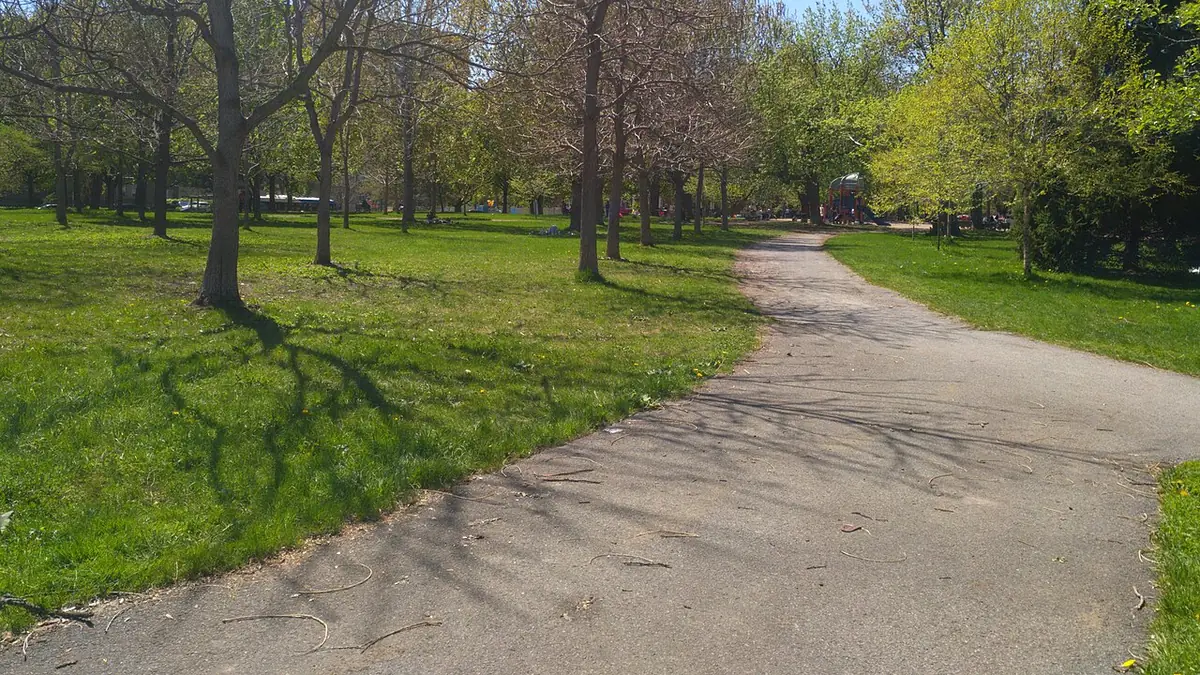
A shaded path for an easy walk in a Montreal park — Photo: Ptaff · CC0 · Wikimedia Commons
To take your search further, work through the answers to the questions prospective tenants in Montréal ask most often.
Deciding to rent a house in Montréal means reconciling what you want from daily life with a clear-eyed look at the numbers. If you have taken the measure of a Quebec winter, accepted the logistical constraints of getting around the city and checked that your budget holds up beyond the rent itself, you have what you need to settle here for the long term.
The Montréal market rewards tenants who are patient, informed and methodical, and who can look past the flattering staging in the photographs. Whether you fall for a heritage triplex in Rosemont or a bright, modern home in the Sud-Ouest, a rental that works out rests on careful preparation, a hard look at the state of the building and a real feel for how each borough behaves.
Take the time to walk the areas you have shortlisted in the rain as well as the sunshine, talk to the people already living there to catch the real atmosphere of the back lanes, and read every line of the lease and its appended rules before you sign. Renting in Montréal remains a fine thing to do for anyone who prepares without rushing, accepting that a Montréal house asks for as much attention as it does affection as the seasons turn.
Related questions
Can a landlord in Montréal ask me for a security deposit?
No. In Quebec a security deposit is illegal, whatever form it takes. A landlord may ask you to pay the first month's rent when the lease begins, but no damage deposit, no advance on future months and no key money can lawfully be required of you before you move in.
What is the standard lease from the Tribunal administratif du logement?
It is the compulsory lease form used for every residential rental in Quebec. It carries legal provisions the parties cannot contract out of, in particular the grounds on which an owner may repossess a home and the rules governing rent increases, and it renews automatically each year on the same date.
Why do so many Montréal leases start on 1 July?
The large majority of residential leases in Quebec end on 30 June and restart on 1 July, which is known as moving day. Everyone moves at once, so removal trucks are scarce for a few weeks and the prices charged for moving services rise sharply around that date.
What does a landlord check before approving my rental application?
Landlords systematically run a credit check and review your financial history, and they may ask for references from your employer or from previous landlords. You authorise that verification formally as part of the rental application form, before the owner approves your file.
What does a listing mean when it says 5 1/2?
Homes here are almost never advertised by their exact floor area. The number counts rooms instead, adding up closed bedrooms, the living room, the kitchen and so on, with the half standing for the bathroom. It takes a practised eye to translate that into the real amount of space.
Who clears the snow and cuts the grass when you rent a house?
In a detached house the shovelling in winter and the mowing in summer fall entirely to you. In a co-ownership or a managed complex those tasks are usually covered by the building's own arrangements, which is one of the practical differences between the two kinds of rental.
Why are heating bills so high in older Montréal houses?
Older homes have real character, with their woodwork and red brick, but their period insulation and single-glazed windows perform poorly. That shows up as a strikingly high electricity bill during the coldest months, so ask for the last twelve months of Hydro-Québec bills before you sign anything.
How does residential street parking work in winter?
Residents have to comply with the winter snow-clearing rules, which often means moving the car when the city announces snow removal operations in the street. Several boroughs also limit street parking to holders of an annual residential permit, and permits are rationed.
Can rent be increased freely during the lease?
No. The Tribunal administratif du logement governs increases over the course of a lease. The owner does, however, set the opening rent freely when a home is newly let, with no direct ceiling tied to floor area, which is why comparable houses can be advertised at quite different prices.
What are the extra rules attached to some leases?
Owners of houses held in co-ownership or inside managed complexes often append building rules covering the use of shared spaces, winter parking or a ban on smoking indoors. Those annexes become part of your contractual obligations the moment you sign, and repeated breaches can lead to termination proceedings.
Property review of ting
No ting properties in Montreal yet
Be the first — share it on ting and it shows up right here.