Finding and renting a house in Delhi means looking past the usual preconceptions to understand the reality of a dense and demanding property market. This guide sets out the essential trade-offs between neighbourhoods, the costs people actually pay and the legal rules you cannot sidestep. Approach your move with a clear, practical and well-structured view of what lies ahead.
Get the app
What nobody tells you.
Real prices, hidden costs and the traps to check before you commit.
What renting a house in Delhi really involves day to day
Scroll
What renting a house in Delhi really involves day to day
Finding and renting a house in Delhi means looking past the usual preconceptions to understand the reality of a dense and demanding property market. This guide sets out the essential trade-offs between neighbourhoods, the costs people actually pay and the legal rules you cannot sidestep. Approach your move with a clear, practical and well-structured view of what lies ahead.
Written by the ting.ad editorial team ·
Delhi in Street View: drag to look around.
Moving from the general idea of a house to the concrete demands of your own lifestyle means testing your habits against the realities of the city.
Renting a house in Delhi is a far bigger commitment than simply signing an ordinary residential lease. Between the sheer amount of space on offer and dealing with local infrastructure, the reality on the ground is often a long way from what you may be used to back home. You need to factor in the architectural quirks and the density of the Indian capital from the outset if you want to avoid disappointment. Your choice will shape your everyday comfort and how well you fit into the life of the city. Weighing these factors objectively lets you approach the move with a clear head and a practical mindset.
Space and independencevsHandling the upkeep
Having a whole house to yourself in Delhi gives you unmatched freedom, often with a private garden or terrace. The flip side is that maintaining the structure, the plumbing and the security falls entirely on the tenant, or calls for constant follow-up with the landlord.
Living like a localvsPossible isolation
Living in a single-family house lets you settle deeply into neighbourhood life, far from the sanitised enclaves of modern residential complexes. It can also mean more direct exposure to street noise and less collective security close at hand.
Making the place your ownvsThe drawbacks of older buildings
Delhi's housing stock includes many houses full of character, with exceptional proportions and a unique charm. The downside is that thermal insulation is often poor and the electrical wiring needs careful inspection before you move in.
Which kind of expatriate or resident finds the right balance in a Delhi house?
Everyday traffic on a wide Delhi road near Akshardham — Photo: Immanuelle · CC BY 4.0 · Wikimedia Commons
These personal trade-offs matter even more once you measure the cultural and practical gap with the habits you bring from home.
Life in Delhi runs at a particular pace, and not everyone copes with it in the same way. Choosing a house rather than a secure apartment radically changes how you get around, how you manage your time and how you interact with others. People settling in the Indian capital need to assess how much of the local way of doing things they can comfortably tolerate. Each housing situation has decisive advantages and points to watch that are worth anticipating precisely.
Families with children or remote workers
Having several separate rooms and a secure outdoor space completely changes the dynamic of a household in Delhi. Children have room to grow, while professionals enjoy the relative calm of the smart residential areas. You do have to accept more complicated logistics for schools and activities, as distances across the megacity can be considerable at rush hour.
The busy, mobile professional
For an executive or entrepreneur short on time, looking after a large house can quickly become a daily source of stress. Managing household staff and minor repairs takes up a real share of your mental energy. In this case, a villa or a large standalone house demands effort that some people would rather put into their working or social life.
Those who value space and hosting
Renting a large residence in Delhi gives you a splendid setting for welcoming guests, hosting dinners and enjoying a level of comfort that is rare in the densest areas. The generous interior space more than makes up for the effort of keeping the temperature under control or maintaining the gardens. It is the natural choice for people who treat their home as a true centre of social life and personal expression.
Living here when you arrive from abroad: what changes radically
Once these cultural reference points have sunk in, choosing exactly which neighbourhood to live in becomes the decision that shapes everything else.
The gap between the rental market you know back home and Delhi's is about far more than a change of scenery. The unwritten rules, contractual customs and technical management of a home rest on entirely different cultural foundations. What you may take for granted elsewhere, such as administrative peace of mind or standardised services, needs constant attention here. Understanding these structural differences is the best protection against unpleasant surprises.
From abroad
In many countries, leases are tightly regulated by law, with standardised check-in inventories and universal guarantees.
Delhi
In Delhi, rental contracts are negotiated directly between landlord and tenant, following local customs that are often informal.
Have every clause of the lease reviewed by a trusted local professional so that your deposit and your exit terms are properly protected.
From abroad
Back home, major maintenance and repairs are often the landlord's legal responsibility, with no complicated negotiation.
Delhi
In Delhi, who pays for upkeep and routine repairs is the subject of hard bargaining from the moment you sign.
Set out in writing in the contract who covers the air conditioning, the water pump and the roof waterproofing before you commit.
From abroad
You may be used to water and electricity that are instant, continuous and rarely cut off.
Delhi
In Delhi, coping with water supply and electrical fluctuations requires suitable backup installations.
Make sure the house has a high-performance inverter, access to a neighbourhood generator and a top-quality water filtration system.
From abroad
Where you come from, immediate neighbours may be governed by strict, standardised building rules.
Delhi
In Delhi, neighbourhood life depends on the local Resident Welfare Association (RWA), which manages security and access to the streets.
Meet the RWA representatives before moving in, to understand how the street works and which parking rules apply.
Which area of Delhi should you target for your lifestyle and priorities?
Now the choice of the ideal neighbourhood has to be tested against the hard reality of prices on the rental market.
Delhi is an archipelago of neighbourhoods with sharply defined identities, each offering its own balance of calm, accessibility and price. The sought-after residential areas stand out for their layout in gated blocks, which makes for a more peaceful environment. Your final decision will depend on how much commuting you can tolerate and how much you need international amenities close by. Comparing the atmosphere of each area quickly shows which one matches what you are looking for.
South Delhi (Vasant Vihar, Greater Kailash)
A green haven of relative calm, dotted with lively local markets and secure residences.
Suits
Families looking for international schools, green spaces and an upmarket setting.
Trade-off
Some of the highest rents in the capital, and roads that are often jammed at rush hour.
Central Delhi (Civil Lines)
A historic, prestigious atmosphere, with wide tree-lined avenues and houses full of character.
Suits
People who appreciate colonial architecture, proximity to institutions and a less frantic pace of life.
Trade-off
Housing stock that is sometimes ageing and needs significant upgrading, and a narrower choice of properties.
The NCR Environs (neighbouring Gurugram)
Modern, planned residential complexes with contemporary infrastructure and on-site services.
Suits
Professionals working in the outlying business hubs who want standardised amenities.
Trade-off
A long way from historic Delhi, and an atmosphere some find too artificial or impersonal.
How much does it really cost to rent a house in Delhi?
Beyond the headline figures, the question of tenancy rights and the legal protection you actually get deserves your full attention.
The market for renting houses in Delhi does not follow a single price scale: rents can vary fourfold depending on the district, the floor area and the level of security. It is essential to separate the headline rent from the extra charges, which include maintenance, block security and upkeep services. The figures below reflect trends observed on the ground for properties that meet the standards expected by international residents. No estimate replaces a thorough viewing and direct negotiation with the landlord.
DelhiTo rentHouseestimate
Median price / m²₹226Half the apartments sell below this
Median price₹49.9kthe average is 14% higher — a few very large properties pull it up
Most common2 bedrooms46 % of listings
Average size210 m²
By number of bedrooms
Bedrooms
Share of market
Avg price
Price / m²
Avg size
2most common
46 %
₹43.7k
₹238
184 m²
3
39 %
₹57.3k
₹226 −5 %
254 m²
4
15 %
₹76.6k
₹219best value / m²
350 m²
Each row is an average, compared against the area average of ₹238 / m². These are indicative estimates of a typical local market, not a measured sample of live listings. Check current listings before relying on them.
Renting property in Delhi: what you can really secure
This contractual rigour comes to a head when it is time to hand over the first payments and approve the final agreement.
The legal framework for renting property in India gives landlords a great deal of freedom, which means tenants have to stay alert at every stage. Understanding the exact nature of your contract will spare you major setbacks if there is a dispute or you need to leave early. The line between customary practice and written legal provisions can be a fine one. Looking at both sides of the legal picture is what keeps your life in the capital on a secure footing.
The registered contract and its formal protections
A valid lease in Delhi must be registered with the relevant authorities and drawn up by a specialist lawyer. This official document protects both parties by clearly setting the term, the conditions for rent reviews and how the deposit will be returned. It is your only legal safeguard if a dispute with the landlord drags on.
What it changesAlways insist on official registration of the lease, even if it means some upfront administrative fees and a little extra time before you move in.
Informal customs and verbal agreements
Many arrangements in the Indian property market rest on mutual trust and the reputation of local intermediaries. Relying only on a landlord's word, or on unwritten promises about future maintenance, exposes the tenant to considerable financial risk. Small verbal arrangements usually fall apart as soon as there is a disagreement over expensive repairs.
What it changesNever give in to intermediaries who push you to overlook the written clauses on the grounds that this is simply how things work locally.
The one rule to understand before paying a deposit in Delhi
Once you are safely past this critical stage, what you need to master is the timeline of the transaction itself.
Reserving a property in Delhi follows a sequence of steps in which haste is the tenant's worst enemy. Paying too early, without first checking the title deeds or the history of the property, can cost you a significant amount of money. Each verification step should be completed in full before you commit any money. Following this logical sequence protects you from first contact right through to receiving the keys.
Viewing the property and expressing your initial interest to the agent or landlord.
A thorough check of the true owner's identity and their full legal right to let the property.
Drawing up a reservation agreement (Token Agreement) that sets the amount of the advance and the conditions attached to it.
A detailed technical inspection of the house, including plumbing, electrics and water storage.
Final approval of the full lease, with every negotiated clause on maintenance included.
Payment of the official security deposit and final signature of the registered lease.
How a rental transaction in Delhi works, step by step
By following this rigorous method, moving into a house in Delhi turns from a risky gamble into a controlled and lasting decision.
Renting successfully in Delhi means coordinating several key players on a tight schedule. From the local estate agent to the residents' association representatives and your legal adviser, each has a specific part to play in making your move a success. Knowing who is responsible for what helps avoid misunderstandings and speeds up the paperwork. This well-marked path guides you step by step towards settling calmly into your new home.
The local estate agent (Broker)Shortlisting properties and first viewingsThey find available houses that match your criteria, arrange viewings on the ground and open the first discussions on price.
The lawyer or legal adviserTitle audit and lease reviewThey check the legal validity of the ownership documents and make sure the contract properly protects your interests as a foreign tenant.
The landlordNegotiating the maintenance termsThey agree to any specific changes you request, to who covers major works and to how the security deposit will be returned.
The residents' association (RWA)Approving the move-in and securityIt records your arrival in the residential block, issues parking permits and checks that neighbourhood rules are respected.
The maintenance technicianBringing equipment up to standard and checking itThey test the inverter, the water pump, the filters and the air-conditioning units before your family actually moves in.
Renting a house in Delhi: should you favour the independence of a bungalow or the security of a villa in a gated community?
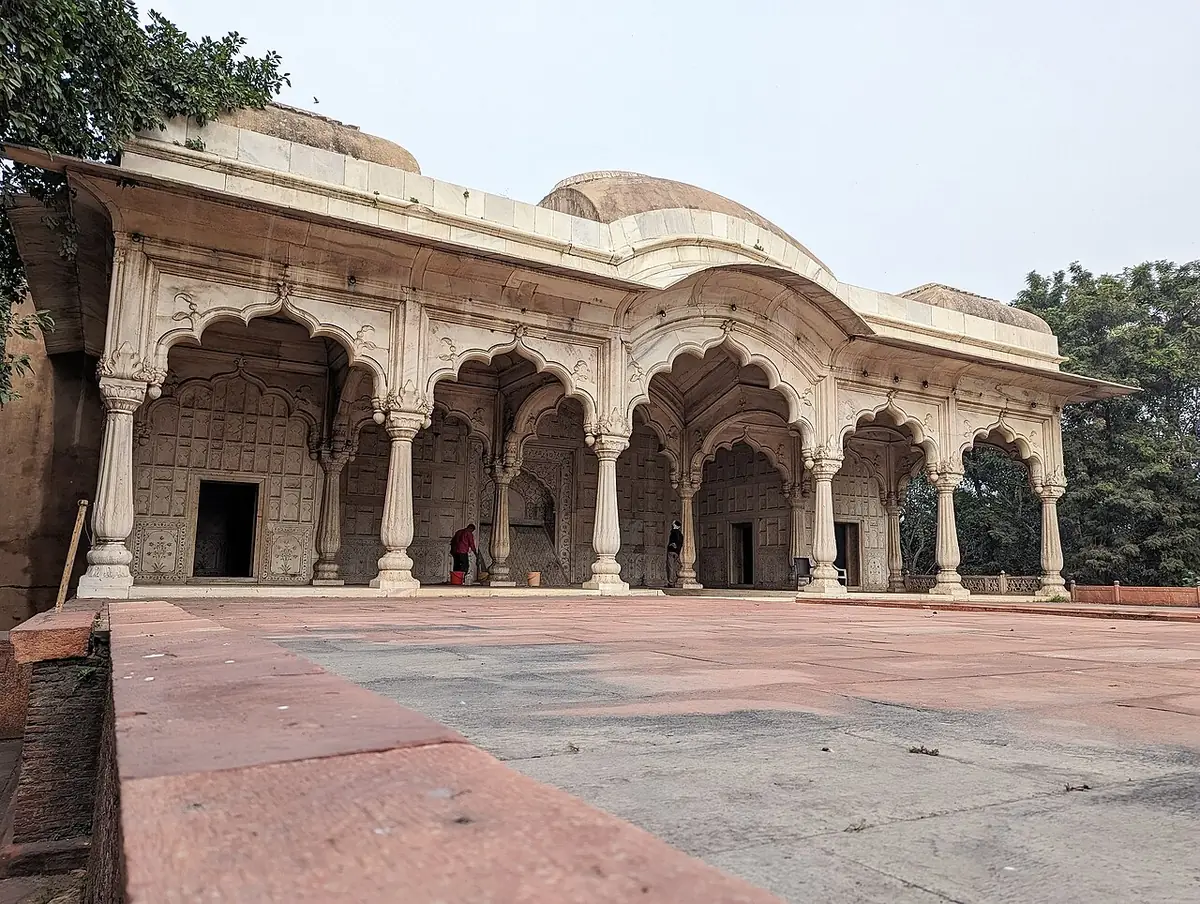
The Shah Burj pavilion inside the Red Fort in Old Delhi — Photo: Sourabh.biswas003 · CC BY-SA 4.0 · Wikimedia Commons
Once this fundamental choice of home has been made, it is time to look closely at the long-term financial impact of your move.
Searching for a house to rent in Delhi immediately confronts expatriates and senior executives with a fundamental dilemma about architecture and security. On one side, the traditional bungalows of historic neighbourhoods such as Golf Links or Sunder Nagar offer remarkable floor space, private tree-filled gardens and complete architectural freedom. That independence, however, comes at a considerable logistical and human cost in terms of guarding, maintaining ageing infrastructure and coping with water and power cuts. On the other side, the gated communities on the outskirts, particularly towards Gurgaon or the planned residential zones, guarantee consistent security, an integrated concierge service and modern shared facilities, but at the price of a more standardised way of life and a greater distance from the beating heart of the capital.
Living in an independent house in Delhi means accepting a significant day-to-day operational workload. The tenant often has to coordinate the maintenance of the water pump, the backup generator for summer power cuts and night-time security by hiring trustworthy guards. This set-up appeals to people looking for authentic character, exceptionally high ceilings and the freedom to entertain without neighbours right next door. Even so, the relative isolation of these large residences calls for extra vigilance on security, especially during long absences for business travel or school holidays. Because the owners of these properties rarely hand over technical management, every major repair quickly turns into a complicated coordination project.
By contrast, choosing a house inside a secure gated community in Delhi transforms everyday life. These residential estates have a perimeter patrolled by trained security teams around the clock, strict access control for visitors and centralised management of green spaces and internal roads. Comfort is immediate, with automatic backup power, private water treatment plants and clubhouses with swimming pools and gyms. Families with children find a ready-made, reassuring social environment that allows a freedom of movement the city's very busy streets do not. The trade-off lies in association charges that can be very high and in strict internal rules that limit any wish to make architectural changes or landscape the garden to your own taste.
The final choice between these two types of property in Delhi therefore comes down to your professional and family priorities. If you spend most of your time travelling, dread administrative and technical hassle, and value a smooth daily life over historic charm, the villa in a secure community is the obvious rational choice. If, on the other hand, your plans for life in the Indian capital are about finding a distinctive way of living, you have a dedicated household team to absorb the logistical load and you value private space over standardised security, the independent bungalow will offer an irreplaceable and truly memorable experience of home.
What monthly budget do you really need to live in a large house in Delhi?
Beyond the purely financial side, it is the practical organisation of a typical day that reveals what your move really involves.
Budgeting for a house rental in Delhi never stops at the rent shown on the property portals. You must factor in the real cost of concierge services, private security, equipment maintenance and energy use, which is often very high because of heavy air-conditioning. The tables below set out the spending ranges seen on the market for an upmarket household in the capital.
Monthly rent ranges by sought-after area in Delhi (in INR and EUR)
Area / Zone
Type of house
Monthly rent (INR)
Estimated equivalent (EUR)
Golf Links / Jor Bagh
Independent bungalow, 4 to 5 bedrooms
INR 350,000 to 700,000
€3,900 to €7,800
Vasant Vihar / Westend
Townhouse or secure villa
INR 250,000 to 500,000
€2,800 to €5,600
Greater Kailash / Defence Colony
Renovated independent house
INR 180,000 to 350,000
€2,000 to €3,900
Gurgaon (Sohna Road / Golf Course)
Modern villa in a gated community
INR 150,000 to 300,000
€1,700 to €3,400
Rents in the historic centre of New Delhi are set in rupees and reviewed each year in line with local inflation, with a security deposit usually equal to three months' rent.
Monthly budget for running costs and related services in a large house
Cost item
What is included
Average monthly cost (INR)
Electricity and air conditioning
Heavy summer use (multiple AC units) and diesel backup
INR 25,000 to 55,000
Household staff
A cook, a night guard and a part-time housekeeper
INR 45,000 to 80,000
Association charges / security
Maintenance of the gated estate, guarding and common areas
INR 10,000 to 30,000
High-speed internet and upkeep
Dedicated fibre line, plumbing maintenance and regular gardening
INR 8,000 to 15,000
These extra costs make up a significant share of the total budget and should be planned for from the moment you sign the lease, to avoid any unpleasant financial surprise at the end of the month.
What does an ordinary Tuesday actually look like for a family living in a house in Delhi?
This well-oiled routine should not hide the contractual and administrative subtleties that property listings carefully leave out.
Organising a weekday in Delhi takes careful planning to get round the complexities of city traffic and coordinate the teams providing services at home. Daily life revolves around early school hours and the traffic peaks you absolutely need to avoid. Here is how an ordinary Tuesday unfolds for an expatriate executive and their family.
06:30The garden of the house - Residential neighbourhoodThe night guard passes on the morning instructions to the cook, who prepares breakfast while the air is still relatively cool.
07:45Leaving by car with a driverThe drive to international schools on the outskirts or in South Delhi, avoiding the main roads already clogged with commuters.
09:30Office or central coworking spaceArrival at work after a smoother journey thanks to the main road network and urban expressways.
13:00Home - Running the householdA phone call with the house manager to oversee the organic grocery delivery and a check of the air-conditioning units.
16:30Residential club or sports centrePicking up the children for their after-school activities in a secure, air-conditioned setting away from the outdoor pollution.
19:30Back home and family dinnerRelaxing in the family living room, checking that the backup generator is working properly and getting ready for the next day.
What do leases and the state of the infrastructure reveal that a property listing never mentions?
These legal and technical precautions help you avoid the most painful disappointments, which usually surface a few months after moving in.
Delhi's rental market runs on powerful informal rules that sales descriptions consistently gloss over. Between restrictive clauses on interior alterations, the tricky handling of deposits at the end of a lease and the reality of seasonal noise, signing a rental contract calls for close scrutiny. Here are the key points you absolutely must check before committing.
The deposit return clause
Disputes over getting the full deposit back at the end of the lease are common, because landlords expect the property to be returned exactly as it was. They often charge painting and full refurbishment costs straight to your original deposit, regardless of the normal wear and tear the property has seen over the years.
The real quality of the water and the filtration systems
The municipal water supplied in Delhi is never drinkable, and its pressure varies considerably by floor and by season. A house must be fitted with an industrial-grade reverse osmosis filtration system and a separate secondary storage tank to cover interruptions in supply.
Restrictions on pets and entertaining
Many landlords impose strict clauses banning larger pets or limiting private evening gatherings. In quiet residential areas, neighbours keep a close eye on noise and do not hesitate to take complaints to the residents' associations.
The real thermal and sound insulation of windows and doors
Often built with traditional materials poorly suited to Delhi's extreme temperature swings, many houses let in the summer heat and the constant noise of traffic. Installing double glazing and insulated shutters is often a necessary personal investment that the landlord will not pay for.
Applicable taxation and tax deducted at source (TDS)
If you rent as a company or under a formal contract, Indian law often requires the tenant to deduct tax at source (TDS) from the gross rent paid to the landlord. Neglecting this administrative obligation exposes the occupant to tax penalties from the Indian authorities.
Which misjudgements do newcomers bitterly discover six months after moving in?
Faced with these demands and operational risks, it is just as important to know whether this kind of property project really suits you.
Looked likeA huge, bright house with a superb tropical garden in the heart of a green and peaceful neighbourhood.
Turned outA summer energy drain with astronomical electricity bills and recurring insect infestations that needed heavy treatment.
Would have caught itCheck how the house is oriented against the heat, how well the large windows are insulated, and ask for a recent pest control certificate before signing.
Looked likeAn exclusive, highly secure residential area where children can play freely in the street without a care.
Turned outAn area subject to constant roadworks, unexpected road closures and fussy visitor checks that held up deliveries.
Would have caught itVisit the surroundings of the property at different times of day and night to judge how easy access really is and how noisy it gets.
Looked likeA verbal promise from a helpful landlord who undertook to deal with all plumbing work straight away.
Turned outA landlord who became unreachable once the lease was signed, leaving the tenant to pay for a complete overhaul of the ageing bathrooms.
Would have caught itAttach to the lease a complete, detailed photographic inventory of the condition of each piece of technical equipment, with a written agreement on maintenance responsibilities.
Looked likeAn ideal central location from which any part of the capital could be reached in under twenty minutes.
Turned outA complete traffic trap at rush hour and during the monsoon, when the surrounding roads turn into flooded basins.
Would have caught itTest the real journey time at peak hours between the house you are considering and the places you go to work or study every day.
Which kind of tenant or expatriate should firmly avoid renting a large house in Delhi?
Now that every side of this property decision has been brought to light, it is time to conclude on how ready you really are.
Renting and running a detached house or a large villa in Delhi does not suit every lifestyle or every professional situation. The logistical load, the technical surprises and the personal effort needed to keep such a property going day to day call for resilience and specific resources. Looking at the profiles that struggle makes the major warning signs clear.
The highly mobile young professional who travels internationally a lot
→An upmarket apartment in a hotel residence or serviced apartments
Without permanent staff at home and with long absences, a detached house is too exposed to technical breakdowns, water leaks or unmonitored security.
The couple looking for total simplicity with no staff to manage
→A modern apartment in a fully managed building
Coordinating gardeners, guards, plumbers and electricians every day is a mental and administrative burden that people seeking peace of mind would rather avoid.
Anyone on a tight budget or dependent on fluctuating housing allowances
→A smaller but perfectly maintained property
The costs of heavy air-conditioning, backup electricity bills and looking after large outdoor spaces quickly exceed initial estimates and put lasting strain on the family budget.
Lovers of minimalist urban architecture and life on foot
→A home in the heart of Delhi's lively, well-connected neighbourhoods
Delhi's large residential areas require almost constant use of a car with a driver and are, by definition, far from the cultural buzz and walkable streets of the historic centre.
So, are you really ready to take the step of renting a house in Delhi?
Settling into a house in Delhi is much more than a simple property transaction: it means adopting a distinctive way of life, demanding but deeply rewarding for anyone who prepares for it. Between the timeless charm of large tree-shaded bungalows and the sanitised comfort of modern gated communities, each choice shapes a different version of your Indian experience. The success of your plans lies in your ability to accept the compromise between space and freedom on one side and the need for rigorous logistical organisation on the other.
Before signing any lease or paying a deposit, make sure you have audited not only the physical structure of the property but also your own tolerance for everyday surprises. Delhi is not tamed by force, but by methodically anticipating its climatic, administrative and cultural particularities. If you have the professional or domestic support needed to absorb the operational load, the adventure is undeniably worth it and will give you memories of home like no other.
Take the time to weigh every line of this guide, to test the promises of the listings against the rough reality on the ground, and to visit the properties you are considering several times at key moments of the day. Your decision should come from clear-headed thinking, free of haste and grounded in a realistic view of your future life in the Indian capital. When all these conditions are met, you will be fully ready to open this new chapter of your life in Delhi with complete peace of mind.
Related questions
Which are the most sought-after neighbourhoods for renting a house in Delhi?
The most popular areas for renting a detached house include Golf Links, Sunder Nagar, Jor Bagh, Vasant Vihar, Westend and Defence Colony. These neighbourhoods offer green surroundings, a welcome level of security and immediate proximity to the diplomatic and business districts.
Do you have to pay a large security deposit to rent a house?
Yes. Common practice in Delhi is a security deposit usually equal to three months' rent, sometimes more for luxury properties. The amount is returned at the end of the lease, minus any restoration costs the contract provides for.
How does the electricity supply work in Delhi houses?
Delhi goes through sharp swings in climate, and the summer peaks in demand sometimes cause power cuts. Most upmarket houses have a backup diesel generator or a central inverter system to keep the supply running without interruption.
Should you use an estate agent to find a house in Delhi?
Using an international estate agency or a reputable local broker is strongly recommended. They know the legal side inside out, including title checks and lease negotiations for expatriates.
What is the standard length of a residential lease in India?
The standard residential lease runs for eleven months and is renewable. This local legal arrangement is designed to avoid the compulsory registration with the tax authorities that applies to leases of twelve months or more, although longer leases can be negotiated.
How is household staff managed for the upkeep of a large villa?
Most people renting houses in Delhi hire qualified household staff, either directly or through agencies, typically a cook, a night guard and cleaning staff. Wages are set by the local market and by established custom.
Is the tap water in Delhi houses safe to drink?
The municipal water supplied to homes is never drinkable straight from the tap. It needs a sophisticated reverse osmosis filtration system, and households regularly use large bottles of mineral water for everything related to food and drink.
What taxes or extra charges come on top of the monthly rent?
On top of your own electricity and water use, the tenant pays any association or maintenance charges, rental value tax where it applies, and tax deducted at source (TDS) depending on the legal status of the contract.
Is it easy to end a lease early in Delhi?
Contracts usually include a lock-in period or notice period of two to three months, and ending the lease early without serious grounds can mean losing part or all of the security deposit.
Are pets allowed in rented houses?
Whether pets are accepted depends entirely on the landlord and on the rules of the residential association or neighbourhood. Permission must be negotiated and set down in writing in the specific clauses of the lease.