Getting ready to rent a house in Adelaide means learning to read a property market with its own rules, a long way from what you may be used to back home. This decision guide takes you step by step, from weighing up the residential neighbourhoods to signing the lease, so you can settle into South Australia with confidence.
Get the app
What nobody tells you.
Real prices, hidden costs and the traps to check before you commit.
What you really get when you rent a house in Adelaide
Scroll
What you really get when you rent a house in Adelaide
Getting ready to rent a house in Adelaide means learning to read a property market with its own rules, a long way from what you may be used to back home. This decision guide takes you step by step, from weighing up the residential neighbourhoods to signing the lease, so you can settle into South Australia with confidence.
Written by the ting.ad editorial team ·
Adelaide in Street View: drag to look around.
Understanding these structural trade-offs helps you judge whether your daily life fits the realities of detached living in South Australia.
Renting a house in Adelaide is about more than gaining a few extra square metres over a city-centre apartment. It is a lifestyle choice that reshapes how you relate to space, commuting time and the natural surroundings. The residential suburbs offer remarkable quiet and leafy blocks, but in return they demand tighter day-to-day organisation. The local rental market has its own dynamics, and they are worth assessing coolly before you commit to a long lease.
More space and privacyvsFurther from amenities
Detached houses come with a private block and no noise through shared walls. In return, you are often further from the main transport corridors and the nightlife areas, which means relying on a car for almost all your shopping and leisure.
A garden and outdoor livingvsDemanding outdoor upkeep
Having your own green space lets you make the most of South Australia's Mediterranean climate. Summer conditions, though, call for regular watering and constant attention to the vegetation to head off the risks that come with the dry season.
Parking and freedomvsHigher energy costs
A lock-up garage and several parking spaces make managing vehicles much simpler. On the other hand, the volume to heat and cool in a standalone house weighs more heavily on your electricity and gas bills than a compact apartment does.
Does this type of home really suit the way you live now?
Saint Ignatius Church and its twin towers in Norwood — Photo: Ashton 29 · CC BY-SA 4.0 · Wikimedia Commons
Your personal profile directly shapes the area and the type of lease you should focus your search on.
Adelaide's housing stock caters for a very wide range of tenants, but a detached house does not suit every rhythm of life. Mobile professionals, families with school-age children and newcomers looking to put down roots have sharply different expectations. Looking at your own situation through the lens of local infrastructure will save you disappointment in the first months of your tenancy.
The remote worker
If you work from home, Adelaide's outer or middle-ring residential suburbs offer a remarkably quiet working environment, far from the bustle of the east-coast cities. You get an extra room to turn into a bright office and a reliable internet connection through the national broadband network. On the other hand, isolation can creep in unless you make a point of using coworking spaces in the business district to break the routine.
The family household
For a family, renting a house brings much-needed stability and easy access to safe local parks. The deciding factors are proximity to the zoned public schools and the safety of the residential streets. You still need to plan for daily journeys at peak times, as the roads linking the residential suburbs to the city centre slow down regularly around school drop-off and pick-up.
The newly arrived expat
Arriving in Adelaide on a work relocation involves a significant period of practical adjustment. Renting a house straight away gives the whole family a secure base, but it means getting to grips quickly with the strict rules of the Australian rental market, particularly putting together your application and the detailed ingoing condition report. Plan temporary accommodation for the first few weeks so you can view properties in person before committing.
Living here when you come from abroad: what really changes day to day
These cultural and administrative differences call for a methodical approach from the moment you submit your first applications.
Moving from a rental market that is often dense and heavily regulated to the South Australian property market is an immediate change of scene. Property management practices, interior layouts and dealings with real estate agencies follow well-established codes that you need to master quickly to avoid dead ends. This table sums up the fundamental differences between where you are coming from and your new reality.
From abroad
A guarantee and deposit system tightly governed by law
Adelaide
A security deposit (bond) lodged with an independent government body (Consumer and Business Services)
Your money is kept safely out of the landlord's hands, but getting it back at the end of the lease requires a meticulously thorough outgoing inspection.
From abroad
Group viewings and traditional paper applications
Adelaide
Online applications through shared platforms with in-depth background checks
Speed is everything: an incomplete application, or one submitted 24 hours after the viewing, sharply reduces your chances of securing the lease.
From abroad
Central heating or hot-water radiators almost everywhere
Adelaide
Reverse-cycle ducted air conditioning (ducted air conditioning) and insulation that varies with the age of the building
Managing the indoor temperature needs constant attention if you want to keep electricity use under control.
From abroad
Long-term residential leases that renew automatically with strong tenant protection
Adelaide
Standard fixed-term agreements (often 12 months) that require formal renewal
Each year you need to anticipate a possible rent review and confirm in writing that you are staying on.
Which neighbourhood should you choose for your budget and goals in Adelaide?
Once you have settled on an area, you need to test your financial ambitions against the actual prices on the local market.
Adelaide is built around a historic centre ringed by parkland (Park Lands), which gives each surrounding area its own identity. Choosing where to live means weighing up being right next to the lively city centre against the leafy calm of residential suburbs further out. Each area offers its own balance of commuting time, neighbourhood feel and the kind of housing available to rent.
North Adelaide
An elegant, walkable and leafy historic neighbourhood known for its Victorian homes and lively cafés close at hand.
Suits
Urban professionals and couples who want architectural character without giving up a cultural life within walking distance.
Trade-off
A limited supply of detached houses, noticeably higher rents and fierce competition between applicants.
Unley and the inner southern suburbs
A well-to-do residential atmosphere, with streets lined by century-old trees and upmarket local shops.
Suits
Families who put zoned school quality first and want a peaceful setting less than fifteen minutes from the centre.
Trade-off
A substantial rental budget is needed to access renovated houses with modern features.
Burnside and the eastern foothills
Outstanding views over the Adelaide Hills, clean air and wooded surroundings that make it easy to unwind.
Suits
Nature and hiking lovers looking for generous interiors and a higher standard of residential living.
Trade-off
Greater reliance on the car and longer journeys to reach the central employment hubs.
West Hindmarsh and the western suburbs
A fast-changing area mixing converted former industrial buildings with new contemporary homes.
Suits
Tenants looking for a budget compromise and direct access to the coastal beaches via the main roads.
Trade-off
A sometimes patchy streetscape and occasional noise from the through roads.
How much does it really cost to rent a house in Adelaide?
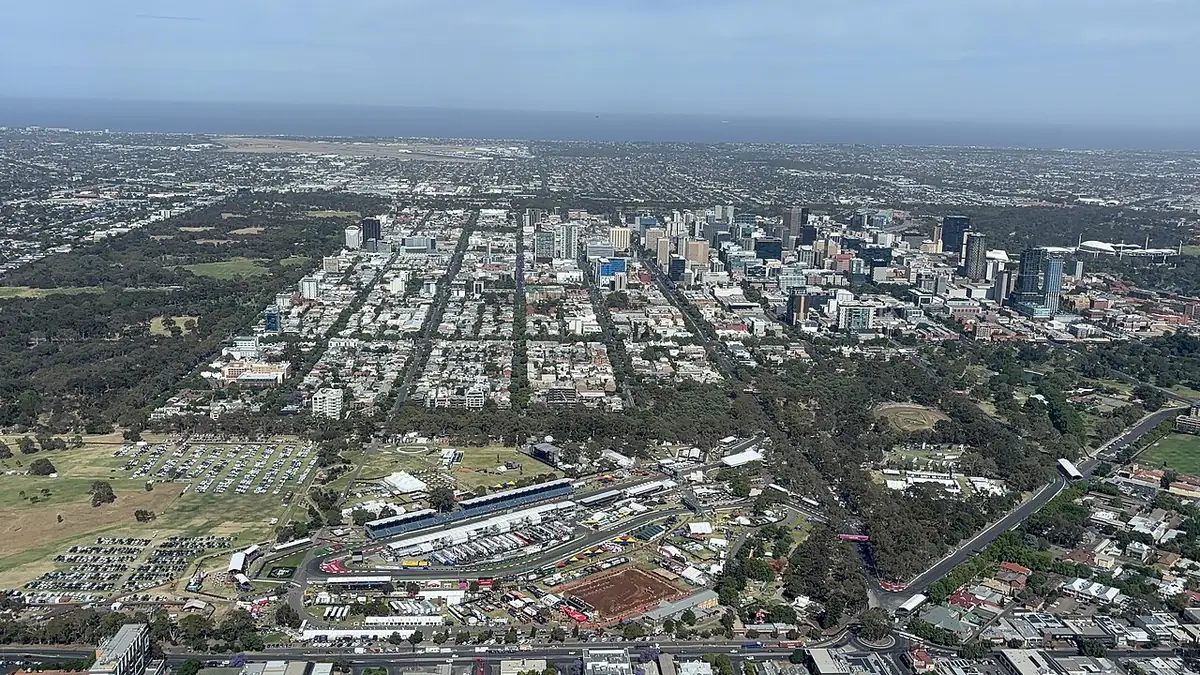
Adelaide from above, a grid city ringed by parklands and suburbs — Photo: Avatar5991 · CC BY-SA 4.0 · Wikimedia Commons
Beyond the headline rent, the legal structure of your lease defines exactly what you can and cannot do as an occupant.
The South Australian rental market works on rent quoted and paid weekly, a habit that calls for careful arithmetic to work out your real monthly budget. Prices vary considerably with the exact location, the number of bedrooms and comfort features such as full air conditioning or a pool. This table sets out the ranges of weekly rents seen on the market to guide your financial planning.
AdelaideTo rentHouseestimate
Median price / m²A$21Half the apartments sell below this
Median priceA$4.07kthe average is 14% higher — a few very large properties pull it up
Most common2 bedrooms42 % of listings
Average size184 m²
By number of bedrooms
Bedrooms
Share of market
Avg price
Price / m²
Avg size
2most common
42 %
A$3.29k
A$22
149 m²
3
39 %
A$4.42k
A$21
210 m²
4
20 %
A$6.06k
A$20best value / m²
298 m²
Each row is an average, compared against the area average of A$22 / m². These are indicative estimates of a typical local market, not a measured sample of live listings. Check current listings before relying on them.
What you can really expect and negotiate in your lease
Following these administrative procedures carefully proves decisive when it comes to finalising your move.
Residential tenancy law in South Australia strictly defines the obligations of landlord and tenant towards each other, but it leaves real room for negotiation when the lease is first signed. Knowing what you can require of the property manager, and what is your responsibility alone, protects you from the disputes that often arise at the end of a tenancy.
The landlord's non-negotiable obligations
The landlord is legally required to keep the property in a fully habitable condition throughout the tenancy. That covers maintaining the structural fittings, keeping safety devices compliant, repairing plumbing leaks and making sure any heating or air conditioning listed at the start of the tenancy works properly. Any proven neglect can be the subject of a formal notice sent through the agency.
What it changesYou have solid legal leverage to demand prompt repairs if a major technical fault affects your living comfort.
Your freedom to make changes and your upkeep duties
In return for quiet enjoyment of the property, you must hand the house back in exactly the condition you received it, allowing for reasonable wear and tear. Structural changes, permanent fixtures or keeping pets require the landlord's prior written consent. The outdoor areas and mowing the lawns are your day-to-day responsibility, unless a special clause in the lease explicitly says otherwise.
What it changesPut any request to make changes in writing to your property manager in advance, to avoid financial penalties at the outgoing inspection.
The rule to understand before paying any money on a rental
Once the administrative steps are behind you, the timetable for your move follows a well-worn sequence.
Rental properties in Adelaide are allocated through a rigorous selection process run by managing agencies. An incomplete or poorly prepared application is set aside straight away in favour of applicants with impeccable financial credentials. Understanding the logical order of the checks saves you repeated frustration in a tight market.
An in-person viewing of the property, or a virtual inspection confirmed by an authorised representative.
Putting together a complete digital application with proof of identity, evidence of regular income and references from previous landlords.
Submitting the application through the agency's approved platform within hours of the viewing.
Automated and manual checks of your ability to pay and your rental history by the property manager.
Formal approval of the application and issue of the standard residential tenancy agreement by the agency.
Paying the first rent in advance and the bond at the same time into the designated secure account.
How a rental goes through, step by step
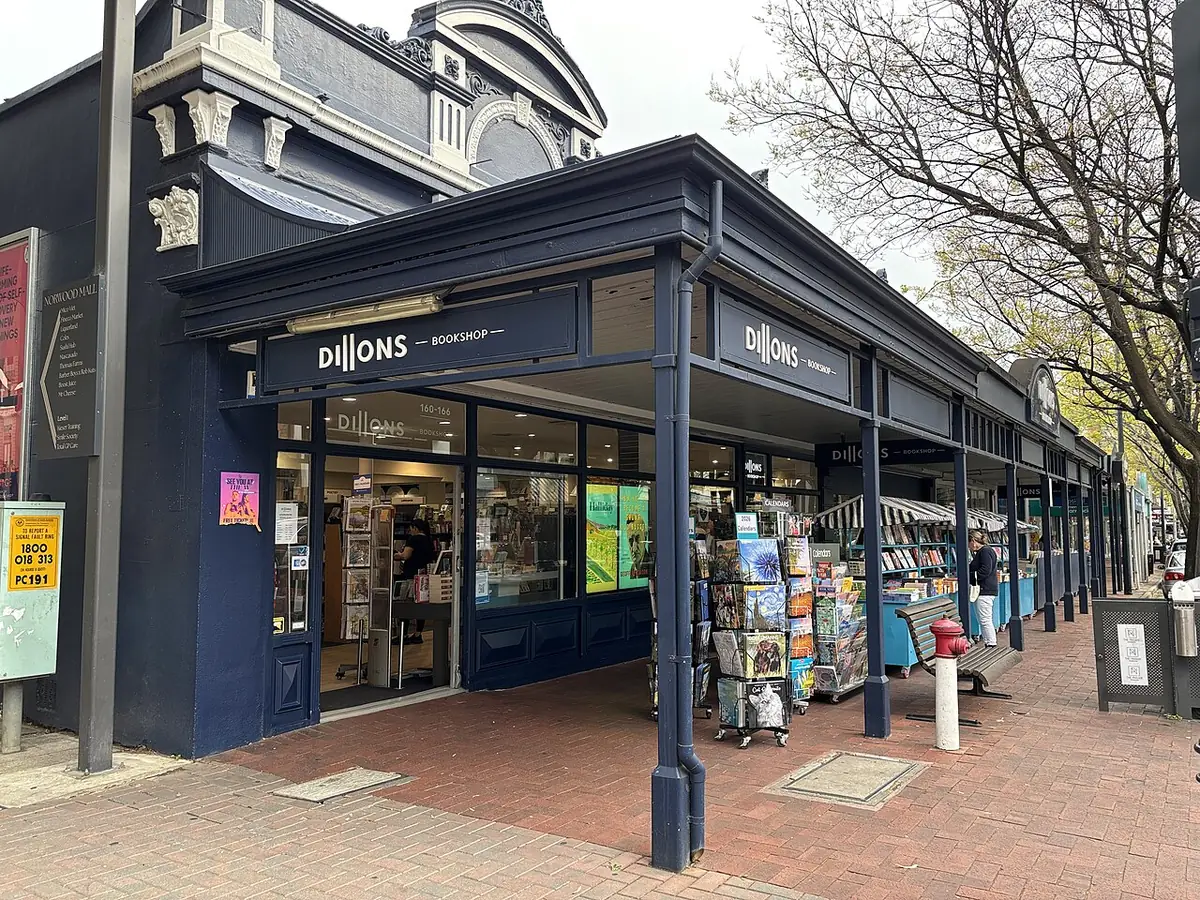
An independent bookshop under a shopfront verandah — Photo: Nick-D · CC BY-SA 4.0 · Wikimedia Commons
By following these milestones closely, you approach your move to Adelaide with everything you need to succeed.
Moving into a new house in Adelaide means following a clear timeline so that everyone involved, from the property manager to the tenant, meets their obligations on time. Careful preparation of the paperwork ensures a smooth and secure transition to your new home.
The tenantShortlisting properties and arranging viewingsSelect the listings that strictly match your budget and location criteria, then attend the viewing slots in person or through a representative.
The tenantSubmitting a complete applicationSend all the required supporting documents (payslips, references, identity documents) through the dedicated online platform.
The real estate agencyAssessing and shortlisting applicationsThe property manager checks professional and personal references before putting the selected applicants forward to the landlord.
The landlordApproving the applicant and signing the leaseOnce the landlord agrees, the tenancy agreement is drawn up, signed electronically by both parties and lodged with the relevant authorities.
The tenantPaying the upfront funds and the condition reportPayment of the bond and the first rent, followed by a detailed ingoing condition report backed up with photographs.
The property managerOfficial key handover and moving inCollecting the keys, connecting the utilities in your own name and actually settling into the property.
House or apartment in Adelaide: which type of home suits your lifestyle?
Once that fundamental choice between house and apartment is made, it is time to look closely at the financial reality of your property plans in Adelaide.
Choosing between a detached house with a garden and a modern apartment in the heart of Adelaide affects your whole daily routine, your long-term budget and your relationship with the city. The inner-ring residential suburbs, such as Unley or Norwood, offer superb Victorian homes or single-storey houses surrounded by private gardens, ideal for anyone after real quiet and a place of their own on their own land. In return, looking after the block, managing local vegetation through demanding Australian summers and being further from cultural life all take a considerable personal investment of time every week.
By contrast, choosing an apartment in North Adelaide or around Hindmarsh Square transforms daily life by removing outdoor upkeep and putting cafés, tram lines and parks within a few minutes' walk. Recent strata developments often include upmarket features such as shared pools, panoramic terraces and effective security systems, which are particularly popular with professionals and couples without children. That central location does, however, mean living with strata fees that can be high, a smaller floor area and no private land at all for growing things or freely parking a second car.
Adelaide's layout, designed to Colonel Light's far-sighted plan with its wide boulevards and ring of parkland, allows an easy shift between urban density and suburban calm. If you value space, the option to alter or extend your home over the years and stronger potential growth in land value, the detached house remains the classic long-term choice in this part of South Australia. If you prefer ease, shorter journeys and immediate freedom from heavy maintenance, the city apartment is naturally the most coherent choice for your move.
What overall and ongoing budget do you need to live comfortably in Adelaide?
To see how these costs fit into a typical week, let us look at how an ordinary day in Adelaide actually runs.
Drawing up a budget for buying and living in a property in Adelaide means accounting for all the fixed and variable costs specific to the South Australian market. Beyond the headline purchase price, which varies noticeably with proximity to the CBD and popular coastal areas such as Glenelg, you need to plan for local taxes, compulsory insurance and the cost of basic services. A clear view of running costs avoids financial headaches and protects your investment over the medium and long term in a city where the cost of living is moderate compared with Sydney or Melbourne.
Estimated purchase costs and upfront charges
Cost item
Typical amount
Frequency and notes
Transfer duty (Stamp Duty)
Varies with the property value
One-off government tax paid on purchase
Legal and conveyancing fees
AUD 1,500 to AUD 3,500
Conveyancer fees for checking the property title
Building inspection
AUD 400 to AUD 800
Recommended to identify termites, damp and structural defects
Comprehensive home insurance
AUD 1,200 to AUD 2,500
Annual premium covering building and contents against weather-related risks
Amounts are in Australian dollars (AUD) and are indicative averages based on recent transactions in Adelaide.
Budget for running costs and essential services
Cost item
Typical amount
Frequency and notes
Electricity and gas
AUD 450 to AUD 700
Billed quarterly, heavily affected by air conditioning use
Water and sewerage
AUD 250 to AUD 400
Billed quarterly, including the fixed supply charge and usage
Municipal rates (Council Rates)
AUD 1,400 to AUD 2,800
Payable annually or in quarterly instalments to the local council
Strata fees (Strata)
AUD 3,000 to AUD 6,000
Applies only to apartments and townhouses under strata title
Energy use can double during summer heatwaves because of heavy use of reverse-cycle air conditioning.
Health, schools and transport: what does an ordinary Tuesday look like living in Adelaide?
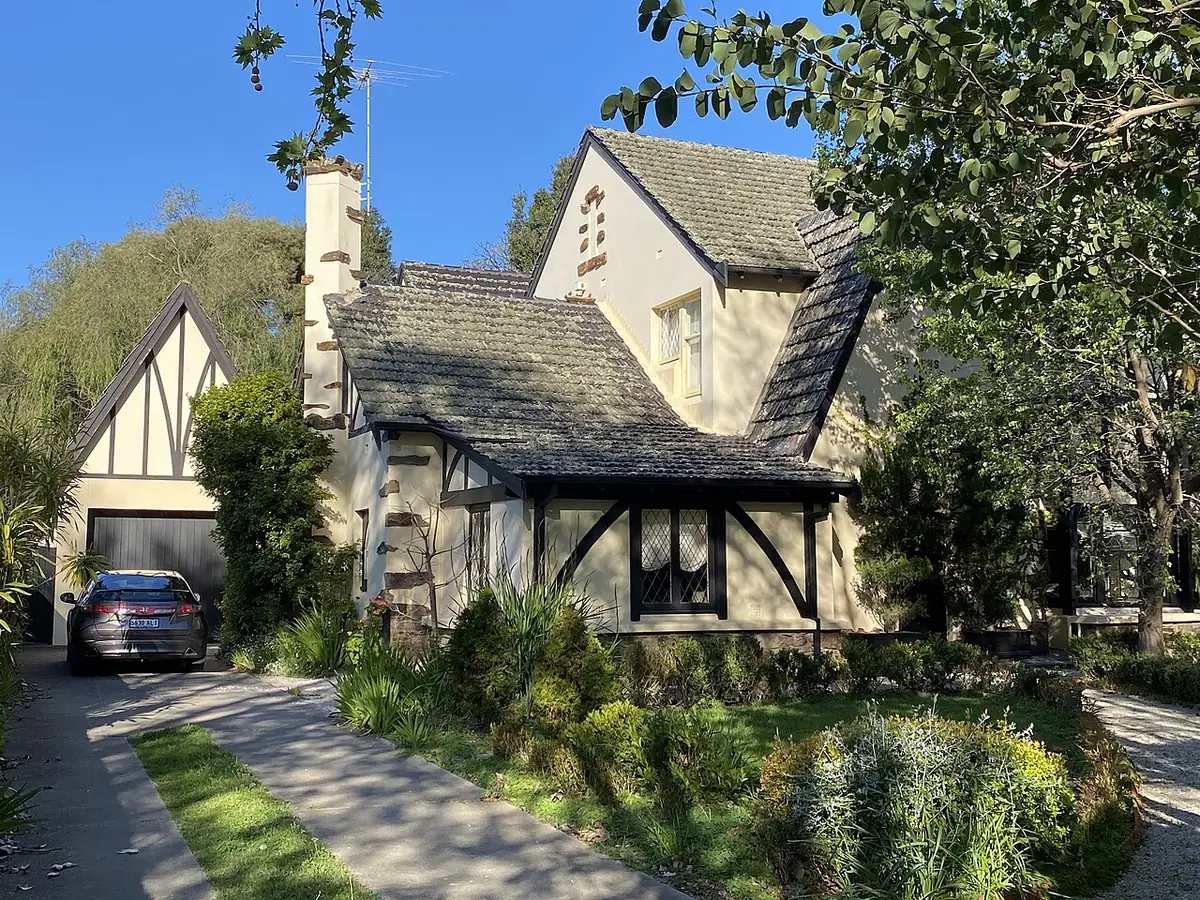
A Tudor Revival home with a leafy front garden in Adelaide — Photo: Ashton 29 · CC BY-SA 4.0 · Wikimedia Commons
Behind that apparently smooth daily routine, Adelaide's property market has hidden sides that the glossy brochures carefully leave out.
Easy getting around and closeness to essential services define the quality of life in South Australia's capital. An ordinary Tuesday shows how simple the links are between the residential suburbs and the city-centre employment hubs, while underlining the value of good organisation. From the morning school run to access to well-regarded health services and free public transport in the centre, every part of the day reflects the balanced pace of this human-scale city.
07:30Residential suburb (e.g. Unley or Prospect)A calm start to the day in leafy surroundings, with quick access to bike paths leading into central Adelaide.
08:15Local school or childcare centreDropping the children at a local public or private school, often within walking distance or a very short drive with no major traffic jams.
09:00CBD business district (King William Street)Arriving at the office after an easy tram or bus ride, making use of the free transport zone (Adelaide Free City Tram zone).
12:30Rundle Mall or the surrounding parksAn outdoor lunch break in one of the tree-lined parks around the centre, or in the city's busy shopping arcades.
16:30Local medical centre or pharmacyA routine doctor's appointment or last-minute shopping at local stores that open late seven days a week.
18:00Home and outdoor spacesBack home to enjoy the garden or the deck, far from the hustle of the world's big cities, in complete calm.
What property listings will never tell you about homes in Adelaide
These technical constraints sometimes combine with misjudgements that many buyers bitterly regret six months after moving in.
The bright photos and glowing descriptions from Adelaide's real estate agencies sometimes hide technical and environmental realities that matter a great deal to any buyer. Understanding what goes unsaid will help you approach viewings with a critical eye and avoid investments that are poorly suited to the local climate or ground. From clay soils to strict insulation rules, every detail counts in making your purchase secure for the long term in this distinctive region.
Reactive clay soils that expand and shrink (reactive clay)
Much of Adelaide sits on reactive clay that shrinks in summer and swells in winter. This often causes cracks in foundations and walls if the house was not built or reinforced on suitable footings, sometimes requiring very expensive underpinning work.
Strict restrictions on water use and garden watering
Because of South Australia's semi-arid climate, using mains water on lawns and large landscaped gardens is subject to strict rules and to restrictions during droughts. Installing a rainwater harvesting system quickly becomes essential to keep a garden viable.
Insulation and coping with heatwaves
Many older homes, however charming their period style, suffer from poor insulation against summer temperatures that can exceed 40 °C. Upgrading to double glazing, ceiling fans and air conditioning is a significant cost to plan for from the moment you buy.
If you buy an older house in a heritage-protected area, every exterior change, roof renovation or solar panel installation will need painstaking approval from the local council, which can add considerably to the time and cost of the work.
The buying mistakes you only discover after six months of daily life in Adelaide
Despite all these attractions and precautions, some buyer profiles would do better to postpone or drop their plans to buy in this region.
Looked likeA charming older house with a huge, leafy garden and a country feel.
Turned outA drain on money and time with weekly upkeep, flammable dead leaves in summer and pipes invaded by eucalyptus roots.
Would have caught itInsist on a full arborist's report on the trees near the foundations and be honest about how much time you have for outdoor maintenance.
Looked likeAn ultra-modern apartment right next to a busy city-centre street.
Turned outUnbearable late-night noise at weekends, made worse by the lack of proper acoustic double glazing in quickly built new blocks.
Would have caught itVisit the property at busy times and on Friday and Saturday evenings to gauge exactly how much the city noise really affects it.
Looked likeA fast-growing residential area on the outskirts with very attractive purchase prices.
Turned outSerious road congestion at peak times, combined with no local shops at all within walking distance.
Would have caught itTest the peak-hour journey between the property and your workplace yourself before signing the sale contract.
Looked likeA strata building advertised with very low, attractive monthly fees.
Turned outAn empty sinking fund and urgent facade repairs voted at the general meeting in the first six months, leading to large special levies.
Would have caught itGo through the minutes of the last three strata general meetings carefully to spot any future works that have been voted on or are under discussion.
Unusual profiles: who should not buy property in Adelaide?
Now it is time to bring all of this together and work out whether you are truly ready to take the plunge.
Buying a home in Adelaide, although more affordable than in Australia's other big cities, is a heavy financial and geographical commitment that does not suit every personal situation. High transaction costs and a relatively slow short-term resale market call for a minimum of stability. Some would-be buyers are headed for certain disappointment if they commit too quickly without weighing up the local economic realities.
A professional on a short assignment or an international posting of less than three years
→Opt for flexible renting rather than buying a property straight away.
Legal fees, transfer duty and agency commissions on buying and selling swallow any potential capital gain over less than thirty-six months, leaving the move in the red.
An investor after immediate, very high rental yields
→Look at other, more speculative regional Australian markets.
Adelaide's property market is known for steady, moderate, long-term growth that does not lend itself to short-term speculation or the eye-catching gross rental yields advertised in other states.
A buyer unsure about settling long term in South Australia
→Rent a house or apartment for a full year to get to know the area.
Exploring Adelaide's different neighbourhoods, from the coast to the Adelaide Hills, is essential to find the right place to live before tying up significant capital in bricks and mortar.
So, are you ready to make your Adelaide property plans happen?
To take your plans further, the answers to the frequently asked questions below offer additional insight you will not want to miss.
Committing to buy property in Adelaide is a defining decision that marks a turning point in your personal life and your finances. Between the relaxed Mediterranean lifestyle, the quality of the infrastructure and the recognised stability of the South Australian market, there is no shortage of reasons to settle here for good. Success, however, depends entirely on anticipating the technical constraints of the ground, factoring in the real hidden costs and choosing a location that truly matches your daily aspirations.
Take the time to work out your real priorities on commuting time, floor area and tolerance of summer heat before signing any official document. Visit several neighbourhoods at different times of day, talk to local residents and surround yourself with independent professionals to assess the structural condition of the building you have in mind. Haste is the worst adviser in a regional property market that rewards patience, method and careful analysis.
If your plans are long term, you enjoy the balanced pace of a human-scale city and you have a carefully calibrated budget that includes all the extra costs, Adelaide will give you an exceptional and secure place to live. All that remains is to refine your search, confirm your borrowing capacity with your bank and step through the door of your future home with confidence.
Related questions
How long does it usually take to complete a property purchase in Adelaide?
The full buying process, from an accepted offer to handover of the keys (settlement), generally takes between thirty and sixty days in South Australia. That window gives conveyancers time to carry out all the necessary title checks with the Land Titles Office.
Can a non-resident foreigner buy property in Adelaide?
Yes, but non-resident foreign investors must obtain prior approval from the FIRB (Foreign Investment Review Board) before signing any purchase contract, and they are generally restricted to buying new residential property.
What is a conveyancer, and do you need one to buy in Adelaide?
A conveyancer is a licensed legal specialist who handles the transfer of ownership, checks the land title and makes sure the paperwork for the sale is in order. Although technically optional, using one is close to essential and expected by every party to make the transaction legally secure.
How do property auctions work in South Australia?
Public auctions are very common in Adelaide. The winning bidder must pay a deposit on the spot (usually 10%) and sign the sale contract unconditionally, with no finance or building inspection clause to fall back on.
What annual taxes do property owners pay in Adelaide?
Owners pay municipal rates (Council Rates) to the local council, along with the water and sewerage charges and the Emergency Services Levy. A state land tax (Land Tax) also applies to second homes and properties that are let out.
Which Adelaide neighbourhoods suit a family with children?
Suburbs inside sought-after school zones, such as Unley, Norwood, Burnside or Glenunga, are especially popular for the quality of their schools and their green, safe residential setting.
How much of a problem are termites for houses in Adelaide?
Termites are a significant structural risk across South Australia, particularly for older homes with timber elements. A professional termite check (pest inspection) is essential before any purchase is finalised.
Should you budget for solar panels on the roof?
Given Adelaide's exceptional sunshine and high electricity prices, installing solar panels with a storage battery is a very worthwhile investment that pays for itself quickly by cutting energy bills sharply.
How can you find out about future planning projects near a property you are considering?
You can check the official Government of South Australia portal and the local council's development plan to see any building, road or zoning projects that could affect the peace and quiet or the future value of the property.
What are the best seasons to view and buy a property in Adelaide?
The southern spring (September to November) and autumn (March to May) offer the most pleasant weather for viewing properties and judging the state of the gardens and the natural light, without the fierce summer heat of January and February.
Property review of ting
No ting properties in Adelaide yet
Be the first — share it on ting and it shows up right here.