Settling into a rental in Adelaide means getting to grips with the particular features of the South Australian property market. This guide covers the neighbourhoods, the budgets to plan for and the paperwork involved, so your move goes smoothly and without nasty surprises.
Get the app
What nobody tells you.
Real prices, hidden costs and the traps to check before you commit.
What renting an apartment in Adelaide really involves
Scroll
What renting an apartment in Adelaide really involves
Settling into a rental in Adelaide means getting to grips with the particular features of the South Australian property market. This guide covers the neighbourhoods, the budgets to plan for and the paperwork involved, so your move goes smoothly and without nasty surprises.
Written by the ting.ad editorial team ·
Adelaide in Street View: drag to look around.
To see whether this dynamic suits the way you live, let's look at how your own situation fits into the local market.
Renting an apartment in Adelaide means understanding how the South Australian rental market works. With strong demand and a housing stock of its own kind, the process calls for rigour and careful preparation. The market runs on strict criteria, and letting agencies examine every application closely. Turning up to a viewing is not enough to get a lease, because the competition is real and landlords want solid guarantees. That reality means planning every step ahead so you can secure a home without rushing.
A city known for its quality of life and its calmvsA historically low rental vacancy rate that makes searching hard
The easy-going lifestyle hides a highly competitive rental market. Well-located properties go quickly as soon as they are listed.
Rents more affordable than on Australia's east coastvsParticularly demanding application requirements for newcomers
Even though prices stay below Sydney or Melbourne, proving you can pay takes precise documentation, including a verifiable income history.
A varied housing stock between the historic centre and the suburbsvsJourneys to plan around the location you choose and your hours
Choosing an area is not only about budget but also about how far it is from the main employment hubs and the transport network.
What kind of tenant are you, moving to Adelaide?
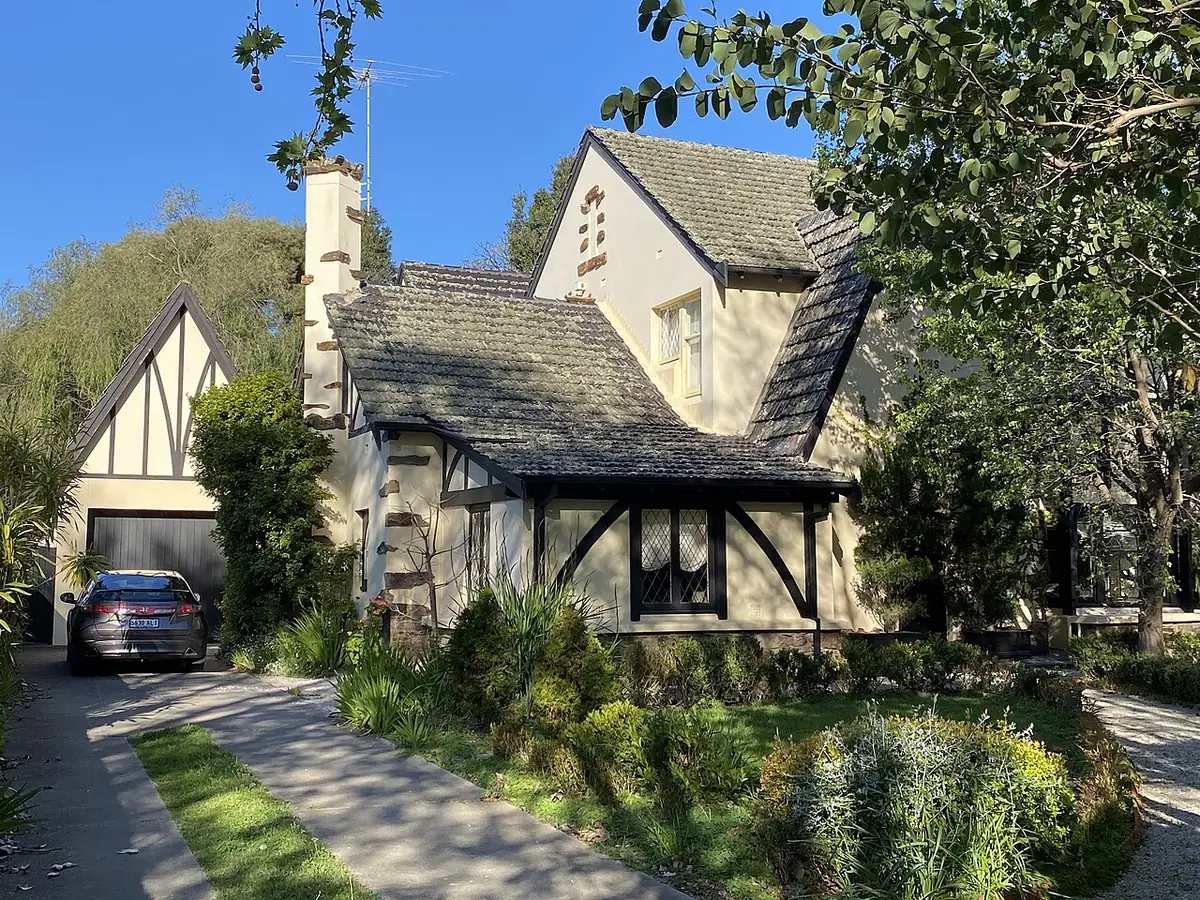
A Tudor Revival home with a leafy front garden in Adelaide — Photo: Ashton 29 · CC BY-SA 4.0 · Wikimedia Commons
These local markers look different when you set them against the habits you bring from back home.
How well your move works out depends directly on how closely your lifestyle matches the neighbourhood you are targeting. Whether you are arriving to work, to study or for a change of life as a family, the constraints of distance and budget are not the same. Each part of Adelaide has its own pace and its own advantages, and they are worth weighing up before you sign a long lease. Getting that match right helps you avoid disappointment over commuting times or a lack of local amenities.
Working in the city centre
Your priority is keeping daily travel time down. A modern apartment in the CBD or right beside the parklands lets you do everything on foot or by tram. Listings are concentrated there, but prices per square metre are the highest in the metropolitan area. You enjoy lively neighbourhood life, with plenty of cafés and services right on your doorstep.
Couple looking for balance
You want a compromise between urban buzz and residential calm. The neighbourhoods ringing the centre, such as North Adelaide or the areas near the eastern parklands, offer buildings with character and smaller, quieter complexes. Parking and access to green space become decisive criteria for a balanced daily life.
Family move
Access to schools and the size of the home matter more than being right in the heart of the city. Residential suburbs well served by public transport offer more spacious apartments or suitable townhouses. The setting is greener there, which lends itself to outdoor activities and a quieter life.
Living here when you come from abroad: what really changes
To pick the right area among these options, it helps to compare the different neighbourhoods of the metropolitan area.
Settling in Australia when you are used to the rental market back home means dropping some reflexes and learning new ones. The rules governing the condition report, the bond and how applications are selected rest on specific administrative practices. Understanding these mechanisms avoids misunderstandings when you put your application together for property managers. The system is designed to be fast, but it demands complete transparency about your finances.
From abroad
Strict rent controls and lengthy court procedures when disputes arise
Adelaide
A more liberal market where twelve-month leases are the norm and renewal is negotiated
You need to plan for the end of your lease and keep an eye on local rent trends from the tenth month.
From abroad
Move-in inspections carried out by independent experts with heavy legal formality
Adelaide
A detailed photographic report drawn up by the agency (Condition Report) that you need to annotate
Take the time to document every imperfection when you move in to protect your bond.
From abroad
A deposit of one or two months' rent that is not held in trust in the same way
Adelaide
A bond that must be lodged with a public body independent of the agency
Your money is protected by the state for the whole tenancy, which makes getting it back at the end simpler.
From abroad
Rental applications built around payslips and personal guarantors
Adelaide
A digital tenant rating system and an assessment of net income against the rent
Submit a complete digital application at the viewing to maximise your chances of being accepted straight away.
Which Adelaide neighbourhood should you settle in?
Once you have picked a neighbourhood, it is worth looking closely at the financial reality of the rents charged.
Adelaide is a city laid out on a precise grid plan, surrounded by belts of parkland that give shape to the urban area. Each neighbourhood has its own identity, from the cultural buzz of the centre to the quieter atmosphere of the surrounding suburbs. Your choice should take into account how you get around, your budget and how much activity or calm you need. Here is a comparison of the main areas to guide your decision.
Adelaide CBD (City centre)
A busy urban rhythm, set by the flow through the shopping streets and trendy cafés.
Suits
People who work locally and those who want to do everything on foot without owning a car.
Trade-off
Higher rents per square metre and living space that is often smaller.
North Adelaide
A historic, leafy atmosphere, lined with fine homes and shady parks.
Suits
People looking for period charm, peace and quiet, and a quick tram ride into the centre.
Trade-off
An older housing stock where double glazing and modern air conditioning are not a given.
East End and Kent Town
A creative, lively village feel, with art galleries, restaurants and craft breweries.
Suits
Lovers of culture and good food who enjoy lively, walkable neighbourhoods.
Trade-off
Very strong demand that makes finding an available apartment particularly competitive.
How much does renting an apartment in Adelaide really cost?
Saint Ignatius Church and its twin towers in Norwood — Photo: Ashton 29 · CC BY-SA 4.0 · Wikimedia Commons
Beyond the raw figures, the kind of properties available deserves particular attention.
The cost of a home in Adelaide varies with the type of property, when it was built and how far it is from the city centre. Rents are generally quoted per week, a habit you need to factor in when converting your monthly calculations. Beyond the rent itself, running costs and subscriptions to essential services need to be budgeted carefully. Here are the indicative ranges seen on the market to help you size your plans.
AdelaideTo rentApartmentestimate
Median price / m²A$26Half the apartments sell below this
Median priceA$2.5kthe average is 14% higher — a few very large properties pull it up
Most common2 bedrooms34 % of listings
Average size105 m²
By number of bedrooms
Bedrooms
Share of market
Avg price
Price / m²
Avg size
1
18 %
A$1.6k
A$29 +7 %
55 m²
2most common
34 %
A$2.3k
A$27
85 m²
3
32 %
A$3.08k
A$26
120 m²
4
16 %
A$4.22k
A$25best value / m²
170 m²
Each row is an average, compared against the area average of A$27 / m². These are indicative estimates of a typical local market, not a measured sample of live listings. Check current listings before relying on them.
What kinds of property you can actually rent here
Before you commit financially, there is one fundamental legal rule to take on board.
The rental market offers a range of housing types that do not follow the same logic when it comes to insulation or strata management. Understanding these differences helps you avoid surprises with heat or noise once you move in. Recent buildings meet high energy standards, while older ones call for closer scrutiny.
Modern strata apartments (Apartments / Units)
These homes in recent buildings often come with built-in appliances, efficient reverse-cycle air conditioning and secure underground parking. Management is handled by a professional strata manager who looks after the upkeep of the common areas and the lifts.
What it changesYou get stable thermal comfort and predictable running costs, but strata by-laws can be strict about pets or changes to outdoor areas.
Homes with character in historic buildings (Character Apartments)
Often found in converted Edwardian or Victorian buildings, these apartments offer high ceilings, original floorboards and undeniable architectural appeal. They are usually centrally located.
What it changesThe architectural charm often comes at the price of lighter sound and thermal insulation, so check that recent heating and cooling equipment is in place.
The rule to understand before paying anything towards a lease
Now let's look at how the actual timeline of a rental transaction unfolds from start to finish.
Renting in Australia involves strict legal steps, and your commitment takes effect as soon as you sign and pay the initial funds. Knowing the legal sequence protects your interests and ensures your bond is handled according to the rules in force in South Australia. Do not skip any part of this check, so you can approach your move with peace of mind.
You spot a property that meets your criteria and attend an open inspection or a private viewing arranged by the agency.
You submit your complete application through the online platform the letting agency requires.
The agency checks your employment references, your rental history and your ability to pay.
The landlord approves your application and the agency sends you the lease (Residential Tenancy Agreement) to review.
You pay the first rent in advance and lodge the bond with the state-approved body.
You complete the move-in condition report together with the agent and officially collect the keys to your new home.
How a rental transaction unfolds, step by step
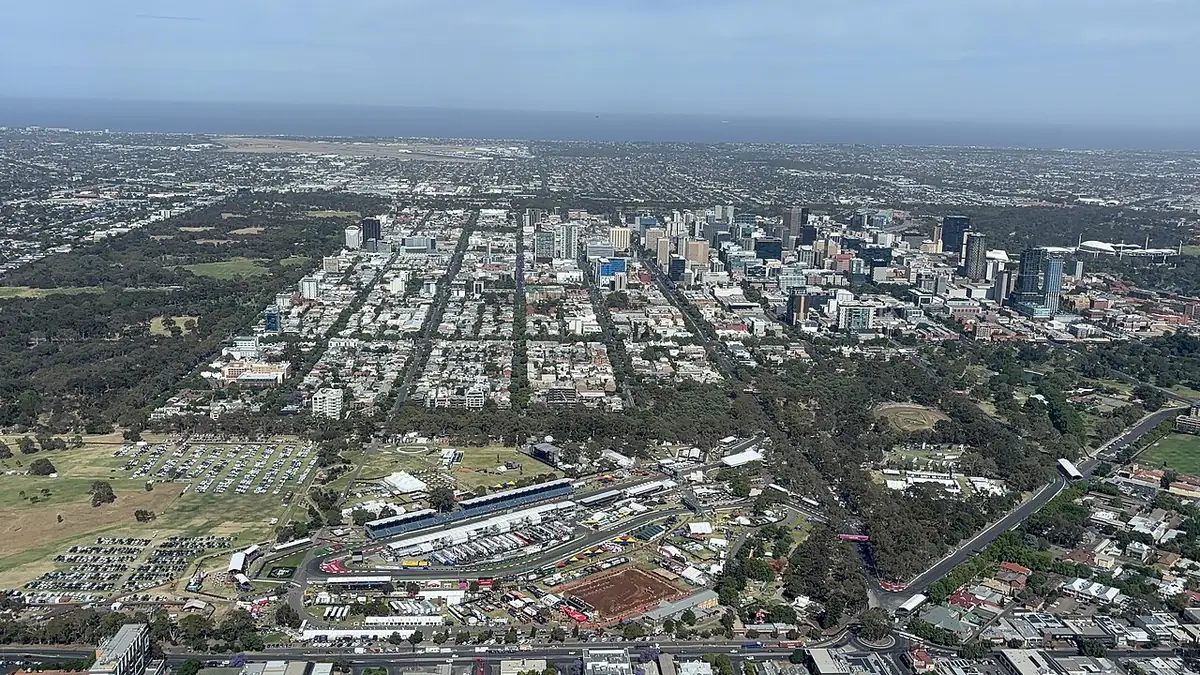
Adelaide from above, a grid city ringed by parklands and suburbs — Photo: Avatar5991 · CC BY-SA 4.0 · Wikimedia Commons
Planning the timeline of your search in Adelaide is the key to avoiding a stretch in temporary accommodation. The market runs smoothly but demands quick reactions as soon as listings go up. Everyone involved in the process has a specific role, and you need to coordinate them effectively.
The prospective tenantPreparing the digital applicationGather proof of income, references and ID, translated if necessary, before you even start viewing properties.
The letting agencyArranging inspectionsViewing slots are often short and announced online a few days ahead. Be on time and ready to apply straight away.
The landlordSelection and approvalReviewing the applications received and choosing the tenant who offers the strongest guarantees of stability and ability to pay.
The tenant and the agencySigning the lease electronicallyAgreeing the general and specific terms of the agreement that set the duration and each party's obligations.
The public bodyLodging the bondPayment and official safekeeping of the bond in a dedicated state account that guarantees it can be returned later.
The tenantCondition report and moving inCarefully checking the condition of the property, signing the joint report and taking possession of the home.
Renting an apartment or a house in Adelaide: which suits your profile?
Now that the type of property is settled, let's turn to the practical finances of your move.
Choosing between an apartment and a house in Adelaide comes down above all to your lifestyle and how much upkeep you are prepared to take on. Apartments are heavily concentrated in the Central Business District (CBD) and in the neighbourhoods right next to it, such as North Adelaide, Prospect or Glenelg. They give you immediate access to the tram lines, the cafés of Rundle Street and the employment hubs of the centre, without the ordeal of a lawn to mow every summer weekend. It is the preferred option for young professionals, couples without children and anyone who wants to be close to the city with the security of a managed strata building.
Opting for a detached house, on the other hand, takes you out to the leafy residential suburbs that South Australia is known for, such as Burnside, Unley, Mitcham or the Adelaide Hills. These properties almost always come with a garden, generous private parking and plenty of living space, which is essential for families with children or people who work from home a lot. In return, the distance from the city centre grows, which means using a car every day and accepting longer journeys at peak times on roads such as Marion Road or Port Road.
Financially, the difference is not just about the headline rent shown on the property portals. A city-centre apartment often carries high strata fees, paid by the owner but passed on indirectly, while a house brings heavier energy bills because there is more space to cool during summer heatwaves, when the mercury often climbs above forty degrees. Water use, billed to tenants in South Australia through a strict metering system, also weighs more heavily on a house with a garden to water.
You also need to factor in how flexible the South Australian rental market is. The stock of new apartments keeps growing along King William Street and around Victoria Square, with modern features such as shared pools, gyms and swipe-card security systems. Older houses, often built in the red brick typical of the Edwardian era or the 1970s, have undeniable architectural appeal but sometimes suffer from poor thermal insulation, a crucial point in a region with cool, damp winters and scorching summers.
Your final decision should therefore weigh the comfort of outdoor space and residential freedom against practicality and a central location. If you have just arrived from Europe or another Australian city to take up a job in the service sector or at a university in the centre, starting in an apartment is an ideal transition before you explore the neighbourhoods and learn how local traffic works. If you are moving as a family with specific schooling needs and want to put down roots in a neighbourhood community straight away, go directly for a house with a garden in the catchment area of the best public schools.
What monthly budget do you need to live comfortably as a renter in Adelaide?
With these financial markers in place, it is worth understanding how a typical day unfolds in the South Australian capital.
Assessing the cost of living in Adelaide means looking at how weekly rents, traditionally quoted per week on the Australian market, interact with unavoidable day-to-day spending. Unlike Sydney or Melbourne, Adelaide keeps prices more moderate, although the housing crisis has put heavy pressure on the market for several years. The tables below set out the rent ranges seen by property type and area, along with an estimated budget for running costs for a two-person household living in an urban area.
Average weekly rents by property type and area
Property type
City centre (CBD)
Inner suburbs (e.g. Unley, Norwood)
Outer suburbs (e.g. Marion, Gawler)
1-bedroom apartment
AUD 420 to AUD 520
AUD 380 to AUD 460
AUD 300 to AUD 380
2-bedroom apartment
AUD 580 to AUD 750
AUD 500 to AUD 650
AUD 400 to AUD 500
3-bedroom house
AUD 850 to AUD 1,100
AUD 700 to AUD 900
AUD 520 to AUD 680
Amounts are per week, in line with rental practice in South Australia.
Estimated monthly budget for household running costs
Expense
Estimated monthly amount (couple)
Comments and seasonal variation
Electricity and gas
AUD 200 to AUD 350
A big peak in summer with air conditioning and in winter with heating.
High-speed internet (NBN)
AUD 70 to AUD 110
Unlimited fibre or cable connection depending on what the property can get.
Public transport (MetroCard)
AUD 140 to AUD 200
Reduced fares for regular journeys with transfers between bus, tram and train.
Food and groceries
AUD 800 to AUD 1,100
Shopping at Coles, Woolworths and local markets.
These figures exclude leisure, eating out and car insurance.
Healthcare, schools and transport: what does an ordinary Tuesday in Adelaide actually look like?
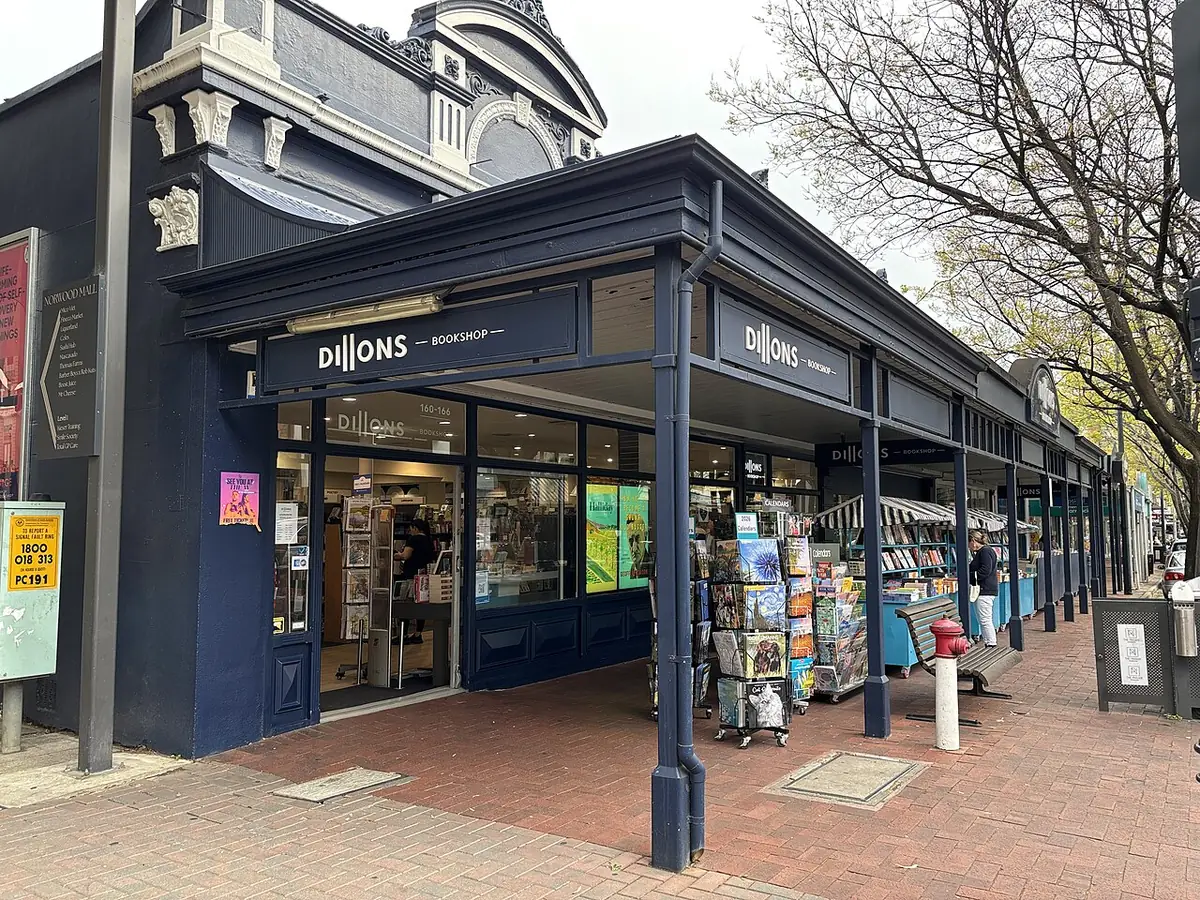
An independent bookshop under a shopfront verandah — Photo: Nick-D · CC BY-SA 4.0 · Wikimedia Commons
Beyond this apparent ease, the property market hides subtleties that the glossy brochures carefully leave out.
Picturing an ordinary day in Adelaide gives you a sense of how smoothly daily life runs in this human-scale city. Unlike congested megacities, commuting times stay reasonable, provided you choose where you live carefully in relation to where you work. Here are the stages of a typical Tuesday for a working resident of the South Australian capital.
07:30Residential neighbourhood (e.g. Parkside)Leaving home after waking to the morning light. The side streets of the inner suburbs are soothingly calm, disturbed only by the song of the local birds.
08:00Local schoolDropping the children at the area's public or private primary school. The trip is often on foot or by bike, thanks to the safe paths that wind through the surrounding parks.
08:30Adelaide Metro network (tram or bus)Heading into the CBD. The combined bus and tram network runs remarkably on time, letting you cross the green belt of the Park Lands without much stress.
09:00CBD business district (King William Street)Arriving at the office. Modern office spaces get plenty of sunshine and are right next to places to eat for the lunch break.
12:30Central Market (Gouger Street)A lively lunch break at the heart of the historic Central Market. It is a chance to enjoy an excellent coffee and pick up fresh produce for dinner.
17:30Local medical centre or pharmacyA quick visit for a routine check-up or a repeat prescription with local health professionals, who are well spread across the whole metropolitan area.
18:30Home and unwindingA quiet evening at home or an after-dinner stroll along the paths beside the River Torrens (Karrawirra Parri), enjoying the mild end of the day.
What the listing won't tell you about your future rental in Adelaide
Knowing these subtleties will spare you some regrettable misjudgements in the months after you move in.
Online rental listings always play up a property's looks, but leave out technical and regulatory aspects that are fundamental to your daily comfort and your budget. In South Australia, several local specifics directly affect quality of life in a home. Here are the key things you must check before signing a lease.
Thermal orientation and wall insulation
Many older buildings have minimal insulation. During summer heatwaves, a badly oriented apartment or a house without double glazing turns into a furnace inside, sending electricity bills soaring from constant air conditioning.
Strict pet policies
Although South Australian legislation has changed to make keeping pets easier, many strata buildings ban dogs outright or require written approval from the strata corporation, which considerably narrows the choice for applicants with four-legged companions.
How water charges work (Water Rates)
Unlike other jurisdictions where water is included in the charges, tenants in South Australia often have to pay for water use measured by a sub-meter, as well as a share of the sewerage costs set by the landlord.
Fibre and real internet speeds
Connection to the National Broadband Network (NBN) varies considerably from one street to the next. Some older buildings still rely on outdated copper technology, which is a serious handicap for people who work from home or stream heavily.
The housing choices you only regret after six months of living in Adelaide
With these pitfalls brought to light, it is time to work out whether moving to Adelaide really suits the life you want.
Looked likeA charming historic cottage on a quiet street close to the city centre, with irresistible architectural character and old floorboards.
Turned outA draughty, damp home in winter, plagued by rising damp and by early-morning noise from major roads two streets away.
Would have caught itVisiting the property on a rainy day to inspect the walls, and checking for double glazing and the heating system installed in the main living areas.
Looked likeAn ultra-modern top-floor apartment in a new CBD tower, with sweeping views over the surrounding hills and parks.
Turned outA stifling home in summer because of large windows unprotected from the western setting sun, with huge air conditioning costs and almost no natural ventilation.
Would have caught itChecking exactly which way the balcony and main windows face, and asking to see the previous occupants' electricity bills to gauge the real heat load.
Looked likeA spacious house with a huge tree-lined garden in a leafy outer suburb, ideal for raising children in the fresh air.
Turned outA drain on money and time when it came to garden upkeep, combined with strict summer watering restrictions and endless drives at peak hours.
Would have caught itWorking out precisely how much time the local vegetation takes to maintain and calculating the real cost of daily car journeys to work and school.
Looked likeAn attractive rent negotiated below market rates in an up-and-coming but outlying neighbourhood, seemingly excellent value for money.
Turned outAn isolated location that meant buying and running a second car, wiping out the saving on the monthly rent entirely.
Would have caught itFactoring in all the transport costs that come with the location before signing the lease, and favouring places close to public transport.
Unusual profiles: who shouldn't rent in Adelaide?
Now it is time to bring all of this together so you can make your final decision with confidence.
Although Adelaide offers an internationally recognised quality of life, the rental market and the pace of life in this regional capital do not suit every profile. Some professional or personal expectations run up against local realities. Here are the situations where it is better to redirect your move towards another Australian city.
Fans of intense cultural and nightlife energy
→Settling long term in central Adelaide in search of constant excitement.
Adelaide is known for its tranquillity, its relaxed way of life and its parks, but it lacks the nightlife density of Sydney or Melbourne, which can wear thin for those who love a hectic night out.
Highly mobile professionals without a car
→Renting a large family home in the far outer suburbs without owning a vehicle.
Public transport works well into the centre but is poorly suited to suburb-to-suburb travel, which makes a car essential in those areas.
People who want to avoid marked swings in climate
→Choosing an older home without effective air conditioning and hoping for constant thermal comfort.
Adelaide's Mediterranean climate brings very hot, dry summers when temperatures often go beyond comfortable levels, which calls for modern, suitable air conditioning.
So, are you ready to take the plunge and rent in Adelaide?
Moving into a rental in Adelaide is a major decision that means lining up your personal expectations with the concrete realities of this South Australian city. By accepting the trade-off between the central location of apartments and the generous space of suburban houses, you lay the foundations for a balanced daily life, shaped by nearby green parks and a mild, sunny Mediterranean climate. The budget markers and neighbourhood analyses in this guide equip you well to navigate the local market without unpleasant surprises.
A successful move depends on your ability to anticipate the hidden details of South Australian leases, whether that is how water bills are handled, how well older homes cope with heat and cold, or a careful choice of how you will get around. By avoiding the classic traps of misleading appearances and setting your criteria according to how you really live, you turn a sometimes stressful administrative process into a smooth transition to a rewarding new chapter.
Take the time to inspect properties with a critical eye, visit neighbourhoods at different times of day to get a feel for the local atmosphere, and make sure your budget covers all the unavoidable indirect costs. Adelaide offers an exceptional setting for newcomers who approach its property market with method, realism and preparation. If those conditions are in place, all that is left is to finalise your application and pack your boxes for the capital of South Australia.
Related questions
How long does it usually take to find a rental in Adelaide?
Adelaide's rental market is particularly tight, with historically low vacancy rates. You should generally allow two to four weeks of steady searching, group viewings and carefully prepared applications before you secure a lease.
What documents do you need for a rental application in South Australia?
Letting agencies traditionally ask for official photo ID, recent proof of income (payslips or employment contracts), rental references from your previous landlords and a verified record of your creditworthiness.
Is the bond regulated by South Australian law?
Yes, the amount of the bond is strictly regulated by local legislation. It cannot exceed the equivalent of four weeks' rent for properties whose weekly rent is below a threshold set by the state authorities.
Do you need contents insurance as a tenant in Adelaide?
The landlord's insurance covers the physical structure of the building, but it does nothing to protect your personal belongings. It is therefore strongly recommended to take out a contents policy covering theft, fire and personal liability.
How are repairs and maintenance handled in a rented home?
Any repair request should be made in writing to the letting agent or the landlord managing the property. For urgent problems that threaten the safety or habitability of the home, the law requires landlords to act within very short timeframes.
How long are rental leases in Adelaide?
The vast majority of residential tenancy agreements are signed for an initial fixed term of twelve months. When that term ends, the lease can be renewed for a new fixed period or roll over automatically into a periodic arrangement.
Can you negotiate the rent shown in a listing?
With competition as fierce as it currently is in Adelaide's rental market, there is very little room to negotiate the rent down, as good-quality properties find tenants from the very first viewings the agencies hold.
What additional costs should you plan for when moving into a rental?
On top of paying the bond and the first weeks of rent in advance, you need to budget for connecting utilities such as electricity, gas and a high-speed internet service.
Do tenants pay strata fees?
No, strata and body corporate fees are the sole responsibility of the property owner. The tenant only pays for their own energy use, water as set out in the lease, and their communications subscriptions.
How do you end a lease before it expires?
Breaking a lease before its set expiry date brings financial penalties and an obligation to contribute to the costs the managing agency incurs in finding a new tenant.
Property review of ting
No ting properties in Adelaide yet
Be the first — share it on ting and it shows up right here.