Settling into Ontario's largest city means learning the rules of a fast, demanding rental market. This guide works through the neighbourhoods, the real budgets and the paperwork you cannot skip, so you can sign a lease with confidence, with no blind spots and no false promises.
Get the app
What nobody tells you.
Real prices, hidden costs and the traps to check before you commit.
Renting an apartment in Toronto: the reality behind the appeal of Ontario's biggest city
Scroll
Renting an apartment in Toronto: the reality behind the appeal of Ontario's biggest city
Settling into Ontario's largest city means learning the rules of a fast, demanding rental market. This guide works through the neighbourhoods, the real budgets and the paperwork you cannot skip, so you can sign a lease with confidence, with no blind spots and no false promises.
Written by the ting.ad editorial team ·
Bloor Street East, Toronto in Street View: drag to look around.
To work out whether that pace and those requirements match your own situation, look at the typical renter profiles.
Moving to Ontario's economic capital means measuring your expectations against the real constraints of the local rental market. The prospect of professional opportunity and cultural energy runs straight into fierce competition and structurally high costs. Understanding how this city works keeps you from believing the move will be easy and gives you the right reference points from the first search. Between the promise of a buzzing urban life and the discipline of a tight budget, the trade-off has to be made with the facts in plain view.
A cosmopolitan, thoroughly connected cityvsAn extremely tight and selective rental market
The promise of constant multicultural energy draws tens of thousands of new arrivals every year, which instantly thins out the supply available for long leases.
Walkable, lively central neighbourhoodsvsApplication requirements that feel like an obstacle course
Getting a home in a sought-after area means producing a Canadian credit history, solid references and sometimes months of rent up front if you want to convince a landlord.
A modern, vertical housing stockvsOften small floor areas for very high rent per square metre
Recent condo towers offer remarkable shared amenities, but living space keeps shrinking while the extra monthly costs keep climbing.
Easy access thanks to the transit networkvsThe absolute need to plan your travel around peak hours
The combined subway and streetcar network serves the core efficiently, but congestion on the main routes weighs heavily on a working commuter's daily travel time.
What kind of tenant are you against the demands of the Toronto market?
The rules and habits behind all of this differ sharply from the reference points most newcomers bring with them.
Not every situation carries the same weight against the administrative and financial complexity of renting in Ontario. Whether you are arriving for a short corporate posting, unpacking with a family, or starting a long-term life project, the strategy for getting a home changes completely. Each profile has to anticipate its own obstacles, from assembling proof that you can pay to choosing the type of home that actually fits local realities.
The mobile young professional
You are probably aiming at a one-bedroom condo in the Financial District or along the main subway line. Your main difficulty is the absence of a Canadian credit history at the start, which agencies and institutional landlords treat as close to mandatory. You will need to make up for that gap with solid financial guarantees, a durable employment contract and sometimes backing from your employer, so the landlord is reassured from the first viewing.
The household looking for stability
Your focus turns to slightly quieter residential areas such as the Annex or Roncesvalles, where you find low-rise buildings with character or duplexes. Looking for more living space calls for patience, because those family-sized homes are rare and are snapped up fast. Your combined income will work in your favour, provided you check the state of the common areas carefully and confirm exactly which costs the lease includes.
The professional splitting time between two places
The medium-term furnished rental market is aimed squarely at you, with more relaxed leases but rates well above the monthly average. Read the condo rules carefully on subletting and short stays, because the city regulates those practices very tightly in order to protect the permanent rental stock and prevent speculative abuse.
How renting in Toronto differs from what most newcomers are used to
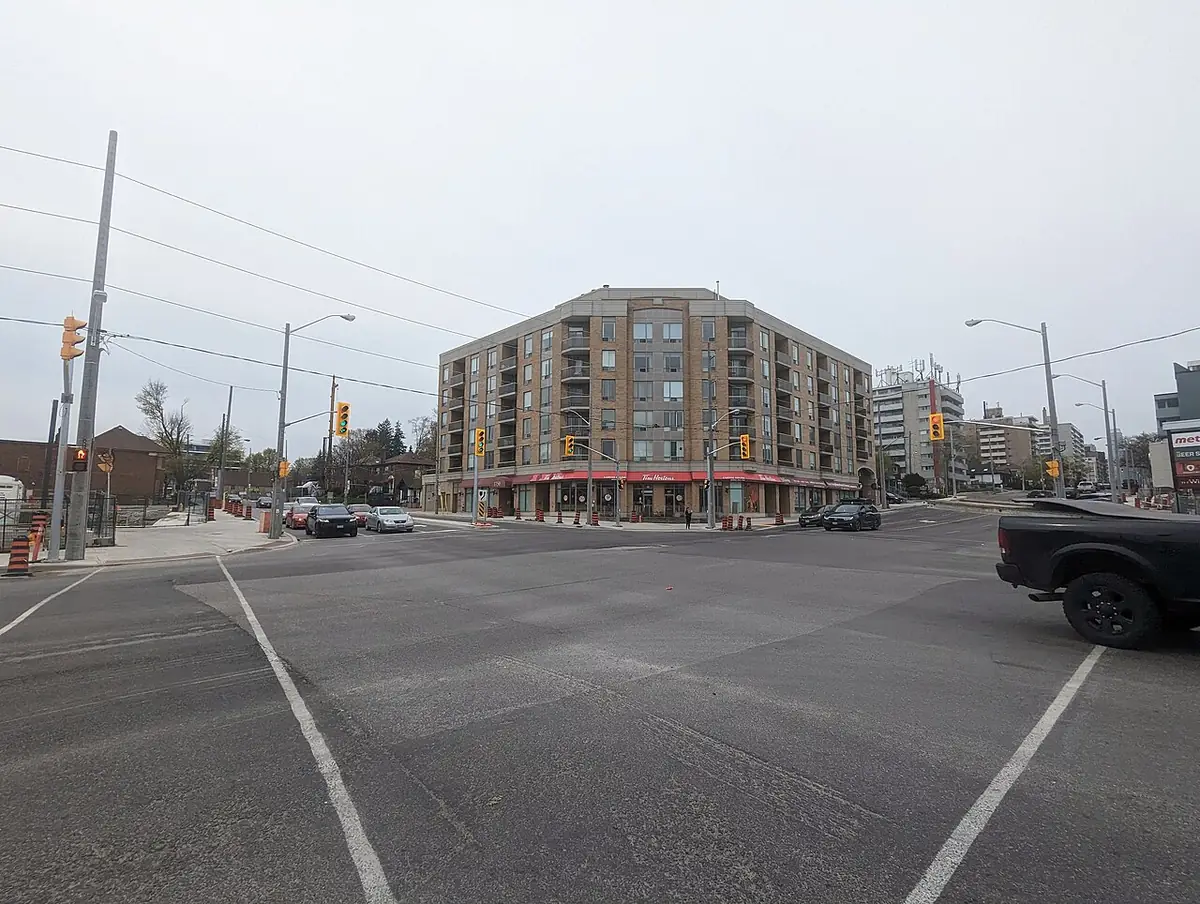
St. Gregory Armenian Catholic Church, a Toronto landmark — Photo: Amakuha · CC BY 4.0 · Wikimedia Commons
Once those rules are absorbed, the crucial question of which neighbourhood to settle in remains.
Expecting the same legal safeguards or the same customs you knew at home leads reliably to unpleasant surprises. Ontario rental law relies on specific contractual mechanisms in which direct negotiation and speed matter more than rigid administrative protection. From the application file to the payment of utilities, every stage follows conventions, legal and cultural, that you have to absorb before you sign anything at all.
From abroad
Rent tightly capped by statute and standardised application files, with a guarantor and uniform payslips
Toronto
A market governed by the Residential Tenancies Act, with increase rules that vary according to the year the building was first occupied
You absolutely must check when the building was first occupied, so you know whether your future rent is protected against steep increases or entirely uncapped.
From abroad
A parental or bank guarantor routinely accepted as proof you can pay
Toronto
A system built on the Canadian credit score held by Equifax or TransUnion, which new arrivals do not have
Having no local history forces you to offer convincing alternatives, such as paying several months of rent in advance, despite the legal grey area around that practice.
From abroad
Kitchens fitted with the bare minimum, where tenants bring their own furniture and appliances
Toronto
Apartments let as a matter of course with a complete fitted kitchen and an in-unit washer and dryer
You save on buying heavy equipment when you arrive, but you must inspect those appliances scrupulously, because minor breakdowns often fall to the tenant.
From abroad
A security deposit strictly capped at one month's unfurnished rent by law
Toronto
A last month's rent deposit, asked for up front and held under precise rules
Plan your immediate cash accordingly, because the first and the last month both have to be paid as soon as the rental agreement is signed.
How do you choose the Toronto neighbourhood that fits your daily life?
That geographic choice feeds directly into the rents you will pay and the costs that come with them.
Toronto's geography is organised around major transit corridors and residential pockets with strongly marked characters. Each area strikes its own balance between travel time, shops, quiet at night and the budget you have to commit. Judging those criteria against your own typical week keeps you from ending up isolated on the edge of the city or worn down by the noise of the financial core.
Downtown / Entertainment District
Constant activity, paced by passing pedestrians, construction noise and office towers right on your doorstep.
Suits
Working people who want to cut their commute to a walk or a short subway ride into the heart of the city.
Trade-off
Smaller living spaces, high noise levels and rent per square metre among the highest in the province.
The Annex / Yorkville
A leafy setting lined with converted Victorian houses, with a mix of students and well-off residents passing through.
Suits
Those looking for an ideal compromise between rich cultural life, independent neighbourhood cafes and quick access to the universities.
Trade-off
An older housing stock where interior fittings sometimes lack modern comforts, and where competition for a home is fierce.
Leslieville / Queen East
The feel of a fashionable village, with small design shops, craft breweries and welcoming family parks.
Suits
Households and creative workers after a strong sense of community, away from the sheer scale of the downtown towers.
Trade-off
A slightly longer trip to the heavy transit network, since you have to combine streetcar and bus to reach the business core.
What does renting an apartment in Toronto actually cost?
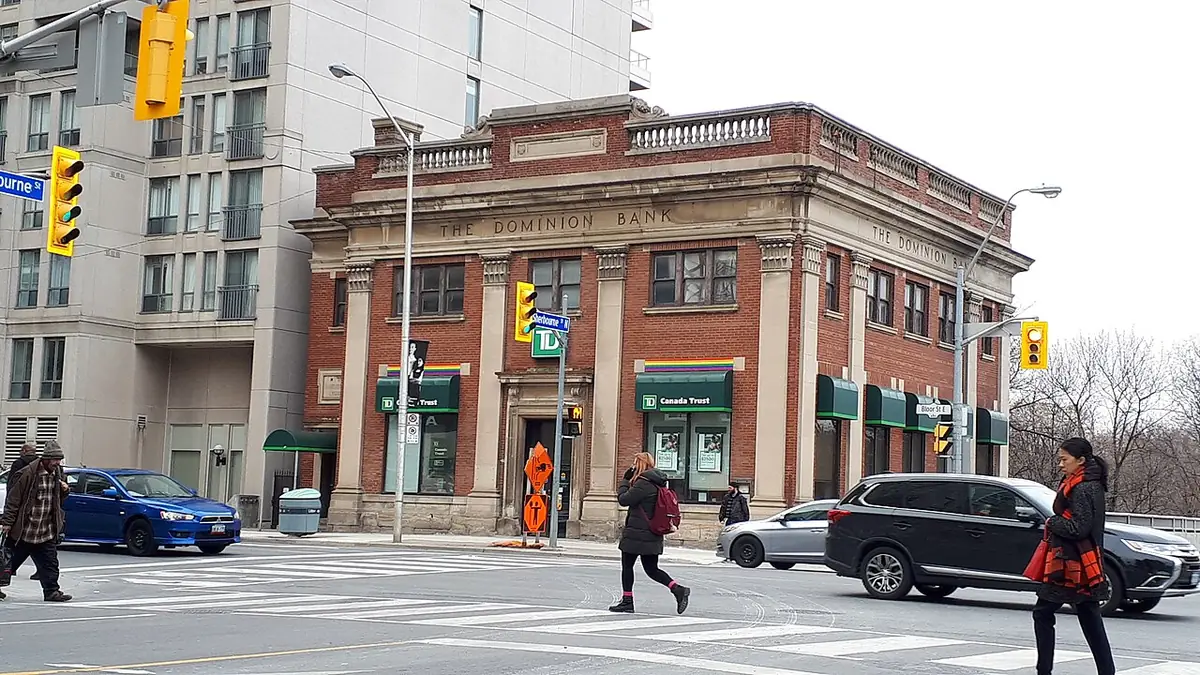
A heritage corner building on a lively Toronto street — Photo: Oaktree b · CC BY-SA 4.0 · Wikimedia Commons
Beyond the figures, the legal nature of the home you rent deserves close attention.
Building a housing budget for Toronto goes well beyond the headline monthly rent shown on the listing. You have to fold in all the unavoidable costs that come with occupying an urban home in Ontario, from electricity bills to service subscriptions. Having these orders of magnitude in hand lets you calibrate your search without being drained financially in the first few months.
torontoTo rentApartmentestimate
Median price / m²CA$41Half the apartments sell below this
Median priceCA$2.85kthe average is 14% higher — a few very large properties pull it up
Most common1 bedroom48 % of listings
Average size66 m²
By number of bedrooms
Bedrooms
Share of market
Avg price
Price / m²
Avg size
1most common
48 %
CA$2.36k
CA$47 +9 %
50 m²
2
38 %
CA$3.03k
CA$42
72 m²
3
11 %
CA$4k
CA$41best value / m²
98 m²
4
3 %
CA$5.11k
CA$41best value / m²
125 m²
Each row is an average, compared against the area average of CA$43 / m². These are indicative estimates of a typical local market, not a measured sample of live listings. Check current listings before relying on them.
A unit in a modern condo tower or an apartment in a Victorian house
Whichever option you choose, signing the lease follows formal steps that should not be skipped.
The Toronto rental market divides mainly between two architectural types whose philosophies of design and management are complete opposites. On one side, the sanitised verticality of recent condos with services built in; on the other, the historic warmth of apartments carved out of older houses in residential neighbourhoods. Understanding what sits behind those walls helps you weigh technical comfort against the character of the place you live.
The recent condo tower
You get modern sound insulation, 24 hour security staffing, an on site gym, sometimes a pool and a balcony with a wide view. In return you depend closely on a fussy condo board, on strict rules about moving in and out, and on lifts that are sometimes saturated at peak times.
What it changesThis is the choice of convenience and technical predictability, at the price of a strongly standardised style.
The apartment in a converted historic house
You enjoy generous ceiling heights, worn old floorboards, period woodwork and a direct place in neighbourhood life. Acoustic comfort between floors often leaves much to be desired, though, heating can prove temperamental in the depths of an Ontario winter, and general upkeep depends entirely on how quickly the individual owner responds.
What it changesThis is the option of charm and local roots, which asks in exchange for more tolerance of an old building's small quirks.
The critical timeline for securing a lease without a misstep
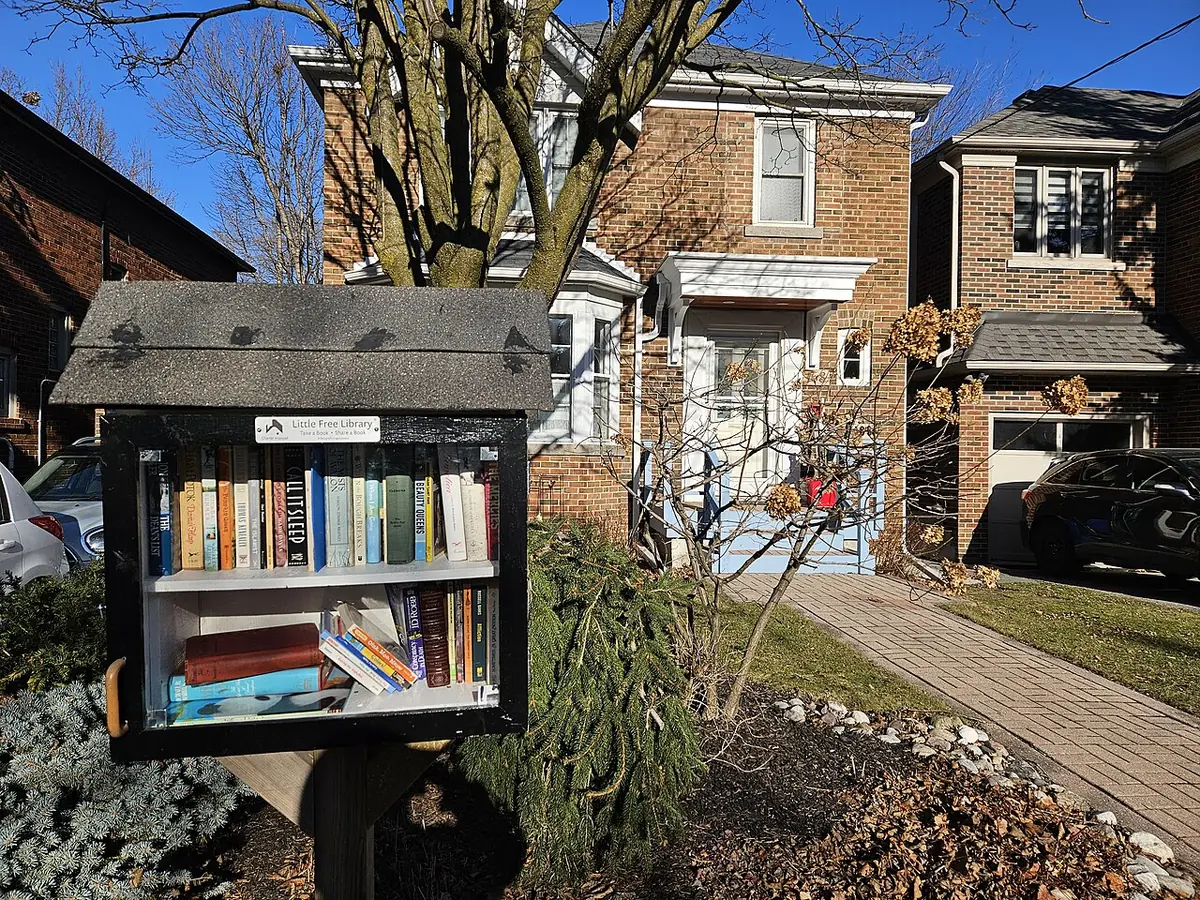
A quiet residential street with a neighborhood book box — Photo: ArthurGron · CC0 · Wikimedia Commons
Let us set out all the people and phases involved in this move in order.
Landing a home in Toronto cannot be improvised and follows a precise sequence in which every document you produce carries weight. Given how fast good homes find a taker, you have to prepare your application in advance so you can react instantly at the viewing. Neglecting a single link in that procedural chain is how the home you wanted goes to a better prepared candidate.
The preparation phase, assembling a complete digital application file before you even attend a first viewing.
Gather proof of identity, employment letters stating your annual salary, and contact details for previous landlords.
View the home in person, or send someone you trust who is already on the ground, to judge the real state of the fittings and the noise around it.
Complete and sign the rental application, attaching the deposit cheques required for the last month's rent.
Negotiate the specific clauses of the Ontario standard form of lease, to be sure that no abusive terms have been added to it.
A meticulous move-in inspection and the formal signing of the lease before you move your things in.
Step by step: how a successful Toronto rental move actually unfolds
To turn a move abroad or a relocation into a calm arrival, it helps to picture everyone involved and the milestones along the way. From the first read of the market to the day you actually move in, each party plays a precise role, and coordinating them carefully is what keeps you inside the deadlines your own calendar imposes.
The future tenantAudit of needs and geographic targetingSetting a precise ceiling on what you can carry each month, including the extra costs, and choosing the two or three target neighbourhoods along the transit lines.
The real estate agentTargeted search and organised viewingsAccess to the professional MLS databases to filter available homes, and grouping viewing slots into a single run.
The landlord or their representativeShortlisting applications and checking you can payClose examination of financial guarantees and professional references, and confirmation that the candidate can honour the commitment across the year.
Both partiesSigning the offer and paying the depositPutting the agreement in writing on Ontario's mandatory lease form, and a secure transfer of the funds for the last month's rent.
The utility and service providersOpening accounts and connectionsSigning up for electricity, internet and the required home insurance so that all of them are live on your first day of occupancy.
The tenantMove-in inspection and moving dayA detailed photographic inspection of every room to record the initial condition of the home before your belongings arrive.
Renting an apartment in Toronto or buying one: the real long-term calculation
Now to the hard numbers behind those choices, through a close look at the budgets involved.
The Toronto market forces a heavy structural choice between owning and renting long term, well beyond a simple comparison of a mortgage payment against an advertised rent. Once you analyse the total cost of ownership, including property taxes, the condo fees that run high downtown, and the opportunity cost of a deposit that could have been invested instead, the equation often tips towards renting for horizons shorter than seven years. First-time buyers routinely underestimate the tax and legal friction on the way in and on the way out, which absorbs a substantial share of any potential gain in the early years of holding a home. Staying a tenant, by contrast, keeps you out of a concentrated bet on Canadian housing, at the cost of accepting rents that may or may not be capped, depending on when the building was first occupied.
That last point is the real risk of renting in Toronto. Homes built after November 2018, the date rent control was removed for new construction in Ontario, carry a genuine exposure to aggressive increases or to being asked to leave. This legislative gap leaves a large share of recent tenants facing discretionary increases that can quickly outrun inflation, so residential insecurity is real even for households on comfortable incomes. Owning, by contrast, offers a form of stability in debt service if you take a fixed rate, although variable rates taught many borrowers painful lessons during the recent increases in the Bank of Canada's policy rate. The decision therefore is not a purely mathematical calculation about the cost of capital, but a question of how much regulatory risk you can tolerate and how firmly you want to be anchored to one place.
To settle it, judge how stable your working and personal life will be over a horizon of at least ten years. Downtown condos are going through an unusual supply and demand cycle at the moment, with a flood of small units arriving on the rental market that weighs on gross yields for investors while opening room to negotiate for patient renters and buyers alike. If your aim is to build up an asset over the long run while immunising yourself against a landlord's decisions, buying a well-located apartment near a subway line remains resilient. If you would rather keep the flexibility to follow career opportunities without the drag of selling into a falling market, renting while keeping a diversified pot of savings stays the more rational strategy, and the priority becomes finding a home whose rent is protected.
What budget do you really need to rent an apartment in Toronto?
Raw figures are not enough on their own, so here is what a typical week in the city actually looks like.
Setting a realistic housing budget for Toronto means looking past the advertised rent. Monthly condo charges, known as maintenance fees or condo fees, vary considerably with the age of the building and the amenities on offer, and they rise every year, which eventually feeds through into what an owner asks a tenant. Property taxes collected by the City of Toronto sit on the owner's side of the ledger, while tenants have to budget for home insurance and for electricity bills that are frequently not included in the rent. The tables below set out the orders of magnitude on the current Toronto market so you can calibrate your own plan.
Estimated monthly costs for a one-bedroom apartment in Toronto
Cost item
Renting (standard apartment)
Owning (condo with a mortgage)
Budget impact and notes
Rent or monthly mortgage payment
CAD 2,400 - CAD 2,800
CAD 2,500 - CAD 3,500
The purchase side depends heavily on the deposit paid up front and on the interest rate agreed.
Condo fees / maintenance
Included or negligible
CAD 500 - CAD 900
They rise steadily to fund the building's reserve fund and major repairs.
Property taxes
Not applicable
CAD 300 - CAD 500
Calculated from the City of Toronto's municipal assessment, generally more moderate than in the suburbs.
Running costs (electricity, internet)
CAD 150 - CAD 250
CAD 150 - CAD 250
Varies with air conditioning in summer and with the building's heating system in winter.
The figures shown exclude parking and any exceptional building service charges.
Typical monthly rents in Toronto by apartment size
Apartment size
Average monthly rent
Average rent per m2
What the pool of listings looks like
One bedroom
CAD 2,360
CAD 47
Around 480 listings averaging 50 m2, the deepest and fastest moving pool in the city.
Two bedrooms
CAD 3,030
CAD 42
Around 380 listings averaging 72 m2, the usual choice for couples and sharers.
Three bedrooms
CAD 4,000
CAD 41
Around 110 listings averaging 98 m2, scarce and taken very quickly.
This table replaces a purchase-price table in the source, which could not be restated as rent. It is rebuilt from the rental market data given earlier on this page, where the median rent is CAD 2,850 and the average CAD 3,250.
Health, schools, transit: what does an ordinary Tuesday in Toronto look like?
Beyond that well-drilled routine, plenty of crucial details never make it into the sales brochures and deserve to be brought into the light.
Living in an apartment in Toronto changes your relationship with time and with the city, above all on weekdays, when commuter flows organise themselves around the TTC network. Between connections on the Line 1 Yonge-University subway and access to local services, every day follows a timed choreography that residents learn to master. Health facilities and public schools depend on exactly where you sit within the various school boards across the Toronto region. This account of an ordinary Tuesday shows both the logistical constraints and the practical advantages of daily life in the city.
07:30Apartment, MidtownWaking up and checking the state of the Toronto Transit Commission (TTC) network on a phone app in order to anticipate any delays.
08:15Subway station, Line 1The commute into the financial district. Trains are particularly busy at peak times, so connections need managing well.
12:30Shopping centre or local high streetA midday break, giving access to nearby health services, pharmacies and the shops built into downtown residential complexes.
17:30Neighbourhood school or daycareCollecting the children from Toronto District School Board facilities, often a few minutes' walk from the main routes.
19:00Condo building, shared space or a local shopHome again, a quick stop at the corner grocery for last-minute shopping, and use of the building's shared amenities.
What Toronto rental listings systematically leave out
Those frequent omissions lead far too often to disappointments you only measure properly after several months in the home.
The Toronto market has its own advertising conventions, in which plenty of essential technical detail is quietly left out of the description. Agents lead with natural light and design finishes, but rarely mention the financial health of the condo corporation or the effect of construction work about to start next door. Understanding those blind spots will spare you real financial disappointment once the lease is signed and the real estate lawyer's paperwork is behind you. Here are the decisive points that owners and developers keep well away from the front of their brochures.
The state of the building's reserve fund study
An underfunded reserve study means special assessments will inevitably land to pay for facade repairs or lift replacement, and an owner facing those costs will push them towards you as higher rent at renewal, while the building sits under scaffolding.
The strict rules on short-term letting and on pets
Many Toronto condo buildings formally prohibit short-term letting on pain of heavy fines, so subletting your unit while you travel may not be an option, and some impose drastic restrictions on the weight or the number of pets you are allowed to keep.
The effect of residential towers due to be built next door
A home taken for its open view can turn within months into a permanent building site, cutting the light in your apartment and generating considerable noise for several years of your tenancy.
Restrictions on parking spaces and storage lockers
In many recent buildings the parking space is not automatically included in the advertised rent and is negotiated separately, as is the storage locker, whose real size often turns out to be cramped.
The disappointments tenants discover six months after moving to Toronto
Faced with those demanding realities, not everyone is equipped to settle into this market for the long run.
Looked likeA booming neighbourhood with endless student and professional demand, where a good rental was supposed to be easy to find and easy to keep.
Turned outA tenancy that consumes time, given everything the Residential Tenancies Act requires of both sides, and a landlord who reappears at every renewal in the quieter periods of the year.
Would have caught itAsk systematically about the history of previous leases, insist on a rigorous move-in inspection, and build a margin of ten per cent into your annual housing budget.
Looked likeA perfect car-free urban life, with everything reachable on foot or by public transport in the heart of the city.
Turned outFatigue from recurring transit breakdowns in winter, and a chronic inability to park easily when friends visit.
Would have caught itTest the exact home to work journey at different peak times before you commit, and check the real distance to subway stations and to essential shops.
Looked likeStable monthly costs and the run of high-end amenities such as the pool and the gym that the listing showed off.
Turned outGeneral building maintenance costs exploding and being passed on, feeding through into the rent, with the amenities themselves frequently closed for corrective maintenance.
Would have caught itGo through the minutes of the last three years of owners' meetings in depth, to spot recurring technical problems and disputes involving the condo board.
Looked likeA quiet, green neighbourhood that felt perfectly safe at any hour of the day or night.
Turned outUnexpected night-time noise from nearby major roads or from construction sites that start at dawn.
Would have caught itVisit the area around the home on a Friday and a Saturday evening to catch the real atmosphere of the neighbourhood and its night-time activity.
The renters who should walk away from the Toronto market
Time to pull these threads together and work out whether you should take the step today.
The Toronto market exerts a powerful pull, but it does not suit every household or every working life. Trying to settle in the city at any cost without the financial or psychological flexibility it demands leads reliably to chronic stress and to being stuck. Ontario's regulatory constraints and the sheer cost of housing call for solid foundations. This set of risk profiles helps you identify whether your current situation is genuinely compatible with what this market demands.
The tenant on an ultra-tight budget with no emergency savings at all
→To stretch to the largest unit their income will just barely support, downtown or on the edge of the city.
One rent increase in a building outside rent control, or a single unforeseen expense, will leave them on the edge of insolvency with no room to manoeuvre, and the first and last month's rent will already have drained their cash.
The professional retraining or on a posting of less than three years
→To sign a long lease on an expensive unit rather than accept something smaller or a shared arrangement.
Breaking or transferring a lease early in Ontario is procedural and slow, and the first and last month's rent, the deposits and the cost of moving twice will swallow whatever the better address was supposed to be worth over such a short stay.
The household unwilling to compromise on space or to live under strict condo rules
→To rent in a dense downtown condo tower in the hope of finding the calm of a suburban house there.
The closeness of neighbours, the strict rules governing the common areas and the absence of any private garden will generate a daily frustration this way of living cannot absorb.
So, are you ready to rent in Toronto?
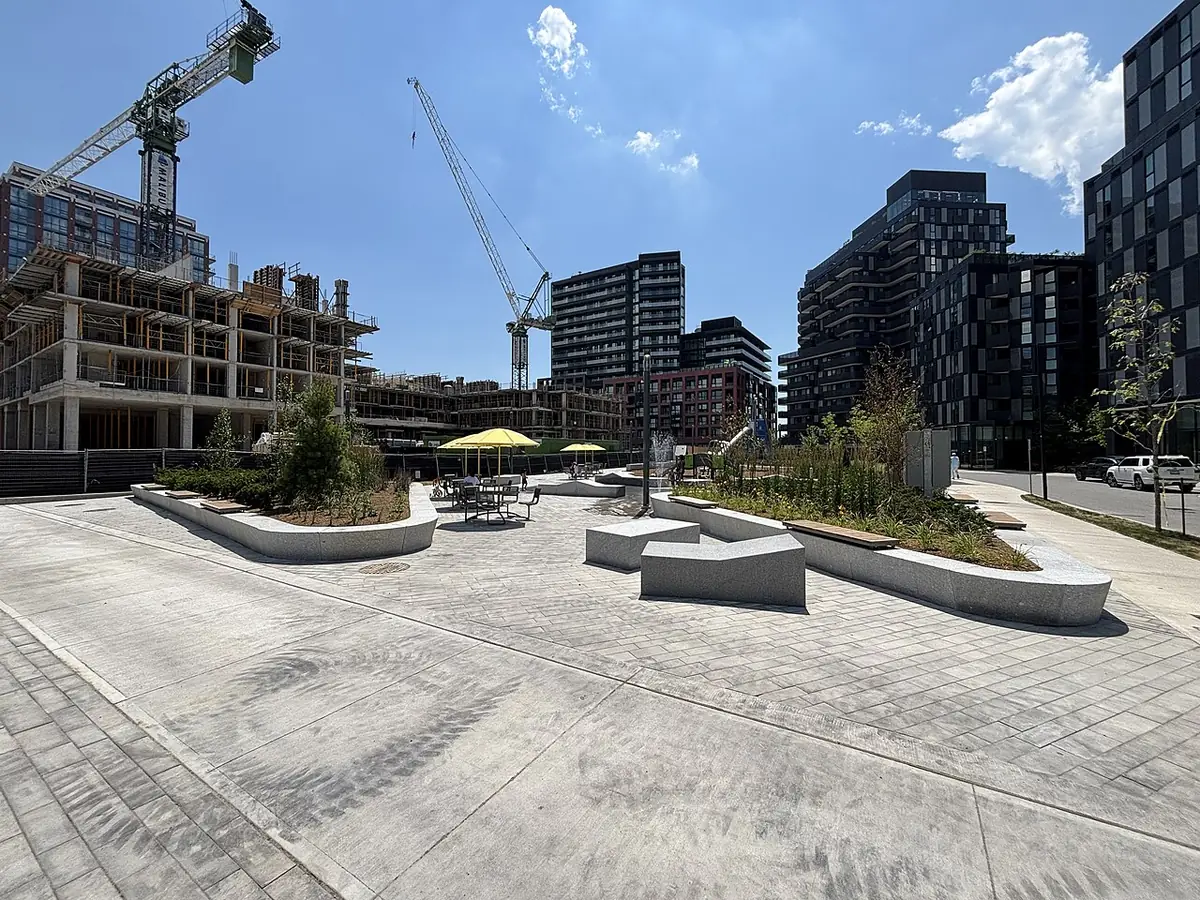
A new public plaza taking shape in Toronto — Photo: Canmenwalker · CC BY 4.0 · Wikimedia Commons
At the end of this close reading of how Toronto's residential market works, the final decision is no longer about falling for a listing but about how well your goals fit the local financial reality. Settling in the city means accepting compromises on space, setting aside substantial financial margins, and understanding the finer points of Ontario housing law, starting with which buildings sit inside the annual increase guideline and which do not. Whether you end up in a well-located condo unit or in an apartment close to transit, clear sight remains your best shield against disappointment.
Take the time to confirm your time horizon. If you expect to stay less than five to seven years in the region, renting, ideally in a building first occupied before the rent control cut-off, is the most prudent way to preserve your savings while keeping the freedom to move. If instead you plan to anchor your working and personal life in Toronto for the decade ahead, it is worth searching harder and waiting longer for a home whose maintenance record and condo minutes you have gone through, because a lease you intend to renew for years deserves the same scrutiny a purchase would get.
Never give in to the pressure of urgency or to the alarming talk about scarcity that pushes people into signing on the spot. The Toronto market offers regular windows to negotiate for methodical renters who surround themselves with people of integrity, whether that means specialist real estate agents or a careful inspection of the unit before you commit. Your housing plan has to be built on verified figures, a clear-eyed reading of what you can afford, and a clear picture of your daily life in the Queen City.
Related questions
What money do I need up front to sign an apartment lease in Toronto?
In Toronto you should expect to hand over the first and the last month's rent when you sign, which is the maximum a landlord may lawfully ask for. Ontario does not use a damage deposit, so the last month's rent deposit is held against your final month of tenancy rather than against wear and tear. Budget that whole sum as immediately available cash, because it is due at signing rather than on move-in day.
Does rent control apply to every apartment rented in Toronto?
No. Strict rent control in Ontario generally applies only to homes first occupied for residential purposes before 15 November 2018. Buildings and condos built and first occupied after that date are exempt from the annual rent increase guideline set by the provincial government, which leaves those tenants exposed to increases that are potentially uncapped.
Do renters pay condo fees in Toronto, and what do those fees cover?
Condo fees are the owner's obligation, so as a tenant you normally see them either included in your rent or as a negligible line in your budget. They are calculated from the fraction interest your unit represents in the building, usually indexed to its square footage, and they cover common area upkeep, building management, shared services and the mandatory contributions to the reserve fund for future major work. They matter to you indirectly, because sharp fee increases put pressure on the rent an owner will ask at renewal.
Can I rent an apartment in Toronto without a Canadian credit history?
Yes, but you have to work around it. Agencies and institutional landlords lean heavily on the Canadian credit score held by Equifax or TransUnion, which a newcomer simply does not have yet. You compensate with solid financial guarantees, a permanent employment contract, letters from previous landlords, and sometimes support from your employer, so that the landlord is reassured from the very first viewing.
What is the difference between renting in a condo tower and renting in a converted house in Toronto?
A recent condo tower gives you modern sound insulation, 24 hour concierge security, an on site gym, sometimes a pool, and a balcony with a view, in exchange for a fussy condo board, strict rules about move-in days and lifts that can be saturated at peak times. An apartment carved out of a historic house gives you generous ceiling heights, old floorboards, period woodwork and a direct place in neighbourhood life, but acoustic comfort between floors is often poor and upkeep depends entirely on how responsive the individual owner is.
What are a landlord's legal obligations towards a tenant in Ontario?
A landlord in Ontario is tightly governed by the Residential Tenancies Act and must use the mandatory standard lease form. They are required to keep the home in a good state of repair, to respect quiet enjoyment rules, and to follow a precise legal procedure if they want to take the unit back for personal use or end the tenancy.
What should I check about a building before signing a lease on a condo unit?
Ask about the state of the reserve fund study and about recent special assessments, and read the minutes of the last owners' meetings if the landlord will share them. Those documents reveal upcoming major work, ongoing disputes and any chronic shortage of cash in the building's budget, all of which translate for a tenant into scaffolding, amenities closed for corrective maintenance and upward pressure on rent at renewal.
How much does the TTC network matter when choosing where to rent in Toronto?
Being within immediate walking distance of a Line 1 or Line 2 subway station is one of the biggest drivers of demand for Toronto apartments. Homes less than ten minutes on foot from a heavy transit node feel market downturns far less and are let again far more quickly, which means they attract more competition and hold their rent better than comparable units further out.
What are the traps to watch for when signing a rental contract in Toronto?
Be wary of demands for advance rent beyond what the law strictly allows, which is generally the first and the last month's rent, of abusive penalty clauses that do not comply with Ontario law, and always verify the landlord's real identity in order to avoid the fake online listing frauds.
Is it better to rent in a brand new tower or in an older Toronto building?
A new tower gives you current fittings and full amenities, but a building first occupied after November 2018 sits outside rent control, so your increases are not capped by the provincial guideline and delivery of a newly completed building can slip. An older building lets you move in quickly, judge the real environment on the spot and, if it was first occupied before that cut-off, keeps your annual increase inside the guideline.
Property review of ting
No ting properties in Toronto yet
Be the first — share it on ting and it shows up right here.