Finding a house to rent in the heart of Paris pairs the promise of rare, self-contained space with logistical and financial constraints you will not meet anywhere else. This guide sets out, without varnish, how to choose your district, work out your real budget and secure your lease.
Get the app
What nobody tells you.
Real prices, hidden costs and the traps to check before you commit.
What renting a house in Paris really means day to day
Scroll
What renting a house in Paris really means day to day
Finding a house to rent in the heart of Paris pairs the promise of rare, self-contained space with logistical and financial constraints you will not meet anywhere else. This guide sets out, without varnish, how to choose your district, work out your real budget and secure your lease.
Written by the ting.ad editorial team ·
Rue de Rivoli, Paris in Street View: drag to look around.
Before you commit to this search for space, it is worth checking whether your own circumstances really fit this kind of home.
Renting a house in Paris means chasing something rare on an urban rental market, pairing the promise of more generous floor space with logistics you will not face in a flat. The districts where this kind of property still survives, such as the 16e arrondissement or the streets around the Butte aux Cailles, force a constant trade-off between living space and distance from the main transport corridors. That configuration attracts people looking for a residential independence no ordinary apartment can offer, provided they accept the structural quirks of older buildings. Understanding this makes the search feel less like settling for a compromise and more like a deliberate choice of lifestyle in a demanding city.
The promise of rare, self-contained spacevsThe reality of demanding upkeep with no co-ownership behind you
Having a garden or a private courtyard in Paris is paid for in the direct handling of every small building problem, from the roof to the pipework, without a building's managing agent (syndic) to absorb the communal side. Tenants need to budget for these hidden costs in time and energy.
The illusion of complete quiet in the middle of the cityvsThe unavoidable reality of Paris density and building sites
Even tucked away at the end of a private villa, a Paris house lives at the city's rhythm and inherits the acoustic constraints of terraced construction. The quiet you came for is a fragile bubble you have to protect as the surrounding streets keep changing.
The appeal of unusual architecture with a history behind itvsThe constraints of insulation that is often hard to get right
Former workers' houses and converted pavilions offer architectural charm nothing else matches, but their energy performance is frequently mediocre. Thermal comfort takes adjustment, and it deserves close attention when you are choosing between properties.
Complete freedom to organise your life across several floorsvsMore staircases and the daily constraint of moving vertically
Spreading your life over three or four floors changes domestic life entirely, above all for deliveries and everyday cleaning. This vertical way of living calls for an organisation that people used to single-level flats routinely underestimate.
Who is renting a house in Paris actually for?
This choice of lifestyle also runs into deeply rooted local habits, particularly for anyone arriving from another country.
The market for houses in Paris does not offer the flexibility of a studio or a standard one-bedroom flat. The people who thrive in one share fairly specific traits tied to how they work, how their family is organised, or how much they need to put down local roots. Weighing your own situation against those criteria heads off the common mismatches that end in a hurried move after only a few months.
Residential stability
Families see a Paris house as an alternative to the larger floor space of the suburbs while staying within reach of city schools. It does call for a long-term view, though, to justify the complexity of moving in and the scarcity of available properties. Proximity to parks and neighbourhood amenities then becomes the deciding factor when choosing an arrondissement.
A dedicated place to work
Needing a room with a door on it, without giving up living space, points naturally towards a townhouse or a converted former workshop. A layout spread over several floors lets you separate work from private life cleanly, which is a rare luxury in standard Paris housing stock. You do still need to check the quality of the internet connection and the sound insulation between floors if you want to work productively.
Architectural character
Creative tenants look above all for ceiling height, the overhead light of old workshops and the absence of windows facing straight into yours that some rear-courtyard houses offer. These properties have a strong identity that more than makes up for the lack of standardised modern conveniences. Maintaining such unusual spaces does demand personal involvement and a tolerance for the small structural flaws that come with older buildings.
What changes when you move from another country into a Paris house
Once those expectations are reset, everything comes down to choosing your part of the city with care.
Carrying expectations formed in a less dense home market into the Paris rental market for houses usually produces a swift culture shock. Ideas about floor space, distance and outdoor living are completely redefined by urban density here. Anticipating those gaps lets you adjust what you are looking for from the very first viewings instead of being disappointed later.
From abroad
Generous private outdoor space taken for granted
Paris
In Paris, a pocket garden or a paved courtyard shared with others
You have to let go of the idea of a large planted plot with no overlooking neighbours and learn to value a small square of urban greenery, often in full view of the neighbours but precious for the air it gives you.
From abroad
Easy free parking outside your front door
Paris
In Paris, no private garage and residents' parking that costs real money
Owning a car becomes a daily handicap if the property has no lock-up included, which forces you to rebuild your mobility around public transport.
From abroad
Complete quiet and few neighbours nearby
Paris
In Paris, close-packed urban living despite thick walls, and a street that never quite settles
Even in a quiet street of the 12e or the 20e arrondissement, the background hum of the city is always there and your tolerance for noise has to move with it.
From abroad
Tradespeople and local services available almost immediately
Paris
In Paris, long waits for a call-out and rates that track the city's cost of living
The smallest repair takes careful planning and a real budget, since local trades quote high prices and are booked up well in advance.
How do you choose which part of the city to search in?
Those choices of district translate into hard financial realities you need to measure before you start any paperwork.
Finding a house to rent in Paris means targeting the micro-districts where an industrial or village past preserved this rare kind of housing. Each area comes with its own atmosphere and its own logistical price, to be weighed coolly against how you actually live. The outer arrondissements and the former villages absorbed into the city hold most of this particular supply.
The eastern villages (11e, 12e and 20e)
The feel of a small market town, with cobbled passages and a lively neighbourhood life.
Suits
Families and creative types after a spirited village atmosphere and prices that are a little less exclusive.
Trade-off
Relative distance from the main business districts, and nightlife that can get noisy.
The private villas of the 16e and 17e
Complete quiet, streets lined with greenery and a distinctly upmarket residential tone.
Suits
Anyone who puts absolute tranquillity, safety and closeness to large wooded parks first.
Trade-off
A closed social world, less varied shopping and rents at the very top of the market.
The rear courtyards of the Marais (3e and 4e)
A unique mix of architectural history and cultural energy right in the centre of the city.
Suits
Lovers of historic buildings and of doing everything on foot, with no concession on being central.
Trade-off
Very small floor areas at a very high price per square metre, plus heavy tourist crowding.
What does the budget for renting a house in Paris really look like?
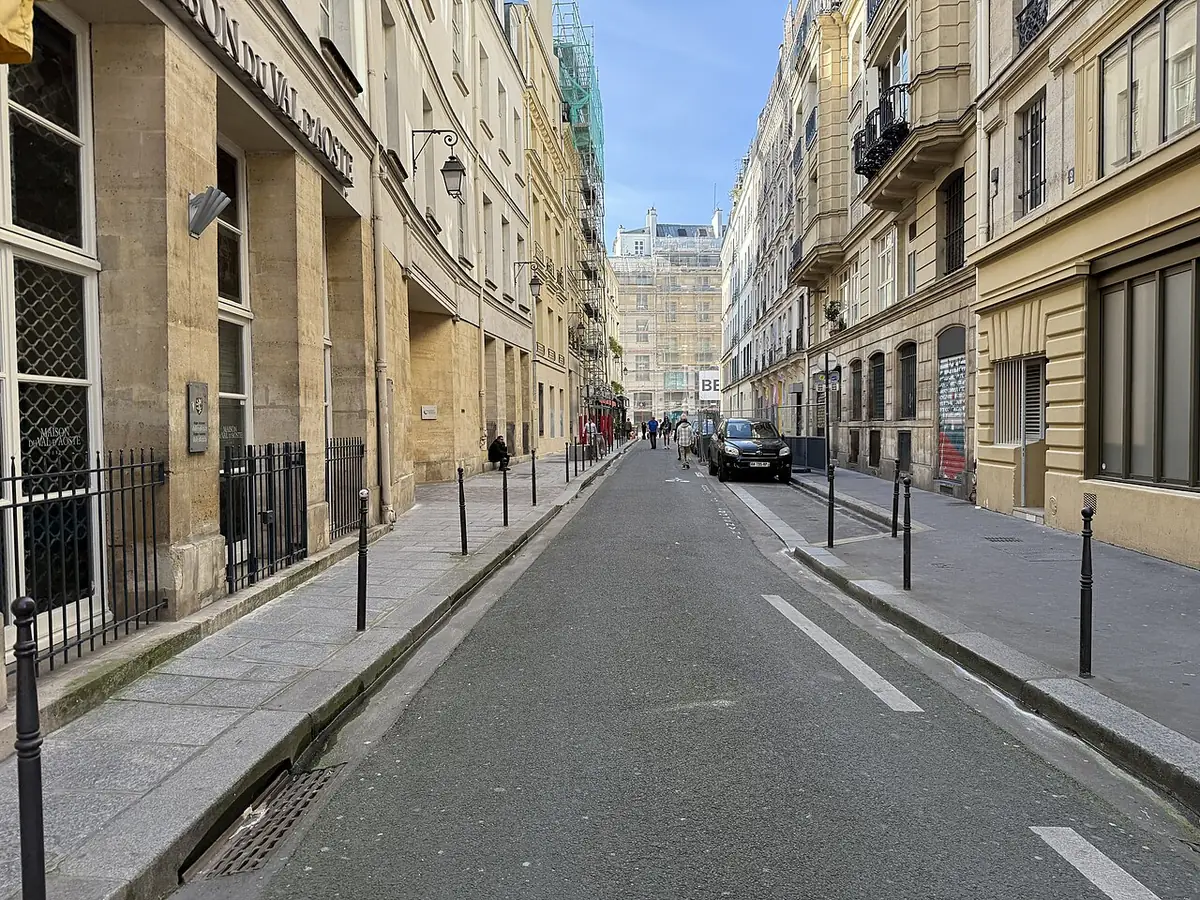
A quiet Haussmannian street in central Paris — Photo: Chabe01 · CC BY-SA 4.0 · Wikimedia Commons
Beyond the headline rent, the legal nature of the property and the extent of your responsibilities deserve very close attention.
The market for houses in Paris follows its own pricing logic, in which scarcity counts for more than a strict reading of the price per square metre. Advertised rents reflect the presence of outdoor space as much as the layout of the building itself. You have to fold in every associated charge to judge whether your plan holds together over the length of the lease.
parisTo rentHouseestimate
Median price / m²€25Half the apartments sell below this
Median price€2.39kthe average is 14% higher — a few very large properties pull it up
Most common2 bedrooms57 % of listings
Average size91 m²
By number of bedrooms
Bedrooms
Share of market
Avg price
Price / m²
Avg size
2most common
57 %
€2.85k
€26
109 m²
3
29 %
€3.88k
€25best value / m²
154 m²
4
14 %
€5.18k
€25best value / m²
210 m²
Each row is an average, compared against the area average of €26 / m². These are indicative estimates of a typical local market, not a measured sample of live listings. Check current listings before relying on them.
Between the feeling of ownership and the reality of being a tenant
To keep the whole process safe, signing follows an order of events you should never short-circuit.
Renting a house often gives the misleading sense of being at home with no neighbours to answer to, which sometimes tempts tenants to step outside the legal framework. The line between everyday upkeep, which falls to the occupant, and major repairs, which fall to the landlord, is a frequent source of friction. Knowing exactly where your autonomy ends protects the time and money you put into the place.
The illusion of complete freedom to alter the place
Having a self-contained space naturally invites you to move a partition, plant something or rework the outdoor layout to make the place your own. Yet the legal framework of an unfurnished or furnished lease forbids any structural change without the landlord's prior written agreement. Work on the garden or terrace also has to respect the co-ownership rules or the history of the plot.
What it changesPutting these requests in writing before the lease is signed avoids serious disputes at the check-out inventory (etat des lieux) and gives you the best chance of getting the security deposit back in full.
The reality of maintenance responsibilities
Unlike an apartment where the common parts are handled by someone else, a house makes the tenant responsible for watching over the fabric of the building day to day. Clearing the gutters, pruning trees, watching for water coming in through the roof and keeping the rainwater drains clear all rest on the occupant's vigilance. Neglecting these small jobs turns a minor problem into a heavy dispute with the landlord very quickly.
What it changesFolding these tasks into your routine preserves the condition of the property and spares you disproportionate reinstatement charges at the end of the lease.
The sequence to master before you sign your lease
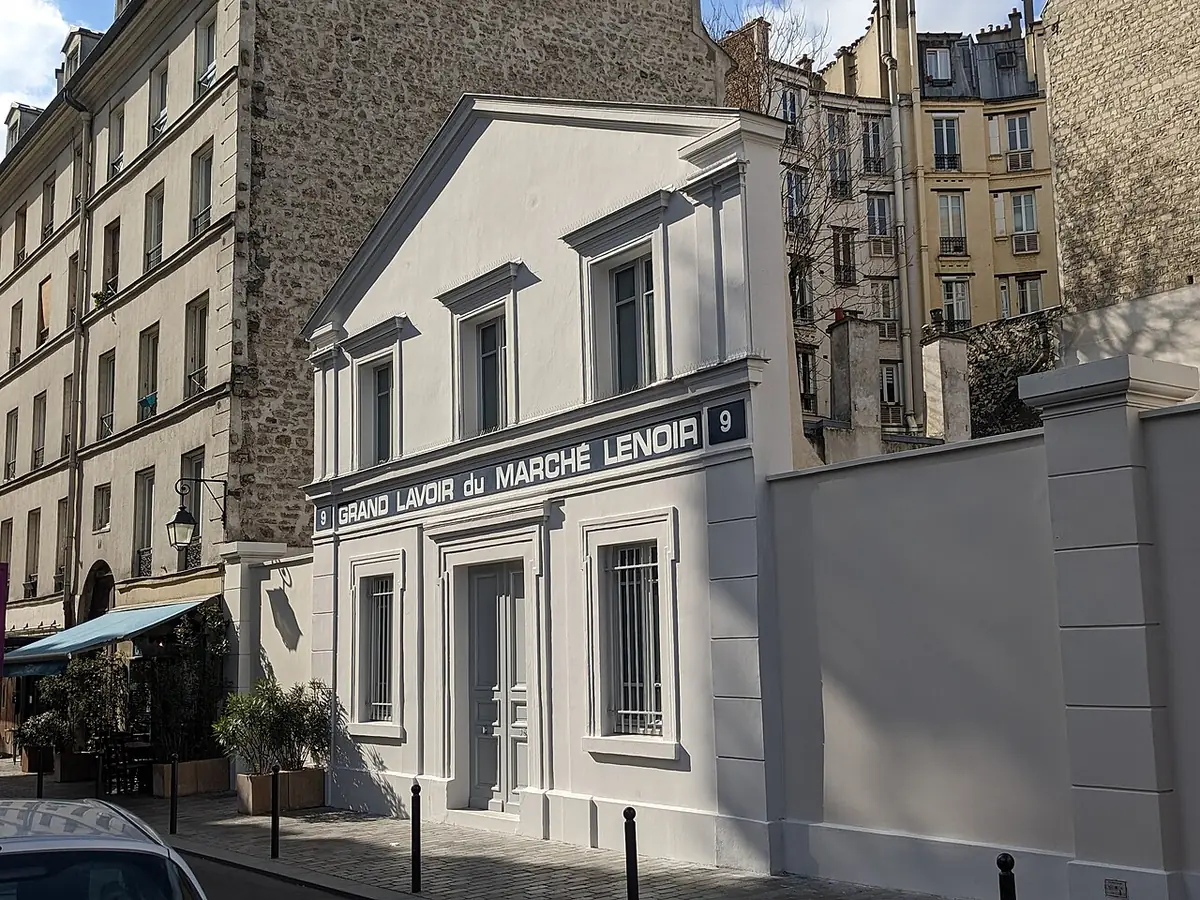
A repurposed neighborhood building near Marché Lenoir — Photo: Artvill · CC BY-SA 4.0 · Wikimedia Commons
Follow this methodical route and a search full of traps turns into a decision you are fully in control of.
The market for houses in Paris is extremely tight and the number of listings extremely limited, which pushes people into hasty decisions. Structuring your search into disciplined stages means nothing gets skipped in the technical and legal check on the property. From the first viewing to the handover of the keys, every phase counts towards how well you settle in.
Set out precisely what you need, and put together an application file (dossier) that leaves no doubt about your ability to pay.
A thorough technical viewing, with a close eye on damp, insulation and the state of the roof.
Careful checking of the technical diagnostics (the energy performance diagnostic (DPE), lead, asbestos, and the statement of risks and pollution).
Analysis of exactly which lease is on offer (the 1989 unfurnished lease, a mobility lease or a furnished lease) and of how the rent may be revised.
Drafting and signing an extremely detailed check-in inventory (etat des lieux), covering the state of the planting and the outbuildings.
Handover of the keys and immediate arrangement of comprehensive home insurance, including the specific cover needed for outbuildings.
Who does what at each stage of the rental process?
Renting a house in Paris successfully means coordinating several parties whose interests do not always align. Understanding where each one stands, from the letting agent to the diagnostics surveyor and the insurer, helps you negotiate calmly. Mapping the roles keeps the paperwork moving, which matters enormously in a tight market.
The letting agent or agency representativeInitial selection and collection of application filesThey sift through hundreds of enquiries and check that the supporting documents supplied by applicants meet the legal requirements exactly.
The landlordFinal approval and the call on termsThey decide which tenant to take and approve any requests to alter the property or to have small improvements paid for.
The diagnostics surveyorObjective assessment of performance and risksTheir technical reports supply the factual data you need to estimate what the house will really consume in energy.
The inventory clerkSecuring the move in and the move outTheir jointly agreed record protects the tenant from being charged for pre-existing damage while safeguarding the landlord's rights.
The home insurerCover for the particular risks of an older buildingThey confirm that the installations comply and cover what is specific about a home on several floors with outdoor space.
House or apartment in Paris: deciding by your relationship to space
Renting a house in Paris is a search for something exceptional, so rare and so sought after is this kind of property in the middle of the city. Unlike large regional cities or the ring of suburban housing around the capital, the Paris stock is dominated by the verticality of the Haussmann-era or modern apartment block. Finding a detached house or a former artisan's villa means turning to specific areas, often on the edges or very discreet, such as the villages of the 20e arrondissement, the Butte aux Cailles or certain private passages in the 14e. That structural scarcity redefines what the property is worth, and it usually lets for well above the standard per square metre rent of an apartment.
Living in a house in Paris changes daily life completely by removing the forced cohabitation of a dense building. No neighbours directly above or below, no fractious general meetings to vote on the facade or the roof, and full autonomy over how the building is looked after. That independence carries a considerable financial and logistical cost, though, which is worth measuring before you commit. Maintaining the roof and the facade, having no caretaker to take in parcels, and dealing directly with the household refuse fall entirely on the tenant, which turns every small technical incident into a personal project.
The Paris apartment, by contrast, offers a formidably efficient compromise of urban convenience, security and shared services. A caretaker, an organised co-ownership, shops on the ground floor and a metro entrance around the corner more than make up for the closeness of neighbours and the lack of private outdoor space. Service charges, much complained about, nonetheless cover collective heating in many older buildings, the upkeep of the common parts and the preservation of a remarkable architectural heritage. Choosing between these two ways of living in Paris is not a matter of taste but a clear-eyed trade-off between the pursuit of privacy and the ease of central city life.
What is the total monthly budget for a house or a large apartment in Paris?
Budgeting for a large home in Paris cannot stop at the headline rent shown on the listing portals. You have to take in the full structure of unavoidable spending that makes up the real cost of living here. Service charges, the household refuse collection tax, energy contracts for what are often large volumes and the particular upkeep of the space add up fast. Being rigorous about the arithmetic prevents the finances going wrong in the first months after you move in.
Monthly cost lines for a large home in Paris
Cost line
Estimated range (3-4 room apartment)
Estimated range (house or rare property)
Rent, furnished or unfurnished, excluding service charges
EUR 2,200 to EUR 3,800
EUR 3,500 to EUR 6,500 and above
Advance payments towards co-ownership service charges
EUR 150 to EUR 350
Variable (upkeep handled directly by the tenant)
Energy (electricity, gas, heating)
EUR 180 to EUR 320
EUR 300 to EUR 550 (insulation is often old)
Comprehensive home insurance
EUR 40 to EUR 80
EUR 70 to EUR 150
The figures given apply to properties inside Paris proper and vary a great deal with the quality of the insulation and the standing of the building.
Daily rhythm and logistics: an ordinary Tuesday in Paris
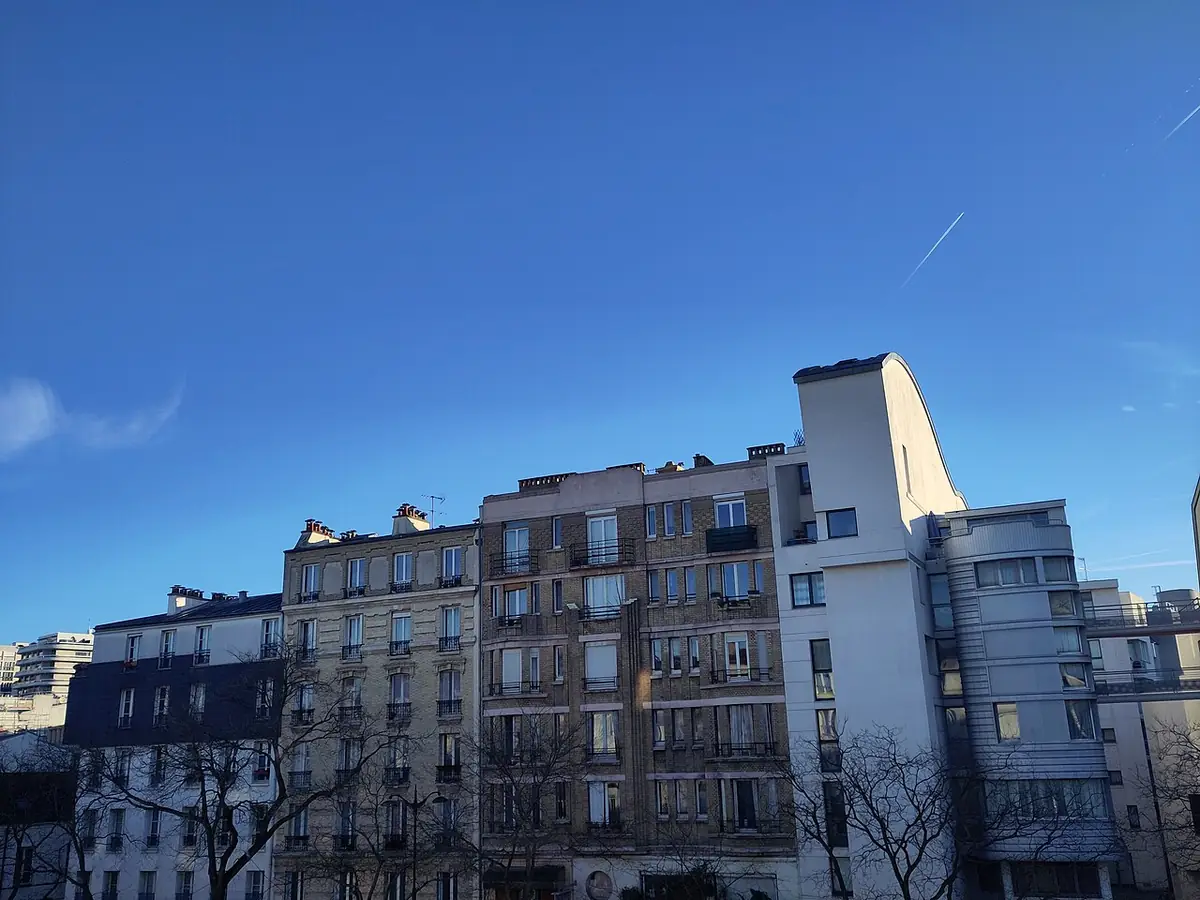
A classic Haussmannian apartment building in Paris — Photo: Exilexi · CC BY 4.0 · Wikimedia Commons
Picturing an ordinary day is the best way to measure what your location really costs you in travel and energy. Between the morning traffic flows, access to state or private schools and closeness to where the jobs are, every minute counts. This typical route across Paris shows the logistical trade-offs you have to make to protect your quality of life.
07:45Leaving home and the school drop-offA ten-minute walk to the local primary school, weaving between the flow of cyclists and early pedestrians.
08:30The commute by public transportBoarding a metro or RER train that is usually full, and using the journey to read or to work through professional emails.
12:30Lunch break and local shoppingA quick visit to the shops on the busy street next to the office or the house to pick up fresh food for lunch.
18:30Home again and the evening logisticsCollecting the children from after-school club or the childminder, crossing a district busy with commuters returning and terraces opening.
20:00Evening and residential calmEnjoying the relative quiet of the apartment or the house once the day's Paris commotion has died down behind the double glazing.
What the listing will not tell you about settling into Paris
Marketing descriptions naturally dwell on a property's attractions and smooth over the rough edges. Yet it is exactly those blind spots that decide how comfortable a Paris household will be over the long run. Anticipating what photographs cannot show avoids serious regrets once the lease is signed.
How the old floors really sound
The charm of cornices and herringbone parquet very often comes with thin sound insulation between floors, which makes every footstep of the neighbours audible.
The turnover of terraces and the rules on noise nuisance
A restaurant or bar opening downstairs can transform how quiet a summer evening is, because of the noise carrying up from the street.
The timetable of major building works
A facade that looks sound can hide an imminent vote at the general meeting to redo the inner courtyard or the rising water mains.
How stretched local public services actually are
Some highly sought-after districts have very long waiting lists at the municipal nurseries and the catchment state schools.
The classic traps you only find after six months in Paris
Looked likeA thoroughly central, lively district with everything the city does at night on the doorstep.
Turned outA permanent source of night-time noise, difficult parking for visitors and streets that are not always clean.
Would have caught itVisiting the area on a Thursday or Friday evening between 22:00 and midnight to gauge what the street is really like.
Looked likeGenerous floor space at a surprisingly attractive rent for the arrondissement.
Turned outA property with serious structural faults, a poor energy rating and a long, narrow layout that lets in little light.
Would have caught itReading the energy performance diagnostic closely and hunting out windowless or poorly ventilated rooms.
Looked likeA modern, well-equipped kitchen opening straight onto the living room.
Turned outA living space that fills with cooking smells and noise as soon as a meal is prepared, since extractor hoods are not always vented outside.
Would have caught itChecking where the hood actually vents and how the mechanical ventilation in the home is set up.
Looked likeAn ideal spot right on top of a major metro line for very fast daily journeys.
Turned outConstant vibration felt on the lower floors and unrelenting noise from the station's ventilation shafts.
Would have caught itListening for vibration during the viewing and finding out exactly how deep the underground line runs.
Who should not take on a large home in Paris?
The pull of Paris should not obscure how uncompromising its financial and spatial constraints are. Taking on a large rental here without accepting those structural trade-offs leads, sooner or later, to disappointment or an early end to the lease. Some renters are better served by looking at the outer suburbs or at other large cities.
The remote worker who wants complete silence and green space at the door
→A large detached house outside the city or in leafy countryside
Paris density, road traffic and the scarcity of private gardens produce a daily frustration that cannot be reconciled with that need for quiet.
The household on a tightly calibrated budget with no financial cushion
→A rental in the inner suburbs or in a well-connected mid-sized town
The smallest change in service charges, rising energy costs or one unforeseen household expense can unbalance stretched finances for a long time.
The driver who depends on a car for work
→An outer-urban area with plenty of parking and ring roads
Paris mobility policy sharply restricts the place of the car, makes residents' parking complicated and pushes up the cost of getting around.
So, are you ready to take the step and move to Paris?
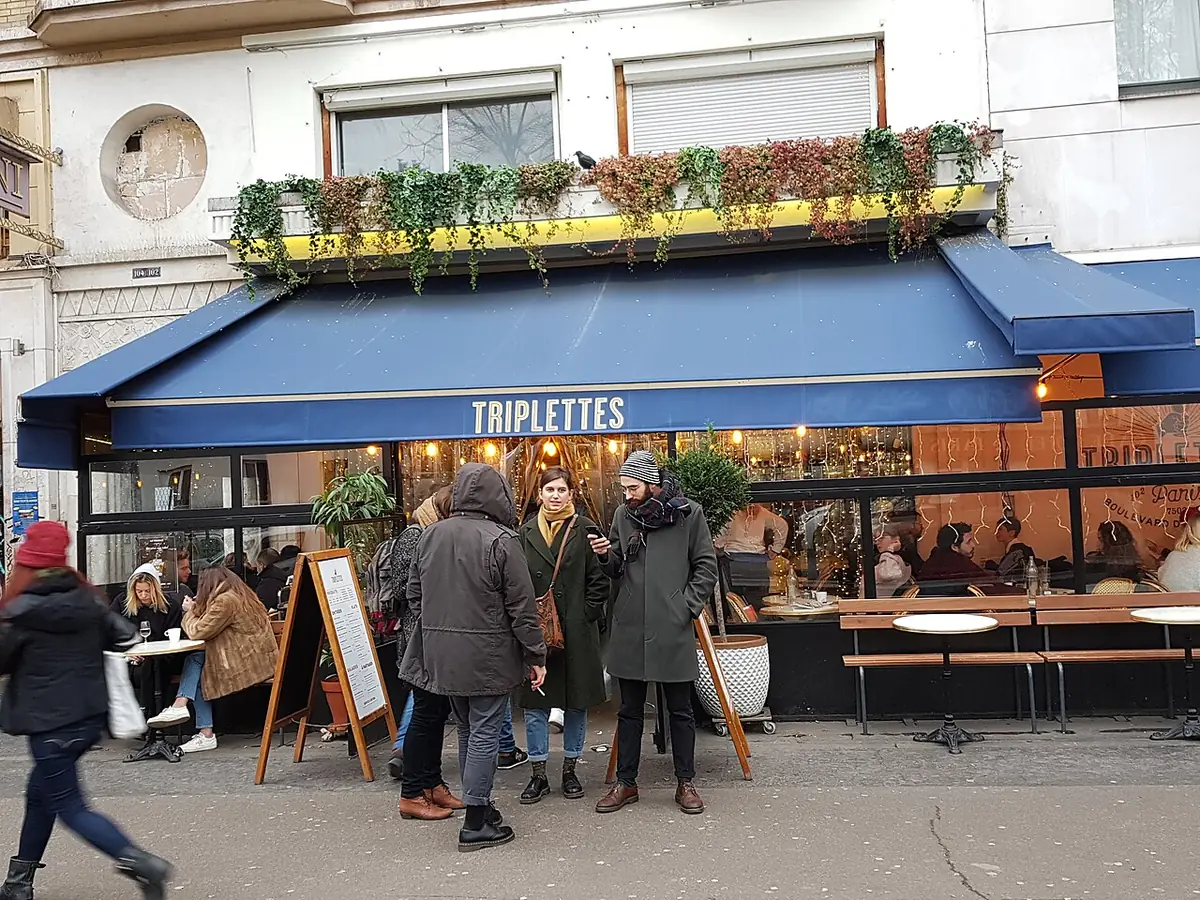
A brasserie terrace bringing life to the boulevard — Photo: Dhehz · CC BY-SA 4.0 · Wikimedia Commons
Deciding to settle for the long term in a large apartment or a rare house in Paris means facing the trade-offs squarely. If you have accepted that space is paid for dearly, that city life involves compromises on quiet, and that an older property demands your involvement, then your plan is ready. The constraints of the capital are no longer surprises but parameters already built into how you live.
Living in Paris means accepting a tacit bargain: in exchange for a unique cultural energy, unmatched access to work and an exceptional architectural heritage, you give up sprawling single-level space and the sanitised calm of a housing estate. That subtle balance suits only those who put central city living at the top of their personal and family priorities. Your choice should rest on that clarity, well away from superficial enthusiasm sparked by photographs online.
Before you put your signature at the foot of the lease, take the time to test your projected budget once more over several years. Make sure your savings could absorb a rise in energy costs or a jump in service charges, and read the notice period and revision terms so you know how you would leave if you had to. Peace of mind as a tenant in Paris is earned through that initial financial discipline, and it is what lets you enjoy everything the city has to offer day to day.
Related questions
Which Paris districts are best suited to finding a house?
Detached houses and private villas are concentrated mainly in the 14e, 19e and 20e arrondissements, along with a few favoured pockets of western Paris such as the village d'Auteuil in the 16e.
How are co-ownership service charges calculated for a large apartment?
Service charges are split according to the tantiemes (ownership shares) attached to your lot, which represent your apartment's share of the surface area and value of the building as a whole.
Is it hard to rent a home in Paris with children?
Demand for large family apartments of three or four rooms is extremely strong, so you need an application file (dossier) with nothing missing and the ability to move very fast when something comes up.
What effect does the rent cap have on large Paris homes?
The rent cap (encadrement des loyers) sets an increased reference rent per square metre that must not be exceeded, although a few exceptional properties with very unusual features may add a rent supplement.
Is it better to choose a Haussmann-era building or new-build in Paris?
Haussmann-era stock appeals through its character, its high ceilings and its central location, while new-build guarantees better energy performance and no immediate work to be done.
How do you judge the energy performance of an older Paris home?
The energy performance diagnostic (DPE) is compulsory and reports precisely on energy consumption and greenhouse gas emissions, which makes the worst-insulated homes easy to identify.
What are the landlord's obligations when it comes to renovation work?
The landlord is obliged to hand over a decent home that poses no risk to the tenant's safety or health, and to keep in working order the equipment listed in the lease.
How are bulky waste and refuse handled in Paris?
Each arrondissement has its own precise timetable for household refuse and bulky waste collection, run by the City of Paris services in liaison with building caretakers.
What financial guarantees do Paris landlords ask for?
Landlords generally look for net income equal to three times the rent including service charges, plus a solid guarantor or unpaid-rent insurance cover.
Can new arrivals get residents' parking?
People whose main home is in the city can apply to the City of Paris for the preferential residents' parking rate, letting them park in the zone they are attached to.