Investing in an apartment in Paris calls for a close understanding of local realities, of how shared-ownership buildings work and of what sets each neighbourhood apart. This analytical guide takes apart the mechanics of the Parisian market so you can carry your purchase through with a clear head, without giving in to received ideas or to manufactured urgency.
Get the app
What nobody tells you.
Real prices, hidden costs and the traps to check before you commit.
What you really get when you buy an apartment in Paris
Scroll
What you really get when you buy an apartment in Paris
Investing in an apartment in Paris calls for a close understanding of local realities, of how shared-ownership buildings work and of what sets each neighbourhood apart. This analytical guide takes apart the mechanics of the Parisian market so you can carry your purchase through with a clear head, without giving in to received ideas or to manufactured urgency.
Written by the ting.ad editorial team ·
Rue de Rivoli, Paris in Street View: drag to look around.
Beyond the building itself, your daily life will depend closely on how well your profile fits the rhythm of the city.
Buying an apartment in the capital is not just about acquiring square metres of living space. You are buying a location, immediate access to a dense ecosystem and an asset whose value has historically held up well through economic upheavals. That scarcity of land, however, comes at a direct cost to the floor area and immediate comfort you can expect for your budget. You have to accept the structural trade-off between being at the heart of the city and the living space available day to day. Every square centimetre comes at a premium, which radically changes your relationship with your home and with privacy.
Unrivalled cultural centralityvsSmaller living spaces
You gain immediate access, on foot or by metro, to theatres, museums and the most dynamic employment hubs in the country. In return, average floor areas sit well below the standard of the outer suburbs, forcing you to completely rethink how you use space and storage.
Strong resale liquidityvsHigh service charges
Structural demand far outstrips available supply, which ensures a quick resale if needed, provided the property is well located. In return, maintaining Haussmann-era or older buildings generates regular calls for funds and significant running charges for the household budget.
A fully walkable lifestylevsConstant noise and bustle
No longer depending on a car makes everyday work and personal journeys considerably simpler. In return, traffic noise, nightlife and living at close quarters with your neighbours are an integral part of everyday life in a Parisian home.
Historic architectural charactervsTechnical constraints on renovation
Old parquet floors, cornicing and fireplaces give your surroundings an undeniable and timeless charm. In return, the lack of a lift in some buildings and the difficulty of insulating these properties complete the equation in a restrictive way.
Does this location really suit your lifestyle, now and in the future?
Moving to dense urban living involves major cultural adjustments compared with more spread-out ways of life.
The classic mistake is to project an idealised lifestyle onto a demanding and highly regulated urban reality. Your balance depends on how well you tolerate the local pace, on your work requirements and on your ability to outsource the things the city no longer has room for in your home. Living arrangements differ completely depending on whether you favour the calm of an inner courtyard or the buzz of a busy shopping street. Analysing your real habits helps you avoid disillusionment in the first months after moving in.
A family looking for stability
You have to weigh being close to well-regarded schools against the cramped size of the homes available in those areas. Neighbourhood life revolves around the municipal squares and small food shops, making up for the lack of a private garden with constant access to public parks. Organising the logistics of after-school activities takes constant discipline to avoid losing time on public transport.
A nomadic or self-employed professional
The challenge lies in fitting an ergonomic workspace without permanently eating into your living or resting space. Cafés with good wifi and co-working spaces ease the isolation, but property prices make every square metre devoted to work particularly expensive. Fibre broadband is almost universal, but the quality of sound insulation between apartments becomes the deciding factor in your daily productivity.
A newcomer from outside the big city
The cultural and physical shock is inevitable when you move from a large private home to a compact apartment in a dense shared building. You learn to give up surplus storage, generous circulation space and complete independence from your immediate neighbours. In return, the cultural and social life on your doorstep transforms your weeks, redefining your priorities for leisure and going out.
Living here when you arrive from abroad: what changes radically day to day
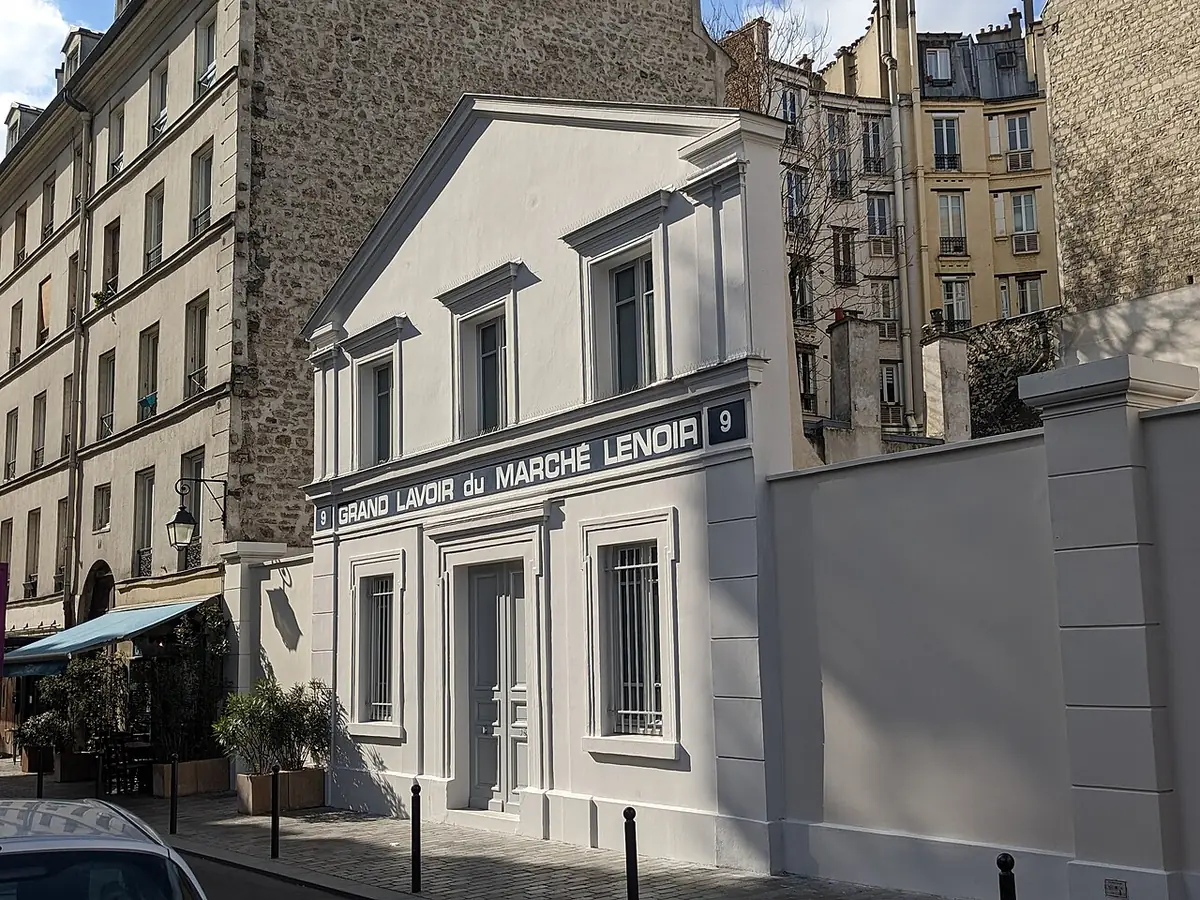
A repurposed neighborhood building near Marché Lenoir — Photo: Artvill · CC BY-SA 4.0 · Wikimedia Commons
Once these practical aspects are taken on board, choosing the arrondissement or micro-neighbourhood becomes the next defining decision.
Leaving the place you called home to settle for the long term in the capital is not simply a change of postcode. Your sense of space, how you deal with distances, your relationship with neighbours and your access to public and private services are all completely reconfigured. What seemed simple and smooth in a mid-sized town or a suburb back home becomes a small logistical operation that has to be planned ahead. Understanding these invisible points of friction lets you approach the move with a clear head.
From abroad
Using your own car as a matter of course for every short local trip
Paris
A shift towards walking, cycling and the dense metro network
You leave behind the hassle of parking and the fuel budget, but you have to accept crowded transport at rush hour and get used to carrying your shopping again.
From abroad
A large single-storey home with a garage and an enclosed private garden
Paris
A vertical apartment in a shared building, with a lift that is sometimes cramped or missing altogether
Dealing with bulky items, recycling and storing bikes or pushchairs means working within the building's rules and letting go of some large-scale storage.
From abroad
Distant relations with neighbours and relative anonymity in a detached house
Paris
Living at close quarters with dozens of households in the same building
Strictly respecting the rules on noise and the permitted hours for building work becomes an absolute condition for keeping relations with the neighbours peaceful.
From abroad
Large out-of-town shopping centres with free parking
Paris
A tight network of independent shops and neighbourhood markets
Your food shopping becomes more frequent and in smaller quantities, which favours fresh produce but changes your long-term storage habits.
Which area should you target for your budget and the life you want?
This map of atmospheres inevitably translates into a price grid that deserves to be looked at without illusions.
Paris is divided into a mosaic of micro-areas whose atmospheres, architectural styles and price levels differ enormously. Trying to settle without precisely targeting the arrondissements that suit your lifestyle exposes you to costly wrong turns, both financially and socially. You need to weigh the trade-off between the cultural buzz of the very centre, the residential calm of the outer arrondissements and the momentum of areas undergoing change.
The historic central arrondissements (1st to 4th)
A constant flow of pedestrians, very dense centuries-old architecture and the landmark monuments right on your doorstep.
Suits
People who love an intense cultural life, walking and being at the very centre, and who accept smaller living spaces.
Trade-off
Prices per square metre among the highest on the market and very little private or tree-lined green space.
The affluent and institutional arrondissements (6th, 7th, 8th, 16th)
The hushed calm of grand Haussmann avenues, prestigious institutions and wide tree-lined boulevards.
Suits
Buyers looking for a secure asset, generous ceiling heights and large family apartments.
Trade-off
An atmosphere sometimes seen as conservative, fewer late-night dining options and an elite price of entry.
The lively working-class areas in transition (10th, 11th, 18th, 19th, 20th)
A strong social mix, a thriving arts scene, busy neighbourhood markets and canals made for strolling.
Suits
First-time buyers and young professionals looking for better value per square metre and a creative atmosphere.
Trade-off
Cleanliness and quiet vary from one side street to the next, and you need to pay closer attention to safety at night.
The mid-range residential arrondissements (12th, 13th, 14th, 15th)
A pragmatic balance between neighbourhood shopping streets, modern family amenities and extensive green space.
Suits
Families and pragmatic investors looking for functionality, calm and a practical everyday setting.
Trade-off
Architecture that is sometimes more uniform or dated from the 1970s, with less authentic Haussmann charm.
What an apartment in Paris really costs, area by area
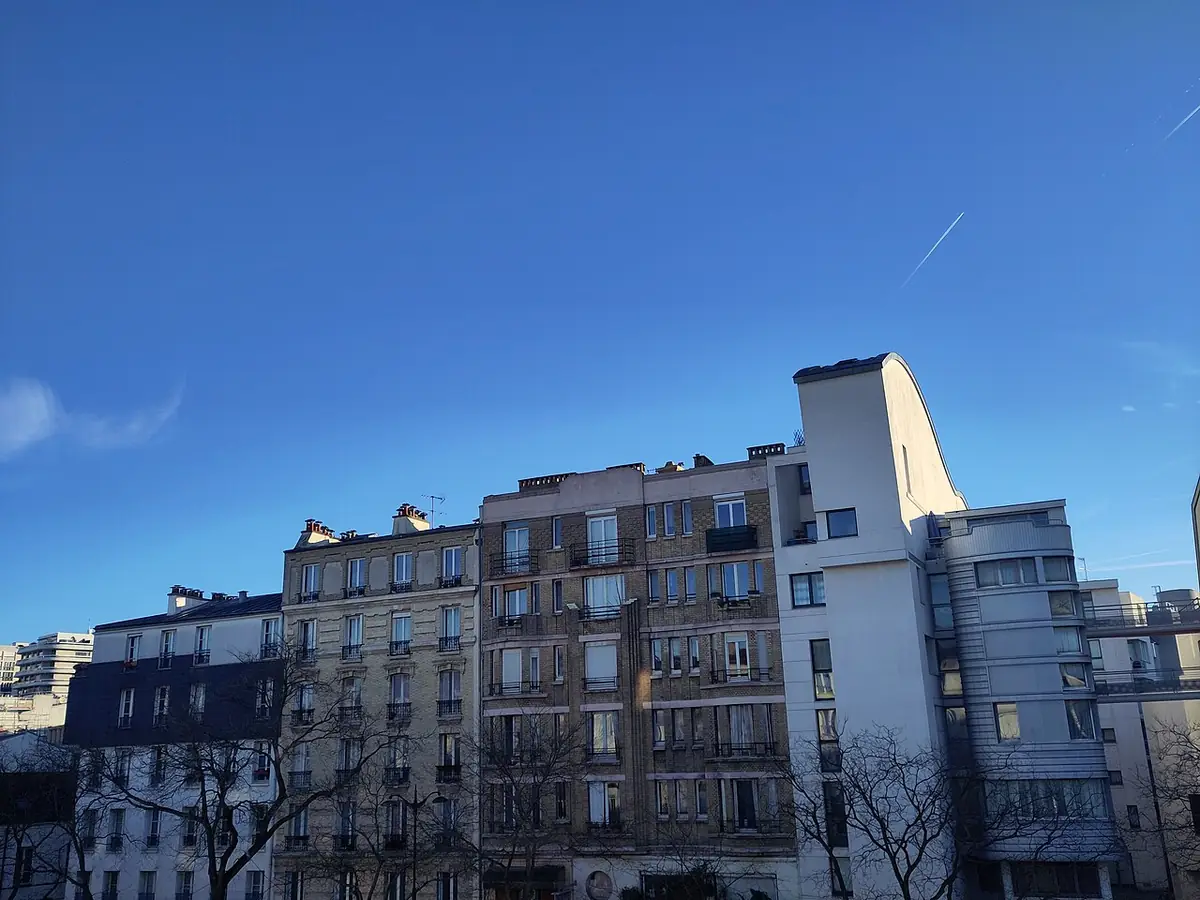
A classic Haussmannian apartment building in Paris — Photo: Exilexi · CC BY 4.0 · Wikimedia Commons
Beyond the headline purchase price, the legal nature and exact extent of what you own deserve close scrutiny.
The Paris property market follows strict valuation rules in which every quality criterion is immediately priced in or knocked off. The overall averages quoted in the press hide huge gaps between a property looking onto a blank courtyard wall and a dual-aspect apartment with an open view. Analysing the price ranges actually recorded lets you calibrate your purchase so that you are not systematically turned down by banks when putting your financing plan together.
ParisFor saleApartmentestimate
Median price / m²€9,975Half the apartments sell below this
Median price€545kthe average is 14% higher — a few very large properties pull it up
Most common1 bedroom42 % of listings
Average size52 m²
By number of bedrooms
Bedrooms
Share of market
Avg price
Price / m²
Avg size
1most common
42 %
€445k
€11,130 +6 %
40 m²
2
33 %
€651k
€10,500
62 m²
3
17 %
€887k
€10,080
88 m²
4
8 %
€1.18m
€9,870best value / m²
120 m²
Each row is an average, compared against the area average of €10,500 / m². These are indicative estimates of a typical local market, not a measured sample of live listings. Check current listings before relying on them.
What you can really own: between exclusive ownership and collective constraints
Because the legal ties are so close, mastering the administrative and financial procedures before signing any document becomes crucial.
Buying an apartment in a dense Parisian shared building means giving up full and complete control over your building. You become a stakeholder in a collective whose financial health, management discipline and planned works bear directly on your own asset. This legal reality redefines the freedom of action you would have in a standalone house, imposing a constant compromise between personal interest and the decisions of the general meeting.
Your share of the common parts and shared ownership
You own your private space as well as a mathematical share of the building's land, roof, stairwell and foundations. This means that every major decision about the building's structure, the facade restoration or the replacement of the shared boiler is voted on by a majority of all the owners.
What it changesYou need to gauge the financial soundness of the owners' association in advance by going through the minutes of the last three general meetings to spot unpaid charges and major works that have been voted or are coming up.
The building regulations and restrictions on use
The building's founding document sets out precisely what you are allowed to do in your own home: bans on practising certain professions, restrictions on hanging laundry where it can be seen, rules on pets and on short-term letting through tourist platforms.
What it changesYou cannot change the use of your property or carry out heavy works that alter the exterior or affect a load-bearing wall without formal approval from the owners, whether unanimous or by majority.
The rule to understand before you pay a deposit on a property
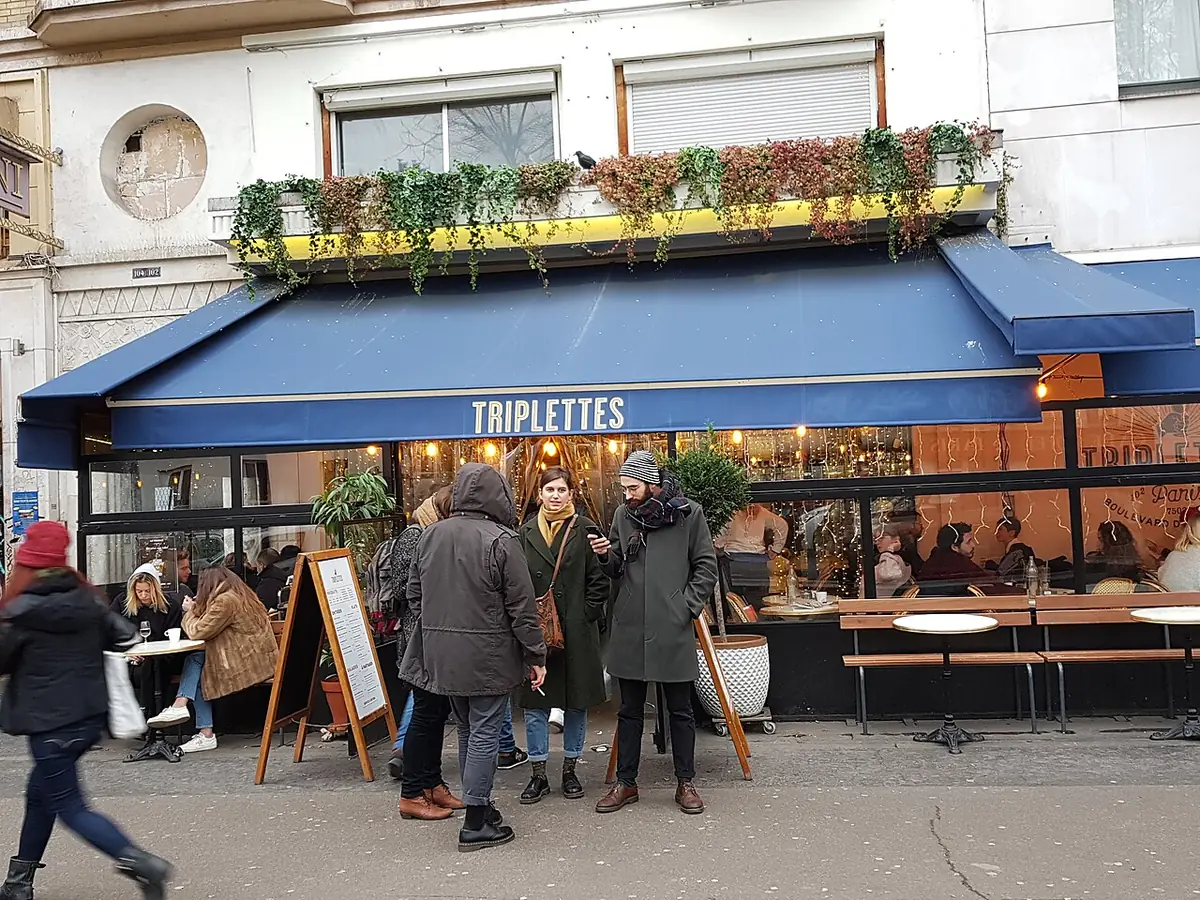
A brasserie terrace bringing life to the boulevard — Photo: Dhehz · CC BY-SA 4.0 · Wikimedia Commons
Once this path has been mapped out and secured by legal professionals, the operational timeline of the transaction falls into place.
The fatal mistake many inexperienced buyers make is to focus solely on falling for the look of an apartment without auditing the financial and technical health of the building. Signing the preliminary sale agreement triggers strict legal deadlines and commits significant sums as a security deposit. Understanding the sequence of mandatory checks protects your investment from nasty surprises after the purchase.
Falling for the apartment at a viewing and making a written offer to the seller.
The seller accepts the offer, opening the period in which the notary drafts the preliminary sale agreement.
The full set of building documents is handed over (maintenance log, general meeting minutes, calls for funds, overall technical assessment).
The statutory ten-calendar-day cooling-off period granted to the buyer after notification of the complete sale file.
Financing applications are submitted to banks to obtain loan offers within the agreed deadline.
Signing the final deed of sale at the notary's office and the actual transfer of ownership.
How a property transaction in Paris unfolds, step by step
A successful property transaction in the capital follows a strict timetable involving several parties with clearly defined roles. Between the moment you make your offer and the first time you open the door of your new home as its owner, three to four months usually go by. Following this sequence lets you steer your project without panicking over administrative delays.
The buyerMaking the offerYou put your price proposal in writing to the seller or their agent, with a short validity period so you are not prevented from bidding on another property.
The notaryDrafting the preliminary contractThe notary drafts the preliminary sale agreement, including the conditions precedent on obtaining a loan and the mandatory technical surveys.
The bankProcessing the loan applicationYou submit a complete file including proof of income, bank statements and details of the property to secure a formal mortgage offer.
The building's managing agentIssuing the transfer certificateThe managing agent provides the dated statements and confirms the seller owes nothing to the owners' association, so the accounts can be settled at completion.
The notary and the partiesSigning the final deedOn the day, you sign the final deed, the bank transfers the funds to the notary's account and the keys are officially handed over to you.
Why choosing between a house and an apartment in Paris redefines your daily life
Buying property in Paris immediately forces a structural choice between the vertical living of an apartment in a shared building and the extreme rarity of a standalone house. In the capital, a house with a garden or private courtyard is a historical exception, often concentrated in the former villages annexed to the city, such as the houses of Charonne, La Campagne à Paris in the 20th arrondissement, or a few discreet lanes in the 14th and 13th. That built-in scarcity comes at a high price, not only in the initial cost per square metre but also in structural maintenance, where the owner alone pays for every repair to the roof, facade or zinc work, without the protective cushion of a shared works fund.
The Parisian apartment, by contrast, is the beating heart of the urban property market, whether it is a dual-aspect Haussmann flat with herringbone parquet and cornicing or a well-optimised 1970s studio. Living in an apartment in Paris means accepting a collective framework: voting on works at the general meeting, dealing with the unwritten rules between neighbours and paying service charges that can be heavy depending on whether there is a caretaker, a lift or shared heating. Yet this vertical way of living offers undeniable logistical security, immediate centrality close to metro stations and a pooling of major maintenance that protects owners from big budget shocks.
The classic mistake of the first-time buyer in Paris is to bring a suburban or small-town lifestyle into the very heart of the city. Insisting on a large floor area or private outdoor space without measuring the financial and time constraints often leads to geographic isolation or a stretched budget. The choice between a house and an apartment is not a mere aesthetic preference, but a careful match between your tolerance for urban noise, your ability to delegate maintenance and your willingness to compromise on living space to protect your daily commute.
Measuring the impact of this choice means looking at how easily the property will sell in the future. A well-placed apartment in a lively area will sell quickly at any point in the economic cycle, whereas a Parisian house, though highly sought after by a wealthy niche, can take longer to sell when credit tightens. Ultimately, your decision should be rooted in a ten-year view of your career and family path, accepting that every Parisian square metre demands a clear-eyed trade-off between freedom of use and ease of resale.
What overall budget do you need to secure to live comfortably in Paris?
Buying an apartment in Paris never stops at the price shown on the estate agent's listing. Between hefty transfer duties, negotiation fees, energy upgrade works and recurring service charges, the real financial envelope calls for meticulous planning. Getting your overall budget wrong would expose you to an immediate blockage when the loans are released, or to cash-flow dead ends from the very first year of occupation, threatening the balance of your whole property project in the capital.
Upfront and recurring cost items when buying an apartment in Paris
Cost item
Estimated range or rate
Direct impact on your financing plan
Transfer duties (notary fees)
7.5% to 8% of the net seller price (older properties)
Required upfront from your own funds, not financed by the bank.
Estate agency fees
3% to 6% of the net seller price
Often included in the advertised agency-inclusive price, but worth breaking down to calculate taxes.
Regular service charges
€35 to €60 per square metre per year
A fixed monthly cost to factor into your overall debt ratio.
Energy renovation works
€500 to €1,500 per square metre depending on the energy rating
Essential to avoid the discount applied to poorly insulated properties and to cut your bills.
Paris property tax
€15 to €25 per square metre per year
A local tax rising sharply, to be set aside each year alongside the housing tax.
These ranges are based on the averages recorded on the Paris market. Any property facing major building works voted at the general meeting will push these ratios up significantly.
What does an ordinary Tuesday actually look like when you live in Paris?
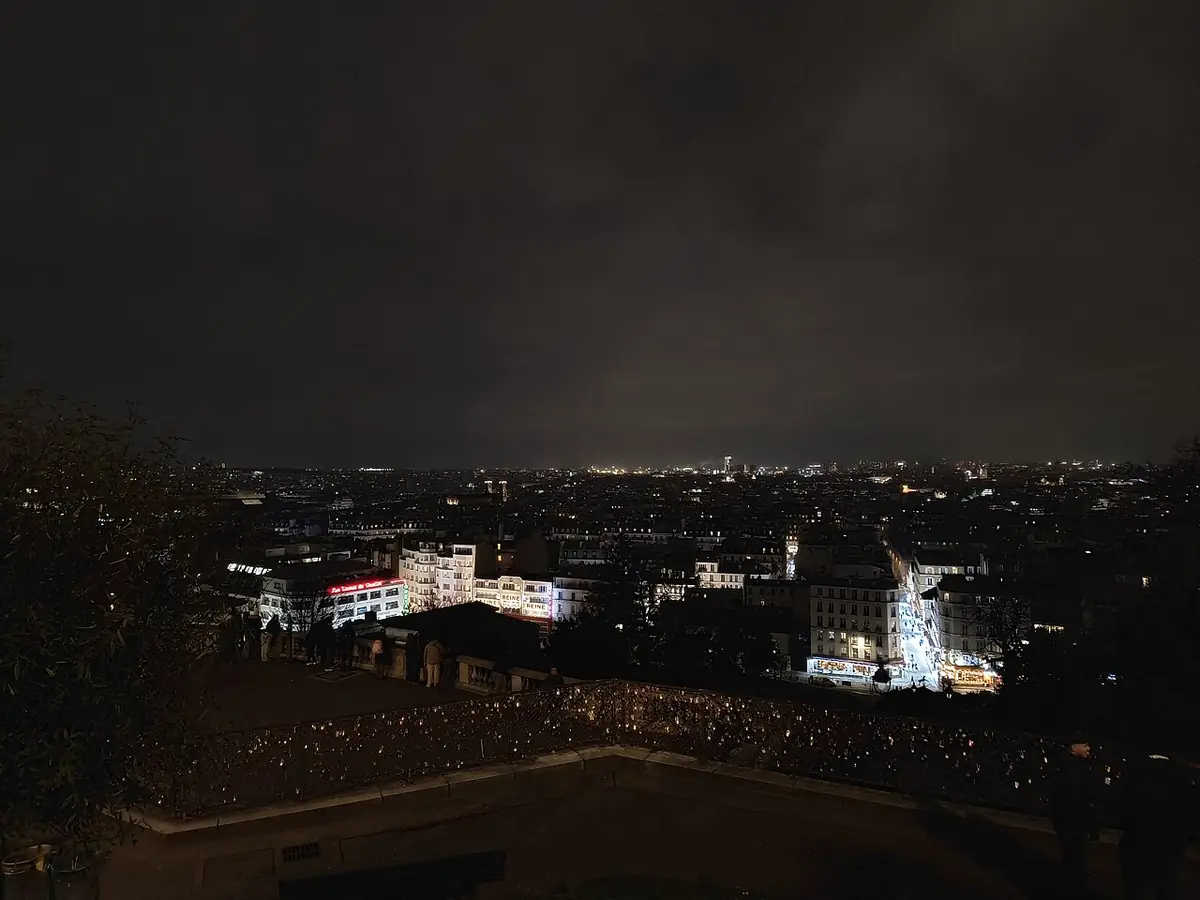
A nighttime view over the rooftops of Paris — Photo: Gargarapalvin · CC BY-SA 4.0 · Wikimedia Commons
Living in Paris radically changes what proximity means and how you manage your time each day. To judge whether a purchase makes sense, you need to picture the physical reality of a typical day, from leaving home in the morning to coming back late. Public transport, the density of local services, access to schools and the network of shops shape your quality of life far more than the interior finishes of your apartment. Here is exactly how an ordinary Tuesday plays out in the capital.
08:00Leaving the building and the metro stationA walk of five minutes at most to the nearest metro station, with a first-hand look at how packed the line is at rush hour and how clean the surrounding streets are.
08:30School or municipal nursery drop-offA morning visit to the catchment school to gauge the atmosphere, the safety of the walking routes and how smoothly parents move through the area.
12:30Food shops and the neighbourhood marketA look at the stalls in the covered market or the independent shops on the street (bakery, wine merchant, butcher) to gauge how lively local trade is and the level of local prices.
18:30Winding down and local servicesCollecting parcels from a pick-up point, a quick stop at a late-opening pharmacy and a look at how lively the street gets in the evening as people come home from work.
20:00At home and sound insulation at nightTime spent in the apartment with the windows open to test the sound insulation against road traffic, café terraces and impact noise from the stairwell.
What the property listing will never tell you about your future building in Paris
Parisian property listings compete in inventive wording to dress up the reality of the homes on sale. Behind the flattering adjectives lie physical and administrative realities that only a thorough viewing and a rigorous read of the building documents can bring to light. Ignoring these things, which never show up in photos, exposes you to major financial setbacks in the first months after signing the final deed.
The level of unpaid charges within the owners' association
An owners' association with chronic unpaid charges weakens the building's finances and holds up urgent works. Reading the minutes of the last three general meetings in detail is the only way to detect this financial strain, which is invisible in photos.
The real condition of the water and electricity risers
In older Parisian buildings, worn-out vertical networks regularly cause cascading leaks or power cuts. Replacing these risers means enormous projects voted unanimously or by qualified majority, often at the new buyers' expense.
Imminent works to add storeys or on adjoining buildings
A vacant plot or a low neighbouring building is a prime target for developers looking to build upwards. That means years of noise, lost direct daylight and heavy dust in your apartment.
The real orientation and amount of natural light
Many Parisian apartments on inner courtyards or narrow streets are almost permanently dark for much of the year. Viewing a property on a grey day is a ruthless test of how bright it really is, without relying on the staging tricks of photographers.
Who the owners really are and how often tenants change
A building entirely in the hands of investors renting out furnished tourist lets or house shares generates constant noise and disregard for the shared rules. A majority of owner-occupiers ensures the building is far better maintained.
The classic traps you discover six months after moving to Paris
Looked likeA charming top-floor pied-à-terre with exposed beams and undeniable historic character.
Turned outAn absolute furnace in summer, combined with no lift at all, making the smallest shopping trip exhausting every day.
Would have caught itAlways check the energy rating and the condition of the roof above, and work out the physical toll of climbing six floors with heavy loads.
Looked likeA dual-aspect ground-floor flat on a quiet street with a small, idyllic private garden.
Turned outConstant damp rising from the cellars, recurring blocked drains and chronic insecurity from break-ins.
Would have caught itInsist on an independent damp survey, inspect the cellars directly below and check how thick and break-in resistant the glazing is.
Looked likeA large studio ideally located next to a major metro station, with unbeatable nightlife.
Turned outA constant, hellish racket from café terraces licensed to stay open late and early-morning delivery lorries blocking the street.
Would have caught itVisit the property on a Thursday or Friday evening after 22:00 to measure the real level of night-time noise.
Looked likeAn apartment on sale at an unbeatable price because it only needed a light cosmetic refresh.
Turned outA rotten screed, a sagging timber structure and a facade restoration voted at the very first general meeting for an exorbitant sum.
Would have caught itBring in a project manager or an architect before the conditions precedent are lifted, to price up the structure and not just the paintwork.
Which buyer profiles should definitely steer clear of Paris?
Buying property in Paris is neither an end in itself nor a universal formula guaranteed to make you richer. For some buyer profiles, putting capital into Parisian bricks and mortar is a major financial and psychological misstep. Identifying these situations helps avoid painful disappointment and points savers towards investment strategies far better suited to how they want to live and to their appetite for risk.
The investor looking for an immediate net rental yield
→Buying a small studio or two-room apartment in the central arrondissements to let unfurnished or as a standard furnished rental.
Purchase prices per square metre in Paris inevitably crush gross rental yields, which rarely exceed 3% to 4%, before charges and heavy local taxes. Other French cities or savings products offer far higher cash flow without the burden of managing lets in a tight market.
The full-time remote worker looking for plenty of green space
→Accepting a drastic compromise on living space within the city limits in order to stay in the capital at all costs.
Paying the top price for a Parisian square metre while enjoying neither the local cultural life nor proximity to a workplace makes no economic sense at all. Relocating to the outer suburbs or a smaller city offers an incomparable ratio of space to price and a far better everyday quality of life.
The buyer with an investment horizon of less than five years
→Buying an apartment financed entirely by a bank loan with the intention of selling again very quickly.
The combined cost of notary fees (around 8%), agency fees on both purchase and resale, and interim interest wipes out any potential short-term gain. Without holding the property for at least seven to ten years, the deal almost always ends in a net capital loss.
So, are you ready to take the plunge and buy property in Paris?
Reaching the end of this reflection on buying property in Paris calls for a clear-eyed look at your deeper motivations. Buying in the capital is not a simple, neutral financial transaction but a life commitment that shapes your daily routine, your budget headroom and where you are rooted for many years. If you have measured the reality of service charges, accepted the constraints of vertical living and taken on board the need to hold for the long term, then your approach rests on sound and lasting foundations.
Today's Paris market rewards patience, analytical rigour and uncompromising selectivity. Mediocre, badly oriented or poorly insulated properties are subject to a healthy discount, while bright apartments with a well-designed layout in financially sound buildings keep an undeniable asset value. Your success depends on not giving in to the rush created by false commercial urgency, and on checking every line of the administrative documents before signing the final commitment.
Take the time to revisit the property at different times of day, to talk to residents of the building and to have professionals price any energy upgrade works. Buying property in Paris is a marathon of standards and method, never an impulsive sprint. When every light is green and your financing plan absorbs the unexpected without flinching, you hold in your hands the most defining decision of your property journey.
Related questions
What is the average price per square metre to buy an apartment in Paris right now?
The average price per square metre in Paris generally ranges from €8,500 to €10,500 depending on the arrondissement, with very sharp differences between the historic central districts and the north and east of the capital. That range moves constantly with bank interest rates and with how tight the supply of available homes is.
Which additional costs must you budget for when buying property in Paris?
You must allow for the transfer duties known as notary fees, which come to roughly 7.5% to 8% of the net seller price on older properties, agency fees if they are not already included, as well as a budget for any energy renovation work and the first service charge calls from the building's owners' association.
How long should you keep an apartment in Paris for the purchase to pay off?
Given how high notary fees and transaction fees are, it is strongly advisable to keep a Parisian property for at least seven to ten years. Sell before then and you will often do so before the initial costs of the purchase have been recovered.
How do you check the financial health of a building's owners' association before buying in Paris?
Carefully reviewing the minutes of the last three general meetings of owners, the building's maintenance log and the summary financial statements lets you spot straight away any unpaid charges, ongoing legal proceedings or major works that have been voted but not yet carried out.
Is it still worth buying a poorly insulated property in Paris to renovate it?
Buying an energy-inefficient property rated F or G gives you significant leverage to negotiate the asking price, but it demands a very precise budget for the cost of full insulation work. Without a firm grip on contractors' quotes, the project can quickly turn into a financial black hole.
Which Paris arrondissements are most sought after for buying a family apartment?
The arrondissements traditionally most popular with families include the 6th, 7th, 15th and 16th, as well as some lively parts of the 11th, 12th and 20th. Each area strikes its own balance between schools, green space and a busy local shopping scene.
What real impact do shared-ownership rules have on managing a property in Paris?
Shared-ownership rules require any change affecting the building's exterior or its common areas to be put to a vote at the general meeting. This protects the collective value of the building, but it takes a good deal of diplomacy and patience to see personal renovation projects through.
How can you be sure a Parisian apartment is quiet and well soundproofed?
It is essential to visit the property with the windows both open and closed, ideally in the late afternoon or at the end of the week, to test the sound insulation against road traffic, neighbouring restaurants and impact noise from the apartments above.
What financial help is available to renovate an older apartment in Paris?
Several national and local schemes exist side by side, notably MaPrimeRénov' and zero-interest eco-loans, access to which depends on the energy performance reached after the work and on a regulatory energy audit being carried out beforehand.
Should you favour a building with or without a lift when buying in Paris?
An apartment on an upper floor with no lift offers a more affordable entry price per square metre and lower service charges, but it is markedly harder to sell on, and the daily physical effort quickly becomes a major burden as the years go by.