Finding an apartment to rent in Paris takes method, speed and a real grasp of how the local market works. This guide walks you through reading the Paris rental market, choosing the right neighbourhood and securing a lease without unpleasant surprises.
Get the app
What nobody tells you.
Real prices, hidden costs and the traps to check before you commit.
What renting an apartment in Paris really means for your daily life
Scroll
What renting an apartment in Paris really means for your daily life
Finding an apartment to rent in Paris takes method, speed and a real grasp of how the local market works. This guide walks you through reading the Paris rental market, choosing the right neighbourhood and securing a lease without unpleasant surprises.
Written by the ting.ad editorial team ·
Rue de Rivoli, Paris in Street View: drag to look around.
Beyond these urban trade-offs, your own circumstances will decide whether you can strike the right balance in the capital.
Renting an apartment in Paris is not simply a matter of finding a roof behind a handsome Haussmann façade. It means accepting a permanent compromise between cultural centrality and liveable space. Behind the postcard sits a demanding logistical reality where every square metre is fought over. Understand how the Paris rental market is structured before you commit, and you avoid the disappointments that catch most newcomers.
A prestigious address in the heart of the capitalvsFloor space that is often tight, and communal areas that can be dated
The central arrondissements put cultural life on your doorstep, but they ask you to lower your expectations on volume and modern fittings. Older buildings frequently have no lift.
Constant, stimulating urban energyvsHigh noise levels and dense traffic day to day
Living in Paris means living alongside the sound of the city, the endless movement of transport and a very high population density. Absolute quiet is a rare and extremely expensive luxury.
An exceptional public transport networkvsPacked metro carriages at peak hours and long interchanges
Coverage is good enough that you can do without a car entirely, but comfort at rush hour is poor. Crowding is simply part of the daily commute.
Which type of Paris home matches the way you actually live?
Understanding local specifics matters even more when you are arriving from a different housing system altogether.
The Paris rental market is heavily segmented by your professional and personal situation. Someone early in their career will not weigh the same priorities as a family looking for stability, or an executive on a mobility posting. Every tenant profile has to trade off proximity to work, floor space and how quiet the neighbourhood is.
A studio or one-bedroom in a lively quarter
You want to be central and close to nightlife, cafés and cultural venues. The apartment is essentially a functional base, while your real living room is the city itself. The eastern arrondissements offer the best balance between a lively local scene and rents that remain reachable for smaller units.
A two- or three-bedroom family apartment
Your search centres on good schools, nearby parks and squares, and residential calm. You want a quarter with genuine village life, where food shops make the daily routine easier. The western arrondissements and certain family pockets in the north and east meet these criteria for comfort and safety.
A high-spec furnished flat or pied-à-terre
You need somewhere immediately operational, well equipped and with reliable connectivity, without the burden of a full move. Being near major transport links to the stations and business districts is non-negotiable if you want to protect your working time. This segment demands you move fast the moment a good unit appears.
Living here when you are coming from abroad: what genuinely changes
Once these realities are accepted, you can target the specific area that fits what you are after.
Moving to Paris from another country is a cultural and practical adjustment of real scale. The unwritten rules of renting, your relationship with space and the pace of the day all shift sharply. Anticipating these structural differences is what stops the first few months from wearing you down.
From abroad
A generous home with bright rooms and often some private outdoor space
Paris
Floor space optimised to the last centimetre, sometimes dark on the ground floor or facing a courtyard
You will need to declutter your daily life and move some activities — storage, hobbies — outside the apartment.
From abroad
A fluid market where you can take time to view and think it over
Paris
Extreme pressure, where correctly priced homes are gone within hours
Your rental file must be complete, digitised and faultless before you start viewing, or you will lose the flat you wanted.
From abroad
Routine use of a private car for errands and commuting
Paris
Widespread pedestrianisation and a dense public transport network
Keeping a car in Paris quickly becomes a financial drain and a constant source of parking stress.
From abroad
Neighbours who are cordial but distant, in a quiet setting
Paris
Close vertical proximity in older buildings that are often poorly insulated
Tolerance of noise and respect for building rules are essential if you want to stay on good terms with the people around you.
From abroad
A tenancy process you already understand in your own language
Paris
A French lease, a guarantor requirement and paperwork governed by French law
Budget time to assemble a French-standard file, and expect a guarantor or a paid guarantee scheme if your income is earned abroad.
Which Paris neighbourhood suits your pace and expectations?
That geographic variety feeds directly into the price brackets you will meet while searching.
Every arrondissement in Paris has its own identity, architecture and rhythm. Your choice of quarter dictates your budget, your commute and how you experience the city overall. Look hard at how each area actually lives before you sign a lease.
The central, historic arrondissements
Constant cultural energy, heavy tourist flows and very busy streets
Suits
People who want intense city life and to do everything on foot or by bike
Trade-off
Among the highest rents per square metre in the city, in apartments that are often cramped
The residential western quarters
Real calm, tree-lined avenues, wide pavements and well-kept mansion blocks
Suits
Families who want safety, more space and proximity to the strongest schools
Trade-off
An atmosphere some find austere, with fewer independent or late-night venues
The eastern and northern arrondissements
A strong village feel, a young population, good cafés and busy local markets
Suits
Creatives, early-career professionals and anyone after a warm, affordable local scene
Trade-off
Street cleanliness can be uneven and night-time noise is more frequent
What does renting an apartment in Paris actually cost?
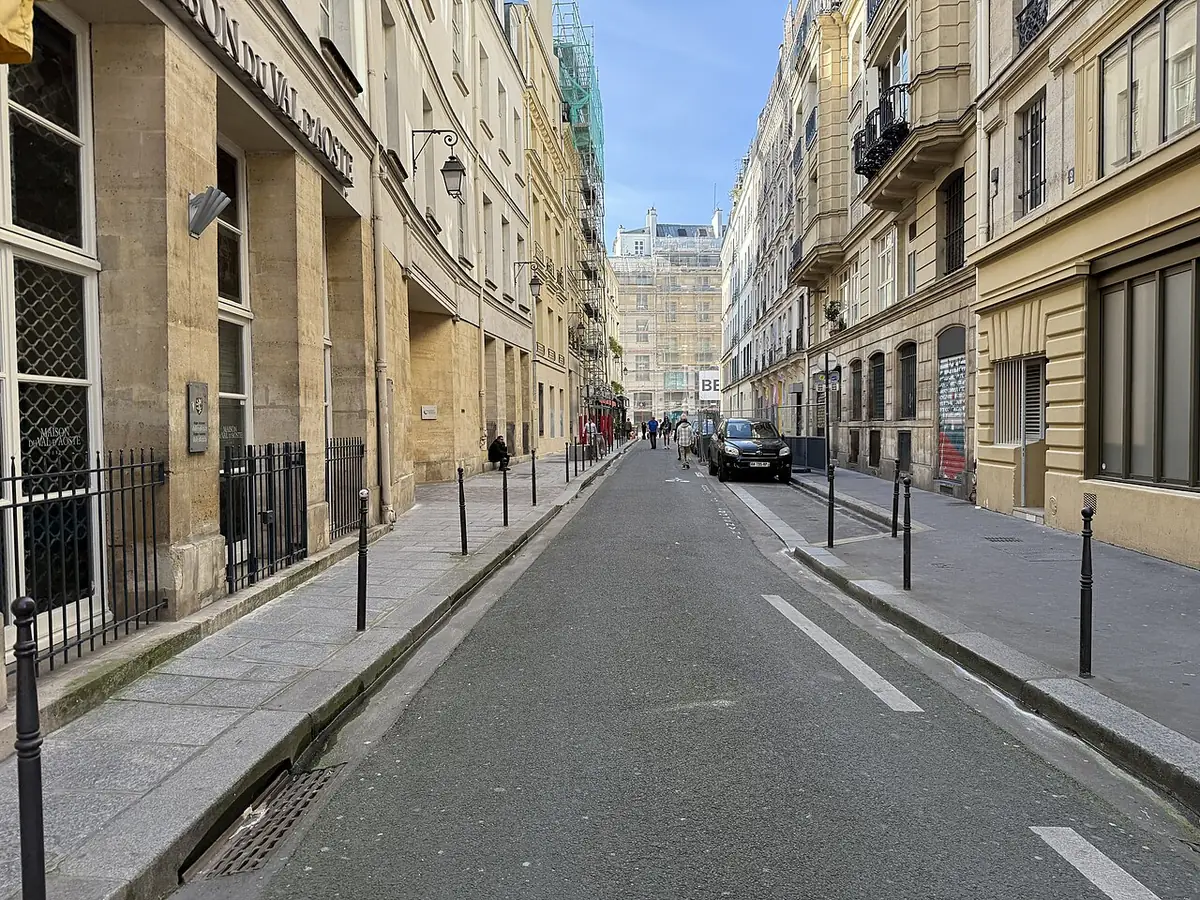
A quiet Haussmannian street in central Paris — Photo: Chabe01 · CC BY-SA 4.0 · Wikimedia Commons
Beyond the money, the legal nature of what is on offer deserves your attention.
The Paris rental market is governed by strict rent caps, which set reference rents per square metre by quarter. Even with that regulation, demand keeps prices very high. You need to calculate your total housing cost carefully, including building service charges and local taxes.
parisTo rentApartmentestimate
Median price / m²€30Half the apartments sell below this
Median price€1.65kthe average is 14% higher — a few very large properties pull it up
Most common1 bedroom42 % of listings
Average size52 m²
By number of bedrooms
Bedrooms
Share of market
Avg price
Price / m²
Avg size
1most common
42 %
€1.36k
€34 +6 %
40 m²
2
33 %
€1.98k
€32
62 m²
3
17 %
€2.7k
€31
88 m²
4
8 %
€3.61k
€30best value / m²
120 m²
Each row is an average, compared against the area average of €32 / m². These are indicative estimates of a typical local market, not a measured sample of live listings. Check current listings before relying on them.
What you can realistically expect to rent in Paris's older housing stock
Signing the lease is the end of a strict regulatory process worth understanding.
Renting in Paris almost always means compromising on architectural perfection. Between the undeniable charm of original parquet and the technical constraints of nineteenth-century buildings, a tenant has to choose sensibly. Understanding these structural trade-offs stops you signing for somewhere uncomfortable.
Architectural charm and its thermal cost
Older buildings offer high ceilings, fine mouldings and a look that is central to the identity of Paris. In exchange, thermal and acoustic insulation is often poor, which means higher energy bills in winter and, in top-floor flats, summers that are hard to bear.
What it changesRead the energy performance certificate (DPE) before committing, so you can estimate what heating will actually cost you.
Modern subdivision and compact space
To create more homes, large old apartments have been divided over the decades into smaller units. That produces unusual layouts, tight kitchens and windowless bathrooms with no direct ventilation.
What it changesDuring the viewing, check where the power sockets are, test the water pressure, and walk the route between rooms to see whether it works.
The legal and administrative rules to understand before you pay anything
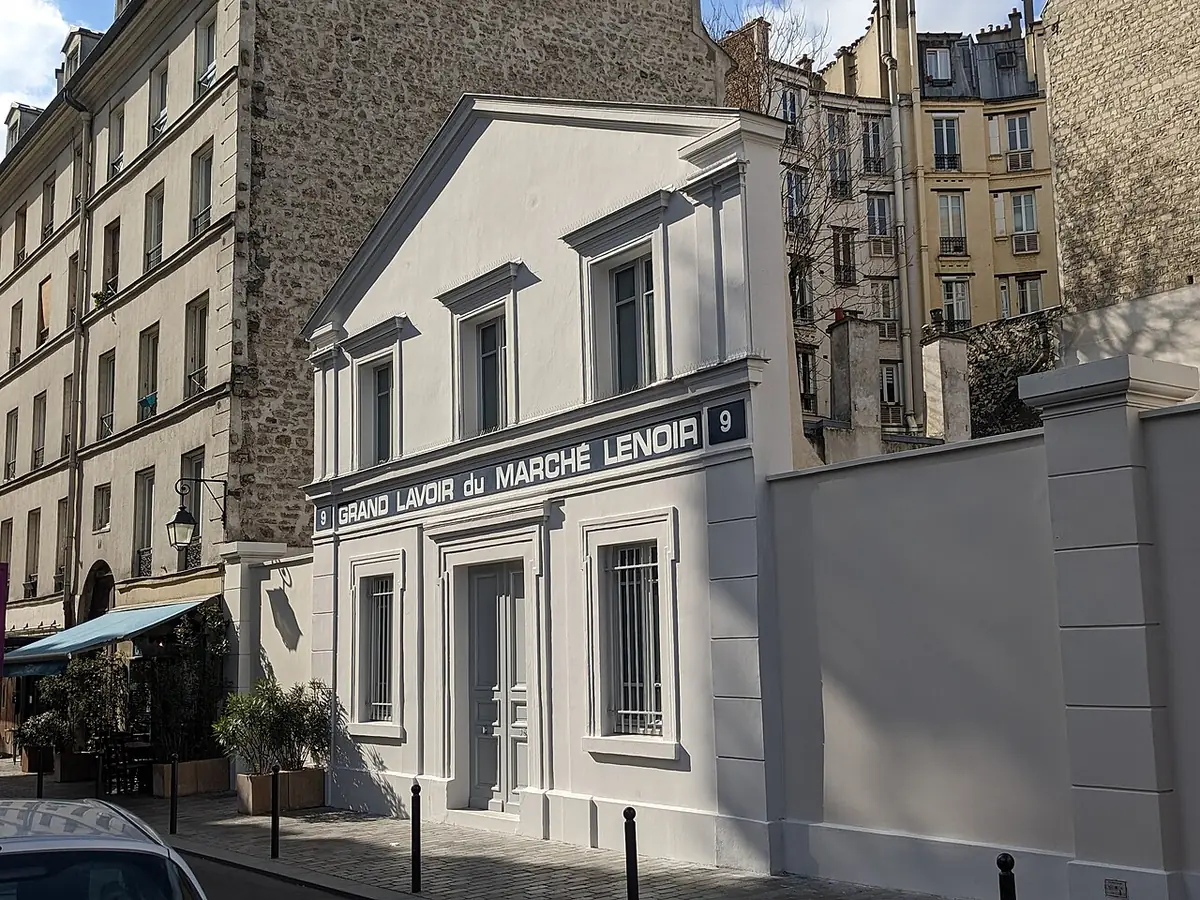
A repurposed neighborhood building near Marché Lenoir — Photo: Artvill · CC BY-SA 4.0 · Wikimedia Commons
To get through it without stress, follow each stage of the process in order.
The Paris rental market unfortunately attracts scam attempts and demands absolute administrative rigour. What a landlord may ask of your file is limited by French law, which protects both sides. Never pay a single euro before you have physically viewed the property and signed a proper contract.
Deciding to submit your application file to the landlord or letting agency
Checking that your file contains only the supporting documents French law permits a landlord to request
Assessing whether your income, and that of any guarantor, is consistent with the rent being asked
Carrying out a careful, jointly signed inventory of condition recording every detail of the apartment
Formal handover of the keys and moving into your new Paris home
How a Paris rental transaction unfolds, step by step
Knowing each phase in advance gives you a decisive advantage in a city where speed decides everything. From the first online search to moving in, here is how a successful Paris rental actually runs.
The prospective tenantPreparing and digitising the fileGather proof of income, identity documents and past rent receipts into a secure digital file, ready to send the moment you need it.
The agency or landlordShortlisting applicants and viewingsViewings come thick and fast; ask everything about the building, the neighbours and the fittings on your first visit.
The prospective tenantAccepting the offer and signing the leaseRead every clause carefully, check the exact amount of recoverable charges and confirm the rent respects the cap for that area.
Both partiesCompleting the inventory of conditionExamine walls, floors, sanitary fittings and plumbing closely to avoid any dispute when you eventually move out.
The new residentSetting up utilities and insuranceTransfer your electricity and gas accounts, and take out the home insurance policy that French law requires of tenants.
A Haussmann apartment in Paris or a house just outside: which compromise makes sense to rent?
Beyond the type of home, it is the whole cost structure that deserves examination.
When you rent in Paris, the choice between a Haussmann apartment in the centre and a house in the inner suburbs describes two very different daily lives. The apartment gives you immediate urban energy and period architecture — mouldings, herringbone parquet, high ceilings — but asks you to give up private outdoor space entirely. A townhouse or a small suburban home with a garden promises quiet, independence and no building service charges, at the cost of a longer commute and greater reliance on surface transport.
Volume and light change the calculation completely depending on which you pick. In an older Paris apartment, the aspect and the floor become decisive if you want to escape the feeling of a narrow street, particularly in the denser arrondissements where facing windows can quickly feel oppressive. A house, even a modest one, spreads across levels and opens outwards, which is invaluable for families with children or pets — though as a tenant you will still be the one calling the landlord about the roof and the garden.
The money settles it for most people. Renting in Paris means a rent capped by regulation but high in absolute terms, plus monthly charges for a building you do not control. Renting outside the city usually buys more space per euro, but adds transport costs, and often a longer lease commitment before you can move again. Weigh the transport season ticket against the extra rent before you decide.
Look past the initial appeal of either option and assess honestly your tolerance for noise, your real need for greenery, and how much of your week you are willing to spend travelling. If a life built around walking, nearby theatres, food shops and public parks wins, the Paris apartment is worth the compromise. If quiet nights and a patch of garden matter more than being in the middle of things, look at the well-connected communes on the city's edge.
What total monthly budget do you really need to live in a Paris apartment?
With the financial frame set, it helps to understand what daily life in the capital is actually like.
Renting an apartment in Paris never comes down to the advertised monthly rent alone. You need to build every associated cost into your first calculation to avoid unpleasant surprises. The security deposit, agency fees, recoverable service charges, compulsory home insurance and utility set-up all reshape what the arrangement really costs across a year.
Up-front and recurring costs when renting an apartment in Paris
Cost
Typical scale
Effect on your budget
Security deposit
One month's rent, unfurnished; up to two months furnished
Payable in full at signature and returned after the exit inventory, so it must be available in cash up front.
Agency fees payable by the tenant
Capped by law per square metre, by zone
A one-off cost at the start of the tenancy, on top of the deposit and the first month's rent.
Recoverable service charges
Billed monthly on top of rent, adjusted annually
A fixed monthly cost independent of the rent itself, reconciled against actual spending once a year.
Home insurance and utilities
Compulsory tenant insurance, plus electricity and gas
Insurance is a legal requirement for tenants; energy costs rise sharply in poorly insulated older buildings.
The figures here are typical of the current Paris market and should be checked against each specific property.
Health, schools, transport: what an ordinary Tuesday looks like when you live in Paris
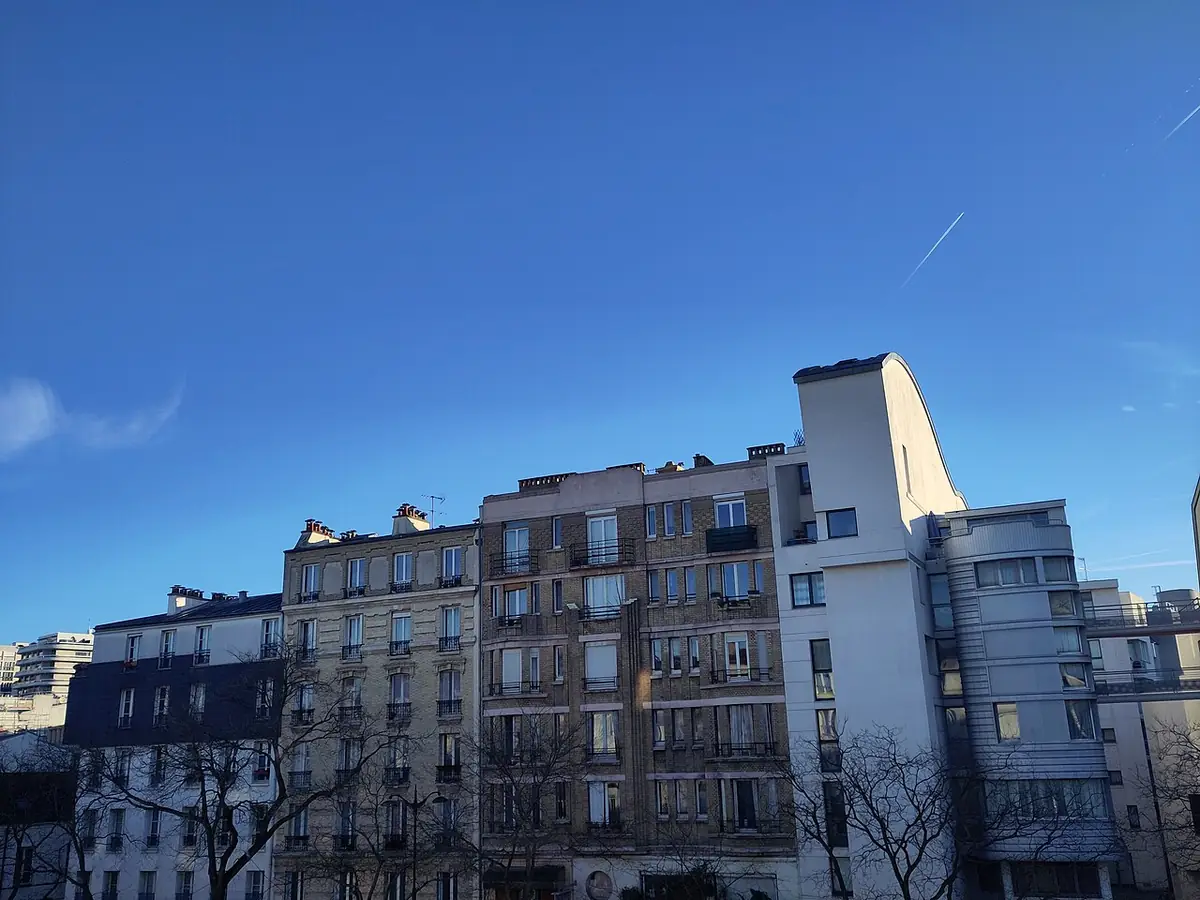
A classic Haussmannian apartment building in Paris — Photo: Exilexi · CC BY 4.0 · Wikimedia Commons
Beyond the visible routine, plenty of things deserve close attention before you sign.
Living in Paris means a tightly choreographed day, where every minute won or lost on public transport shapes your real quality of life. Away from the postcards, a resident's day is built around a dense but crowded metro and bus network, an abundant healthcare offer that can still be hard to access at standard rates, and municipal schools rooted in every quarter. Understanding this routine shows you how much the exact location of your future apartment will matter.
08:00Metro station, morning departureThe commute starts with a brisk walk to the nearest station, then a metro line that is usually busy at peak hours.
08:45School drop-off nearbyState schools are generally under a ten-minute walk, since the city's coverage puts a school in every quarter.
12:30Lunch break and local shopsThe quarter comes alive around its bakeries, street markets and small food shops, which are the real social centre of local life.
17:30Medical appointmentSpecialist provision is very good, though securing an appointment at standard reimbursed rates takes planning and flexibility.
19:00Home, and neighbourhood servicesCollecting children from after-school care comes before a walk home that is usually short, given how close local services are.
What the listing never tells you
These technical details lead straight to the misjudgements tenants most often make.
Paris rental listings compete on vocabulary, turning plain facts into appealing marketing. Behind the superlatives sit technical and planning realities that will decide your comfort for the length of your lease. Spotting these blind spots before you apply saves you money and the kind of recurring friction with neighbours that makes a home unpleasant.
How much sound actually travels through the old floors
Original parquet on joists transmits impact noise extremely well, which makes daily life miserable if the flat above is heavy-footed or badly insulated.
Construction or roof-extension projects opposite
A planning permit granted for a neighbouring building can permanently remove the daylight from a flat on a courtyard or a low floor.
The real condition of the shared water and electrical risers
Ageing shared services that the building has not renewed point to major disruptive works during your tenancy.
Café terraces below the windows, existing or planned
A bright ground or first-floor flat can lose its summer peace entirely when the city extends terrace licences on that street.
The renting mistakes people only discover six months after moving to Paris
These disappointments are a reminder that renting in Paris does not suit every situation.
Looked likeA charming top-floor flat under the eaves with exposed beams
Turned outStifling in summer, hard to ventilate, and with no lift for carrying shopping to the fifth floor.
Would have caught itCheck the roof insulation and the quality of the glazing, and be honest about what a daily climb with no lift will feel like.
Looked likePerfectly placed in a lively, fashionable quarter
Turned outUnliveable at weekends because of night-time noise, bar terraces and a steady flow of people until the early hours.
Would have caught itView the flat at awkward times — Thursday to Saturday between 22:00 and 02:00 — and listen rather than look.
Looked likeA bargain, thanks to a small space cleverly laid out
Turned outA home that felt claustrophobic within months, with no room to absorb any change in circumstances.
Would have caught itCheck the certified floor area against the rent per square metre for that quarter, and picture a full year in that space, not a viewing.
Looked likeA large family flat needing only light cosmetic attention
Turned outPersistent damp and heating problems the landlord was slow to resolve, with the tenant living around them.
Would have caught itRecord everything in the entry inventory, photograph it, and get any promised repairs written into the lease before signing.
When you should not rent in Paris at all
Time to draw an honest conclusion about whether your plan holds up.
The pull of a Paris address persuades people to sign leases that their circumstances do not really support. Renting here carries rigidities and up-front costs — deposit, agency fees, guarantor requirements — that can trap a household whose situation is about to change or whose income is not yet stable.
Someone whose work will move them again within a year
→Signing a standard unfurnished lease for the lower headline rent.
The up-front costs and notice requirements outweigh the saving, and a furnished or mobility lease would give the flexibility the situation actually needs.
A household that genuinely needs space and greenery now
→Taking a dark ground-floor two-bedroom on a street just to stay inside the city.
The daily compromise on light and space builds a frustration that usually ends in an early, expensive move.
An applicant with income earned abroad and no French guarantor
→Applying for competitive flats without arranging a guarantee scheme first.
Files without a recognised French guarantor are passed over in a market this tight, and weeks are lost before the problem is understood.
So are you actually ready to rent in Paris?
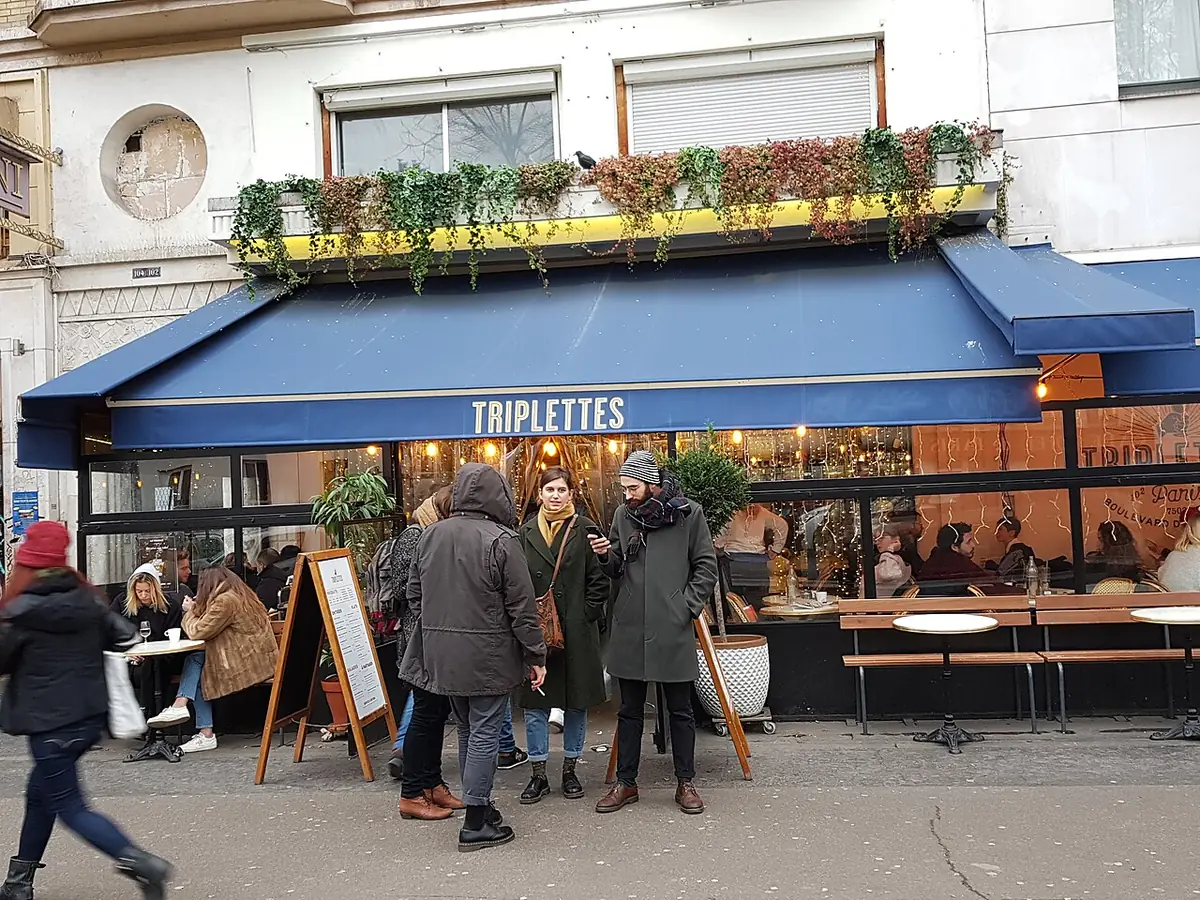
A brasserie terrace bringing life to the boulevard — Photo: Dhehz · CC BY-SA 4.0 · Wikimedia Commons
Reaching the end of this means separating the pressure of the market and the urgency of agents from what you actually want from where you live. Renting in Paris is not a compromise you make once; it is one you live with daily, accepting the constraints of a dense city in exchange for cultural, professional and practical advantages that few places match. If your budget covers the deposit, the agency fees, the monthly charges and compulsory insurance without draining your savings, the move makes sense.
If instead you are signing out of fear of missing out, or because you feel you must be inside the périphérique at any cost, step back. Paris rewards patience and a well-prepared file far more than speed alone. Take the time to view again at different hours, ask what the service charges have done over the last two years, and test honestly how much noise and proximity you can live with before you put your name to a lease.
Related questions
What up-front costs should I budget for when renting in Paris?
Plan for the security deposit — one month's rent unfurnished, up to two months furnished — plus tenant agency fees, which French law caps per square metre by zone, and the first month's rent in advance. Add compulsory tenant home insurance and the cost of opening electricity and gas accounts.
How do I judge the real energy performance of an older Paris apartment?
The energy performance certificate (DPE) gives a regulatory starting point, but read it alongside the thickness of the walls, whether the glazing is double, whether heating is collective or individual, and how the flat is oriented relative to neighbouring façades.
What does rent control in Paris mean for me as a tenant?
Rent control sets a maximum reference rent per square metre according to the quarter, the number of rooms and the year the building was constructed. If the rent you are asked for exceeds that cap without a properly justified supplement, you can challenge it.
Do I need a French guarantor to rent in Paris?
In practice most landlords ask for one, particularly if your income is earned outside France. If you have no French guarantor, a recognised guarantee scheme or a bank deposit arrangement is the usual alternative, and arranging it before you start viewing saves weeks.
Which documents can a landlord legally ask me for?
French law limits the file to a defined list — proof of identity, proof of address, proof of employment and proof of income. A landlord cannot require a bank statement, a medical record or a pre-paid rent deposit beyond the legal amounts.
How long is a standard lease, and how much notice must I give?
An unfurnished lease usually runs three years, a furnished lease one year. Tenant notice is generally three months, reduced to one month in a designated tight-housing zone, which includes Paris.
How can I check a neighbourhood for noise before I commit?
View at different hours, particularly Thursday to Saturday evenings. Beyond that, check the city's environmental noise plan, ask about upcoming municipal works, and speak to shopkeepers on the street, who know the pattern better than anyone.
Why do monthly service charges suddenly increase?
Charges are billed as a provisional monthly amount and reconciled annually against real spending. A sharp rise usually follows an increase in collective heating or hot water costs, or a change in the building's maintenance contracts.
Is a lively quarter or a quiet residential one the better choice?
It depends entirely on how you live. A lively quarter gives you culture and shops at the cost of night-time noise; a quiet residential one guarantees calm but leaves you further from the parts of Paris people move here for.
What happens at the exit inventory, and how do I protect my deposit?
The exit inventory is compared line by line against the one made when you moved in. Photograph everything at entry, keep the signed document, and repair minor damage before the appointment — that comparison is what decides how much of your deposit comes back.