Moving into a rented house in Calgary takes careful preparation, because the Alberta rental market works to rules and rhythms of its own. This guide breaks down the real costs, how to pick a district, the tenancy law that applies and the steps to follow, so you can sign a lease without unpleasant surprises.
Get the app
What nobody tells you.
Real prices, hidden costs and the traps to check before you commit.
What renting a house in Calgary actually means day to day
Scroll
What renting a house in Calgary actually means day to day
Moving into a rented house in Calgary takes careful preparation, because the Alberta rental market works to rules and rhythms of its own. This guide breaks down the real costs, how to pick a district, the tenancy law that applies and the steps to follow, so you can sign a lease without unpleasant surprises.
Written by the ting.ad editorial team ·
10 Street SW, Calgary in Street View: drag to look around.
Moving from theory to practice means measuring your own situation against the particular demands of this city.
Renting a detached house in Calgary changes your relationship with space and with the weather far more than the extra floor area suggests. Hard winters and the very spread out layout of the Alberta metropolis create maintenance and logistics obligations that are hard to picture from overseas. You gain independence and quiet, but you also take on direct responsibilities for the building and the grounds, and those responsibilities reshape your real monthly budget. Understanding that from the start spares you the financial letdowns and the energy bill shocks that arrive with the first deep cold snap. The local rental market favours annual leases and rewards anyone who reads the clauses on utilities and minor repairs closely.
Space and independencevsUpkeep and management
You get a private yard and generous floor area that suits a family well, but you have to clear snow from every access point and cut the grass all summer. Those jobs take time and proper equipment, which you either buy yourself or pay someone else to handle.
Nature close at handvsDistance from services
Living in a residential district puts you next to parks and to the trails that lead towards the Rockies, while moving you away from central city amenities. A car quickly becomes essential for every ordinary errand.
Comfortable, generous roomsvsThe energy bill
Detached houses usually offer large volumes and a basement you can put to use, which makes for a very pleasant home. In exchange, heating through the coldest months pushes utility bills up sharply.
Which kind of tenant are you in the Calgary rental market?
The cultural and administrative reference points shift completely once you leave your home country to settle here.
The Calgary rental market does not treat every applicant the same way, and your professional and family situation changes what it asks of you. Families looking for school stability, remote workers who need a dedicated office and newcomers meeting the Alberta climate for the first time have almost nothing in common in their priorities. Each profile runs into its own difficulties around financial guarantees, lease length and tolerance for driving. Working out where you sit lets you target the right districts and the right lease types immediately, instead of losing weekends to viewings that were never going to work.
Stability and school access
Your first filter is a catchment area that gives you direct access to the strongest public or Catholic schools in the city, along with a fenced yard for the children. Long leases are the norm here, and landlords look for strong applications with verifiable local references. Plan school registration well before you sign anything, so your children keep the catchment you are counting on.
Office space and connectivity
You need a room with a door you can close and a very fast internet connection, often delivered by fibre in the newer districts. Being close to the main road corridors such as Deerfoot Trail or Stoney Trail matters more to you than being close to the centre. That geographic flexibility lets you look at quieter, greener areas further out.
No local credit history
Arriving from abroad, you do not yet have the Canadian credit file that many agencies and traditional landlords treat as essential. Prepare strong alternative evidence instead: a detailed employment letter, substantial bank statements, or an offer to pay several months up front. Approaching private landlords or agencies used to working with new arrivals makes the process considerably easier.
What really changes for a tenant arriving from abroad
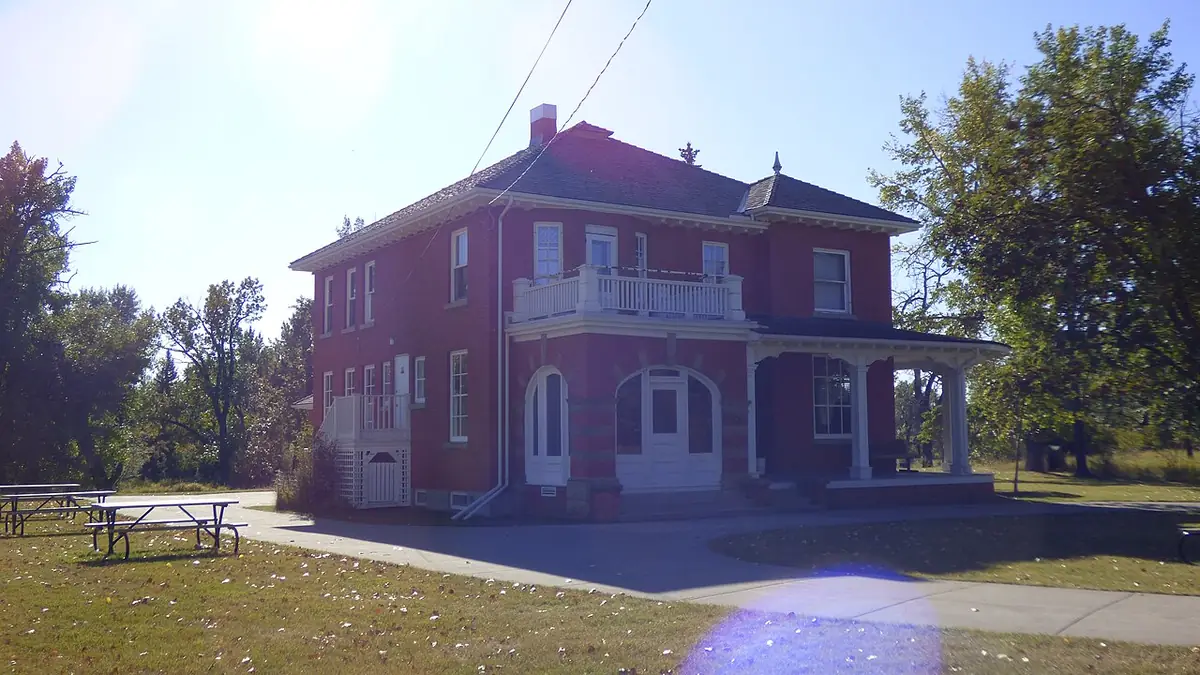
Heritage homes like this anchor Inglewood, one of Calgary's older residential pockets — Photo: James Mott · CC BY-SA 4.0 · Wikimedia Commons
Your choice of district decides not only your surroundings but also your transport budget and your daily travel times.
Settling in Calgary from another country unsettles most of the assumptions you carry about tenancy law, housing management and the relationship with a landlord. Where many national systems are tightly framed by statute and by public rent commissions, the Alberta system rests on contractual flexibility set inside the Residential Tenancies Act. The guarantees you are asked for, the role an agent plays and the handling of small repairs all work differently. Absorbing those differences on day one saves you serious misunderstandings with your landlord later.
From abroad
Strong statutory protection for tenants, with rent increases capped by law in tight markets.
Calgary
Alberta's Residential Tenancies Act leaves a lot of room for contract, and rent increases follow open market conditions rather than a set ceiling.
Negotiate the amount and the renewal terms directly in the original lease, because your landlord can adjust the rent more freely than you may be used to.
From abroad
A security deposit strictly capped, and often held under a public scheme rather than by the landlord.
Calgary
The security deposit is capped at one month of rent, held by the landlord in a trust account, and returned with the applicable interest at the end of the tenancy.
Have that money available immediately once your application is accepted, or the house goes to a faster applicant.
From abroad
The landlord carries all major works and the building's energy compliance.
Calgary
The tenant of a detached house frequently takes on routine care of the grounds, and sometimes basic maintenance of specific equipment.
Read every clause carefully to see exactly who is responsible when the furnace, the air conditioning or an outdoor pipe fails.
From abroad
Move in and move out inspections carried out by an independent officer or an appointed expert.
Calgary
The inspection is done jointly by you and the landlord (or their agent), using a standard form that the law requires.
Photograph every corner as you move in and note the smallest existing defect, so you get your full deposit back when you leave.
How to choose your area according to the way you live
Once you have settled on an area, it is time to pull apart the real cost structure of a rental.
Calgary is a huge, spread out city where every sector has its own identity, its own pace and its own amenities. Between the older districts near the Bow River, the family communities of the established suburbs and the new subdivisions expanding rapidly towards the edge of the city, the offer is extremely varied. Your choice depends on how much daily driving towards downtown you can accept and on how much you need shops and services within walking distance. Weighing those two things in advance keeps you from ending up isolated in a poorly served corner of the city.
Kensington and Hillhurst
A lively, walkable village feel along the river, with independent cafes and local shops you can reach on foot.
Suits
Couples and families who want an urban, active way of living without giving up the charm of a renovated older house.
Trade-off
Detached houses to rent are scarce here, rents run clearly higher and street parking can be awkward.
Mount Royal and Britannia
Prestigious residential streets lined with mature trees, offering complete quiet and an unusually attractive setting.
Suits
Households with a comfortable budget who value prestige, safety and being close to the best schools.
Trade-off
Rental properties are extremely rare and monthly rents sit at the very top of the Calgary market.
NW communities (Brentwood and Varsity)
An established residential sector, well served by the light rail network (C-Train) and close to the University of Calgary.
Suits
Families looking for a balance of green space, neighbourhood parks, accessible shopping centres and quick links to the centre.
Trade-off
Most of the houses date from the 1960s and 1970s and may need a close look at their insulation.
SE suburbs (Mahogany and Seton)
Very modern planned communities built around man made lakes, water recreation areas and new hospital facilities.
Suits
People who want new build comfort, large modern rooms and a busy, family oriented community life.
Trade-off
The distance from downtown means long daily commutes if you work in the central business district.
What does renting a house in Calgary really cost?
Heritage apartment blocks like the Devenish mix shops and homes downtown — Photo: Benlarhome · CC BY-SA 4.0 · Wikimedia Commons
Beyond the raw figures, the exact nature of the lease and the guarantees it offers deserve constant attention.
The cost of renting a house in Calgary varies a great deal with floor area, the age of the building and above all its position relative to downtown and the transport corridors. Contrary to a common assumption, the base rent is only part of your total housing budget: electricity, natural gas and water can add substantially to the monthly figure, especially in winter. The tables below summarise the rent ranges observed in the current market, so you can calibrate your application and your finances without risking arrears.
calgaryTo rentHouseestimate
Median price / m²CA$19Half the apartments sell below this
Median priceCA$2.73kthe average is 14% higher — a few very large properties pull it up
Most common2 bedrooms73 % of listings
Average size133 m²
By number of bedrooms
Bedrooms
Share of market
Avg price
Price / m²
Avg size
2most common
73 %
CA$2.87k
CA$20
140 m²
3
23 %
CA$3.5k
CA$19 −5 %
184 m²
4
5 %
CA$4.2k
CA$18best value / m²
228 m²
Each row is an average, compared against the area average of CA$20 / m². These are indicative estimates of a typical local market, not a measured sample of live listings. Check current listings before relying on them.
What you can actually sign: the standard lease or a negotiated one
Before you hand over any money at all, one administrative rule protects the whole process.
An Alberta tenancy agreement sets the rules for the whole time you live in the house, but it leaves real room to negotiate on the secondary clauses. Understanding the difference between a plain residential lease and one carrying specific maintenance or pet clauses is essential if you want to avoid disputes. Landlords are protecting their property against premature wear, while you need to protect your basic rights as an occupant. That clash of interests is exactly why every paragraph deserves a careful read before you sign.
The rigid standard lease
This kind of agreement applies the minimum provisions of the Residential Tenancies Act strictly, with no flexibility on pets, subletting or decorative changes. It shields the landlord from any risk of damage and sets a fixed one year term, renewable, with clear financial penalties if you break it early.
What it changesYou get complete legal certainty and a predictable framework, but you give up any real personalisation of your home and accept strict rules about keeping animals.
The negotiated lease with custom clauses
This agreement carries riders negotiated directly between the two parties, allowing pets in exchange for an additional deposit, for example, or sharing the cost of improving the yard. It reflects a constructive conversation between a private landlord and a tenant whose application is unusually strong.
What it changesYou get a home shaped around your family's actual needs, but you must put every agreement in writing to avoid later disagreements over who maintains what.
The rule to understand before you send any money in Calgary
Newer mid-rise blocks like this are common across Calgary's residential streets — Photo: Chris Woodrich · CC BY-SA 4.0 · Wikimedia Commons
With those precautions taken, the rental process itself follows a well established order.
The Canadian rental market runs on speed and on trust, which occasionally exposes newcomers to sophisticated scams on the listing platforms. Paying a security deposit or a first month of rent before you have physically seen the property or verified who owns it is a serious risk. Understanding the chain of checks that has to happen protects you against fraud and confirms that your financial commitment is legally valid. Each step in the sequence removes one risk and confirms the legitimacy of your future home.
You spot an attractive online listing for a detached house.
Insist on a live video viewing, or send someone you trust in Calgary to see the house in person and confirm its real condition.
Verify the identity of the landlord or the licensed agent, checking the Alberta land titles register if you need to.
Never send funds through anonymous or untraceable payment methods (cryptocurrency, international cash transfers).
Sign a proper lease that clearly states the official account details before you make any bank transfer at all.
You move into your house legally, with your deposit properly recorded and protected.
How a Calgary rental goes through, step by step
Renting a house in Calgary follows a precise sequence that agencies and private landlords apply rigorously. From assembling the initial application to the formal handover of keys, each party has a clearly defined role in confirming that a tenant can pay and can be relied on. Knowing that sequence lets you prepare your documents in advance and move quickly through a screening process that is often highly competitive.
The tenantPutting the application togetherGather your employment letters, proof of income, references from previous landlords and, where possible, a Canadian credit report.
The agent or landlordReviewing and shortlistingThe manager checks that your documents are genuine, contacts your employer and weighs your existing commitments against the rent being asked.
The tenantViewing the house and confirming its conditionYou visit the house, ask about the history of the heating bills and confirm that you firmly want the property.
Both partiesSigning the residential leaseElectronic or paper signature of the standard Alberta agreement, including every special condition negotiated and accepted.
The tenantPaying the initial fundsPayment of the first month of rent and of the security deposit into the trust account named by the agency.
The property managerMove in inspection and handoverA joint move in inspection with meter readings, and signature of the official form before the keys change hands.
Renting a house in Calgary: between ground level chores and room to breathe
Once you have settled on the kind of home you want, you have to look hard at what it costs to live in it.
Renting a house in Calgary means accepting one very specific urban reality: horizontal sprawl. Unlike the dense metropolises of Europe, or even Canadian cities such as Vancouver, Calgary stretches across a vast area where the car remains the pivot of daily organisation. Renting a detached house means settling into residential districts that are usually quiet, with tree lined streets, plenty of parks and direct access to large green spaces. Families find real independence there, with fenced back yards and no immediate neighbours above or below, which transforms the acoustic quality of daily life compared with a condominium. That independence carries a direct management cost, though: mowing the lawn in summer and shovelling snow in winter are not simply chores, they are contractual obligations, and house leases usually place them on the tenant.
Financially, renting a house in Calgary means budgeting for running costs well above those of an apartment. Utility bills, and heating in particular through Alberta winters where the thermometer regularly drops below minus twenty, catch newcomers off guard. A poorly insulated house or an ageing heating system will see its energy bill climb steeply from November through March. Because the floor area is larger, furnishing and decorating also represent a substantial upfront outlay, unless you find a furnished rental, which stays relatively rare among detached houses in the Calgary market. So the freedom of space has to be weighed against the mechanical rise in maintenance and energy costs before you sign a long lease.
Location shapes the experience of renting a house just as much. Established districts such as those in the southwest quadrant offer heritage charm and mature trees, but rents there reach the top of the market, reflecting strong demand for proximity to downtown and to the best schools. Move out towards the rapidly expanding suburbs instead, whether in the newer northern sector or at the far edge of the southeast, and the same rent buys considerably more space, at the cost of longer daily commutes. Public transport, strong as it is along the C-Train corridors, serves those newer subdivisions less finely, which often makes a second vehicle unavoidable for a household. Choosing a house in Calgary therefore means accepting a permanent trade between the calm of private space and the burden of distance.
What monthly budget do you really need to live in a house in Calgary?
With the budget settled, it helps to see what that location does to the shape of an ordinary day.
Building a realistic budget for renting a house in Calgary means looking well past the headline rent on the listing platforms. The Alberta rental market moves in strong cycles, driven by the provincial energy economy and by the steady arrival of new residents. Alongside the base rent, your fixed housing costs cover electricity, natural gas for heating, water, and the tenant insurance that protects you against the water damage that is common during the spring freeze and thaw. Overlook those secondary lines and a household can find its finances out of balance within the first few months.
Estimated monthly cost ranges for a house in Calgary
Cost item
Low end (CAD)
High end (CAD)
Context
Monthly rent (3 to 4 bedroom house)
$2,200
$3,500
Varies sharply with proximity to the C-Train and the age of the district.
Utilities (electricity and gas)
$250
$500
Peaks hard in winter because of heating and the severity of the climate.
Tenant insurance
$60
$120
Depends on the value of the contents insured and on your claims history.
Internet and telecoms
$90
$150
Bundled fibre offers are widely available from the major providers.
The figures shown are based on averages observed in the Calgary rental market for standard sized properties.
Secondary costs and routine upkeep of the house
Type of cost
Estimated cost
Frequency
What it means in practice
Lawn care and snow clearing
$0 to $150
Monthly (in season)
Free if you do it yourself with your own equipment.
Furnace filters and small consumables
$20
Monthly
Essential to keep the heating system running efficiently.
Parking and any permits
$0
Included
The great majority of detached houses come with a garage or a driveway.
Basic maintenance equipment represents an upfront outlay of roughly three hundred dollars when you arrive.
What does an ordinary Tuesday look like for a Calgary resident?
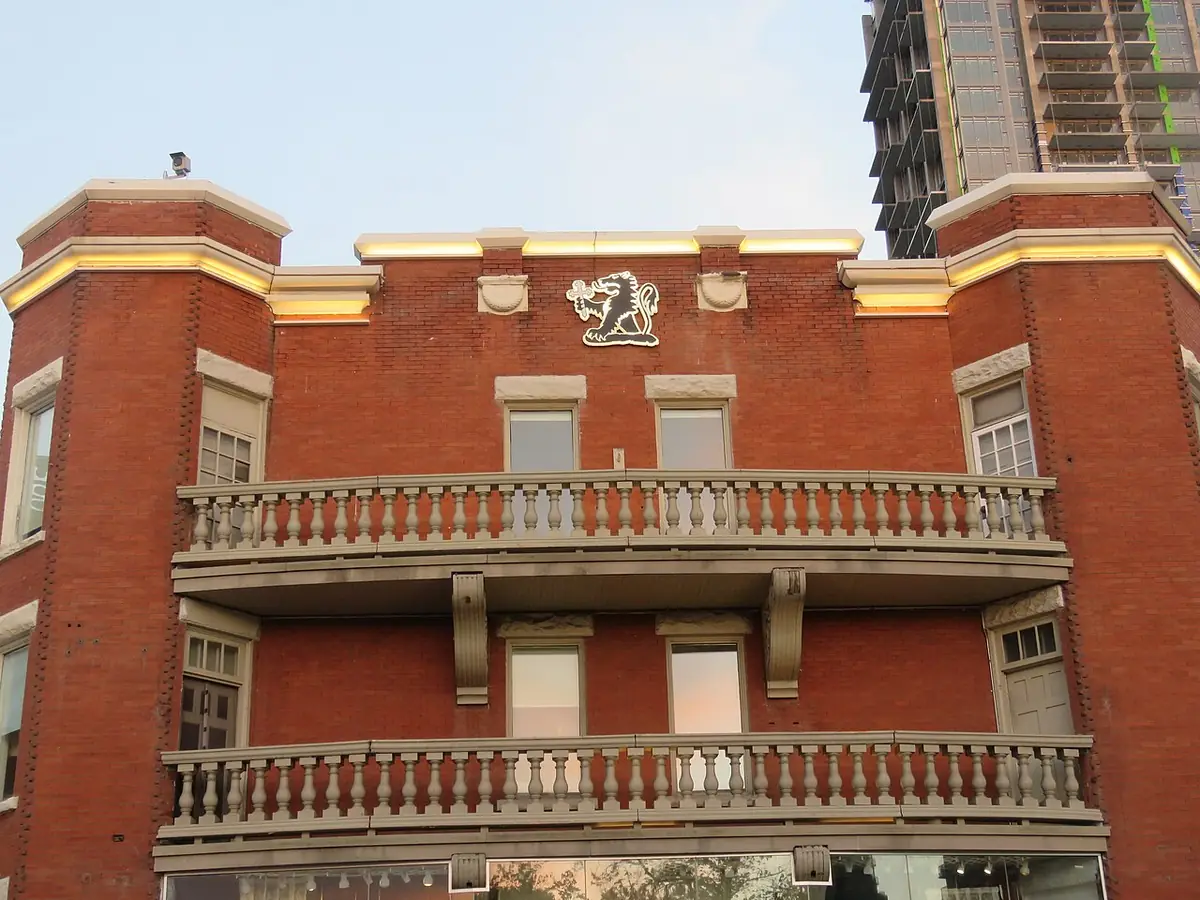
Detailed brick facades like this show the character of Calgary's older apartments — Photo: Benlarhome · CC BY-SA 4.0 · Wikimedia Commons
Smooth as that day looks on paper, some realities of the Calgary rental market never make it into the listings.
Picturing your future rhythm means looking closely at a typical weekday in the Calgary setting. Between the morning commute, the adjustment to changeable weather and the use of local infrastructure, every hour is structured around efficiency. The shape of the city, with its major road corridors and its residential areas set apart from the employment centres, imposes a travel discipline that newcomers usually absorb within a few weeks. Here is the hour by hour run of an ordinary Tuesday for a household settled in a residential district.
07:00Home in the suburbsWaking up and checking the local forecast, an essential reflex in Alberta whether you are anticipating winter road conditions or dressing for fast temperature swings.
08:15Commute towards the employment centreDriving in along the main arteries such as Deerfoot Trail, or combining a local bus with the C-Train if home sits near a station.
09:00Workplace or downtown officeArriving at the office in the central district, often connected by the +15 network, a system of enclosed elevated walkways unique in the world.
12:30Lunch break in the business districtA quick meal or a brisk walk through the surrounding urban parks, making the most of the bright skies and high sunshine hours the region is known for.
17:30Local shopping and errandsA stop at a neighbourhood shopping centre to stock up, made easy by large areas of free parking.
19:00Back home for the eveningA quiet evening in the house, homework with the children or cooking, with the calm of a residential street around you.
What the polished rental listings never get around to mentioning
Those omissions sometimes turn into real disappointment, which you can head off by studying the mistakes newcomers usually make.
The Canadian rental market runs on strict rules, yet it leaves plenty of practical detail in shadow at the moment of the viewing. Marketing photographs highlight bright rooms and renovated kitchens while skipping technical or contractual points that shape your comfort over the medium term. Knowing those blind spots lets you approach the lease signing clear eyed, and avoids financial or legal disappointment once you have moved in.
The real age and efficiency of the gas furnace
An ageing heating system burns a great deal of fuel and can fail in the depth of an Alberta winter, leaving the tenant with long waits and high costs if the lease puts specific maintenance duties on you.
The strict rules of homeowner and community associations
Even in a rented house, some districts have owner associations that restrict street parking, fence heights or how long seasonal decorations may stay up.
The real history of water damage and spring damp
Fast snow melt in some low lying parts of Calgary drives water into basements that are not properly sealed, a risk landlords rarely raise during a summer viewing.
The exact policy on pets and on deposits
The market is becoming more flexible, but many landlords still refuse cats and dogs or ask for an additional pet deposit that provincial law does not regulate, which weighs on your cash position at move in.
How close the house really is to industrial or rail noise
Rail lines cross several residential sectors of Calgary and freight trains run at night sounding their horns, something you cannot possibly detect on a Saturday afternoon viewing.
The classic traps you only discover after six months on the ground
For all those pitfalls, this way of living does not suit every profile equally.
Looked likeA pretty suburban house with a green yard and a rent that looked affordable next to Toronto or Vancouver.
Turned outA punishing heating bill on top of failing insulation, and grounds maintenance costs well above what had been budgeted.
Would have caught itAsking for the full utility bill history of the last twelve months before signing the lease, and checking the attic insulation.
Looked likeA quiet residential district ideally placed a few minutes by car from the main road corridors into work.
Turned outA daily commuting ordeal at peak hours, thanks to permanent roadworks and congestion on the bridges over the Bow River.
Would have caught itDriving the exact route at rush hour on a weekday before committing to the location.
Looked likeA flexible landlord offering an informal verbal understanding about small repairs and looking after the yard.
Turned outSerious disagreement over who pays when major equipment fails, such as the water heater or the air conditioning.
Would have caught itInsisting that every arrangement on upkeep, repairs and the return of the deposit is written into the official lease.
Looked likeA standard internet connection casually described as available in the area, with no technical check.
Turned outVery low speeds, or no fibre coverage at all, in some of the newer outlying subdivisions.
Would have caught itChecking the exact address for service eligibility with the main Canadian providers before you commit.
Who should think twice before renting a detached house in Calgary?
With that analysis behind you, it is time to decide where you stand in the Calgary market.
Renting a house in Calgary answers a very specific wish for comfort and space, but it is completely wrong for some ways of living. The logistical demands, the job of running a large property yourself and the relative distance from city life all create friction for anyone who wants urban spontaneity or the simplicity of a home managed end to end by a building manager. Recognising those counter indications saves you an investment of time and energy that would only end in frustration.
The young professional or the couple without children working in the heart of downtown
→A modern condo apartment in a central tower or in a lively district such as Beltline.
It gives them a walkable neighbourhood, restaurants, cafes and the C-Train on the doorstep, and spares them mowing a lawn and shovelling snow all winter.
The highly mobile professional who travels frequently for work
→A furnished apartment with services included, or a short term lease where the building handles all the maintenance.
No outdoor upkeep and a building watched around the clock suit a life on the move, where nobody can look after an empty house for weeks at a time.
The new resident on a tight budget or with no Canadian credit history
→A townhouse, a duplex apartment or a shared rental in an area well served by transport.
The full cost of a detached house (high rent, heavy energy bills, a second car that quickly becomes necessary) would weigh far too much on finances that are not yet settled in the first months after arriving.
So, are you ready to sign for a house in Calgary?
Green spaces like Inglewood Bird Sanctuary offer an easy escape close to home — Photo: Grungaloo · CC BY-SA 4.0 · Wikimedia Commons
Committing to a rented house in Calgary is not a matter of geographic impulse but a considered choice, weighing the calm of private space against the climatic and logistical realities of Alberta. If you have accepted that winter demands serious preparation, that driving is built into the local way of living, and that your budget needs a safety margin for swings in utility costs, then you hold the keys to a successful move. The Calgary market rewards anyone who approaches it pragmatically, preparing every contractual and financial detail before the lease is signed.
Taking the time to visit several sectors, to test travel times at peak hours and to comb through the clauses on property upkeep will spare you the disappointments of the first few months. The city offers an exceptional setting, at the meeting point of the wide open spaces of the Rockies and a stimulating economy, provided you do not underestimate what a detached house costs to run. Your decision should rest on a clear view of your family and professional priorities, well away from the polished images in tourist brochures or over flattering rental listings.
In the end, settling successfully in Calgary means lining your expectations up with the reality of a modern city still expanding fast. If your plans sit well with the quiet of residential districts and the need for careful organisation, the local rental market can give you a stable and rewarding place to live. All that is left is to confirm your search criteria, to contact trustworthy landlords or property managers and ask the right technical questions from the first conversation, and to prepare your move to this major city of western Canada with confidence.
Related questions
How long does it usually take to find a house to rent in Calgary?
The Calgary rental market goes through periods of real pressure depending on the season, particularly in spring and summer. It is sensible to start looking four to six weeks before your intended move in date so you have a decent choice of properties.
Do you need a Canadian credit history to rent in Calgary?
The large majority of landlords run a credit check. Newcomers with no Canadian history can make up for it with an official employment letter, solid bank guarantees, or an offer to pay several months of rent in advance.
How does the security deposit work for rentals in Alberta?
Under Alberta law the security deposit cannot legally exceed one month of rent. The landlord must hold it in a trust account and return it to the tenant with the applicable interest at the end of the tenancy, subject to the move out inspection.
Which districts are most sought after for renting a house with children?
Districts in the southwest quadrant, along with certain established residential areas in the northwest, are particularly popular because of the quality of the public and Catholic schools and the closeness of parks and sports facilities.
Are utilities usually included in the rent for a house?
For a detached house, utilities (electricity, natural gas, water) are almost always the tenant's responsibility on top of the monthly rent. Check that specific point in the terms of the tenancy agreement.
Do you really need a car to live in a house in Calgary?
Public transport does include the C-Train and effective bus routes, but single family houses sit mostly in outlying subdivisions where a personal vehicle, and often two for a couple, proves essential day to day.
How does snow clearing actually work in winter for someone renting a house?
Calgary bylaws require owners or occupants to clear the sidewalks next to their property within twenty four hours of a snowfall. In almost every house lease that obligation passes to the tenant, who needs a shovel or a snow blower.
How much does the climate affect the energy budget of a Calgary house?
Alberta winters bring waves of intense cold when temperatures drop sharply. The gas or electric heating system then runs at full capacity, and energy bills rise noticeably between November and March.
Are pets easily accepted in house rentals?
Whether pets are allowed depends entirely on the landlord's policy. Unlike some other provinces, nothing stops Alberta landlords from refusing animals or asking for additional unregulated fees, so clarify the point at the first viewing.
What documents should you prepare for a strong rental application in Calgary?
A complete application should include official photo identification, a recent employment letter confirming your salary and the status of the role, your most recent pay slips, and references from previous landlords to show that you are reliable and financially sound.
Property review of ting
No ting properties in Calgary yet
Be the first — share it on ting and it shows up right here.