Putting a credible figure on a Calgary apartment takes more than glancing at what the neighbours are asking. The Alberta market prices condition, floor level, outlook, condo fees and the financial health of the building itself, and it does so building by building rather than district by district. This guide sets out what actually drives an estimate here, what to gather before an appraisal, and how to sanity-check any number you are handed.
Get the app
What nobody tells you.
Real prices, hidden costs and the traps to check before you commit.
Why the value of a Calgary apartment is decided by more than its floor area
Scroll
Why the value of a Calgary apartment is decided by more than its floor area
Putting a credible figure on a Calgary apartment takes more than glancing at what the neighbours are asking. The Alberta market prices condition, floor level, outlook, condo fees and the financial health of the building itself, and it does so building by building rather than district by district. This guide sets out what actually drives an estimate here, what to gather before an appraisal, and how to sanity-check any number you are handed.
Written by the ting.ad editorial team ·
10 Street SW, Calgary in Street View: drag to look around.
Once you can see what really moves the number, the next question is which kind of valuation you actually need.
Valuing an apartment in Calgary does not come down to arithmetic on a price per square metre or a quick rental yield. Behind the stated floor area sits an urban reality shaped by the scale of the Prairies, the severity of winter and the immediate closeness of the Rockies. Each district sets its own rhythm, dictated by how well it is served by the CTrain and how far it sits from the financial core. Reading the real value means decoding what sales material routinely leaves out.
A figure treated as pure arithmetic on floor areavsA figure anchored in how resilient the surrounding economy is
What a Calgary apartment is worth depends far less on short-term speculation than on the underlying strength of the province and the continuing pull of the local job market. Owners who forget that end up with an estimate that does not survive contact with a resale.
The assumption that walkable city living reads the same all yearvsThe premium buyers place on the indoor network and sheltered links
Through the coldest months life does not stop, it changes level. A building's connection to sheltered routes changes how buyers rate it, and that shows up in the price they will actually pay.
The idea that carrying costs sit outside the valuationvsCondo fees and municipal property taxes priced straight into the offer
The running costs of managing a building through Canadian winters weigh heavily on any buyer's budget. Leave them out and you distort the estimate from the first line.
The belief that North American condominiums are broadly standardisedvsThe complexity of individual bylaws and reserve funds
Every building carries its own financial history and its own future maintenance obligations. A thorough read of the corporation's health moves an estimate far more than the finish on the common areas ever will.
Which kind of valuation do you actually need?
Knowing which figure you need makes it easier to see how far Calgary practice sits from the habits you arrived with.
The reason you want a number decides how the number should be built. An owner testing the market, a lender assessing security and an investor marking a holding to market are not looking for the same thing, and a figure produced for one purpose rarely holds up when used for another. Matching the method to the purpose is what keeps an estimate honest.
The market estimate
You want the figure a buyer would realistically agree to over the next few months. That means recent sales in the same building and the same district, matched for size, floor and outlook, then adjusted for condition and for how your condo fee compares with the local norm. Agents in the downtown and Beltline towers have a deep pool of comparable sales to draw on, so the evidence is usually good, but it is also where two units with the same floor plan can differ by a wide margin on view alone. Treat any single comparable with caution and look for a cluster.
The formal appraisal
Here the number has to be written down, sourced and capable of standing up to challenge. An appraiser inspects the unit, reads the condominium documents, sets out the comparables used and states the adjustments made to each. This is the figure that governs how much can be borrowed against the unit, and it is produced independently of whatever price has been agreed. If it lands below the agreed price, the shortfall is yours to bridge, which is why it is worth anticipating rather than discovering.
The investor's valuation
Your figure has to reconcile capital value with what the unit actually earns. Buildings near the universities or along the main transport corridors hold their occupancy best, which supports both the rent and the resale. This approach requires a firm grip on Alberta's rules for residential tenancies, on local taxation and on how tightly the corporation manages its fees, since a fee that drifts upward year after year erodes the yield and the price at the same time. The district remains the most critical variable in the calculation.
What changes when your instincts about value were formed somewhere else
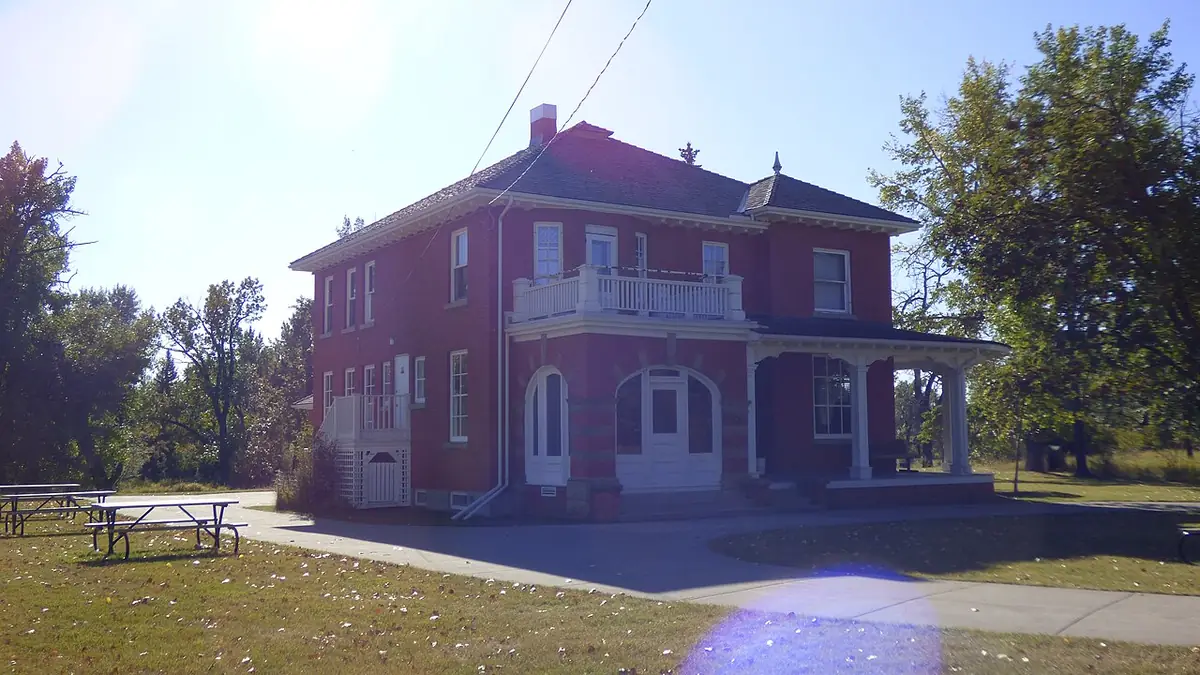
Heritage homes like this anchor Inglewood, one of Calgary's older residential pockets — Photo: James Mott · CC BY-SA 4.0 · Wikimedia Commons
With those reference points reset, the district itself becomes the most structural input into the estimate.
Property valuation in North America follows legal, administrative and cultural conventions that differ deeply from the ones most owners arrive with. Applying imported reflexes without measuring the gap leads to serious errors of judgement, financially and in what you assume you are actually buying. From how floor area is counted to the very idea of collective ownership, each step calls for a full reset of your certainties.
From abroad
Floor area defined by a strict statutory measuring standard and tightly regulated construction norms
Calgary
Stated areas that often include exterior walls, balconies and sometimes a prorated share of common space
Establish the real usable area before you compare anything against a price per square metre, and never rely on the headline figure quoted in the advertisement.
From abroad
A co-ownership system centred on a professional managing agent and an annual general meeting
Calgary
A corporation run by the owners themselves through a board, with highly responsive delegated managers
You have to engage with the life of your building, and the minutes from previous years tell you more about value than any brochure will.
From abroad
A fixed set of mandatory technical surveys supplied by the seller (lead, asbestos, energy performance)
Calgary
A culture of independent inspection reports commissioned and paid for by the buyer before conditions are removed
Condition evidence comes from an inspector you appoint yourself, and that report is what will defend or dent your figure.
From abroad
Local charges based on traditional rates and transfer duties calculated as a percentage
Calgary
Municipal property taxes calculated on the city's annual assessment of market value
Treat the assessed value as one data point rather than the answer: it varies sharply from one area to the next and it lags the market.
How the district shapes the number, and how much evidence it gives you
Beyond the character of each area, it is the published price ranges that anchor a working estimate.
Calgary is a large, spread-out city, structured by its main corridors and cut through by the Bow River. Where a unit sits changes not only its value but how confidently that value can be established, because some areas trade often and others barely at all. Each sector has its own identity, from intense urban energy to quiet, green residential streets.
Beltline and Downtown
A dense urban rhythm, marked by the flow of pedestrians towards the office towers and restaurants a short walk away.
Suits
Estimates built on a deep pool of recent comparable sales, since tower units turn over often and the evidence is plentiful.
Trade-off
Values swing hard on floor, outlook and building quality, so a comparable two floors down can quietly mislead you by tens of thousands.
Kensington and Hillhurst
An urban village feel along the river, with independent shops, busy cafes and direct access to the parks.
Suits
Units whose value rests on location and character rather than on building services and amenities.
Trade-off
Older stock and corporations that are harder to audit mean condition and reserve-fund adjustments carry much of the estimate, and new-build comparables are scarce.
East Village
A fully redeveloped district, modern and architecturally bold, turned towards culture and the reworked riverbank.
Suits
Straightforward comparison, with recent buildings, documented specifications and clearly stated amenities.
Trade-off
A neighbourhood still in transition next to pockets that have yet to follow, and high condo fees that buyers discount from the price they offer.
Mission and Cliff Bungalow
A mix of streets lined with mature trees and the busier life along 4th Street SW, valued for its shops.
Suits
Established-area estimates that tend to hold their ground over time.
Trade-off
Strong competition for good units lifts the headline figures, while ageing buildings needing renovation budgets sit well below the area average.
Benchmarks and price ranges for a Calgary apartment
Heritage apartment blocks like the Devenish mix shops and homes downtown — Photo: Benlarhome · CC BY-SA 4.0 · Wikimedia Commons
Prices on their own are not enough: you also need to know exactly which form of ownership is being valued.
Calgary's market shows sharp contrasts depending on the age of a building, its amenities and its exact position relative to downtown. No single figure holds for long, given how the market moves month to month, but the structural trends give realistic ranges to test your own estimate against before you rely on it.
calgaryFor saleApartmentestimate
Median price / m²CA$4,370Half the apartments sell below this
Median priceCA$350kthe average is 14% higher — a few very large properties pull it up
Most common2 bedrooms45 % of listings
Average size76 m²
By number of bedrooms
Bedrooms
Share of market
Avg price
Price / m²
Avg size
1
38 %
CA$299k
CA$5,152 +12 %
58 m²
2most common
45 %
CA$368k
CA$4,600
80 m²
3
14 %
CA$449k
CA$4,278 −7 %
105 m²
4
3 %
CA$538k
CA$4,140best value / m²
130 m²
Each row is an average, compared against the area average of CA$4,600 / m². These are indicative estimates of a typical local market, not a measured sample of live listings. Check current listings before relying on them.
What you actually own: the ownership form sitting behind the figure
With the legal frame settled, what remains is the order in which a defensible figure is actually assembled.
In Alberta, the legal form under which an apartment is held decides not only how much autonomy the owner has but also who carries the cost when major work falls due on the building. Miss that distinction and your estimate quietly excludes liabilities a seller is rarely in a hurry to raise.
The standard condominium corporation
You own the private space bounded by your interior walls while holding an undivided share of the common property (roof, foundations, corridors, lifts). A corporation of owners runs the whole through an annual budget voted on collectively.
What it changesYou are jointly exposed to those collective financial decisions. If the reserve fund cannot cover a roof replacement, every owner faces a special levy, sometimes a heavy one, and an informed buyer will price that risk straight into an offer.
The bare land condo
Rarer for apartment towers but common for townhouse groupings and low-rise blocks, this structure makes you the owner of the land beneath your unit, or of its exact footprint, in addition to the building itself.
What it changesYour direct exterior maintenance obligations are wider, which changes both the day-to-day running of the property and how comparable it really is to a conventional condo unit down the street.
The sequence that turns scattered evidence into a figure you can defend
Newer mid-rise blocks like this are common across Calgary's residential streets — Photo: Chris Woodrich · CC BY-SA 4.0 · Wikimedia Commons
For that sequence to run cleanly, it helps to know who produces which part of the number.
A number produced in one sitting is a guess. In Alberta the process that tests a price is built around a rigorous system of conditions, and the period between an accepted price and a firm contract is precisely where an estimate is confirmed or corrected. Treat that window as the audit of your figure rather than a formality, because it is the last point at which the number can move without cost.
Gathering the file: title, the condominium documents, the corporation's budget and the most recent reserve fund study.
Pulling recent comparable sales in the same building and the same district, matched for size, floor, age and outlook.
Adjusting that base for condition, parking and storage, and for how the monthly condo fee compares with the local norm.
Testing the working figure through the condition period (generally 7 to 14 business days) against an independent building inspection and a full audit of the condominium documents.
Confirming that a lender's own appraiser lands in the same territory, since the mortgage approval is what turns a number into a completed sale.
A figure you can defend line by line, from the comparables that set the base to the adjustments that moved it.
Who produces which number in a Calgary valuation
Put those pieces together and the figure on your apartment stops being a guess and becomes a position you can hold.
Establishing what an apartment is worth in Calgary means drawing on a team of local specialists whose roles are tightly framed by Alberta law. Each one produces a different part of the answer, from the legal integrity of the title through to a close technical reading of the building itself, and no single one of them owns the whole figure.
The real estate agentComparative market analysisWorking from comparable sales data, the agent produces the market view of value and defends your interests exclusively once a written representation agreement is in place. The analysis is only as good as the comparables behind it, so ask which ones were used and why.
The home inspectorCondition evidenceThe inspector examines the state of the unit, the electrical installation, the plumbing and any signs of water ingress. The written report is what justifies moving a figure up or down, and it usually decides whether the inspection condition is removed.
The real estate lawyerTitle and what is genuinely includedIn Canada, the lawyer takes the place of the civil-law notary: verifying title, registering the transfer at the provincial land titles office and handling the secure release of funds on closing. They also confirm whether parking and storage sit on the title, which changes what is being valued.
The mortgage brokerThe lender's view of valueThe broker negotiates across multiple institutions for the terms best suited to your profile as a resident or non-resident. The lender then orders its own appraisal, and that figure, not yours, sets how much can be borrowed against the unit.
The condo managerThe building's financial fileThey supply the official building documents (budget, minutes, reserve fund, engineering study) that decide whether your figure survives scrutiny. A corporation that is slow to release them is itself a signal worth pricing.
Apartment or house: why the two are valued on entirely different logic in Calgary
Comparing what an apartment is worth against what a house is worth in Calgary is not a matter of dividing one price by the other, because the two are valued on different engines. An apartment's value comes overwhelmingly from the building: its age, its services, the quality of its management, the level it sits on and the condition of its envelope. A house draws most of its value from the land underneath it, and land in a growing western city appreciates on a logic all of its own. Two properties can share a postcode and a floor area and still behave nothing alike over ten years.
That difference explains why comparable evidence has to be gathered so differently. For an apartment, the most useful comparables usually sit in the same building, since they share the same fees, the same reserve fund and the same management history. Anything outside the building needs adjusting for all of those at once, which is where amateur estimates go wrong. For a house, the comparable set is drawn from the surrounding streets, whether the stock is infill housing in the established inner districts or detached homes in the residential suburbs, and the adjustments run mainly to lot size, frontage and the condition of the structure.
The cost side pulls in the same direction. An apartment carries a monthly condo fee that covers snow clearing, roof maintenance and the upkeep of common areas, work the corporation handles on your behalf through the hard winters. A buyer prices that fee as a permanent claim on their budget, so a building with fees well above the local norm sells for less than an equivalent unit with modest fees, whatever the interior looks like. A house has no monthly fee, but it carries the whole burden of maintenance, from summer lawns to the major foundation and roof repairs the continental climate eventually demands, and a valuation that ignores deferred maintenance on a house is simply wrong.
Liquidity is the last factor, and it is the one owners most often overlook when they test a figure. The apartment market moves through pronounced supply cycles, driven by waves of tower construction in the Beltline and downtown, which can stretch selling times considerably when the local economy slows. Well-maintained houses in established districts benefit from structurally steady demand from local families and new arrivals from within the province, so they are absorbed faster. A figure that only holds in a fast market is not really your value: test any apartment estimate against what it would fetch if it had to sell in ninety days.
The carrying costs any Calgary valuation has to account for
A buyer does not price the mortgage payment in isolation, they price the whole monthly cost of holding the unit. That total takes in unavoidable fixed charges set by the local market, municipal property taxes and whatever is specific to the corporation. Any estimate that leaves these lines out overstates what the market will pay, because the buyer on the other side of the table is certainly not leaving them out.
Monthly cost lines for a standard Calgary apartment
Cost line
Estimated range (CAD)
Comment and effect on the estimate
Mortgage repayment
$1,500 - $2,500
Varies with the down payment, the prevailing interest rate and the amortisation period, and it sets what the realistic pool of buyers can bid.
Condo fees
$350 - $700
Worth examining in detail: they cover common area maintenance, water and sometimes heat, and a fee well above the local norm is discounted straight off the price.
Municipal property taxes
$150 - $300
Calculated by the City of Calgary from the annual assessed value and the prevailing rate, which makes that assessment a useful cross-check on your own figure.
Condo insurance
$40 - $80
Essential for covering unit-specific risks and the deductible on the building's master insurance policy, a cost buyers increasingly factor into what they offer.
The amounts shown are indicative averages based on Calgary market practice for a two-bedroom apartment.
A day in the building, read the way a valuer reads it
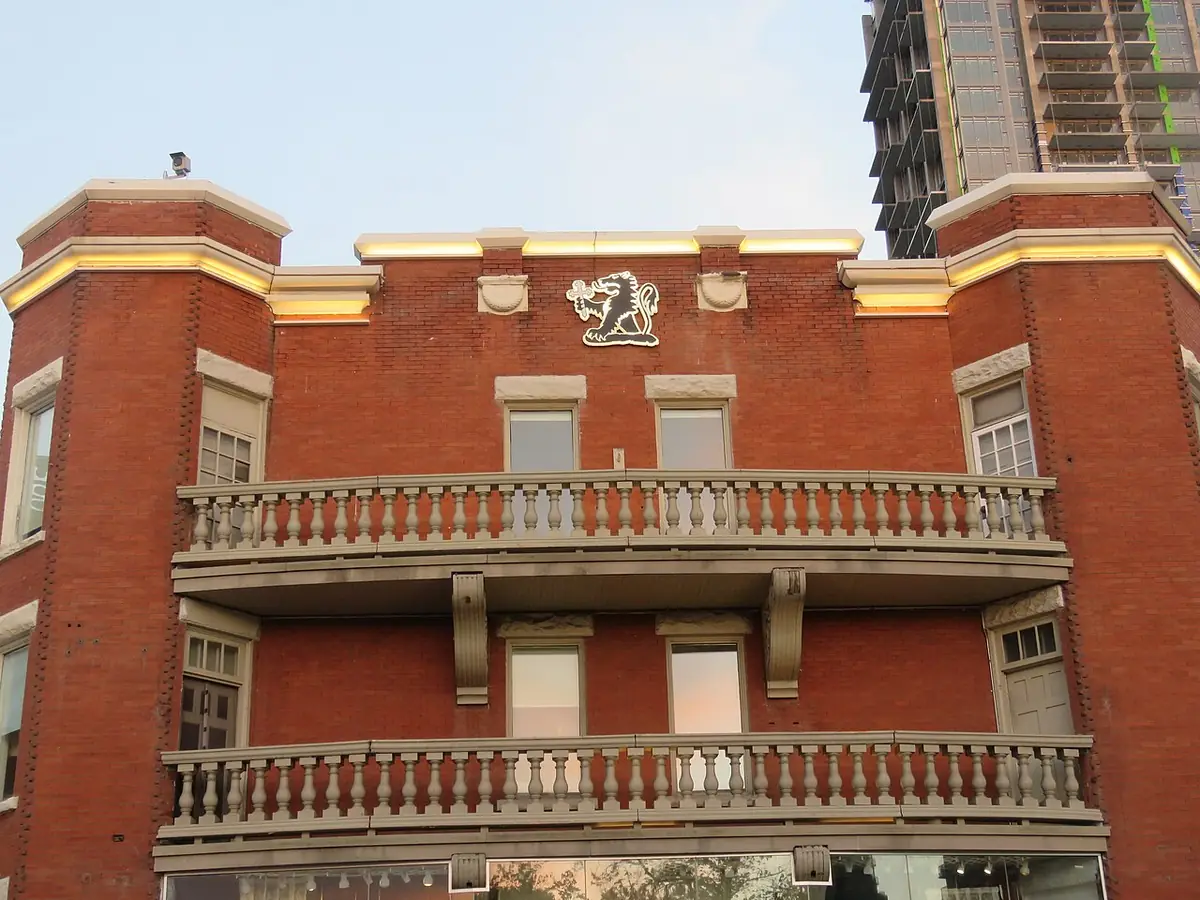
Detailed brick facades like this show the character of Calgary's older apartments — Photo: Benlarhome · CC BY-SA 4.0 · Wikimedia Commons
The most useful walk through a property is an ordinary day in it. Morning light, the walk to transport, what can be reached on foot, what the building itself provides and what the balcony is really like: these are the features that separate the top and the bottom of a building's price range, and they are the ones a careful estimate has to price explicitly.
07:30The apartment, Downtown or BeltlineWaking to natural light through the wide glazing typical of modern construction, with an open view over the towers or the distant mountains. Aspect and outlook are among the largest single adjustments between two otherwise identical units.
08:30The nearest CTrain stationUnder ten minutes on foot, reaching the economic core of downtown without the winter parking problem. Walking distance to the CTrain is one of the few location factors buyers price consistently, and it holds its weight through the cold months.
12:30The local shopping street (17th Avenue SW)Lunch in a neighbourhood cafe or a quick stop at a nearby grocer for the week's meals, all without the car. A unit that lets a household drop a vehicle supports a firmer figure than floor area alone suggests.
17:30The building gymA session downstairs rather than an outside membership. The amenity is real, but the condo fee pays for it: check the fee is proportionate to what the building actually offers before crediting it in your estimate.
19:00The private balcony or living roomAn evening with no lawn to cut and no exterior landscaping to manage. Balcony size, screening and orientation are small features that repeatedly separate the best and worst units in the same tower.
What the listing photographs never show, and what it does to the value
Behind the visual polish of an online listing sit technical and regulatory realities particular to the Calgary market. Overlook them and an apparently excellent figure turns into a financial hole or a daily irritation. These are the dimensions to audit before you settle on any number, whether you are setting a price or checking one.
The history of the corporation's reserve fund
An underfunded reserve signals large and imminent special levies to pay for roof or lift replacement, and a buyer who reads the study will subtract that expected cost from your asking price in full.
The rules governing parking stalls and storage
Many apartments come with unheated outdoor stalls, a serious drawback through polar cold snaps when starting a vehicle without a working electrical outlet becomes an ordeal. Titled heated parking and a surface stall are not the same asset and should never be valued alike.
The exact orientation and the thermal quality of the glazing
A due north aspect combined with poor insulation can drive heating bills sharply up through Alberta winters, while a full west aspect with no cooling turns the unit into a greenhouse in summer. Both are visible in the running costs and both move the price.
The bylaws covering rentals and pets
Some corporations formally prohibit short-stay letting or impose severe restrictions on the size and number of pets, which removes whole categories of buyer from your pool and, with them, part of the value.
The misjudged values owners regret six months after the keys change hands
Looked likeA golden opportunity, with condo fees curiously low next to everything else in the area.
Turned outA badly run-down corporation whose board had refused to raise contributions for the sake of popularity, leading to a record special levy to repair the underground garage.
Would have caught itAlways insist on the independent reserve fund study covering the last three years, and have a specialist read it before you commit to a figure.
Looked likeAn extremely quiet and peaceful location, seen at the height of summer.
Turned outA major road that became a morning bypass route as soon as the city's first big spring roadworks got under way.
Would have caught itVisit at a range of deliberately chosen times, particularly the morning and evening peaks, to judge the real noise level and traffic, both of which buyers price without saying so.
Looked likeA modern apartment with flawless, well-designed interior finishes.
Turned outA hurried cosmetic cover over recurring water ingress at the balconies and facades that were poorly sealed against the weather.
Would have caught itAppoint an independent certified inspector to carry out thermal imaging and a close examination of the building envelope, whatever the apparent age of the property.
Looked likeUnderground parking included in the price with no particular mention made of it.
Turned outA stall held under a separate lease or a precarious right of use, not attached to the main land title of the apartment.
Would have caught itCheck the land titles with absolute care to confirm that the parking stall and the storage locker form part of what is actually being conveyed, and therefore of what is being valued.
Whose valuation assumptions break down in Calgary
A property figure is never universally right, it is right for a purpose and a time horizon. In Calgary's particular economic and geographic setting, some owners build estimates on assumptions the local market simply does not support, and the gap only becomes visible when they try to act on the number.
The speculative investor pricing in a quick gain over a horizon of less than twenty-four months
→A figure that assumes a small condo unit in one of the recent downtown towers will resell sharply higher.
The transaction costs at both ends (legal fees, transfer registration where applicable, resale commission) combined with Calgary's supply cycles absorb the whole projected margin over so short a period, so the paper gain never becomes a real one.
The professionally mobile owner likely to move out of the province within three years
→A value built on the idea that owning always beats paying someone else's rent.
The interest paid in the early years far exceeds an equivalent rent and the capital has no time to build, so the only figure that matters at exit is the price net of costs, which sits well below the headline number.
The household stretched to the limit of its borrowing capacity with no reserve for unplanned costs
→An estimate that quietly leaves out condo fees, special levies and the risk at mortgage renewal.
A rise in rates at renewal or a single unexpected special levy forces a hurried sale, and a forced sale realises far less than any calm valuation, which makes the original figure academic.
So how much weight should you put on the figure you are holding?
Green spaces like Inglewood Bird Sanctuary offer an easy escape close to home — Photo: Grungaloo · CC BY-SA 4.0 · Wikimedia Commons
At the end of a careful reading of how value is set in Calgary, the judgement is yours to make. A figure on an apartment in this city is not the product of an optimistic chart or a hopeful comparison with the unit that sold upstairs. It is the point where several independent lines of evidence converge: comparable sales in the same building, the documented condition of the unit and the envelope, the financial health of the corporation, and the running costs any buyer will subtract before they bid.
Work through each of those before you rely on the number for anything binding. If the comparables cluster rather than scatter, if the reserve fund study has been read by someone who understands it, if the parking and storage are confirmed on the title, and if the city's assessment sits in the same territory rather than a different one, then your figure is doing real work and you can negotiate from it with confidence.
If those checks disagree with each other, that disagreement is the finding. Pausing to gather the missing documents, to watch how a few more comparable units settle, or to commission a proper appraisal is not a delay, it is the difference between a price you can defend and a price you merely hope for. The Calgary market will keep producing evidence for anyone patient enough to read it.
Related questions
What is the minimum down payment required to buy an apartment in Calgary?
The minimum down payment depends on the purchase price under Canadian federal rules. It is generally 5 % for properties worth less than 500,000 dollars, and rises for the brackets above that. A larger down payment often secures better terms from lenders and lowers the overall cost of the loan, which is also why two identical units can be affordable to very different pools of buyers.
Do condo fees in Calgary always include heating and electricity?
No. Every corporation sets its own energy management rules. Some include water and heat in the monthly fee, while electricity is almost always paid by the resident owner through an individual meter. Establish exactly what is included before you compare one building's fees with another's, because a fee that looks high may simply be covering more.
Can a non-resident of Canada own property in Calgary?
Yes, buying property is open to non-residents in Canada, although specific regulations and taxes on purchases by foreign buyers may apply depending on the province and the municipality. It is strongly advisable to work with legal and tax advisers who specialise in Alberta property law before starting anything.
How long does a property transaction in Calgary usually take to complete?
Once the offer is accepted and the conditions have been removed, the period running to possession (the closing date) generally falls between 30 and 90 days. That window is used to finalise the mortgage arrangements and prepare the transfer documents with the legal professionals handling the file.
How do municipal property taxes work for an apartment in Calgary?
Property taxes are calculated each year by the City of Calgary on the basis of the assessed value of your property. They are payable in a single instalment or by automated monthly payments through the TIPPS programme the city runs to help owners spread the cost. That assessed value is also a useful, if lagging, cross-check on any market estimate.
What is a reserve fund study for a Calgary condominium?
It is a mandatory technical and financial audit carried out by engineers or independent experts. The study assesses the long-term condition of the building's common property and sets out precisely how much the corporation needs to be saving to meet future major replacement work. It is one of the single most useful documents for judging whether a price is realistic.
Is buying a new-build or off-plan apartment in Calgary a good idea?
Buying off-plan brings builder warranties and modern, customised finishes, but it carries the risk of delivery delays and real uncertainty over the eventual value of a district still under development. A careful look at the developer's track record is essential before you accept any projected figure.
Do I have to use a building inspector before buying an apartment?
Although it is not strictly required by law, a pre-purchase inspection by a certified professional is a highly recommended condition. It uncovers hidden defects, water ingress and electrical non-compliance that would otherwise cost you dearly later, and the written report is what justifies adjusting a price up or down.
What legal fees should I expect on a purchase in Calgary, Alberta?
In Alberta, property transactions are generally handled by real estate lawyers rather than by civil-law notaries. Legal fees vary with the complexity of the file, and land titles registration fees are charged on top.
How do Calgary's harsh winters affect the upkeep of apartment buildings?
The abrupt temperature swings known as Chinook winds, together with heavy snowfall, demand close attention from condo managers to roof waterproofing, foundation drainage during the thaw and regular servicing of shared heating systems. A building that has kept up with that work is worth measurably more than one that has not.
Property review of ting
No ting properties in Calgary yet
Be the first — share it on ting and it shows up right here.