Investing in an apartment in Calgary calls for a close understanding of the neighbourhoods, of how condominiums work and of Alberta's particular climate and legal setting. This guide walks you step by step through structuring your purchase clearly, away from the marketing promises and the received ideas about the Canadian market.
Get the app
What nobody tells you.
Real prices, hidden costs and the traps to check before you commit.
What buying an apartment in Calgary actually involves day to day
Scroll
What buying an apartment in Calgary actually involves day to day
Investing in an apartment in Calgary calls for a close understanding of the neighbourhoods, of how condominiums work and of Alberta's particular climate and legal setting. This guide walks you step by step through structuring your purchase clearly, away from the marketing promises and the received ideas about the Canadian market.
Written by the ting.ad editorial team ·
10 Street SW, Calgary in Street View: drag to look around.
That tension between central location and upkeep obligations shows up directly in the profiles of the people buying here.
Investing in residential property in Calgary means looking past the sales brochures and the promises of quick returns. Every neighbourhood sets its own rhythm, its own distance from the transport corridors and its own maintenance constraints, and all of that changes what your investment really is. Between variable condo fees and the demands of a hard winter, how comfortable a home feels depends as much on how it was built as on where it sits. The structural trade-offs deserve to be worked through before you commit to a transaction in this fast-moving western Canadian market.
Being right next to the city centre and the office towersvsA very dense urban lifestyle in buildings with high monthly fees
Living close to the core lets you get to work without a car, but it comes with smaller outdoor space and stricter collective management of the shared areas. Modern towers offer built-in amenities, and those feed straight back into the monthly fees.
Buying in an outlying residential districtvsMore living space, but complete dependence on a car
Moving away from the rapid transit stations buys you a lower cost per square metre and larger rooms for the same budget. In exchange, daily journeys demand careful planning once winter weather sets in.
Choosing a renovated older building with charactervsUnpredictable maintenance costs and reserve funds that are sometimes too thin
Older construction often comes with generous proportions and the architectural character buyers look for. It also calls for closer attention to the state of the roof, the foundations and the shared heating systems.
Picking a new development still being finishedvsPossible delivery delays and unplanned adjustments to the fees
Buying off plan brings modern energy standards and builder warranties that cover the early years. What you accept in return is uncertainty about how the surrounding neighbourhood finally settles and how the condominium corporation is first set up.
Which kind of buyer are you in the Calgary property market?
Those personal trade-offs take on a particular colour when you come to this market with reference points formed somewhere else.
The Calgary property market does not answer the same way depending on whether you want a functional weekday base, a long-term family home or a rental investment aimed at mobile professionals. The structure of the fees, how close the parks are and how easily you reach the main road corridors all redefine what an apartment is worth in your particular situation. Working out your own profile is what keeps you from the casting errors that later weigh on resale or on the quality of your daily life.
Urban professional
You care most about quick work journeys and about having restaurants and leisure close at hand. A compact apartment near the transit lines or in the central districts gives you maximum flexibility. Maintenance is handed over to the building management, which frees up time for everything else. What you accept is an efficiently laid out interior and no private garden, in exchange for a shared terrace or a balcony.
Family home
Your priority is the quieter residential districts, the ones with well regarded schools and safe local parks. In that context a family sized apartment or a low rise condominium is a reasonable compromise between the security of collective management and having several bedrooms. The condo fees need close examination so you can anticipate how they move over the long term. A private parking space and a storage locker become essential.
Rental investor
You are looking for a home that is easy to let, in an area sought after by the employment pools in energy, technology or health care. How liquid the property is on resale, and the ratio between fixed charges and potential rental income, guide every decision. It is worth checking the condominium bylaws to make sure nothing bans or limits medium or long term renting. The financial strength of the corporation is the decisive criterion here for protecting your capital.
Settling in Calgary when you arrive from abroad: the reference points to reset
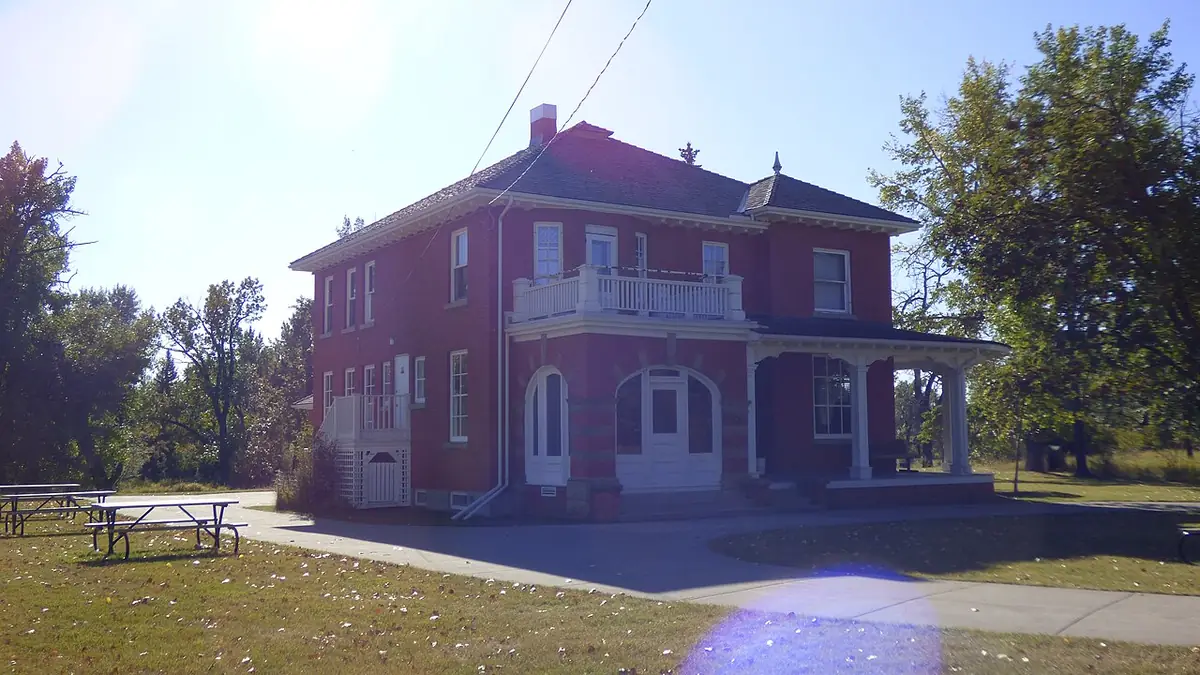
Heritage homes like this anchor Inglewood, one of Calgary's older residential pockets — Photo: James Mott · CC BY-SA 4.0 · Wikimedia Commons
Once those reference points are in place, choosing the right area becomes the central step in the process.
Carrying your home country's property habits into western Canada exposes you to real cultural and technical gaps. Floor area, thermal performance and the way a condominium works all rest on very different legal and climatic foundations here. Understanding those divergences from the start is what prevents unpleasant surprises when the contracts are signed and you move into your new home.
From abroad
A cultural reference point of older stone buildings and walkable historic centres
Calgary
A recent urban layout, organised around wide avenues and functional zones
You have to accept a less dense cityscape, where a car remains a frequent link for shopping and leisure outside the central districts.
From abroad
A strictly regulated way of calculating habitable floor area
Calgary
Ways of measuring surface area that often include balconies or ancillary space, depending on the developer
Checking the official plans, and measuring for yourself, is essential if you want to compare the real price per square metre of each apartment fairly.
From abroad
The owners' meetings you are used to at home, run under your own country's rules
Calgary
A condominium corporation run by professional boards under strict reserve fund rules
The compulsory financial reserves protect the building against the unexpected, but they translate into monthly contributions that can be higher than you are used to.
From abroad
Thermal insulation standardised by uniform national regulations
Calgary
Construction requirements built around Alberta's hard winters, with materials chosen for them
The heating system, the double or even triple glazing and the sealing of the facades are crucial things to audit before any firm offer.
How to choose your Calgary neighbourhood according to what matters to you
Those atmospheres translate into budget realities that deserve a rigorous look.
Calgary's geography is built around the Bow River and a network of major corridors that divide the city into areas with strongly contrasting atmospheres. From the energy of the Beltline to the residential calm of Parkhill or the accessibility of the northwest, each zone strikes its own balance between travel time, green space and the kind of neighbours you will have. Reading how daily life actually feels in these different settings is what lets you narrow your search precisely.
The central area and its immediate surroundings (Beltline, Downtown)
Constant urban activity, easy journeys on foot or by transit, and a rich cultural offer right outside your door.
Suits
Buyers who want to cut out the daily commute altogether and enjoy a lively, current lifestyle.
Trade-off
Smaller living space for the same budget, and parking that is often governed by strict condominium rules.
The riverside, park-lined neighbourhoods (Hillhurst, Sunnyside)
A comfortable compromise between the parkland along the river and welcoming independent local shops.
Suits
Those who want leafy surroundings while staying only minutes from the city's business core.
Trade-off
Strong pressure on the local market, which shows up as higher prices and homes that sell very quickly.
The established residential districts (northwest or southwest)
Quiet tree-lined streets, the feel of an urban village and direct access to the main schools and universities.
Suits
Families and anyone who puts quiet, green space and a settled local community first.
Trade-off
A heavier reliance on the car to reach downtown at peak hours, and condo fees that are sometimes particular to the building.
What an apartment in Calgary really costs, area by area
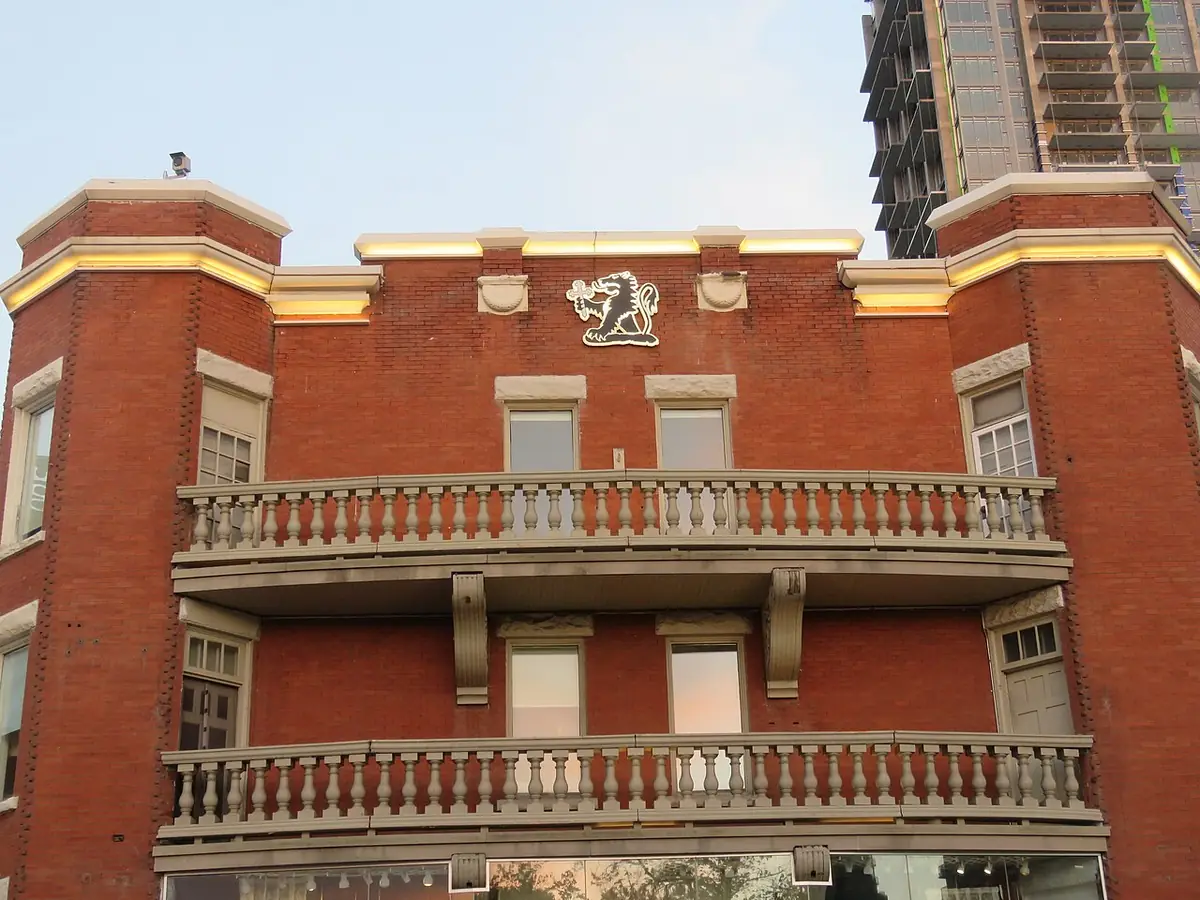
Heritage apartment blocks like the Devenish mix shops and homes downtown — Photo: Benlarhome · CC BY-SA 4.0 · Wikimedia Commons
Beyond the raw figures, the legal nature of what you own deserves very close attention.
Working out your acquisition budget does not stop at the asking price shown on the property portals. In Calgary, municipal property taxes, monthly condo fees and the movement of interest rates all feed directly into the overall financial load. It is essential to look at the ranges the market actually shows, so you can build a financing plan that does not put you at risk if economic conditions shift.
calgaryFor saleApartmentestimate
Median price / m²CA$4,370Half the apartments sell below this
Median priceCA$350kthe average is 14% higher — a few very large properties pull it up
Most common2 bedrooms45 % of listings
Average size76 m²
By number of bedrooms
Bedrooms
Share of market
Avg price
Price / m²
Avg size
1
38 %
CA$299k
CA$5,152 +12 %
58 m²
2most common
45 %
CA$368k
CA$4,600
80 m²
3
14 %
CA$449k
CA$4,278 −7 %
105 m²
4
3 %
CA$538k
CA$4,140best value / m²
130 m²
Each row is an average, compared against the area average of CA$4,600 / m². These are indicative estimates of a typical local market, not a measured sample of live listings. Check current listings before relying on them.
Condominium ownership in Calgary: what you actually hold
That administrative discipline runs through every stage of the purchase, right up to the handover of the keys.
Buying an apartment in a Calgary condominium (usually just called a condo) involves a precise split of responsibility between your own private property and the shared parts of the building. The Canadian legal framework protects owners with strict reserve fund obligations, but it also imposes an administrative discipline that every buyer needs to absorb before signing.
Your private share and the common property
You are the exclusive owner of the interior of your home, bounded by the bare walls, along with the fittings attached to it. Everything else, from the load-bearing structure to the outdoor landscaping, the corridors and the lifts, belongs collectively to all the owners in the building.
What it changesYou cannot alter the exterior structure or the look of your balcony without express permission from the condominium board, which is what preserves the visual coherence and the overall value of the building.
The reserve fund and special assessments
Alberta legislation requires regular reserve fund studies to plan for replacing the building's major systems, such as the roof, the boilers or the lifts. If the money set aside turns out to be insufficient when a large project comes up, a special assessment is voted through.
What it changesGoing carefully through the condo documents before conditions are removed is the only effective protection against paying for unplanned work in your very first month in the building.
The basic rule to understand before you put down a deposit
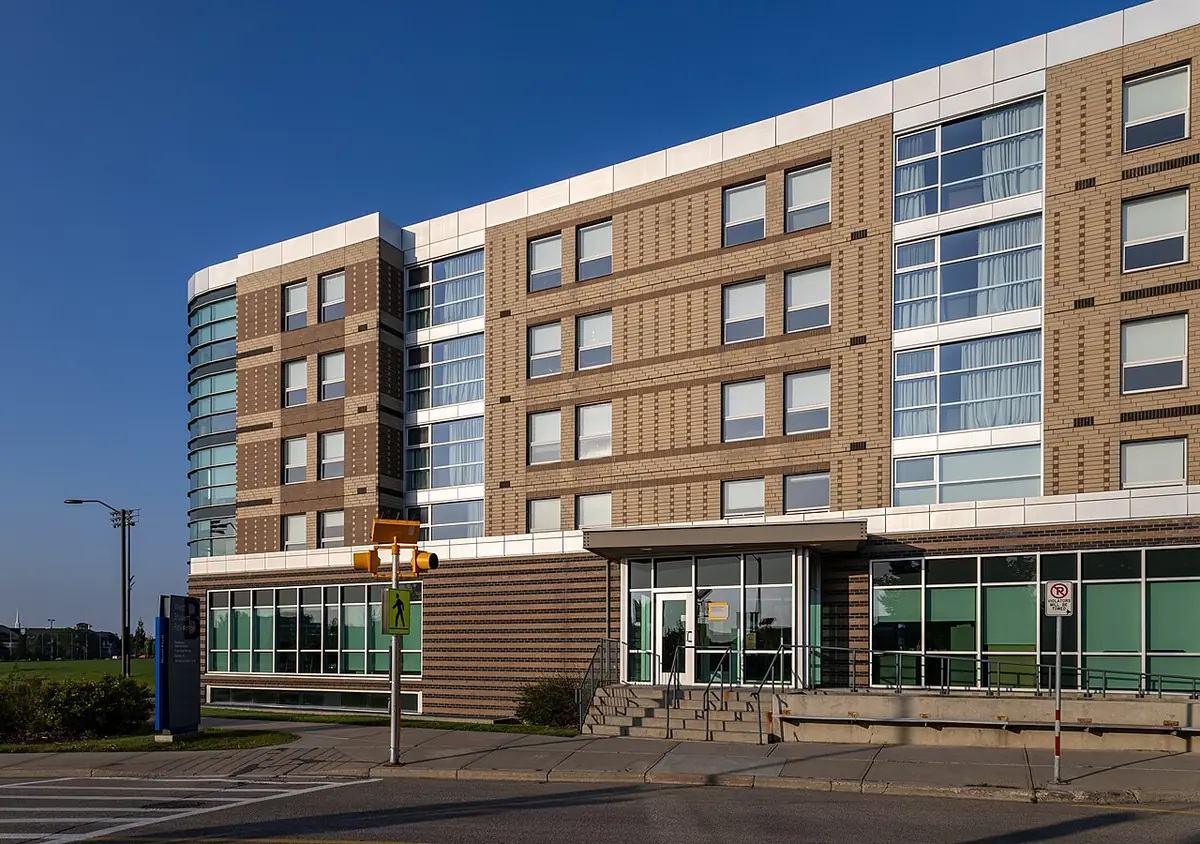
Newer mid-rise blocks like this are common across Calgary's residential streets — Photo: Chris Woodrich · CC BY-SA 4.0 · Wikimedia Commons
Once those steps are cleared, the transaction follows a precise timetable run by the professionals involved.
In the Calgary market, writing an offer is not a blind commitment from the moment it is drafted. It is built around a condition period, usually seven to ten days, during which the buyer carries out every technical and financial check. This is the most critical stretch of the whole purchase, because it decides whether you can walk away without penalty if something disqualifying turns up.
Your local real estate agent drafts the written offer with the protective clauses you cannot do without.
The seller formally accepts the offer, which starts the countdown on the condition period.
A specialist reviews all the condominium documents in depth, looking for disputes or shortfalls in the funds.
A certified independent expert carries out a full technical inspection of the building and the apartment.
Your financial institution gives final approval on the financing and the mortgage.
Conditions are formally removed, which makes the sale firm and final before the file goes to the lawyer or notary.
How a Calgary property transaction unfolds, step by step
Preparing each stage with that kind of discipline is what turns your Calgary property plan into something solid and lasting.
Buying property in Calgary brings in several professionals working in sequence: the buyer's agent, the seller's agent, the home inspector, the appraiser and the lawyer or notary. Each has a precise role in securing the transfer of ownership and making sure every local rule is scrupulously followed. Knowing how that chain fits together lets you steer your own project calmly.
You and your real estate agentDefining the plan and targeted viewingsYou view the shortlisted homes in the neighbourhoods you have targeted and test how well they match your criteria and your budget.
Your real estate agentDrafting and negotiating the offerThe offer goes to the seller with the protective clauses and the time needed to carry out the inspections and checks.
The home inspector and the condominium document reviewerTechnical and documentary auditsA thorough check of the physical condition of the home and the financial health of the condominium corporation during the condition period.
Your financial institutionFinalising the mortgageFinal approval of the funds and transmission of the financial instructions to the legal professional handling the file.
The lawyer or notarySigning the legal documents and transferring fundsSignature of the official documents, registration of the title with the Alberta authorities and payment of the purchase price.
You and your agentHandover of the keys and moving inYou collect the keys on the agreed date and carry out a final walkthrough that formalises your move into your new home.
Apartment or house in Calgary: weighing upkeep against being central
Once the type of property is settled, the central question becomes the full financial reality of moving here.
Choosing between a condominium apartment and a detached house in Calgary is not simply a matter of floor area or of the initial budget. It is a structural trade-off between the time you are willing to give to maintaining your property and the location you want for daily life. Central districts such as the Beltline or Downtown offer a dense urban life, where condominiums put walking, transit and services within reach without the burden of outdoor space. Move out towards the residential rings and the individual house imposes heavy physical demands, from summer mowing to hard winter snow clearing, but it does guarantee complete independence from a condominium corporation.
The Calgary market has one pronounced peculiarity when it comes to condo fees. Unlike other cities where these charges stay stable, Calgary condominiums, particularly the towers built between the 1970s and the 1990s, are facing significant increases in insurance premiums and in the cost of maintaining building envelopes. Buying an apartment therefore means analysing the building's reserve fund with absolute rigour. An engineering study that has been under-provisioned can turn an apparent bargain into an unplanned financial hole, a long way from the peace of mind that first-time buyers or simplicity-seeking investors were after.
In asset terms, the way value builds diverges sharply between these two types of property in Calgary. Detached and semi-detached houses have historically held on to faster and more predictable capital appreciation, supported by the relative scarcity of land in the established districts. Apartments, by contrast, face stronger competition from new developments and the steady delivery of residential towers. If your aim is to maximise the gain over the medium term, the house or the half-duplex almost always wins. If you are after gross rental yield or a drastic cut in your commuting time, the central apartment remains the more rational instrument.
Finally, daily life in Calgary is deeply shaped by the continental climate and the severity of the winters. Living in an apartment often means having heated underground parking, an advantage that is hard to overstate when temperatures drop sharply below minus 30. You step out of your home straight into the sheltered city, without having to clear an iced-over driveway at dawn. In a house the interior comfort is certainly greater, with generous volumes and no shared walls, but the price paid to the weather demands a logistical resilience that every buyer should assess honestly before signing.
What budget do you really need to live and to house yourself in Calgary?
To see how those costs come together in practice, it helps to follow a typical day in the city.
Buying an apartment in Calgary commits you well beyond the monthly mortgage payment your broker works out. Between municipal property taxes, monthly condo fees and the essential utilities, the total cost of ownership calls for careful financial modelling. Ignoring these layers of recurring expense leads without fail to budget strain in the first year, all the more so as local inflation hits insurance and energy particularly hard.
Monthly and annual cost items for an apartment in Calgary
Cost item
Estimated range
Frequency
Effect on the budget
Municipal property taxes
$1,500 to $3,500
Annual
Varies with the city's assessed value and the area you choose.
Condo fees
$400 to $900
Monthly
Depends on the size of the building, its age and the amenities included.
Homeowner's insurance
$45 to $95
Monthly
Rising generally across Alberta because of weather-related risk.
Heating, electricity and water
$120 to $250
Monthly
Wide seasonal swing tied to the hard winters and to gas prices.
The amounts shown are indicative averages based on Calgary market data and can vary from one condominium to another.
Health care, schools and transport: what does an ordinary Tuesday in Calgary look like?
Detailed brick facades like this show the character of Calgary's older apartments — Photo: Benlarhome · CC BY-SA 4.0 · Wikimedia Commons
Beyond that well-oiled routine, the market hides realities the sales brochures carefully leave out.
The pace of life in Calgary is set by the sheer size of the city and by how freely its main road and rail corridors move. An ordinary Tuesday shows how residents juggle the journey into the centre, access to health care and family obligations. Reading that timeline is how you measure the real effect your future address will have on your quality of life and on how tired you are at the end of the day.
07:30A residential neighbourhood (Hillhurst or Bankview, for example)Waking up and getting ready in a bright apartment. A check on the outside temperature and the state of the roads before setting off.
08:30The local C-Train stationThe journey downtown by transit or by car. The light rail network is the vital artery of commuting here.
12:30Downtown CalgaryLunch in the commercial core. The indoor pedestrian links (Plus 15) let you move around sheltered from the weather.
17:00Day care or schoolPicking up the children. How close the public or Catholic schools are is a decisive criterion when choosing a district.
18:30A community centre or a neighbourhood green spaceExercise or a last-minute errand at the local shops before heading home for the evening.
What developers and agencies will not tell you about property in Calgary
Those grey areas explain why so many buyers bitterly regret certain choices six months after moving in.
Buying property in Calgary is governed by specific market practices that the advertising brochures sanitise. Behind the promises of high returns and unobstructed views of the Rockies sit very real technical, regulatory and climatic constraints. Knowing about these unspoken aspects saves you from harsh financial disillusion after the deal closes.
The effect of destructive hailstorms
Calgary sits in the part of Canada worst affected by hail. Facades, roofs and vehicles parked outside regularly take major damage, which sends condominium insurance premiums soaring for every owner in the building.
How volatile special condominium assessments can be
A vote at a general meeting can require you to pay thousands of dollars within months to redo the roof or the central heating system, if the building's reserve fund turns out to be too small to cover mandatory work.
The strict winter rules on street parking
During emergency snow clearing operations, alternating or banned parking can turn finding a space into an obstacle course, which makes private underground parking absolutely essential.
Solar orientation and managing summer heat
Apartments facing due west with no air conditioning become hard to live in during summer heat waves, because local condominium rules often prohibit fitting air conditioners to the facade at will.
The classic traps buyers in Calgary discover six months later
Faced with those measurable risks, it is fair to ask whether buying in Calgary really suits everyone.
Looked likeAn excellent financial deal, with condo fees unusually low for the area.
Turned outA badly run building with an empty reserve fund, leading straight to an enormous special assessment voted through in the first spring.
Would have caught itInsisting on a full review of the condominium documents by a specialist before conditions are removed.
Looked likeA hyper-central location, perfect for doing everything on foot without owning a car.
Turned outUnbearable noise at night on weekends and no food shops nearby at all for everyday groceries.
Would have caught itVisiting the neighbourhood at different times of the day and night, especially Friday and Saturday evenings, to judge the real atmosphere.
Looked likeA modern apartment with wide west-facing windows to make the most of the natural light.
Turned outUnmanageable overheating in summer and outsized electricity bills from the constant use of fans and portable air conditioners.
Would have caught itChecking whether the building has central air conditioning and how effective the insulating glazing is (double or triple).
Looked likeA quick estimate of travel times, based on sales material produced in easy summer conditions.
Turned outA daily ordeal on congested motorway corridors as soon as the weather turns in winter or road works start.
Would have caught itDriving the route yourself at peak hours on a weekday before submitting a firm offer.
The exceptions: who should firmly avoid buying an apartment in Calgary?
It is time to set out the final terms of the decision, so you know whether to go ahead now.
Getting on the property ladder is often presented in Canada as an unquestionable financial article of faith, but it is the wrong calculation for several kinds of household. The rigidity of the Calgary market, combined with transaction costs and the regional economic uncertainty tied to the energy sector, sometimes calls for caution. Knowing when to give up on buying and rent instead is a financially saving decision in specific cases.
The worker moving between countries or between provinces
→Staying a flexible tenant
Legal fees, agency commissions and mortgage break penalties wipe out any potential gain if the property is sold again before a minimum of four or five years.
The household whose emergency savings are too thin
→Keeping their capital in cash
Buying an apartment exposes you immediately to unplanned expense, whether interior repairs or a special condominium assessment for work on the facade.
The investor after an immediate, effortless rental yield
→Looking at other asset classes
High condo fees and local taxation cut the net return on small apartments compared with other investment opportunities that take up less time.
The decision in the round: are you ready to buy in Calgary?
Green spaces like Inglewood Bird Sanctuary offer an easy escape close to home — Photo: Grungaloo · CC BY-SA 4.0 · Wikimedia Commons
At the end of this analysis, deciding to buy an apartment in Calgary is no longer a matter of impulse or of falling for a renovated kitchen. It is a considered commitment that requires your professional horizon, your tolerance for financial risk and your acceptance of the local climate to line up. If you expect to be rooted in the city for less than five years, the economic friction of buying and then selling argues clearly for keeping a flexible rental position.
If, on the other hand, you have verified the financial strength of the condominium you are looking at, you understand what the recurring charges really are, and you accept the pace of life in the central or residential districts, the Calgary market offers rational opportunities. Prices per square metre remain more accessible here than in other large Canadian cities such as Vancouver or Toronto, which leaves a space-to-price ratio that still makes sense for rigorous buyers who take the time to pull each file apart before signing.
Your next step is not to scroll through the listing portals, but to audit your real capacity to save and to appoint an agent or an independent inspector who specialises in analysing Calgary condominiums. Insist on full access to the minutes of the general meetings for the last three years. It is those dry documents, far more than the polished marketing photographs, that will decide whether your investment succeeds or fails over the long term.
Buying in Calgary is an excellent decision provided you approach it as an industrial and asset-building project rather than a simple act of residential consumption. The city rewards those who anticipate the true cost of the climate, of maintenance and of collective management. Respect those methodological guardrails and you will turn your move into a solid asset base for decades to come, properly anchored in Alberta's particular dynamic.
Related questions
What do condo fees typically cost for an apartment in Calgary?
Condo fees generally run between $400 and $900 a month, depending on the size of the home, the age of the building and the services included, such as a pool or on-site security. Looking at the history of those fees is essential if you want to anticipate future increases.
Do you have to buy underground parking with an apartment in Calgary?
There is no legal obligation, but having a heated underground parking space is strongly recommended in Calgary given the harsh winters, the heavy snowfall and the city's strict snow clearing policies.
How do you check the financial health of a condominium before buying?
You need to order the reserve fund study and the minutes of the general meetings for the last three years, and have an inspector or a specialist professional analyse them.
What property taxes apply to an apartment in Calgary?
Municipal property taxes depend on the official assessment of the property by the City of Calgary and generally fall in a range from $1,500 to $3,500 a year for a standard apartment.
How does the weather affect property in Calgary?
Calgary's climate is marked by very cold winters and frequent hail in summer. Those factors feed directly into home insurance costs and call for particularly resistant facade and roofing materials.
Is it better to buy downtown or in the Calgary suburbs?
It depends on how you live: downtown favours shorter journeys and getting around on foot, while the suburbs and outer residential rings offer more living space at the cost of a longer commute.
What legal and transaction costs should you plan for when buying in Calgary?
On top of the initial down payment, you should plan for legal fees, the building inspection fee, a professional appraisal and provincial land transfer charges where they apply, amounting to several thousand dollars.
Are apartment prices in Calgary stable compared with detached houses?
Detached houses have historically shown greater stability and faster appreciation, while apartments face stronger competition from new developments and sometimes more pronounced volatility.
How long does it take to complete a property purchase in Calgary?
The full process, from the first viewing to taking possession by way of removing the conditions and getting mortgage approval, generally takes between 30 and 60 days.
Can you easily rent out an apartment bought in Calgary if you decide to move?
Calgary's rental market is active, supported by the province's population growth, but it is subject to condominium rules that can sometimes impose quotas or restrictions on renting to investors.
Property review of ting
No ting properties in Calgary yet
Be the first — share it on ting and it shows up right here.