

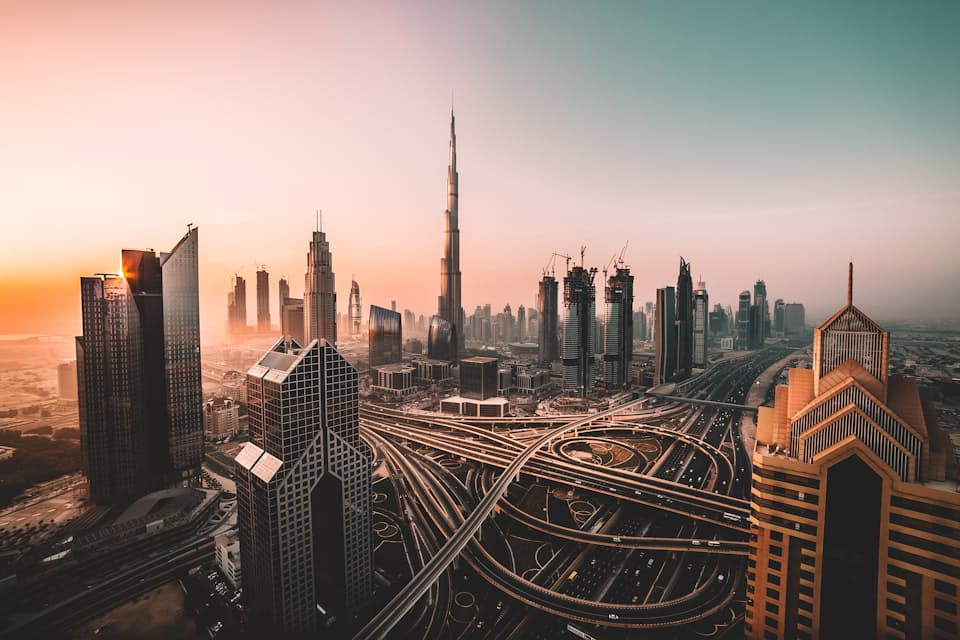
- Foreigners own fully. You can own a home outright across most of the new city — no local partner, no residency needed.
- The numbers are hard to beat. 6–9% rent a year, no yearly property tax, one flat 4% fee to buy.
- The market is huge and open. 914,087 recorded sales — Dubai Marina alone did 90,647.
- Buying is fast. A cash purchase is done in about two weeks. Plan for the price plus 8% all in.
- Renting has its own rules. A year paid up front by cheque, a must-do Ejari registration, and rent rises limited by RERA.
- A home can earn you residency. AED 750k gets a 2-year visa; AED 2M the 10-year Golden Visa.
Start with the data
Dubai is one of the most transparent property markets in the world — every sale is recorded by the Dubai Land Department. ting puts that data to work for you:
Why Dubai
Few cities have changed as much as Dubai. In just one generation it has grown from a small Gulf trading port into one of the world's best-connected cities — home to more than 200 nationalities, the world's busiest international airport, and an economy that moved beyond oil long ago into trade, tourism, finance and technology.
For people who live here, the draw is simple: no tax on your salary, sunshine all year, some of the safest streets anywhere, and things that just work. For buyers, it's one of the few big cities where renting out a home brings in 6–9% a year, and where foreigners can fully own a home across most of the new city. For visitors, it mixes record-breaking sights with old-town markets, little wooden ferries on the creek, and quiet public beaches.
The property market in numbers
Numbers first — this is what Dubai's market actually looks like, from recorded Dubai Land Department transactions:
Homes make up most sales — about 764,000 of all recorded deals — with apartments making up most of those, at an average of roughly AED 1.56M. So where is everyone buying? These are the busiest areas by recorded sales:
| Area | Transactions | Avg AED / sq ft |
|---|---|---|
| Dubai MarinaMarsa Dubai | 90,647 | 1,761 |
| Business Bay | 72,764 | 1,676 |
| Jumeirah Lakes TowersAl Thanyah 5th | 59,747 | 964 |
| Jumeirah Village CircleAl Barsha S. 4th | 59,666 | 1,026 |
| DowntownBurj Khalifa district | 46,292 | 2,233 |
| Palm Jumeirah | 28,103 | 1,865 |
Source: Dubai Land Department transaction records. Explore any area in detail in the Area Guides, or check a specific building in Transactions.
How Dubai compares to other world cities
If you're comparing Dubai with the other cities investors put their money into, it comes down to three things: how much it costs to get in, how much rent you earn, and tax. Here's the honest picture:
| Prime market | Price / sq ft (USD) | Gross yield | Annual property tax |
|---|---|---|---|
| Dubai | ~$950 | 6 – 9% | None |
| London | ~$2,900 | 2 – 4% | Council tax + stamp duty up to 17% |
| New York | ~$2,500 | 2 – 4.5% | ~0.9 – 1.9% of value, yearly |
| Singapore | ~$2,000 | 2 – 3% | Up to 60% stamp duty for foreigners |
Rough 2026 figures for top areas, just to give you a feel. The big difference: in Dubai you pay a one-time 4% to buy, and after that your only running cost is the building service charge.
That's why more and more buyers are people from overseas who never plan to live here — and why there are always plenty of homes to rent for the people who do.
Neighbourhoods at a glance
Dubai is long and linear, stretched along the coast. Where you base yourself shapes your whole experience of the city:
- Downtown & Business Bay — the postcard centre: Burj Khalifa, Dubai Mall, fountains and tall apartment towers. Easy to walk, central, high prices (AED 2,233/sq ft on average).
- Dubai Marina & JBR — waterfront towers, a beach promenade and a huge expat community. The single busiest sales market in the city, and great for renters who want the beach-city lifestyle.
- Jumeirah & Umm Suqeim — low-rise, villa-led neighbourhoods along the public beaches. Quieter, family-oriented, close to some of the city's best schools.
- JLT & JVC — where you get the most for your money: roughly AED 960–1,030/sq ft, newer buildings and more space for what you pay. Both are in the top four busiest areas for a reason.
- Deira & Bur Dubai — the historic heart: gold and spice souks, the creek, and the best-value dining in the city.
Want the full picture for a specific community? Every area has its own guide — start at Area Guides or put two head-to-head with Compare.
What things cost
Dubai can be as expensive — or as reasonable — as you make it. The same city that sells AED 1,000 tasting menus also serves AED 12 shawarma. A rough feel for everyday prices:
| Everyday item | Typical price (AED) |
|---|---|
| Flat white at a specialty cafe | 18 – 25 |
| Casual lunch for one | 30 – 60 |
| Dinner for two, mid-range restaurant | 250 – 400 |
| Metro ride (Nol card) | 3 – 7.5 |
| Taxi across town | 40 – 80 |
| Monthly gym membership | 200 – 450 |
| 1-bed apartment, Marina (yearly rent) | 90,000 – 130,000 |
| 1-bed apartment, JVC (yearly rent) | 55,000 – 80,000 |
Prices are indicative for 2026 and vary by season and neighbourhood — for live property prices use the Price tool.
The bills nobody mentions
Rent is only the headline. A realistic monthly budget for a one-bed apartment adds these on top:
| Monthly bill | Typical range (AED) |
|---|---|
| DEWA (electricity & water) | 400 – 800 |
| Chiller (A/C, if billed separately) | 300 – 600 |
| Housing fee (5% of annual rent ÷ 12, via DEWA) | 375 – 540 |
| Internet (du / e&) | 300 – 400 |
| Mobile plan | 100 – 200 |
| Building service charges (if you own) | AED 10 – 30+ / sq ft / year |
Where everything is
The city runs south-west along the Gulf from the old creek towards Abu Dhabi. Sheikh Zayed Road — and the Red Line of the metro above it — is the spine that connects almost everything below. Pan around — every gold dot is a district covered in this guide.
Tip: most addresses in Dubai are given by landmark and community rather than street number — every listing on ting.ad is organised the same way, so you always know which part of town you're heading to.
How buying a home actually works
If you've bought a home elsewhere, Dubai will surprise you — in a good way. There's no long legal chain that drags on for months: a straightforward cash purchase can be done in under two weeks, and the whole process runs through the Dubai Land Department (DLD), the government office that records every sale — not private lawyers.
- Shortlist with data, not brochures. Check what buildings actually sell for in Transactions and what sellers are asking in Prices before you ever visit.
- Make an offer and sign Form F. Form F (also called the MOU) is the standard sale contract. A 10% deposit cheque, held by the agent, locks it in.
- Get the developer's NOC. The seller requests a No-Objection Certificate confirming service charges are paid (AED 500–5,000, a few days).
- Transfer at a trustee office. Buyer, seller and agent meet at a DLD trustee office; you pay, and the title deed is issued in your name — usually the same day.
What it costs on top of the price:
| Fee | Amount |
|---|---|
| DLD transfer fee | 4% of price |
| Trustee office & admin | AED 4,000 – 5,000 |
| Agent commission | 2% + VAT |
| Mortgage registration (if financed) | 0.25% of loan + AED 290 |
| Bank valuation & arrangement (if financed) | AED 2,500 – 3,500 + ~1% |
Renting: what nobody tells you
Most newcomers rent first — and renting in Dubai has three surprises nobody warns you about:
- Rent is quoted per year, paid by cheque. Landlords usually take 1–4 cheques dated through the year. Fewer cheques means a stronger bargaining position; you can pay monthly, but it usually costs extra.
- Ejari is not optional. Your tenancy must be registered in the government's Ejari system (~AED 220) — without it you can't connect DEWA (electricity & water), get internet, or sponsor family visas.
- Rent rises are limited by law. The official RERA rent calculator sets how much your rent can go up at renewal — if you're already paying the going rate, the landlord may not be allowed to raise it at all. Check the calculator before you accept any increase.
Up-front you'll need: a 5% security deposit (10% furnished), the agent's 5% commission, ~AED 2,000–4,000 DEWA deposit, and your first cheque. Find agents worth talking to under real estate agencies.
Off-plan vs ready: which to buy
Roughly half of Dubai's sales are off-plan — buying from the developer before the building is finished. It's how many investors enter the market, and it works differently from a ready purchase:
| Off-plan | Ready | |
|---|---|---|
| Entry cost | 10–20% down, then instalments | Full price (or 20–25% with mortgage) |
| Price | Below ready market, launch discounts | Market price, negotiable |
| Income | None until handover | Rent from day one |
| Main risk | Delays, market shifts before handover | Paying today's full price |
| Protection | RERA escrow + Oqood registration | Title deed at transfer |
The bad stories from 2008 led to real change: the developer's money now sits in a protected bank account (watched by RERA, the property regulator) and is only released as the building work reaches agreed stages. Still — stick to developers who have actually finished their past projects, and compare the off-plan price against what homes have really resold for in the same area, not the developer's brochure.
Visas & residency through property
Property ownership is one of the cleanest routes to UAE residency:
- AED 750,000+ — a renewable 2-year investor residence visa.
- AED 2,000,000+ — the 10-year Golden Visa, including spouse and children, with no sponsor needed. Off-plan and mortgaged properties can qualify, subject to conditions.
Beyond property, Dubai offers employment visas, freelance permits, a remote-working visa, and free-zone company setups that come with residency — most newcomers combine one of these with renting first, then buy once they know the city.
Where to invest in 2026: three strategies
There is no single "best area" — there are three different goals, and the right one depends on what you want the home to do for you:
- Buying for rental income. Small one-beds and studios in mid-priced areas — JVC, JLT, Dubai Sports City — where prices around AED 1,000/sq ft and steady demand from renters push returns to 7–9% a year. Keep an eye on the building service charge; it decides how much you actually keep.
- Buying for price growth. The city is spreading south: Expo City, Dubai South and the area around the future Al Maktoum airport. Earlier-stage, cheaper, and a bet on new roads and transport — the kind of areas the Area Guides are there for.
- Buying the best address. Palm Jumeirah, Downtown, Emaar Beachfront. Rent brings in less (4–5%), but these homes are easy to sell, carry the best-known names and hold their price — this is where wealthy buyers from around the world go first.
How the market got here
Understanding Dubai's property cycles is the best protection against buying the wrong moment:
2002 — a new law lets foreigners own homes in set areas, and the modern market is born. 2008–09 — the global crisis hits a market that had run too hot with too few rules; prices fall by roughly half, and unfinished towers grind to a halt. 2010–13 — the clean-up years: RERA tightens the rules, developer money moves into protected accounts, off-plan sales get registered in Oqood. 2014–20 — a long, slow slide ends with the dip during the pandemic. 2021 onwards — the strongest run the market has ever seen: Golden Visas, people moving here to work remotely, and wealthy buyers from abroad push sales to record highs year after year.
The takeaway for newcomers: this market rises and falls in cycles, but it has grown up a lot. The 2008 horror stories happened under rules that no longer exist — but the ups and downs haven't gone away, so buying based on real data rather than hype matters here more than in most cities.
Daily life: health, schools & essentials
Dubai's healthcare is mostly private and very good. For anything serious you'll use one of the city's hospitals; for everyday medicine, the 2,161 neighbourhood clinics handle same-day appointments, and pharmacies — many open 24 hours — are rarely more than a few minutes away. Health insurance is mandatory for residents and usually provided by employers.
Families have real choice in education: the city's schools span British, American, Indian, IB and French curricula, inspected and rated annually by the KHDA. Places at the top-rated schools go quickly — apply early in the year. Higher up, Dubai hosts universities from the UK, US and Australia in Knowledge Park and Academic City.
For the weekly run, supermarkets range from hypermarkets to organic grocers, and banks make account opening straightforward once you have residency. Add the city's salons and gyms — from budget chains to boutique studios — and daily life sorts itself out faster than in most cities. Evenings revolve around 16,955 restaurants, the specialty cafes, the malls (genuine social spaces here), the public beaches and the parks once the heat drops. The driverless metro — find your nearest metro station — covers the spine of the city, and DXB is 20–30 minutes from almost anywhere central.
Five mistakes newcomers make
- Renting sight-unseen from abroad. Photos lie, and "5 minutes from Downtown" can mean 25 in traffic. Spend the first month in a short-term let, then commit.
- Ignoring service charges. Two identical apartments can carry wildly different annual charges (AED 10–30+/sq ft) — it's the difference between a good yield and a poor one.
- Trusting brochure prices. Always check what units actually sold for in Transactions before negotiating.
- Signing all four cheques without negotiating. One cheque is leverage — many landlords drop the rent 5–8% for it.
- Forgetting the summer test. Visit your shortlisted area in August before buying. If the walk to the metro is unbearable, you want to know now.
Your first 30 days: a checklist
- Week 1 — paperwork. Emirates ID biometrics, medical test, visa stamping; get a local SIM the day you land.
- Week 2 — money. Open a bank account (passport, Emirates ID, salary letter); set up the DEWA account when you sign your lease, and register Ejari.
- Week 3 — daily rhythm. Find your supermarket, gym, clinic and coffee spot; get a Nol card and learn your metro line.
- Week 4 — the long game. Shortlist areas with the Area Guides, start tracking prices, and book school tours if you have kids.
What is ting?
ting.ad is a smarter way to find and talk to local businesses. Instead of scrolling reviews and calling numbers that don't pick up, you tell ting what you need — in your own words, in your own language — and it connects you with the right places directly. For Dubai that means real market data (area guides, recorded transactions, live prices), tens of thousands of verified listings across 25 categories, and the whole directory in English, French, Hindi, Spanish, Italian, German, Russian and Arabic.
The Dubai property glossary
The vocabulary you'll meet in every listing, contract and conversation:
- DLD
- Dubai Land Department — the government registry where every sale is recorded and title deeds are issued.
- RERA
- The regulatory arm of the DLD: licenses agents, supervises escrow accounts and publishes the rental index.
- Ejari
- Mandatory registration of every tenancy contract — needed for utilities, visas and disputes.
- Oqood
- The registration system for off-plan sales before a title deed exists.
- Form F (MOU)
- The standard sale contract between buyer and seller, signed before transfer.
- NOC
- No-Objection Certificate from the developer confirming the seller owes nothing — required before transfer.
- Freehold
- Full, permanent ownership of the property and a share of the land — what foreigners buy in designated areas.
- Chiller-free
- Air-conditioning costs are included in the rent — a major saving in summer.
- Service charge
- The annual per-square-foot fee owners pay for building upkeep, amenities and cooling plants.
- Handover & snagging
- Taking delivery of a new unit — and the inspection for defects the developer must fix.
Top categories
The most searched-for categories in Dubai, ranked by what people actually look for:
- Restaurants16,955 places25 Jump Street · 319 My Wonderland
- Apartments3,023 placesAB Plaza 9 · Al Buteen Building
- Cafes7,758 places#ashtag cafe · & More by Sheraton
- Salons4,369 places1847 Grooming · 500 Gents Salon & Spa
- Gyms2,830 placesAdventure HQ · Al Ahli Club
- Hotels2,136 places"Bulgari Hotel & Resorts, Dubai" · 1897 Bar
- Supermarkets1,846 places7 Eleven · 99 MART
- Offices6,046 places10xDS - Exponential Digital Solutions · 1776
- Clinics2,161 placesAltaderma Clinic And Training Center Dubai · Dentac (Hall 8 Pavilion)
- Shopping Malls738 placesAbaya Mall · Ahmad AbdulRahman & Sons Warehouse Sale
More topics
FAQ
Can foreigners buy property in Dubai?
Yes. Since 2002 foreign nationals can buy, sell and own property outright in Dubai’s designated freehold areas — which include almost all of the new city: Dubai Marina, Downtown, Palm Jumeirah, JVC, Business Bay and dozens more. No local partner or residency is required to buy.
How much are the fees when buying property in Dubai?
Budget roughly 7–8% on top of the price: 4% Dubai Land Department transfer fee, about AED 4,000–5,000 in trustee and admin fees, a 2% agent commission, and — if you take a mortgage — a 0.25% mortgage registration fee plus bank arrangement costs.
Is there an annual property tax in Dubai?
No. Dubai has no annual property tax, no capital gains tax and no tax on rental income at the emirate level. The recurring costs are service charges (paid to the building/community) and a 5% housing fee on rentals collected through utility bills.
Can I get residency by buying property in Dubai?
Yes. Property worth AED 750,000+ qualifies you for a renewable 2-year residence visa, and AED 2 million+ qualifies for the 10-year Golden Visa — even if the property is mortgaged or off-plan, subject to conditions.
What is Ejari and do I need it?
Ejari is Dubai’s mandatory rental-contract registration system. Every tenancy must be registered (the landlord or agent usually does it, the tenant usually pays the ~AED 220 fee). Without an Ejari certificate you cannot connect DEWA utilities, sponsor family visas or file a rental dispute.
How much rent can I earn in Dubai?
The rent you can earn in Dubai is typically 6–9% of the property’s value each year — among the highest of any major city. Small apartments in mid-priced areas like JVC and Dubai Sports City usually earn more rent, while luxury villas rise more in value instead.
Can non-residents get a mortgage in Dubai?
Yes. Several UAE banks lend to non-residents, typically up to 50–60% of the property value (residents can borrow up to 80%). You’ll need income documents, bank statements and a minimum salary — rates in 2026 are roughly 4–5%.
Is off-plan property safe to buy in Dubai?
Far safer than it used to be: the developer’s money must go into a protected account (watched by RERA, the property regulator) that is only released as the building work reaches set stages, and every off-plan sale is registered in the DLD’s Oqood system. The main risks are late delivery and a falling market, so buy from developers who have a strong record of finishing their projects.
Post review of ting
 change background colour (opens in a new tab)


change background colour
 change background colour (opens in a new tab)
 change background colour
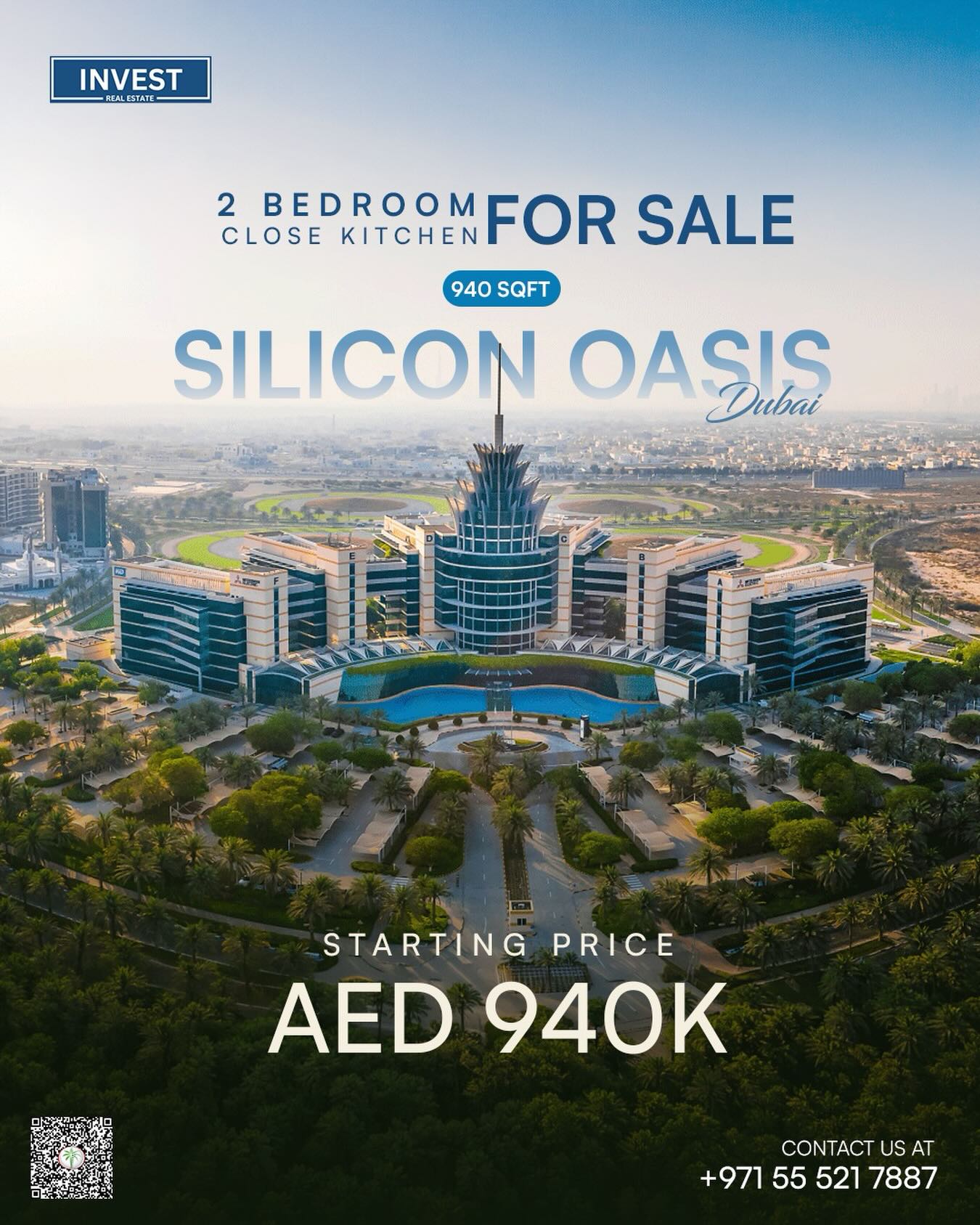 Own a Premium Address in Silicon Oasis, Dubai! 🏙️✨ Discover this… (opens in a new tab)
  Ting - Dubai
 Own a Premium Address in Silicon Oasis, Dubai! 🏙️✨ Discover this…
 They say racing is 90% preparation, but sometimes the remaining 10%… (opens in a new tab) Ting - Dubai
 They say racing is 90% preparation, but sometimes the remaining 10%…
 hello (opens in a new tab)
  yaam
yaam hello
 On teste l’un des meilleurs burger du champions burger à Paris : le… (opens in a new tab) yaam
 On teste l’un des meilleurs burger du champions burger à Paris : le…
 Dear Grandma — (opens in a new tab) yaam
 Dear Grandma —
 SDASCF (opens in a new tab)