Becoming a homeowner in Liverpool offers space and architectural character that are hard to match elsewhere, provided you master the specifics of the local market and of English property law. This detailed guide walks you through it step by step: how to judge prices, choose the right neighbourhood and secure your investment with clear eyes.
Get the app
What nobody tells you.
Real prices, hidden costs and the traps to check before you commit.
Buying a house in Liverpool: the reality behind the attractive prices
Scroll
Buying a house in Liverpool: the reality behind the attractive prices
Becoming a homeowner in Liverpool offers space and architectural character that are hard to match elsewhere, provided you master the specifics of the local market and of English property law. This detailed guide walks you through it step by step: how to judge prices, choose the right neighbourhood and secure your investment with clear eyes.
Written by the ting.ad editorial team ·
High Street, Liverpool in Street View: drag to look around.
Beyond the raw market figures, your daily life will take shape around your own profile and priorities.
The affordability of Liverpool's Victorian brick draws plenty of buyers looking for floor space, but it hides structural realities you need to weigh before signing. The price per square metre is well below London or the South East, and that is the result of a specific industrial history and a particular local market dynamic. You have to separate the plain financial opportunity from the maintenance obligations that come with an older housing stock marked by the decades behind it. Understanding that trade-off between purchase price and future costs is the first essential step in securing your investment without nasty surprises.
A very low entry pricevsEnergy upgrade work that is often unavoidable
Older properties frequently need heavy thermal renovation to reach today's comfort standards, which eats into the budget you had set aside for the purchase itself.
Generous living space for the moneyvsHigher structural maintenance costs over the long run
The volumes of Victorian terraced houses give you room, but the roof, the plumbing and the insulation all demand close attention and regular work.
A flattering headline gross rental yieldvsResale liquidity that varies with the micro-location
If you are buying to let or to sell on in the medium term, demand differs considerably from one neighbourhood to the next, which makes some areas far riskier than others.
What kind of buyer are you in the Liverpool property market?
That choice takes on a particular colour when you are arriving from a different property and legal system.
Buying a house is not simply a financial equation; it plants you in a catchment area, a daily rhythm and a fairly precise set of professional or personal prospects. Whether you are after a long-term main home, a lively base in the city or a capital investment, your criteria for location and property type have to change radically. Different neighbourhoods answer very different expectations, and picking the wrong area usually means you have picked the wrong project. Let us look at how your actual situation maps onto the realities of the city's neighbourhoods.
You want to stop renting and get a garden without ruining yourself
You are looking at outlying or transitional residential areas such as Wavertree or Bootle, where houses come with three bedrooms and outside space. The trade-off is a longer journey into the city centre and a setting that is sometimes less consistent to look at. You have to accept a part in the gradual revival of a changing neighbourhood, while enjoying floor space that would be impossible to find in the southern cities.
You combine occasional trips to London with a need for quiet
You favour areas near Lime Street or fast rail links, or you go looking for the residential charm of Calderstones or Mossley Hill. Your daily life is built around nearby parks and a green setting, while keeping your connections smooth. The purchase cost is higher, but the capital value and future resale prove markedly more resilient to market swings.
You want to put your capital into bricks and mortar with letting in mind
You turn to the traditional student areas or to districts with strong demand for family homes to rent, such as Kensington or parts of a regenerated Anfield. The classic trap is to underestimate potential void periods and the management costs of older properties. You absolutely must audit the physical condition of the building so that service charges or repair bills do not swallow your entire net yield.
Buying in Liverpool when you arrive from abroad: what fundamentally changes
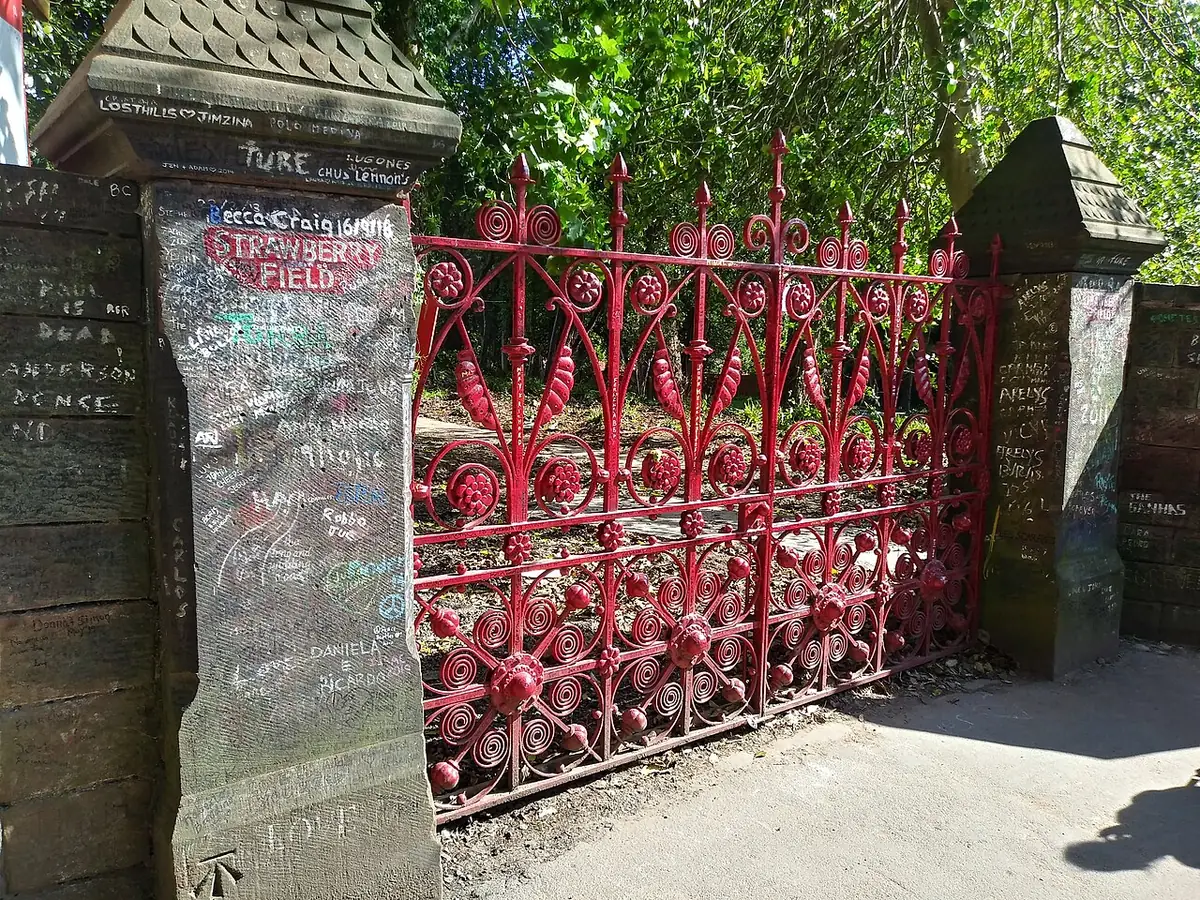
Strawberry Field's gates are one of Liverpool's best-known landmarks — Photo: Robertoalonsomen · CC BY-SA 4.0 · Wikimedia Commons
Once those rules of the game are absorbed, a careful look at local geography is needed to target the right area.
The English property system has its own rules, its own vocabulary and its own traps, and they regularly catch out buyers coming from elsewhere. Forget any centralised, state-appointed transfer official: here the transaction rests on specialist lawyers (conveyancing solicitors and licensed conveyancers) and on freedom of contract as framed by the common law. On top of that, the legal nature of ownership (freehold versus leasehold) radically changes your rights over the land and the building. Grasping those basic mechanisms saves you from misreadings that can carry heavy financial consequences.
From abroad
A single neutral official drafts and secures the whole sale
Liverpool
Each side instructs its own solicitor or conveyancer to negotiate and check title
Communication between lawyers can stretch the timeline, and the rigour of your own legal adviser is your only shield against hidden defects in the title.
From abroad
Ownership as a single indivisible right over building and land
Liverpool
The frequent distinction between freehold (outright ownership) and leasehold (a long lease)
With leasehold you are buying a right to occupy for a fixed term, with annual ground rent and service charges that are often unpredictable.
From abroad
An offer that binds you morally but stays flexible until a preliminary contract
Liverpool
The 'subject to contract' system, under which nothing is legally binding before exchange of contracts
The risk of a last-minute higher bid (gazumping) or of the seller pulling out stays high throughout the checking and processing phase.
From abroad
Compulsory technical reports gathered into a single seller's pack
Liverpool
The buyer has to commission their own inspections (HomeBuyer Report or Building Survey)
The principle of 'caveat emptor' (the buyer alone is responsible for inspecting) means defects that were never explicitly disclosed remain your problem after the purchase.
How to choose your Liverpool neighbourhood according to how you want to live
That geographical variety translates directly into the price tags you will meet on the market.
Liverpool's geography turns around a lively historic centre and outlying neighbourhoods with sharply contrasting identities. From the Victorian charm of the southern parks to the areas of the north and east now being rebuilt, each district sets its own pace, its own level of amenities and its own kind of neighbourhood. Choosing where to live means weighing immediate proximity to urban buzz against residential calm. Here is a comparative overview to steer your decision towards the area that genuinely suits you.
Aigburth and Sefton Park
A green, village-like feel, dominated by large landscaped spaces and independent cafes.
Suits
Families, lovers of the outdoors, and anyone wanting a calm setting without cutting themselves off from the city.
Trade-off
Some of the highest property prices in the city and strong competition for whatever comes up.
Baltic Triangle and the city centre
An intense urban rhythm, marked by contemporary art, co-working spaces and industrial lofts.
Suits
Young professionals, people who want cultural life on the doorstep, and investors targeting short or long lets.
Trade-off
A supply made up mostly of leasehold flats with sometimes heavy service charges and very little greenery.
Wavertree and Smithdown
A working-class, student-heavy area in full transition: busy, full of shops and cosmopolitan.
Suits
First-time buyers on a tight budget and investors after Victorian houses to renovate.
Trade-off
Marked differences from one street to the next in terms of quiet and general upkeep of the surroundings.
Crosby and Waterloo (northern edge)
A seaside air, fine sandy beaches, dunes and a settled residential community.
Suits
Those after coastal calm and an excellent choice of schools while staying close to the wider city.
Trade-off
A longer commute into the heart of Liverpool at peak times and a very tight housing market.
What does buying a house in Liverpool actually cost today?
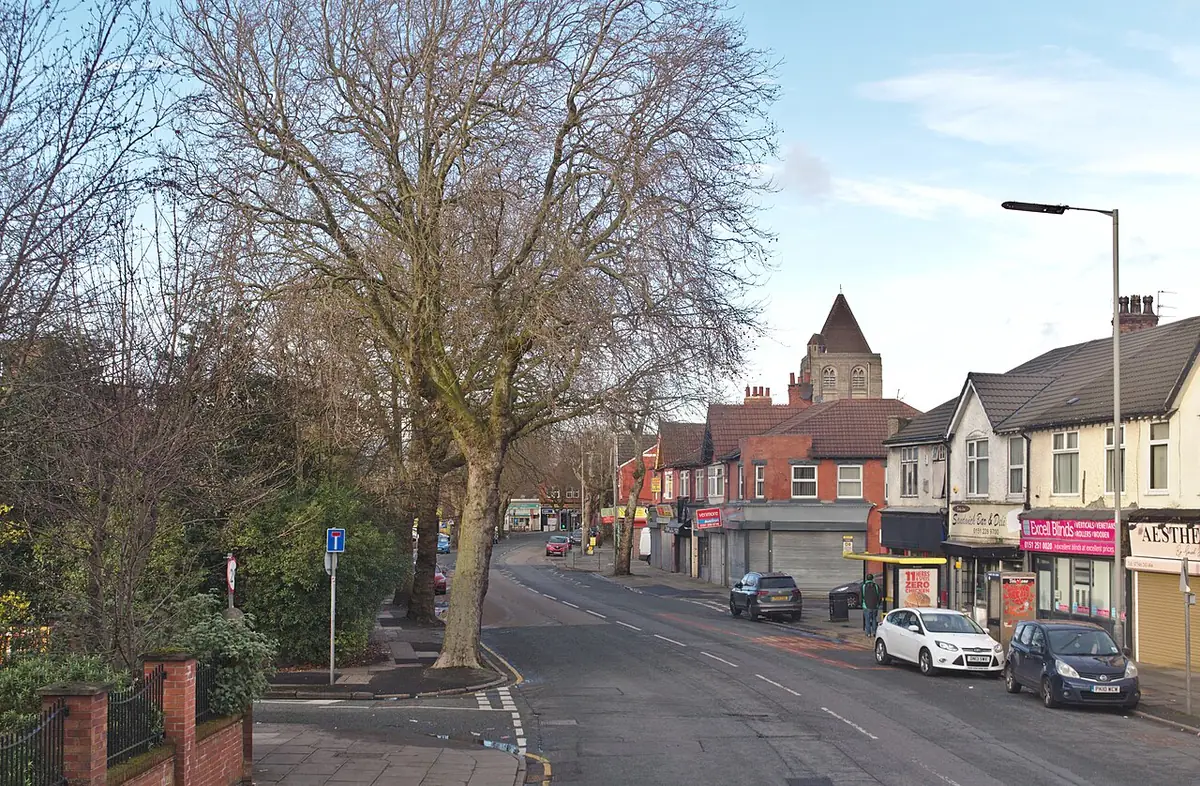
Streets like this mix shops and terraced homes under the trees — Photo: Rodhullandemu · CC BY-SA 4.0 · Wikimedia Commons
Beyond the headline purchase price, the legal nature of what you own radically changes your relationship with the property.
Working out what a property costs in Liverpool means going past the simple statistical average and looking closely at each micro-market. Prices vary threefold depending on whether you are aiming at an older terraced house needing work in the east of the city or a family property with a garden in the smart southern neighbourhoods. The overall budget also has to take in the local transfer tax (Stamp Duty Land Tax), the conveyancing costs and the essential allowance for energy renovation. This table pulls together the orders of magnitude observed, to help you calibrate your financing plan.
liverpoolFor saleHouseestimate
Median price / m²£1,870Half the apartments sell below this
Median price£241kthe average is 14% higher — a few very large properties pull it up
Most common2 bedrooms63 % of listings
Average size123 m²
By number of bedrooms
Bedrooms
Share of market
Avg price
Price / m²
Avg size
2most common
63 %
£241k
£1,968
123 m²
3
28 %
£304k
£1,830 −7 %
166 m²
4
9 %
£387k
£1,771best value / m²
219 m²
Each row is an average, compared against the area average of £1,968 / m². These are indicative estimates of a typical local market, not a measured sample of live listings. Check current listings before relying on them.
Freehold or leasehold: what you can really own in Liverpool
Securing your purchase also means following the administrative steps and technical checks to the letter.
One of the biggest surprises for buyers coming from outside the UK is the dual system of land ownership. Owning the walls of a house does not automatically guarantee that you own the ground it stands on, particularly for certain property types or recent developments. That distinction between freehold and leasehold has a direct impact on your freedom to alter the building, on your real running costs and on the future value of your asset. You must check this point with your solicitor from the moment you make your first offer.
Freehold (outright ownership)
You buy both the building and the land beneath it, with no time limit and no periodic ground rent. This is the standard for most detached and traditional terraced houses in Liverpool, giving you complete autonomy over how you manage the property and over any outside space and alterations.
What it changesYou control every running cost of your property and remove any risk of a dispute with a third-party landowner when you come to sell.
Leasehold (a long lease)
You own the right to occupy the property for a fixed term (often 125, 250 or 999 years) granted by the owner of the land (the freeholder). That status involves paying an annual ground rent and service charges towards the upkeep of common parts, and those charges can rise over time.
What it changesYou need to scrutinise the remaining lease term and the clauses governing charge increases very closely, because a lease of under 80 years sharply depresses the value of the property and makes a mortgage harder to obtain.
The golden rule to understand before you put a deposit down on a house in Liverpool
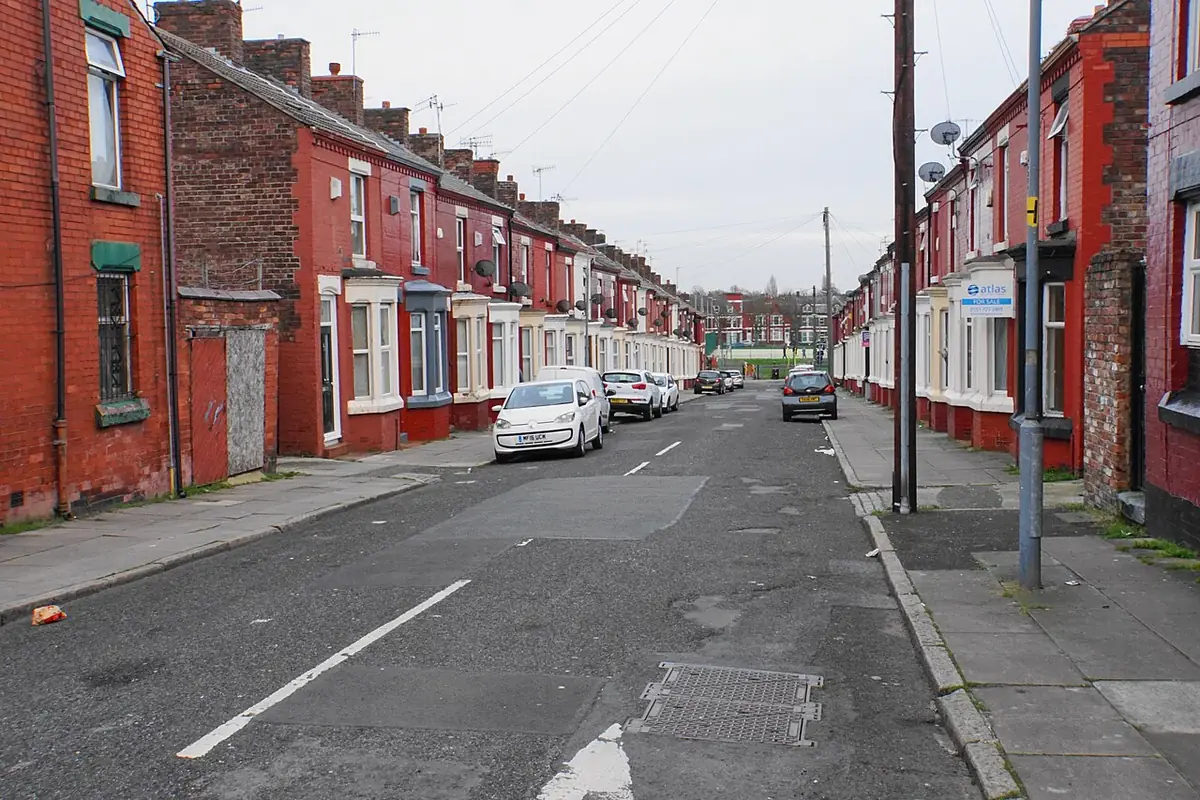
Terraced rows like this are the backbone of Liverpool's housing — Photo: Bill Boaden · CC BY-SA 2.0 · Wikimedia Commons
Let us look concretely at how the timeline of this transaction fits together, party by party.
In the English property system, the maxim 'caveat emptor' (let the buyer beware) applies with absolute rigour. The seller has no obligation to hand you an exhaustive, unified pack of technical reports; it is up to you to instruct independent experts to inspect the structure, the damp and the services. Committing without having made those checks exposes you to enormous financial disappointment once contracts have been exchanged. Here is the logical chain of precautions to take before ownership passes.
You spot an appealing house and put in a written offer, which the seller accepts.
Instruct a qualified professional (a RICS surveyor) straight away for a full HomeBuyer Report or Building Survey.
Work through the survey to identify problems with damp, the roof, the plumbing or electrical compliance.
Use the defects found to renegotiate the agreed price with the seller before any firm legal commitment.
Have your solicitor confirm there are no hidden easements, no awkward local planning schemes and no irregularity in the title.
Proceed to exchange of contracts: from that precise moment, the sale becomes legally irrevocable.
How a property transaction in Liverpool unfolds, step by step
Buying a house in the UK follows a precise choreography involving several professionals whose roles are strictly separated. From the initial search to the handover of keys on completion day, the process generally takes between two and four months if no technical or legal blockage appears. Knowing what each party is responsible for lets you steer your purchase efficiently and anticipate the waiting periods. Here is the detailed sequence of actions and of the people involved.
You (the buyer)Getting a mortgage agreement in principleYou set your real budget up front and prove your financial standing to local estate agents.
The estate agentViewings, choosing the property and negotiating the offerThey act as the commercial go-between for you and the seller, but their duty is first and foremost to the seller.
Your solicitorLegal checks and property searches (conveyancing)They go through the title with a fine comb, raise planning searches with the council and prepare the contract of sale.
The surveyor (RICS)Physical inspection and survey report on the buildingThey examine the walls, the roof timbers and the foundations, and cost the urgent work you should expect.
Both solicitorsExchange of contractsYou pay a deposit (usually 10% of the price): the transaction becomes legally binding on both sides.
You and your lenderCompletion day and handover of the keysThe remaining funds are transferred, the seller moves out, and you officially take possession of your house.
House or flat in Liverpool: trading space against upkeep
With that first structural choice made, what remains is the financial reality of buying on the local market.
Choosing between a typical Victorian terraced house and a modern flat in Liverpool's docklands commits you to far more than a simple sum about floor space. Older houses often offer generous volumes, fine ceiling heights and a private garden, but they demand a considerable investment of time and money to bring up to energy standards and to preserve period joinery. The city flat, by contrast, appeals through its simplicity of management, the absence of a roof you have to repair yourself and the services frequently built into the building's management, while giving up a measure of privacy and private outside space.
Liverpool's property market is characterised by a strong mix of property types from one neighbourhood to the next. In areas such as Sefton Park or Mossley Hill, the family house dominates, with undeniable architectural character and green space immediately to hand. Yet the scarcity of renovated properties that need no major work pushes many buyers to overestimate their ability to see a renovation through in an older building subject to strict planning rules. City-centre blocks, for their part, answer a demand for residential flexibility that is particularly prized by young professionals and by investors after an immediate rental yield without the uncertainties of managing structural work.
The question of shared walls and sound insulation is another point of friction, often underestimated when viewing a Victorian house in Liverpool. Party walls shared with the neighbours sometimes let everyday noise through, whereas recent flats benefit from far better acoustic and thermal standards, even if they carry service charges that can be heavy. It is worth weighing the total cost of ownership, taking in not only the initial purchase price but also the recurring charges, the local property tax and the budget needed to adapt the home to the way you live over the long term.
In the end, the decision to buy a house or a flat in Liverpool depends above all on your tolerance for risk and for renovation work. If you are looking for a lasting asset with land that you can pass on, the house makes its own case despite its upkeep demands. If you value mobility, tight control of your monthly budget and freedom from the constraints of shared outside space, the city flat offers a pragmatic alternative that fits contemporary life in this fast-changing city rather well.
What total budget should you plan for to buy and live in Liverpool?
With those financial markers in place, it is time to picture how an ordinary day in the city actually runs.
Buying property in Liverpool comes down to far more than the size of the mortgage, and it calls for a full view of all the extra expenses. Between local taxes, routine maintenance, compulsory insurance and the cost of getting around, a household's financial balance rests on a rigorous forecast budget. Market data show notable differences depending on exactly where the property sits.
Upfront and recurring property costs in Liverpool
Cost item
Typical order of magnitude
Frequency and notes
Buying a standard house
GBP 180,000 to GBP 250,000
One-off amount, varying with proximity to the centre
Conveyancing costs and Stamp Duty Land Tax
GBP 2,000 to GBP 7,500
Payable in cash on completion of the transfer
Council Tax (local property tax)
GBP 1,400 to GBP 2,200
Annual amount, depending on the property's band
Buildings and contents insurance
GBP 300 to GBP 600
Annual premium, required to cover local risks
These estimates are based on averages observed in Liverpool's residential market for a mid-sized property.
Monthly running budget for a homeowning household
Cost category
Monthly estimate
What moves it
Energy (gas and electricity)
GBP 150 to GBP 250
Closely tied to the energy performance of the house
Water and sewerage
GBP 40 to GBP 70
Usually billed on an individual meter
Internet and communications
GBP 30 to GBP 60
Depends on the provider and the fibre speed chosen
Maintenance and small repairs
GBP 100 to GBP 200
An essential provision for the regular upkeep of the fabric
Energy costs can vary a great deal between an older, uninsulated build and a property renovated to recent standards.
Health, schools, transport: what does an ordinary Tuesday in Liverpool look like?
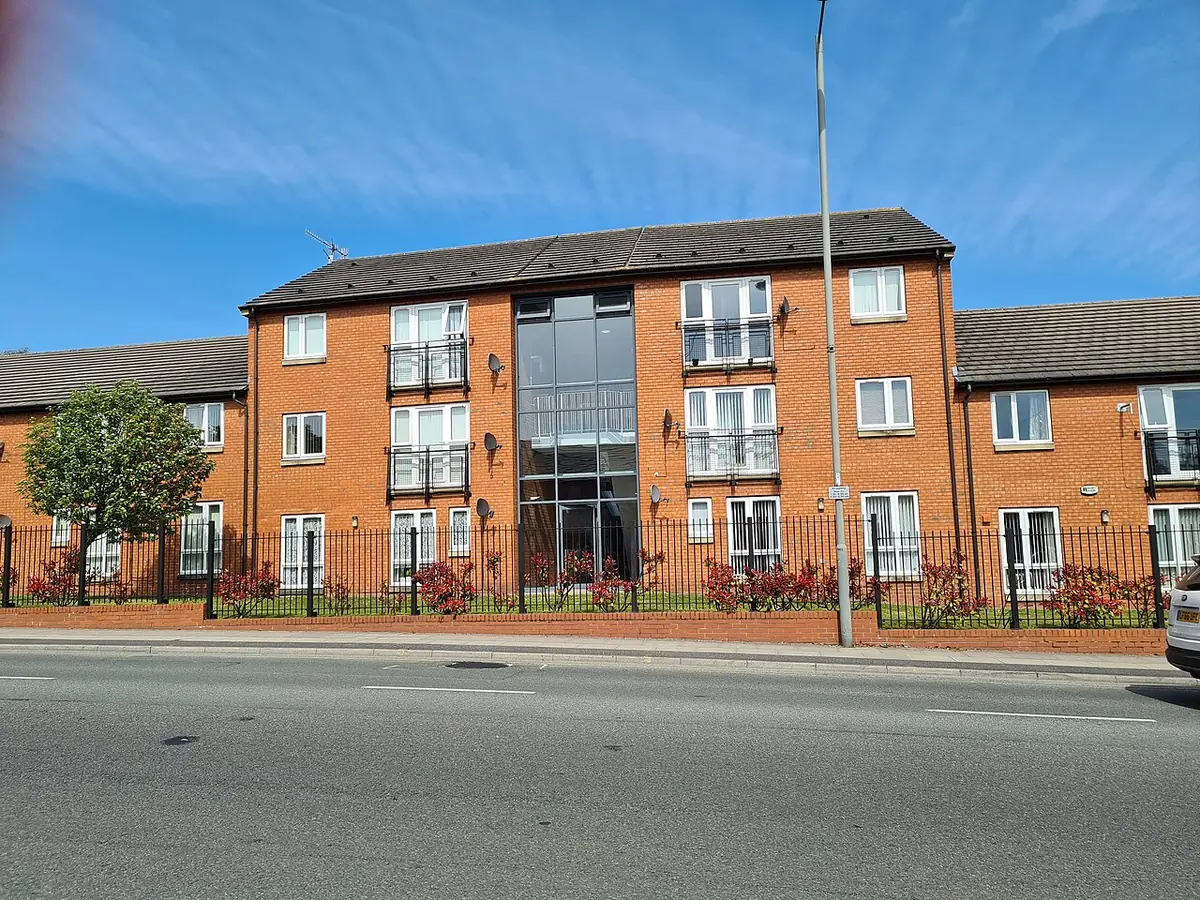
Newer apartment blocks like this add to Liverpool's housing mix — Photo: Frombowen · CC BY-SA 4.0 · Wikimedia Commons
Beyond that well-oiled routine, buying a home often reveals aspects that viewings never put on show.
Living long term in a city like Liverpool means testing how well the public infrastructure copes during the busiest parts of the week. From the morning journey to the employment centres through to local services at the end of the day, how smoothly your life runs depends directly on your micro-location. A careful look at journey times and at access to essential facilities keeps you from being disappointed after the move.
07:30Leaving home and reaching transportGetting to the local railway station or the nearest bus stop to start the journey into the city centre or out to the outlying business areas, avoiding the worst of the road congestion.
08:30Dropping the children at the local schoolChecking the admission criteria of local schools and allowing for the daily walk or the short public transport journey needed to get there.
12:30Lunch break and health servicesLocating GP surgeries, late-opening pharmacies and health centres within the neighbourhood so that the family can be seen quickly if something unexpected comes up.
17:00Last-minute food shoppingUsing local shops and neighbourhood convenience stores for the evening's food, topping up the big weekly shop done at the supermarkets.
18:30Winding down and running the householdMaking the most of the green spaces nearby, or heading home for the evening's domestic tasks in a residential setting that is broadly spared excessive noise.
What the glossy property listings will never tell you about Liverpool
That watchfulness about hidden defects leads straight into the regrets new buyers most often voice.
Marketing photographs and glowing agency descriptions regularly leave out contextual factors that will nonetheless shape your future quality of life. Between the subtleties of local property law, the true state of the underground services and the impact of port or tourist activity, several realities deserve to be anticipated before you commit to any sale.
The true state of the drains and the sewer connection
Many older houses have ageing cast iron or clay drainage that needs a camera survey, to avoid major water damage and eye-watering costs to reconnect.
Restrictions attached to conservation areas
If your future house sits in a protected historic area, the slightest change to the facade, replacing the windows or fitting solar panels is subject to planning consents that are extremely demanding and expensive.
The noise impact of secondary through routes
A street that seems quiet on a Sunday afternoon viewing can turn into a busy rat run at weekday peak times, generating lasting noise that eats into your peace.
The complexity of leasehold arrangements on some properties
Some houses and flats are not sold freehold but on a long lease, which means paying annual ground rent and dealing with the constraints of lease extension.
The real coverage of mobile and internet networks
The thickness of the stone walls in Victorian buildings badly weakens the mobile signal indoors, making it essential to check fibre availability and real speeds in advance.
The buying mistakes you only discover six months into life in Liverpool
With those disappointments avoided, the fundamental question is whether this market is really made for you.
Looked likeA remarkable property opportunity at a very attractive price in a neighbourhood on the up.
Turned outAn area cut off from decent public transport, forcing daily car use and creating chronic fatigue from sitting in traffic.
Would have caught itMaking several trial journeys at the exact peak times before putting in an offer, and asking residents how the journeys really work.
Looked likeIrresistible period charm, with original floorboards and decorative fireplaces in every room.
Turned outA thermal sieve impossible to heat properly in winter without watching the monthly energy bills take off.
Would have caught itInsisting on a full energy performance assessment and having a professional cost the necessary insulation work precisely before signing anything.
Looked likeA discreet, quiet neighbourhood, as observed on a single Sunday viewing.
Turned outRecurring noise at the weekend because of nearby pubs or very busy short-term lets.
Would have caught itVisiting at different times of the week, especially Friday and Saturday evenings, to gauge the real atmosphere of the immediate surroundings.
Looked likeGenerous living space offering endless potential to reconfigure over the years ahead.
Turned outWhole-house renovation costs badly underestimated against a shortage of qualified trades and rising material prices.
Would have caught itSystematically consulting local builders for detailed quotes and setting aside a contingency of at least fifteen percent of the cost of the works.
Who really should not be buying a house in Liverpool right now?
With those counter-indications examined, it is time to settle the question of whether you can take the plunge.
Getting onto the property ladder in Liverpool, appealing though it looks on paper, is not a universal answer suited to every situation. Some buyer profiles expose themselves to quick financial or professional disillusion by committing too early to a heavy purchase. A clear-eyed look at your short and medium-term prospects avoids a major strategic error.
The young professional whose job mobility is uncertain in the short term
→Buying a property as soon as they arrive, to avoid paying rent for nothing.
The upfront transaction costs, combined with the time and expense of selling again after a quick relocation, wipe out any capital gain over a period shorter than five years and turn the purchase into a money pit.
The investor with no appetite for management or renovation
→Agreeing to buy an older house needing heavy work to bring it up to energy standards.
Local administrative complexity, rising labour costs and tightening regulatory requirements turn the project into a source of constant stress and budget overruns.
The household with extremely limited emergency savings
→Putting every last saving into the deposit and the conveyancing costs to secure the mortgage.
The slightest major failure of an appliance, the roof or the boiler after moving in will put the household straight into arrears, with no cash left to draw on.
So, are you really ready to go ahead with your purchase in Liverpool?
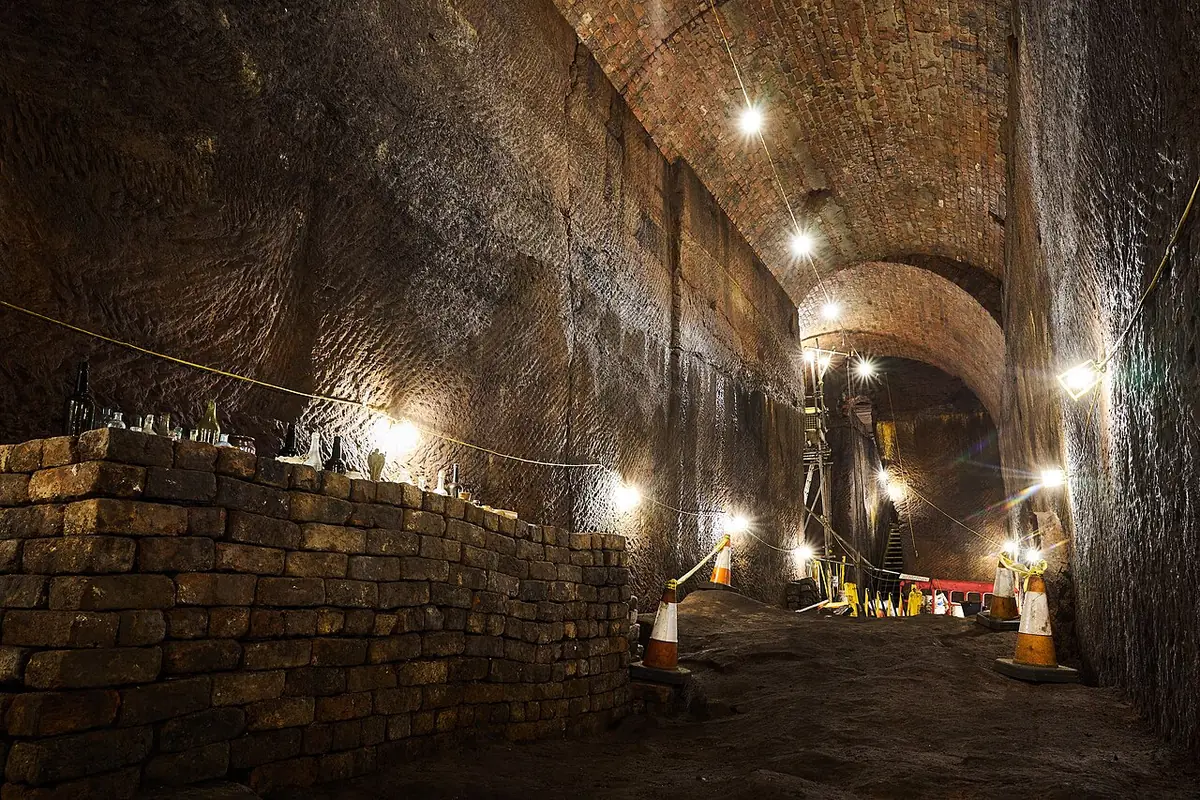
The Williamson Tunnels' brick passage, mid-restoration — Photo: Kyle J May · CC BY-SA 4.0 · Wikimedia Commons
Reaching the end of this look at Liverpool's property market leaves you with a personal decision that will shape your future. Buying a house in this city is not a matter of aesthetic impulse or opportunistic bargain-hunting, but of alignment between your long-term plans, your real financial capacity and your tolerance for the ups and downs of maintaining an older property. If your bags are packed for several settled years, the city's fundamentals offer a stimulating setting with genuine opportunities.
Take the time to reread your priorities in the light of what this guide has covered: the balance between the charm of Victorian building and the demands of thermal insulation, the reality of your budget including all the local taxes and running costs, and how well your micro-location fits your travel and schooling requirements. If those dials are all green and your emergency savings survive the deposit intact, then buying in Liverpool makes full sense and is a sound investment in your future.
If not, and doubts remain about your job stability or your appetite for managing renovation work, holding off for six months to a year of renting while you observe shows a healthy financial maturity. Liverpool's property market will keep moving, and good opportunities will come round again once your personal situation is properly settled. Your future peace of mind is worth infinitely more than rushing to sign.
Related questions
How much should you budget on average for conveyancing costs and taxes when buying a home in Liverpool?
Transaction costs are dominated by the property transfer tax known as Stamp Duty Land Tax, whose rates vary with the purchase price and with your status as a buyer. On top of that sit the fees of the legal professionals who handle the transaction, usually several thousand pounds, and that sum has to be built into your overall financing plan from the very start.
Is a thorough technical inspection compulsory before buying an older house?
English law does not systematically require an in-depth survey, but instructing a qualified professional for a Level 2 or Level 3 Home Survey is strongly recommended. It uncovers hidden defects in the structure, the roof or rising damp, and so spares you the astronomical repair bills that can appear once the transfer of ownership is final.
How does the local property tax (Council Tax) work for homeowners in Liverpool?
Council Tax is an annual local property charge collected by the council to fund local public services, waste collection and road maintenance. The exact amount depends on the valuation band (Bands A to H) assigned to your home according to its estimated market value at a past reference date, with larger properties naturally carrying the highest contribution.
Which Liverpool neighbourhoods are most sought after for buying a family house?
Residential areas such as Sefton Park, Mossley Hill, Aigburth and Woolton have traditionally been among the most prized by families, thanks to the quality of their green spaces, the quietness of their streets and the reputation of local schools. Prices there logically reflect that strong appeal, with entry points well above the citywide average.
Can you buy a property as a non-resident foreign national in the UK?
Buying property as a foreign national is entirely legal in the UK, but it is governed by specific tax rules and sometimes by surcharges on transfer duty for non-residents. It is essential to work with a specialist tax adviser to confirm that your financing structure and your international banking flows are compliant.
How long does a property transaction usually take, from offer to handover of the keys?
The English buying process, known as conveyancing, takes on average between two and four months in normal conditions. That timeline reflects the in-depth legal checks, the land registry and local searches, the final mortgage offer and the coordination of the various parties before exchange of contracts and the completion date.
What does a leasehold property mean compared with outright freehold ownership?
Buying freehold means you own both the building and the land it stands on, in perpetuity. Leasehold, by contrast, gives you only the right to occupy the property for a fixed term set by a long lease, which involves regular ground rent payments to the owner of the land and strict rules on how the building is managed.
How do you find out about future planning schemes around a property you have spotted in Liverpool?
The planning department of Liverpool City Council publishes all planning applications and local development plans in public registers you can consult online. Working carefully through those records lets you confirm that no heavy construction project or major road scheme is about to disrupt the immediate surroundings of the home you have set your heart on.
What financial help is available for getting onto the property ladder in the UK?
Government support schemes change regularly, but bonus savings mechanisms such as the Lifetime ISA let first-time buyers earn a state top-up while building their deposit. Check the eligibility criteria in force with the participating financial institutions at the point when you are preparing your mortgage application.
How does energy performance affect the resale value of a house in Liverpool?
Properties with poor ratings on their energy performance certificate face an increasingly steep discount on the market as energy costs stay high. Investing in loft insulation, double glazing and a modern heating system is therefore no longer just a comfort choice, it is a requirement if you want to protect the capital value of your investment.
Property review of ting
No ting properties in Liverpool yet
Be the first — share it on ting and it shows up right here.