Settling into a rented house in Liverpool means getting to grips with the local market, its neighbourhoods and its administrative rules. This practical guide walks you through choosing between districts, working out your full monthly budget and securing your tenancy with confidence.
Get the app
What nobody tells you.
Real prices, hidden costs and the traps to check before you commit.
Renting a house in Liverpool: the great illusion of space
Scroll
Renting a house in Liverpool: the great illusion of space
Settling into a rented house in Liverpool means getting to grips with the local market, its neighbourhoods and its administrative rules. This practical guide walks you through choosing between districts, working out your full monthly budget and securing your tenancy with confidence.
Written by the ting.ad editorial team ·
High Street, Liverpool in Street View: drag to look around.
Beyond floor area alone, your choice has to fit the shape of your actual days.
Renting a house in Liverpool often raises hopes of generous square footage and a private garden, in contrast with the density of large European cities. The reality of the local housing stock calls for a more measured view of that promise. Between the traditional terraced houses, whose volume runs vertically, and newer builds, each type redefines what comfort means. You are trading floor area against closeness to the places you need to reach.
An apparently generous floor area spread over several levelsvsVertical circulation that can wear on you day to day
Victorian and Edwardian houses offer handsome raw volumes, but splitting them over three or four storeys multiplies the steep staircases. That historic compartmentalisation makes living space flow less freely than a single-level layout.
The private outdoor space so many tenants are looking forvsA concreted yard rather than a genuine planted garden
In central and inner districts, the outside space is most often a hard-surfaced urban yard. Upkeep is minimal, which suits a tenancy, but its recreational use stays very limited compared with a suburban lawn.
Rent per square metre that can look better value than the centrevsHigher heating and insulation costs in older stock
The saving on raw floor area often shrinks once the energy bill arrives. Poorly insulated homes deserve particular attention at the viewing, and the EPC rating is the quickest way to spot them.
What kind of tenant are you, moving into a house in Liverpool?
To understand what awaits you, it helps to measure the practical and cultural gap between where you have come from and Merseyside.
The rental market for detached and terraced houses suits some ways of living far better than others, and it is a long way from the student or young professional hunting a studio. Whether you arrive alone for work, as a couple or with children, the equation changes completely. Each part of the city imposes its own constraints on transport, parking and local services, and those deserve a clear-eyed look.
The suburban house let
You want a dedicated room for a desk and silent nights. Outer districts such as Woolton or Allerton offer that calm, at the price of longer journeys into the business core. A stable internet line and decent sound insulation become your leading criteria when you pick a property, and it is worth asking the letting agent what broadband the previous tenants had.
The terraced house with a compact garden
Your absolute priority is being near strong schools and local parks such as Sefton Park. You trade the immediate buzz of the docks for a daily life built around the neighbourhood, local groups and safe walking routes. Storage for pushchairs and bikes is finally sorted, and a garden you are expected to keep tidy under the tenancy comes with the territory.
The large subdivided Victorian house
You want to split the cost while keeping generous communal rooms for having people over. Semi-central areas such as Wavertree or Kensington answer that need with substantial floor areas. In exchange, you have to live with saturated on-street parking and neighbours who are sometimes noisier, and every sharer normally signs the same tenancy agreement jointly.
What actually changes when you rent in Liverpool rather than back home?
Strawberry Field's gates are one of Liverpool's best-known landmarks — Photo: Robertoalonsomen · CC BY-SA 4.0 · Wikimedia Commons
Once those rules are absorbed, everything comes down to choosing where in the city you settle.
Moving into a rented house in England means setting aside a good many of the legal and practical reference points you brought with you. The British private rental market runs on very pragmatic rules, where speed of response counts for more than rigid tenant protection. From assembling your application to the check-in inventory, each stage follows a specific formality that is worth mastering to avoid expensive dead ends.
From abroad
Tightly regulated rents and long eviction procedures in many countries
Liverpool
A liberalised private market built on assured shorthold tenancies (AST)
A landlord can more easily take the property back or adjust the rent once the initial fixed term ends, which calls for close attention to the length of your commitment.
From abroad
A security deposit often capped by law at one month's rent
Liverpool
A tenancy deposit of up to five weeks' rent, which must be protected in an approved scheme
You have to tie up a larger sum at signing, but protection through a government-approved scheme guarantees its return if the check-out inventory is clean.
From abroad
Condition reports done informally, or quickly, by the two parties
Liverpool
A highly detailed photographic and written inventory drawn up by a third-party firm
The smallest mark on a wall or a piece of furniture is recorded precisely. Skimming that document at the start exposes you to substantial deductions from your deposit.
From abroad
An occupancy tax billed to the resident on national criteria
Liverpool
Council Tax, which the tenant normally pays, assessed on the property's banded value
That monthly amount sits on top of the rent and can vary considerably from one street or ward to the next depending on the band, while the EPC rating drives what you then spend on heating.
How do you pick the right neighbourhood to settle in Liverpool?
To turn the plan into something concrete, you need to decode the real budget behind the rents being asked.
Liverpool is a mosaic of districts with strong identities, running from regenerated dockside quarters to leafy suburbs. Which house you rent depends directly on how much travel time you will tolerate and how much cultural life you want on your doorstep. There is no perfect neighbourhood, only carefully weighed compromises between rent per square metre, accessibility and the quality of the immediate surroundings.
Aigburth and Sefton Park
A well-heeled, arty village atmosphere, paced by walks around the big park and the independent cafes of Lark Lane.
Suits
Families and couples after handsome green space, fine period houses and a well-preserved setting.
Trade-off
Rents noticeably above the city average and strong competition for the properties that do come up to let.
Baltic Triangle and Ropewalks
A restless urban pulse, made of converted industrial brick, street art everywhere and fashionable coworking space.
Suits
Young professionals without children who want to do everything on foot and enjoy the nightlife and culture.
Trade-off
Houses to rent are very rare here, replaced almost entirely by flats and noisy loft conversions.
Wavertree and Smithdown
A working and student district in full transition, lively, well served by shops and thoroughly cosmopolitan.
Suits
Mid-range budgets and sharers looking for generous floor areas at a reasonable rent.
Trade-off
Uneven upkeep of public space and night-time quiet that varies street by street.
Woolton and Allerton
The complete calm of a leafy residential suburb with the feel of a traditional English village.
Suits
Those escaping urban bustle, who have a car and put a large garden first.
Trade-off
A marked distance from the city centre, meaning long journeys at peak times.
What budget should you plan for renting a house in Liverpool without nasty surprises?
Streets like this mix shops and terraced homes under the trees — Photo: Rodhullandemu · CC BY-SA 4.0 · Wikimedia Commons
Beyond the figures, the legal structure of the home you will occupy deserves your full attention.
The figure displayed on the property portals is only part of the financial equation of your tenancy. In Liverpool, the rise in energy costs and the local tax bill call for a careful reading of everything that sits alongside the rent. The ranges below reflect the market averages for decent properties, outside the exclusive city core.
liverpoolTo rentHouseestimate
Median price / m²£10Half the apartments sell below this
Median price£1.31kthe average is 14% higher — a few very large properties pull it up
Most common2 bedrooms63 % of listings
Average size123 m²
By number of bedrooms
Bedrooms
Share of market
Avg price
Price / m²
Avg size
2most common
63 %
£1.31k
£11
123 m²
3
28 %
£1.65k
£10best value / m²
166 m²
4
9 %
£2.1k
£10best value / m²
219 m²
Each row is an average, compared against the area average of £11 / m². These are indicative estimates of a typical local market, not a measured sample of live listings. Check current listings before relying on them.
Between shared responsibility and private renting: what is your status really?
To keep your move safe right through to handover of the keys, follow the timeline of a well-run tenancy step by step.
Renting in the United Kingdom rests on a finely balanced contract that protects the landlord's freedom as much as the tenant's security of occupation. Understanding exactly what kind of tenancy you hold, and the obligations that flow from it, saves a great deal of grief in the day-to-day running and upkeep of the property.
The strict framework of the assured shorthold tenancy (AST)
The great majority of house lets in Liverpool run under this standard legal regime. It sets the financial terms, the initial fixed term (often 6 or 12 months) and how the rent may be reviewed. During that period you have a legally guaranteed right to quiet enjoyment, provided you keep scrupulously to your payment dates and to the house rules that apply to the building or the street.
What it changesYou have genuine legal stability, but you need to plan ahead for renewal or for a notice served by the landlord, which normally carries a statutory two months.
Shared responsibility for repairs and upkeep
British law draws a clear line between the landlord's obligations, which cover keeping the structure, the roof, the plumbing and the heating in working order, and the tenant's, which cover routine minor upkeep, ventilating damp rooms and looking after the garden or the yard outside. Any repair request should be reported in writing so it is dealt with quickly.
What it changesGood written communication with the managing agent or the landlord as soon as something goes wrong heads off any dispute at the check-out inventory.
What is the exact timeline for securing a house to rent in Liverpool?
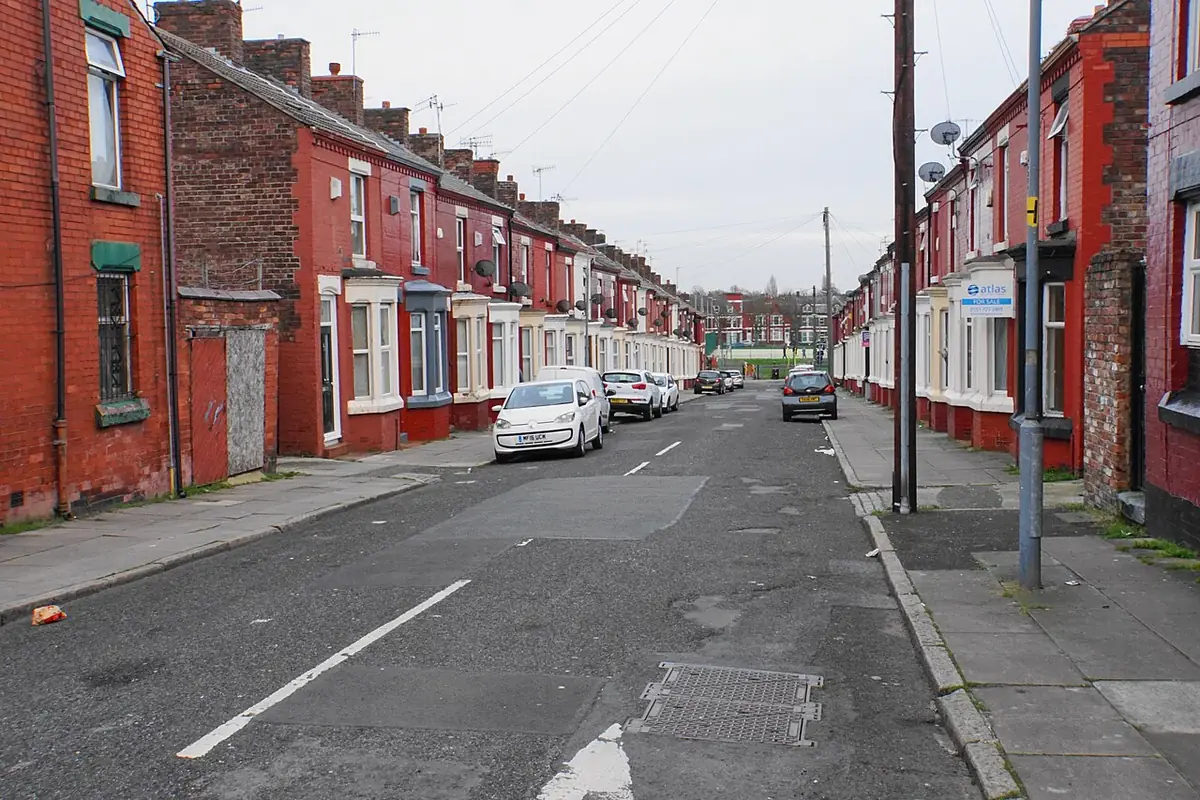
Terraced rows like this are the backbone of Liverpool's housing — Photo: Bill Boaden · CC BY-SA 2.0 · Wikimedia Commons
Every party in that chain plays a specific role, and it pays to know who is who.
Landing a house to rent in a city as popular as Liverpool takes quick reactions and a carefully prepared application. Demand for good properties is strong, so landlords and letting agents favour applicants who can immediately evidence that they can afford the rent and will be reliable. Here is the logical chain of events that leads to a signed tenancy.
You spot a property matching your criteria and book a viewing in person.
Put a firm offer to the letting agent as soon as the viewing ends, if the property suits you.
Supply the evidence that you can afford it: employment contract, recent payslips and references from previous landlords.
Pay a holding deposit, capped by law at one week's rent, to take the property off the market.
Pass the referencing check run by the third-party firm the agency instructs, providing a guarantor if your income does not meet the threshold.
Pay the first month's rent and the tenancy deposit, protected in an approved scheme, before the keys are formally handed over.
You complete the check-in inventory with the clerk and take possession of the property.
Who does what in a UK letting transaction?
The British rental market does not rest on a landlord and a tenant facing each other alone. It brings in several regulated professionals whose job is to safeguard money, guarantee that homes meet the standards and settle any disputes. Knowing what each of them covers tells you who to turn to when you need something.
The letting agentThe marketing intermediaryThey arrange viewings, sift applications on the landlord's behalf and draw up the initial tenancy agreement. They are your first point of contact for questions.
The property managerThe keeper of daily orderUsually attached to the agency, they handle maintenance, coordinate tradespeople when something breaks and make sure the property meets safety standards.
The deposit schemeThe financial third partyIt legally protects your deposit for the whole term of the tenancy and rules impartially on how it is returned at the end.
The inventory clerkThe condition checkerAn independent professional instructed to draw up a highly detailed record of condition at check-in and check-out, heading off subjective arguments about wear and tear.
The landlordThe owner of the propertyThey approve the final choice of tenant and remain responsible for the heavy spending on compliance work and structural repair of the house.
House or flat in Liverpool: trading space against upkeep
Beyond the type of property, it is the overall financial picture that now has to be examined to root your plan in the economic reality of Liverpool.
Renting a house in Liverpool generally means looking to the residential rings such as Mossley Hill, or to the traditional terraced houses near the city's best-known parks. These properties offer real breathing room and a private outdoor space, but they bring a considerable share of day-to-day upkeep tied to the age of the red-brick British housing stock. Roofs, original insulation and drainage are the landlord's responsibility, yet they are also what determines how comfortable and how expensive your winter turns out to be, so ask about them at the viewing rather than after you sign.
The urban flat, whether tucked into a converted warehouse near the Albert Dock or in a contemporary tower in the Commercial District, redefines daily life entirely. Living is simpler, the service charge paid by the owner covers security and the upkeep of the communal parts, and being minutes from stations such as Lime Street simplifies commuting to Manchester or London. Against that, there is no private garden, and the rules set by landlords or by the building's management limit what you can do with any outdoor space.
The final choice therefore depends on how much routine upkeep you are willing to take on and how long you expect to stay in Merseyside. Families naturally favour houses with gardens to build a settled home life, while younger professionals lean towards the flexibility and short commutes of central flats, where tenancies turn over quickly and the choice is wider at any given moment. Looking honestly at the size of your household and your work plans remains the best way to decide between two very different ways of living in this port city.
It is also worth examining how each option performs on energy, since older properties often need heavy investment to reach modern standards of comfort, and as a tenant you feel that directly in the bills rather than in a renovation budget. Local developers now build new schemes to strict standards, but their architectural character is a long way from the Georgian and Victorian houses that are the region's heritage pride. Your decision will rest on a subtle trade between historic charm and how well the place actually runs from day to day.
What total monthly budget should you plan for renting long term in Liverpool?
With the financial picture set out, it is time to come down to ground level and see how an ordinary day is actually organised for a resident.
Setting a working budget for renting in Liverpool means going past the headline figure shown on the listing portals. Between local Council Tax, the insurance you take out yourself, the upkeep that falls to the tenant and the money you have to put down before you get the keys, the monthly envelope varies considerably with the neighbourhood you choose. A careful reading of the recurring costs keeps the tenancy affordable and avoids unpleasant financial surprises in the first year of occupation.
Upfront and recurring costs estimated for renting a house in Liverpool
Cost item
Lower end
Upper end
Frequency
Council Tax (bands B to D)
1,400 GBP
2,200 GBP
Annual
Contents insurance (tenant's own cover)
300 GBP
650 GBP
Annual
Routine upkeep, minor plumbing and garden care
500 GBP
1,500 GBP
Annual
Tenancy deposit and holding deposit payable at signing
1,500 GBP
3,000 GBP
One-off (at signing)
Council Tax amounts depend directly on the property's banded value set by the local authority and can be revised each year. The deposit range reflects the statutory cap of five weeks' rent applied to the monthly rents shown above, from a two-bedroom house to a four-bedroom one, plus the holding deposit of up to one week's rent, which is credited against your first payment.
Energy budget and running costs for a mid-sized household
Type of service
Lower monthly estimate
Upper monthly estimate
Electricity and gas
150 GBP
280 GBP
Water and sewerage
35 GBP
60 GBP
Fibre broadband
30 GBP
55 GBP
How well an older Victorian house is insulated feeds straight through to the size of the energy bills in winter, which is why the EPC rating is worth checking before you sign.
Health, schools and transport: what does an ordinary Tuesday in Liverpool look like?
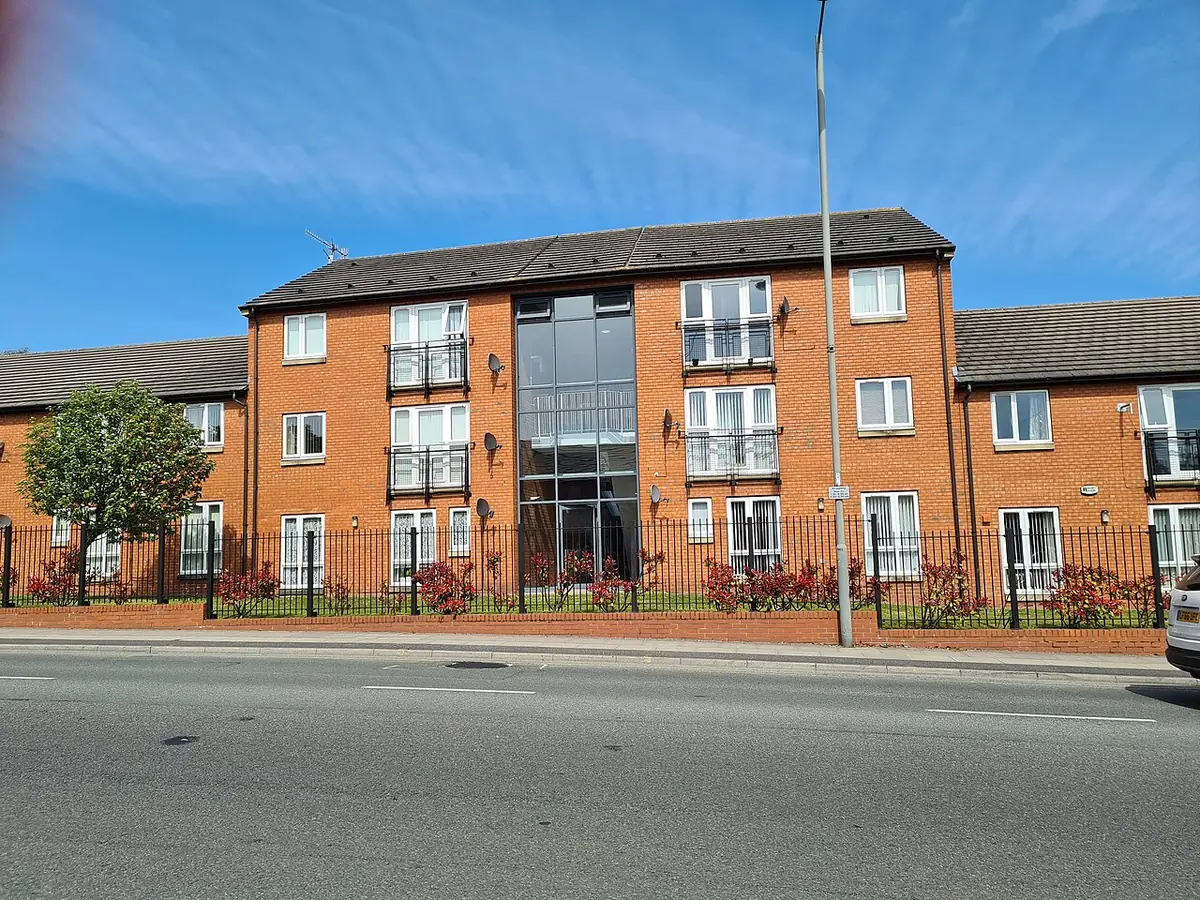
Newer apartment blocks like this add to Liverpool's housing mix — Photo: Frombowen · CC BY-SA 4.0 · Wikimedia Commons
Beyond the practical points visible at the first viewings, many structural details never appear in the marketing brochure.
To judge how smoothly your life in Liverpool will run, nothing replaces watching an ordinary weekday closely. From the morning flow towards the employment centres to the local services in the late afternoon, each neighbourhood reveals its own patterns of movement and access to infrastructure. Following the clock like this lets you anticipate real journey times and adjust where you rent to fit your family and working commitments.
07:30Moorfields or Lime Street stationHeavy morning flow of commuters heading for the business district or taking the Merseyrail network across the river.
08:30Local primary schoolDrop-off in popular residential areas such as Aigburth or Wavertree, which have a high concentration of schools rated 'Good' by Ofsted.
12:30The Bold Street shopping quarter or Liverpool ONELunch in the heart of the city, showing the commercial vitality and the range of places to eat a few steps from the offices.
17:00Main road corridors (M62 and Queens Drive)Regular delays at peak times on the ring road, worth bearing in mind when you weigh up parking or a garage with a house let.
18:30Local GP surgeryRegistering with a neighbourhood practice and using local pharmacies for first-line care within the NHS system.
20:00Sefton Park or Princes ParkEvening downtime in the city's green lungs, much loved by residents for running and family walks after work.
What the letting advert will never tell you about your future house
Those administrative and technical blind spots are often followed by errors of judgement that new arrivals regret bitterly six months later.
Marketing descriptions of Liverpool properties tend to shine with superlatives, smoothing over the technical and regulatory rough edges that shape daily life for whoever lives there. Between little-known rights of way, the ground history of some dockside areas and conservation constraints, a good many crucial details escape a first glance. Lifting the lid on these blind spots lets you ask the right questions before you sign and avoid unpleasant discoveries after you move in.
Restrictions tied to conservation areas
Many historic parts of Liverpool impose strict rules on replacing windows or altering facades, ruling out standard modern double glazing without prior planning consent. As a tenant that means draughty single glazing your landlord may not be free to upgrade, so ask before you commit.
The real condition of lead pipework and Victorian drainage
Older foundations sometimes still carry worn-out drainage that needs a camera inspection. A blockage or leak becomes your problem to live through even when the landlord pays for the repair, so ask when the drains were last surveyed.
Local controlled parking policy (residents' parking permits)
Renting a house does not guarantee that you can park outside your own door without buying an annual permit from Liverpool City Council, and the quota per household is sometimes limited. Check the permit rules for the street before you sign.
Planned redevelopment and densification nearby
The regeneration schemes the council is running can radically change the view, the traffic and the noise level of a quiet street within months, which matters if you are committing to a twelve-month term.
The disappointments tenants discover six months after signing the tenancy
These avoidable disappointments are a reminder that renting a house in Liverpool does not suit every profile and calls for complete clarity about what you need.
Looked likeA charming Victorian house full of character, with high ceilings and period mouldings.
Turned outA poorly insulated property that is hard to heat in winter, producing punishing energy bills and recurring condensation.
Would have caught itAsking for the full EPC before you offer, checking the rating and the heating system in person, and getting any damp already present written into the check-in inventory.
Looked likeAn extremely quiet, picturesque neighbourhood a couple of minutes from parks and shops.
Turned outAn area that seizes up on football match days and during major cultural events, blocking traffic and any hope of parking.
Would have caught itVisiting the neighbourhood at different times during the week and also on local match days, to judge the real pressure on the streets.
Looked likeA property advertised as ready to move into thanks to a recent cosmetic refresh.
Turned outA cover-up hiding damp coming through the brick walls and a roof at the end of its life, with repairs that disrupt the tenancy for weeks.
Would have caught itInspecting the loft, the cellar and the base of the external walls methodically for salt staining or rising damp, and photographing everything at check-in.
Looked likeA building with an easy-going management set-up and minimal running costs.
Turned outAn inactive or deeply divided managing agent, holding up urgent decisions on repairs to the communal parts.
Would have caught itAsking the letting agent who manages the building, how repairs are reported and how long the last communal repairs took to resolve.
Who this kind of tenancy suits, and which profiles should think again
Now that the personal and financial filters are clearly set out, it is time to conclude on whether you are genuinely ready to take the step.
Renting a house is often presented as the natural upgrade for anyone whose life has settled down. Yet the rigidity of a twelve-month British tenancy, the running costs of an older property and uncertainty about how long you will stay in the region make a house let a poor fit for some profiles. Working out objectively whether you fall into these categories will save you years of unnecessary financial and geographical constraint.
The mobile professional whose international or national career means moving every couple of years
→A flexible flat let in the city centre, or a short initial term
The deposit, the upfront month and the cost of breaking a fixed term early wipe out any saving from a house's extra space if you have to leave at short notice.
The tenant who has no appetite for upkeep and whose budget is stretched with no safety buffer
→A professionally managed new-build let
The garden, the yard and the routine minor maintenance that fall to a house tenant, together with the higher heating bills of older stock, weigh heavily on a household budget with no room for the unexpected.
The sharer looking for a low monthly cost with no drawn-out admin
→A room in an existing house share, or a smaller flat closer to work
Joint referencing, a guarantor requirement and the deposit spread across several names make a whole-house tenancy slower and more expensive to set up than a room let.
Taking stock: are you genuinely ready to commit to renting in Liverpool?
The Williamson Tunnels' brick passage, mid-restoration — Photo: Kyle J May · CC BY-SA 4.0 · Wikimedia Commons
Reaching the end of this analysis shows that your search for a home in Liverpool goes beyond an aesthetic impulse and rests on a considered strategy. You have measured the gap between the charm of the Victorian houses and the practicality of urban flats, while taking in the reality of the recurring costs and the local tax bill. That clear sight of what the Merseyside market demands is your best protection against a decision you would regret.
Renting in this large port city is not simply a matter of signing a tenancy agreement; it means accepting that you will put time and energy into looking after a home that is often old. If you have confirmed that you can absorb the running costs, thought through the parking constraints and checked the schools and transport serving your future neighbourhood, then you are clear to start making firm offers on properties.
If, on the other hand, doubts remain about how long you will stay or how much upkeep you want to take on, staying in a smaller or more flexible let for now is a wise and courageous decision. Liverpool's rental market will keep moving, and holding on to your financial and mental breathing room is worth infinitely more than rushing at a property for fear of missing a fleeting opportunity. Take the time to weigh each factor before you commit your deposit.
Your housing decision should above all serve the balance of your life and give your household a settled base in a stimulating environment. By following the stages of this road map, you turn a potential source of stress into a solid and durable choice. All that remains is to call on a trusted local letting agent to turn the plan into a set of keys.
Related questions
Which neighbourhoods are most sought after for renting a family house in Liverpool?
The residential areas south of the city, such as Aigburth, Mossley Hill and Woolton, are particularly popular thanks to the quality of their green spaces, the quiet of their tree-lined streets and the strong reputation of their state schools.
Can you rent a home in Liverpool as a foreign national?
Yes, non-residents can rent in the United Kingdom. Letting agents will run a right-to-rent and affordability check, and landlords may ask for extra reassurance, such as a UK-based guarantor or several months of rent paid in advance, depending on your income history in the country.
How does Council Tax work for tenants in Liverpool?
Council Tax is a compulsory local charge collected by Liverpool City Council to fund municipal services, and in most private tenancies the tenant pays it directly. The amount is based on the property's assessed value as at 1 April 1991, sorted into bands running from A to H.
What is the difference between a house let and a flat let in British renting?
Renting a house usually means you hold the whole building and its outside space, so garden upkeep and day-to-day maintenance fall to you under the tenancy agreement. Renting a flat means the communal parts are looked after through a service charge paid by the owner, so your own responsibilities stop at your front door.
How long does it usually take to secure a tenancy in Liverpool?
From the moment your offer is accepted, referencing and paperwork normally take one to three weeks before the tenancy agreement is signed and the keys are handed over, provided your documents are complete and your referees respond promptly.
Is it worth inspecting a rental property closely before signing?
The law does not require a survey for a let, but it is strongly advisable to inspect the property carefully and to review the EPC, looking for damp, poor insulation or heating faults, and to have anything you find written into the inventory before you move in.
How do Liverpool rents compare with Manchester or London?
Rents in Liverpool remain far more affordable than those in London and sit slightly below those seen in neighbouring Manchester, which is one reason the city attracts tenants looking for space at a manageable monthly cost.
What service charges should you expect when renting a city-centre flat?
Service charges cover the upkeep of communal areas, security, lifts and sometimes communal heating. They vary a great deal with the facilities of the building, and in a normal tenancy the landlord pays them, so check the agreement to confirm they are not being passed on to you.
Does Liverpool's public transport let you live without a car?
Yes, central Liverpool and the corridors served by the Merseyrail network and local bus routes make daily travel easy without your own vehicle, particularly for people working in the city core.
What upfront costs should you budget for when renting in England?
Beyond the first month's rent, you should budget for a holding deposit of up to one week's rent, a tenancy deposit of up to five weeks' rent, contents insurance and the cost of setting up utility accounts. The Tenant Fees Act bars agents from charging you for referencing or for drawing up the agreement.
Property review of ting
No ting properties in Liverpool yet
Be the first — share it on ting and it shows up right here.