Moving to San Antonio to rent a home means understanding how the local market works, what separates one neighbourhood from the next, and what the Texas rental market actually asks of you. This detailed guide walks you through the decision step by step so you can find the right place with confidence.
Get the app
What nobody tells you.
Real prices, hidden costs and the traps to check before you commit.
Renting an apartment in San Antonio: urban energy set against the reality of the local market
Scroll
Renting an apartment in San Antonio: urban energy set against the reality of the local market
Moving to San Antonio to rent a home means understanding how the local market works, what separates one neighbourhood from the next, and what the Texas rental market actually asks of you. This detailed guide walks you through the decision step by step so you can find the right place with confidence.
Written by the ting.ad editorial team ·
West Commerce Street, San Antonio in Street View: drag to look around.
To see whether that urban energy fits your own profile, let us look at how different kinds of renters really live in the city.
Renting an apartment in San Antonio means reconciling the promise of a distinctive Texas lifestyle with the logistical constraints of a fast-growing metropolitan area. On one side, the city offers a cost of living that is comparatively more accessible than other large Texas metros, and a quality of life carried by a sunny climate. On the other, strong rental demand and sheer urban sprawl call for a careful look at your priorities before you commit. It helps to understand that daily life is neither the postcard version of the River Walk nor the cliche of the gated complex. Each area sets its own rhythm, its own level of services and its own transport demands, constantly redefining what you actually get for your rent.
The promise of quick access to downtown and to the city's cultural lifevsThe reality of a tight market where well-located homes are gone within days
Being close to lively areas such as Southtown or River North attracts plenty of applicants, but the scarcity of available homes in those areas pushes landlords to raise their requirements. You often have to accept a compromise on floor area to hold on to a central location.
The modern comfort of recent complexes with pools and fitness roomsvsThe distance from the historic neighbourhoods and near-total dependence on a car
The large residential complexes on the edges of the city offer very high specification for moderate rents. In exchange, the absence of dense public transport locks you into road traffic that can be saturated at peak hours.
A rich multicultural setting and an authentic, well-preserved Texas identityvsMarked differences from one neighbourhood to the next in infrastructure and services
The variety of urban atmospheres is one of San Antonio's real strengths. It also means, however, that the quality of public amenities, local shops and general quiet varies considerably from one street to another.
Which area and which kind of rental suit your personal situation in San Antonio?
This overview of local lifestyles leads naturally to the next question: what actually changes when you arrive from another country?
Choosing where to rent in San Antonio depends not only on your gross budget but on your daily routine, your work commitments and how much driving you can tolerate. Between young professionals looking for walkable, lively areas, families seeking green space, and people here on temporary assignment, expectations diverge sharply. Each renter profile faces its own trade-offs between living space, geographic location and the amenities included in the complex. Working through these situations helps you avoid disappointment after the move and pick out straight away the kind of neighbourhood that will give you the balance you are after.
Central, characterful area (Southtown / River North)
You value urban life, restaurants within walking distance and being right next to your workplace if it sits in the centre. Apartments here are often more compact, sometimes in renovated period buildings or in mid-sized new developments. The trade-off is the space-to-rent ratio, generally less favourable than on the outskirts, and parking, which can be awkward to manage. In exchange you save valuable time every day and enjoy the local cultural scene fully without always needing your car for leisure.
Established residential area (Alamo Heights / North Side)
Your absolute priority is quiet streets, the reputation of local schools and access to private or secure shared outdoor space. The rentals available include apartments in landscaped complexes with parks and supervised pools, or townhouses. The monthly budget is higher, and a car becomes indispensable for the smallest errand or after-school activity. This choice does, however, guarantee a stable, predictable setting that suits family life well over the long term.
Busy outer areas (Medical Center / Stone Oak)
You want a functional, modern, low-maintenance home with quick access to the main highways for regional work travel. These areas offer recent apartments with careful finishes, often including coworking space built into the complex and connected services. The main drawback is the sameness of the landscape and the absence of authentic walkable neighbourhood life. You trade historic charm for faultless practical comfort and often more generous floor areas for the same rent.
Settling in San Antonio from another country: the cultural and practical shifts to expect
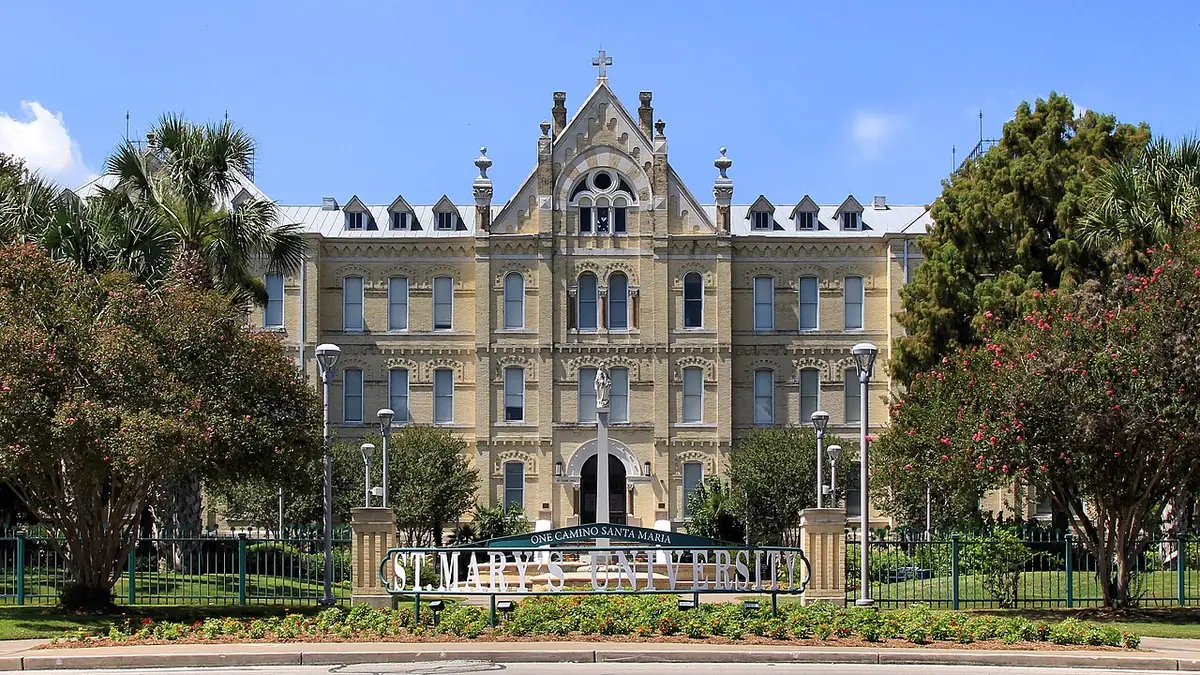
St. Mary's University, a Gothic Revival landmark in San Antonio — Photo: Larry D. Moore · CC BY 4.0 · Wikimedia Commons
Once these cultural bearings are in place, choosing the right neighbourhood becomes the decisive step in settling in successfully.
Moving to San Antonio from abroad unsettles a lot of familiar reference points, whether that is your relationship to space, the administrative side of renting, or how the day is organised. Where many overseas markets rest on strict, heavily regulated application files and long-standing lease traditions, the Texas system rewards responsiveness, credit scores and the contractual flexibility of large property managers. Understanding these differences lets you anticipate the friction and adopt local habits straight away, so you can secure the home you want without losing time to administrative misunderstandings.
From abroad
A dense, older housing stock built around walkable historic centres
San Antonio
A spread-out city dominated by urban sprawl, recent residential complexes and the omnipresence of the car
You have to factor driving time and the layout of the highway network into your choice of location well before you start looking at the exact size of the living room.
From abroad
Highly regulated conventional leases with tightly framed notice and eviction procedures
San Antonio
Leases handled by private property managers with strict in-house rules and variable extra fees
Read every clause of the complex or homeowners association (HOA) rules carefully, because restrictions on parking, pets and outdoor alterations are enforced very rigorously.
From abroad
A rental search built on a paper file, personal guarantors and domestic payslips
San Antonio
A process assessed on immediate solvency, local credit history or substitute financial guarantees
If you arrive without a US credit history, be ready to pay a higher security deposit or to provide particularly solid proof of professional income.
From abroad
Local shops around the corner and within walking distance for daily errands
San Antonio
Retail concentrated along major roads, which means planning larger, less frequent shopping trips
Your daily organisation changes radically: shopping is done weekly in large supermarkets rather than through lots of small daily purchases.
Comparing San Antonio's main areas so you can choose where to live
Now that the neighbourhoods are mapped out, it is worth looking at the financial reality of the rents actually charged here.
San Antonio is a mosaic of a city where each area has its own identity, its own rhythm and its own comparative advantages when it comes to renting. Choosing the right neighbourhood means weighing the atmosphere you want, how easily you can get to work, and the kind of services available right on your doorstep. The profiles of the various areas run from historic, cultural urbanism to highly functional residential zones. This comparison helps you identify which area offers the best compromise between your lifestyle and the reality of the local rental market.
Downtown / Southtown
An artistic, lively and walkable atmosphere, punctuated by galleries, cafes and renovated historic buildings.
Suits
People working in the centre, lovers of cultural life and anyone wanting to drive less.
Trade-off
Higher rents per square metre, smaller floor areas and recurring difficulty finding parking.
Alamo Heights / Olmos Park
A mature residential setting, extremely green, peaceful and with a strong architectural identity.
Suits
Families looking for quiet, good green space and well-regarded schools.
Trade-off
A scarce and heavily contested rental stock, with rents among the highest in the metro area.
Medical Center / Northwest
A very active economic and hospital hub, characterised by large modern, functional residential developments.
Suits
Healthcare professionals, researchers and renters who want quick access to the main highways.
Trade-off
A hard-edged urban landscape dominated by road infrastructure and short on historic character.
Stone Oak / Far North Side
Modern, secure residential suburbs built around recent shopping centres and family services.
Suits
Those after standardised comfort, generous living space and a very quiet suburban setting.
Trade-off
A pronounced distance from the historic centre and total dependence on a car for every journey.
Budget benchmarks and the rent ranges observed on the San Antonio market
Beyond the headline rent, the legal structure of what you are signing deserves particular attention.
The San Antonio rental market shows notable differences depending on the type of home, the year it was built and its precise location. Unlike other Texas metros such as Austin or Dallas, the city keeps prices broadly more affordable, even though pressure on newer homes keeps rising. It is essential to read these rent ranges alongside the additional running costs: electricity, heavy air conditioning use over the summer, and any complex or association fees. This summary table gives you the benchmarks you need to build a realistic budget.
san-antonioTo rentApartmentestimate
Median price / m²US$15Half the apartments sell below this
Median priceUS$1.3kthe average is 14% higher — a few very large properties pull it up
Most common2 bedrooms42 % of listings
Average size90 m²
By number of bedrooms
Bedrooms
Share of market
Avg price
Price / m²
Avg size
1
40 %
US$1.2k
US$18 +13 %
65 m²
2most common
42 %
US$1.52k
US$16
95 m²
3
16 %
US$1.9k
US$15best value / m²
125 m²
4
2 %
US$2.36k
US$15 −6 %
160 m²
Each row is an average, compared against the area average of US$16 / m². These are indicative estimates of a typical local market, not a measured sample of live listings. Check current listings before relying on them.
Renting in Texas: understanding what you are actually signing
To finish your search calmly, let us look at the chronological steps behind a successful rental.
Renting in Texas rests on standardised contracts issued by professional associations, whose clauses protect landlords strongly while setting out tenant rights precisely. Unlike systems that heavily protect occupants on term length or renewal, the Texas lease is a strict commercial document. Understanding the thinking behind these contracts spares you unpleasant surprises at the end of the term or when the security deposit is returned. The point is to approach every obligation rigorously so your move is secure over the long run.
The standard residential lease agreement
This is a fixed-term contract, most often running twelve months, which sets the rent and the exact due dates in a way that cannot be varied. Breaking it early on your side triggers rigorously calculated financial penalties, sometimes including the remaining rent until the home is re-let.
What it changesMake sure your working situation is stable before committing to a long term, because there is almost no flexibility to leave without a prior amicable agreement with the property manager.
The security deposit and move-in fees
The security deposit is generally equal to one month of rent, sometimes increased if your local credit history is thin or non-existent. On top of that come non-refundable application fees and specific pet fees if you have animals.
What it changesPlan for a substantial amount of cash at move-in, because the deposit will only come back several weeks after you leave, less any charges for putting the home back in order.
The golden rule to grasp before paying anything or signing a lease
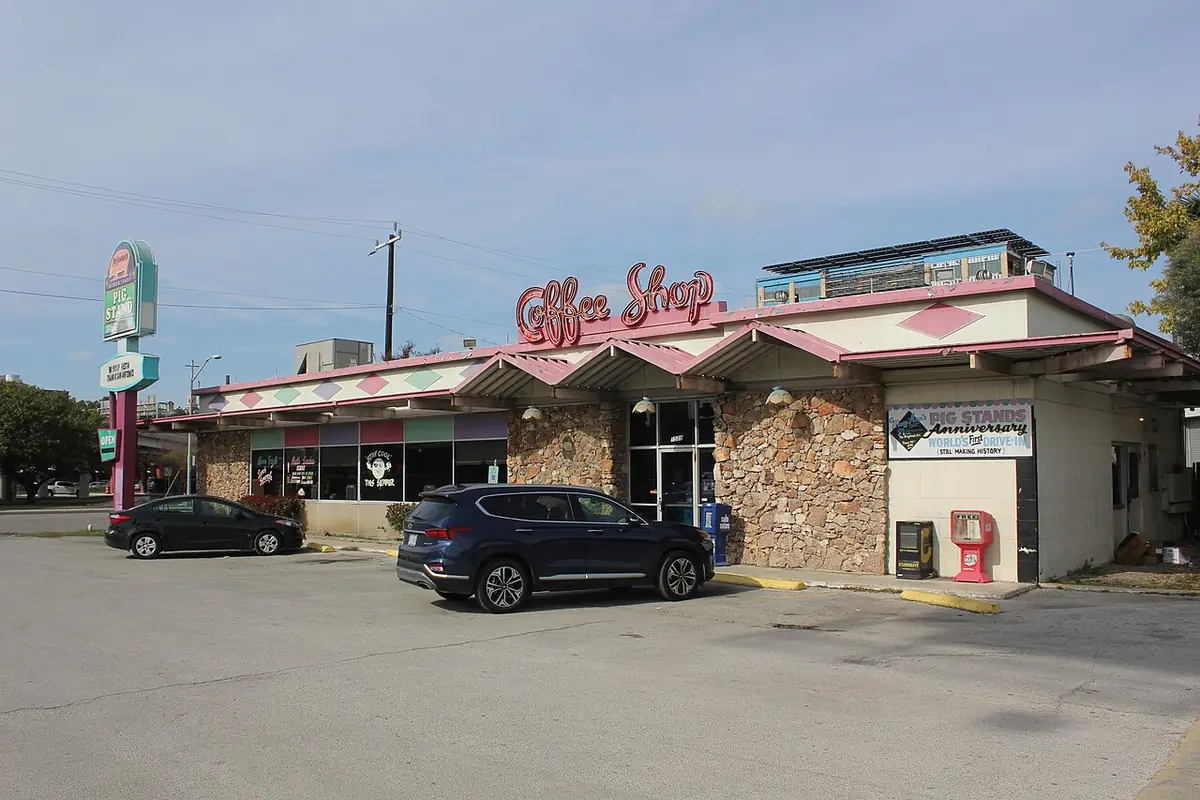
A century-old commercial building on a San Antonio corner — Photo: Larry D. Moore · CC BY 4.0 · Wikimedia Commons
That methodical caution applies directly to the full chronological sequence of the rental, which we set out now.
In the process of renting in San Antonio, the fundamental rule is that a virtual tour or an advertisement never replaces a careful physical inspection of the immediate surroundings and the real condition of the home. The Texas rental market sometimes attracts opportunistic practices, or flattering descriptions of complexes located in poorly served outer areas. Mastering the order in which you carry out your checks protects you against fake-listing scams and makes sure you sign for a home that matches exactly what you expect in comfort and security.
First spotting an appealing listing on an online property portal
Verify the exact identity of the property manager or accredited leasing agency operating in the local market
Visit the home at peak hours to judge noise levels and road traffic objectively
Inspect the condition of the air conditioning and the insulation, both critical in the Texas climate
Read the complex or association rules in full, especially on parking and other restrictions
Signing the lease with confidence and paying the initial funds securely into an official escrow account
How a rental goes through, step by step, in San Antonio
Renting successfully in San Antonio follows a rigorous sequence in which every party, from the property manager to the future occupant, plays a precise role. From first assembling your solvency file through to collecting the keys on moving day, the process is highly digital and standardised. Knowing the exact order of these steps lets you anticipate the documents you will be asked for, avoid needless processing delays and take possession of your new home in the best possible conditions.
The prospective tenantAssembling and checking the solvency fileGather your proof of income, employment contracts and recent bank statements, and prepare alternative evidence if you are arriving from overseas without a US credit history.
The agency or property managerViewings and a focused shortlistTour the apartments on your shortlist and ask precise questions about which utilities are included, the termination terms and the condition of the appliances provided.
The prospective tenantSubmitting the formal applicationFill in the rental application online, pay the application fees and authorise the background and credit checks.
The landlord or property managerReviewing the file and approving the offerThe leasing office or the landlord reviews your file within 24 to 48 hours and issues the standardised lease if you are approved.
The prospective tenantSigning the lease electronically and paying the initial fundsRead every clause carefully, sign the lease online and transfer the first month of rent along with the security deposit.
Both partiesMove-in inspection and handover of the keysCarry out a meticulous move-in inspection, sign the inventory of any existing defects to protect yourself when you eventually leave, and collect your keys.
Renting an apartment or a single-family house in San Antonio: how do you decide?
Once that first structural choice is made, it is worth turning to the economic reality of living in this Texas metro.
Choosing between an apartment in the heart of San Antonio and a single-family house in the outer residential neighbourhoods depends above all on your relationship with time, with maintenance and with your daily mobility. Recent apartment complexes, often with pools, built-in fitness rooms and concierge services, appeal to people working downtown and to newcomers wanting to settle in quickly without the logistical burden of an independent property. These shared developments offer a simplified way of living in which landscaping, security and the upkeep of communal facilities fall entirely to the association or the building manager, freeing up valuable time for work or leisure.
Renting a single-family house in San Antonio, by contrast, means accepting a heavier set of domestic responsibilities, but it gives you radical control over your space and a level of quiet you will not find in a shared building. Having a private yard, an enclosed garage and living rooms with no shared walls changes daily life fundamentally, particularly if you have pets or young children. The outer residential neighbourhoods offer considerably more living space for an equivalent rent per square metre, but they mechanically expose you to longer drives at peak times, since local roads regularly suffer congestion on major routes such as I-410 or US 281.
Financially, the trade-off between an apartment and a house is not settled by the headline figure on the lease alone. While apartments often show lower gross monthly rents, adding in certain association charges or optional parking fees can narrow the initial gap. Houses, on the other hand, come with markedly higher energy bills through the Texas summer, since central air conditioning has to run flat out to cool larger volumes and building envelopes that are sometimes less well insulated than in recent multi-storey developments built to strict standards.
Your final decision should therefore rest on a realistic projection of your daily life over the medium term rather than on purely aesthetic considerations. If you value being central, right next to the cultural hubs, and keeping your options open, the urban apartment is the obvious practical answer. If instead you want space, independence from neighbours and a lasting residential base in a suburban setting, the single-family house will suit you better, despite the maintenance that comes with a property of that kind.
What overall budget should you plan for to rent comfortably in San Antonio?
With that financial framework set out, let us look at how an ordinary day in the city is actually organised.
Working out the cost of renting in San Antonio means examining all the unavoidable spending that sits on top of the headline rent. Between the electricity you need to cope with the intense summer heat, the compulsory water and waste service accounts, and the unavoidable use of a car to get around a very spread-out metro area, the real budget goes well beyond the monthly rent statement. This detailed breakdown lets you anticipate your outgoings precisely and avoid nasty surprises in your first months after moving in.
Estimated monthly running costs for a renting household
Cost item
Estimated budget range
Main factors that move it
Monthly rent (one or two bedroom apartment)
$1,100 - $1,600
Proximity to the centre (Downtown, Pearl) versus the outer suburbs.
Electricity and air conditioning
$120 - $250
Size of the home, energy efficiency and the heat peaks in July and August.
Water, sewer and waste
$50 - $90
Municipal pricing (SAWS) and whether there is a garden to water.
High-speed internet
$60 - $90
Choice of provider (fibre or cable) and the speed you sign up for.
The amounts shown assume standard residential use and can fluctuate with the season and with local inflation.
Budget for getting around and running a car
Type of cost
Average monthly amount
Impact on the overall budget
Fuel (commuting)
$150 - $250
How far the home sits from the main employment centres.
Car insurance
$130 - $200
Driver profile, insurance history and where the car is parked.
Maintenance and urban tolls
$50 - $100
How often the car is serviced and any use of paid express lanes.
The absence of a heavy public transport network makes a car indispensable, which mechanically inflates this part of the budget.
Health, schools, transport: what does an ordinary Tuesday in San Antonio actually look like?
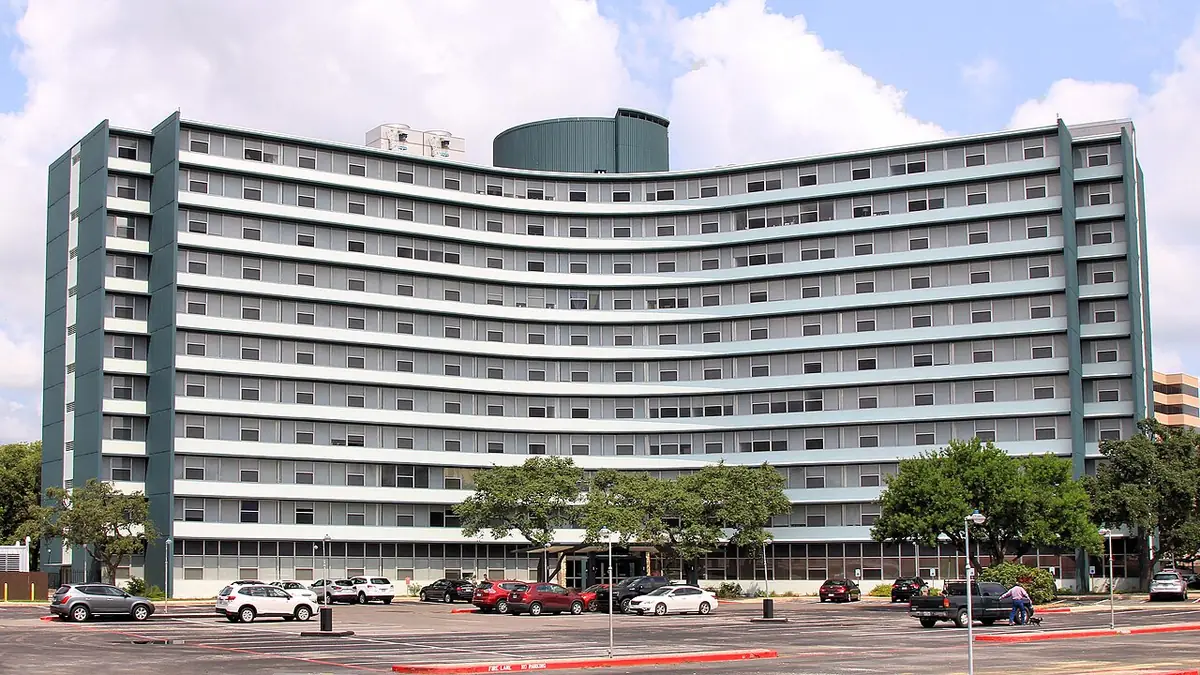
A mid-century apartment tower typical of San Antonio living — Photo: Larry D. Moore · CC BY 4.0 · Wikimedia Commons
Beyond that well-established routine, some less visible aspects of the rental market deserve your full attention.
To grasp what settling in San Antonio really involves, it helps to follow an ordinary weekday from the morning rush on the highways through to the end-of-day activities. The local rhythm is shaped strongly by driving and by how widely services are spread out, whether that is schools, health centres or business districts. This hour-by-hour walkthrough puts you right inside the daily logistics of residents here.
07:00 - 08:00The main highways (I-10, Loop 410)A period of heavy traffic when commutes lengthen noticeably because of the volume of people travelling in.
08:30 - 09:30Neighbourhood schoolsDropping children at the public schools of the local districts or at private schools, with well-drilled access procedures.
10:00 - 12:00Medical centres and health clinicsVisits to care facilities, often clustered around the South Texas Medical Center.
12:30 - 13:30Business parks and commercial districtsThe lunch break in business centres or retail areas, marking a clear break in the working day.
15:30 - 17:00School pick-up and after-school activitiesLight congestion returns around the schools, along with trips to sports facilities and clubs.
18:00 - 19:30Local shops and supermarketsEnd-of-day food shopping at the big local chains before heading home for the evening.
What rental listings will never tell you about renting in San Antonio
Knowing these blind spots helps you avoid the classic traps that catch out so many newcomers.
Online listings systematically play up natural light, floor area and how modern the fittings are, while saying nothing about basic practical matters that shape what living there is actually like. Between the strictness of association rules, the real impact of the climate on the building and the complexity of local administrative steps, several important realities never make it into the advertising. Here are the decisive points you must check before signing any rental commitment.
The real impact of strict homeowners association (HOA) rules
Many residential developments and subdivisions impose extremely fussy rules about street parking, the colour of exterior decorations or the upkeep of private outdoor space, with immediate financial penalties if you fall short.
How well the insulation actually performs against summer heatwaves
A poorly insulated apartment or house drives dramatic overuse of electricity to keep the interior bearable between June and September, weighing heavily on the household's real monthly budget.
The total absence of conventional public transport coverage
Outside the immediate downtown core, the bus network run by VIA Metropolitan Transit runs too infrequently for reliable daily use, which makes a car per adult effectively unavoidable.
How complicated it is to terminate a residential lease early
Texas leases protect landlords strongly and very often build in particularly heavy financial penalties if you leave before the agreed end date, which limits how freely you can move.
The traps new renters discover six months after moving in
These lessons from experience lead naturally to the question of who this move might not suit at all.
Looked likeA charming older house with a large, tree-filled yard in a quiet, green neighbourhood.
Turned outAn energy sink over the summer, with exorbitant air conditioning bills and recurring plumbing problems caused by the age of the pipework.
Would have caught itAlways asking for the energy bills for the last twelve months before committing, and having the technical systems inspected carefully.
Looked likeAn ultra-cheap apartment in an outer area in the middle of rapid development.
Turned outA daily nightmare of travel time, with severe congestion at peak hours and nothing at all within walking distance.
Would have caught itDriving the real routes at peak hours between the home you are considering and the places you go to work before signing the lease.
Looked likeA lease signed quickly online without visiting in person, so as not to miss a good deal.
Turned outDiscovering serious night-time noise generated by a road or industrial area right next door.
Would have caught itVisiting the neighbourhood at different times of day and night, weekends included, to judge the real noise levels and how busy it gets.
Looked likeAn informal verbal agreement with the property manager about small refurbishment works at move-in.
Turned outThe landlord flatly refusing to pay for the promised repairs once the contract was signed, leaving you alone with the contractor's bills.
Would have caught itHaving every commitment to carry out works put in writing by the landlord or their agent and attached to the official lease.
Who should seriously think twice about renting in San Antonio?
Now that these guardrails are in place, it is time to take a final view of your plans.
Moving to San Antonio answers specific ambitions, but the way this large Texas metro is built and the climate it sits in can prove entirely unsuited to certain ways of living or professional expectations. Understanding the structural limits of the place lets you work out quickly whether your own plans risk running into incompatibilities you cannot get around. Here are the profiles for whom relocating here is strongly discouraged.
Committed car-free renters who rely entirely on walking, cycling and transit
→To give up driving in favour of public transport, walking and cycling alone for every daily journey.
San Antonio's extremely spread-out urban structure and the chronic thinness of its public transport make that daily choice unsustainable and a fast route to isolation.
Professionals looking for a dense urban fabric and constant street-level cultural buzz
→To expect lively, walkable neighbourhood life with traditional shops at the foot of the building and no logistics to think about.
The city is laid out on the classic American suburban model, with residential areas separated from retail hubs and a vehicle needed as a matter of course.
People determined to avoid hot climates and wide summer temperature swings
→To settle in a region where summers are long, extremely dry and marked by temperatures regularly above 35 degrees Celsius for several months in a row.
The local climate creates total dependence on air conditioning and considerably restricts daytime outdoor activity for much of the year, which can affect the morale of anyone who does not tolerate heat well.
So, are you ready to take the step and rent in San Antonio?
At the end of this detailed analysis, your decision to rent in San Antonio should no longer rest on instinct or on the surface appeal of an attractive listing. You now have the factual material you need to measure the financial, logistical and climatic reality of this large Texas metro. Choosing to settle here means accepting how it works, starting with the omnipresence of the car and the need to plan your overall budget rigorously against the energy demands of summer.
If your move is part of a carefully considered plan, if your working situation is settled and you have taken on board the need for a suburban way of life, San Antonio offers a dynamic setting, a varied rental market and a remarkable quality of life, provided you know how to sidestep the classic traps in residential leases. The central neighbourhoods will appeal to those who want connected urban life, while the vast suburban rings will satisfy families looking for space and quiet.
Take the time to check your priorities one last time by testing your real expectations against the constraints we have set out. Visit the areas you have shortlisted at different points in the week, drive your future daily commutes at peak hours and go through every clause of your future lease scrupulously. That is the price, in clear-headedness and careful preparation, of turning your move to San Antonio into a lasting and genuinely rewarding success.
Related questions
How long does it usually take to find and sign an apartment lease in San Antonio?
Searching for and signing a lease in San Antonio generally takes between two and four weeks. Leasing offices expect a complete application file including recent proof of income, a credit history and references from previous landlords, which lets them approve newcomers quickly.
Do you really need a car to live and rent in San Antonio?
Owning a personal vehicle is close to essential for living comfortably in San Antonio. Outside a few very specific pockets of the immediate downtown core, the public transport network cannot support smooth, quick daily journeys between residential areas and employment centres.
How do electricity and air conditioning costs work through the Texas summer?
Electricity bills climb dramatically over the summer months because central air conditioning runs almost constantly. It is strongly advisable to sign up with electricity providers offering fixed rates, and to check how well the home is insulated before you sign the lease.
What financial guarantees do local landlords typically ask for?
Landlords require a security deposit usually equal to one month of rent, sometimes alongside non-refundable administrative application fees and paid solvency checks. People without a recent US credit history may occasionally be asked for a higher deposit.
Which neighbourhoods are most sought after for renting an apartment near the centre?
The most in-demand areas for urban renting include the historic King William district, the lively Pearl District and Downtown itself. These areas offer walkable access to plenty of shops, restaurants and cultural venues, but their rents run noticeably above the metropolitan average.
How do you set up water, electricity and internet accounts when you move in?
Opening water accounts (managed by SAWS) and electricity accounts is done directly online with the official providers a few days before your move-in date. For internet, several providers offer fibre plans depending on exactly what each building is eligible for.
Are pets easily accepted in San Antonio rentals?
The large majority of recent apartment complexes accept pets, but they impose weight restrictions, limits on certain dog breeds, and require payment of specific application fees plus an additional non-refundable deposit.
What paperwork should you prepare to put together a rental application?
A complete rental application in San Antonio should include your pay stubs for the last three months, official photo identification, your recent tax returns and the contact details of your previous landlords so your references can be verified quickly.
Are there parking restrictions on the streets of residential neighbourhoods?
Many residential neighbourhoods governed by homeowners associations (HOAs) strictly prohibit long-term street parking of vehicles, or leaving commercial vehicles standing in front of homes. Checking these rules before choosing a home is essential.
How does the move-in and move-out inspection work in Texas rentals?
The inspection is carried out using a detailed form supplied by the landlord or leasing office, which the tenant must complete and return with time-stamped photographs within the first few days after collecting the keys. That rigour is essential to getting your security deposit back when you leave.
Property review of ting
No ting properties in San Antonio yet
Be the first — share it on ting and it shows up right here.