Investing in property in San Antonio calls for a close understanding of local specifics, property tax charges and the way Texas condominium associations work. This complete guide walks you step by step through structuring your purchase clear-headedly, away from received ideas and sales talk.
Get the app
What nobody tells you.
Real prices, hidden costs and the traps to check before you commit.
What you really get when you buy an apartment in San Antonio
Scroll
What you really get when you buy an apartment in San Antonio
Investing in property in San Antonio calls for a close understanding of local specifics, property tax charges and the way Texas condominium associations work. This complete guide walks you step by step through structuring your purchase clear-headedly, away from received ideas and sales talk.
Written by the ting.ad editorial team ·
West Commerce Street, San Antonio in Street View: drag to look around.
With those first trade-offs on the table, the next thing to settle is whether your buyer profile genuinely matches how this market works.
Putting money into property in San Antonio means looking past the tourist postcards and understanding how the local market actually behaves. Between the energy of changing neighborhoods and the quiet of settled residential areas, every property choice involves precise trade-offs. Accepting those compromises from the outset avoids financial disappointment and lines your plans up with the planning constraints of Texas. Looking carefully at the tension between affordability and future value is the first essential step for any serious buyer.
The promise of a lively place to live in the heart of TexasvsThe reality of a market shaped by urban sprawl and car dependence
The city wins people over with its cultural energy and its history, but daily journeys demand careful planning of travel times. Transport infrastructure overwhelmingly favors the private car, which changes how you actually use your apartment day to day.
The financial appeal of prices per square meter that are still moderatevsThe weight of association dues and local property taxes
Unlike saturated coastal metros, San Antonio offers more accessible entry prices. Local taxation and the upkeep costs of amenity-rich communities nonetheless weigh heavily on an owner's recurring budget.
The search for stable, lasting rental yieldvsSharper competition from new-build schemes and managed complexes
Rental demand remains firm thanks to dynamic employment centers and military bases. Even so, the proliferation of new construction means you have to target scarce locations to protect your property's resale value.
The architectural charm of restored historic buildingsvsThe technical and regulatory constraints of renovation
Buying an older property guarantees unique character but exposes you to energy and structural compliance costs that are sometimes underestimated. Local planning rules protect heritage strictly, limiting certain alterations.
Does this place fit your way of life and your property ambitions?
Understanding what your profile demands makes it easier to take in the wide gap between where you are coming from and San Antonio.
Every property plan answers particular hopes about how you want to live, and those have to be tested against conditions on the ground in Texas. Whether you are moving for good, buying a second base or making a pure investment, local requirements differ radically from what buyers arriving from abroad are used to. Measuring your profile against the main cases you meet here will stop you buying the wrong property. Buyers differ above all in their relationship to time, space and getting around the city.
Main home and putting down roots
Living year-round in an apartment in San Antonio means accepting a way of life deeply rooted in Texas culture, where space and air conditioning play a central part. Central neighborhoods offer walkable local life around the River Walk, while outlying areas favor residential quiet and generous floor areas. You have to weigh your tolerance for high summer temperatures and daily car journeys to choose the right area. Buying a main home also means taking on board the dynamics of homeowners associations, which are powerful and tightly regulated in this state.
Rental investment and return
San Antonio's rental market benefits from strong demographics and a working population that keeps growing, drawn by technology, healthcare and defense. To make your investment work, target apartments right beside the main university corridors or office employment hubs. Vacancy has historically been low, but competition from new development means you have to maintain your property rigorously. Association dues have to be calculated precisely so they do not eat into a gross yield that looks attractive at first glance.
A second base and managing from a distance
Owning a second apartment in San Antonio appeals to many investors looking for an affordable alternative to the larger Sun Belt metros. Not being there in person, though, means handing day-to-day management to a specialist agency or a reliable local property care company. Condominium rules often ban seasonal letting of the Airbnb type, which limits your options for offsetting costs through short stays. Favor secure communities that include on-site staffing and maintenance so you can leave with complete peace of mind.
Preparing for retirement and comfort
Choosing San Antonio to enjoy your later years means looking for the convenience of serviced communities and proximity to first-rate healthcare centers. Single-level apartments, or ones served by reliable elevators in secure communities, are the ideal target. Access to shops and the quality of medical infrastructure then matter more than being close to the lively downtown districts. Take the time to study the rules governing community life and the monthly dues that go with them.
Living here when you arrive from abroad: what changes radically in daily life
St. Mary's University, a Gothic Revival landmark in San Antonio — Photo: Larry D. Moore · CC BY 4.0 · Wikimedia Commons
Once those cultural bearings are in place, choosing a neighborhood becomes the most decisive geographic decision of all.
Moving abroad, or investing in property across an ocean, brings its share of cultural and administrative surprises. The reference points you built at home often fall apart in the face of the customs of the Texas property market and the way the city is laid out. From the size of homes to how condominium communities are run, every detail differs from what most newcomers are used to. Anticipating those structural gaps is the best way to avoid administrative disillusionment and wrong turns during your purchase.
From abroad
A compact city center and shops within walking distance
San Antonio
Widespread sprawl and near-exclusive use of a personal vehicle
Where you may be used to walking around the corner for bread, in San Antonio a car is indispensable for the smallest daily errand. Even in denser neighborhoods, the layout is designed around the automobile, which changes your relationship to time and space.
From abroad
Statutory condominium law playing a protective, framing role
San Antonio
The wide-ranging power of local homeowners associations (HOAs)
The rules an HOA sets govern community life with a strictness that can be disconcerting to a newcomer. They can impose restrictions on exterior appearance, colors and the terms on which you may rent out, with heavy fines for breaches.
From abroad
Living areas that are often compact and tightly planned
San Antonio
Generous volumes, open-plan space and built-in appliances
Texas apartments generally offer far more floor area than city homes elsewhere, along with open kitchens and built-in laundry rooms. In exchange, the quality of acoustic insulation can sometimes take newcomers by surprise.
From abroad
A formal, step-by-step negotiation handled by legal officials
San Antonio
A fast transaction framed by standard contracts and agents
The American buying process rests on standardized forms and ever-present intermediaries (agents, title companies). Signing is digital and smooth, a long way from the administrative delays common elsewhere.
From abroad
Local funding drawn from income and national taxes
San Antonio
A system built on heavy local property taxes (Property Taxes)
The absence of income tax in Texas translates into particularly high property taxes, a recurring cost you have to build permanently into your financing plan.
Which neighborhood should you choose to settle in and invest with confidence?
With the neighborhood settled, the next job is to look precisely at the financial and budgetary reality of a purchase like this.
San Antonio is a mosaic of neighborhoods with strongly marked identities, from the historic bustle of the center to the well-heeled residential enclaves in the north. Choosing the right location shapes both your daily quality of life and how easily you will sell later. Each area answers precise criteria in terms of amenities, safety and economic momentum. Comparing the main districts side by side is essential to steer your search efficiently.
Downtown / River Walk
A lively urban atmosphere, touristic and cultural, set to the rhythm of visitors and downtown workers.
Suits
People who love fast-moving city life, and investors betting on premium or medium-term letting.
Trade-off
High noise levels, heavy traffic and a cost per square meter well above the city average.
Alamo Heights
A green residential haven of calm, with streets lined by mature trees and a settled population.
Suits
Families looking for quiet, excellent schools and a safe setting.
Trade-off
An extremely tight market where scarce properties sell fast at very high prices.
Southtown / King William
An artistic, bohemian and historic quarter mixing galleries, independent cafes and period houses.
Suits
Buyers drawn to heritage character, cultural creativity and neighborhood life that is lively but intimate.
Trade-off
Strong pressure on land that drives rapid gentrification and steadily rising property taxes.
North / Stone Oak
A modern, orderly retail-heavy area built around large shopping centers and secure communities.
Suits
Professionals working in the technology or healthcare hubs who want modern comfort and plenty of space.
Trade-off
Heavy car dependence and an architectural uniformity that can lack historic soul.
What does an apartment really cost here, and what are the extra charges?
Beyond the raw purchase figures, the legal nature of what you actually own deserves your full attention.
Buying property in San Antonio comes to more than the headline price shown on online listing portals. The total cost of ownership takes in specific local taxes, mandatory insurance and association dues that are sometimes substantial. Building a rigorous financial forecast protects you against nasty surprises and secures the long-term viability of your investment. The ranges below reflect the trends observed in the market for properties of equivalent standard.
san-antonioFor saleApartmentestimate
Median price / m²US$1,852Half the apartments sell below this
Median priceUS$175kthe average is 14% higher — a few very large properties pull it up
Most common2 bedrooms42 % of listings
Average size90 m²
By number of bedrooms
Bedrooms
Share of market
Avg price
Price / m²
Avg size
1
40 %
US$146k
US$2,242 +15 %
65 m²
2most common
42 %
US$185k
US$1,950
95 m²
3
16 %
US$232k
US$1,852best value / m²
125 m²
4
2 %
US$287k
US$1,794 −8 %
160 m²
Each row is an average, compared against the area average of US$1,950 / m². These are indicative estimates of a typical local market, not a measured sample of live listings. Check current listings before relying on them.
What you can really own: title and its legal limits
With the legal structure clarified, let us look at the strict chronology of steps that closes your transaction.
The American system of shared ownership differs noticeably from what buyers from abroad know, particularly in how rights and duties are split. When you buy an apartment you become the owner of your own walls and of a share of the common areas, while remaining subject to the community's strict rules. Understanding those legal boundaries is essential to avoid disputes with the homeowners association and to protect the value of your asset. Two visions often compete in the day-to-day running of these developments.
The self-governing community and the condominium model
In a condominium structure, you own the interior of your home outright while the land and the exterior structures belong collectively to all the owners grouped in an association. That structure pools the maintenance costs of shared facilities such as the pool, the gym or on-site staffing. In exchange you have to pay monthly dues (HOA fees) that can rise regularly in line with maintenance spending and the works the membership votes through.
What it changesYou absolutely must comb through the association's accounts and reserves before signing, because a badly run community can hit you with very heavy special assessments.
Ground-level communities and townhome developments
Some developments amount to groups of attached houses or low-rise apartments set inside a secure private estate (townhomes). The legal regime often includes ownership of the land under the building or of a private garden plot, while keeping strict obligations toward the neighborhood association. This model appeals to buyers who want spatial independence while still enjoying shared services and the security of a gated community.
What it changesReviewing the internal restrictions is crucial, because altering the facade or installing anything outside always requires prior approval from the community's architectural committee.
The golden rule to grasp before you pay a deposit on your future home
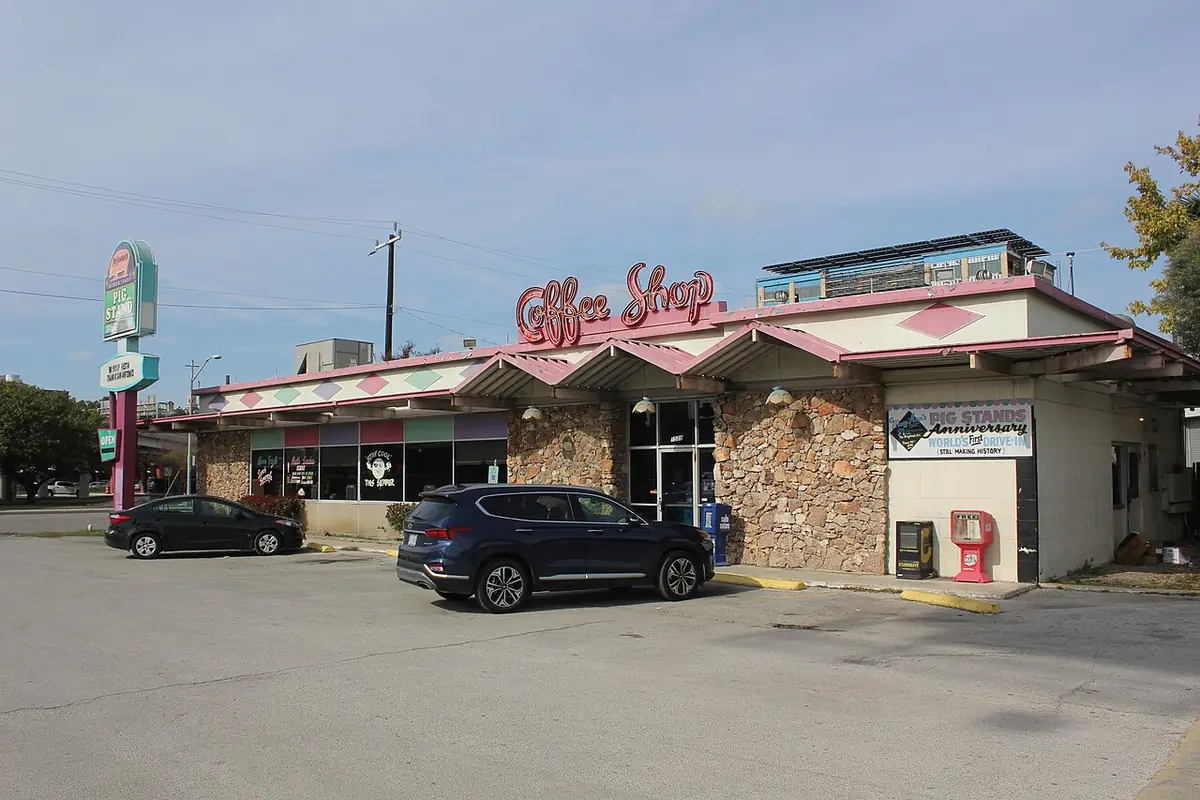
A century-old commercial building on a San Antonio corner — Photo: Larry D. Moore · CC BY 4.0 · Wikimedia Commons
To run that sequence without a hitch, it helps to spell out exactly what each party in the transaction does.
Buying property in Texas follows an extremely strict chronological sequence in which every financial commitment is protected by precise contingency clauses. Unlike practice in some other countries, an accepted offer triggers a complex contractual mechanism involving neutral third parties and tight deadlines. Mastering that chain of events stops you losing your deposit if you withdraw or discover a hidden defect too late. Following the timeline scrupulously keeps your money safe throughout the transaction.
Drafting and signing the purchase offer (Earnest Money Contract) by both parties.
Paying the deposit (earnest money) into an escrow account held by an independent title company.
Starting the inspection window (option period), which allows you to have the property examined by a certified professional.
Clearing any financing contingencies with your bank or mortgage lender.
Running a thorough title search to confirm there are no liens or undisclosed debts.
Signing the final deed of sale (closing) and the official transfer of funds recorded with the county.
How a property transaction unfolds, step by step
A successful property transaction rests on the smooth coordination of a team of professionals with complementary, strictly regulated skills. From the agent to the title company by way of the building inspector, each party plays a precise role in securing your investment. Knowing what each one is responsible for lets you steer your purchase with confidence and never sign blind. Here is the detailed chronology of who does what, from the first viewing to the handover of keys.
The buyer's agentSelecting the property and negotiating the offerThey guide your targeted search, analyze comparative market analyses (CMAs) and draft the offer, making sure it includes the protective clauses your interests require.
The home inspectorTechnical assessment of the apartmentThey carry out a full audit of the structure, plumbing, electrics and air conditioning system, producing a detailed report you can use as leverage to negotiate repairs or adjust the price.
The title companyEscrow and legal securityIt acts as a neutral third party, checks the property's legal history to confirm there are no disputes and orchestrates the final transfer of funds and title.
The mortgage lenderApproving the financing and releasing the loanThey process your credit file, assess your ability to repay and release the funds needed for the purchase in line with the timetable agreed between the parties.
HOA managementHanding over the community rulesThey supply all the financial and regulatory documents governing community life, letting you confirm the dues and internal constraints before the option period runs out.
Apartment or single-family house in San Antonio: which type of property suits your plans?
Once that fundamental choice between urban verticality and residential sprawl is settled, the central question of budget and real costs comes straight to the front.
The choice between buying an apartment in the heart of San Antonio and buying a single-family house in the outlying residential neighborhoods depends above all on your tolerance for the daily burdens of upkeep and travel. Urban condominium buildings, concentrated in particular near the River Walk and in the historic district, remove the work of exterior maintenance but impose strict community rules along with unavoidable monthly charges for the common areas and security. That formula suits working people without children, or investors looking for quick liquidity in a busy rental market, where demand for compact, manageable homes stays structurally firm all year round.
Going the other way, choosing a detached house in areas such as Alamo Heights or the subdivisions further north offers total spatial independence, no immediate attached neighbors and real scope to develop the outdoor space. That independence carries a direct financial and operational cost, though, one buyers often underestimate when they first settle in Texas. Heavy air conditioning for seven months of the year, maintaining foundations on clay soils and looking after a private lot all demand a significant annual preventive maintenance budget that has to go into your overall financing plan from the start.
In terms of how value develops, urban apartments face resale dynamics tied more closely to cycles of downtown densification and to the city's development projects in the historic center. Their value rests essentially on location and direct access to office employment centers without using highways that clog at peak hours. Detached houses, for their part, capitalize on the quality of school districts and long-term residential stability, attracting creditworthy family buyers who make the property easier to sell over a medium or longer horizon.
The final choice should therefore not rest on aesthetic love at first sight or on a simple projection of the purchase budget, but on a clear-eyed analysis of how you will live in five or ten years. If you refuse to spend your weekends mowing a lawn, pulling weeds and supervising maintenance technicians for the pool or the roof, the urban apartment is the obvious functional answer. If you insist on private space sealed off from neighborhood noise and adaptable volume for a growing family, investing in a suburban house wins out despite the commuting.
What total budget do you really need to live in an apartment in San Antonio?
With those financial markers set, it helps to understand how a typical week actually fits together in the daily life of a San Antonio resident.
Buying an apartment in San Antonio comes to more than the headline price local agencies advertise. The Texas tax system leans heavily on property tax, coupled with association dues that are often high in amenity-rich communities. It is essential to work through every recurring cost so that nothing catches you out financially after closing.
Structure of purchase costs and recurring charges for an apartment
Cost item
Estimated range
Impact on the annual budget
Median purchase price (apartment)
USD 220,000 - USD 380,000
Depends on floor area and neighborhood
Property tax
1.8% - 2.5% of assessed value
Reassessed each year by the county
Association dues (HOA/condo fees)
USD 250 - USD 600 per month
Covers maintenance, water and insurance
Homeowners insurance
USD 1,200 - USD 2,500 per year
Rising noticeably because of climate risk
Property tax rates vary with the school districts and special districts attached to the land.
Forecast monthly running budget for a household
Type of service
Average monthly cost
Seasonal variation
Electricity (heavy air conditioning use)
USD 150 - USD 350
Very sharp rise between June and September
Water, wastewater and refuse
USD 60 - USD 110
Moderate, depending on irrigation use
High-speed internet and connections
USD 70 - USD 100
Fixed, depending on the provider chosen
The electricity bill is the most volatile item because air conditioning runs continuously through the Texas summer.
What does an ordinary Tuesday actually look like between travel, services and local constraints?
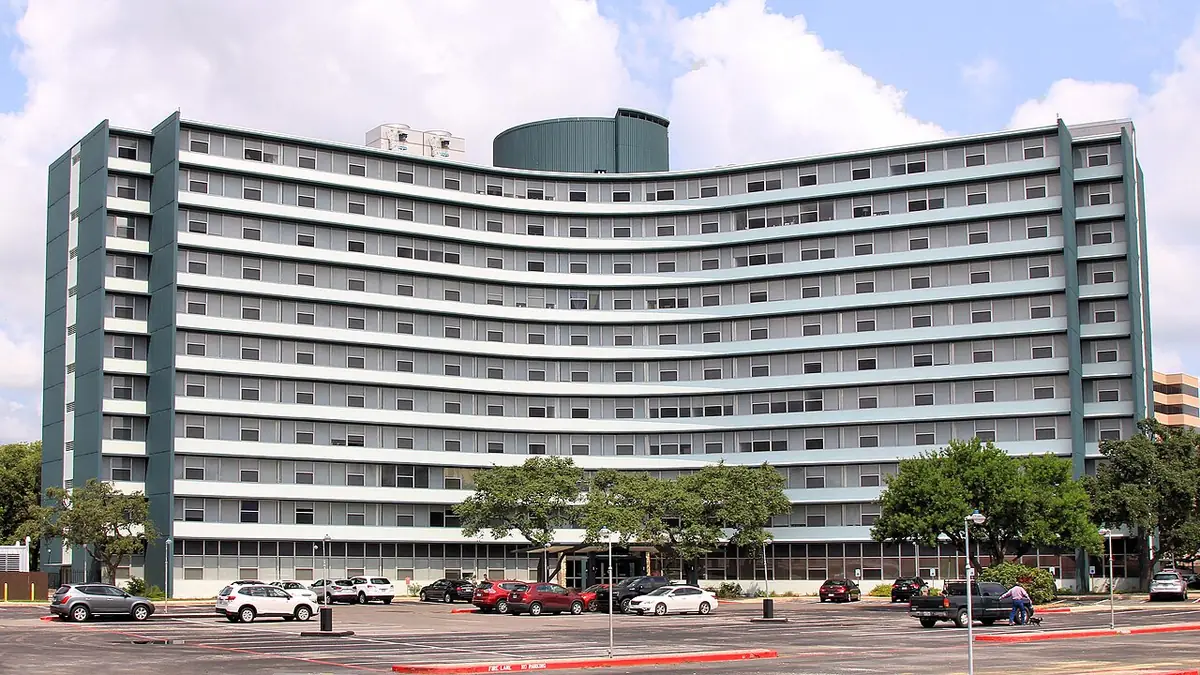
A mid-century apartment tower typical of San Antonio living — Photo: Larry D. Moore · CC BY 4.0 · Wikimedia Commons
Beyond that timed routine, plenty of things the sales brochures never show deserve your attention before you sign.
Managing your time in San Antonio is dictated by the road network and the sprawl characteristic of Texas metros. An ordinary Tuesday illustrates perfectly the need to optimize journeys between residential areas, the highways and the office employment districts. Anticipating those daily flows keeps logistics from choking you and lets you plan your move calmly.
07:30Leaving home and joining I-35 or Loop 410The main routes fill up quickly from half past seven, which makes the choice of where you live absolutely critical for keeping the commute to employment areas short.
08:30Arriving at the office in the business district or the medical center areaParking in downtown San Antonio or in the outlying business parks often requires a monthly permit arranged by your employer or by a business association.
12:30Midday break and local errands in the neighborhoodThe lunch break is a chance to use local shops or neighborhood shopping centers for the week's quick grocery runs.
17:30The drive home with a stop at a supermarket or pharmacyEnd-of-day shopping usually happens at the big regional chains with large free parking lots, sited where the main roads cross.
19:00Back at the community and dealing with its servicesThe evening is a chance to enjoy the shared amenities while handling the routine administrative chores that come with a Texas home.
What hidden aspects of San Antonio property do listings systematically leave out?
With those technical traps in the open, it is just as instructive to look at the misjudgments buyers make a few months after moving in.
Marketing material and online platforms present properties from their most flattering angle, smoothing away the technical and regulatory realities specific to the San Antonio market. Understanding those blind spots will spare you costly disappointment after you get the keys and will protect the durability of your investment.
The real condition of foundations on clay soils
The ground across the region is made of expansive clays that react strongly to moisture swings between dry and wet seasons. A ground-floor apartment or a poorly drained house can suffer major structural movement requiring pier work costing tens of thousands of dollars.
The strict rules of homeowners associations (HOAs)
Many condominium communities and subdivisions enforce fussy rules about the color of blinds, where you park a work vehicle or a ban on short-term letting. Not reading those covenants before buying exposes you to repeated fines and restricts how you can use your home.
The effect of special district levies on your local tax bill
Some newer neighborhoods sit inside municipal improvement districts or public utility districts that add permanent surcharges to your annual tax bill. That surcharge mechanically reduces how much you can borrow and weighs lastingly on net yield if you let the property.
Real exposure to heatwaves and drought
The cost of air conditioning and the watering restrictions imposed by the water authorities weigh heavily on the running budget. A poorly insulated property will turn your summer electricity bill into a recurring money pit you cannot recover.
Which misjudgments do buyers most often regret bitterly six months after buying?
Aware of those pitfalls and of the disappointments people describe in hindsight, it is worth asking whether this market really suits everyone, or whether some buyers should step back.
Looked likeAn excellent financial deal, thanks to a price per square meter that read as very attractive at first glance.
Turned outA huge catch-up tax bill the following year, because the Bexar Appraisal District realigned the assessed value upward to the actual sale price.
Would have caught itInsisting on the full record of property taxes the previous owners paid over the last three years, and modeling the post-purchase reassessment straight away with your broker.
Looked likeA quiet, pastoral neighborhood with quick access to the main roads along a lightly used side route.
Turned outDaily traffic hell at peak hours because of unplanned road widening works and the opening of large new subdivisions upstream.
Would have caught itTesting the real journey times yourself at the critical morning and evening hours on several days of the week before submitting a firm offer.
Looked likeA modern apartment needing no immediate work, thanks to fresh paint and a renovated kitchen.
Turned outAn obsolete central air conditioning unit running flat out and a failing drainage system, neither of which survived the first intense summer heatwave.
Would have caught itAlways hiring an independent certified home inspector who specializes in the building problems specific to the south Texas climate.
Looked likeA peaceful community with moderate dues, apparently a sign of careful management of the common areas.
Turned outA completely empty reserve fund and a members' meeting voting through massive special assessments to redo the roof and the community pool.
Would have caught itAsking for the minutes of the last three association meetings to check the financial health of the HOA management and the works that have been voted through.
Which kind of buyer should seriously give up on a property purchase in San Antonio?
With those warnings set out to guide your judgment, it is time to conclude on how ready your decision to buy really is.
Despite the general economic appeal of the region and the absence of state income tax in Texas, the local property market has structural rigidities incompatible with certain plans. Identifying clearly the profiles for whom this investment is a dead end avoids quick financial losses.
The very short-term investor chasing a fast speculative gain
→Buying a downtown apartment to resell within twelve to eighteen months at a big margin.
Transfer costs, high agent commissions and the rigidity of property taxes absorb most of the potential short-term gain, turning any fast resale into a break-even deal at best.
The household on a tightly calibrated budget with no emergency savings
→Buying a property by putting every last dollar of cash into the down payment and the initial closing costs.
The slightest air conditioning failure in the middle of August, or a sharp rise in local property tax, will immediately push the household into insolvency and acute financial stress.
The remote worker who insists on an absolutely walkable, car-free life
→Moving into a condominium expecting to do everything on foot or by public transport in a hugely spread-out metro.
San Antonio's urban layout rests almost entirely on daily use of a personal car, which makes having no vehicle extremely limiting socially and professionally.
So, are you ready to take the step and buy property in San Antonio?
Buying an apartment or a house in San Antonio is a serious commitment that tolerates no methodological shortcuts. If your approach rests on a long-term view, solid emergency savings able to absorb the volatility of property taxes and a clear-eyed acceptance of the local climate and transport constraints, the Texas market offers superb opportunities for stability and building wealth. The metro's demographic momentum supports the value of quality locations, provided you do not give in to the temptation of rushing or of an emotional purchase that has never been technically inspected.
Take the time to check every line of your financing plan, building in the invisible recurring charges, from homeowners insurance to summer electricity bills to annual reassessments of value. Hire independent professionals to inspect the structure, the foundations and the mechanical systems before you commit legally. That is the price, made of rigor, careful verification and geographic realism, at which your property plans in San Antonio turn into a lasting success for your future and that of the people close to you.
Related questions
What is the average property tax bill for an apartment in San Antonio?
Property tax generally represents between 1.8% and 2.5% of the value the county assesses for your property each year. The exact rate varies with the school district and the special districts attached to the precise location of your home.
Do you need a car to live in San Antonio?
Yes, San Antonio's urban layout is marked by significant sprawl that makes a car indispensable day to day. Public transport is limited and does not cover residential areas and employment centers effectively.
How do association dues work for an apartment in a managed community?
Association dues, known as HOA or condo fees, cover maintenance of the common areas, security, water and sometimes insurance on the building envelope. They generally run between 250 and 600 dollars a month depending on the amenities the community offers.
What soil-related risks affect property in San Antonio?
The ground across the region contains expansive clays that swell and shrink with moisture, which can weaken a building's foundations. A specialist technical inspection is therefore essential before buying, to spot any structural cracking.
Does Texas levy an income tax on residents?
No, the state of Texas levies no personal income tax, which is a major tax advantage. In exchange, local taxes such as property tax are markedly higher than in other American states.
How much does air conditioning affect the budget for an apartment in San Antonio?
Air conditioning runs at full tilt for seven months of the year because of the fierce Texas summer heat. That translates into monthly electricity bills that can easily double or triple between the cool season and the height of summer.
Should you budget for unplanned repairs when you buy?
It is strongly advised to build a financial reserve equal to 1% or 2% of the property's value each year to cover equipment failures, particularly air conditioning, plumbing or roofing.
How are property taxes assessed each year in Texas?
The Bexar Appraisal District assesses the market value of every property each spring. That assessment is the basis for calculating the taxes owed to the various local entities, and owners can challenge the estimate if they believe it is too high.
Which San Antonio neighborhoods are best for a long-lasting investment?
Areas close to the historic center and the River Walk, along with northern neighborhoods such as Alamo Heights, have historically been the most sought after. They offer better liquidity on resale and attract a stable, creditworthy population.
Can you rent your apartment short term on platforms such as Airbnb?
Many condominium communities in San Antonio strictly prohibit short-term rentals in their rules. On top of that, the city requires specific permits and hotel occupancy taxes that you must check before considering that kind of use.
Property review of ting
No ting properties in San Antonio yet
Be the first — share it on ting and it shows up right here.