Buying a home in San Antonio means looking past the tourist cliches and coldly assessing the reality of the neighborhoods, the constraints imposed by homeowners associations and the financial structure of the Texas market. This guide walks you through each stage so you can secure your investment and settle in successfully in the southern United States.
Get the app
What nobody tells you.
Real prices, hidden costs and the traps to check before you commit.
Why the promise of a house in San Antonio hides decisive lifestyle choices
Scroll
Why the promise of a house in San Antonio hides decisive lifestyle choices
Buying a home in San Antonio means looking past the tourist cliches and coldly assessing the reality of the neighborhoods, the constraints imposed by homeowners associations and the financial structure of the Texas market. This guide walks you through each stage so you can secure your investment and settle in successfully in the southern United States.
Written by the ting.ad editorial team ·
West Commerce Street, San Antonio in Street View: drag to look around.
This tension between space and distance immediately reshapes the way you will organise your days.
Buying a property in this Texas metro is not simply a matter of gaining extra square meters or mild weather all year round. Buyers quickly discover that the urban reality forces structural trade-offs between access to employment centers and the quiet of residential suburbs. You have to assess coldly what each area really offers day to day, so that nothing disappoints you once the closing is done at the title company.
Space and quiet in the single-family suburbsvsBeing systematically far from services and places of interest
Large lots and family houses are mostly found on the northern edge of the city, which means spending many hours on the major highways to reach the historic core or the busiest business districts.
The historic charm of central neighborhoodsvsCompact older properties and a shortage of parking
Buying near the River Walk or in the older districts guarantees a walkable, picturesque setting, but it usually means smaller homes and substantial renovation budgets to meet current standards.
The rapid spread of new subdivisionsvsArchitectural sameness and no landscape maturity
New developments toward the northwest offer modern comfort and immaculate open-plan kitchens, but they are badly short of mature trees and make you completely dependent on the car for the smallest errand.
Does San Antonio really match your profile and your everyday expectations?
Moving to a Texas way of organising daily life means taking on new spatial and cultural reference points.
The Texas housing market follows its own logic, and it does not suit every life plan. Between the pace of the livelier districts and the calm of more secluded areas, the address you choose has to line up precisely with your professional and personal habits.
The large green suburb option
If you work remotely and want a large home with a substantial yard, the northern outer areas offer a space-to-price ratio that is unusually good compared with coastal metros. You get a quiet setting and modern amenities grouped in recent shopping centers. In exchange, spontaneous cultural life is almost nonexistent and every outing means taking the car and covering significant distances.
The central or adjacent neighborhood option
For professionals who have to be at the office every day, living close to downtown or in historic districts such as King William is essential to preserving quality of life. The properties available often force trade-offs on floor area or lot size, but you gain precious time on the commute. Your daily rhythm is set by the buzz of the city, restaurants within immediate reach and a genuine neighborhood life.
The security of planned communities
Managed developments or areas with structured homeowners associations suit people who want minimal upkeep and a secure setting. These neighborhoods guarantee well-kept infrastructure, shared pools and a homogeneous set of neighbors. That said, the community rules are often strict about the exterior appearance of properties, which limits how freely you can alter your own home.
What changes radically when you move to San Antonio from abroad
St. Mary's University, a Gothic Revival landmark in San Antonio — Photo: Larry D. Moore · CC BY 4.0 · Wikimedia Commons
Once those reference points are absorbed, exactly where in the city you settle becomes the top priority.
Moving to or investing in south Texas immediately confronts newcomers with completely different standards of planning and construction. The sense of distance, the way services are centered and the legal structure of transactions all demand a quick adjustment if you want to avoid unpleasant surprises.
From abroad
A dense city built around local shops you can reach on foot
San Antonio
Massive urban sprawl where a private car is the only practical way to get around
You absolutely must build the cost of a car and the time spent parking into your overall budget and your daily routine.
From abroad
Homes with thick stone or brick walls and strong thermal inertia
San Antonio
Wood-frame construction with central air conditioning systems running all year
Summer energy bills are a substantial line item that needs to be anticipated rigorously at the time of purchase.
From abroad
Leases and transactions tightly framed by national law
San Antonio
Contract rules governed by Texas law and very specific local market practice
Working with a licensed local real estate agent and a specialist attorney becomes indispensable if every clause is to be watertight.
From abroad
Historic city centers animated by pedestrians and continuous terraces
San Antonio
Segmented urban hubs where activity concentrates in very specific zones such as the River Walk
Social life is structured differently, often around enclosed venues or large purpose-built commercial spaces.
Mapping the areas: which San Antonio neighborhood fits your plan?
The neighborhood you choose directly determines the budget you will need to complete the purchase.
The city divides into zones with sharply contrasting identities, each offering a particular balance of budget, setting and accessibility. Picking the right area protects the value of your asset and the comfort of your daily life in Texas.
Alamo Heights and the historic enclaves
A leafy setting, quiet residential streets and the atmosphere of a well-off village within immediate reach of downtown.
Suits
Buyers looking for architectural character, excellent schools and a very stable long-term asset.
Trade-off
Prices per square meter are well above the city average and properties on the market are scarce.
Southtown and the arts districts
A bohemian, creative atmosphere set by art galleries, independent coffee shops and a young, energetic population.
Suits
Buyers drawn to urban activity, a social mix and the chance to live in a renovated older house.
Trade-off
Pressure on housing is high and some adjacent areas vary in terms of safety and services.
The Northwest and the expanding areas
Large modern residential developments, recent shopping centers and proximity to the major technology employment hubs.
Suits
Families and working households looking for spacious houses, recent amenities and a very functional, standardised environment.
Trade-off
No historic soul, uniform streetscapes and complete dependence on congested major highways.
Budget assessment: what to expect on the San Antonio housing market
Beyond the purchase itself, the way property ownership is structured in Texas means you need to understand exactly what rights you hold.
The Texas market still offers openings that are more affordable than the big metros on the East or West Coast, but the recent rise in prices calls for a careful reading of the financial data. Amounts vary considerably with the age of the building, the presence of a homeowners association and the exact location.
san-antonioFor saleHouseestimate
Median price / m²US$1,519Half the apartments sell below this
Median priceUS$252kthe average is 14% higher — a few very large properties pull it up
Most common2 bedrooms70 % of listings
Average size158 m²
By number of bedrooms
Bedrooms
Share of market
Avg price
Price / m²
Avg size
2most common
70 %
US$266k
US$1,599
166 m²
3
27 %
US$332k
US$1,519 −5 %
219 m²
4
3 %
US$412k
US$1,471best value / m²
280 m²
Each row is an average, compared against the area average of US$1,599 / m². These are indicative estimates of a typical local market, not a measured sample of live listings. Check current listings before relying on them.
Outright ownership versus homeowners association restrictions
Making the transaction legally safe follows its own formal process, one you need to master from the very first offer.
Buying a house in the United States does not always mean total freedom over your property. The near-automatic presence of HOAs (homeowners associations) rewrites the rules on exterior work and community management.
A house in a planned community with an HOA
In the vast majority of recent subdivisions, buying a house comes with mandatory membership of a homeowners association. That body collects monthly or annual dues to maintain the common areas, security and shared amenities. In return, it imposes strict rules on the color of your facade, the type of fence, where vehicles are parked and how the lawn is kept. Any change visible from the outside has to be submitted to a committee for prior approval.
What it changesYou get a clean, consistent and protected environment, but you give up part of your autonomy over architecture and landscaping.
An independent property in a historic or older area
Buying an older house outside a managed subdivision frees you from HOA constraints. You are entirely free to repaint your walls, redo your yard or alter exterior structures as you wish, provided you respect municipal zoning rules and any heritage protections attached to the neighborhood. Streets and public spaces are maintained solely by city services, with no additional private dues.
What it changesYou keep complete freedom over your property, but you alone deal with whatever the neighborhood throws at you and with maintaining your immediate surroundings.
The unavoidable steps before you put money down on a house in Texas
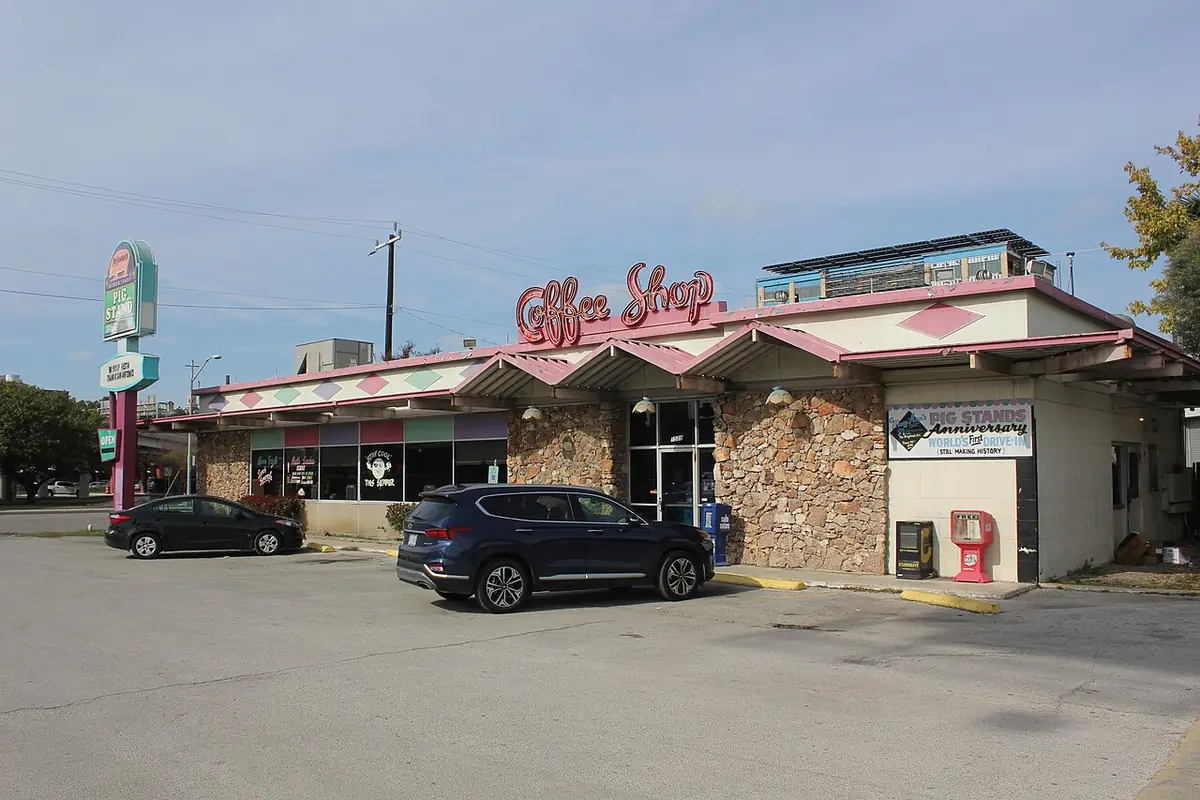
A century-old commercial building on a San Antonio corner — Photo: Larry D. Moore · CC BY 4.0 · Wikimedia Commons
Once those legal mechanics are clear, the chronology of the transaction becomes entirely predictable.
The Texas sale system rests on a very strict binding purchase contract and on the use of a neutral escrow account held by a title company. Understanding the option period and the technical inspections is vital for any buyer.
Putting a written purchase offer together through your licensed agent.
Depositing the earnest money into the title company's escrow account within the deadlines set by the contract.
Opening the inspection window (the option period), usually set at 7 to 10 days, in exchange for a modest payment to the seller.
Having a full technical inspection of the building carried out by an independent professional to identify hidden defects or urgent repairs.
Negotiating repairs, or walking away legally without penalty if the structural defects uncovered turn out to be too serious.
Clearing the contingencies and signing the final transfer of ownership (the closing).
Timeline of a successful purchase from the search to the handover of keys
That discipline in execution is what protects your investment in one of the most dynamic cities in Texas.
Running a purchase in San Antonio means coordinating several key players under local law. Here is the typical path of a well-secured acquisition.
The buyerGetting mortgage pre-approvalBefore you view a single property, you need a pre-qualification letter from a local lender to prove to sellers that you can afford the purchase.
The real estate agentShortlisting properties and targeted viewingsYour representative filters listings against your strict criteria, arranges in-person viewings and analyses comparable price data in the neighborhood you are targeting.
The attorney or brokerDrafting and negotiating the purchase offerThe standard Texas contract is completed with the appropriate protective clauses, including inspection deadlines and financing conditions.
The home inspectorA rigorous audit of the building's structureCareful examination of the roof, the concrete slab foundation, the electrical installations and the central air conditioning system.
The title companyChecking title and liensThorough searches to guarantee that the property is sold free of any debt, undisclosed mortgage or boundary dispute.
The closing agentFinal signature and transfer of fundsValidation of the legal documents, payment of closing costs and official recording of the title with Bexar County.
House or apartment in San Antonio: how do you decide?
Once the type of property is settled, the central question becomes the overall financial reality and the costs that come with it.
Buying a single-family house in San Antonio means accepting significant structural maintenance costs, not least because of prolonged exposure to Texas heat, which takes its toll on foundations and roofs. Prospective buyers frequently underestimate the bill for heavy air conditioning use and for watering the foundation to counter movement in the local clay soils. Unlike dense urban areas, a detached home here means directly managing a large plot of land, which is a recurring investment in time and in gardening equipment.
Opting for a condo or an apartment in a shared-ownership building radically changes the structure of monthly spending, adding association dues that are often high but predictable. Those dues pool the upkeep of exterior spaces, the roof and shared pools, freeing owners from immediate technical worries. In exchange, architectural freedom is tightly framed by strict community rules that govern every exterior change, restricting what a resident owner can decide alone.
Where you sit within the city naturally steers the choice between these two housing types according to the lifestyle you are after. Central neighborhoods such as King William or the surroundings of the River Walk clearly favor multi-unit housing or smaller historic houses with their own renovation constraints. As you move out toward the outer rings and residential suburbs such as Stone Oak, the detached house becomes the undisputed norm, offering considerably more living space for a more moderate price per square meter.
The resale horizon is the last decisive trade-off for protecting your capital in the San Antonio region. Detached houses in well-regarded school districts stay remarkably liquid and attract steady, structurally solid family demand. Apartments prove more sensitive to local economic cycles and call for closer attention to the financial health of the association, so that major works do not trigger unexpected special assessments.
What overall budget do you really need to plan for living in San Antonio?
These fixed costs shape directly how a household settled here organises a typical week.
Assessing your budget in San Antonio cannot stop at the mortgage payment agreed with the bank. Texas property taxes are notably high and weigh heavily on the long-term cost of ownership. You have to build in all the compulsory side costs to avoid a financial squeeze during the first years in the home.
Unavoidable cost items for buying and maintaining a house
Budget item
Estimated range
Impact and frequency
Property tax
1.8% to 2.5% of assessed value per year
Collected annually by the county, it varies with the school districts and municipal services attached to the parcel.
Homeowners insurance
$2,500 to $4,500 per year
Rising noticeably in Texas because of weather and hail risk, this policy is required by every lender.
Homeowners association (HOA) dues
$300 to $1,500 per year
Common in recent subdivisions, they fund security, green spaces and the shared amenities of the neighborhood.
Energy and air conditioning bills
$150 to $350 per month
Consumption peaks in the summer months, when air conditioning runs continuously to keep the house livable.
These estimates are based on the averages observed for a standard mid-sized single-family house in the metro area.
What do daily life and logistics in San Antonio actually look like?
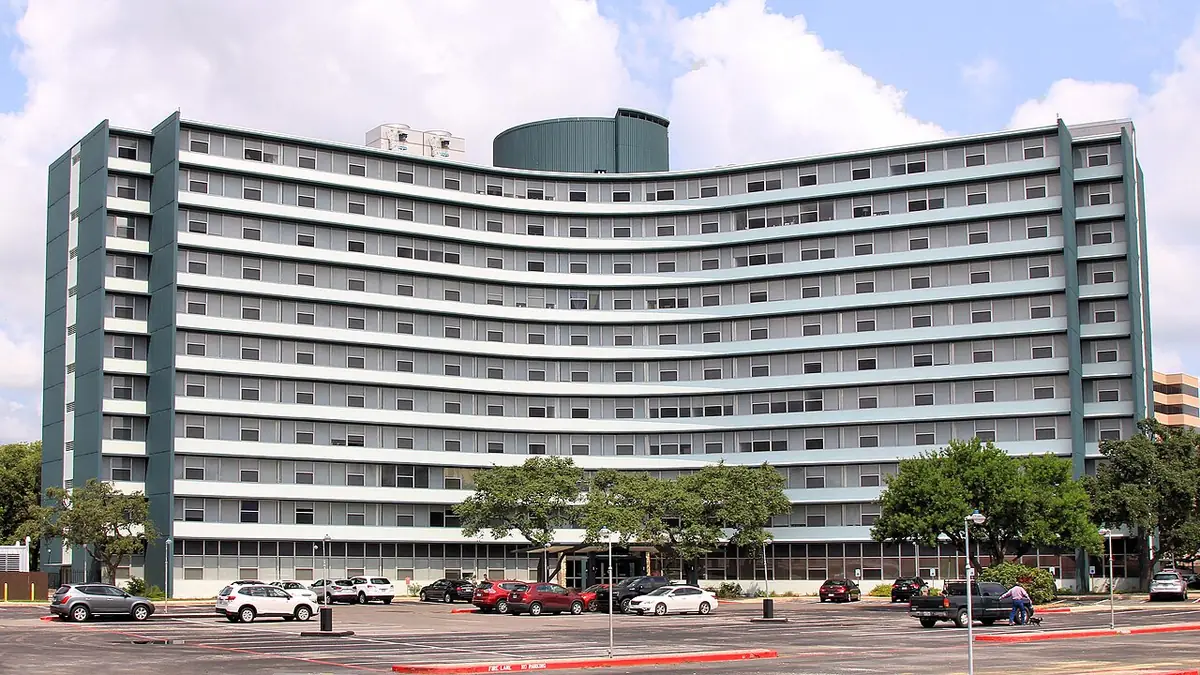
A mid-century apartment tower typical of San Antonio living — Photo: Larry D. Moore · CC BY 4.0 · Wikimedia Commons
Beyond that well-drilled routine, some less visible aspects of the local market deserve particular attention.
The daily rhythm in San Antonio is deeply shaped by car use and by the urban sprawl typical of large Texas metros. Anticipating travel times at peak hours prevents major friction in family life. Every stretch of the day illustrates the need for a coherent geographic fit between the workplace and the school you have chosen.
07:00Residential neighborhood and departureMorning preparations and a check on traffic conditions along major routes such as Loop 410 or Interstate 35 to anticipate delays.
07:45Local schoolDropping the children at the school in the assigned district, a decisive factor in the original choice of where to live.
08:30Arrival at workReaching the working district, whether that is the central business district, the medical hubs of the Medical Center or the technology zones.
12:30A lunch break close byA quick meal or a work conversation in the integrated retail areas that usually sit alongside the office parks.
17:30The trip home and essential shoppingThe obligatory stop at a large supermarket for the household's weekly groceries in the outlying retail areas.
19:00Home and downtimeMaking the most of the outdoor space at the house or the amenities of the community to close the day away from the traffic.
Which invisible details do real estate agents often leave out?
These hidden traps lead straight to the misjudgments that many buyers regret six months after moving in.
Buying a property in San Antonio carries local technical and regulatory quirks that sales brochures pass over in silence. Knowing these hidden realities is what keeps a major financial setback from landing after the deed is signed at the closing table. Examining the immediate surroundings and the zoning rules closely is absolutely essential.
The nature of the clay soils and foundation movement
Blackland Prairie soils expand and contract considerably through episodes of drought and heavy rain. That causes structural cracks in load-bearing walls if a rigorous perimeter watering system has not been installed and carefully maintained by the previous owners.
The strict restrictions imposed by homeowners associations (HOAs)
Many subdivisions ban parking work vehicles on the street, set out precisely which exterior paint colors are allowed and dictate fence heights. Not reading those internal rules before you buy exposes you to repeat fines and permanent disputes with neighbors.
The direct impact of summer strain on the Texas power grid
The independence of the Texas grid (ERCOT) sometimes produces demand peaks or very high dynamic pricing during summer heat waves. It is vital to check the thermal insulation of the house and the energy performance of the air conditioning equipment in order to keep the bill under control.
The rules on partial tax relief for a primary residence
The Texas system grants significant reductions in property tax, but only if the administrative application (the Homestead Exemption) is filed within the deadlines after you move in. Neglecting that formality costs newcomers thousands of dollars every year.
Which purchase mistakes are bitterly regretted a few months after moving in?
Those disappointments lead to the fundamental question of who should step back from the purchase altogether.
Looked likeAn exceptional financial opportunity in a fast-growing outlying neighborhood
Turned outComplete geographic isolation, with exhausting daily commutes toward the center and an underestimate of the cost of running a car.
Would have caught itTiming the actual journey precisely at peak hours on a weekday before you put a firm offer on the property.
Looked likeAuthentic rustic charm with large mature trees on the lot
Turned outInvasive roots that had damaged the underground drainage lines, and prohibitive pruning costs to keep the roof safe.
Would have caught itInsisting on a camera inspection of the sewer lines and a full health assessment of the trees standing close to the house.
Looked likeA property tax shown as moderate on the original sale listing
Turned outAn abrupt reassessment of the property's value by the county in the year after the sale, sending the annual tax bill up unexpectedly.
Would have caught itBudgeting for an immediate rise in the assessed base, using the actual price you paid rather than the seller's last historic assessment.
Looked likeVery generous living space at an attractive price per square meter
Turned outAn ageing air conditioning system unable to cool every room effectively, generating astronomical electricity bills in summer.
Would have caught itHaving the age and real capacity of the air conditioning compressors audited by an independent certified technician before the contingencies are cleared.
Who should absolutely avoid buying a property in San Antonio right now?
Having weighed all these constraints and checked your own profile, the moment has come to make your final decision.
Becoming a homeowner in San Antonio is not a universal answer suited to every life situation or career path. Some buyer profiles expose themselves to disproportionate financial risk because of the specifics of the local market. Sometimes it is far wiser to keep renting a while longer and preserve your flexibility.
The professional facing uncertain relocation in the short term
→To stay a tenant, or turn down an immediate purchase
The high transaction costs on both the purchase and the resale (agent commission, transfer taxes, title and closing costs) require holding the property for at least five years before appreciation or saved rent can absorb them.
The household with a down payment stretched too thin and no emergency savings
→To postpone the purchase by several quarters
A major structural repair to the roof or the air conditioning arriving early would immediately jeopardise owners who cannot absorb that kind of surprise.
The investor after an immediate rental yield with no management effort
→To look at other asset classes or other metro areas
High property taxes and insurance premiums in Texas weigh heavily on the net return of conventional residential rental investments in the region.
So, are you really ready to go ahead with your purchase in San Antonio?
Deciding to buy a property in San Antonio means looking past the surface appeal of the listings to examine the full reality of the cost of ownership. Between high property taxes, the essential management of clay soils and summer energy bills, the financial commitment goes well beyond the monthly mortgage payment. Your approach has to rest on a cold analysis of your time horizon and of your capacity to absorb technical surprises.
If your working life is stable for the next five to seven years and your budget includes a comfortable safety margin, buying a house or an apartment here offers genuine stability as an asset. The established neighborhoods of San Antonio guarantee a lasting setting, provided you have confirmed the structural condition of the building and the applicable zoning rules in advance. Working with impartial local professionals remains your best protection against nasty surprises.
If, on the other hand, there is the slightest doubt about your professional situation, or if your down payment leaves no room to build an emergency fund, the wise course is to defer. Renting offers valuable flexibility in a rapidly expanding metro where road and energy infrastructure keeps evolving. Take the time to walk the neighborhoods you are targeting at different hours of the day to settle your choice for good.
In short, a successful purchase in San Antonio is not a matter of haste or opportunism, but of a careful match between your real resources and the structural constraints of the Texas market. Armed with these facts, you now have all the key elements to decide clearly on your next home.
Related questions
Which neighborhoods are most sought after for buying a house in San Antonio?
The most prized areas include Alamo Heights, Terrell Hills and King William for historic character, along with Stone Oak to the north for families looking for large recent subdivisions and excellent school districts.
How is property tax calculated in Bexar County?
Property tax is assessed each year by the Bexar Appraisal District based on the estimated market value of the property. The overall rate applied is the sum of the levies from the county, the city and the specific school district.
Is joining a homeowners association (HOA) mandatory in San Antonio?
HOA membership is not universal, but it has become almost automatic in every single-family subdivision built over the past thirty years on the outskirts of the city.
What is the real impact of foundations on older homes in Texas?
Clay soils shift with the alternation of drought and heavy rain, which regularly causes slabs to settle. A foundation inspection by a specialist engineer is therefore an unavoidable step before any purchase.
How does schooling for children work in the local education system?
Public school assignment depends strictly on residential geographic zoning (the school district). Buyers who care about teaching quality always check school ratings before choosing their neighborhood.
What precautions should you take about the intense summer heat when buying?
It is essential to check the condition, age and energy performance of the central air conditioning system, along with attic insulation, because these directly determine the summer electricity budget.
What title company and closing costs should you plan for when buying?
Closing costs generally represent between 2% and 5% of the total purchase amount, including the title company's fees, prorated taxes and lender processing charges.
Is it possible to negotiate the listed price of a house on the San Antonio market?
The room for negotiation depends directly on how tight the local market is, how long the property has been listed and its precise location. An experienced local real estate agent supplies the recent comparable sales you need in order to adjust your offer.
What is the Homestead Exemption for Texas residents?
It is a favorable tax provision that reduces the taxable base for property tax on a primary residence, provided you file the official application with the county tax office.
How long does it typically take to close a transaction from offer to handover of the keys?
The full transaction process takes 30 to 45 days on average, the time needed to carry out technical inspections, clear the contingencies and confirm financing with the lender.
Property review of ting
No ting properties in San Antonio yet
Be the first — share it on ting and it shows up right here.