Buying property in Calgary calls for a close reading of local dynamics, of how far the city sprawls, and of the contract rules specific to Alberta. This analytical guide breaks down every stage of the process so you can invest with confidence, without false promises or rough approximations.
Get the app
What nobody tells you.
Real prices, hidden costs and the traps to check before you commit.
Why the sheer size of Calgary changes your whole approach to buying a home
Scroll
Why the sheer size of Calgary changes your whole approach to buying a home
Buying property in Calgary calls for a close reading of local dynamics, of how far the city sprawls, and of the contract rules specific to Alberta. This analytical guide breaks down every stage of the process so you can invest with confidence, without false promises or rough approximations.
Written by the ting.ad editorial team ·
10 Street SW, Calgary in Street View: drag to look around.
That split between peripheral space and central density feeds straight into your way of life and your daily habits inside this Alberta city.
Calgary's horizontal expansion completely redefines what centrality and accessibility mean for any buyer looking to settle here for the long term. Between the established inner-city neighbourhoods and the suburban rings that keep spreading outward, the reality of living space and ownership changes entirely. That constant trade-off between being close to the employment hubs and having buildable land available demands a clear-eyed look at what you genuinely need day to day. You have to weigh what you give up in commuting time against what you gain in real floor area and residential quiet.
The search for a large living area out on the edge of the cityvsAccepting near-total dependence on the car and longer daily trips into the central business areas
The newer suburban sectors offer exceptional volumes and generous lots for budgets that would only buy something compact downtown. In return, how the main roads flow at peak hours and the absence of heavy transit infrastructure profoundly reshape the way your week is organised. This is a decision to be weighed carefully, between indoor domestic comfort and making the best use of your travel time.
Choosing a central, mature locationvsA drastic squeeze on available floor area and living alongside a denser urban fabric
Settling in the historic neighbourhoods, or in those immediately adjacent to the urban core, guarantees a lively local street life and journey times cut to a minimum. Land is scarce here, though, which translates into more modest surfaces, properties that sometimes need substantial upgrading, and a distinctly higher cost per square metre. The trade-off shifts from built volume toward immediacy of services and architectural character.
Investing in a modern, energy-efficient buildvsHigher upfront costs and locations often sitting in the city's most recent development phases
Local building standards impose very demanding insulation requirements that keep energy bills under control through the hard winters. These recent properties need little structural work in the short term, but they often mean moving away from the mature parks and large trees that define the older sectors. Your call is between predictable maintenance costs and an attachment to an established landscape setting.
Buying a property that needs targeted renovationvsManaging complex worksites where skilled trades are stretched thin, plus the risk of structural surprises
Buying an older, well-located house lets you shape the interior to your taste while enjoying a sector with undeniable urban maturity. It does, however, require a solid financial cushion and a serious amount of personal availability to supervise work that is often heavy. The risk lies in the chronic underestimation of what thermal and functional upgrades actually cost.
How your working life and family situation decide the right location in Calgary
Beyond your own profile, the cultural and practical gap between the reference points you arrive with and the reality of Calgary deserves particular attention.
Each part of Calgary answers very specific social and logistical needs, depending on whether you arrive alone, as a couple with children, or in the middle of a career transition. The structure of the city, paced by its rapid transit corridors and its closeness to the Rocky Mountain foothills, means your property plan has to line up with your everyday reality. Getting the neighbourhood wrong can turn your routines into permanent constraints, no matter how good the property itself is. Looking at your profile strictly through the lens of daily use is therefore essential to securing a purchase that holds up over time.
City worker centred on the financial core
Your search should concentrate on the inner neighbourhoods and the communities directly bordering the business district, so commuting fatigue is taken out of the equation. In these sectors, walkability and the connection to the main transit network matter more than raw lot size. You get cultural and dining options within walking distance, at the price of tighter outdoor space and a denser set of neighbours. This is the ideal option if you value saving time every day over having generous residential volumes.
Family household looking for stability
The mature residential neighbourhoods and the best of the planned communities offer the educational, sporting and recreational infrastructure your balance depends on. Here life revolves around the local parks, the community rinks and the safe cycle path networks that run through the subdivisions. The counterweight is the absolute need for a vehicle per adult in order to do the shopping and take the children where they need to go. This investment secures a stable setting, well suited to family life over the long run.
Outdoor enthusiast who values mobility
Your attention should turn to the western or northern margins of the metropolitan area, which noticeably cut the time it takes to reach the routes into the Rockies. These sectors let you avoid the cross-town weekend congestion and make handling bulky sports equipment far easier. In exchange, the local urban buzz is quieter and neighbourhood life rests largely on decentralised retail hubs. Your priority is clearly the freedom to get away rather than city animation.
What fundamentally changes when you move from abroad to settle in Calgary
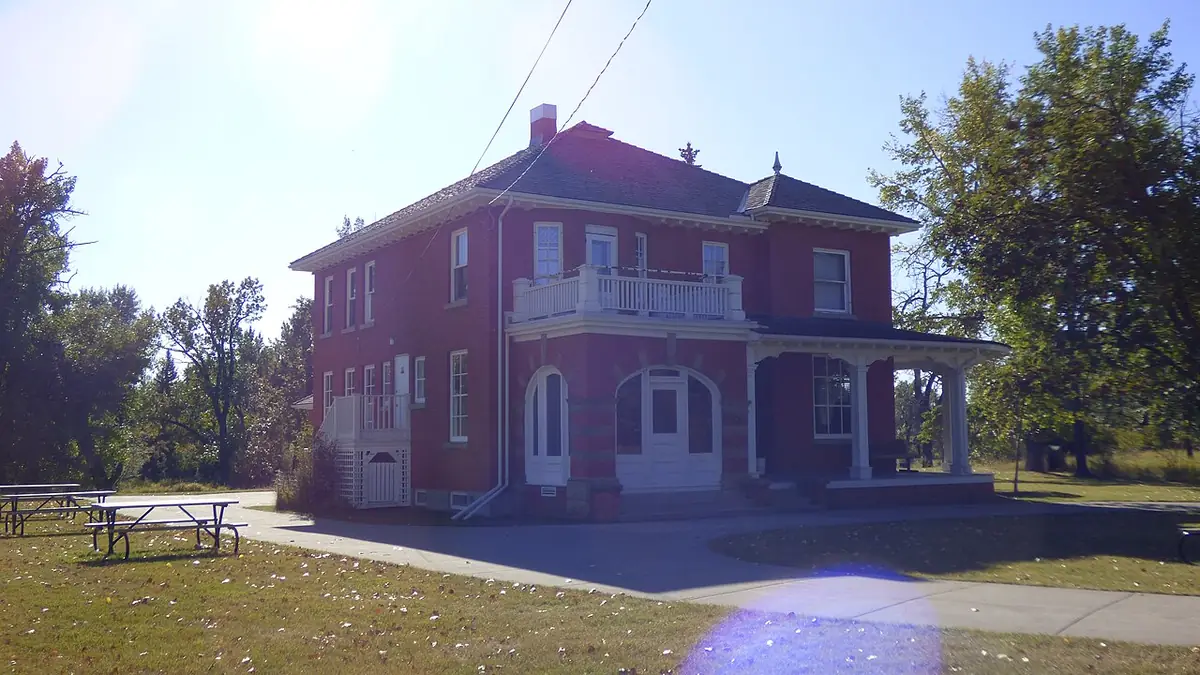
Heritage homes like this anchor Inglewood, one of Calgary's older residential pockets — Photo: James Mott · CC BY-SA 4.0 · Wikimedia Commons
That cultural and practical transition first takes concrete shape in the careful choice of a sector among the many faces of the metropolitan area.
Moving from another country confronts a buyer straight away with planning, construction and contract norms that are radically different from the ones they grew up with. Ideas about shared walls, thermal performance and the relationship with neighbours follow North American logic here, built on spatial efficiency and municipal regulation. Understanding these structural differences before you sign avoids disillusion after the purchase and lets you read the local market clearly. Every detail, from how common areas are managed to how foundations are insulated, redefines your comfort at home.
From abroad
Dense urban housing with shared walls, typically older construction in stone or brick
Calgary
An almost total predominance of wood-frame structures, open subdivisions and private lots marked out without high walls
You gain immediate visual independence and flexibility in laying out the interior, but you have to accept sound insulation and thermal mass that behave differently from older European building.
From abroad
A strong administrative and commercial centre where everyday services sit at the foot of your building
Calgary
A zoned urban layout where retail and residential areas are kept separate, making a vehicle close to essential for ordinary shopping
Your weekly organisation has to build in dedicated slots for stocking up at large stores, which turns household logistics into a planned routine.
From abroad
Notarial transactions framed by long administrative timelines and strict legal guarantees against hidden defects
Calgary
A fast acquisition process run by licensed real estate brokers, relying on independent pre-purchase inspections and standardised contracts
That speed of execution demands immediate responsiveness from you and heightened care when reading the technical inspection reports supplied before conditions are removed.
From abroad
Mild winters where district or individual heating asks little active involvement from the resident
Calgary
Hard continental winters where snow management, maintaining forced-air heating systems and humidifying indoor air are all crucial
You need to build in a specific seasonal operating budget and pick up new preventive maintenance habits to protect the building against deep cold.
How to choose between Calgary's main residential sectors according to your priorities
Once the right sector is identified, it becomes essential to line up what you want in space with the financial reality of the local market.
Calgary's urban mosaic is made up of sectors with strong identities, running from the historic communities along the Bow River to contemporary suburban developments. Each zone offers a distinct balance between the quality of school infrastructure, retail vitality and how easily you can reach the employment hubs. Weighing these options means going beyond simple aesthetics to look at long-term asset value. Your choice should faithfully reflect your tolerance for commuting time and your attachment to a particular kind of social setting.
The central riverside and historic neighbourhoods
A pronounced pedestrian buzz, with urban nature parks, independent cafes and the main cycle paths immediately at hand. The atmosphere is lively, carried by varied architecture and streets lined with mature trees.
Suits
Working people without children, or couples looking to minimise their reliance on the car while enjoying a rich cultural life within walking distance.
Trade-off
Distinctly higher prices per square metre, tighter living areas and properties that sometimes need energy upgrades.
The established suburban communities of previous decades
A reassuring residential calm, paced by neighbourhood schools, active community centres and wide green spaces opening onto the prairie. The neighbourhood is stable and spans generations.
Suits
Families looking for large lots, spacious single-family houses and a complete, well-run network of public infrastructure.
Trade-off
A pronounced reliance on driving for work trips into the centre, and local retail often limited to conventional shopping centres.
The new development sectors on the outskirts
A uniform architectural modernity, defined by state-of-the-art energy-efficient homes, landscaped stormwater ponds and brand new pathway networks. The mood is young and forward-looking.
Suits
Buyers who want a turnkey property with no immediate work, benefiting from the latest insulation technology and integrated home automation.
Trade-off
A significant distance from the historic cultural hubs, and rapid densification that can saturate local road infrastructure at peak hours.
What the budget and pricing reality looks like on the Calgary property market
Heritage apartment blocks like the Devenish mix shops and homes downtown — Photo: Benlarhome · CC BY-SA 4.0 · Wikimedia Commons
Beyond the asking price on the label, the legal structure of property ownership deserves rigorous attention if you want to avoid unpleasant surprises.
The Calgary property market is marked by substantial price variation driven by the type of property, its year of construction and its distance from the central core. Unlike other Canadian metropolitan areas, the city still offers windows of opportunity for buying into single-family ownership, provided you analyse the prevailing price brackets rigorously. Data compiled by the local professional bodies shows a direct correlation between a property's energy performance and its resale value. Looking carefully at these budget tiers protects you against the risk of overpaying.
calgaryFor saleHouseestimate
Median price / m²CA$3,583Half the apartments sell below this
Median priceCA$502kthe average is 14% higher — a few very large properties pull it up
Most common2 bedrooms73 % of listings
Average size133 m²
By number of bedrooms
Bedrooms
Share of market
Avg price
Price / m²
Avg size
2most common
73 %
CA$528k
CA$3,772
140 m²
3
23 %
CA$645k
CA$3,508 −7 %
184 m²
4
5 %
CA$772k
CA$3,395best value / m²
228 m²
Each row is an average, compared against the area average of CA$3,772 / m². These are indicative estimates of a typical local market, not a measured sample of live listings. Check current listings before relying on them.
Between freehold and managed ownership: what you can actually hold title to
Once the legal framework is clear, the sequence of steps leading to final signature calls for iron discipline and a method you can trust.
Alberta's land system draws a clear line between freehold ownership, where you own the building and the land with no perpetual fee attached, and the various condominium or neighbourhood association arrangements. That legal distinction directly shapes your freedom to alter the exterior, your real running costs and the future liquidity of your investment. Understanding what each status implies guarantees quiet enjoyment of your property and heads off potential disputes with resident associations. This is not a technical footnote: it is the legal foundation of the asset you are buying.
Detached single-family freehold ownership
You own the land and the structure outright, with no mandatory monthly association fee and complete freedom to make exterior changes, subject to municipal planning rules. This status confers full residential autonomy, leaving you sole master of your maintenance, renovation and long-term financial choices.
What it changesYou bear the entire cost of weather-related damage and structural upkeep, with no collective reserve fund to cushion major roof or foundation work.
Condominium or attached ownership with a management body (Condo / HOA)
You buy your private unit along with a share of the common areas and shared services, run by an owners' association that imposes strict rules on exterior appearance, parking and use of the common property. This arrangement pools exterior landscaping and snow clearing on the access routes, which greatly simplifies the day-to-day running of your home.
What it changesYou have to pay mandatory monthly contributions that are subject to increase and accept restrictions that can be constraining, covering the appearance of your property and any potential rental.
The critical sequence to master before you put down a single dollar of deposit
Newer mid-rise blocks like this are common across Calgary's residential streets — Photo: Chris Woodrich · CC BY-SA 4.0 · Wikimedia Commons
To handle that complex sequence calmly, let us break down the roles and actions of the various people you will meet along the way.
Alberta property law rests on the principle of making the purchase offer conditional, a protective mechanism that is essential for any careful buyer. Committing without having cleared every technical and financial checkpoint exposes a buyer to considerable financial loss if major defects come to light. The rigour of this procedural timeline ensures your commitment only becomes firm after a meticulous check of every aspect of the property you want. Following these steps scrupulously is the best barrier there is against regret after the purchase.
Your licensed broker drafting the initial purchase offer, including protective conditions
Setting a deadline for removing conditions, usually seven to ten business days after the seller accepts
Appointing a certified home inspector to carry out a thorough examination of the structure, the insulation, the roof and the foundations
A detailed review of the official land title documents to identify any registered easements, encroachments or use restrictions
Final confirmation that your mortgage financing has been granted on the terms negotiated with your financial institution
Formal removal of conditions, at which point the sale contract becomes irrevocable and the funds are placed in trust
How the professionals actually come into play across your purchase
In closing, approaching Calgary property with method and judgement turns a complex logistical challenge into a solid springboard for your future.
Buying successfully in Calgary means coordinating several regulated professionals whose roles are tightly defined by provincial legislation. From the real estate broker defending your financial interests to the lawyer or notary who makes the transfer of ownership official, each one secures a specific facet of the transaction. Knowing what each is responsible for lets you steer your project with confidence and avoid confusion over who does what. This rigorous professional structure is what makes the handover smooth and legally sound.
The buyer's brokerSearch and strategic negotiationThey analyse market comparables to frame a realistic offer, draft the protective clauses and defend your financial interests in negotiations with the seller.
The home inspectorTechnical and structural auditThey go through the heating and electrical installations, the plumbing and the building envelope in detail to spot any hidden defects or urgent work.
The mortgage brokerStructuring the financingThey compare offers from different financial institutions to get you the interest rate and repayment terms best suited to your profile.
The Alberta lawyer or notaryLegal protection and transferThey carry out the land title searches, draft the official transfer documents, receive the mortgage funds and handle the final registration at the land titles office.
The home insurerCover for weather riskThey confirm the essential cover for local conditions, in particular water damage tied to the spring thaw and the hail risk that is common in the region.
Weighing an apartment against a detached house in Calgary
Once that fundamental choice between shared and detached is settled, it is worth looking closely at the total financial envelope needed to make your plan real in this city.
Choosing between a condominium apartment and a single-family house in Calgary commits your way of life and the shape of your personal finances for years. On one side, the condo market in central neighbourhoods such as Beltline or Downtown puts you next to the employment hubs and the transit network, which appeals to professionals looking to cut their daily commute. On the other, the detached house with its own lot, particularly sought after in the residential suburbs of the outer ring, guarantees complete spatial independence and has historically shown more robust land value over the long term. This basic distinction is not only about comfort at home: it redefines your entire fixed monthly outgoings and your exposure to swings in the Alberta market.
Maintenance costs are the first thing that separates these two options. Choosing an apartment means condominium fees that pool roof replacement, upkeep of the common areas and snow clearing, but they are an unavoidable monthly expense that inevitably rises as the building ages and reserve fund requirements grow. A house buyer in Calgary, by contrast, takes on every maintenance expense, from replacing roof shingles worn down by hard winters to looking after the lawn and the drainage system, which means setting aside a meaningful share of the annual budget to avoid nasty surprises.
Floor area and architectural flexibility weigh heavily in the balance when the household changes or when working from home becomes a permanent part of family life. Single-family houses generally come with basements that can be finished, double garages and fenced back yards that give you valuable freedom to adapt, even though these spaces take considerable time and energy to keep up. Apartments, on the other hand, impose obvious space constraints but free the occupant from those chores, leaving weekends for what the Rockies have to offer rather than for repairs and gardening.
Finally, how easily you can sell varies noticeably with the type of property you choose in this Alberta city. Single-family houses in sought-after sectors generally benefit from steady demand from families moving to the region, which tends to mean shorter selling times and greater resilience through provincial economic cycles. Apartments and townhouses see sharper swings in supply depending on how many new developments are delivered downtown, so it pays to look carefully at available inventory before you sign at the lawyer's office.
Working out the real budget for living and settling in Calgary
With that budget framework in place, it helps to understand what a typical day actually looks like for residents of this Alberta city.
Putting together a rigorous forward budget in Calgary goes well beyond simply working out the mortgage payment with your financial institution. It takes in a set of local taxes, energy costs tied to the continental climate and insurance charges specific to the region. This detailed financial simulation lets you anticipate every mandatory monthly outgoing and adjust your purchase offer to what you can genuinely repay over the medium and long term, without eating into your emergency savings.
Monthly and annual cost items for an average single-family house in Calgary
Budget item
Estimated range (CAD)
Frequency
Main factors behind the variation
Municipal property tax
250 to 500
Monthly
Municipal property assessment and location within the city
Home insurance
100 to 180
Monthly
Rebuild value, age of the roof and claims history
Heating and electricity (natural gas)
150 to 350
Monthly
Thermal insulation, severity of the winter months and floor area
Maintenance and contingency fund
200 to 400
Monthly
Age of the build, whether the basement is finished and the state of the equipment
The amounts shown are for a standard single-family house and can vary with the energy efficiency of the building.
Additional costs tied to the initial transaction
Type of cost
Indicative percentage or amount
When it is paid
Legal obligation
Provincial registration fees
Varies with the value
At signing
Mandatory
Home inspection fee
500 to 750
During the condition period
Strongly recommended
Lawyer or notary fees
1200 to 2000
At closing
Mandatory
Plan on a cash reserve equal to 1.5% or 2% of the total purchase price to cover all the closing costs.
Seeing the daily rhythm through an ordinary Tuesday in Calgary
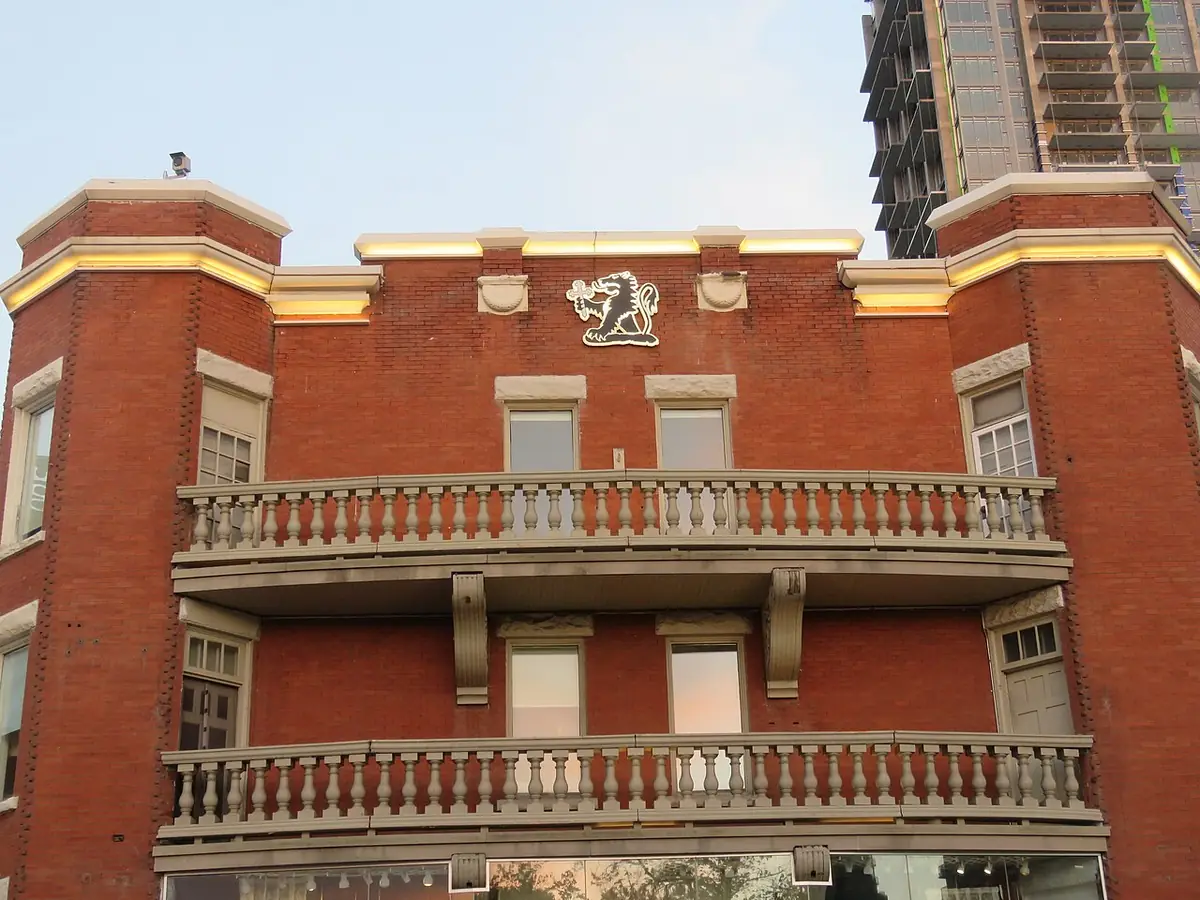
Detailed brick facades like this show the character of Calgary's older apartments — Photo: Benlarhome · CC BY-SA 4.0 · Wikimedia Commons
Beyond that well-worn routine, plenty of crucial details tend to escape the property viewings agencies arrange.
To gauge whether a residential sector fits your way of life, nothing replaces walking through an ordinary weekday hour by hour. From the morning trip toward the working districts to the end-of-day activities, each slot reveals how well the local infrastructure performs, how the main roads flow and how close the essential services really are. Following the day in this way helps you spot the likely sources of daily fatigue and confirm where you want to be.
07:15Residential neighbourhood, getting readyWaking up in the quiet of a low-rise sector, getting the children ready for the local school and checking the winter weather conditions.
08:00Travelling to the employment hubDriving in via the main corridors, or taking the C-Train network into downtown Calgary at peak hours.
09:00Arriving at the office and settling inThe working day starts in an office building downtown or in a connected workspace out on the edge of the city.
12:30Lunch break and nearby servicesUsing the lunch break to run quick errands at local shops or to enjoy the surrounding urban parks.
17:00End of day and after-school activitiesPicking up the children from school or daycare, followed by the customary stop along a retail strip to stock up.
18:30Home again and winding downFamily dinner at home, homework to supervise and time to relax in the quiet of the residential neighbourhood.
What the listing sheets and advertisements leave out in Calgary
With those technical points understood, it is worth examining the misjudgements first-time buyers in the region make most often.
The Alberta property market has regulatory and climatic quirks of its own that attractive marketing photographs are careful not to reveal. Between little-known public utility easements, differences in sunlight depending on how a lot is oriented and the fine print of municipal planning rules, every buyer has to do some serious digging. Here are the decisive points the brochures systematically leave out, and which nonetheless dictate the quality of your investment over the long term.
How the back yard is actually oriented relative to the prevailing wind
In Calgary, the prevailing westerly winds and the sudden warm spells brought by the Chinook have a considerable effect on outdoor comfort. A yard facing north or east holds snow longer into spring and gets less direct sun through the long winter months.
The exact classification of the stormwater drainage zone
Some lots sitting low or in a natural hollow carry a risk of water ingress when the spring snow melts. Checking the real property report and the history of the drainage system avoids very expensive foundation work.
Planned urban densification and transport projects
The City of Calgary regularly amends its planning frameworks to allow multi-family housing in sectors that were previously strictly single-family, which can permanently change how quiet your street is and what your property is worth.
The real age of the underground service connections
Ageing water mains and municipal sewers in established neighbourhoods can become the subject of major renewal work voted by the city, which brings special local improvement levies for the owners along the street.
The regrets buyers most often report six months after moving in
With those traps sidestepped, what remains is to judge clearly whether this kind of investment truly matches your own situation right now.
Looked likeA charming older house full of character, with superb mature trees in an established sector
Turned outAn eye-watering heating bill caused by period insulation, and old pipework vulnerable to sustained freezing
Would have caught itInsisting on a full energy assessment of the home and having the foundations and the plumbing inspected by an independent professional
Looked likeA very quiet outlying residential neighbourhood offering a large living area at a very attractive price per square metre
Turned outGeographic isolation that means very long daily commutes and complete dependence on the car
Would have caught itDriving the commute at genuine peak hours on a Tuesday morning before putting in a firm offer
Looked likeA beautifully landscaped lot on a gentle slope with an open outlook over the surrounding green space
Turned outExhausting manual snow clearing on a steep slope and recurring runoff into the basement during rain
Would have caught itStudying the exact topography of the lot and consulting the municipality's stormwater drainage plans before committing
Looked likeA condominium apartment with moderate opening monthly fees in a building with plenty of amenities
Turned outA sharp increase through special assessments voted at the general meeting to fund repairs to the facade
Would have caught itGoing carefully through the minutes of the last three general meetings and checking the state of the reserve fund
The buyer profiles that should postpone or drop the idea here
With those warnings set out, it is time to pull your thinking together and reach a final decision with a clear head.
Buying property in Calgary is not a universally sensible move for every group of people. Certain professional, financial or personal situations make a purchase premature, or even financially perilous given what the local market demands. By highlighting the profiles most exposed to risk, this candid look lets you confirm that your plan makes sense as it stands, or consider a safer alternative.
The worker whose contract or professional situation is temporary or uncertain
→Buying a house quickly in order to put down roots in Alberta
The upfront transaction costs (legal fees, taxes, commissions) cannot be recovered if the property is resold within three to five years, leaving the buyer with a net financial loss on resale once agency commissions and registration fees are accounted for.
The household with minimal emergency savings and no room for manoeuvre
→Putting every last saving into the down payment in order to move in straight away
The slightest unexpected rate rise when the mortgage comes up for renewal, or one big emergency repair (roof, furnace), would instantly threaten the household's solvency given the complete absence of a financial cushion.
The buyer with no appetite for the upkeep and practical management of a building
→Buying an older single-family house simply because it is fashionable, or for the floor area
Having to maintain the structure, mow the lawn, deal with snow clearing and plan maintenance work will weigh heavily on daily life, turning the dream of ownership into a constant source of anxiety and frustration.
Closing out your search and confirming your decision to buy in Calgary
Green spaces like Inglewood Bird Sanctuary offer an easy escape close to home — Photo: Grungaloo · CC BY-SA 4.0 · Wikimedia Commons
Making the final decision to buy property in Calgary means cross-checking everything examined across this guide, and refusing to give in to short-term pressure or to the artificial urgency that market players so often generate. Your approach should rest on a clean fit between your long-term investment horizon, the strength of your emergency savings and your acceptance of the climatic and practical realities of daily life in this Alberta city. If your working situation is settled for the next few years and you fully appreciate all the hidden costs that come with ownership, then the investment makes complete economic and financial sense.
It is worth remembering that a successful purchase is not measured by how fast the transaction went, but by the peace of mind it brings season after season. Whether you opt for a functional apartment in the middle of the urban buzz or a single-family house in a quiet residential neighbourhood, each choice commits the balance of your life. Take the time to validate every condition in the purchase agreement, surround yourself with independent professionals for the technical inspection, and never sign before checking that your forward budget holds together over a five-year horizon.
In the end, becoming an owner in Calgary is a real opportunity to anchor yourself in a dynamic economy and an exceptional natural setting, provided you approach the step with method and clear sight. By setting aside the illusions of the advertisements and concentrating on the structural facts set out here, you now have everything you need to carry your property plan through with confidence, as a genuinely informed party to your own financial future.
Related questions
What are the average legal fees to budget for when buying property in Calgary?
Lawyer or notary fees for closing a property transaction in Calgary generally run between 1,200 and 2,000 CAD, on top of which come the provincial registration fees, calculated on the exact value of the property acquired.
Is a building inspection compulsory before buying a house in Calgary?
Although Alberta law does not formally require an inspection, writing in a condition for an inspection by a certified professional is strongly recommended, so you can detect hidden defects, the state of the roof and any potential foundation problems.
How do Calgary's harsh winters affect the upkeep of a single-family house?
Cold winters and the abrupt temperature swings caused by the Chinooks put roof shingles, gutters and the outdoor drainage system under real strain, which calls for a regular annual budget to prevent water getting in.
What impact do municipal property taxes have on an owner's monthly budget?
Municipal property taxes are a significant line in the budget, generally between 250 and 500 CAD a month depending on the property's assessed value and the part of the City of Calgary you choose.
Is buying a condo a good idea for a first property investment in Calgary?
Buying a condo is a more accessible way into the property market and frees you from exterior maintenance, but you need to look very rigorously at the state of the reserve fund and the history of the condominium fees.
Which Calgary neighbourhoods offer the best balance between price and access to transport?
The sectors close to the C-Train transit lines, particularly in the rings near downtown or along the main corridors, have historically shown the best appreciation together with quick access to the employment hubs.
How long should you allow to resell a property if you have to leave Calgary?
Resale times vary noticeably with the season and the type of property, but a correctly priced single-family house in a sought-after sector generally finds a buyer within a few weeks, while some condos can take longer.
What is the Chinook phenomenon in Calgary and how does it affect property?
The Chinook is a warm westerly wind that causes sudden temperature rises in winter, producing repeated freeze and thaw cycles in the snow that put heavy demands on the weather-tightness of roofs and house foundations.
What minimum down payment do financial institutions in Canada require for a purchase?
The minimum down payment depends on the purchase price of the property, generally 5% on the first tranche up to 500,000 CAD and rising for the portion above that, with mortgage loan insurance being compulsory.
How can you find out about future planning projects around a house you have spotted in Calgary?
You can consult the City of Calgary's development plans and enquire with the municipal planning department to check whether zoning changes or major infrastructure projects are scheduled in the vicinity.
Property review of ting
No ting properties in Calgary yet
Be the first — share it on ting and it shows up right here.