Investing in a house in Al Ain means understanding the particular dynamics of this green oasis, far from the bustle of the big coastal cities. This independent guide takes you through the neighbourhoods, the budget realities and the legal framework, so you can secure your purchase from start to finish.
Get the app
What nobody tells you.
Real prices, hidden costs and the traps to check before you commit.
What you really get when you buy a house in Al Ain
Scroll
What you really get when you buy a house in Al Ain
Investing in a house in Al Ain means understanding the particular dynamics of this green oasis, far from the bustle of the big coastal cities. This independent guide takes you through the neighbourhoods, the budget realities and the legal framework, so you can secure your purchase from start to finish.
Written by the ting.ad editorial team ·
Al Ain in Street View: drag to look around.
Understanding that basic reality puts your project in its proper geographic and long-term perspective.
Investing in a house in Al Ain does not follow the same logic of immediate returns as in the big coastal cities. Here the property promise rests on space, residential stability and a much more moderate cost per square metre, which reshapes the very idea of ownership. In choosing to settle in this oasis, buyers knowingly trade the buzz of the financial hubs for the calm of a market dominated by local residents and families thinking long term. That duality shapes the whole market and means you have to look beyond the architecture to understand what an asset is really worth. You have to accept that liquidity is not what it is in Dubai, but for anyone settling in for the long haul, day-to-day comfort more than makes up for it.
Considerable living space and generous plots for a comparable budgetvsA less liquid secondary market, where a quick resale takes more patience
The size of the homes gives a freedom of layout that is rare in dense city centres, but it also means a longer transaction cycle when the time comes to sell.
A calm, family-oriented setting sheltered from speculative swingsvsSlower, less speculative capital growth
Prices that regulate themselves naturally protect you from sudden bubbles but also limit short-term capital gains, favouring a sound and prudent long-term approach.
A home that sits comfortably within a green, well-structured urban fabricvsA certain distance from the major business districts and port areas
The greenery everywhere and the city parks make up for the lack of a seafront, but you need to build journey times to the neighbouring cities into your working life.
Architectural independence and regulated scope for extensionsvsStrict planning rules on changes to facades and structure
Owning your own villa gives you complete freedom over the interior layout, tempered by strict respect for local standards of visual harmony and neighbourliness.
Does this place really fit your lifestyle and your ambitions?
With your personal profile clear, it is time to measure what sets this buying process apart from the reference points you bring with you.
Buying a house is not just a financial equation; it commits you to a daily routine, to journey times and to a particular social environment. Al Ain especially appeals to families and professionals looking for a calmer balance of life, away from the bustle of the heavily built-up coastal areas. Yet each type of buyer experiences the move differently, depending on their line of work and what they expect from their free time. Analysing your personal situation before signing a preliminary agreement will spare you the disappointment of a daily life that does not match your pace. Here is how your profile fits with the reality of life in this oasis city.
The permanent resident looking for stability
For working people whose professional life is anchored in the city, buying a house is the natural culmination of settling down happily. You get the full benefit of the local infrastructure, the well-regarded schools and a dense community network, without the strain of commuting between emirates every day. Everyday amenities are a few minutes away by car, and the social fabric is particularly stable and welcoming for families with children. This is the ideal case, where the property investment lines up exactly with personal fulfilment.
The regular commuter between cities
If your work requires regular trips to Abu Dhabi or Dubai, the equation changes completely and calls for careful organisation. The house in Al Ain then becomes your haven for weekends and evenings, at the cost of regular road journeys that you need to factor into your reckoning of time and fatigue. This choice often means delegating the upkeep of the property or opting for secure communities with built-in services. For many executives, the gain in quality of housing outweighs the burden of the commute.
The long-term family investor
Approaching the Al Ain market with inheritance and asset security in mind completely changes the order of your selection criteria. Above all you are looking for established locations, solid buildable areas and plots that offer complete privacy, regardless of short-term market fluctuations. The detached house plays its role as a safe-haven asset par excellence here, rooted in an area whose population and planning are tightly managed by the authorities. An investment horizon of ten or twenty years fits perfectly with the calm, well-regulated character of the city.
Living here when you arrive from abroad: what really changes in your reference points
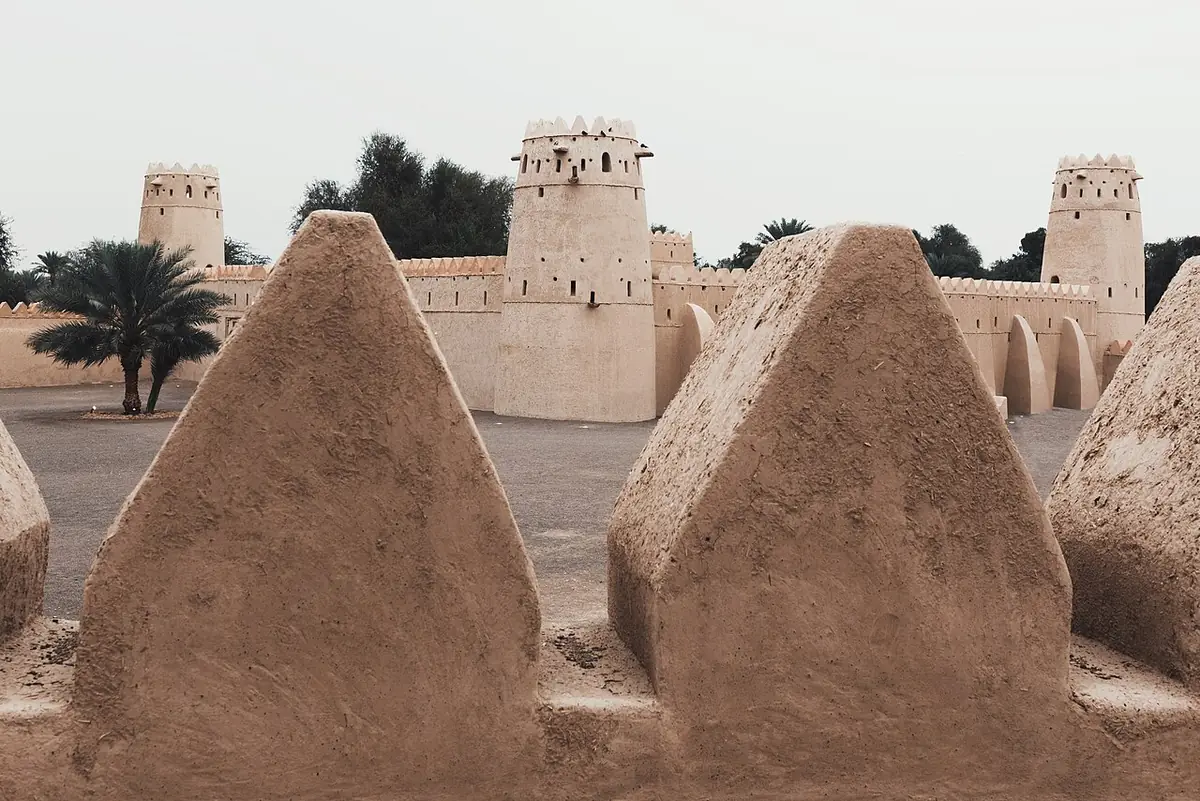
The mudbrick towers of Al Jahili Fort in Al Ain under a clear sky — Photo: Jeff2rado · CC BY-SA 4.0 · Wikimedia Commons
With those cultural and administrative differences in mind, let us turn to the local map to pinpoint the right areas.
Leaving a European-style setting to move to the United Arab Emirates, and in particular to the green surroundings of Al Ain, profoundly shakes up your reference points as a buyer and as a resident. Shared ownership, easements, local taxation and the technical management of buildings do not rest on the same legal foundations or the same cultural habits. This table sets the reflexes you bring from the property market back home against the practical reality you will meet on the ground, so you can avoid costly misreadings during the purchase.
From abroad
A culture of dense, walkable historic town centres
Al Ain
A spread-out city designed around the car and major arterial roads
You need to factor parking and the relative distance to local services into the choice of your exact location, because spontaneous walking around town is less common here.
From abroad
The protective but heavily taxed framework of property ownership back home
Al Ain
No income tax and no local capital gains tax on property
Managing your cash flow becomes easier, but your vigilance shifts entirely to the intrinsic quality of the property and to keeping maintenance costs under control.
From abroad
Tightly regulated managing agents and formal owners' general meetings
Al Ain
Communities run by licensed management companies with their own neighbourhood rules
Upkeep of the shared areas and the resolution of disputes follow direct contractual procedures that you need to read carefully before signing.
From abroad
Old buildings everywhere, dressed stone and heavy renovations
Al Ain
A recent or contemporary housing stock with standardised, air-conditioned finishes
The technical survey is not about the condition of old roof timbers but about how well the air conditioning performs and how watertight the flat roofs are.
Which Al Ain neighbourhood should you choose for your daily priorities?
With the neighbourhood map laid out, let us look at the financial reality of transactions and the price ranges seen on the market.
Al Ain is not a uniform whole; the city is made up of areas with distinct atmospheres, from shaded historic districts to modern developments on the outskirts. Choosing the right location determines the quality of your journeys, how close you are to schools and how your asset will develop in the future. Each area has its own landscape, its own level of services and its own built-in compromises, which you need to weigh up before committing. Here is a comparison of the main residential areas to guide you towards the one that best matches what you are looking for.
Al Jimi
A central, lively area that is very well served by local shops and shopping centres.
Suits
Families who put immediate convenience first, like to walk and want quick access to the main city roads.
Trade-off
Heavier traffic at rush hour and plots that are sometimes a little more compact than in the outlying areas.
Asharej
A quiet residential setting, popular for its proximity to the major university and medical hubs.
Suits
Healthcare professionals, academics and families looking for a calm, well-organised place to live.
Trade-off
A choice of available properties that is sometimes limited because of strong and steady demand from local residents.
Al Foah
A semi-rural, green atmosphere, with large plots and complete peace and quiet.
Suits
Those who dream of generous space, architectural independence and a lifestyle close to nature.
Trade-off
A marked distance from the historic centre, which makes the car essential for every errand.
Zakher
An established, family-oriented residential neighbourhood with all the essential amenities within reasonable reach.
Suits
Buyers looking for an excellent balance between floor area, a controlled budget and a peaceful neighbourhood life.
Trade-off
A more varied housing stock that calls for careful selection to find houses that have been renovated with care.
What does buying a house in Al Ain really cost?
With the budget clarified, it is important to understand exactly what kind of ownership rights you can acquire.
Tackling the question of budget in Al Ain means separating the headline purchase price from the costs of transferring ownership and of maintaining the property afterwards. Unlike the speculative coastal markets, prices here reflect a measured use value, but they call for careful anticipation of hidden costs. The figures below summarise the price levels seen on the market for detached villas, along with the unavoidable administrative costs that come with any secure transaction in the emirate of Abu Dhabi.
Al AinFor saleHouseestimate
Median price / m²AED 5,842Half the apartments sell below this
Median priceAED 1.18mthe average is 14% higher — a few very large properties pull it up
Most common2 bedrooms54 % of listings
Average size193 m²
By number of bedrooms
Bedrooms
Share of market
Avg price
Price / m²
Avg size
2most common
54 %
AED 1.18m
AED 6,150
193 m²
3
31 %
AED 1.53m
AED 5,842best value / m²
263 m²
4
14 %
AED 2.15m
AED 5,842best value / m²
368 m²
Each row is an average, compared against the area average of AED 6,150 / m². These are indicative estimates of a typical local market, not a measured sample of live listings. Check current listings before relying on them.
What you can actually own: understanding land tenure
Getting to grips with these legal subtleties leads straight on to the step-by-step, secure course of a transaction.
Land tenure is the cornerstone of any property investment in the United Arab Emirates for a foreign national. Depending on your nationality and the exact location of the property in the city, the rules on access to full ownership differ in subtle ways. It is essential to clear up any confusion between freehold zones and areas subject to specific regulations before you pay a single dirham. That distinction guarantees the legal security of your asset and your ability to pass it on. Let us look at the two legal situations open to you.
Full ownership in a designated zone (Freehold)
In the areas of Al Ain that qualify for freehold, any buyer, whatever their nationality, can own 100% of the property and the land it stands on, with no time limit. This title of full ownership is entered directly in the emirate's official land registry, giving you the standard rights to sell, let and pass the property on to your heirs. It is the simplest and most reassuring framework for an international investor seeking a solid legal footing.
What it changesYou hold an asset that you are free to pass on and sell, with no constraint other than the planning rules that apply to the zone.
Usufruct rights and long leases (Leasehold)
Certain specific zones or particular projects may fall under leasehold, which grants you an exclusive right to use and enjoy the property for a fixed period, generally from 30 to 99 years and often renewable. Although this arrangement is legally secured by official registration, it differs from full ownership of the land. It is common on specific developments or on types of property deeply rooted in the historic local fabric.
What it changesYou must check with great care how much time remains on the original lease, to avoid a loss in value when you resell in the medium term.
The golden rule to understand before paying any deposit
With that path mapped out, let us look at how the different parties actually play their part on completion day.
The property buying process in the Emirates follows strict formalities in which every signed document is binding. The most common mistake made by inexperienced buyers is underestimating the legal weight of the preliminary agreement, often called a Memorandum of Understanding or Form F depending on practice. A commitment made too hastily without suitable conditions precedent can bind you for good or cost you your deposit. Understanding the logical sequence of this critical phase is what effectively protects your financial interests.
Verbal negotiation ends in agreement on the net price to the seller and the general terms of the sale.
The Memorandum of Understanding (MOU) is drafted and carefully checked by an independent adviser or an accredited agency.
A security cheque (generally 10% of the price) is lodged and held in escrow by the agent or agency until the transfer.
The conditions precedent are lifted and the no-objection certificates (NOC) are obtained from the developer or the community manager.
The official transfer file is prepared for the municipality's land department.
The final transfer of title is signed before the registration officer or authorised agent, and the balance is paid.
How a property transaction in Al Ain works, step by step
Buying a villa in Al Ain requires several public and private parties to work together to ensure a flawless transfer of ownership. From the first viewing to the handover of the keys, each party plays a precise role that you need to know if you want to steer your project calmly. This chronological walk-through sets out who is responsible for what and gives you full visibility of the timescales to expect as you complete your investment in this oasis city.
The buyerDue diligence and confirming the financingYou gather your proof of funds, set your maximum budget and shortlist target properties with your adviser.
The estate agentIssuing and signing the MOUThe agent drafts the preliminary agreement setting out the conditions precedent and the completion deadlines, and collects the 10% deposit.
The sellerObtaining the no-objection certificate (NOC)The current owner proves to the community that there are no unpaid charges, service fees or mortgages on the property.
The building surveyorThorough inspection of the buildingAn independent professional checks the condition of the villa's air conditioning, waterproofing, roof and electrical installations.
Al Ain MunicipalityOfficial registration of the transferBoth parties attend (or appoint a legal representative) to validate the transfer of ownership and pay the property fees.
The buyer and the sellerHandover of the keys and transfer of utility accountsA final inspection of the property, signing of the handover reports and switching over the water, electricity and service contracts.
House or apartment in Al Ain: how to choose between a detached villa and community living?
Once that fundamental choice is made, the question of budget immediately reshapes the outline of your project.
Buying property in Al Ain immediately forces a clear choice between two ways of life that could hardly be more different. On one side, the detached house, often single-storey or on two levels with a private garden, embodies the promise of complete independence away from urban crowding. On the other, an apartment in a secure community or in one of the few city-centre buildings offers simpler maintenance and shared facilities such as pools and gyms. Families with children naturally lean towards a villa for the outdoor space, while young professionals and investors look for the easy letting of smaller homes.
Al Ain's climate, with its scorching summers, weighs heavily on this structural decision. A detached house needs rigorous upkeep of the air-conditioning systems, the outdoor areas and any private pool, which adds up to a significant recurring budget. In return, it guarantees complete freedom over the layout, with no managing agent to deal with and no neighbours on the other side of the wall. Apartment communities, though more standardised, absorb part of these technical burdens through shared management of the infrastructure and the communal green spaces.
Financially, the initial gap widens quickly once service charges come in. Villas in Al Ain, particularly in sought-after areas such as Asharej or Al Jimi, command prices per square metre that include the value of the plot of land. Apartments, rarer in this garden city than in coastal cities like Dubai, are often a more affordable way in for a first property purchase. You therefore have to weigh the initial purchase cost against the mental load of managing an independent property under a relentless sun.
Resale and liquidity also carry a lot of weight. Family villas enjoy steady demand from Emirati citizens and long-term residents looking to put down lasting roots in the region. Apartments, on the other hand, attract a more mobile profile, drawn by proximity to the roads towards Abu Dhabi or Dubai. Your final decision will therefore depend as much on your investment horizon as on how much everyday maintenance you are personally willing to take on.
What monthly budget should you plan to live comfortably in your house in Al Ain?
With the financial framework set, it is worth picturing the concrete reality of a typical week in the heart of the city.
Buying a house in Al Ain is not just about repaying the bank loan or paying out the initial capital. The total cost of ownership includes spending that is specific to the desert climate and the local way of life. Between utility bills, upkeep of the installations and local charges, anticipating these outgoings keeps your investment on a sound footing without any nasty surprises at the end of the month.
Estimated monthly budget for a household that owns a house in Al Ain
Expense
Low range (AED)
High range (AED)
Commentary
Electricity and air conditioning (DEWA/AADC)
800
2,500
The bill soars during the summer months because the air conditioning runs non-stop.
Water and sewerage
150
400
Standard consumption, including moderate watering of a small landscaped garden or courtyard.
Routine maintenance and repairs
500
1,500
Preventive maintenance contracts for the air conditioning, plumbing and minor structural repairs.
Internet and telecoms
350
600
High-speed triple-play packages, essential for remote working and family entertainment.
Comprehensive home insurance
100
300
Essential cover against property damage, fire and third-party liability.
The amounts shown are averages observed for a standard three- to four-bedroom house in Al Ain and vary with the quality of the thermal insulation.
One-off and annual costs to build into your cash-flow plan
Type of cost
Estimated annual amount (AED)
Frequency
Impact on the budget
Municipal housing fee
5% of the estimated rental value
Annual
Collected directly through the utility bills in instalments.
Professional air-conditioning servicing
1,200
Twice a year
A thorough technical visit before and after the summer season to prevent major breakdowns.
Pest control (termites/insects)
800
Annual
An essential preventive measure to protect the timber elements and the foundations of the house.
Roof and waterproofing inspection
500
Annual
Checking the rainwater drainage and the thermal insulation of the roof slabs.
These annual provisions should be ring-fenced in a dedicated account so they do not throw the household's everyday budget off balance.
What does daily life look like for a homeowner living in Al Ain, from Monday to Sunday?
Beyond this well-ordered routine, buying property in Al Ain involves subtleties that the sales brochures consistently leave out.
Living in Al Ain offers a much calmer pace of life than in the coastal cities of the Emirates, while calling for careful organisation because of the distances. Between the morning runs to drop the children at international schools, work journeys and running the household, every hour follows a well-rehearsed routine. This outline of an ordinary Tuesday shows the key moments in the day of an established resident.
06:30Al Jimi residential neighbourhoodAn early start in the quiet of the neighbourhood. The relative cool of dawn lets you enjoy a few minutes outside before the heat builds.
07:30The road to the international schoolsDropping the children at one of the city's well-known campuses. Traffic flows easily compared with Abu Dhabi, which makes the morning routine simpler.
08:30Workplace or home officeThe working day begins. Whether working remotely from a fitted home office or in one of the local business districts, high-speed internet keeps things running smoothly.
13:00Midday break and cooling offBack home for a family lunch during the hottest hours of the day. The air-conditioned house becomes a real refuge from the heat.
17:00Public garden or the Al Ain oasisLate afternoon is ideal for a family walk or some exercise in one of the many green parks the city is famous for.
20:00Local shopping centre (Al Ain Mall or Bawadi)The weekly shop or a relaxed dinner in one of the city's restaurants. Modern retail facilities cover every everyday need.
22:00Back to the calm of homeGetting ready for the next day in the complete silence of a residential neighbourhood untouched by night-time city noise.
What hidden aspects do Al Ain estate agents fail to mention?
These grey areas explain why some buyers become disillusioned a few months after moving in.
Al Ain's property market has its own unwritten rules, which newcomers often discover too late. Between the way facades face the sun, the finer points of local land law for expatriates and the constraints of connecting to utility networks, several crucial points deserve close scrutiny before you sign the sale agreement.
Sun orientation and overheating facades
A house facing due west takes the full force of the afternoon sun, which sends air-conditioning bills soaring and makes the courtyard unusable for several months a year. Checking which way the house faces avoids permanent energy costs and ensures natural thermal comfort.
Restrictions on exterior alterations
Contrary to popular belief, changing the boundary wall, adding a porch or turning a carport into an enclosed garage in Al Ain requires strict municipal approval. Buying a property whose earlier extensions do not comply exposes you to fines or demolition orders.
The reality of ownership zones for non-nationals
The legal framework governing property purchases by foreigners in Al Ain follows precise geographic boundaries set by the emirate of Abu Dhabi. Making sure the property is in a freehold zone, or one recognised as open to expatriates, is an absolutely vital legal step.
The real age of the underground plumbing
In the older parts of the city, water supply and drainage pipes suffer from corrosion caused by mineral-rich soil. A thorough camera inspection stops you buying a house where re-plumbing would cost as much as a new kitchen.
How close future road extensions really are
Al Ain's planning schemes are changing quickly to improve links between the emirates. A plot that is currently quiet and edged with sand could have a new motorway slip road running past it within three years, seriously affecting the peace and the long-term value of the property.
What are the most common disappointments buyers face six months after moving to Al Ain?
These painful lessons naturally raise the question of whether this market really suits everyone.
Looked likeA large, affordable villa with a huge plot of bare sand to landscape yourself.
Turned outA money pit of landscaping and watering to stabilise the ground and stop dust getting into every corner of the house.
Would have caught itInsist on a full survey report on ground stabilisation and budget from the outset for paving or professionally laid artificial grass.
Looked likeA peaceful residential neighbourhood, perfectly quiet and ideal for relaxing at the weekend.
Turned outNeighbouring construction sites that started without warning, bringing noise and dust every day from dawn.
Would have caught itConsult the municipality's planning scheme to identify the remaining buildable plots around the property you are considering.
Looked likeA modern, efficient central air-conditioning system covering every room in the villa.
Turned outAn ageing system with clogged ducts, breaking down in the middle of August and producing sky-high electricity bills.
Would have caught itHave an independent technical assessment of the air conditioning carried out by a certified refrigeration engineer before final signature.
Looked likeA highly profitable rental investment that would be easy to let with no void periods.
Turned outStiffer competition from new developments delivered on the outskirts, forcing a cut in the expected rent to find tenants.
Would have caught itAnalyse actual rental data for the last three years in the specific micro-neighbourhood rather than relying on developers' promises.
What kind of buyer should definitely not invest in property in Al Ain?
It is now time to lay the foundations of your final decision by weighing up the pros and cons with a clear head.
Buying property in Al Ain follows a logic of long-term stability and wealth-building that does not suit every lifestyle. Trying to transplant the expectations of a cosmopolitan city, or chasing short-term speculative returns in this historic oasis, leads straight to a financial and psychological dead end. Working out whether or not you belong to the right target group will spare you a major wrong turn.
The speculative investor looking for quick short-term capital gains
→Stays out of Al Ain altogether and directs their capital to the far more volatile markets of Dubai or Abu Dhabi.
Al Ain is a market of end users and settled families; prices rise organically and steadily, without dramatic speculative surges.
The highly mobile expatriate whose posting lasts less than three years
→Opts for flexible renting rather than buying a villa or an apartment in the city.
Transaction costs, registration fees and resale costs instantly swallow any potential gain made over such a short period.
The lover of fast-paced city life, nightlife and trendy big-name brands
→Settles in the major coastal cities of the Emirates and rules out Al Ain.
Al Ain cultivates its identity as a peaceful garden city, centred on greenery, heritage and family tranquillity, far from the bustle of the big cities.
So, are you ready to take the plunge and settle in Al Ain for the long term?
Buying a house in Al Ain is a decision that goes well beyond simply building up a property portfolio. It is a deliberate lifestyle choice, putting down roots in a green oasis that puts serenity, space and family life ahead of the frantic buzz of the big coastal cities. If you are looking for a haven in which to raise your children in a safe and authentic setting, the investment makes complete sense and offers remarkable long-term prospects.
This project does, however, demand complete realism. You have to accept the constraints of the desert climate, budget carefully for the hidden costs of energy and maintenance, and recognise that this is a market of settled residents, not a playground for speculators in a hurry. The buyers who settle in successfully are those who take the time to inspect the technical condition of properties, check the sun orientation and surround themselves with independent legal advice before releasing any funds.
Take the time to visit several neighbourhoods, watch how the road infrastructure is developing and compare the real running costs of a detached villa with those of a modern community. If, after weighing up all that effort, the idea of waking up in the calm of Al Ain still feels like the obvious choice, then your purchase plan is ready. All that remains is to confirm your financing and begin the process methodically.
In the end, property in Al Ain rewards patience and clear thinking. This guide has given you the facts, the pitfalls to avoid and the real costs, so that your decision rests not on an advertising illusion but on a well-founded conviction. Your future home in the garden city is waiting, provided you approach the move with the rigour and clarity it deserves.
Related questions
Can a foreigner buy a house freehold in Al Ain?
Yes, foreign nationals can acquire property on a freehold basis, but only in geographic zones specifically designated for that purpose by the Abu Dhabi government. It is essential to check the exact land status of the plot with the planning department before signing any reservation agreement.
What additional costs should you plan for when buying property in Al Ain?
Purchase costs generally include the registration fees paid to the municipality, the fees of the licensed estate agent and the administrative charges for transferring ownership. These extra costs most often come to between 2% and 4% of the total value of the transaction.
How are electricity bills calculated for a villa in Al Ain?
Electricity and water are supplied by AADC. Bills are based on actual consumption read from the meter, with a tiered tariff. They rise substantially over the summer because of the heavy use of air conditioning, which is essential for everyday comfort.
Is it better to buy a new or an older villa in Al Ain?
New villas offer better insulation and need less immediate work, but they are often on the outskirts. Older properties in the established central neighbourhoods come with larger plots and mature trees, but they frequently need a renovation budget for the plumbing and the air conditioning.
How long does it usually take to complete a property purchase in Al Ain?
A standard transaction, whether between private individuals or through a developer, generally takes between four and eight weeks. That allows time for the usual legal checks, for obtaining the no-objection certificate from the local authorities and for finalising the financing with the bank.
Are international schools easy to reach from Al Ain's residential neighbourhoods?
Al Ain has a dense network of high-quality schools offering British and American curricula or the International Baccalaureate. The layout of the city means most campuses can be reached in under twenty minutes from the main residential developments.
Is home insurance compulsory for a house in Al Ain?
Although the law does not always require comprehensive home insurance for owner-occupiers, it is strongly recommended and banks require it if you take out a mortgage. It gives effective protection against fire, water damage and weather-related risks.
How is the resale market for houses in Al Ain doing?
The resale market in Al Ain is notably stable, supported by solid and consistent local demand. Well-maintained properties in sought-after neighbourhoods find buyers within a reasonable time, provided the asking price is in line with the transactions actually recorded.
What precautions should you take over roof waterproofing in Al Ain?
The flat roofs of villas in Al Ain go through large temperature swings between cool nights and very hot days. It is vital to have the multi-layer waterproofing and the thermal insulation inspected regularly to prevent leaks during the rare but intense spells of rain.
Can you easily rent out your house in Al Ain if you have to leave the Emirates?
Rental demand for detached family houses in Al Ain remains strong, driven by the arrival of qualified professionals in education and healthcare. Handing the letting over to a reputable agency secures your income and ensures the property is looked after technically while you are away.
Property review of ting
No ting properties in Al Ain yet
Be the first — share it on ting and it shows up right here.