Buying an apartment in Leeds is a strategic move at the heart of Yorkshire, where economic momentum meets a renewed quality of life. This guide sets out, in detail, what defines the local market, the legal traps built into the British system and the key steps for seeing your purchase through with confidence.
Get the app
What nobody tells you.
Real prices, hidden costs and the traps to check before you commit.
What you actually get when you buy an apartment in Leeds
Scroll
What you actually get when you buy an apartment in Leeds
Buying an apartment in Leeds is a strategic move at the heart of Yorkshire, where economic momentum meets a renewed quality of life. This guide sets out, in detail, what defines the local market, the legal traps built into the British system and the key steps for seeing your purchase through with confidence.
Written by the ting.ad editorial team ·
Scott Hall Road, Leeds in Street View: drag to look around.
Beyond the macroeconomic figures, whether a purchase suits you comes down above all to how you live day to day.
Investing in an apartment in Leeds means weighing a city on a strong upward trajectory against the property realities specific to West Yorkshire. The city's market is built around a highly attractive business core and residential rings with sharply contrasting profiles. To understand what you are really buying, you have to look at how the promise of a modern way of life runs up against the structural constraints of the local building stock, whether that means new-build schemes or converted industrial buildings. This founding tension shapes not only your daily comfort but also the capital value of your investment over the medium and long term in this British city.
Being central, in a city with real economic momentumvsManaging service charges and local taxation
Buying near the Waterfront or in the Civic Quarter guarantees strong rental demand and everything within walking distance, but it means high service charges for the upkeep of communal areas and lifts, plus a Council Tax bill whose upper bands weigh heavily on the annual budget.
The architectural character of old industrial brickvsThe constraints of insulation and refurbishment
Former mills converted into loft apartments are appealing for their volumes and their visual authenticity, but they often demand considerable budgets to bring energy performance up to an acceptable level against the climate of northern England.
The promise of uplift tied to major regeneration schemesvsUncertainty over delivery dates and competition from new-build
Betting on regeneration areas offers appealing potential for capital growth, but it exposes the buyer to transitional periods in which the immediate surroundings remain a permanent building site for several years.
Does this place really suit the way you live now, and the way you will live later?
Moving from an urban life elsewhere to the realities of the British property market means identifying clearly what changes structurally.
Choosing an apartment in Leeds is not simply a matter of floor area or a number of bedrooms. The city offers very different urban micro-climates depending on whether you are after cultural buzz, residential calm or immediate access to the main transport routes for travelling. Every type of buyer has to set their own habits against the topographical and logistical realities of the city, because daily journeys and access to amenities change radically from one area to the next in ways no simple map will reveal.
Choosing walkable centrality and built-in services
If you spend your days in the office towers of the financial district around Wellington Street or Sovereign Square, the ideal is a compact apartment less than ten minutes on foot from your workplace. That way you avoid rush-hour road congestion and make full use of the cultural and dining offer of the centre. In exchange, you have to accept the absence of private outdoor space such as a garden and live with the night-time activity that comes with dense urban areas.
Choosing recent schemes near the university or hospital hubs
For an investment aimed at letting furnished to young professionals or postgraduate students, the areas immediately outside the centre offer the best balance between purchase price per m2 and rental demand. Appetite for well-laid-out apartments with faultless fibre connectivity and a decent Energy Performance Certificate (EPC) holds up all year round. The challenge here is picking well-run buildings, so that unpaid service charges do not eat into your net return.
Choosing the semi-outlying residential areas
If you value quiet, closeness to parks such as Roundhay Park or to well-regarded schools, while staying a reasonable distance from the centre, apartments in large subdivided Victorian houses or in landscaped developments are a sound alternative. You gain more generous floor areas and easier parking, at the price of depending more on public transport or the car to reach the heart of the city at peak times.
Living here when you arrive from abroad: what fundamentally changes
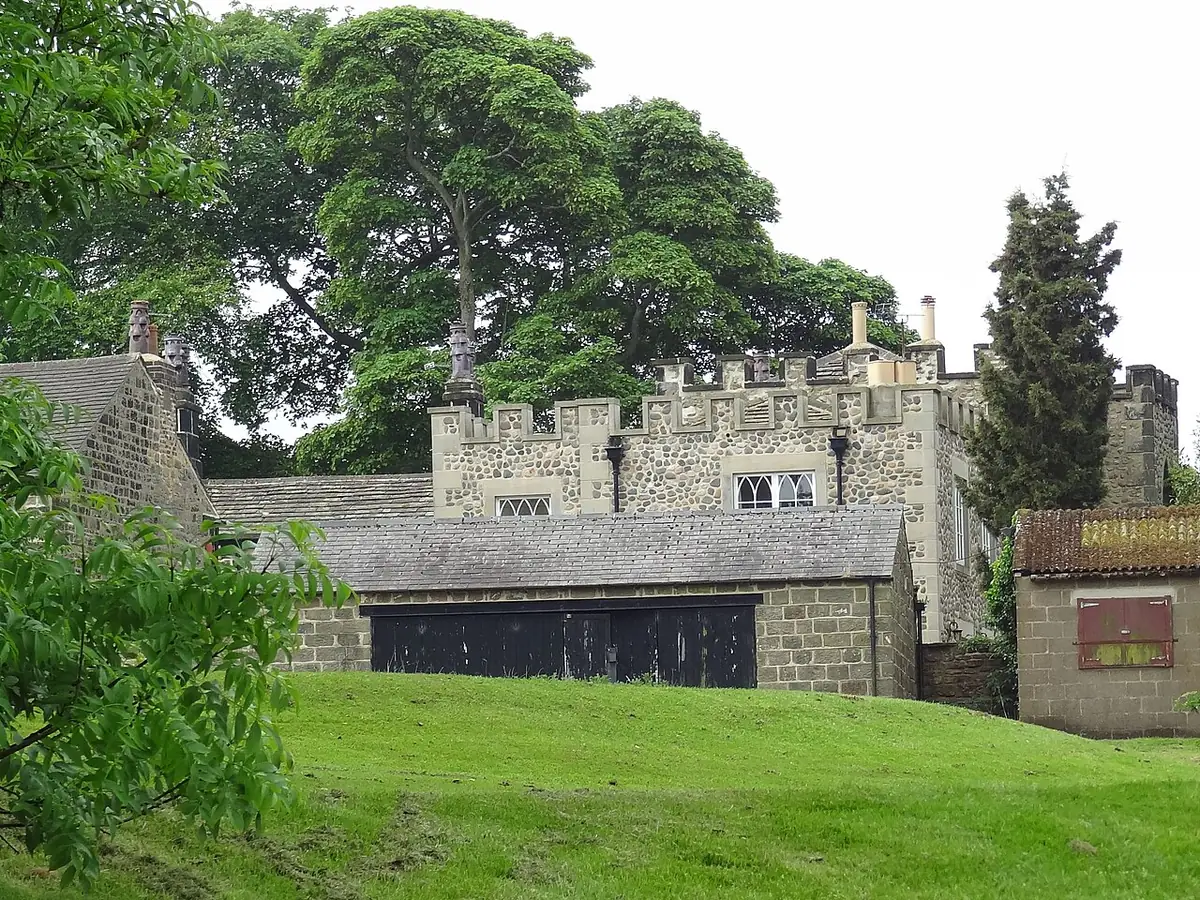
Historic halls like Cobble Hall still stand among Leeds' green edges — Photo: Simon Cobb · CC0 · Wikimedia Commons
To focus your search geographically, a comparison of the various Leeds neighbourhoods is indispensable.
Buying property in the United Kingdom follows legal and cultural rules that are profoundly different from those most overseas buyers know. Failing to take these divergences on board from the outset leaves you exposed to serious misunderstandings during negotiation or when arranging finance. From the legal status of ownership to the handling of the transaction itself, the British system favours contractual flexibility but demands absolute rigour from the legal professionals who secure your investment.
From abroad
The idea of exclusive, perpetual ownership of a home, held outright
Leeds
A dual system of Freehold (outright ownership of land and building) and Leasehold (time-limited ownership of the property under a long lease)
The great majority of apartments in Leeds are sold leasehold. You are buying the right to occupy the property for a fixed term (often 125, 250 or 999 years) and must pay an annual ground rent plus a share of the building's upkeep (the service charge) to the owner of the land, which makes checking the unexpired lease term a matter of the highest vigilance.
From abroad
Preliminary sale agreements that are formally drawn up, binding early, and protected by long statutory deadlines
Leeds
Non-binding agreement subject to contract, right up to exchange of contracts
In England, an accepted offer is not a completed sale. Until the formal stage of exchange of contracts, buyer or seller can walk away without penalty (the phenomena known as gazumping and gazundering), which demands absolute responsiveness from your conveyancing solicitors so that the transaction is locked down as quickly as possible.
From abroad
A single state-appointed official drawing up the deed for both sides and collecting the taxes
Leeds
Conveyancing solicitors or licensed conveyancers, acting separately for each party
There is no single officer acting for both sides. Every buyer must instruct their own specialist lawyer to carry out the searches, analyse the title and check the technical reports, which represents a cost and a timescale of its own to build into your purchase calendar.
From abroad
Transparent publication of actual recorded sale prices in public databases
Leeds
Land Registry data used alongside the asking prices agents post on the central portals
Although the Land Registry records every completed transaction, updates can lag by several months. To estimate the fair value of an apartment in Leeds, you have to cross-reference historic sale data with a close reading of what is currently available and the record of price reductions sellers have accepted on the property portals.
Which part of Leeds should you choose to settle in?
Once the area is settled, it is worth looking very closely at the prices actually being paid in the local market.
Leeds is not one homogeneous city centre. The city grew around hubs with strongly marked identities, from the retail and financial core to former industrial zones since converted, by way of green residential areas in the first ring. Your choice of micro-location will determine not only your day-to-day quality of life but also how easily you can sell or let the property when the time comes.
The city centre (City Centre and Waterfront)
A dense urban atmosphere, paced by the foot traffic along the quays of the River Aire and the constant activity of shopping centres such as Trinity Leeds.
Suits
Young professionals, investors looking for strong rental demand, and anyone who wants to live entirely on foot without needing a car.
Trade-off
Higher prices per m2, service charges that can be substantial, and exposure to night-time noise on the busiest streets.
Headingley
A lively student and residential area, crossed by broad shopping avenues lined with independent cafes, traditional pubs and small local shops.
Suits
Those who enjoy an energetic village feel, a young population and excellent bus links running straight to the universities and the centre.
Trade-off
A high turnover of student tenants that can change the character of certain streets during the academic year, and a very competitive property market.
Chapel Allerton
A smart, cosmopolitan residential feel, with tree-lined streets, good independent shops and a strong community of professionals.
Suits
Couples and families looking for a high quality of life, accessible green space and a neighbourhood that is lively but calmer than the centre.
Trade-off
A more limited supply of apartments, as houses, detached or terraced, make up the majority, and firmer asking prices.
What does an apartment in Leeds really cost?
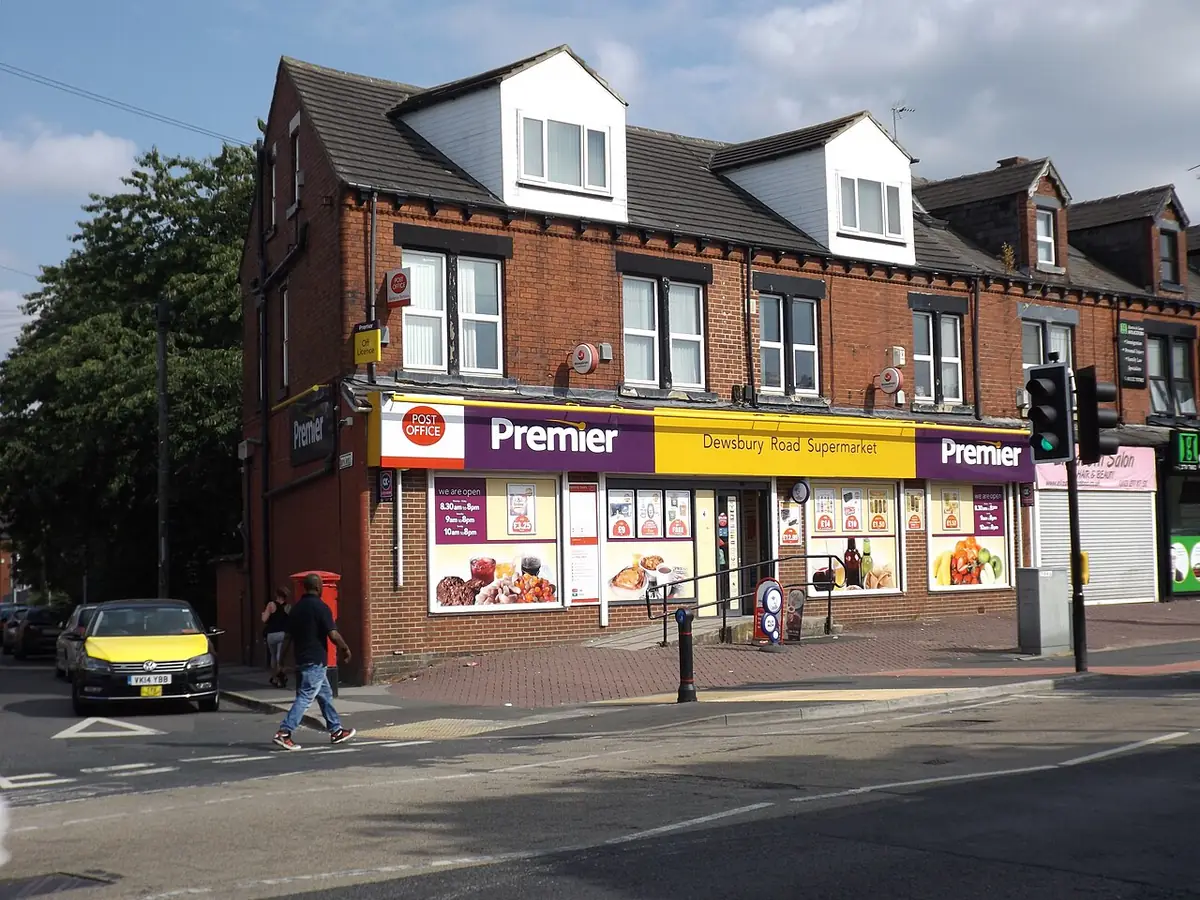
Corner shops under flats like this anchor Leeds' local high streets — Photo: Ian Kirk (Zath Ras) · CC BY-SA 4.0 · Wikimedia Commons
Beyond the headline sum, the legal structure of ownership determines what you actually own.
The Leeds property market has the advantage of offering valuations that are markedly more accessible than those of London or the south of England, while still providing first-rate metropolitan infrastructure. Prices nevertheless vary considerably with the age of the building, the quality of its energy performance and whether or not the development includes integrated services. Any reading of the price ranges has to take in the full set of associated costs, in particular Stamp Duty Land Tax and the recurring charges.
leedsFor saleApartmentestimate
Median price / m²£2,755Half the apartments sell below this
Median price£215kthe average is 14% higher — a few very large properties pull it up
Most common2 bedrooms44 % of listings
Average size74 m²
By number of bedrooms
Bedrooms
Share of market
Avg price
Price / m²
Avg size
1
30 %
£162k
£3,248 +12 %
50 m²
2most common
44 %
£209k
£2,900
72 m²
3
20 %
£267k
£2,726 −6 %
98 m²
4
6 %
£338k
£2,639best value / m²
128 m²
Each row is an average, compared against the area average of £2,900 / m². These are indicative estimates of a typical local market, not a measured sample of live listings. Check current listings before relying on them.
What you can actually hold: Freehold, Leasehold and Commonhold
Buying a property in the United Kingdom follows a strict sequence that has to be respected if each stage is to be secure.
In English property law, the distinction between the different forms of ownership is crucial for anyone buying an apartment. Unlike the uniform co-ownership regimes common elsewhere, the British system often separates ownership of the building from ownership of the land, or sets up complex rules for collective management. Understanding these legal mechanisms protects you against unpleasant financial surprises in the long run, particularly around lease extension or unforeseen maintenance costs.
Leasehold, managed by a freeholder or a management company
In more than 90% of cases for apartments in Leeds, you are buying a leasehold, that is, a long-term right of occupation granted by the owner of the land (the freeholder). Each year you must pay a ground rent and a share of the building's maintenance costs (the service charge). If the unexpired term of the lease falls below 80 years, its value drops quickly and extending it becomes a complex and costly exercise that has to be anticipated at the point of purchase.
What it changesYour solicitor must therefore go through the lease agreement line by line to identify any clause providing for automatic increases in the ground rent, or restrictions on subletting, so that the future resale of your property is protected.
The participative route: Share of Freehold or Commonhold
Some better-run or smaller developments allow the apartment owners to hold the freehold of the land collectively through a dedicated company (Share of Freehold), or to opt for the modern Commonhold regime. Under these arrangements, residents control management decisions directly, decide for themselves on maintenance work, and remove the financial and administrative burden of a third-party landowner.
What it changesIt is therefore strongly advisable, where the market allows, to favour properties that offer some form of collective control of the building, because that guarantees complete transparency over spending and better value in the long run.
The rule to understand before you pay a deposit on a property
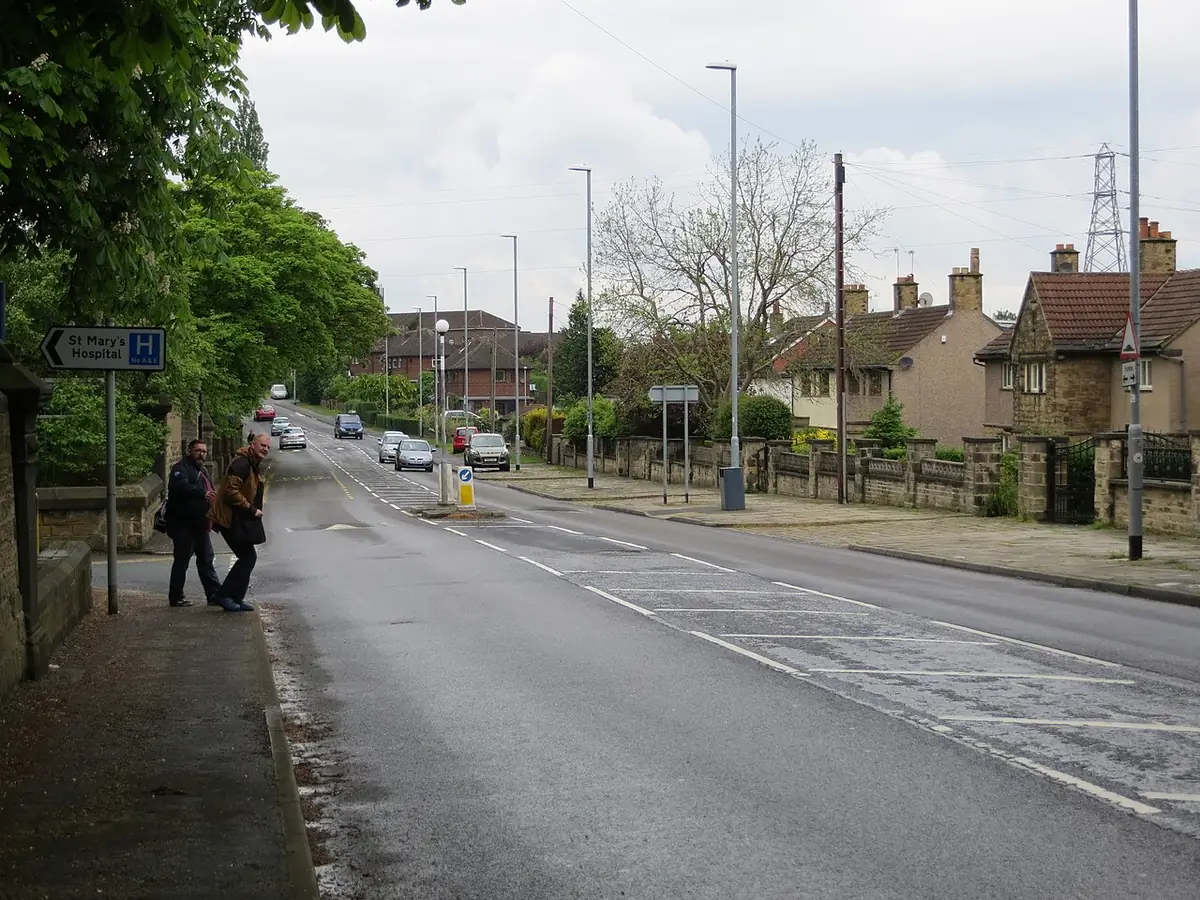
Streets like this, terraces and pavements, are typical of Leeds' suburbs — Photo: Peter Wood · CC BY-SA 2.0 · Wikimedia Commons
To orchestrate all of this without stumbling, it helps to picture the role each professional plays in the process.
One of the most disconcerting features for a buyer arriving from abroad is the timeline of a British property transaction. Between the moment the seller accepts your offer and the moment the sale becomes legally irrevocable, several weeks pass during which neither party is bound by a definitive contract. Mastering this chain of events is the key to avoiding a last-minute withdrawal.
Your offer is formally accepted by the seller through the estate agent.
You instruct your conveyancing solicitor and put up the funds needed to launch the official searches and order the technical reports.
The solicitor analyses the title, checks the planning rules, examines the lease and asks the council about schemes planned nearby.
Both sides settle every legal and technical point (the pre-contract enquiries), which clears the last doubts about the property.
You obtain the final mortgage offer from your lender, or confirm that your own funds are available for the transaction.
Exchange of contracts takes place: the purchase becomes irrevocable, a deposit (usually 10%) is paid, and the date for completion is fixed.
How a transaction unfolds in Leeds, step by step
Getting a purchase in Leeds right means coordinating several professionals with clearly defined roles. From the first search on the online portals to the handover of the keys on completion day, each player has a precise part in keeping the transaction sound. Here is the operational timeline of your purchase.
The buyerSetting the budget and obtaining an Agreement in Principle from a lenderThis essential preliminary step demonstrates your financial standing to local estate agents from the very first viewings.
The estate agentViewings and submission of the offerThe agent puts your proposal to the seller. In England, offers are made in writing or by telephone and can be outbid if the market is tight.
The conveyancing solicitorLegal checks, property searches and analysis of the leaseThey go through the title, query the Land Registry and make sure no easement or hidden debt sits over the apartment you are targeting.
The surveyorProducing the survey report (Home Survey Level 2 or 3)They inspect the structural condition of the building, detect any damp, roofing or insulation problems and cost the work that will be needed.
The solicitors on both sidesExchange of contractsThis is the critical legal moment when the sale becomes definitive and the 10% deposit is held pending the final transfer of funds.
The buyer and the solicitorsCompletion day and handover of the keysThe balance of the price is paid to the seller, the agent hands you the keys, and your solicitor formally registers the change of ownership at the Land Registry.
Apartment or house: which should you choose to live in Leeds?
Let us now look at the real financial costs and running charges attached to these different kinds of property in the region.
Choosing between an apartment in the heart of Leeds and a house on the outskirts means trading off fundamental aspects of daily life. The urban core concentrates the recent schemes and the industrial conversions prized by working people who want to be close to employment centres and cultural venues. Living in these areas means accepting floor areas that are often more compact and service charges that can be substantial, covering the upkeep of communal areas and lifts.
Move out to the outlying residential districts, by contrast, and you reach properties with a private garden and a distinctly larger footprint for the same budget. This option suits households looking for quiet and a lasting family base, at the price of depending more on the road network or public transport to reach the centre of the city.
Assessing the costs involved should not stop at the asking price on the particulars. Older houses often need significant work to bring their energy performance up to standard, whereas recent apartments guarantee better thermal performance but impose strict rules that limit changes to the exterior of the building.
The pace of life you want ultimately decides whether the investment makes sense. Those who thrive on urban energy will favour the compactness of a home high above the street, while those who prefer calm will turn to the green suburban areas that ring the conurbation.
Anticipating how your own circumstances will develop over five to ten years remains the best protection against being forced to sell because the property no longer fits. Central properties generally sell on more quickly thanks to sustained rental demand, whereas family houses offer greater stability of use over the long term.
What overall budget do you need to live and settle in Leeds?
Let us look concretely at what an ordinary day looks like for someone settled in these areas.
Buying a property in Leeds involves far more than the principal sum paid to the seller on completion. You have to factor in the full set of unavoidable associated costs, including local taxation, insurance and routine maintenance. Anticipating these headings avoids any budgetary shock in the first months of living in the home. A complete financial picture keeps your investment sound in the face of local economic swings.
Estimated purchase costs and initial charges
Cost heading
Typical amount
Effect on the overall budget
Stamp Duty Land Tax and legal fees
2% to 5% of the purchase price
Payable in cash at completion
Local property taxation (Council Tax)
GBP 1,200 to GBP 2,500 a year
Annual charge, payable in instalments according to the property's band
Service charges (apartments)
GBP 1,000 to GBP 2,200 a year
Covers upkeep of communal areas and building insurance
The amounts shown vary with the exact floor area, the energy rating of the building and the precise location within the conurbation.
Monthly running and energy costs
Type of cost
Monthly budget range
Main influencing factors
Electricity and gas
GBP 150 to GBP 250
Insulation, floor area and type of heating
Home insurance
GBP 25 to GBP 50
Value of the contents insured and level of cover taken out
Transport and getting around the city
GBP 80 to GBP 150
How often public transport is used, and parking
These estimates reflect average rates observed for a standard household occupying a mid-sized home.
Health, schools and transport: what does an ordinary Tuesday look like in Leeds?
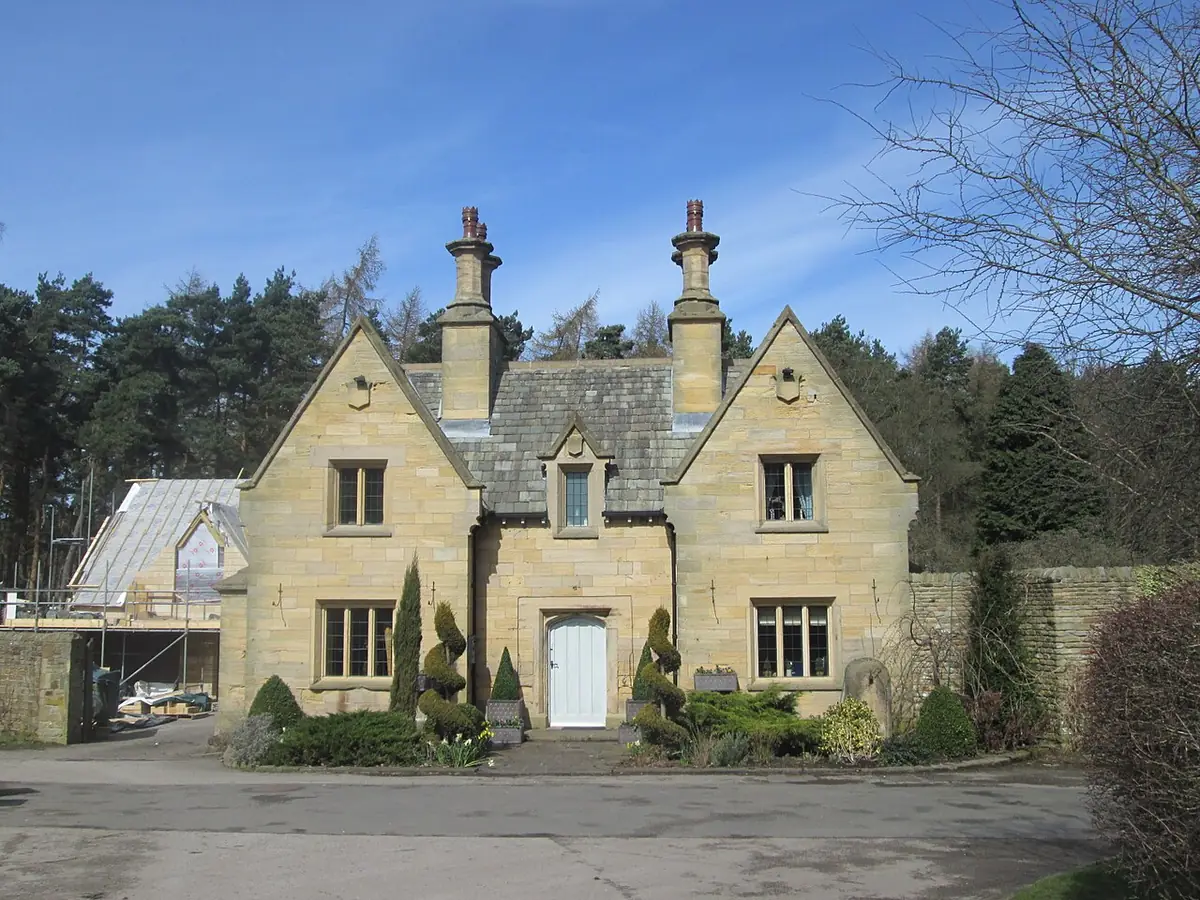
Grand stone houses like this sit at the higher end of Leeds' housing stock — Photo: John Slater · CC BY-SA 2.0 · Wikimedia Commons
Beyond what is visible on a viewing, certain hidden aspects deserve your full attention before you commit.
How a weekday is organised in Leeds depends directly on how freely the transport networks move and on how close the public services are. Anticipating journey times at peak hours means avoiding the congestion on the main roads into the business district. Health services and schools are spread reasonably well across the city, provided you pick your area with care from the outset.
07:30Leaving home and the school runFamilies tend to walk to the local primary schools, while older pupils take the regular bus routes linking the residential areas to the centre.
08:45Getting to work, and transportThe central station and the main bus corridors absorb the bulk of commuters heading for the office and financial districts of the city.
12:30Local services and shopsThe lunch break is the moment for neighbourhood supermarkets and basic administrative services, all easily reached on foot from the office districts.
17:00After-school activities and leisureThe city parks and municipal sports centres take in children and parents for training sessions and end-of-day walks before nightfall.
19:00Winding down and neighbourhood lifeThe residential streets return to their usual calm as the local restaurants and pubs slowly come alive for the evening.
What the listings in Leeds deliberately leave out
Now let us look at the misjudgements buyers most often make, six months after moving in.
Marketing material naturally highlights the good looks and the light of the properties offered for sale. It frequently leaves out technical or planning constraints that can weigh heavily on your future comfort and on resale value. Bringing these blind spots into the open takes a careful reading of the title documents and independent survey reports. Ignoring them exposes the buyer to major unforeseen spending once the keys have changed hands.
The true condition of old roofs and roof timbers
Many Victorian properties need costly roof repairs that are invisible on a courtesy viewing. A thorough examination by a qualified roofer is essential to avoid a renovation bill of several thousand pounds straight away.
Planned development and highway schemes
A neighbouring building yet to be built, or a change to the traffic layout, can permanently alter the light and the quiet of your home. It is essential to consult the council's planning register to find out what has been approved in the immediate vicinity.
The strict restrictions attached to Conservation Areas
Buying a listed property, or one inside a protected area, considerably restricts your freedom to alter the facades, change the windows or install solar panels. These administrative constraints add to the paperwork and raise the cost of the work that is permitted.
The real quality of sound insulation between adjoining homes
Older adjoining construction often suffers from high sound transmission between neighbouring dwellings. Checking for reinforced insulating partitions is what guarantees the acoustic calm essential to everyday wellbeing.
The regrets people usually discover six months after moving in
It matters just as much to know when to hold back, when your profile does not match the realities of the local market.
Looked likeA central area that felt lively and full of life at any hour of the day or night.
Turned outA recurring source of night-time noise from the bars and clubs and from constant delivery traffic.
Would have caught itVisiting late on a Friday or Saturday evening to judge the real noise level objectively before signing an offer.
Looked likeA cheap renovation opportunity, an easy way to make every room your own at low cost.
Turned outAn endless building site revealing hidden structural defects and massive overruns on the trades' quotes.
Would have caught itCommissioning a full survey from an independent firm before the finance conditions are satisfied.
Looked likeEasy on-street parking in the adjoining road, as observed on a first summer viewing.
Turned outNo chance at all of parking the car once evening comes, because the residents' spaces are saturated and there is no private garage.
Would have caught itTesting the parking yourself in the early evening peak, to gauge the real pressure on the space available.
Looked likeA moderate energy bill, on the strength of modern radiators and visible double glazing.
Turned outSubstantial heat loss caused by untreated thermal bridges across the envelope of the older building.
Would have caught itInsisting on the detailed Energy Performance Certificate (EPC) and reviewing the previous household's recent consumption record.
Who should firmly hold off buying a property here?
Let us now turn to the conclusion, and to whether you hold all the cards.
Home ownership is not always the right answer for every stage of life. Some buyers expose themselves to disproportionate financial or practical risk by committing to bricks and mortar too quickly. Recognising these mismatches avoids serious disappointment and preserves your ability to react if your working life changes unexpectedly. Renting is sometimes the strategically better option for keeping your flexibility.
Working people whose job mobility is uncertain in the short term
→Postponing the purchase and renting flexibly instead
Conveyancing costs, Stamp Duty Land Tax and the costs of selling again require a minimum holding period of about five years to be absorbed. A quick relocation would force a rushed sale with a real risk of a net loss.
Households whose emergency savings are too thin
→Building a solid financial cushion before taking the plunge
Buying a home inevitably brings unforeseen maintenance or repair costs that a tight budget could not absorb without putting the household's finances at risk.
People who want no part of managing a building
→Staying a tenant, so that structural upkeep stays with the landlord
Owning means shouldering alone the responsibility and the cost of every breakdown or piece of deterioration in the building, with no landlord to turn to.
So, are you really ready to take the step and buy in Leeds?
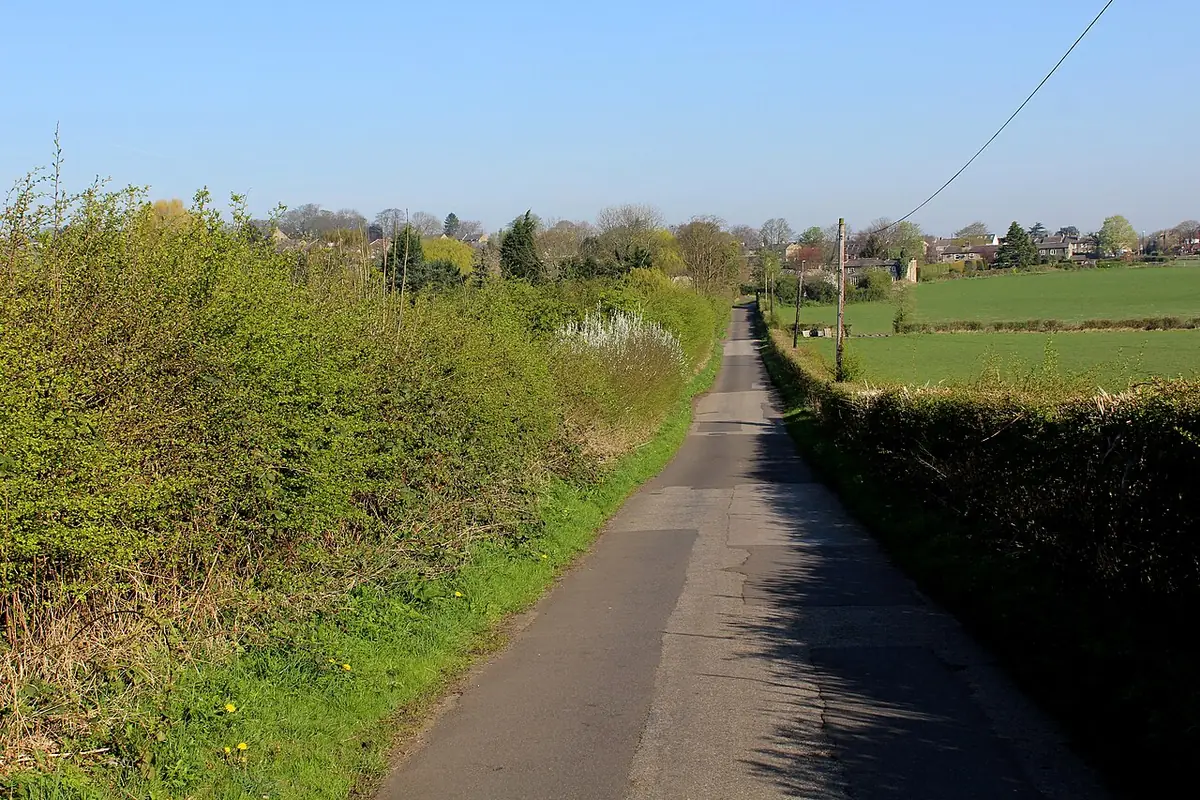
Quiet lanes like this lead into Leeds' greener, edge-of-town streets — Photo: Chris Heaton · CC BY-SA 2.0 · Wikimedia Commons
Deciding to buy a property in Leeds calls for complete clarity about your priorities in life and your real financial capacity. The appeal of this energetic city should not obscure what a long-term commitment demands. Every choice of area or type of home draws the frame of your daily life for years to come.
If your working life is settled, your emergency savings are solidly in place and you have measured all the hidden costs, then the investment makes full sense. The local market rewards patient, well-informed buyers who know how to see past flattering particulars.
Take the time to visit more than once and at different hours, talk to the neighbours and go through the technical documents without rushing. The success of your purchase rests entirely on that methodical rigour, applied before you sign anything binding.
Related questions
Which are the most sought-after areas for buying an apartment in Leeds?
The most prized areas cluster around the Waterfront, the business district and the immediate surroundings of the university. These pockets attract working professionals and investors thanks to their closeness to employment centres and cultural amenities, which keeps them easy to sell on later.
How are the purchase costs calculated on a property transaction in England?
In England, the costs attached to buying a property consist mainly of Stamp Duty Land Tax, charged in bands according to the purchase price, together with the fees of the solicitors or licensed conveyancers who handle the legal checks and the transfer of title.
Is a technical survey compulsory before buying?
Although the law does not systematically require an expert report on every type of property, commissioning a detailed home survey is strongly advised. It is the way to identify hidden structural defects, damp problems or roofing work that will be needed, before you commit for good.
What effect does Council Tax have on the annual budget?
Council Tax is a compulsory local charge payable by the occupier of the home. The annual amount depends on the valuation band the authorities have assigned to the property, which can amount to a significant monthly cost that has to be built into your day-to-day budget.
How long does it usually take to complete a purchase, from offer to handover of the keys?
A property transaction takes an average of two to four months in the United Kingdom. That time allows for all the essential legal searches, for the final mortgage offer to come through, and for the various parties to be coordinated up to exchange of contracts.
Do leasehold apartments carry high running costs?
Yes, apartments involve paying service charges and ground rent, which cover the upkeep of communal areas, the lifts and the external envelope of the building. These amounts can rise over the years and should be checked carefully against the building's accounts.
How can you assess the quality of local schools before buying?
The advice is to read the official inspection reports published by Ofsted, the government body, for every school in the area you are targeting. These documents rate teaching quality, the standard of leadership and pupil wellbeing at the school.
Is it possible to negotiate the asking price of a property in Leeds?
Negotiation is a normal part of the buying process. The price advertised by agents often reflects the seller's opening expectations, but the true condition of the property, the findings of the survey and how tight the local market is are all legitimate grounds for offering less.
What precautions should you take when buying in a protected historic area?
Buying a property in a Conservation Area, or a Listed Building, brings strict limits on architectural alterations. It is essential to check with the local planning department which consents are required before contemplating any renovation work at all.
Is it better to buy a new-build or an older property in need of work?
The answer depends on your appetite for building work and on your overall budget. A new-build guarantees strong energy performance and no immediate work, while an older property often offers sought-after architectural character and generous proportions, at the cost of time and money spent bringing it up to standard.
Property review of ting
No ting properties in Leeds yet
Be the first — share it on ting and it shows up right here.