Buying a home in Leeds successfully means understanding both the mechanics of a fast moving market and the particular features of the legal system in England. This no nonsense guide gives you everything you need to weigh one neighbourhood against another, keep control of your total budget and secure every stage of the transaction.
Get the app
What nobody tells you.
Real prices, hidden costs and the traps to check before you commit.
What buying a house in Leeds actually changes about your daily life
Scroll
What buying a house in Leeds actually changes about your daily life
Buying a home in Leeds successfully means understanding both the mechanics of a fast moving market and the particular features of the legal system in England. This no nonsense guide gives you everything you need to weigh one neighbourhood against another, keep control of your total budget and secure every stage of the transaction.
Written by the ting.ad editorial team ·
Scott Hall Road, Leeds in Street View: drag to look around.
With those first trade offs on the table, the next question is whether your own profile genuinely fits what this city asks of its residents.
Buying a home in this large Yorkshire city redraws your relationship with space and with getting around. Between the pull of a lively neighbourhood and the search for a quieter residential retreat, every housing choice locks in structural compromises that last. It pays to look clearly at the reality of the local market before committing to a purchase of this size. Glossy brochures tend to leave out the administrative complexity and the true condition of the older housing stock.
Being right next to the main employment centres and the cultural life of the city centrevsAccepting less floor space for the same budget, along with more noise
Buyers who want to cut their daily commute have to weigh the size of the property against how central it is. Living in the heart of the city gives you direct access to services, but it means real compromises on quiet and on outdoor space.
Buying a large detached house with a private garden in the outer residential beltvsAccepting longer journeys at peak times and greater reliance on the road network
Moving away from the central corridors buys the extra square metres a family needs to live comfortably. That green promised land is paid for with a heavier travel routine and a degree of isolation from the busiest parts of the city.
Choosing a Victorian house with character and original architectural featuresvsKnowing you will have to budget for significant and recurring energy efficiency work to keep the place comfortable
The undeniable charm of old stonework often hides major technical challenges around insulation and bringing systems up to standard. Buyers who have not been warned consistently underestimate what those essential upgrades cost in this kind of building.
What kind of buyer are you in the Leeds property market?
Understanding your own profile makes it easier to measure the cultural and practical gap waiting for you if you are arriving from another country.
How well your way of life fits the urban fabric of Leeds will decide whether the purchase works out over the long run. Every personal situation brings its own constraints, and they are worth identifying before you commit to a purchase. A move settles well not because the house is beautiful but because it absorbs your working and family obligations day after day. Here is how different types of buyer actually experience the transition to this part of the country.
Urban professional
You value short journeys and being close to places to meet people, eat out and take in some culture. Your search will naturally centre on terraced town houses or properties in the fast changing districts near the core of the city. You are willing to give up a large garden in exchange for an active local scene and a walk or cycle to work. This option resells easily, but it means living with higher population density and the noise that comes with city life.
Family looking for space
Your priority shifts firmly towards floor space, how safe the surroundings feel and the quality of the catchment schools. You will look at outlying residential districts or neighbouring towns with good public transport links to the employment centres. An enclosed garden and parks within walking distance become non negotiable for the family's daily balance. In return, your evenings will be shaped by ferrying children around, and you will have to accept a less spontaneous social life than in the centre.
Long term investor
You judge every purchase on potential rental yield, the structural soundness of the building and the direction the neighbourhood is heading. Your attention goes to areas with regeneration schemes under way or major public investment planned over the medium term. You can look past the interior decoration and assess only the intrinsic value of the location and the quality of the construction. This disciplined approach takes patience and a good grasp of local dynamics if you are to avoid areas with weak rental demand.
Moving to Leeds from abroad: the structural changes that really matter
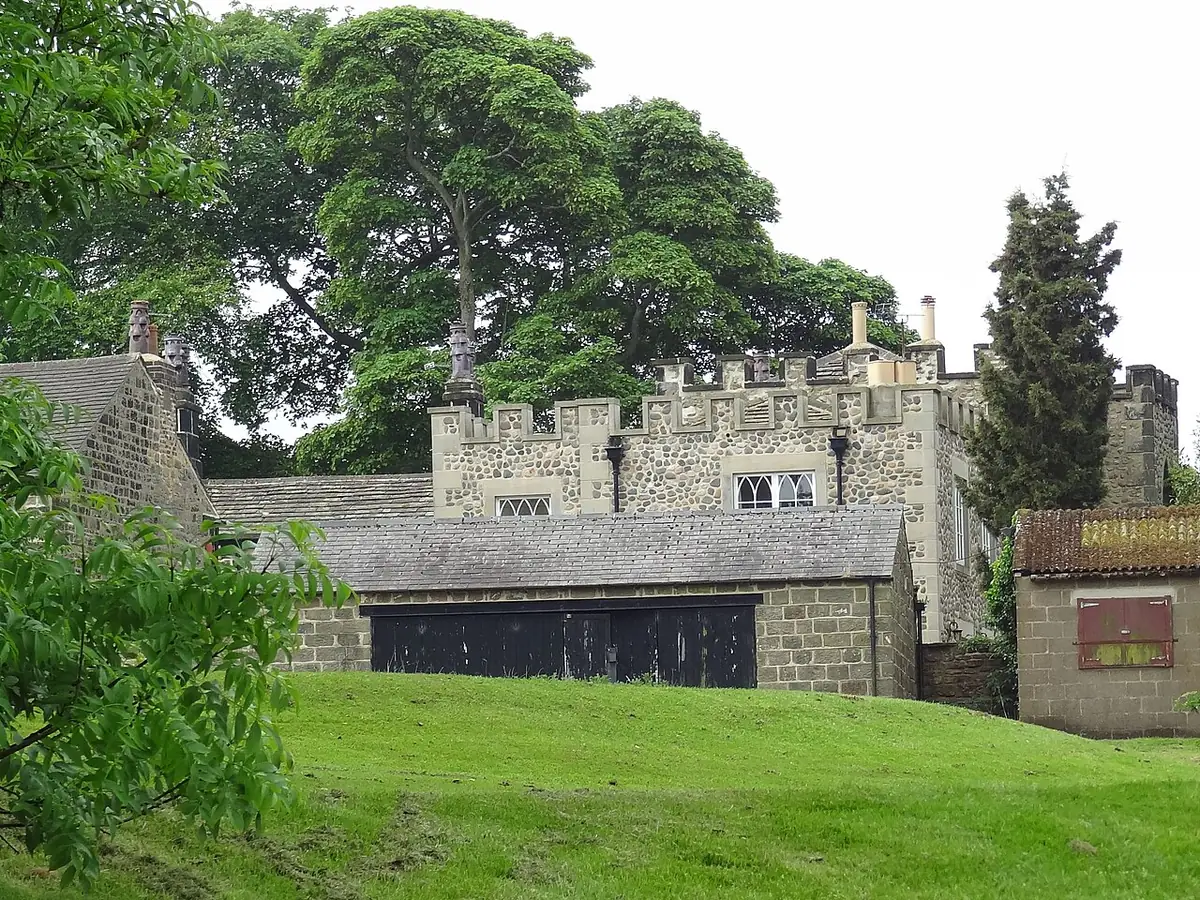
Historic halls like Cobble Hall still stand among Leeds' green edges — Photo: Simon Cobb · CC0 · Wikimedia Commons
Once those cultural markers are in place, choosing the right area becomes the cornerstone of the whole plan.
The property system in England and the local customs around it differ sharply from what most buyers arriving from abroad are used to, from the first viewing through to the final signature. Missing those cultural and legal subtleties exposes a buyer to financial surprises and long administrative delays. Transactions here rest on particular negotiation mechanisms and particular safeguards, and there is no substitute for learning them. Here is a careful comparison between the reference points you are likely to bring with you and the reality you will find on the ground.
From abroad
A centralised system in which a single public official oversees the deed and protects both parties
Leeds
The system of conveyancers and solicitors, with each party to the transaction separately represented
Completion tends to take longer and demands careful coordination between the two legal teams if you want to avoid last minute deadlock.
From abroad
The habit of signing a preliminary sale contract that binds both parties quickly and firmly, subject to conditions
Leeds
A flexible window in which an accepted offer becomes legally binding only at exchange of contracts
The risk of being outbid or of a last minute withdrawal (gazumping) is a genuine legal reality you have to factor into your buying strategy.
From abroad
A tradition that places great weight on masonry buildings and blocks of flats held as investments
Leeds
The pervasive freehold or leasehold system, applied to detached and terraced houses alike
Check the remaining term on any lease carefully, along with the management charges attached to it, so you are not caught out by costs you did not expect.
From abroad
Standardised statutory surveys and certificates gathered into a single pack by the seller
Leeds
Far more responsibility on the buyer, who has to commission detailed inspections on their own initiative (HomeBuyer Report or Building Survey)
Never skip an independent technical inspection: it identifies hidden defects and lets you negotiate the price knowing exactly what you are buying.
How to choose the right neighbourhood to settle in Leeds
With the geography settled, it is time to look at the financial reality and the price brackets you will actually meet.
Leeds is a mosaic of neighbourhoods with strongly drawn identities, from regenerated industrial quarters to leafy residential suburbs. Each area strikes its own balance between accessibility, price per square metre, commercial life and how quiet it is after dark. There is no substitute for walking the ground yourself and feeling the real atmosphere of each district at different times of day. Here is an objective comparison of the main areas to guide your decision.
Headingley and Hyde Park
A very lively, energetic area shaped by a large student and young professional population, with plenty of independent shops and cafes.
Suits
Anyone after a busy atmosphere, a self contained local scene and quick access to the university campuses and the main routes out of the city.
Trade-off
Parking is difficult, tenants turn over quickly and complete quiet is rare during term time.
Chapel Allerton and Meanwood
Sought after residential districts in the north of the city, combining a village feel, generous green space and a strong food and drink scene.
Suits
Families and settled professionals who want a balanced setting, good schools and a strong sense of community.
Trade-off
Property prices sit noticeably above the city average and competition between buyers is fierce.
Leeds Dock and South Bank
An ultra modern urban environment defined by schemes converting the old docks into contemporary places to live.
Suits
Admirers of modern architecture, remote workers who want open plan space and people working directly in the financial district.
Trade-off
Some of the recent development feels manufactured, and evenings can be quiet outside the busiest periods.
Roundhay and Moortown
The ideal compromise between the leafy outer belt and proximity to the city, backing onto one of the largest urban parks in Europe.
Suits
Buyers with a comfortable budget who put nature, open space and residential calm at the top of their list.
Trade-off
You will rely more on a car to reach the centre at peak times, and the local market is very tight.
What does buying a house in Leeds really cost? Brackets and market realities
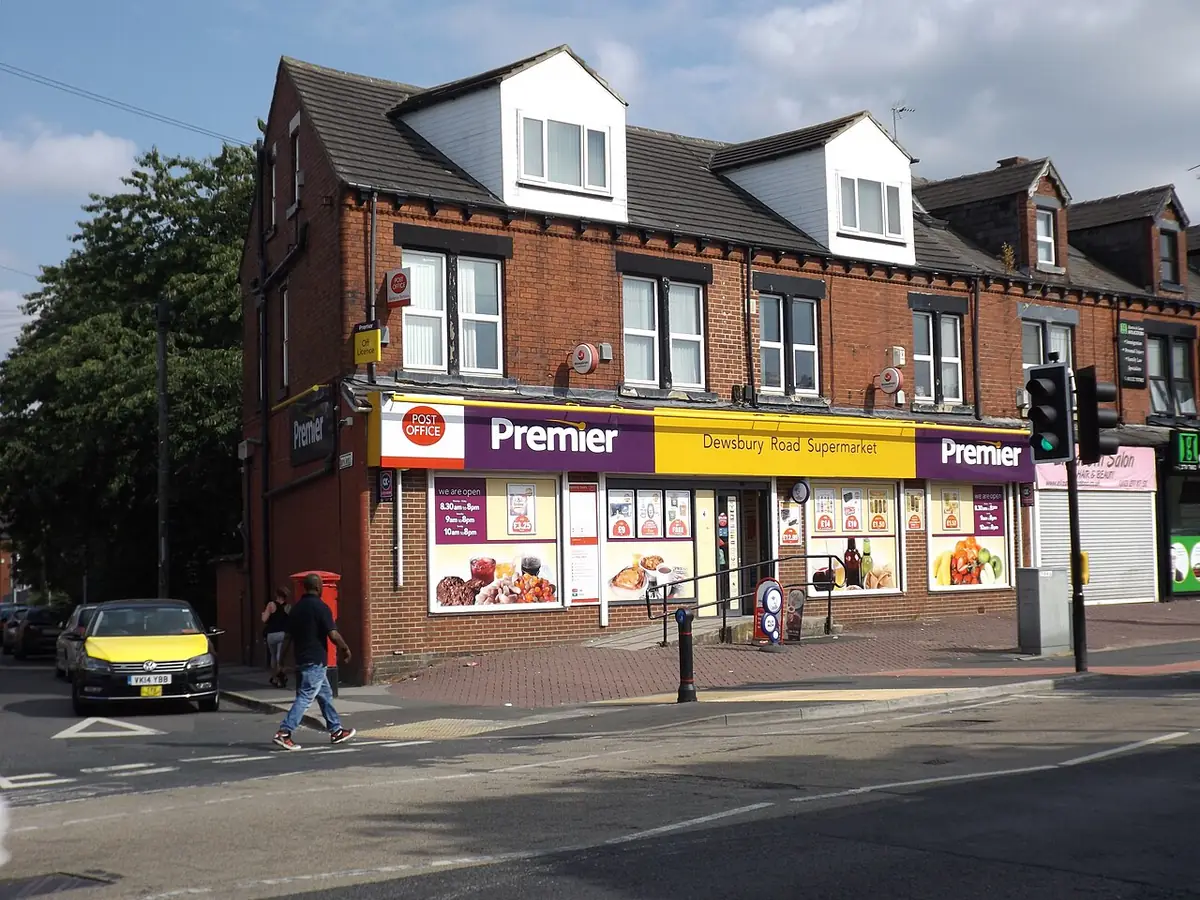
Corner shops under flats like this anchor Leeds' local high streets — Photo: Ian Kirk (Zath Ras) · CC BY-SA 4.0 · Wikimedia Commons
Once the budget is settled, the next step is to understand exactly what kind of ownership right you are actually buying.
Working out the budget for a purchase goes well beyond the asking price of the house. You have to build in all the additional fees, the local taxes and the energy efficiency work that comes with the older housing stock in this country. Prices vary considerably from one area to the next, reflecting the pull of school catchments and the quality of public transport links. Here is a structured view of the orders of magnitude on the market, to help you calibrate your financing plan.
leedsFor saleHouseestimate
Median price / m²£2,259Half the apartments sell below this
Median price£308kthe average is 14% higher — a few very large properties pull it up
Most common2 bedrooms63 % of listings
Average size130 m²
By number of bedrooms
Bedrooms
Share of market
Avg price
Price / m²
Avg size
2most common
63 %
£300k
£2,378
126 m²
3
29 %
£383k
£2,235 −6 %
172 m²
4
9 %
£485k
£2,164best value / m²
224 m²
Each row is an average, compared against the area average of £2,378 / m². These are indicative estimates of a typical local market, not a measured sample of live listings. Check current listings before relying on them.
Freehold or leasehold: what do you actually own when you buy in Leeds?
With the legal structure clear, the next task is to decode the chronological run of a transaction in England so you can avoid the traps.
Property ownership in the UK rests on legal distinctions that have no direct equivalent in many other countries. Grasping the difference between owning the land outright and holding a time limited right to use it is vital if you want to protect the value of your asset over the long term. Get this wrong and an apparently attractive investment can turn into a financial hole when the lease comes up for renewal. Here are the two main regimes you will meet when buying a house.
Outright ownership (freehold)
You own both the building and the land it stands on, with no time limit and no periodic ground payment to a third party. This is the absolute standard for the great majority of traditional detached and semi detached houses in residential areas. That status gives you complete freedom to carry out conversion, extension or energy efficiency work, subject to obtaining local planning permission.
What it changesYou keep full control of the asset and you eliminate any risk of the value being marked down because a long lease is running out.
Long lease ownership (leasehold)
You buy the right to occupy the house for a fixed term that shortens every year, while a landowner (the freeholder) retains ultimate ownership of the land. This regime applies more often to flats, but it also covers some houses built as part of recent collective schemes or managed estates. You have to pay annual charges (ground rent and service charges) whose increases are often outside your direct control.
What it changesAlways check the remaining lease term before making an offer: a lease under 80 years makes reselling drastically harder and costs a great deal to extend.
The golden rule to understand before you part with a single pound of deposit
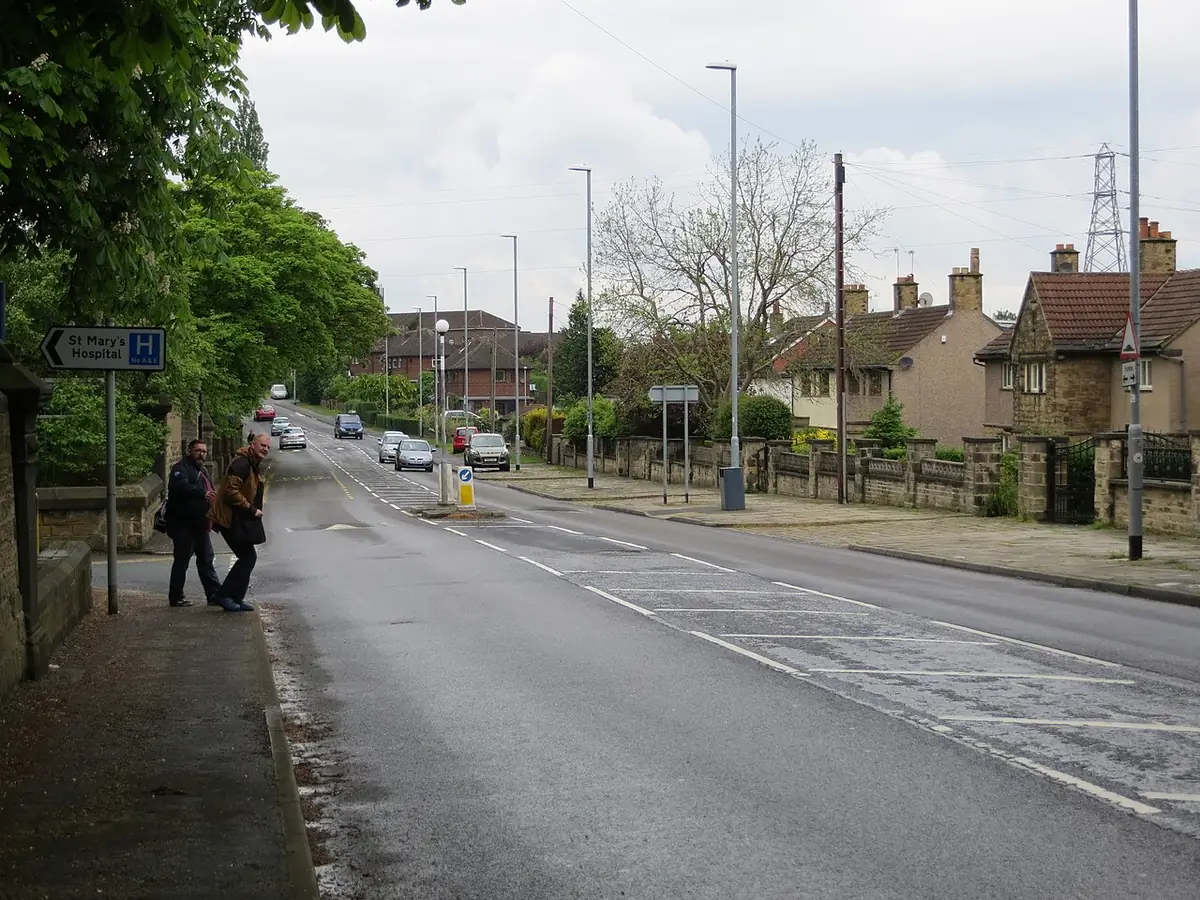
Streets like this, terraces and pavements, are typical of Leeds' suburbs — Photo: Peter Wood · CC BY-SA 2.0 · Wikimedia Commons
With those administrative stages behind you, let us look at how the operational timetable of the transaction fits together.
Buying property in England is marked by a contractual flexibility that many overseas buyers find disconcerting. Throughout the negotiation and the legal work, the agreement between seller and buyer carries no binding legal force at all. Either party can walk away at any moment, without giving a reason, right up to the crucial point of exchange of contracts. That structural uncertainty means you need a disciplined strategy and professionals who respond quickly.
Making an offer, verbally or in writing, through the estate agent (subject to contract).
The seller formally accepts your offer and takes the property off the market, without signing anything that binds them exclusively.
Your solicitor works meticulously through the file, including the official property searches and the analysis of title.
You commission a thorough technical inspection (a Building Survey) to identify hidden defects or urgent repairs.
Your lender formally releases the funds and your overall financing plan is confirmed.
Formal exchange of contracts, which makes the transaction irrevocable and fixes the immovable date for completion.
How a property transaction in Leeds unfolds, step by step
Anticipating each stage of the buying process takes a great deal of the stress out of an international or cross country move. Coordination between the various players in the market (agents, solicitors, brokers and surveyors) is the keystone of a timetable you can actually control. The journey normally runs over ten to sixteen weeks between the initial offer and the day you move in. Here is the chronological detail of what to plan for.
The buyerShortlisting properties and targeted viewingsVisit the properties on your shortlist more than once and at different times of day, to judge the atmosphere, the light and the traffic.
The estate agentSubmitting and negotiating the offerPut the offer in writing and attach proof of funds, so the seller can see you are serious.
The solicitorLegal checks and searchesStart the searches with the council and examine easements, boundaries and the history of title.
The surveyorCarrying out the Building SurveyInspect the structure, the roof, the electrical installation and the plumbing to estimate what putting things right will cost.
The solicitorsExchange of contractsContracts are signed simultaneously and a deposit is paid (usually 10% of the price), making the sale definitively binding.
All partiesCompletion and handover of the keysThe balance of the funds is transferred, the transaction is registered with HM Land Registry and the keys are collected from the agent.
House or flat in Leeds: which choice suits your daily life?
Once that decision about property type is made, the next step is to look at the budget reality of actually completing a purchase on the Leeds market.
Buying a house in Leeds is a structurally different commitment from buying a flat in the centre, largely because of the shape of this Yorkshire city. Residential districts such as Headingley, Roundhay and Chapel Allerton are dominated by Victorian and Edwardian terraces with small gardens, which changes your relationship with domestic space and your day to day independence. Choosing a house in those areas means accepting a heavier maintenance burden, from renewing slate roofs to keeping the outdoor space in order, but it also guarantees complete freedom from a management company and the charges that come with it.
A flat, by contrast, whether in the converted flax mills along the River Aire and the Leeds and Liverpool Canal or in the contemporary schemes of the Wellington Place business district, answers a different logic of fluidity and absolute centrality. These properties appeal because the upkeep of the common parts is shared and security is stronger, and because residents are within walking distance of the railway stations, shopping centres such as Trinity Leeds and the cultural spaces around the Corn Exchange. The financial counterpart is regular service charges, sometimes steep ones, and the absence of private outdoor space, replaced by balconies or shared terraces.
The choice between the two therefore comes down to a basic trade off: time spent managing a private property further out, against the compromise of shared ownership in the middle of the city. Families looking for stability will consistently favour a house with a garden in the northern residential belt, while young professionals and investors will steer towards the lofts and flats of the waterfront for their rental liquidity and walkability. Understanding that architectural duality is the first essential step in structuring your purchase in this part of the north of England.
What budget do you really need to buy a house in Leeds?
With the budget settled, it is worth seeing how a typical week fits together for residents of these Leeds neighbourhoods.
Working out the purchase budget in Leeds accurately means factoring in not only the headline price of the house you want, but all the additional costs built into the UK tax system. Between transfer duty, survey fees and the current structure of mortgage rates, the total envelope goes well beyond the figure the agency displays. Studying market averages carefully across the different areas is what keeps you out of financial trouble when you put your mortgage application together.
Indicative price brackets for houses in Leeds by type and area
Property type
Area sought
Observed price bracket
Market trend
Two to three bedroom terraced house
Headingley / Hyde Park
GBP 250,000 - GBP 320,000
Strong demand, stable prices
Family terraced or detached house
Roundhay / Alwoodley
GBP 380,000 - GBP 550,000
Moderate rises driven by good schools
Large period family house
Moortown / Shadwell
GBP 600,000 - GBP 900,000 and above
Rare properties, room to negotiate
These price figures are based on transactions recorded by HM Land Registry for the Leeds residential market and exclude conveyancing costs, Stamp Duty Land Tax and other taxes.
Compulsory additional fees and purchase costs to plan for
Cost item
Basis of estimate
Typical amount observed
Is it compulsory?
Stamp Duty Land Tax (SDLT)
Progressive bands applied to the purchase price
GBP 2,500 - GBP 12,000
Compulsory (depending on buyer profile)
Survey report (HomeBuyer Report)
Fixed bracket according to the value of the property
GBP 600 - GBP 1,200
Strongly recommended for period houses
Mortgage arrangement and broker fees
Fixed fees plus a percentage of the loan
GBP 1,000 - GBP 2,500
Varies by lender
Blowing the initial budget by forgetting these additional costs is the single most common reason sales fall through in the UK.
Health, schools, transport: an ordinary Tuesday in Leeds
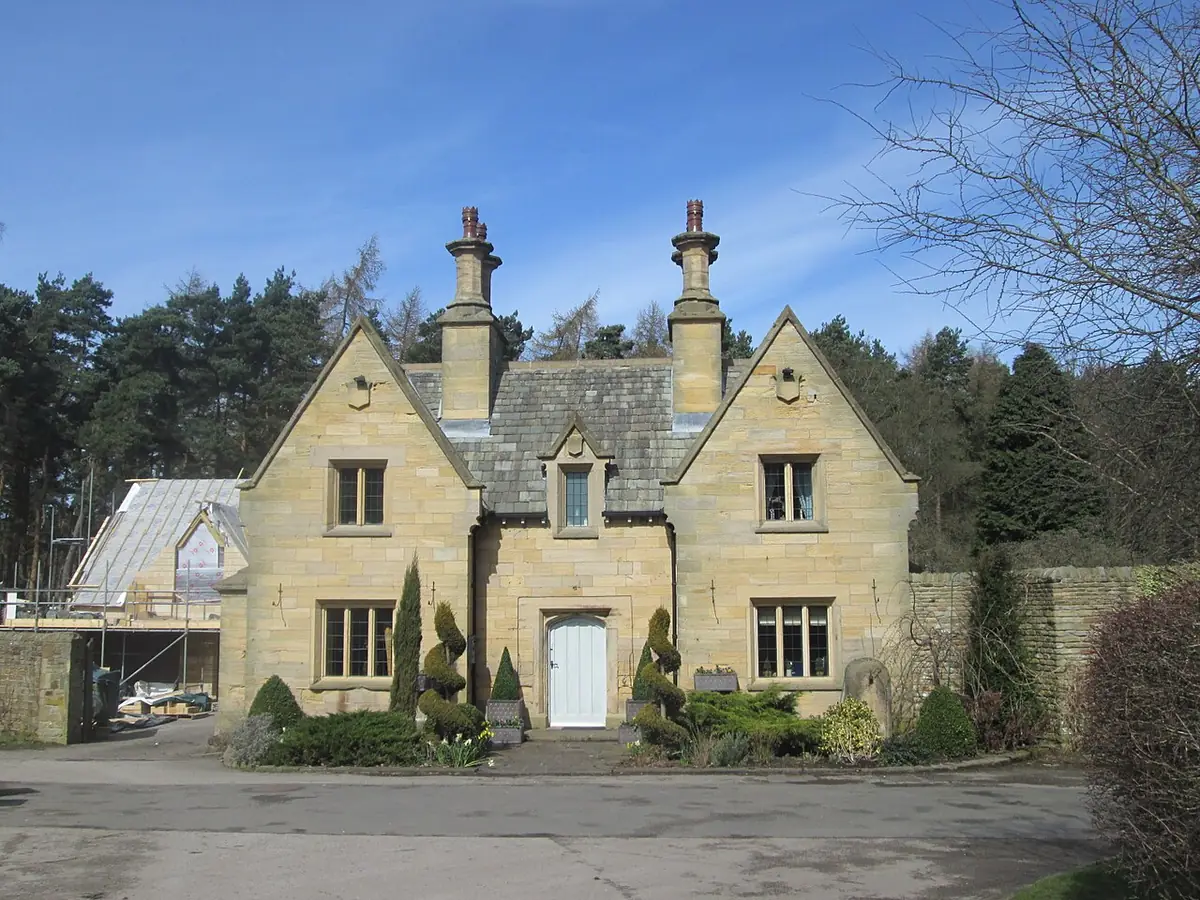
Grand stone houses like this sit at the higher end of Leeds' housing stock — Photo: John Slater · CC BY-SA 2.0 · Wikimedia Commons
Beyond that well oiled routine, a closer look at the market reveals subtleties estate agents generally leave unmentioned.
Getting a real sense of a property purchase in Leeds means immersing yourself in the rhythm of an ordinary weekday, far from the marketing promises of the sales brochure. Between commuting into the business district, managing the children's schooling locally and reaching NHS health services, every neighbourhood sets its own tempo. Picturing those daily flows lets you anticipate real journey times and adjust where you buy to fit your working and family commitments.
07:45Leaving the residential districts (Roundhay, for example)An early start to avoid the chronic congestion on the A58 running straight into the centre of Leeds.
08:30Dropping the children at the local primary schoolAccess to schools rated Good or Outstanding by Ofsted, which in sought after areas generally means applying well in advance.
09:00Arriving at the office or a coworking space at Wellington PlaceA quick connection to the Leeds service sector hub, either by regular bus or on foot through the recently improved pedestrian routes.
13:00Lunch break and local shoppingUsing independent local shops or the markets to stock up on fresh food without taking the car out.
17:30The journey home and a stop at the GP surgeryRoutine health appointments with local general practitioners attached to the National Health Service.
19:00An evening at home and household upkeepTime given to family life in the living room or the garden, while keeping an eye on energy use and the thermal performance of the building.
What the property listing will never tell you about Leeds
With those grey areas brought into the light, it is worth looking at the psychological and financial traps that most often catch inexperienced buyers six months after they move in.
The UK property market has its own grey areas, and sales particulars consistently soften them so as not to slow the purchase down. Whether it is the complex legal structure of long leases, the true state of the drainage beneath the house or the small scale noise that comes with transport corridors, several decisive factors escape a superficial first viewing. Bringing those unspoken aspects out into the open is essential if a buyer is to be protected from major financial and legal disappointment after the keys change hands.
The legal trap of leasehold on certain houses
Although most houses in Leeds are sold freehold, some older properties and some recent schemes come with long leases carrying ground rent that can sometimes be reviewed upwards, which complicates any future sale and adds to your fixed outgoings.
The true state of the drainage and the cellars
Many nineteenth century Victorian houses have old foundations and clay drainage pipes vulnerable to the roots of mature trees, which brings a risk of damp getting in and repair bills that are unplanned and very high.
The invisible acoustic impact of flight paths and railway lines
An area that seems quiet at the weekend when you view it can turn out to be heavily affected on weekdays by rail traffic converging on Leeds station or by aircraft on approach to Leeds Bradford Airport.
The strict restrictions inside Conservation Areas
Buying a house within a protected area means having to obtain specific planning consent for the smallest change of windows, for fitting solar panels or for altering the facade, all of which pushes up renovation costs.
The traps and regrets people discover six months after buying in Leeds
Knowing those pitfalls helps you judge honestly whether your own profile really matches what this market demands.
Looked likeA charming Victorian house full of character, with original floorboards and high ceilings.
Turned outAn energy sieve whose ageing heating system produces eye watering gas bills through the hard Yorkshire winters.
Would have caught itInsisting on a recent Energy Performance Certificate (EPC) and budgeting straight away for loft insulation and double glazing.
Looked likeA peaceful, leafy residential district, ideally placed away from the bustle of the city centre.
Turned outAn area choked by commuters and students parking wherever they can, making it impossible to park outside your own front door at the end of the day.
Would have caught itVisiting at different times of day and checking whether a residents' parking permit scheme is in place.
Looked likeA chance to buy quickly at a good price thanks to a small reduction advertised by the agency.
Turned outA transaction stuck for months because of a fragile property chain involving several other interdependent buyers and sellers.
Would have caught itAsking the estate agent precisely who makes up the whole chain, and favouring sellers who are not dependent on buying somewhere else first.
Looked likeA small private garden, easy to look after and ready to enjoy on fine days.
Turned outPoorly drained clay soil that turns into an impassable quagmire with the first autumn and winter rain in the north of England.
Would have caught itInstructing a surveyor to inspect the ground thoroughly and to check the surface water drainage.
Unusual profiles: who really should not buy a house in Leeds?
It is now time to pull all these factors together and assess how ready you are for a decision of this size.
Buying property in a large regional city such as Leeds is not a universal answer that fits every life plan. Some buyers, because of how mobile their career is, how little appetite they have for maintenance or how short their time horizon is, are heading for certain financial disappointment if they commit too quickly. Naming those contraindications clearly is what prevents costly mistakes.
The mobile young professional in the middle of an international career change
→Buying an out of town house quickly, just to have somewhere to live.
The upfront transaction costs (Stamp Duty Land Tax, legal and broker fees) combined with how long it takes to resell a property in the UK rule out any short term operation without a straight financial loss if you have to move on quickly.
The investor with no appetite for building work or technical management
→An old Victorian house needing heavy work on insulation and heating.
The regulatory complexity of local planning rules and the current shortage of skilled tradespeople in Yorkshire turn any upgrade project into an obstacle course in both money and time.
The committed city dweller attached to having everything within walking distance
→A large detached house in the green outer belt.
Being far from cultural life, relying on a car for the smallest errand and feeling relatively isolated outside office hours quickly breed frustration in anyone who loves the buzz of a city.
Taking stock: are you ready to take the plunge in Leeds?
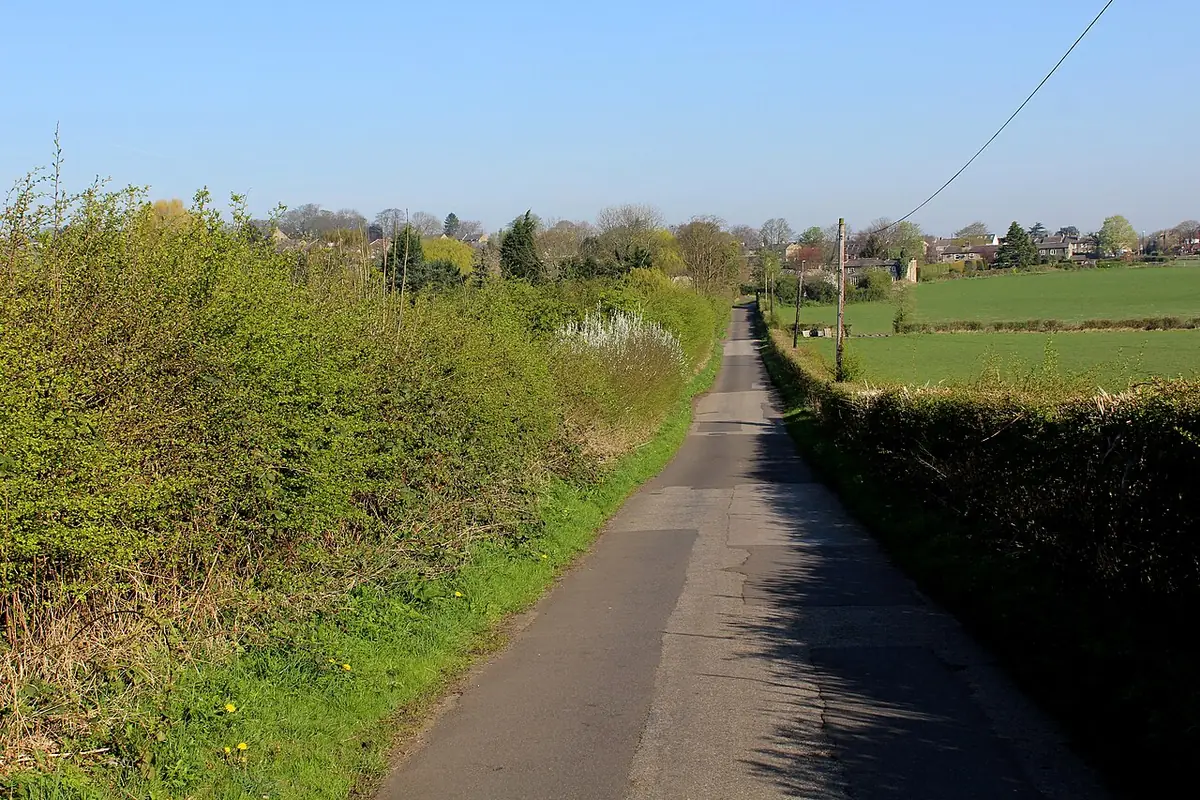
Quiet lanes like this lead into Leeds' greener, edge-of-town streets — Photo: Chris Heaton · CC BY-SA 2.0 · Wikimedia Commons
Reaching the end of this analysis shows that buying a house in Leeds is a carefully considered strategy rather than an impulse. Between choosing the right type of property, building the hidden costs of the UK system into your figures and understanding the logistics of an ordinary Tuesday, every decision shapes how well the purchase holds up over the long term in Yorkshire.
If your working life is settled for the next five years, if you have savings that comfortably cover the additional costs, and if you accept the responsibilities that come with maintaining an older building, then the conditions are in place to go ahead in one of the most dynamic cities in the north of England.
Take the time to view several properties on weekdays, to press estate agents on the reality of the chains involved and to have every structure assessed by an independent building professional. Your future house in Leeds is waiting, provided each step you take rests on facts you can verify rather than on the promises in an advert.
Related questions
How long does it usually take to complete the purchase of a house in Leeds?
In the UK, the full buying process, from the moment an offer is accepted through to signing and completion, when the keys change hands, generally takes between three and five months. That timescale reflects the depth of the legal checks carried out by conveyancers and the difficulty of managing sale chains that involve several parties at once.
Do I have to instruct a surveyor to inspect a house in Leeds?
The law in England does not formally require an independent technical inspection, but commissioning a HomeBuyer Report or a Full Structural Survey is strongly advised. It brings hidden defects, damp problems and roofing faults to light, and it spares you the unplanned and often very large repair bills that surface after completion.
What is the leasehold system compared with freehold in Leeds?
Freehold means you own both the building and the land it stands on, which is the case for most houses. Leasehold, more common for flats, means you own the right to occupy the property for a fixed term while paying ground rent and service charges to the owner of the land.
Which neighbourhoods are most sought after for buying a family house in Leeds?
Roundhay, Alwoodley, Chapel Allerton and Headingley are among the areas families favour most, thanks to the quality of their schools, generous green space such as Roundhay Park and easy access into the city centre.
How does Council Tax work for a house in Leeds?
Council Tax is an annual local charge collected by Leeds City Council and calculated from the assessed value of the property as at 1 April 1991. Homes are placed in tax bands (Band A to Band H), and the exact amount changes each year according to the council's budget requirements.
Can you negotiate the asking price of a house on the Leeds market?
Yes, negotiation is a normal part of how property is bought and sold in the UK. The price quoted by agencies often reflects an optimistic valuation, and studying recent sold prices in the same neighbourhood lets you pitch a lower offer with confidence, depending on how tight the local market is.
What is a property chain and how does it affect a purchase?
A property chain is a linked sequence of buyers and sellers whose transactions all depend on one another. If a single link pulls out or is refused a mortgage, every transaction in the chain stalls, which stretches the timeline considerably.
What criteria do lenders use when assessing a mortgage application?
UK lenders look closely at your regular income, your debt to income ratio, your credit score with the reference agencies and the size of your deposit, which normally needs to represent at least 10 to 20 per cent of the property's value.
Do all period houses in Leeds have double glazing?
Not necessarily. Many Victorian and Edwardian houses still have original joinery or ageing double glazing. Within Conservation Areas, replacing windows is subject to strict rules on appearance imposed by the council.
What does the conveyancer do when you buy a property in Leeds?
The conveyancer (a specialist lawyer or solicitor) is the professional you cannot do without: they run all the property searches, draft the contracts of sale, transfer the funds securely and register the change of ownership with HM Land Registry.
Property review of ting
No ting properties in Leeds yet
Be the first — share it on ting and it shows up right here.