Buying an apartment in Melbourne calls for a close understanding of how things work locally, from the neighbourhoods to the rules of strata living. This guide walks you through it step by step so you can secure your property investment with your eyes open.
Get the app
What nobody tells you.
Real prices, hidden costs and the traps to check before you commit.
What you really get when you buy an apartment in Melbourne
Scroll
What you really get when you buy an apartment in Melbourne
Buying an apartment in Melbourne calls for a close understanding of how things work locally, from the neighbourhoods to the rules of strata living. This guide walks you through it step by step so you can secure your property investment with your eyes open.
Written by the ting.ad editorial team ·
Sale Apartment Melbourne in Street View: drag to look around.
Investing in bricks and mortar in Melbourne is about more than buying square metres in one of the southern hemisphere's liveliest cities. Between the search for an inspiring place to live and the reality of strata fees, the equation deserves to be worked through with a clear head. Every neighbourhood has its own growth dynamics and its own structural constraints. You have to weigh being right next to the Central Business District against the residential calm of the greener outer rings. Usable floor space comes at a premium, which often means scaling back your expectations on room sizes.
The promise of an urban lifestylevsThe reality of density and noise
Living in the heart of the city gives you instant access to cafes, theatres and public transport. The flip side is that traffic noise and constant night-time activity call for excellent soundproofing, a point too often overlooked when viewing older properties.
The architectural charm of historic buildingsvsRenovation constraints and ageing services
Beautiful Victorian or Edwardian facades sometimes hide outdated wiring and recurring damp problems. Strict strata rules sharply limit what you can do to the common areas and the exterior.
Rental performance and steady demandvsRental regulation and complex local taxes
Population pressure keeps rental vacancy rates in Melbourne traditionally low. However, progressive land taxes and legal obligations towards tenants demand careful, forward-looking financial management.
Access to high-end shared amenitiesvsSteeply rising strata fees
A pool, a gym and a concierge win over buyers looking for modern comfort straight away. Those services translate into very high owners corporation fees that weigh heavily on long-term returns and your annual budget.
Does this place really fit the way you live day to day?
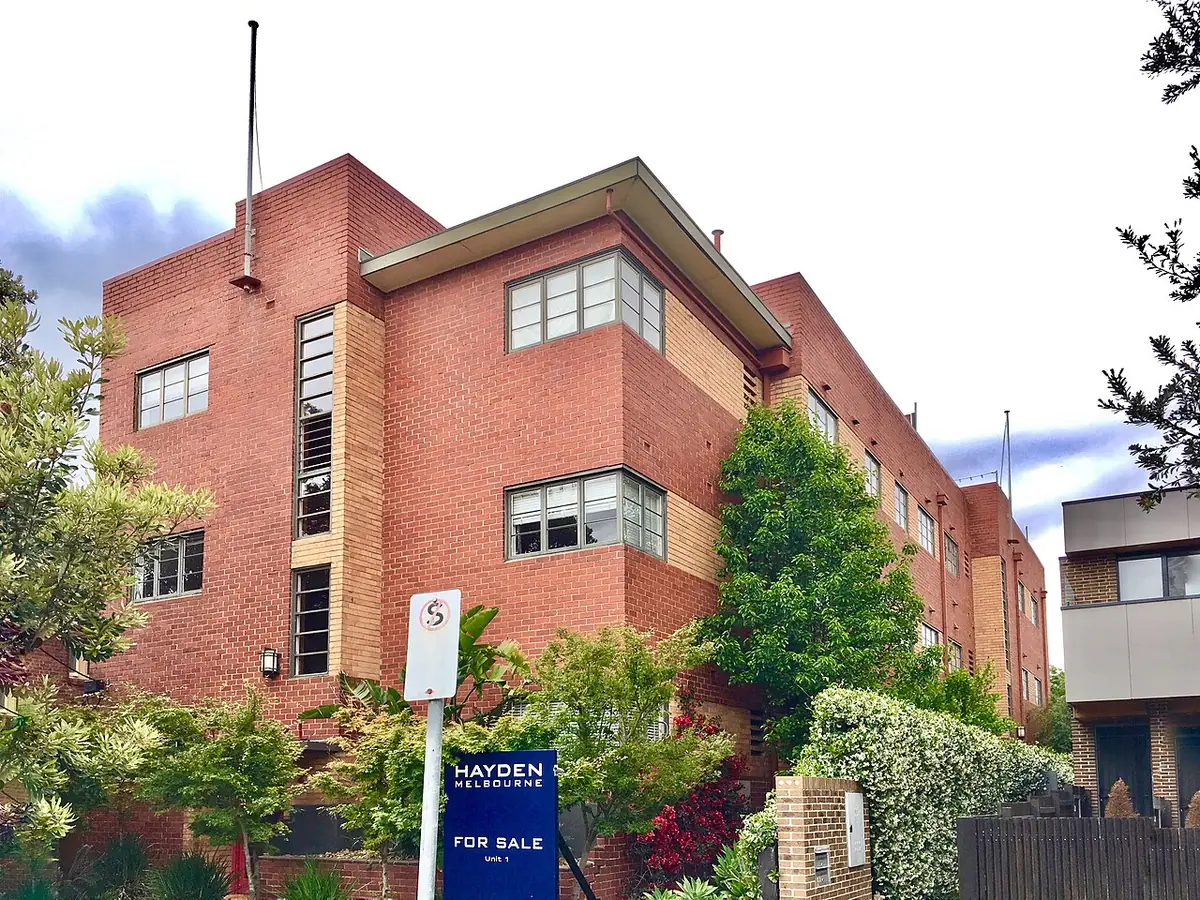
A red-brick apartment block in St Kilda West — Photo: Rohanstorey · CC BY-SA 4.0 · Wikimedia Commons
Melbourne's property market caters to buyers with very different expectations, from the always-connected young professional to the family looking for stability. You don't choose an apartment only for its floor area, but for how well it absorbs the demands of your days. Commuting times, closeness to green space and access to healthcare completely reshape how much a home feels worth over the months. That is why you need to hold your real habits up against the local urban reality before you commit financially.
The remote worker looking for calm and light
Spending whole days in an apartment calls for well-used space flooded with natural light so it doesn't feel stifling. In Melbourne, north-facing properties get precious sunshine during the southern winter, a key factor for both your mood and your energy bill. You must check the quality of the fibre internet connection and whether there is a nook or a separate room for an office. Living and working in the same space without proper acoustic separation quickly wears down your quality of life.
The highly mobile urban professional who loves cultural life
If your days run to the rhythm of trams and train connections, living close to a major station on the metropolitan network changes everything. Apartments along the main tram corridors offer unmatched ease of movement, but come with vibration and noise you have to factor in. It is essential to check how often services really run at weekends and in the evening. That accessibility comes at a noticeably higher price per square metre and usually in more compact floor plans.
The investor or part-time resident
For people who split their time between different regions or countries, security and easy upkeep come before everything else. Apartment complexes with strict access control and an integrated management service meet that need for independence perfectly. However, building rules sometimes ban short-term letting such as Airbnb, which limits your options for earning income while you're away. Look closely at the fixed costs that keep running even when the home stands empty for several months.
Living there when you come from abroad: what really changes
The Australian property system runs on legal and cultural rules that can be very different from what you're used to back home. Moving from the regulatory framework you know to the way things are done in Melbourne takes a real mental and administrative adjustment. Ownership, relations with strata managers and builder warranties all rest on distinct legal foundations. Anticipating these differences avoids unpleasant surprises when you sign purchase contracts and protects your investment over the long term.
From abroad
Strong legal protection through mandatory technical surveys and tightly regulated preliminary sale agreements.
Melbourne
The principle of 'caveat emptor' (let the buyer beware), where responsibility for checking the property falls almost entirely on the buyer.
You must pay for thorough independent inspections (building and pest inspections) before any condition is lifted, so hidden defects come to light.
From abroad
Service charges that are often moderate and governed by a well-established co-ownership law.
Melbourne
'Strata fees' tied to the building's leisure amenities and run by private management companies with wide-ranging powers.
Your projected budget for fees can double within a few years if major compliance or facade works are voted through by the owners' meeting.
From abroad
Traditional estate agencies with negotiated commissions shown inclusive of tax.
Melbourne
A tightly regulated public auction system or sale by sealed tender with no advertised price.
Asking prices are only loosely transparent, so you need a very good knowledge of recent sales in the neighbourhood to avoid overpaying.
From abroad
Deeds centralised with a single, neutral public official who drafts them.
Melbourne
Conveyancers or specialist lawyers each representing one party separately during the transfer of ownership.
Every legal file needs careful checking of the title and any easements by a licensed professional.
Which Melbourne neighbourhood should you choose for your priorities?
Choosing where to live in Melbourne means navigating a patchwork of neighbourhoods with very distinct cultural and architectural identities. Between the artistic buzz of the north and the residential calm near the bay beaches, each area gives your daily life its own flavour. Prices per square metre vary considerably from one area to the next, reflecting demand and the quality of schools and transport. You need to weigh up the pros and cons of each zone to line up your investment with what you want from life.
Fitzroy and Collingwood
A bohemian, trendy and artistic feel shaped by art galleries, vintage shops and specialty coffee.
Suits
Young professionals, creatives and anyone who loves a lively neighbourhood and gets around on foot or by bike.
Trade-off
The housing stock is mostly older and often cramped, and night-time noise is especially noticeable at weekends.
South Yarra and Prahran
A polished, shop-lined daily life, backed by green parks along the Yarra River and avenues full of boutiques.
Suits
People after prestige, parks on the doorstep and upmarket restaurants within walking distance.
Trade-off
Purchase prices reach their peak here and strata fees in newer buildings weigh heavily on the budget.
Docklands and Southbank
An ultra-modern atmosphere facing the harbour basins and the glass towers overlooking the river.
Suits
Fans of move-in-ready living, panoramic skyline views and buildings with pools and gyms.
Trade-off
The atmosphere can sometimes feel impersonal or deserted in the evening, far from the historic soul of the Victorian neighbourhoods.
Carlton and Parkville
A leafy, academic spirit dominated by the University of Melbourne and superb landscaped parks.
Suits
Investors seeking steady student rental demand and families who value large green spaces and heritage buildings.
Trade-off
The high concentration of students brings heavy tenant turnover and a lot of activity at the start of each academic year.
How much does buying an apartment in Melbourne really cost?
Once your budget is confirmed, it's time to look closely at the legal form of the ownership you are actually going to sign for.
Melbourne's property market follows complex price dynamics shaped by interest rates and the economic health of the state of Victoria. It makes little sense to reason only on a headline price per square metre without factoring in the unavoidable extra costs. Stamp duty, legal fees and contributions to strata reserve funds noticeably increase the total budget you need. Looking at price ranges by property type lets you fine-tune your financial strategy before you make an offer.
MelbourneFor saleApartmentestimate
Median price / m²A$7,695Half the apartments sell below this
Median priceA$790kthe average is 14% higher — a few very large properties pull it up
Most common2 bedrooms36 % of listings
Average size100 m²
By number of bedrooms
Bedrooms
Share of market
Avg price
Price / m²
Avg size
1
22 %
A$455k
A$8,748 +8 %
52 m²
2most common
36 %
A$648k
A$8,100
80 m²
3
28 %
A$885k
A$7,695 −5 %
115 m²
4
14 %
A$1.23m
A$7,452best value / m²
165 m²
Each row is an average, compared against the area average of A$8,100 / m². These are indicative estimates of a typical local market, not a measured sample of live listings. Check current listings before relying on them.
What you can actually own: understanding property titles
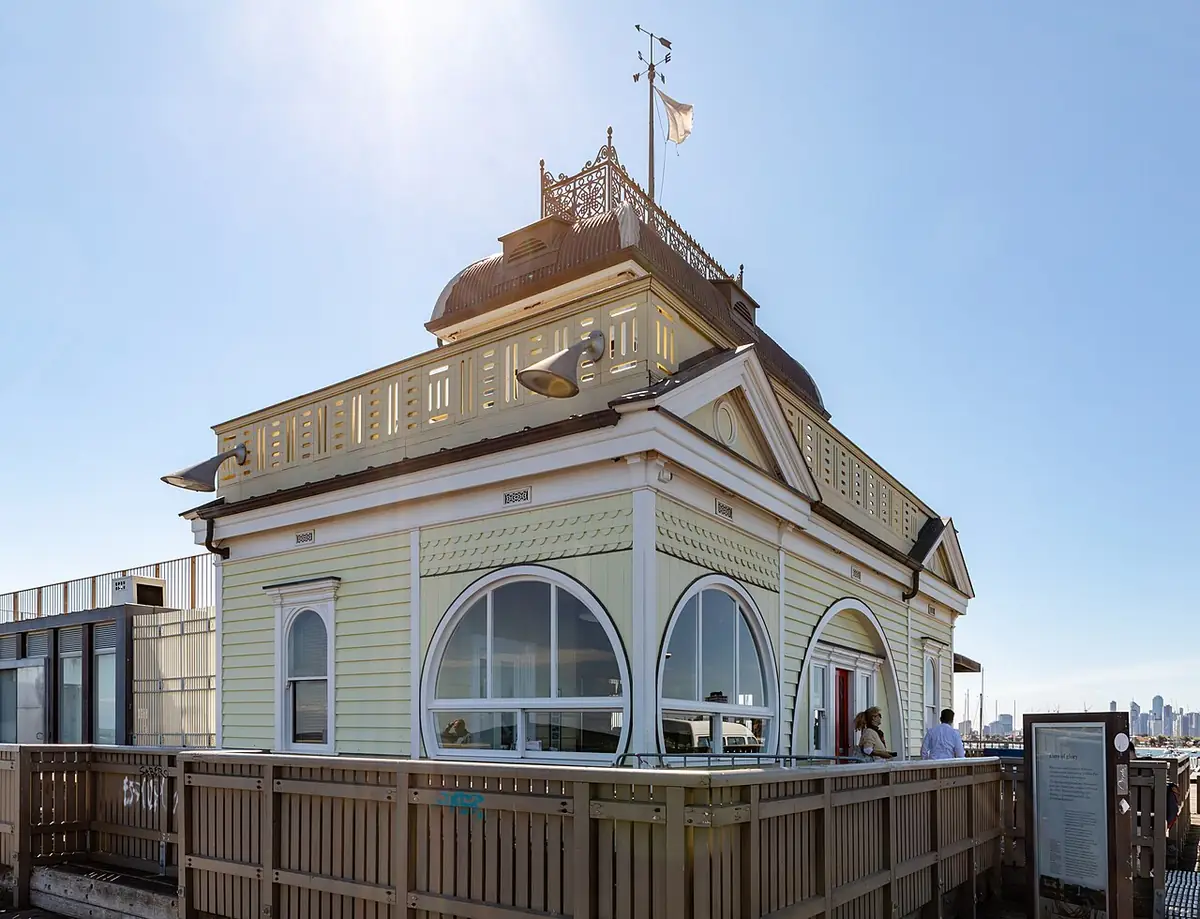
The Melbourne skyline seen across the bay from St Kilda — Photo: Sourabh.biswas003 · CC BY-SA 4.0 · Wikimedia Commons
In Australia, the legal form of your purchase determines not only how freely you can alter the property but also how much you will pay in future charges. Far from a simple idea of outright ownership, local rules draw subtle distinctions between the legal structures of apartment buildings. Grasping these technical points protects buyers from nasty surprises when votes come up at the owners' general meeting. It is the foundation your property's legal security rests on.
Strata Title (or Unit Title)
This is the most common legal form for modern apartments and large residential developments in Melbourne. You own your private lot (the apartment) outright, along with an undivided share of the common property, such as the entrance lobby, lifts and shared outdoor areas. An Owners Corporation handles general maintenance and strictly enforces the building's rules. Major decisions are taken by majority vote at the annual meetings.
What it changesYou have to follow the collective rules on changes to the facade, laying floor coverings or keeping pets, or face financial penalties.
Company Share Title
Rarer and often found in prestigious historic buildings from the 1930s to the 1950s, this arrangement places ownership with a company. Each shareholder holds a block of shares in the company that owns the building, giving them the exclusive right to occupy a specific apartment. Internal management is traditionally more closed and selective, with the company keeping full say over who the prospective new buyers are.
What it changesGetting a mortgage from a major bank can be harder, as lenders are often reluctant to finance this unusual ownership structure.
The one rule to understand before you pay any deposit
Once these legal steps are under control, it's time to break down how a transaction unfolds from start to finish.
Putting money down on the Australian property market follows a strict procedural sequence that leaves no room for guesswork. Unlike the habits of some other markets, signing a Contract of Sale binds the buyer for good as soon as all conditions are satisfied or if there are none. The deposit, usually set at ten per cent of the total price, is paid into a trust account. Mastering this chain of responsibilities is the best protection against outright financial losses.
Finding the property and carefully reviewing the preliminary legal document (the Section 32 Statement).
A thorough review of the Section 32 by your conveyancer or lawyer to identify the charges, easements and local taxes attached to the land.
Carrying out the essential building inspections (Building and Pest Inspection) to detect any major structural or pest problems.
Negotiating the special conditions of the contract of sale and, if needed, adjusting the amount of the deposit held in trust.
Formally signing the contract and paying the ten per cent deposit, which in some cases opens the statutory cooling-off period.
Paying the balance of the purchase price and the official transfer of title registered with the Land Registry of the state of Victoria.
How does a property transaction actually work in Melbourne?
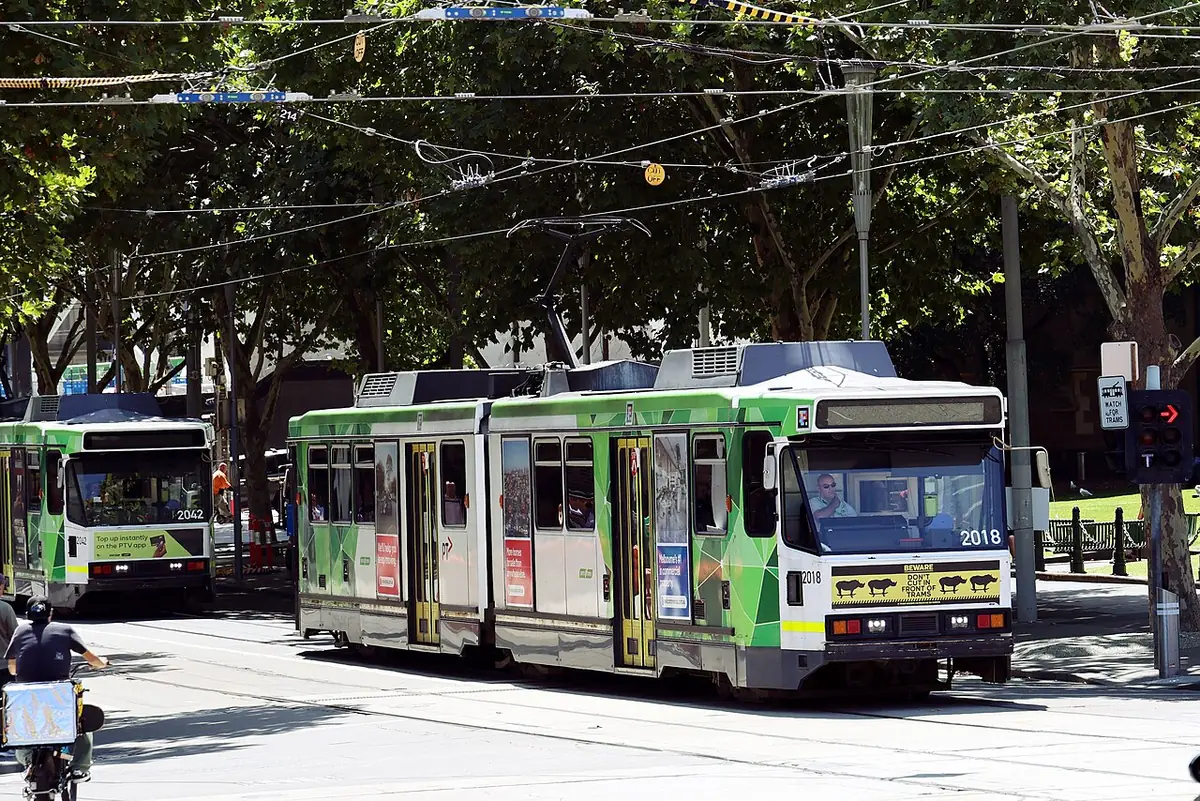
Green trams under the trees on Swanston Street — Photo: Bhullargraphic · CC BY-SA 4.0 · Wikimedia Commons
Buying an apartment in Melbourne follows a well-established path marked out by regulated professionals. Understanding exactly what each party does in this well-oiled process helps you stay in control of your purchase. From the first offer to the day you get the keys, each player has a precise role you should not underestimate. Here is the detailed sequence of steps along your journey as a buyer in Victoria's capital.
The buyerActively searching and shortlisting propertiesYou view the available properties, study the inspection reports and set your bidding limit or the maximum offer your financing plan allows.
The estate agent (Selling Agent)Negotiating or running the public auctionThey represent the seller's interests. At an auction, they run the public session where bids follow one another at a very fast pace.
The Conveyancer / LawyerLegal review and title checksThey go through the Section 32 in detail, make sure there are no hidden debts and prepare the legal documents needed to transfer ownership.
The building inspectorInspecting the building and its foundationsThey write the inspection report highlighting structural defects, damp problems or termites in the building.
The bankLoan approval and release of fundsIt confirms the final financing after an independent valuation of the apartment's market value and transfers the funds on settlement day.
The buyer and the agentThe Final InspectionJust before settlement, you visit the property one last time to check it is in the agreed condition and that the appliances and fittings work properly.
Apartment or house in Melbourne: how to choose based on how you live?
Once you have settled that first choice between vertical city living and horizontal suburban living, the central question of total cost comes straight to the fore.
In Melbourne, choosing between an apartment and a house comes down to much more than floor area or your starting budget. The shape of the city, with its huge sprawl out into residential suburbs and a very dense centre of glass towers, forces a clear-cut trade-off in your daily life. Opting for an apartment in central neighbourhoods such as Southbank, Carlton or Docklands means embracing a life on foot or by tram, where local cafes, public parks and cultural venues are close at hand. In return, you have to accept strata constraints, building fees and outdoor space that is often reduced to a simple balcony, or none at all.
Going for a detached house in the outer suburbs instead, whether in the leafy east or the fast-growing new estates to the north and west, completely redefines your living space. You get your own land, full independence from your immediate neighbours and obvious architectural freedom to shape your home. That freedom comes at a high cost in logistics and time, however, in the form of long daily commutes into the Central Business District (CBD). The main roads and suburban train lines suffer regular congestion at peak hours, turning every work trip into a serious organisational constraint you should plan for from the moment you buy.
A medium- and long-term financial analysis also reveals very different growth patterns between these two types of property. Houses with land in Melbourne have traditionally shown stronger capital growth, driven by the structural scarcity of land in well-connected areas. Apartments, on the other hand, face an abundant supply of new developments, which can hold back resale in the short term, although they often deliver a higher gross rental yield if you are looking at a long-term investment. Your personal profile, family situation and tolerance for commuting should therefore guide every dollar you invest, well beyond falling for a beautiful kitchen or an open view.
Finally, Melbourne's climate, known for its sudden changes and cool winters, directly affects how sound your property choice is. A poorly insulated 1970s house will need a considerable spend on energy to stay comfortable, while a recent apartment usually benefits from stricter thermal building standards, although some developments suffer from ventilation defects. Assessing the real build quality, the orientation to the sun and how well the heating or cooling systems perform is therefore essential to avoid climate and financial disappointments once the purchase is complete.
What real budget do you need to buy and live in Melbourne?
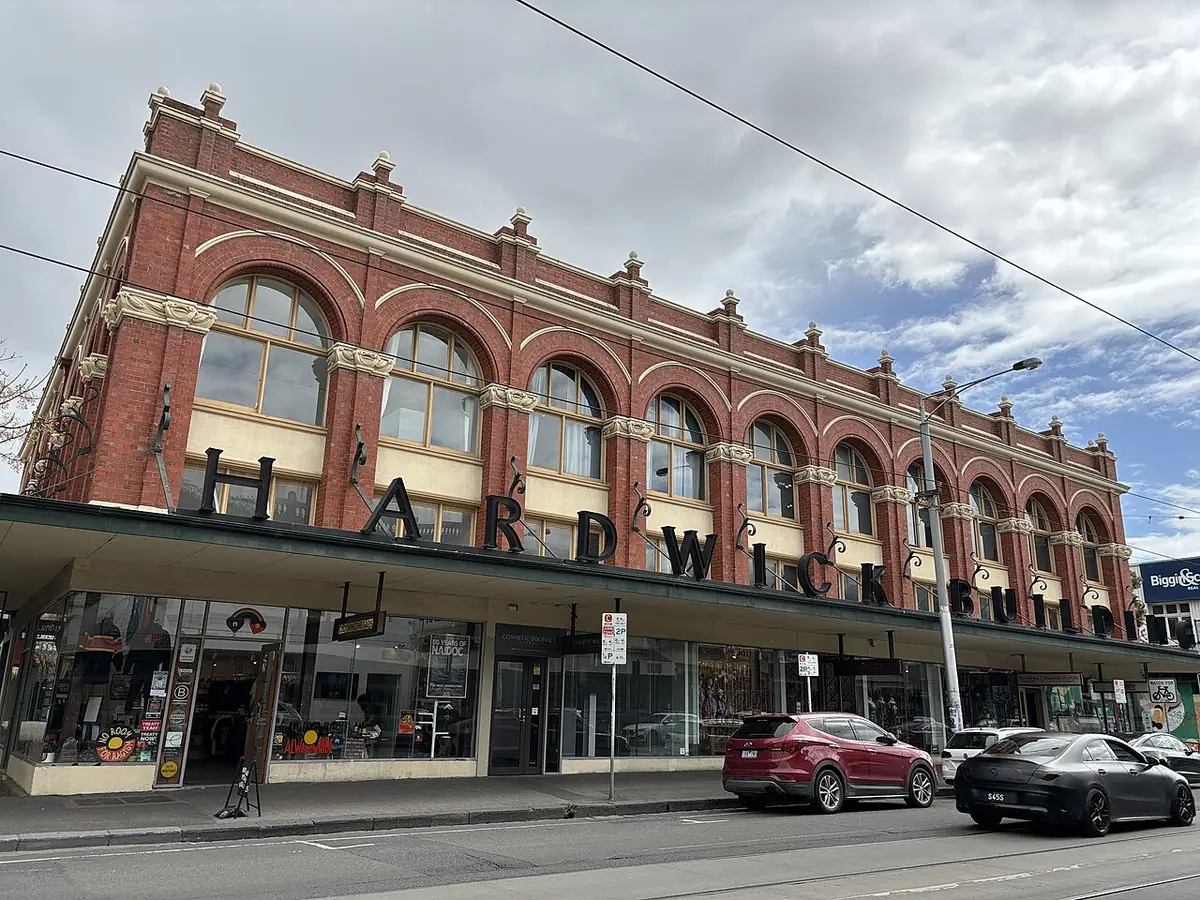
The red-brick Hardwick Building and its shopfronts in Brunswick — Photo: Nick-D · CC BY-SA 4.0 · Wikimedia Commons
Understanding these financial balances lets you approach the practical reality of a typical day in the city with confidence.
Buying property in Melbourne is about more than the price shown on online portals. You have to factor in all the mandatory extra costs, including property transfer taxes and local charges, which weigh heavily on the upfront budget. Strata fees for an apartment or rates for a house then add a recurring cost that you must build into your overall financing plan.
Estimated purchase and ownership costs for an apartment or a house in Melbourne
Cost item
Apartment (median)
House (median)
Impact on the budget
Median purchase price
AUD 620,000
AUD 930,000
Sets the basis for the mortgage and the deposit you need.
Stamp Duty
AUD 33,000
AUD 52,000
State tax not covered by the loan, payable in cash at settlement.
Annual charges (Council & Water Rates)
AUD 2,000
AUD 3,500
Mandatory local charges for the upkeep of roads and utilities.
Owners Corporation fees
AUD 4,000
None
Upkeep of common areas and lifts, plus building insurance.
These figures are based on median prices in the Victorian property market and include the tax rates currently in force.
Indicative monthly budget for a household living in Melbourne
Budget item
Apartment (central)
House (suburbs)
Commentary
Groceries and household
AUD 800
AUD 950
Varies with the shops you use and the size of the household.
Transport (public or fuel)
AUD 160
AUD 350
The Myki network is affordable; daily car use in the suburbs adds up.
Energy (electricity, gas, water)
AUD 180
AUD 300
Insulation and floor area have a direct effect on these bills.
These estimates are for a standard household and include seasonal variations in energy costs in Victoria.
Healthcare, schools and transport: what does an ordinary Tuesday in Melbourne look like?
Beyond this well-oiled routine, a close look at the market reveals details that sales brochures always leave out.
How smoothly your days run in Melbourne depends closely on how well your working hours line up with the capacity of local infrastructure. Between the huge morning flows of commuters heading into the CBD and the vitality of local services in residential neighbourhoods, every hour of the day has its own rhythm to build into your routine.
07:30Local train station or tram stopThe public transport network fills up as workers pour in. Touching on your Myki card and allowing for small delays takes the stress out of connections into the city centre.
08:45Local schoolSchool drop-off at the local public or private school. School zones impose strict 40 km/h speed limits that you must observe to the letter.
10:30Medical centre or GP clinicRoutine health appointments. The Australian healthcare system relies on the Medicare card for permanent residents, with varying out-of-pocket costs.
13:00High street or local cafeLunch break at one of the many cafes behind Melbourne's internationally famous coffee culture, a genuine local social institution.
17:30Local supermarket (Coles or Woolworths)End-of-day shopping for dinner. The fresh food aisles offer a wide range of local produce, often held to very strict traceability standards.
19:00Family homeBack to a quiet home. A chance to check how well the heating or air conditioning works for the season and to enjoy the calm of the residential neighbourhood.
What the property listing won't tell you about the Melbourne market
These documented blind spots shed direct light on the misjudgements made by many inexperienced buyers.
The promotional descriptions published by Melbourne estate agents naturally highlight the light, the nearby parks and the interior design. They leave out, however, major structural factors that determine a property's real value and long-term comfort, from heritage legislation to the finer points of local planning schemes.
Restrictions in heritage protection zones (Heritage Overlays)
Many of Melbourne's historic neighbourhoods impose drastic architectural constraints. Renovating a facade, replacing windows or adding a storey becomes an administrative obstacle course that needs prior approval from the local council.
The real quality of sound and thermal insulation
Older housing stock, especially Victorian or Edwardian houses, often has only basic insulation. New strata buildings, for their part, can suffer from noise between apartments if acoustic standards were not strictly applied.
Upcoming urban development projects nearby
Melbourne's rapid growth comes with major infrastructure works, from new metro lines to residential tower projects. Buying a property with an open view today is no guarantee that a concrete wall won't go up opposite in the future.
History of climate damage and flood-prone areas
Some parts of Greater Melbourne are exposed to flood risk during intense rainfall or to summer watering restrictions because of shifting clay soils. Checking local geographic risk reports avoids major setbacks.
Common pitfalls and regrets discovered six months after buying in Melbourne
Faced with these measurable risks, it is just as important to work out objectively who should hold off investing in this city.
Looked likeAn exceptional financial opportunity in an up-and-coming neighbourhood with strong potential for quick capital growth.
Turned outAn area poorly served by public transport, creating total car dependency and a hard resale when the market slows.
Would have caught itCarefully analysing current and planned public transport, and checking that rental and owner-occupier demand holds up with independent sources.
Looked likeA modern top-floor apartment with a breathtaking panoramic view of the Melbourne skyline.
Turned outUnbearable summer overheating from full west-facing sun exposure without proper shading, combined with sky-high air conditioning bills.
Would have caught itChecking the property's orientation, the presence of good double glazing and its overall energy efficiency as certified by an independent assessment.
Looked likeA charming older house full of authentic character with a large, leafy garden.
Turned outA constant money pit due to chronic damp, unstable foundations on clay soils and termites that are endemic to the region.
Would have caught itAlways having a full inspection carried out by an independent building expert before signing any final offer.
Looked likeModerate strata fees for a building with plenty of upmarket amenities.
Turned outA sudden jump in levies voted at the general meeting to pay for safety compliance works or urgent facade repairs.
Would have caught itGoing through the minutes of the last three owners corporation general meetings to spot ongoing disputes and the real state of the sinking fund.
Profiles and situations: who shouldn't buy property in Melbourne?
Once these personal filters are in place, the moment of the final decision comes into full view.
Investing in property in Victoria's capital requires a financial and geographic stability that some career paths or personal situations don't provide. Taking on a long-term loan without clear visibility over your income or future moves exposes the buyer to outright financial losses in the event of a rushed sale.
The professional on a short-term assignment (less than three years)
→Buying an apartment to avoid paying rent seen as money down the drain in a tight rental market.
Upfront purchase costs, combined with selling costs and market swings, wipe out any capital gain over such a short period.
The investor seeking an immediate high rental yield without a substantial deposit
→Buying a new off-the-plan property in one of Melbourne's large urban densification projects.
The glut of similar properties on the resale market and the building's running costs weigh heavily on the real net return after taxes and management fees.
The household on a tightly constrained budget with no emergency savings
→Buying an older house that needs major renovation work to be liveable.
The slightest discovery of hidden defects or structural problems, or a rise in the Reserve Bank of Australia's cash rate, can lead straight to default.
Conclusion: are you really ready to go ahead with your project in Melbourne?
Reaching the end of this analysis shows that buying property in Melbourne is a matter of well-considered strategy rather than an impulsive crush. Victoria's capital offers an exceptional quality of life, recognised many times over in international liveability rankings, but in return it sets strict rules of the game on tax, hidden costs and urban logistics. Your final decision should rest on a close match between your real financial means, your tolerance for commuting and how firmly your working life is rooted in the region.
If your plans are long term, you have factored in all the extra costs, from Stamp Duty to strata fees, and you have confirmed the build quality of the property through an independent inspection, then going ahead with the purchase is a sound and secure move. Melbourne's property market has historically rewarded the patience and analytical rigour of buyers who look beyond agents' marketing pitches.
Take the time to revisit your target neighbourhoods at different times of day, to try the transport lines at peak hours and to test your assumptions against the experience of local residents. A successful property purchase in Melbourne is one that makes your daily life simpler rather than more complicated, turning your investment into a real, lasting and fulfilling home for years to come.
Related questions
What legal fees and taxes should you plan for when buying property in Melbourne?
In Australia, and in the state of Victoria in particular, there is no traditional notary; a conveyancer or solicitor handles the transfer instead. The main purchase tax is Stamp Duty, whose amount depends on the purchase price, the type of property and your residency status, and it can represent 5% to 6% of the property's value.
Can non-resident foreigners buy property in Melbourne?
Yes, but only after obtaining prior approval from the FIRB (Foreign Investment Review Board). On top of that, specific tax surcharges apply to non-resident foreign buyers when they acquire residential property in Victoria.
How does the property auction system work in Melbourne?
Public auctions are the dominant way residential property is sold in Melbourne. A winning bid is firm, final and not subject to finance, which means you need formal pre-approval from your bank and an inspection of the property before auction day.
What is the difference between Torrens title and Strata title?
Torrens title means outright ownership of a piece of land and the house built on it, with nothing shared and no common charges. Strata title applies to apartments and townhouses, where you own your private lot and share ownership of the common areas, paying annual owners corporation fees.
What are Heritage Overlays in Melbourne's planning system?
They are heritage protection zones that tightly regulate external changes to older buildings. If the property you want sits inside one, even a modest facade renovation or extension needs approval from the local council.
How do clay soils affect houses in Melbourne?
Much of suburban Melbourne sits on reactive clay soils that swell in the wet season and shrink in summer. This can weaken the foundations of older houses if drainage and watering around the walls are not carefully managed.
How do you assess a home's energy efficiency in Victoria?
Homes usually carry an energy performance rating called the NatHERS Star Rating, scored from 0 to 10 stars. It measures how much energy is needed to keep the inside of the building at a comfortable temperature throughout the year.
Which neighbourhoods are most sought after for buying an apartment in Melbourne?
The Central Business District (CBD), Southbank, Docklands, Carlton, Fitzroy and Richmond see the strongest demand for apartments, thanks to their closeness to the universities, the main employment hubs and the major transport lines.
Is a building inspection mandatory before you buy?
Although the law does not always require it for a private sale, it is strongly recommended to hire a professional for a Building and Pest Inspection to spot any hidden defects, damp problems or termites.
How does the Myki public transport network work in Melbourne?
The Myki system covers all the trams, trains and buses across metropolitan Melbourne. It runs on a rechargeable smart card with zone-based fares, and trams are free within the central CBD area (the Free Tram Zone).