Buying a house in Birmingham is a major commitment of capital, and it calls for a clear-eyed reading of the local market. Between the particularities of British property law and the sheer variety of the city's neighbourhoods, this guide sets out the mechanisms you need to understand to secure your investment without giving in to false urgency.
Get the app
What nobody tells you.
Real prices, hidden costs and the traps to check before you commit.
What you actually get when you buy a house in Birmingham
Scroll
What you actually get when you buy a house in Birmingham
Buying a house in Birmingham is a major commitment of capital, and it calls for a clear-eyed reading of the local market. Between the particularities of British property law and the sheer variety of the city's neighbourhoods, this guide sets out the mechanisms you need to understand to secure your investment without giving in to false urgency.
Written by the ting.ad editorial team ·
Avenue Road, Birmingham in Street View: drag to look around.
This pull between architectural character and practical constraint is felt differently depending on how you live.
Putting money into bricks and mortar in Birmingham opens up genuine prospects, but they need to be read beyond appearances. Between the energy of areas in transition and the reality of older housing stock, every choice carries its own compromise. This is not simply about finding a roof: it is about understanding how the local market is built, so you avoid financial and structural disappointments over the long run.
The Victorian charm of the residential streetsvsThe upkeep and insulation burden that comes with it
Older houses offer sought-after looks and generous proportions, but they often demand significant investment to meet current energy standards. The cost of bringing a property up to standard should never be underestimated at the point of purchase.
Being close to the main routes and the city centrevsExposure to noise and to urban density
Settling near the busier zones makes daily journeys easier but shrinks your private outdoor space. Gardens become rarer and smaller the closer you get to the city's major employment hubs.
The quiet of the leafy outer areasvsThe mechanical lengthening of every daily journey
Moving further out buys you more space and a proper mature garden. In return you become entirely dependent on public transport or a car, which pushes up the monthly travel budget considerably.
Does this place genuinely suit your day-to-day life?
These everyday trade-offs take on a different colour when you arrive from another country with your own frame of reference.
A property project succeeds above all when the home you buy matches the way your days are organised. Your rhythm, the shape of your household and your working obligations all redefine what comfort means. Looking honestly at your habits before you sign will spare you a lasting mismatch with your new surroundings.
Space and quiet come first
If your days are spent behind a screen at home, the internal layout matters more than the exact location. You will need a dedicated room away from street noise and a reliable internet connection. Houses with a loft that can be converted or a rear extension are ideal for carving out that workspace without encroaching on family life. Having shops on the doorstep then becomes secondary to the quality of your immediate surroundings.
Central location and infrastructure
For families, easy school runs and quick access to public parks decide whether a purchase makes sense. Areas served by well-regarded schools hold firmer valuations but offer a better resale prospect later. It is worth checking the local clubs and societies on offer and how safe the walking routes to school really are. An enclosed garden also becomes a non-negotiable criterion so that children can play without you worrying.
How well the transport connections work
When your weeks are shaped by business trips or regular commuting, logistics matter more than period charm. Living near the main rail hubs or the major road routes saves you valuable time every morning. Properties in those areas call for particular attention to sound insulation and to secure parking. The compromise usually falls on the floor area or the size of the plot outside.
Living here when you arrive from abroad: what actually changes
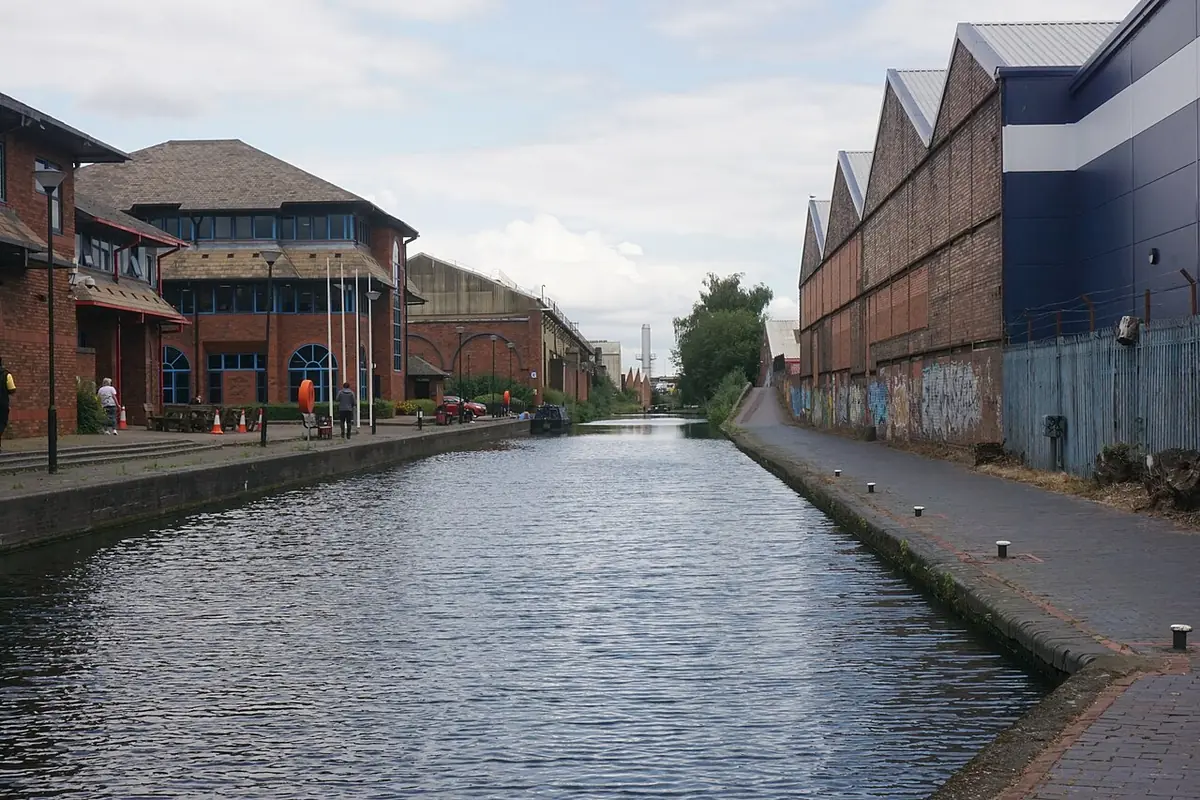
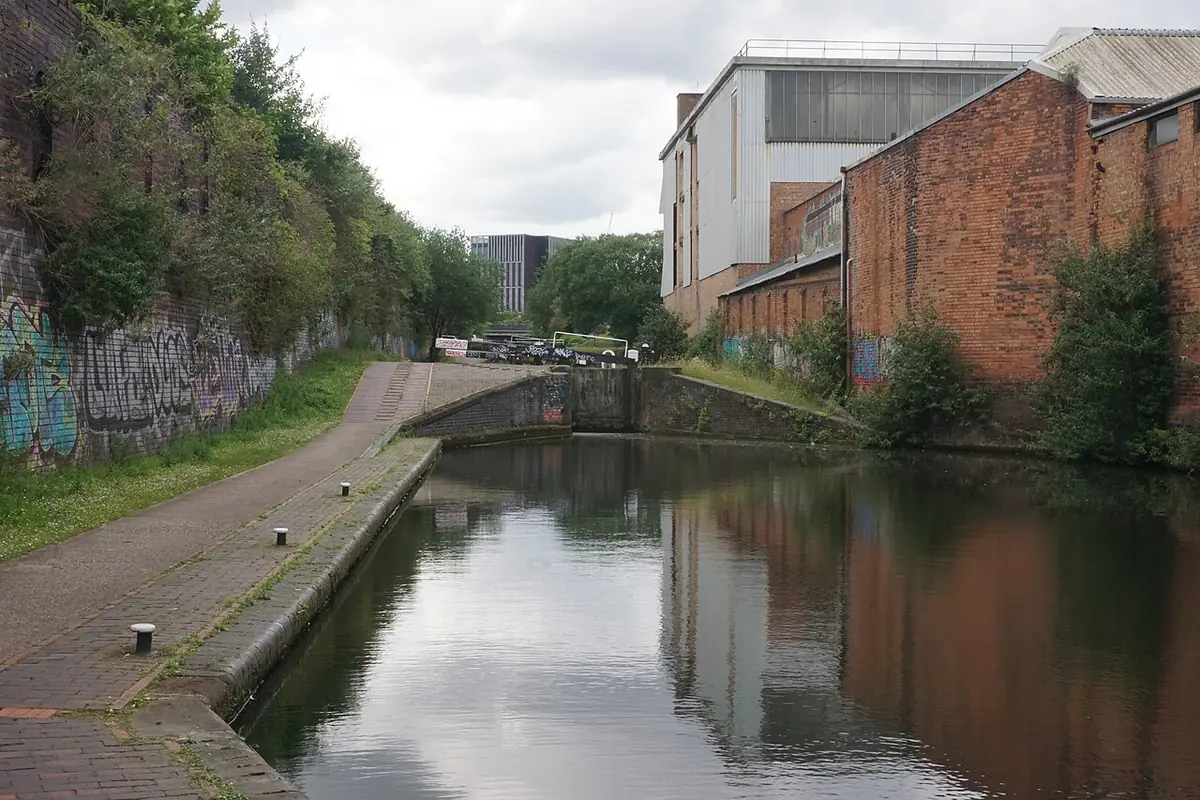
The canal towpath near Aston, part of daily life around the city's waterways — Photo: Bill Boaden · CC BY-SA 2.0 · Wikimedia Commons
Once those reference points are in place, choosing the area becomes the cornerstone of your project.
The British property system runs on rules and administrative habits that are a long way from those most overseas buyers know. Anticipating these legal and cultural divergences lets you move calmly through the purchase. Every stage of the transaction has a local equivalent you need to absorb if you want to avoid misunderstandings.
From abroad
A single public official handling the whole transaction
Birmingham
Conveyancing solicitors on each side
Transactions are not centralised with one appointed officer. They are run by specialist lawyers acting for each party, which calls for constant responsiveness and means separate fees on both sides.
From abroad
A statutory pack of seller-provided condition reports
Birmingham
The Energy Performance Certificate, and the buyer's own diligence
The energy assessment is compulsory, but hidden structural defects are largely the buyer's problem to spot, which makes an independent technical inspection (a Home Survey) indispensable.
From abroad
Shared ownership governed by one national statute
Birmingham
The freehold and leasehold system
Buying a house normally comes with outright ownership of the land (freehold), but some properties on estates carry maintenance charges for the shared communal areas.
From abroad
An indicative completion date fixed with the transaction
Birmingham
The property chain, and open-ended timescales
A sale is often conditional on other transactions above and below it. One party pulling out anywhere in the chain can block or delay your own purchase for months.
Which part of Birmingham should you focus on, given your priorities?
Looking at these areas leads naturally to the central question of what prices the local market is actually asking.
Birmingham is a mosaic of areas with strong individual identities, from Victorian districts in the middle of renewal to quieter residential pockets further out. Each one answers particular expectations in terms of budget, quality of life and prospects for growth in value. Targeted searching will stop you scattering your efforts across a vast and uneven conurbation.
Harborne
A lively village feel, with independent shops, well-kept green spaces and steady, strong family demand.
Suits
Families after stability, good schools and a well-preserved setting while staying close to the centre.
Trade-off
Some of the highest prices per square metre in the city, and a supply of available properties that is often very tight.
Moseley
A bohemian, artistic spirit, marked by a rich cultural life, popular parks and striking architecture.
Suits
Buyers drawn to period character, a social mix and a lively neighbourhood atmosphere.
Trade-off
Strong pressure on both sales and rentals, which makes for aggressive competition when offers go in.
Sutton Coldfield
A leafy residential haven bordering an enormous park, offering complete quiet and plenty of space.
Suits
Those who want a more rural way of life without moving away from the region's employment centres.
Trade-off
Greater reliance on transport to reach the city centre at peak times, and properties that often cost more to maintain.
What does buying a house in Birmingham really cost?
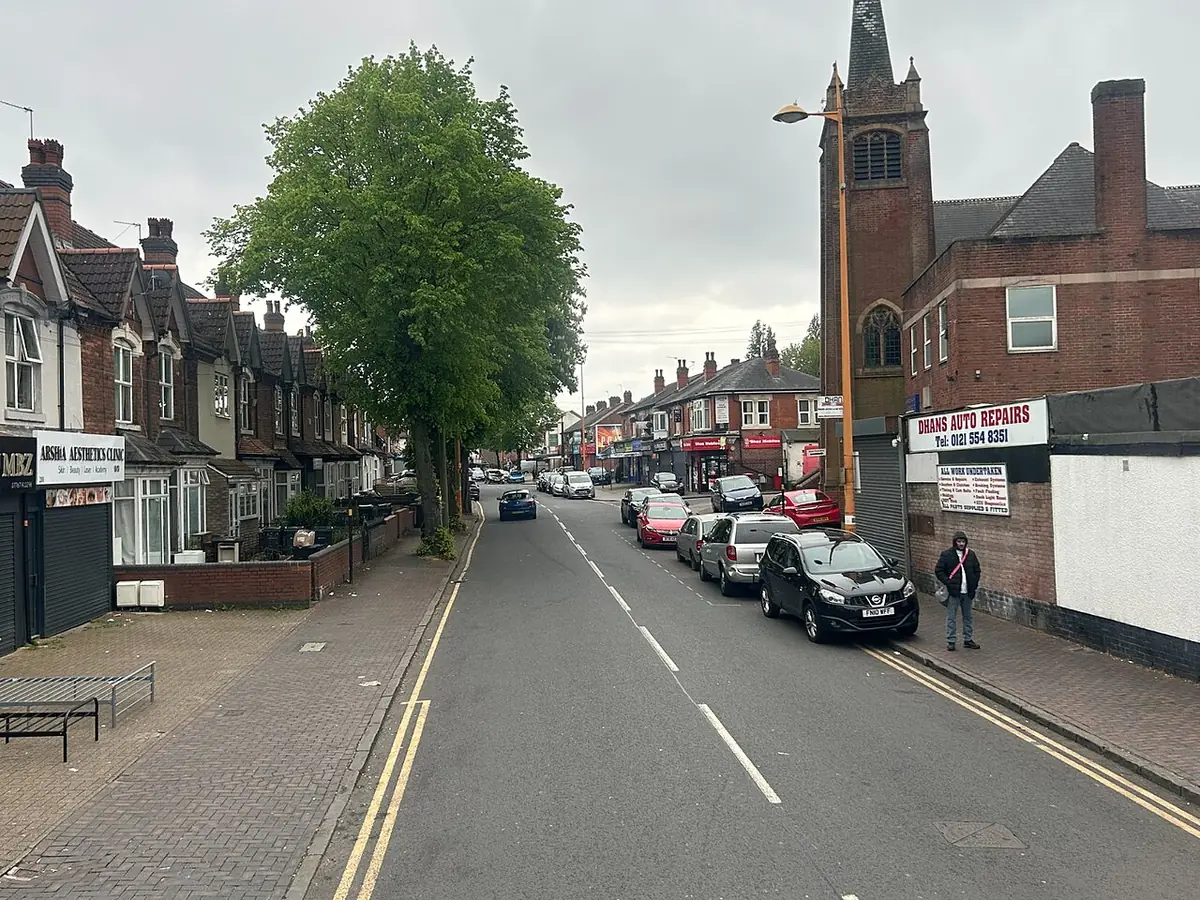
A typical Handsworth high street, shops below flats and houses nearby — Photo: Philip Halling · CC BY-SA 2.0 · Wikimedia Commons
Beyond the financial envelope, the precise nature of the ownership rights deserves careful analysis.
Setting an acquisition budget goes well beyond the price shown on the listing. You need to fold in every associated cost, from local taxation to legal fees, to arrive at an honest financial picture. The ranges below reflect the trends observed in the market by property type and by location.
birminghamFor saleHouseestimate
Median price / m²£2,337Half the apartments sell below this
Median price£280kthe average is 14% higher — a few very large properties pull it up
Most common2 bedrooms69 % of listings
Average size114 m²
By number of bedrooms
Bedrooms
Share of market
Avg price
Price / m²
Avg size
2most common
69 %
£280k
£2,460
114 m²
3
26 %
£356k
£2,312 −6 %
154 m²
4
6 %
£455k
£2,263best value / m²
201 m²
Each row is an average, compared against the area average of £2,460 / m². These are indicative estimates of a typical local market, not a measured sample of live listings. Check current listings before relying on them.
What you can actually own: the legal structure of the property
That legal vigilance has to be matched by a firm grasp of how a transaction unfolds in time.
The security of your investment rests on understanding British title in detail. Rather than treating ownership as a single unified thing, the British system sometimes separates the physical structure from the land it stands on. Grasping that fundamental distinction protects your assets over the long term.
Freehold: full and lasting ownership
Buying freehold means you own both the building and the land it is built on, with no limit in time. This is the case for the vast majority of detached and traditional terraced houses. The status gives you complete freedom to carry out works, alter the structure or sell on, without needing permission from a third party who owns the ground.
What it changesYou retain full control of the asset and of its future value, with no hidden ground charge.
Leasehold: temporary ownership of the building
Rarer for a house but present in some newer developments and complexes, leasehold gives you the right to occupy the property for a fixed term set by a long lease, often 99 to 999 years. You pay an annual ground rent to the owner of the land (the freeholder) and sometimes service charges for the shared areas nearby. The shorter the lease becomes, the more the value of the property suffers.
What it changesYou must check the remaining lease term before making any offer, or face a major discount at resale.
The rule to understand before you put down a deposit on a house
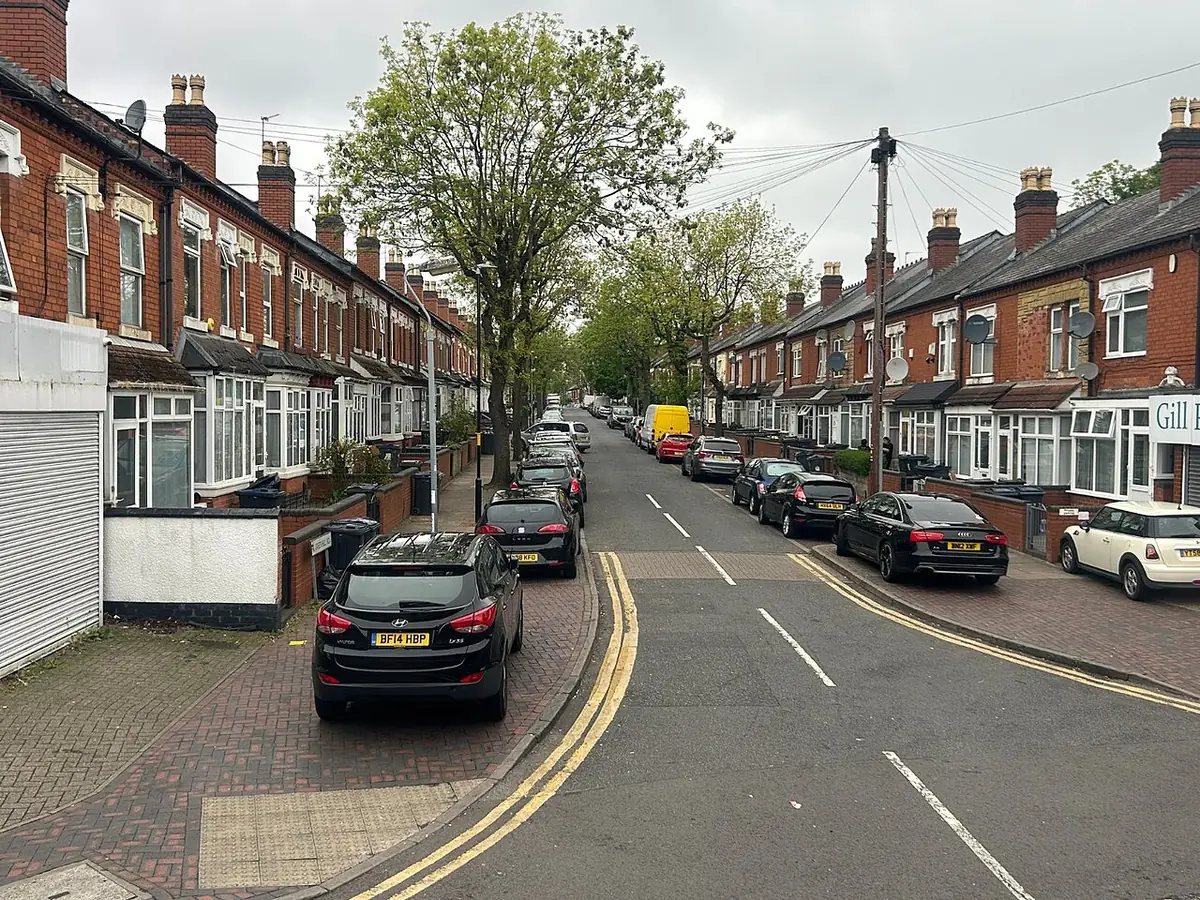
Terraced streets like this are the everyday housing stock across Birmingham — Photo: Philip Halling · CC BY-SA 2.0 · Wikimedia Commons
To orchestrate that sequence smoothly, each party plays a precise role that has to be coordinated.
The British buying process has a legal flexibility that can be disconcerting for a buyer arriving from abroad. Until exchange of contracts, the agreement between seller and buyer carries no binding force at all. Understanding this critical sequence protects both your capital and your nerves.
Making the offer (offer accepted)
The offer is accepted by the seller, but at this stage it remains purely verbal and moral. No financial penalty applies if either side walks away.
Solicitors are instructed to begin the legal searches, the environmental checks and the technical audit of the building.
The survey report reveals any structural defects, opening a legitimate window to renegotiate the price originally agreed.
The final mortgage offer is confirmed and recorded in writing by your lender.
Exchange of contracts, the moment the transaction becomes legally irrevocable.
How a property transaction unfolds, step by step
In closing, a successful move into property in Birmingham takes method, rigour and forward planning.
Seeing a Birmingham purchase through means coordinating a number of parties with clearly bounded roles. From the first contact with the estate agent to the handover of keys, the timetable generally spreads over several months. Anticipating each milestone keeps your progress as a buyer running smoothly.
The buyerGetting the financing confirmed up frontObtaining an Agreement in Principle from a lender before you view gives your approach credibility with the agencies.
The estate agentShortlisting and viewing propertiesIdentifying the opportunities on the market and putting a written offer to the estate agent acting for the seller.
The solicitorThe legal audit and the searchesCarrying out the required local searches to confirm there are no restrictive planning proposals or hidden easements.
The independent surveyorThe technical inspection of the buildingCommissioning a Level 2 or Level 3 survey to assess the condition of the roof, the foundations and the heating system.
Both solicitorsExchange of contractsPayment of the deposit (usually 10%) and the irrevocable fixing of the completion date.
The buyer and the sellerCompletionTransfer of the remaining funds, vacant possession of the property and collection of the keys so you can move into your new home.
House or flat in Birmingham: which suits your way of life?
Once that fundamental choice is settled, you need to look hard at the financial reality of moving in.
Choosing between a house and a flat in Birmingham shapes your whole daily life and changes the way you experience the city through the seasons. Detached and terraced houses, usually with private outdoor space, dominate the outer residential areas and the green belt around the city. They offer complete independence and a valuable freedom to adapt the space, but in return they demand real time and energy for the regular upkeep of the roof, the façade and the garden. This is the choice families tend to make when they want quiet and floor area, and are willing to accept a slightly longer daily journey into the employment centres.
A flat, by contrast, appeals through its immediate centrality and its day-to-day practicality, particularly along the historic canals or in newer urban hubs such as Brindleyplace and the Jewellery Quarter. Living in a flat in Birmingham frees you from the heavier burdens of external maintenance while often giving you better thermal insulation in the more recent developments. Service charges, though, are a fixed budget line that has to be built rigorously into your initial financing plan, alongside the local property tax and your energy contracts.
The question of resale and of how easily your property can be sold on also deserves serious thought from the very start of your project. Well-located family houses in good school catchments retain remarkable appeal, carried by demand that structurally outstrips the supply available on the market. Urban flats, on the other hand, go through market cycles that are more sensitive to movements in interest rates and to the volume of new developments completed in the city centre, which can lengthen the time to sell if you suddenly have to move for work.
Your final decision should therefore rest on a careful weighing of your tolerance for logistical constraints against what you genuinely want in terms of domestic comfort. If you spend your weekends gardening and dread noise from neighbours above all else, a house is the obvious answer despite the higher purchase cost. If you value cultural spontaneity, transport on the doorstep and a life led on foot or by bike, an urban flat will meet your daily expectations perfectly.
What overall budget do you need to settle in Birmingham for the long term?
Beyond the raw figures, it is the rhythm of your days that now needs anticipating.
Building a realistic budget for buying a house in Birmingham goes well beyond the headline price on the listing. You have to include every associated cost, from local taxation to unavoidable maintenance, so that nothing catches you out financially in your first years in the property. That analytical discipline lets you pitch your offer with your eyes open and secure your financing plan with local lenders.
Upfront and recurring costs for a house in Birmingham
Budget item
Estimated order of magnitude
Frequency and terms
Average purchase price (3-bedroom house)
£250,000 to £350,000
One-off amount paid on purchase, depending on the area
Stamp Duty (transfer tax)
£0 to £5,000
Government tax calculated in price bands
Legal and brokerage fees
£2,000 to £4,000
Compulsory legal costs for securing the title
Council Tax (local dwelling tax)
£1,400 to £2,200 per year
Paid annually or in instalments, according to the valuation band
The amounts given are averages observed in the Birmingham property market and can vary with the exact condition of the property.
Ongoing running and annual maintenance costs
Type of cost
Indicative annual budget
Explanatory comment
Energy (gas and electricity combined)
£1,800 to £2,500
Varies considerably with the building's energy performance (EPC)
Home insurance (buildings and contents)
£350 to £600
Essential cover including structural risks and contents
Routine upkeep and repairs
£1,000 to £2,000
Recommended provision for preventive maintenance of the house
It is strongly advisable to build up a contingency fund equivalent to three months of fixed outgoings.
What does an ordinary Tuesday in Birmingham actually look like?
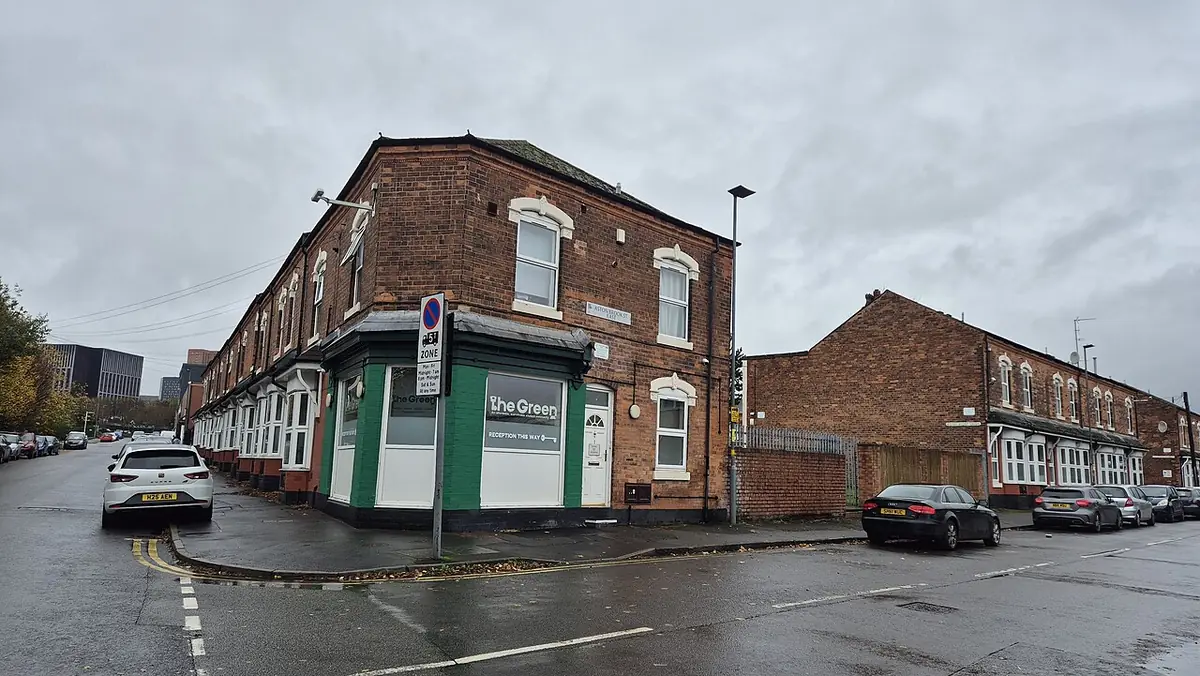
Corner pubs and terraced rows like this define Aston's streets — Photo: Paul Collins · CC BY-SA 2.0 · Wikimedia Commons
That apparent routine hides realities of the built environment that agencies often leave unmentioned.
To judge whether a Birmingham address really works for you, nothing beats walking carefully through a typical weekday. From handling the morning traffic on the main roads to the public transport run into the business district, every detail counts. This hour-by-hour immersion reveals the friction points you will live with fifty weeks a year.
07:30Residential area (Harborne or Moseley, for example)An early start to avoid the routes into the city centre seizing up completely.
08:15Bus stop or Midland Metro tram stopBusy, but running frequently enough to keep you on schedule.
09:00Arrival at the office in the core central business districtSettling in at your desk after a journey that was broadly under control.
12:30Lunch around Colmore Row or BrindleyplaceStraight into the professional and commercial buzz of the city.
17:30Local shopping at a neighbourhood convenience storeTopping up on the way home to put dinner together.
19:00Home again, and time in the neighbourhoodEnjoying the relative quiet of the residential streets at the end of the day.
What the beautiful listing photographs will never tell you
These local subtleties lead straight to the disappointments newcomers meet most often.
Birmingham's property market has its own unwritten rules and its own geographical traps, which only long-standing residents read fluently. Virtual tours and promotional shots flatter the proportions but leave in shadow the structural details that will decide your quality of life. Here are four unavoidable realities it is up to you to check on the ground before you sign anything.
The real impact of the Clean Air Zone
If your car does not meet the strict environmental standards in force across the wider centre, every trip for work or pleasure will cost you a substantial daily charge. It is essential to check whether your future street sits inside that permanent charging boundary.
How well Victorian terraces really block sound
Victorian and Edwardian houses have undeniable architectural charm, but their period party walls carry airborne and impact noise easily. A careful check of the acoustics inside is essential if you want to avoid recurring friction with neighbours.
How saturated residential parking gets in the evening
Owning a house without a driveway in some of Birmingham's most sought-after pockets quickly becomes an evening ordeal. Finding a permitted parking space near your own front door after seven in the evening can take endless patience.
The tangle of easements and disguised communal rules
Some houses that look entirely independent in fact share access ways, inner courtyards or drainage networks governed by complicated legal clauses. Your solicitor will need to comb through every line of the title to rule out any risk of a future dispute.
The typical regrets people discover six months after moving in
Given those demands, it matters just as much to know whether this purchase is genuinely right for you.
Looked likeA quiet, leafy street, perfectly peaceful at the weekend.
Turned outA busy rat run at peak times, used by drivers avoiding the main roads.
Would have caught itVisiting the target area several times, including a Tuesday at 8am and a Friday at 6pm.
Looked likeAn older house full of authentic character, ready to move straight into.
Turned outA thermal sieve needing major insulation work to bring heating bills back to something acceptable.
Would have caught itInsisting on the detailed Energy Performance Certificate (EPC) and commissioning a Home Survey Level 3 from a surveyor.
Looked likeAn up-and-coming area with exceptional short-term potential for growth in value.
Turned outA slow transition zone where the promised regeneration schemes are taking their time to appear on the ground.
Would have caught itChecking Birmingham City Council's public planning records to see the real timetables for the works.
Looked likeVery short estimated journey times to the region's main employment centres.
Turned outAwkward public transport connections in winter because of weather disruption and engineering works.
Would have caught itTesting the exact home-to-work journey yourself at genuine peak times before you formalise your offer.
Who should definitely hold off buying a house in Birmingham right now?
If you recognise yourself in these profiles, caution is called for. If instead you have the measure of these challenges, here is how to proceed.
Buying property in Birmingham is a heavy commitment of money and time, and it does not suit every situation in life. Being determined to own in circumstances that do not support it usually leads either to a financial dead end or to daily frustration that becomes untenable. Here are the profiles for whom continuing to rent is clearly the better option for now.
The young professional facing uncertain international mobility
→Postponing the purchase of a house and keeping the flexibility of renting.
The upfront costs of buying and the time it takes to sell in the Birmingham market call for an investment horizon of at least five years before they can comfortably be recouped.
The buyer with a deposit that is only just sufficient and no contingency savings
→Waiting until a solid financial cushion is in place before taking the plunge.
A single unforeseen structural repair on an older house can instantly unbalance a family budget with no cash reserves behind it.
The city dweller who is viscerally allergic to household maintenance
→Looking instead at a managed flat, or sticking with an all-inclusive rented lifestyle.
Keeping up a house with a garden in Birmingham takes a weekly personal commitment that not everyone wants to make, or is able to.
So are you genuinely ready to go ahead in Birmingham?
Canal walks like this are part of daily routines near Aston — Photo: Bill Boaden · CC BY-SA 2.0 · Wikimedia Commons
Reaching the end of this analysis shows that you are approaching your Birmingham purchase with the clear-headedness and rigour it requires. Buying a house here is not an impulsive attachment prompted by an attractive photograph: it is a considered decision that weighs up each area on its merits. You now know that the city's architectural appeal comes with budgetary, logistical and technical constraints you have to be willing to shoulder day to day in order to live here comfortably.
Birmingham's current market offers real opportunities, provided you do not rush the checking and inspection stages. By taking the time to test every assumption about your journeys, to study what your Council Tax will actually be and to probe the real condition of the properties you view, you turn a risky purchase into a solid, lasting investment. Your ability to anticipate the unexpected will make all the difference between a move that works and a permanent source of stress.
It is now up to you to move from thinking it through to acting methodically on the ground. Meet local estate agents with precise criteria, view at different times of day and surround yourself with competent professionals to assess the properties that hold your attention. If these prospects motivate you rather than alarm you, then you are fully ready to unpack your bags and build your future in the heart of this great British city.
Related questions
How long does it typically take to complete a property purchase in Birmingham?
The full acquisition process, from the offer being accepted through to completion and the handover of keys, generally takes between three and five months in the United Kingdom. The timescale reflects the complexity of the legal checks carried out by each party's solicitors.
What is the difference between 'leasehold' and 'freehold' in Birmingham?
Freehold means you own both the building and the land it stands on, which is the norm for the vast majority of houses. Leasehold, more common for flats, means you are buying the right to occupy the property for a fixed term while paying ground rent to the owner of the land.
How is Council Tax calculated for a house in Birmingham?
Council Tax is a local charge collected by Birmingham City Council to fund municipal services. Every dwelling is placed in a valuation band (A to H) based on its estimated market value in 1991, and that band determines the exact annual amount due from the occupants.
Is a building survey compulsory before you buy?
British law does not formally require an independent technical inspection (a Home Survey), but it is an absolutely essential precaution. It uncovers hidden defects, damp problems or roof faults before you commit for good.
Which residential areas are most sought after by families in Birmingham?
Areas such as Harborne, Moseley, Kings Heath and Sutton Coldfield are consistently at the top of family preferences. They combine leafy surroundings, good quality public spaces and proximity to very highly rated schools.
Does the Clean Air Zone affect every vehicle in Birmingham?
No. The Clean Air Zone in central Birmingham specifically targets polluting vehicles that fall short of the minimum emissions standards (generally Euro 4 for petrol and Euro 6 for diesel). Compliant cars travel through entirely free of charge.
How is the purchase price negotiated locally?
Negotiation traditionally goes through the estate agent, who passes your written offer to the seller. It is common to offer below the asking price, making the case on the works required or on how quickly your financing can move.
What is a property chain in the British market?
A property chain is the interdependence of several transactions in which each buyer is also selling another property. If a single link in the chain hits a financing problem or pulls out, every transaction in it is blocked or delayed.
What legal fees should you budget for when buying in Birmingham?
In the United Kingdom there is no traditional notary: you instruct a solicitor or a conveyancer who specialises in the transfer of ownership. Their fees generally run between £1,000 and £2,500 before tax and administrative disbursements.
Can you buy a property in Birmingham as a non-resident?
Yes, it is perfectly possible to buy a property in Birmingham as a non-resident of the United Kingdom, although local banks apply stricter mortgage lending conditions and often require a larger deposit.
Property review of ting
No ting properties in Birmingham Gb yet
Be the first — share it on ting and it shows up right here.